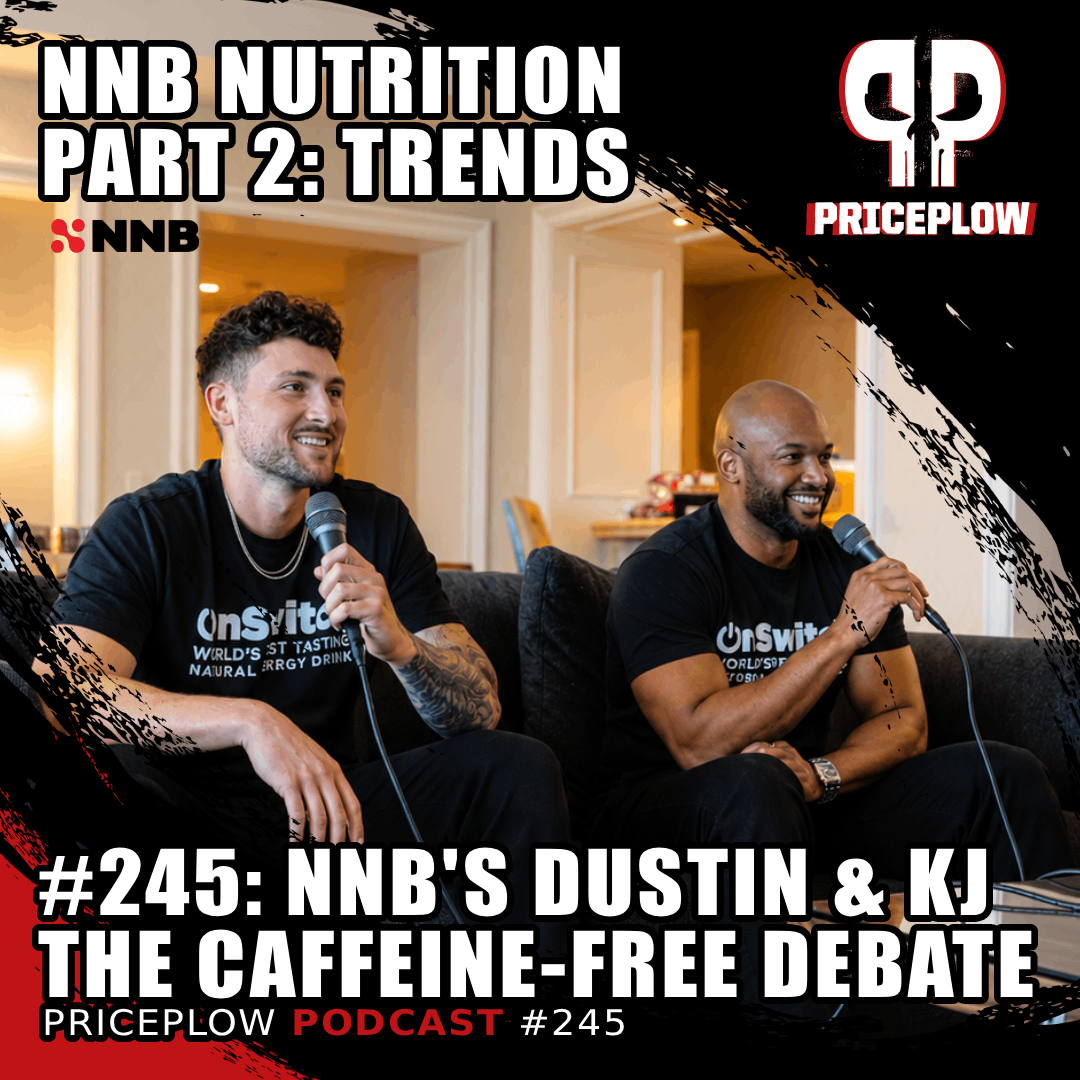
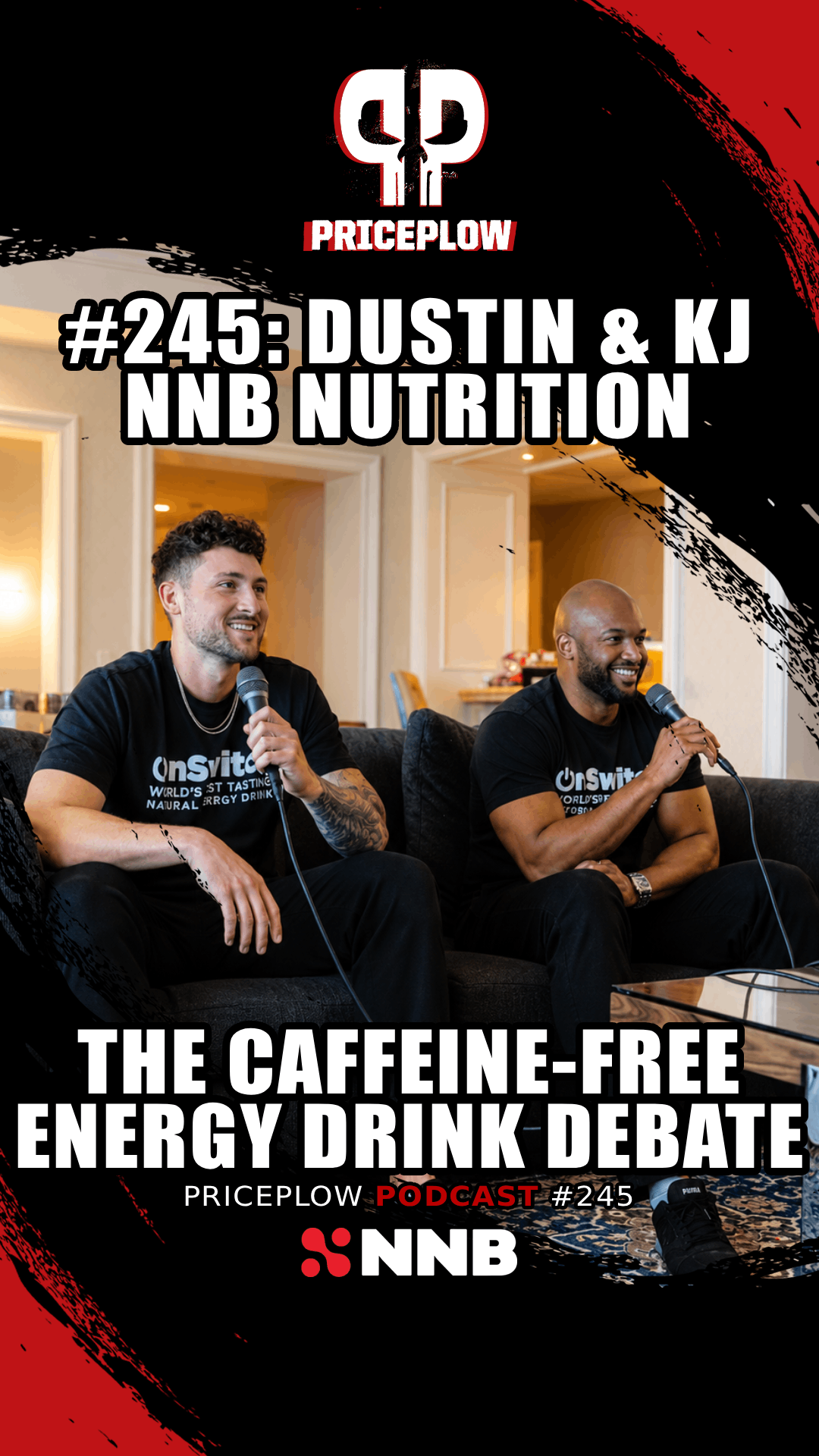
NNB Nutrition Chief Brand Officer Dustin Elliott and product reviewer Konlan James (KJ) debate caffeine-free energy drinks, drop culture, nootropic sodas, and soaring protein prices on Episode #245 of the PricePlow Podcast.
Is the caffeine-free energy drink the next big hit, or does Diet Coke already have it covered? NNB Nutrition's Chief Brand Officer Dustin Elliott and product reviewer Konlan James, better known as KJ, join Mike and Ben for Episode #245 of the PricePlow Podcast. We recorded it in NNB's suite at Mandalay Bay during SupplySide Global 2026, right after our conversation with Shawn Wells and Jake Mulder on Episode #244.
Can Anyone Build a Caffeine-Free Energy Drink People Love?
Part 2 trades ingredient science for consumer trends, seen from three angles: an ingredient industry insider, a product reviewer who owns a brand of his own, and Ben, who seems to be everywhere. The crew prices out a can of OnSwitch 2.0, talks about why so many fitness people over 40 want off caffeine, and digs into the drop culture that keeps us hunting through gas station fridges. Then it's on to protein, where prices keep climbing and demand hasn't budged.
What a fun one this was. By the end, Mike had talked himself into a caffeine-free movement and even named the campaign. As for the OnSwitch 2.0 flavor debate, Mike and KJ are Team Crisp Apple, while Dustin and Ben stick with Cherry Limeade.
Subscribe to the PricePlow Podcast on your favorite platform and sign up for our NNB Nutrition news alerts, and then let's get into it:
Subscribe to the PricePlow Podcast on Your Favorite Service (RSS)

Apple Podcasts

Spotify

YouTube
https://blog.priceplow.com/podcast/dustin-elliott-konlan-james-caffeine-free-245
Video: Dustin Elliott and KJ Debate Caffeine-Free Energy at SupplySide Global 2026

Podcast: Play in new window | Download (Duration: 1:01:49 — 73.3MB)
Detailed Show Notes: Dustin Elliott and Konlan James on Consumer Trends
-
0:00 - Introductions
Mike opens Episode #245 by noting how quickly the numbers climb when you put out an episode every single week for more than a year. He welcomes back Dustin, last on the show for Episode #229 at IFT FIRST 2026, and KJ, who joined us at NNB's booth a year ago for Episode #195. Part 1 (Episode #244, recorded that same morning) caught everyone up on NNB's latest, including the VasoRush™ launch, SweetVantage®+, and OnSwitch 2.0. This time, the plan is to hit consumer trends from different angles: the industry insider, the product reviewer, and two hosts who have a few things to say themselves.
-
2:00 - OnSwitch 2.0 Round Two: Apple vs. Cherry Limeade
Mike asks the new guests to settle the red-versus-green debate over OnSwitch 2.0, NNB's concept energy drink. Dustin was a cherry limeade fan going in, so Cherry Limeade was an easy call. KJ was at the flavor tasting in Utah with Mike, Jake, and Shawn when the drink came together, and since then his vote has flipped. The Cherry Limeade reminds him of one of his favorite energy drinks, but he's a big apple guy, and he's probably had four cans of Crisp Apple since arriving in Vegas. (Crisp Apple went on to win the show-floor vote by just three ballots!)
Ben, a self-described cherry limeade nerd, breaks the flavor into syrupy cherry, lime juice, and lime peel, the Sonic-style note that's his favorite part. He thinks SweetVantage hides beautifully in the lime. Every sweetener brings its own natural notes, he says, and NNB picked flavors that play to its strengths. Ben misses making products himself, and Dustin, who came from the brand side, admits that every collab like this tempts NNB to become the first raw material supplier with a brand on the side.
-
4:15 - What Would a Can of OnSwitch Cost?
OnSwitch is a concept drink, not something you can buy, so what would a can cost if it were ever commercialized? NNB hasn't costed out OnSwitch 2.0 yet, but Dustin says the retail estimate for the original OnSwitch landed around $5 to $6 a can, a price tag he calls "jarring". Scaling it back might get it close to $4. Then he'd stop calling it an energy drink at all. Next to a serving of a premium longevity formula, it starts to look like your daily longevity drink.
Ben reminds everyone that distribution is a whole game of its own, between field teams, promo pricing, and paying for shelf space. He gives Gorilla Mind, GHOST, and Bum Energy a lot of credit for simple, straight-to-the-point formulas built for the shelf. KJ, who owns a brand too, thinks a premium can could work, since he's spending about $7 on an Alani Nu right here in Vegas.
Dustin adds that coffee's culture and aroma can't be duplicated, but people already spend about $4 a day waiting in line at coffee shops. He pictures a drink like this in high-end spaces like wellness clinics, biohacking centers, and Whole Foods. "I'm not thinking that something like this is going to end up in a Walmart", he says.
-
8:30 - A $7 Gas Station Shake and the Thorne Playbook

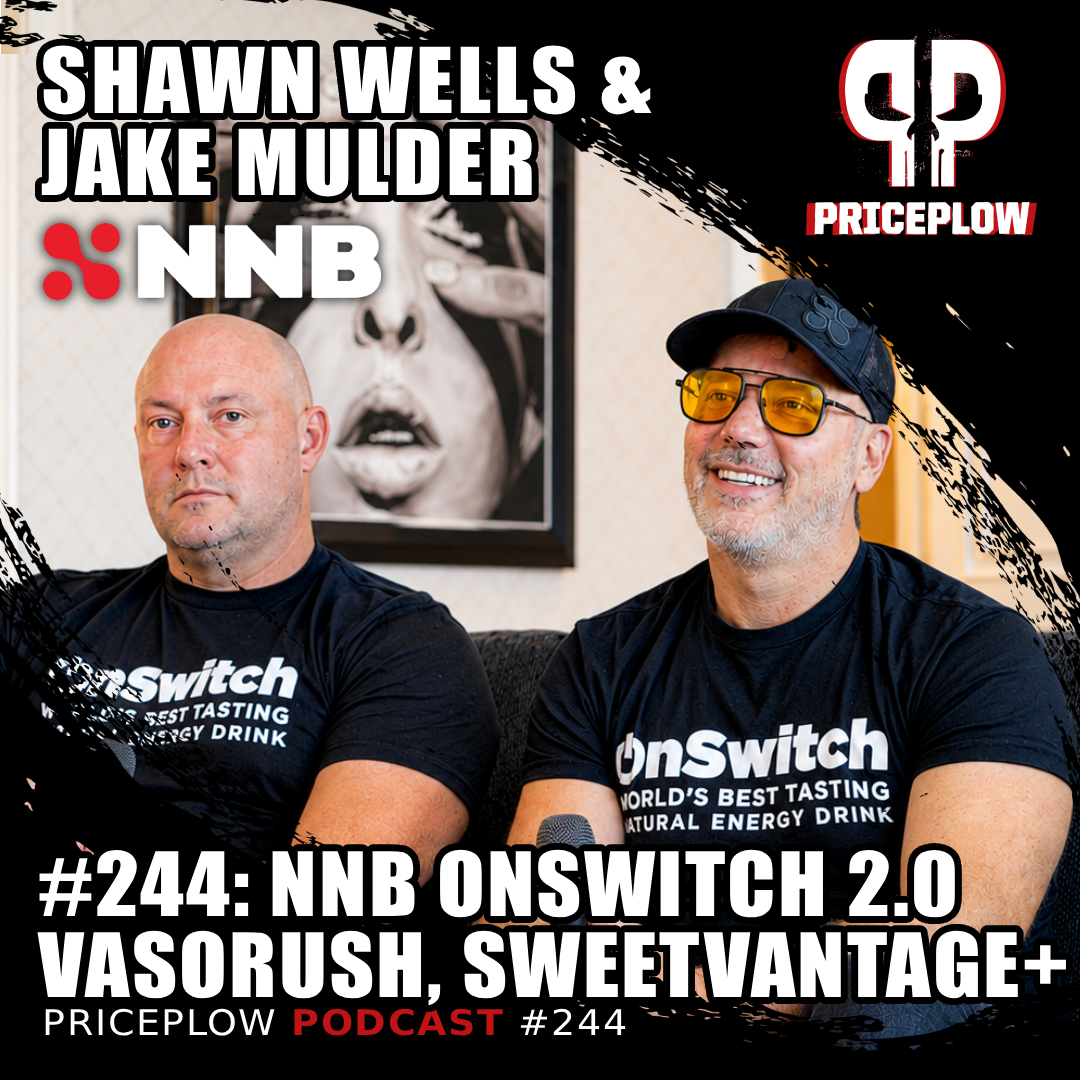
NNB Nutrition Chief Science Officer Shawn Wells and CEO Jake Mulder break down OnSwitch 2.0, VasoRush, SweetVantage+, and new supplement formats on Episode #244 of the PricePlow Podcast.
Ben asks KJ for the most expensive consumable he's seen sell well. KJ's answer is a 42g protein shake at a gas station, which he's pretty sure runs about $6.99. Ben usually pays in the mid-$2 range for Jocko Fuel shakes when he gets a good deal at Wawa, and he notes that brands need room for promo pricing, which is a whole thing on its own.
Dustin answers with a lesson from the specialty vitamin space. People new to the industry knocked Thorne over its big acquisition, because they never see the brand anywhere. Dustin points them to the practitioner channel, Thorne's D2C work, its branding, and its NSF Certified for Sport status, which put it on the mind of every strength and conditioning coach. "There's a whole other world out there with a whole other customer out there that is buying it", Dustin says. That's the route he sees for high-priced drinks, too: specialty channels with experts talking about them, not promo teams handing out cans at concerts.
-
11:00 - Mike: The Practitioner Channel Is Generational
Mike adds a generational twist. A massive older generation won't take a supplement unless their doctor recommends it, and they're much less likely to buy one at a gas station, Walmart, or grocery store. In 20 years, that model may fade. If Mike ran Thorne, he'd get into grocery now and push hard on YouTube, TikTok Shop, and whatever the next TikTok Shop turns out to be.
Ben loves the point about living in a bubble, because he sees it constantly. Comment sections fill up with people saying they'd buy a product, but would they pay for shipping, or drive to the specialty store that carries it? Plenty of people love picking up GHOST at 7-Eleven, then complain the moment they have to hunt down the newest limited edition.
-
13:00 - Why Doesn't GHOST Make a Caffeine-Free Energy Drink?
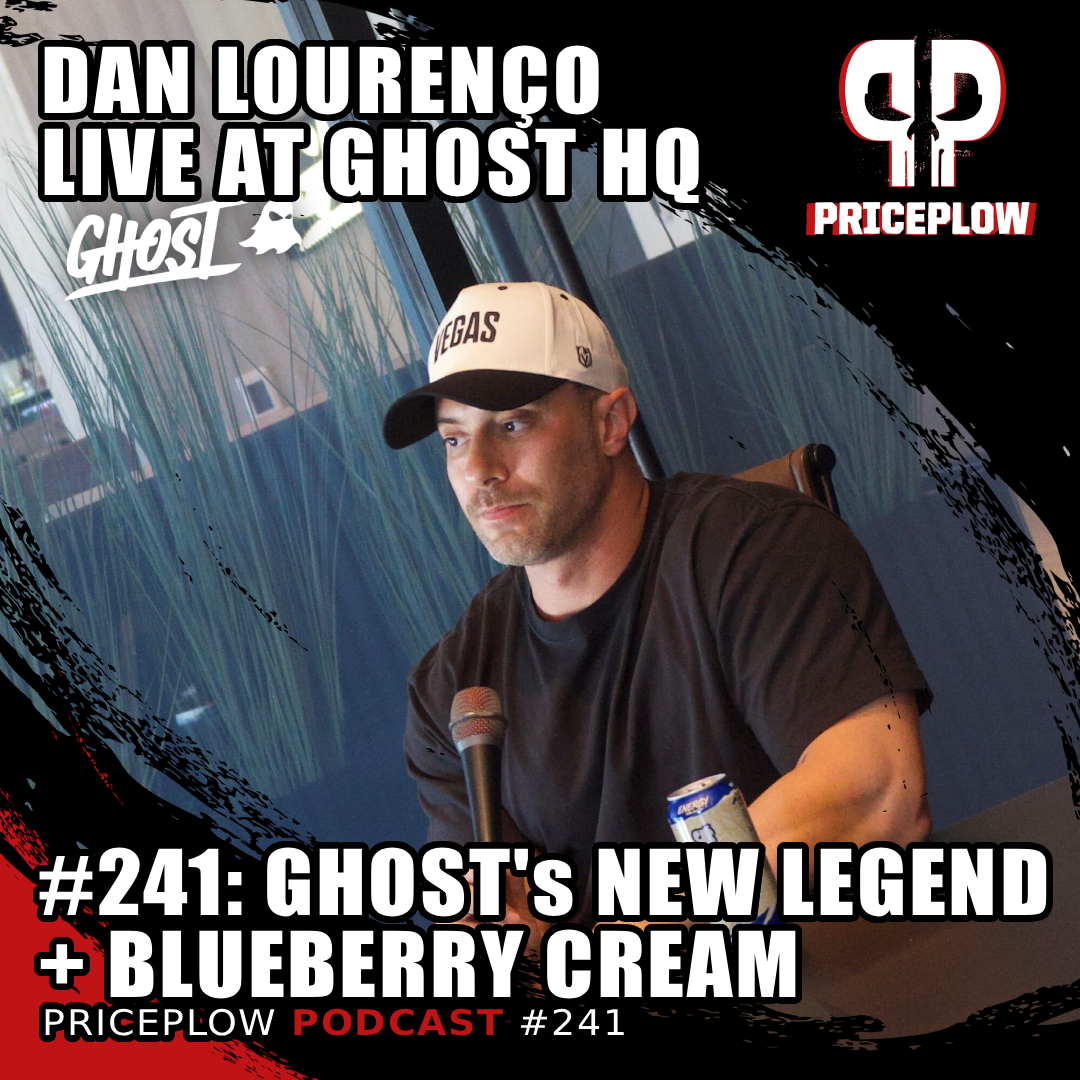
GHOST co-founder and CEO Dan Lourenço hosts what he calls the first official Blueberry Cream flavor review at GHOST HQ, then previews the three-product Legend lineup, protein bar improvements, and the Yoo-hoo launch story on Episode #241 of the PricePlow Podcast.
KJ brings up one of the industry's favorite questions: why doesn't GHOST have a caffeine-free energy drink? Ben pushed GHOST's Dan Lourenço on it so hard the day before that he thought they'd get kicked out of Dan's office (catch Dan's latest on Episode #241). Mike's take is that you can't pull an energy drink out of its slot in the fridge, so a caffeine-free can has to beat a soda instead. He doesn't want a soda, though. He wants that GHOST Energy Blueberry Cream flavor in a can he could drink at 7PM, and with only one slot it won't come in many flavors, but he thinks it'll happen. "I do see an up groundswell of anti-caffeine sentiment", Mike says.
Ben brings the mainstream view. Sit outside a gas station and you'll see construction workers, blue-collar workers, and truck drivers who just want energy, and they aren't thinking about branded ingredients. Still, he believes there are a ton of micro-occasions through the day when people want something new and tasty. That drink doesn't always have to be called an energy drink, and plenty of premium consumers who skip energy drinks could use the same ingredients.
-
15:00 - Prebiotic Sodas and the Over-40 Crowd
Mike says prebiotic sodas are winning the caffeine-free space right now, though most of them use a generic stevia he finds kind of gross. Ben loves them anyway. Paraxanthine lets him spread more energy across his day, and a Bloom Pop is something he can simply enjoy without worrying about stimulants.
Dustin thinks brands should look into this more. At beverage conferences, he hears that sugary sodas are falling and that merchandisers are moving functional sodas in with the regular sodas. Functional sodas are only around 20% of the category by his count, but they're saving it from a year-over-year decline. Then Dustin connects that to what he saw at NNB's booth at the 2026 Olympia. Fitness fans under 40 grabbed the energy drink and started sipping before hearing what was in it. Many over 40 asked whether it had caffeine, because they're trying to quit.
-
17:30 - Who Builds the Caffeine "Halfway House"?
Plenty of people would quit caffeine if they could, Dustin says, and he's even talked with KJ about KJ's own habit. There are "caffeine users who want to be caffeine-free but don't see the pathway to do so", so he wants to go a step further than prebiotic sodas:
"Who's creating the substitute product? For the withdrawal, for the needs and benefits that you need, that can benefit somebody trying to move away from caffeine, right? Who's creating that halfway house?"
-- Dustin Elliott, Chief Brand Officer, NNB Nutrition
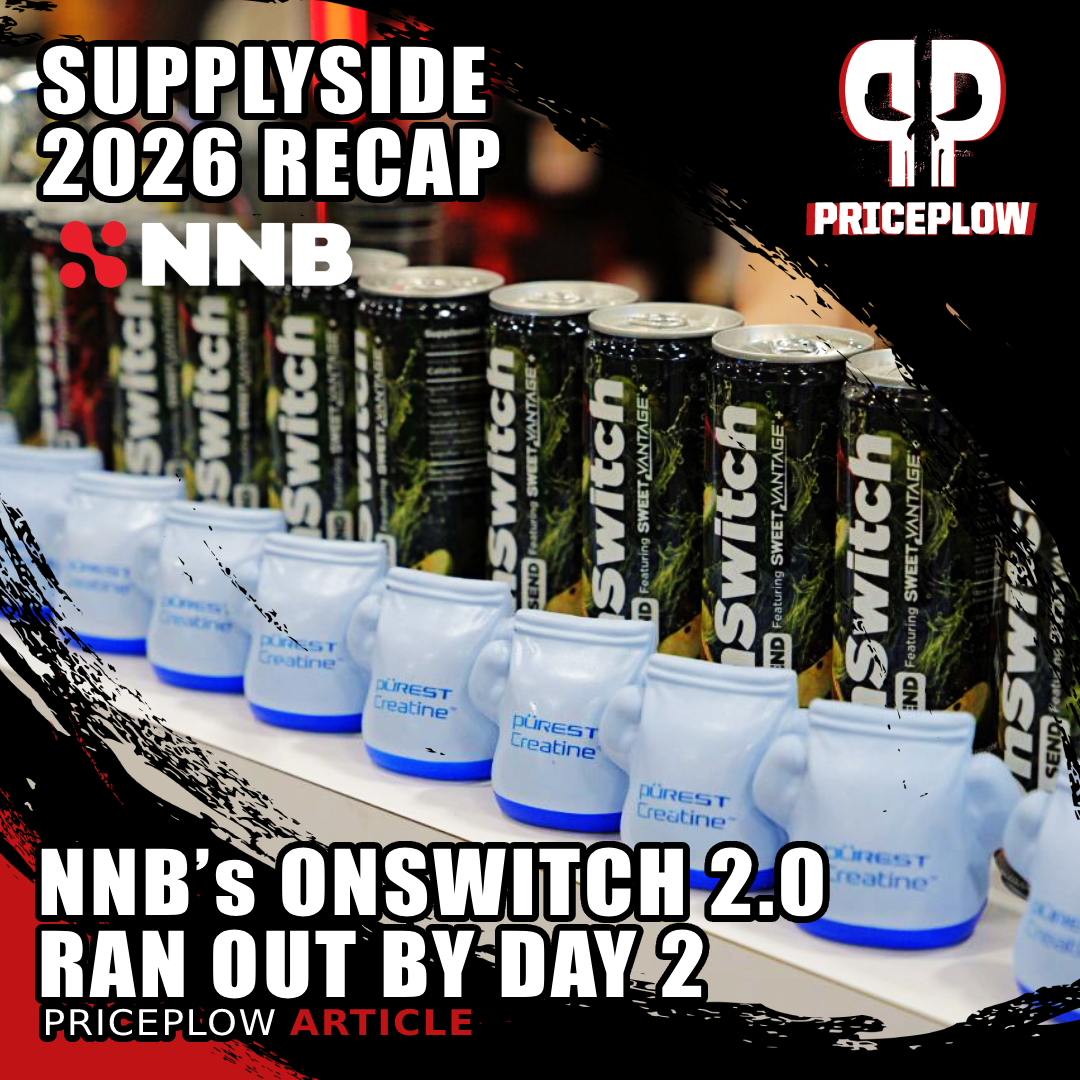
Tasters kept saying the same thing about OnSwitch 2.0. It's the closest a natural sweetener system has come to sucralose. NNB Nutrition and Sensapure Flavors ran out of both flavors by day 2 at SupplySide Global 2026.
Years ago, Rhodiola was a go-to for that job, and Dustin sees adaptogens like salidroside filling the gap. Mike notes that caffeine has a vasoconstrictive effect in the brain, so he'd want to see what a blood flow ingredient like VasoRush adds to the mix. Dustin's answer centers on dopamine, the response caffeine users miss when they quit, and that's where NNB's SalidroPure® fits. He also shares news fresh off the presses: NNB just finished a new clinical study on GeniusPure® for acute use, and he says it showed benefits for mood and motivation, two huge areas that caffeine traditionally provides. We don't have the data yet, but we're excited to see what's coming. Mike adds the N-acetyl L-tyrosine that went into OnSwitch 2.0. It's the same thinking behind NNB's Four Need States framework for energy, and we covered the new receptor research in SalidroPure and Dopamine.
Mike is living this debate. He was more than 30 days caffeine-free until the day before, he's sticking with paraxanthine (and OnSwitch cans) for the rest of the trip, and then he's going back to caffeine-free. He likes life better without it, and maybe that's the 40-plus crowd talking: "the juice ain't worth the squeeze anymore".
-
20:30 - KJ on Drop Culture and the Daily Fridge Hunt
KJ admits he's addicted to caffeine, but he thinks he's just as hooked on the experience of picking out the day's drink. Where are the drops happening, and which store has them? Ben calls it drop culture: a low-stakes, $2 or $3 hit of dopamine from a flavor you haven't had in a while. He's recently turned to seltzers and diet sodas to stave off caffeine, like Aldi's 50-cent kiwi strawberry and orange mango sodas, and he wonders when our industry will step into the soda aisle. "I am definitely also addicted to just having a cool flavor in my hand", Ben says.
-
22:30 - Cans Are Flags
Everyone talks about dopamine. Almost nobody has a mechanism. A 2026 study found salidroside, the compound behind NNB Nutrition's SalidroPure, binds the dopamineD2 receptor directly and switches on signaling inside neurons.
Dustin sees the same pattern with coffee. Brands launch coffee-flavored proteins and wonder why they flop when coffee is one of the largest industries in the world. The answer is the experience: ordering it your way, with your sweetener and your milk, and that warm cup first thing in the morning. Ben adds the culture. Coffee has plenty of benefits, he notes, but a coffee protein doesn't come with the Starbucks logo on the cup. He's been saying for years that "these cans are flags that people fly". See someone holding a GHOST or a Ryse, and you know something about who they are. So everyone has questions about why KJ, sick of Alani Nu after three of them, reached past them for a Rockstar from the Luxor's thin selection.
-
24:00 - Hunter-Gatherers at the Convenience Store
Mike comes up with a wild (and rather humorous) theory about the fridge hunt: maybe it's a stand-in for hunting and gathering. "We miss picking our berries and going hunting", he says, so before we head to our keyboards, we pick out which energy drink we're going to get. Maybe it isn't all caffeine addiction. Humans like little rituals, and the cylindrical can became one of them. Dustin says they're building the case for a caffeine-free product right there, because whoever recreates that experience for people who want off caffeine has found the missing piece.
-
25:15 - "It Exists. It's Called Diet Coke."
Ben thinks the caffeine-free argument often comes down to semantics. When people say they want a caffeine-free energy drink, his go-to joke (which KJ finishes with him) is that it exists, and it's called Diet Coke. Want a cool flavor? Ben says the diet version of Dr Pepper's Strawberries & Cream was one of the most sought-after flavors on the market and sold out everywhere, and Dustin is excited that caffeine-free Coke Zero exists now. So why isn't our industry, with flavor houses doing phenomenal work, leaning into the flavor experience? Mike thinks GHOST's parent company, Keurig Dr Pepper (KDP), could step in, but he doesn't want to carry a soda brand around: "the flag I fly is not Coca-Cola".
Most energy drinks just mask fatigue with caffeine. NNB Nutrition's "Need States for Energy" framework addresses four critical systems: cellular energy, cognition, stress resilience, and oxidative protection.
KJ has two points. First, a gas station run feels "a little bit like gambling", and spotting a rare flavor gives him a hit that keeps him stopping at new places just to see what they carry. Second, the diet soda shelf is one brand after another, while the GHOST section is "flavor, flavor, flavor, flavor". Finding a can like Tropical Mango GHOST makes him want to go right back for more. To KJ, that branding is why people ask for a caffeine-free energy drink instead of settling for diet soda. Ben agrees that if you can harness the experience our industry created, you can sell a lot without caffeine, and Prime showed people were looking for exactly that.
-
29:00 - Dustin's Oreo Playbook for Shelf Space
Dustin brings in a lesson from the grocery store. Why did Coca-Cola keep Diet Coke after launching Coke Zero, which he calls the superior formula? Some fans would hate the change, but the bigger reason is shelf space. A merchant will trust a new flavor of Coke before trusting a new brand. Oreo plays the same game with limited editions and store exclusives. People say half the flavors are gross, Dustin says, but they keep buying them, and merchants keep giving Oreo more shelf space.
In his words, "supplements have become like clothing nowadays", with limited editions and drop culture of their own. If GHOST launched a caffeine-free GHOST with functional ingredients tomorrow, Dustin believes specialty merchants would feel forced to carry it, and GHOST would take up half the cooler. Caffeine might be its rate-limiting factor.
-
31:45 - Would Mainstream Buyers Accept a Caffeine-Free Can?
Ben agrees, but he pushes back. The vast majority of consumers see a brightly colored can and think energy drink, caffeine or not. Dustin's rebuttal goes back to the Olympia booth, where people reached for the can before they knew what was in it. There are a lot of fitness people like KJ who want to get off caffeine but still want the bright cans, the flavors, and the hunt. They just want to leave caffeine's downsides behind.
NNB Nutrition CEO Jake Mulder and Chief Brand Officer Dustin Elliott dive into dipeptide science, global manufacturing, and natural sweetener breakthroughs like SweetVantage+ on Episode #229 of the PricePlow Podcast.
Ben says that makes the case for specialty, where someone has to take the first stab. Mike adds that GHOST would need to convince KDP to give it another slot, and if a stim-free can flopped, that's a lot of lost face inside a big corporation. Dustin clarifies that he means up-and-coming brands, not GHOST. Ben puts it plainly: "if you can harness this culture, you can do it without caffeine".
-
34:00 - Enter the Nootropic Soda
Mike predicts this will be one of those episodes we look back on as either "so dead on right" or a total flop. KJ now doubts GHOST can pull it off, because anyone who sees the logo will assume there's caffeine inside. Ben thinks prebiotic soda is the perfect category to borrow, since you're no longer selling a stim-free energy drink. Take the labels off, he says, and sodas and energy drinks are both carbonated water with different things in them. Mike points out that prebiotic sodas chase gut health while our crowd wants focus and energy, which leaves a gap across men, women, and age groups. Maybe we need a new mini category: the nootropic soda.
Dustin says people are already trying at beverage conferences, but with plain one-tone cans, a little cursive, and too much preaching about mushrooms. "They're talking too much about the ingredients, not enough about the experience", he says. They don't have the branding or the capital for multiple flavors, and he's never tasted a functional soda at those shows that tastes like GHOST.
-
36:15 - THC Drinks Are Leaving. What Fills the Gap?
Functional drinks latched onto hemp, too, and Ben expects hemp THC drinks to go away in December. He gives the quick history. The 2018 Farm Bill allowed hemp at 0.3% THC by weight, the industry promised it wouldn't sell anything intoxicating, and intoxicating drinks hit the shelves the second they were legal. With states pushing back, Ben says, the Farm Bill is being amended. He thinks that leaves an experience vacuum, since people want little moments with something that makes them feel good.
Lucas Kaelin and Konlan James discuss the realities of supplement content creation, from navigating the pouch regulatory gray area to battling imposter syndrome, live from NNB Nutrition's booth at SupplySide Global 2025 on Episode #195 of the PricePlow Podcast.
Dustin feels that pull himself. He doesn't use caffeine these days, but whenever he hears the crack of a can and sees the colors, he wants a sip for the flavor alone. If someone made a can with that experience, plus ingredients like alpha-GPC and no caffeine, Dustin says it would help people like him.
-
38:15 - Could OnSwitch Be the Next FitAid?
KJ brings it full circle: why can't OnSwitch take the FitAid angle? He'd pay $6 for a great-tasting morning drink with most of what he needs, and Dustin says that's the lifestyle, wellness, and longevity angle he had in mind. Ben points to Cadence doing great with electrolyte drinks, and he says there are moments in the day when you just want to crack a can and enjoy something sweet. The twist-top sodas he's been drinking aren't the same, and everyone agrees.
Mike says the high carbonation matters, and so does the aroma. When he cracked a GHOST Blueberry Cream for his first caffeine in 30 days, the blueberry jumped right out of the can. As a master flavorist will tell you, "it's not the first sip, it's the first smell that really starts it", and his favorite prebiotic soda, a Bloom Pop root beer, doesn't deliver that smell. Mike has convinced himself that a caffeine-free can could, should, and will be done. His checklist: the scent, high carbonation, and the right sweetener, whether that's sucralose or maybe SweetVantage+. Just not old-school stevia.
-
40:15 - The Nicotine-Free Pouch Problem
Ben offers a warning from another category. Plenty of companies have tried nicotine-free vapes and pouches, and they never trend the way the nicotine versions do. He can tell people that nicotine-free pouches are beneficial, just like drinks without caffeine, and the comments still say "yeah, but I want the real thing". Mike asks whether Ultra is killing it anyway. To an extent, KJ says, but that's branding. Ben adds that Ultra and FitAid are both ultra-niche, and FitAid's whole world revolves around CrossFit gyms. There are levels to killing it, and a niche win doesn't speak for the whole category. Just like a can, Ben says, the pouch someone uses tells you a lot about them, right down to whose coupon code they used.
-
42:15 - Wanted: A Caffeine-Free Influencer
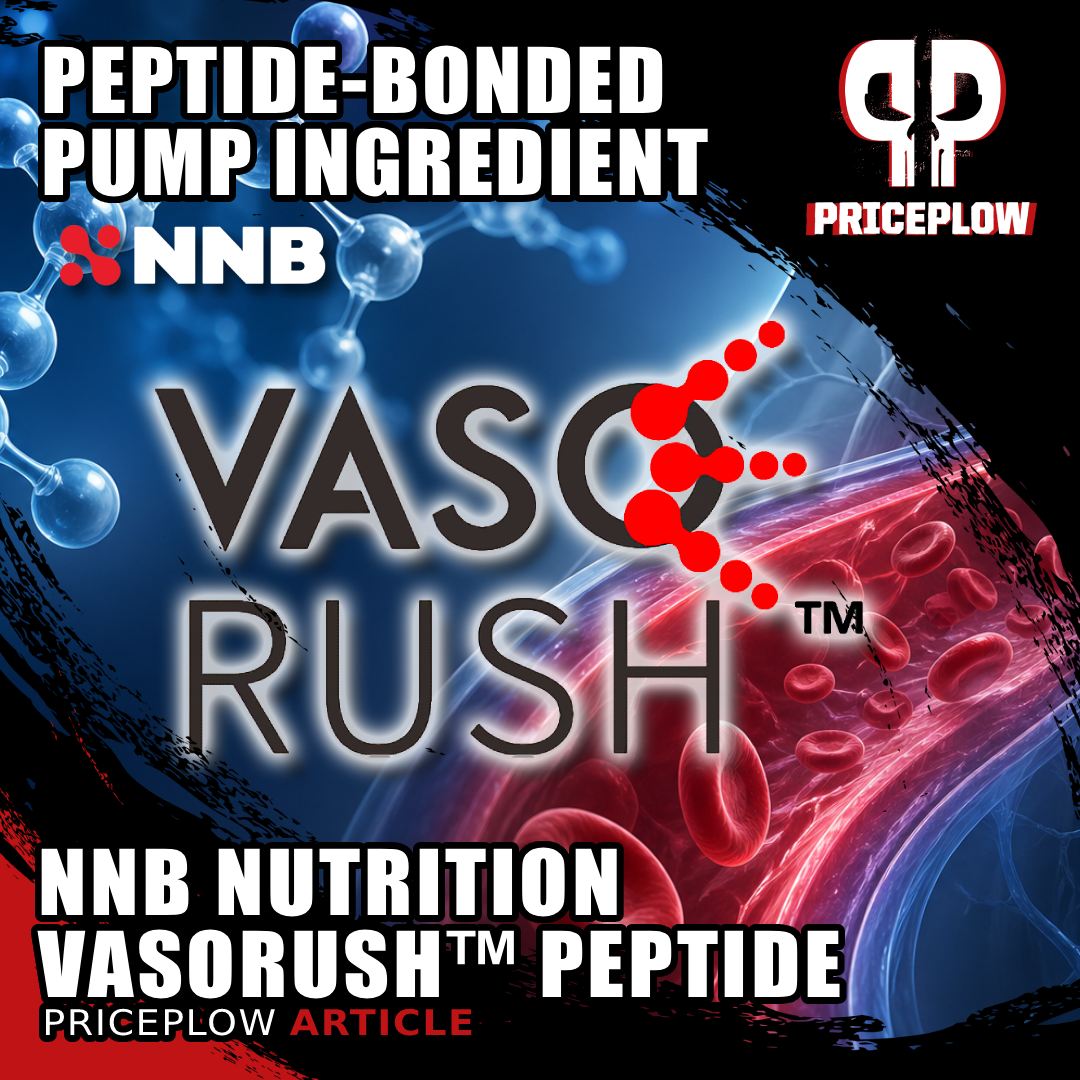
NNB Nutrition's VasoRush™ is a peptide-bonded di-citrulline and di-arginine ingredient built for pumps. It absorbs faster via PEPT-1 and drives more cGMP per unit of nitric oxide, meaning more vasodilation, not just more NO.
Dustin sees another path for a caffeine-free concept: launch it inside a community. Launch with vegans or CrossFitters, and that community gets so loud that it spreads the message without you spending the money. Ben made a similar point at IFT about non-alcoholic alternative beverages. Experiential drinks exist, but nobody has done it the way Chris Bumstead did with Bum Energy or GHOST did with GHOST Energy, and there's no generational run yet.
Mike's answer: "There's no caffeine-free influencers. We have to become it." Ben counters that Jake Paul's Prime Hydration was caffeine-free influencing, and Mike pictures a rising influencer teaming up with Bevlab or another incubator to own that angle with their audience. Dustin would go wider still. Find several influencers within one community, each on their own journey away from caffeine, and let them all bring it to their audiences. "So I think you need to create a culture", he says.
-
44:30 - Why Did Bang Win? Dustin on the Death of the Pre-Workout Drink
Everyone has a theory on Bang. Some credit the 300mg of caffeine, and others point to the flavor, the marketing spend, or a great distribution team. "No product just works on merit alone", Ben says. Dustin was in the specialty channel when Bang got big, and he thinks everyone's right, because all of it happened at once:
"People forget the death of the pre-workout drink when the energy drink came, and nobody talks about that with Bang."
-- Dustin Elliott
Pricey pre-workout drinks were filling specialty shelves in all kinds of bottles, and many didn't taste great. Bang blurred the line between energy drink and pre-workout drink. It tasted better, carried more caffeine, and promoted ingredients beyond caffeine. People drank it before training and all day long, and month after month, Dustin watched specialty stores swap out another pre-workout drink for Bang until it took over the fridge. Ben adds that VPX's Redline was huge in pre-workouts, and he remembers the old heads at The Vitamin Shoppe loving Turbo Tea. It all came down to a bigger machine, Ben says, which is why everyone keeps pitching these ideas to GHOST.
-
48:30 - Mike Pitches "Caffeine Free February"
NNB Nutrition revolutionizes natural sweeteners with SweetVantage. A 3-year, $2.5M project delivers clean-tasting stevia that covers the entire palate. Perfect for beverages and powders.
If we started a caffeine-free movement, Mike wonders, would we make enemies, since everyone's making money off caffeine? Ben thinks everyone would love it, because it adds to product lines and drives more consumption. Dustin isn't so sure. When artificial sweeteners came out, the sugar industry vilified them, and he expects critics to nitpick any ingredient that stands in for caffeine. Ben recalls all the misinformation about potassium in Prime Hydration being dangerous for kids.
Mike's pitch is Caffeine Free February. People already do things like Carnivore January, and it's a short month. Dustin says it should come with recommendations and an alternative lifestyle so people aren't quitting cold turkey. KJ wonders why nobody makes an energy drink with 35mg or 50mg of caffeine, close to what a Coke Zero has. Ben laughs that commenters remind him diet soda has caffeine, too, but he can go to sleep on that.
-
50:15 - Where Would a New Soda Even Start?
Distribution is the catch, Dustin says. In supplements, the path is familiar: start D2C, grow into specialty retail, get bought by a venture capital group, then go mass market. A new soda doesn't have an obvious first step. Would a specialty retailer even pick it up without functional ingredients? Ben agrees that beverages need the machine. Plenty of drinks make the rounds at beverage industry events, but Jake Paul could walk into NACS and sign up everyone. Ben has also watched a lot of supplement companies launch energy drinks and fall flat on their faces after ordering a 52-foot trailer full of cans. Dustin points to Update, the caffeine-free energy drink. He loves the brand to death, but it had a tough time with natural flavor at first. Then it brought on Kim Kardashian, improved the flavor, and landed mass distribution, and the rest is history.
-
52:00 - Protein Prices Are Soaring, and Nobody's Quitting
Ben switches topics: protein prices are going nuts, so how will consumers react? "Nothing", KJ says. Dustin agrees that protein and creatine have had "some of the most amazing inelastic demand that I've seen". Creatine sales rose faster than he'd ever seen after the pandemic sent people back to gyms, even as prices climbed month after month. Protein is doing the same with the GLP-1 trend and the proteinification of everything, so he expects people to spend a bigger share of their budget on protein and less on something else. KJ thinks the brands that don't put enough effort into flavor and the experience will be the ones that disappear.
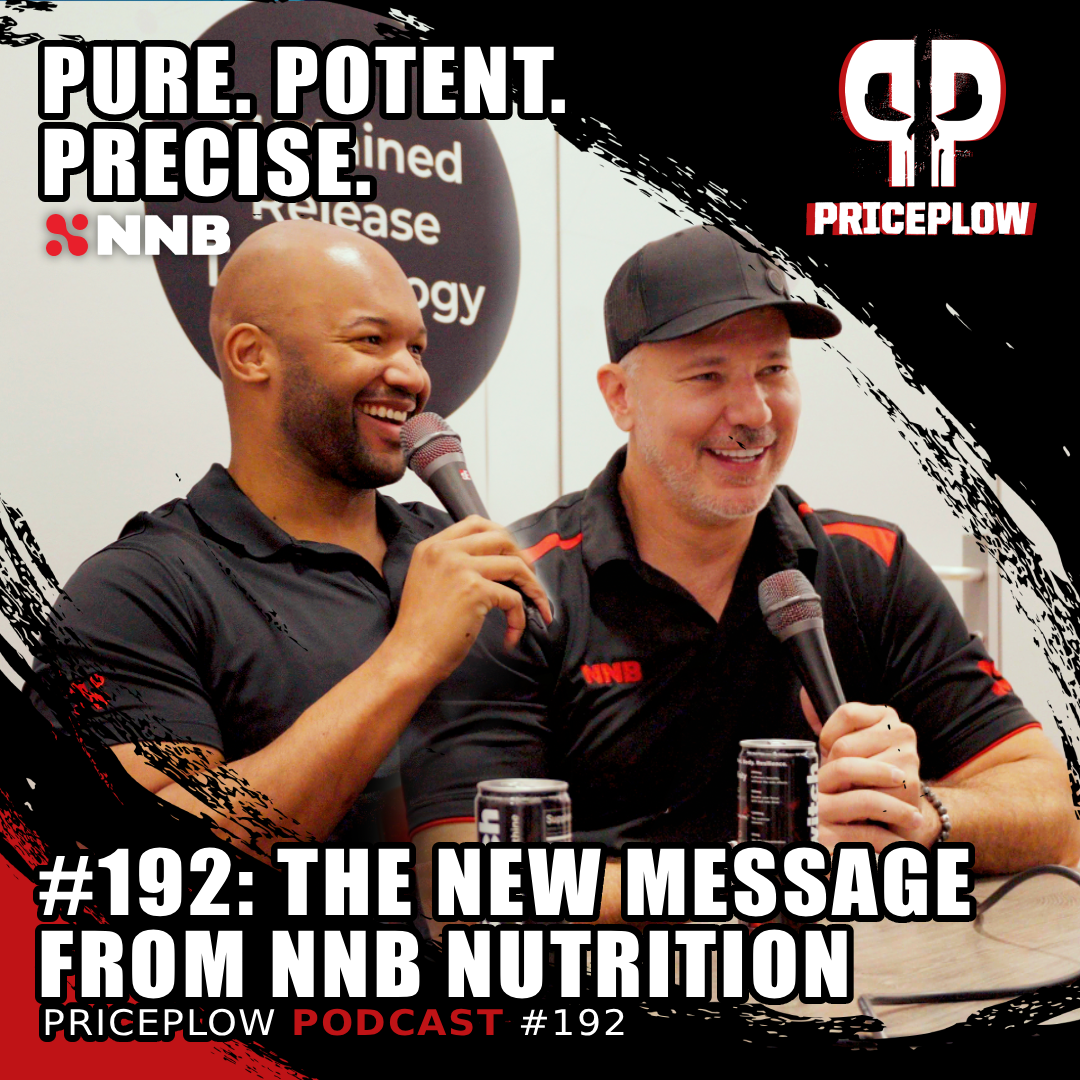
Shawn Wells and Dustin Elliott reveal NNB Nutrition's Pure, Potent, Precise revolution at SupplySide Global 2025, discussing precision fermentation, Pürest Creatine, OnSwitch beverage innovation, and the future of pharmaceutical-grade supplement ingredients on Episode #192 of the PricePlow Podcast
Ben points out that protein was never a high-margin product, and he thinks some companies are better off skipping it. He doesn't see whey prices coming back down, and he thinks the lesson is that we didn't know how good we had it back when there was more room for promotions. Mike compares it to used cars: sometimes all you can do is look back on the good old days.
-
55:00 - Still Buying Protein: Dustin's Car Note Test
Dustin adds a car loan test. In a bad economy, the car note is usually the last bill people stop paying, and he believes more car loans are going unpaid now than in decades. People are hitting rock bottom on what they can afford, and they're still buying protein. Ben calls it a paradox. We're complaining about protein prices while demand is the largest it's ever been, which he sees as a net positive. Mike puts it simply: our space always wanted everyone eating more protein, and now "you reap what you sow".
-
56:30 - "Creatinification Is Next"
KJ asks whether people will eventually stop chasing as much protein as possible. "I think creatinification is next", Ben says, predicting creatine will soon be in everything. On protein, he keeps asking the same question. GLP-1 use is up, cheese consumption is down, and people are eating more protein, but are the Starbucks protein drinks and protein ranch dressings getting repurchased? He thinks some products will stick, like high-protein pasta and protein confectionery, while others won't. Mike agrees that some of it has to wash out of the market, and Ben's protein shampoo joke almost gets Dustin.
-
57:45 - Does a "High Protein" Label Turn You Off?
KJ asks whether seeing protein on a label turns anyone off. Ben is curious by nature and likes trying things, but Myprotein's high-protein cheese turned him off. He doesn't blame Pop-Tarts, though: 15g of protein from something he already enjoys is 15 more grams for his day. Dustin is less forgiving. Protein on a label used to signal low sugar or fewer calories, and now he points to Honey Nut Cheerios Protein at 8g to 10g per serving, against 4g in the original. "In my sports nutrition bubble, high protein is 20+ grams", he says, while FDA rules only require 20% of the Daily Value per reference serving for a "high" claim, which Dustin pegs at about 10g.[1] He nearly bought a high-protein bread or cereal before noticing regular bread already had 4g per slice.
-
59:45 - Is Anyone Repurchasing?
Ben compares today's protein claims to the early 2000s, when brands spoke down to consumers with clinical studies. Telling people 8g of protein is enough feels like the same thing. KJ points out that it works, but Ben's question is whether it keeps working. The first purchase is easy, and SPINS keeps telling him it'll be another six months before we know about repurchases. KJ thinks it comes down to education and whether people turn the package around. Ben says they're doing that more than ever, though Dustin notes shoppers rarely remember how much protein the original product had. When KJ suggests a chicken breast beats protein cereal, Dustin laughs: "I don't think Americans are switching from cereal to chicken breasts, but it's a nice thought." Ben's big-picture view is that interest in protein, healthy living, and smarter nutrition decisions keeps climbing, and that's a net benefit for everyone.
Mike wraps it up there, thanking Dustin for hosting and giving one last vote for the apple. Shout-outs go to NNB Nutrition and SIP Manufacturing, who all rocked it.

Connect with Dustin Elliott, Konlan James, and NNB Nutrition
- LinkedIn: Dustin Elliott
- LinkedIn: Konlan James
- Instagram: @konlan.james
- Instagram: @nnbnutrition
- NNB Nutrition on LinkedIn
- NNBNutrition.com
- NNB Nutrition on PricePlow - Sign up for news alerts
- Episode #244: No Sucralose Required, Part 1 with Shawn Wells and Jake Mulder
- NNB Nutrition's SupplySide Global 2026 Recap: OnSwitch 2.0 Ran Out by Day 2
- Beyond Caffeine: NNB Nutrition's Four Need States Framework
- SalidroPure and Dopamine: New Research Finds a Direct Receptor Connection
- Episode #229: Solving the Protein Problem with Jake Mulder & Dustin Elliott
- Episode #195: Konlan James & Lucas Kaelin on Pouches and Content Creation
- Episode #192: NNB Nutrition's Pure, Potent, Precise Revolution
Thanks to Dustin and KJ for a conversation that went from gas station fridges to Oreo shelves and still found its way back to the can. We walked in talking trends and walked out half-convinced that a caffeine-free energy drink with big flavor, big aroma, and high carbonation can win, as long as someone builds the culture around it. Thanks as well to NNB Nutrition for hosting both of our SupplySide Global 2026 sessions. If you missed Part 1, go back to Episode #244 with Shawn and Jake. And if Caffeine Free February takes off, you heard it here first.
Perfect Shaker helps keep this show on the road. See their full lineup of shaker cups at PricePlow.com/perfect-shaker, or hear how the company got started on Episode #209 with Darren Thompson.
Subscribe to the PricePlow Podcast on any platform, sign up for NNB Nutrition news on PricePlow, and leave us a great review on iTunes and Spotify!
Subscribe to the PricePlow Podcast on Your Favorite Service (RSS)
Apple Podcasts
Spotify
YouTube

Comments and Discussion (Powered by the PricePlow Forum)