Three theories, one name. Shawn Wells' "GLP-1 Drag" ties together muscle loss, mitochondrial fatigue, and dopamine flattening on weight loss drugs.
Most of the supplement industry's GLP-1 content covers two moments: the drug itself, and what happens after someone stops taking it. NNB Nutrition's Post GLP-1 Window framework belongs to that second part. This article covers the time in between, the actual stretch of time spent on the medication, and three linked theories NNB's science team has been developing about what's happening there beneath the number on the scale.
Introducing "GLP-1 Drag"... and How to Work Around It
NNB Chief Science Officer Shawn Wells has taken to calling this stretch "GLP-1 Drag". It covers three ideas:
- A proposed mechanism behind the outsized muscle loss GLP-1 users experience,
- A metabolic cost Wells calls "mitochondrial drag", and
- A dopamine trade-off that may explain why some users feel flat even as their cravings quiet down.
Note that none of this is settled science yet. Wells frames it as a working theory, and that's the spirit this article takes too. But rest assured, with Shawn at the helm of the company's science, NNB Nutrition is sure to stay on top of all of the trends, coming up with solutions to work around some of their pitfalls. Let's get into it, but first, sign up for our NNB Nutrition news alerts:
Subscribe to PricePlow's Newsletter and Alerts on These Topics

The "Anti-Dileucine" Effect
New 14-week preclinical data on GlucoVantage® dihydroberberine shows 165% GLP-1 increase at week 14 and 33.3% body weight reduction by week 13. Benefits intensified over time rather than plateauing. Natural metabolic support for the post-GLP-1 window.
GLP-1 medications have gone mainstream fast. 11% of U.S. adults are currently taking one for weight loss, up from just 3% two years ago, and 15% have tried one at some point.[1] GLP-1 receptor agonists work in part by slowing digestion. Delayed gastric emptying isn't a side effect of drugs like semaglutide, tirzepatide, and retatrutide, it's one of the core mechanisms behind how they work: food sits in the stomach longer, satiety lasts longer, and post-meal blood sugar rises more slowly. A 2024 meta-analysis pooling 36 studies found a real but modest delay, about 36 minutes on average for solid food measured by scintigraphy, with no significant change in how fast liquids clear the stomach.[2]
Wells' theory starts there. Leucine is the amino acid most responsible for triggering muscle protein synthesis (MPS) through the mTOR pathway.[3] Getting leucine into circulation fast and at a high peak matters as much as the total dose. Slow gastric emptying down, and the leucine from a meal or protein shake shows up later and lower than it otherwise would. Wells calls this the anti-dileucine effect: GLP-1 drugs push in the opposite direction from what a fast-absorbing anabolic trigger is built to do.
Nobody has run the specific study connecting delayed gastric emptying to blunted leucine kinetics to reduced MPS in GLP-1 users. What does exist is the outcome the theory would predict: a systematic review of semaglutide trials found roughly 70% of total weight lost came from lean body mass, well above what caloric restriction alone typically produces.[4] Wells reads that number as circumstantial support for a mechanism nobody has directly tested yet.
Anti-Anabolic Effects? Add Dileucine!
This is where DL185® dileucine comes in.
Sarcopenia isn't just about losing muscle. It's about losing the strength to live independently. DL185® research shows dileucine addresses what standard supplements can't.
The dipeptide absorbs through the PEPT1 transporter in the small intestine, a high-capacity route that runs independently of the amino acid transporters free leucine relies on.[5] Dipeptides absorb roughly 185% faster than the equivalent free amino acids.[6] Head-to-head, 2g of dileucine produced intramuscular leucine levels 86% higher than 2g of leucine at the 30-minute mark, and drove a 60% greater rise in muscle protein synthesis.[7] Over 8 weeks of training, dileucine users gained 25.8% more leg press strength than placebo, against 15.2% for leucine alone.[8]
Worth mentioning, however, is that dileucine still has to clear the same slowed stomach before PEPT1 can absorb it. Nobody has tested whether its kinetic edge survives the GLP-1-delayed gastric emptying intact, or whether the whole curve just shifts later without closing the gap. Wells is betting that a molecule built for speed still comes out ahead of one that wasn't, even running behind schedule. It's a reasonable bet. It's still a bet.
Is dileucine really responsible for more than we realize?
There's a bigger version of this argument NNB is still gathering data for: whether dileucine itself, not leucine, is the actual signal muscle tissue is waiting for, with leucine acting as raw material the body converts into it on demand. That's a larger claim than this article is making, though. But we're keeping our eyes on the thought.
Mitochondrial Drag
Wells' second concern sits further from the gut. Newer multi-agonist drugs like retatrutide activate the glucagon receptor alongside GLP-1, and that combination shows up in trial data as a measurable rise in resting heart rate, about 3.5 beats per minute above placebo for retatrutide specifically, per a 2026 meta-analysis spanning six GLP-1 drug classes.[9] The review's authors point to increased sympathetic nervous system activity as the likely driver, though the exact pathway is still being worked out.
Ongoing, Low-Grade Fight-or-Flight Activity
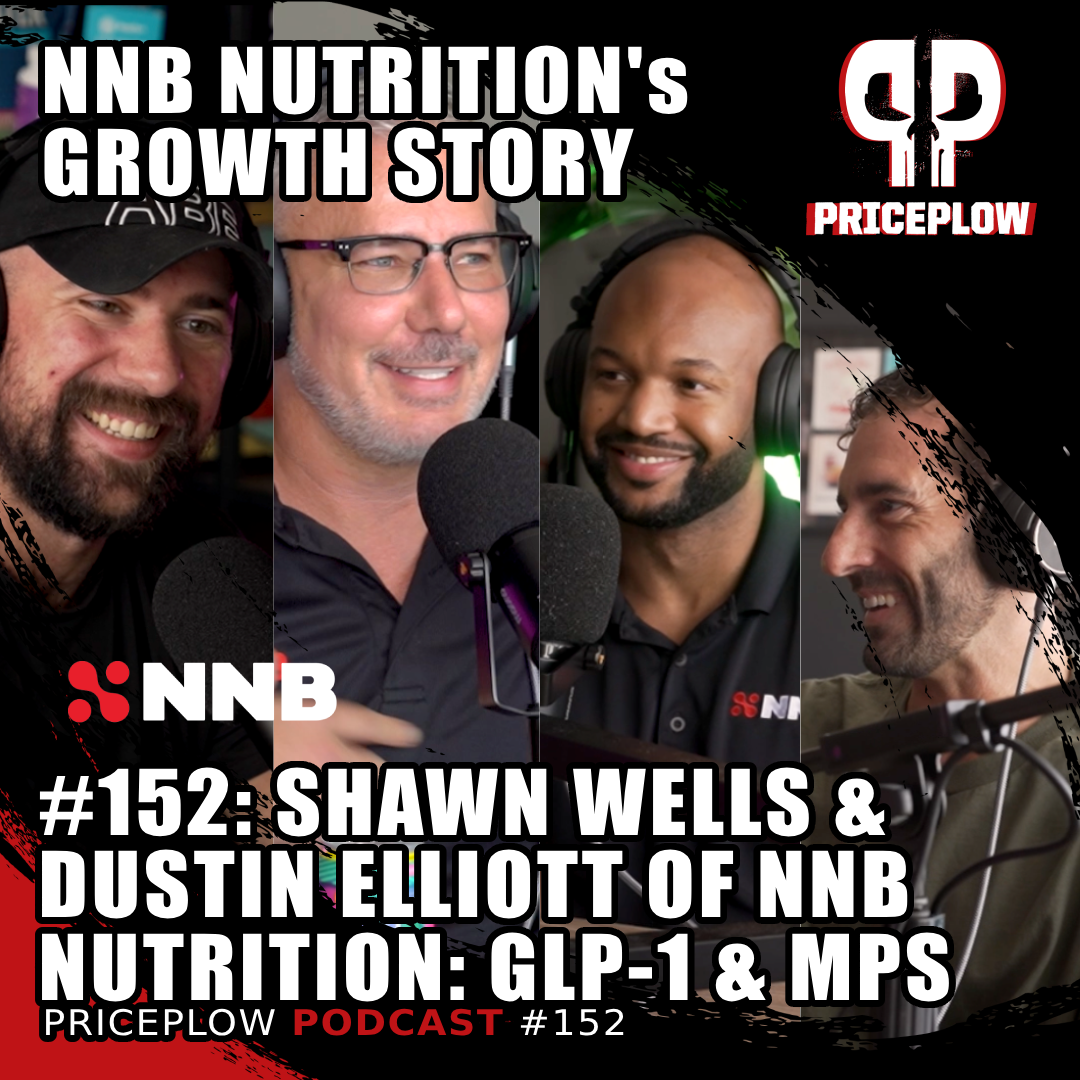
Shawn Wells and Dustin Elliott of NNB Nutrition join the PricePlow Podcast for Episode #152 to discuss innovative ingredients that capture ongoing trends like GLP-1 and MPS. We also get into Dustin's trip to China, NNB's participation in XPO NRG with MitoPrime, and Shawn's psychedelic experiences and his post-trip supplement stack.
Layer that onto a sustained caloric deficit, which is the entire point of the drug, and Wells sees a body running a low-grade fight-or-flight response while also being asked to generate ATP from less incoming fuel. He calls the cumulative toll "mitochondrial drag": a slow decline in mitochondrial output that shows up as fatigue and flat training sessions rather than any single measurable event. It's a concept, not a diagnosis, and nobody has published a study measuring it directly.
This is the same territory GlucoVantage® occupies in NNB's Post GLP-1 Window framework, an AMPK activator built to support nutrient partitioning and insulin sensitivity during and after GLP-1 use. One timing note carries over regardless of which theory holds up: AMPK activators like dihydroberberine and metformin work against the same signaling the body needs for muscle protein synthesis, so they're better taken away from training rather than paired with it.
Dopaminergic Flattening
The gut and the mitochondria aren't the only systems GLP-1 drugs touch. The same receptors that suppress appetite sit inside the mesolimbic dopamine system, the brain's reward circuitry, and a growing body of research shows GLP-1 activity there reduces cue-driven cravings, for food and, in preclinical models, for alcohol, nicotine, and other substances/behaviors as well.[10] For someone trying to break a cycle of compulsive eating or drinking, that's a true benefit, no doubt.
But the trade-off gets less attention. A 2025 review of GLP-1 agonists and reward processing notes the same circuitry driving appetite suppression also governs anticipation and motivation more broadly, and the effect isn't limited to food cues.[11] Wells calls the pattern "dopaminergic flattening", and some users on higher or longer-running doses report exactly that: food noise goes quiet, but so does a fair amount of everyday drive and libido along with it.
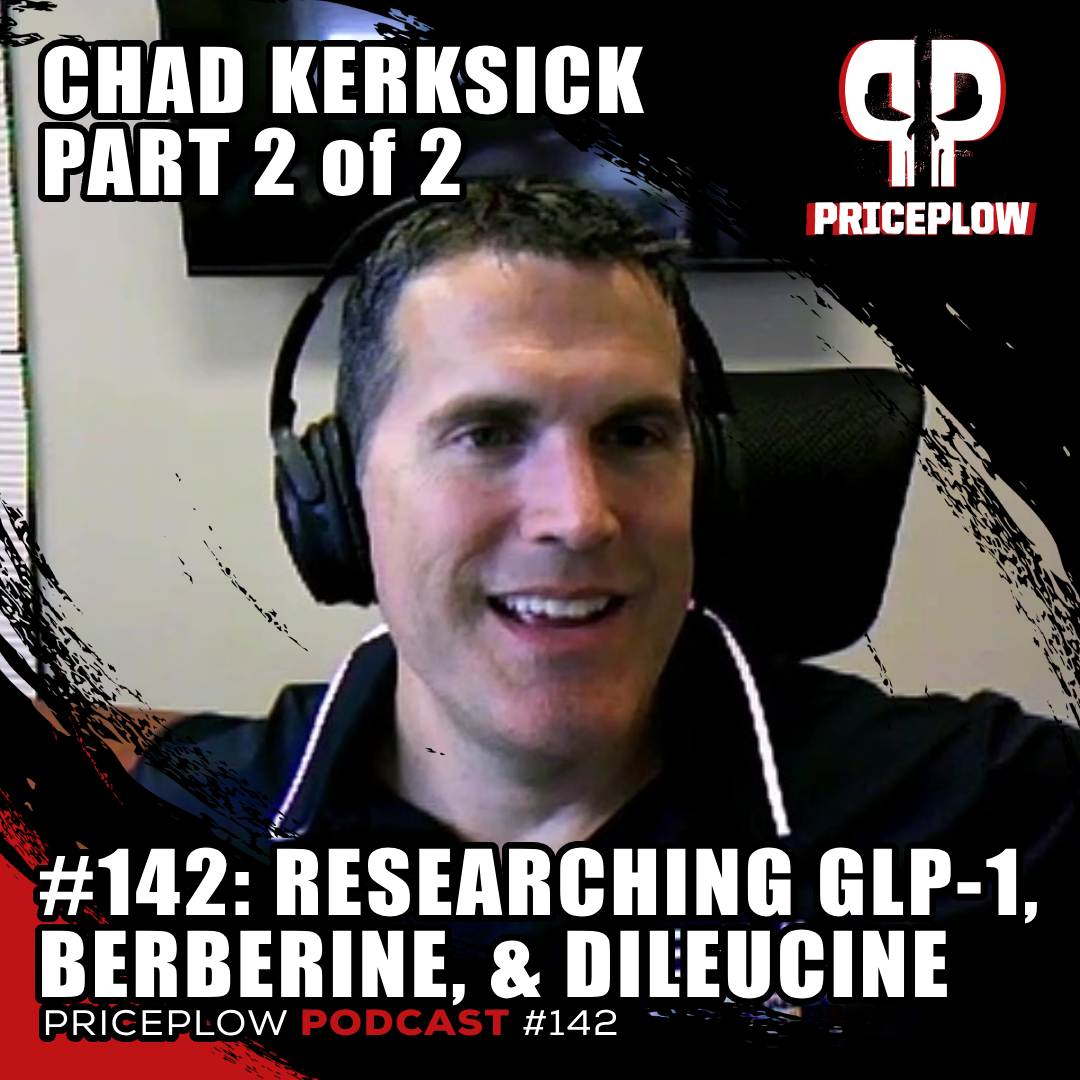
Chad Kerksick finishes his 2-part podcast series on the PricePlow Podcast in Episode #142 to discuss his research done on NNB Nutrition ingredients like DL185 dileucine and GlucoVantage dihydroberberine. We also talk study design and targeting new research areas like GLP-1.
None of this shows up on a lab panel. It's the kind of thing many people notice only in hindsight, once the joy of ordinary things has slowly dropped off without an obvious cause. Wells isn't arguing people should avoid GLP-1 medications entirely. He's arguing that dose and duration matter for reasons beyond the scale, and that flatness deserves the same attention as any other side effect.
Titrate Down, Don't Just Stop
However someone gets off a GLP-1 medication matters as much as how they used it. Ramping up a dose happens gradually, over weeks. Coming off should follow the same pattern in reverse, worked out with the prescribing physician, rather than stopping cold at a peak dose. If you stop abruptly, the body swings back hard: appetite-regulating hormones rebound and fat mass returns, landing on a smaller muscle and bone base than before, since whatever lean mass was lost during treatment doesn't come back first.[4]
Building the Stack
Set the three theories aside, and the main takeaway holds regardless of which one turns out to be right. Anyone on a GLP-1 medication, or coming off one, is managing the same two jobs: protecting muscle through a caloric deficit, and supporting the metabolic and neurological systems the drug leans on. DL185 dileucine, creatine, and HMB cover the first job, ideally dosed away from training if paired with an AMPK activator like GlucoVantage. GlucoVantage covers the second, especially in the window after a medication is discontinued, which our Post GLP-1 Window deep dive covers in full.

Shawn Wells goes deeper on all three theories, plus a look at NNB's IFT FIRST 2026 booth, in Episode #226 of the PricePlow Podcast, out now. It's a very solid follow-up to Episode #152, where Wells and Dustin Elliott first laid out NNB's GLP-1 positioning, and to Episode #142, where independent researcher Chad Kerksick dug into the dileucine and dihydroberberine data himself.
And for the full muscle protein synthesis case behind DL185, our DL185 for Sarcopenia and Anti-Aging article covers the Paulussen and Hagele trials in more depth.


Comments and Discussion (Powered by the PricePlow Forum)