The Kichwa people of Ecuador have brewed guayusa for generations. Applied Food Sciences turned it into AmaTea Max, a patented caffeine extract with four human trials behind it.
Applied Food Sciences (AFS) has built two of its flagship ingredients around the same basic pitch: natural caffeine sources that give formulators a superior alternative to synthetic caffeine anhydrous, providing a smoother option for users who report jitters at higher doses. We've already covered the first of those ingredients, PurCaf® (AFS's green coffee bean-derived caffeine source) in Why Smart Brands Turn to Natural Caffeine Sources Like PurCaf®.
AmaTea® Max is the second, built on a different plant, and it's the one with the deeper research program behind that smoother-energy pitch. Instead of coffee, AmaTea Max comes from guayusa (Ilex guayusa), an Amazonian holly tree the Kichwa people of Ecuador have brewed as tea for generations.
AmaTea Max: A Natural Caffeine from Guayusa That Feels Better
Guayusa brings caffeine along with a set of plant polyphenols that standard caffeine extracts don't have, and AFS has funded a growing research program testing what that combination does beyond a simple energy boost.
A few reasons AmaTea Max has earned a spot alongside PurCaf in real formulas:
- Four peer-reviewed human trials, plus additional work reported in an academic thesis, covering safety, mood, cognitive performance, gaming performance, and exercise training
- A patented extraction process that standardizes the leaf's caffeine and chlorogenic acid content for consistent dosing
- GRAS status, with the FDA confirming it had no questions about AFS's safety conclusion
- Already stacked directly alongside PurCaf in Kaged's pre-workout and fat-burner lines
This article digs into AmaTea Max, and why it makes sense to add some to natural caffeine blends in dietary supplements in any number of energy-based categories. Sign up for our AFS news alerts to stay on top of new research, and then we'll start with the story on guayusa.
Subscribe to PricePlow's Newsletter and Alerts on These Topics

What Is Guayusa?
Guayusa is an evergreen member of the holly family, native to the upper Amazon basin of Ecuador, Colombia, and Peru, with domesticated stands going back generations in Ecuadorian home gardens.[1] The Kichwa people of Ecuador's Napo province have chewed the leaves and brewed them as tea for generations, often as a morning stimulant.[2]
Traditionally, the leaves are dried and tied into leaf "necklaces" for storage and trade rather than processed industrially. The brewed leaf has a sweet, invigorating character similar to yerba mate, guayusa's close relative in the same Ilex genus, though international commercialization only picked up on it around 2010, decades after yerba mate and guarana had already found US shelf space.[1]
Standardized for Chlorogenic Acids
Chemically, guayusa leaf contains the methylxanthines caffeine and theobromine alongside chlorogenic acids, flavonoids, and sugars, plus a broader supporting cast of alkaloids, terpenes, and phenolic compounds.[2]
AmaTea Max takes that starting material and standardizes it. AFS extracts the leaf through a patented process for pulling both the antioxidants and caffeine from a single source plant,[3] and the extract is standardized to about 20% caffeine and 30% chlorogenic acids by weight.[4] The resulting ingredient is a water-soluble, shelf-stable dry extract with a sweet, tea-like flavor. This is all a big part of why AmaTea Max shows up across beverages, powders, stick packs, and capsules.
Grown Where It Thrives and Supporting Local Communities Along the Way
AFS also sources the leaf through cooperatives across more than 90 indigenous farming communities in Ecuador rather than industrial plantations, tying AmaTea Max back to the same smallholder Kichwa agriculture that has grown guayusa for generations.
There's also a great deal of research done on the extract itself:
The Clinical Evidence
AmaTea Max has been the subject of four peer-reviewed human trials, plus additional acute and longer-term work reported in a 2023 University of Iowa master's thesis. Together, they cover safety, esports performance, mood, exercise training, and cognitive performance:
-
Safety and Natural Caffeine Comparison
The earliest study, from 2016, gave 12 healthy men 200mg of caffeine from each of three sources on separate visits: a historical version of the guayusa extract AFS then called AMATEA, a green coffee extract, and synthetic caffeine, in a double-blind crossover design.[5]
The paper's own methods describe that historical AMATEA material as standardized to 20% caffeine and 30% polyphenols by weight, essentially the same profile AFS uses for AmaTea Max today, which works out to roughly 1000mg of extract for a 200mg caffeine dose (a figure we calculated from the standardization percentage, since the paper reports the caffeine amount directly rather than stating the extract weight).[5]

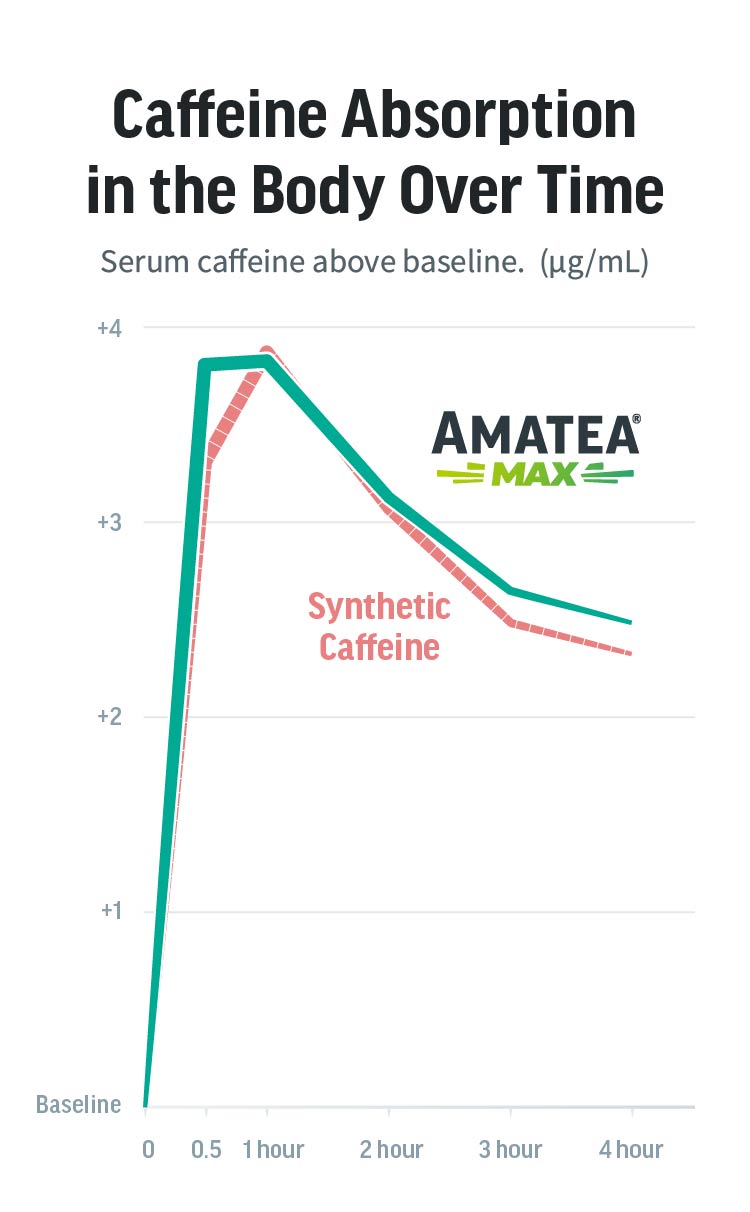
Serum caffeine tracks almost identically for both sources across four hours, which is how the guayusa extract met FDA bioequivalence standards against synthetic caffeine.
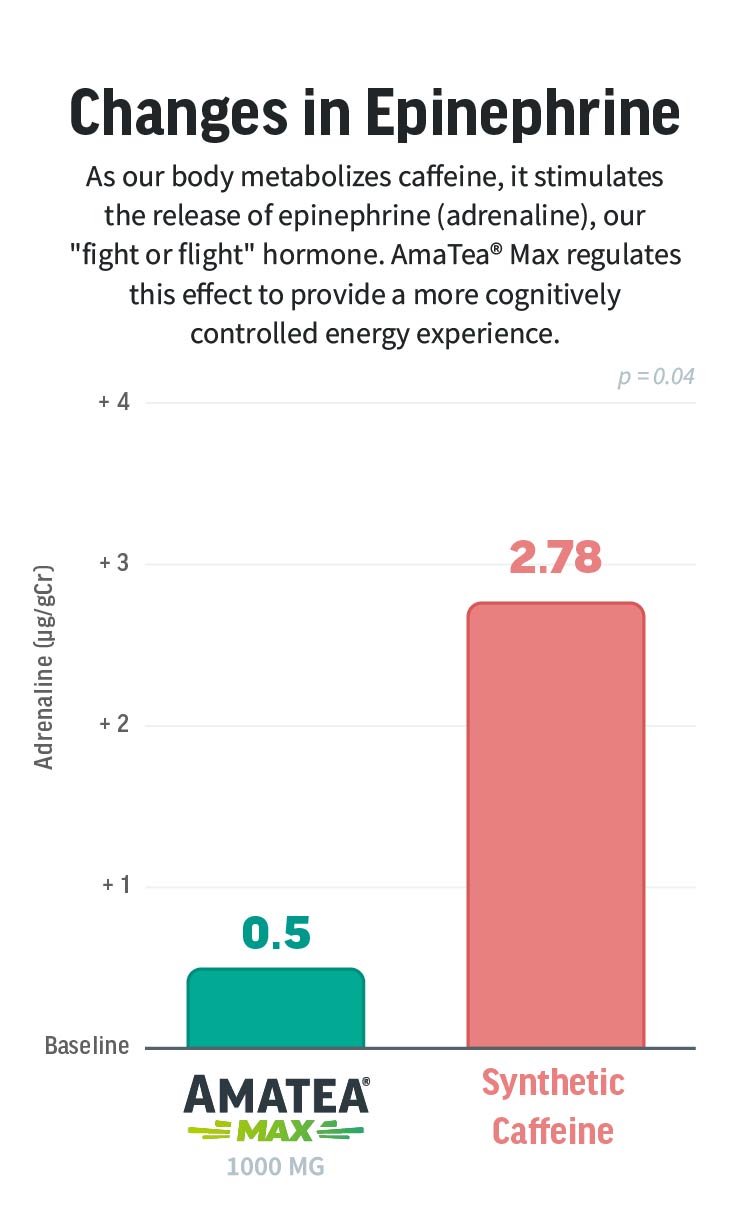
Guayusa's absorption profile (its Cmax and AUC values) was bioequivalent to synthetic caffeine by FDA standards, meaning the body absorbed it at a similar rate and extent. The one notable difference showed up in epinephrine: guayusa produced a smaller rise in urinary epinephrine than synthetic caffeine (+0.5 vs. +2.78µg/gCr, p=0.04), while the green coffee extract tracked the synthetic control closely.[5] The trial didn't assess whether that biomarker difference changed how the caffeine actually felt to the men taking it, but this aligns with anecdotal evidence stating that these types of extracts provide a "smoother" sensation.
At 1000mg of extract, urinary adrenaline rose just 0.5µg/gCr against 2.78µg/gCr for synthetic caffeine, the 2016 finding behind the smoother energy argument (p=0.04).
AFS digs into this idea in its own write-up on solving the caffeine paradox, which connects caffeine's jittery side to epinephrine's role in the body's fight-or-flight response.
-
Esports and Gaming Performance
In 2022, researchers at the University of Memphis compared AmaTea Max, synthetic caffeine, and a placebo in 49 active gamers playing Fortnite across four one-hour blocks per session.[6] The paper reports the AmaTea Max dose as delivering 270mg of caffeine, matched to the synthetic caffeine control.
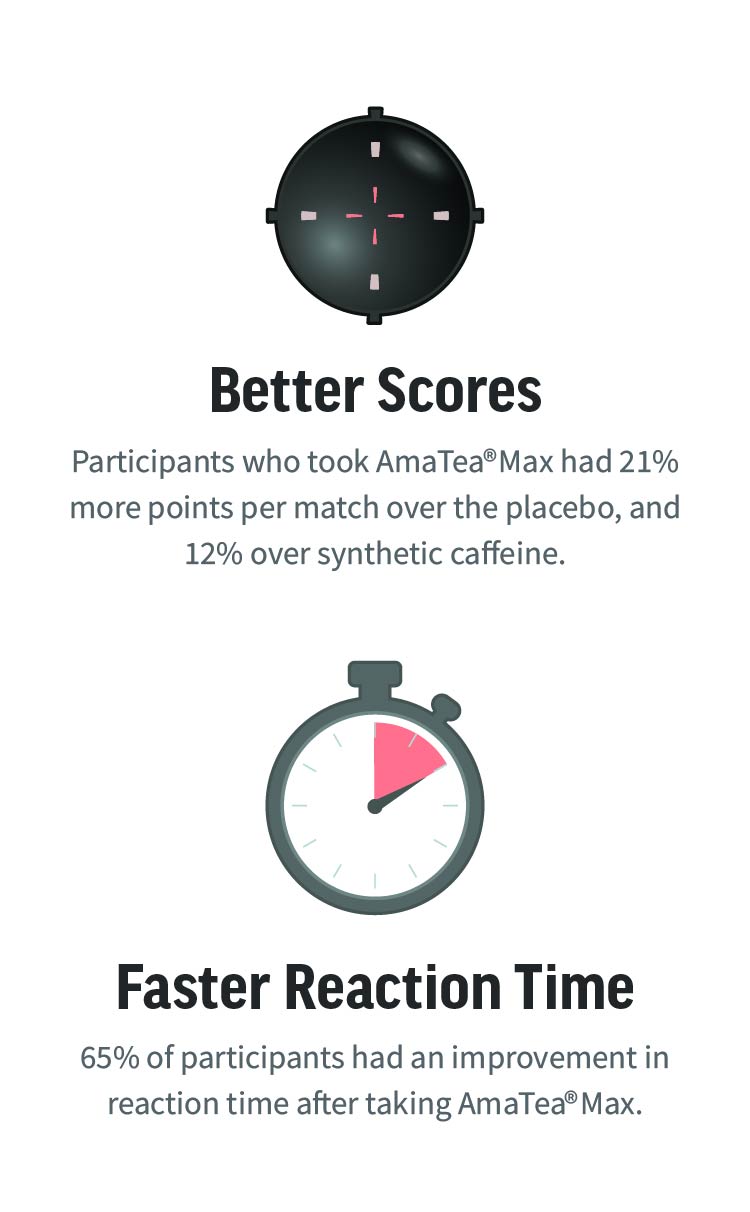
From the Fortnite trial, AmaTea Max gamers scored 21% higher per match than placebo and 12% higher than synthetic caffeine, with 65% of them reacting faster.
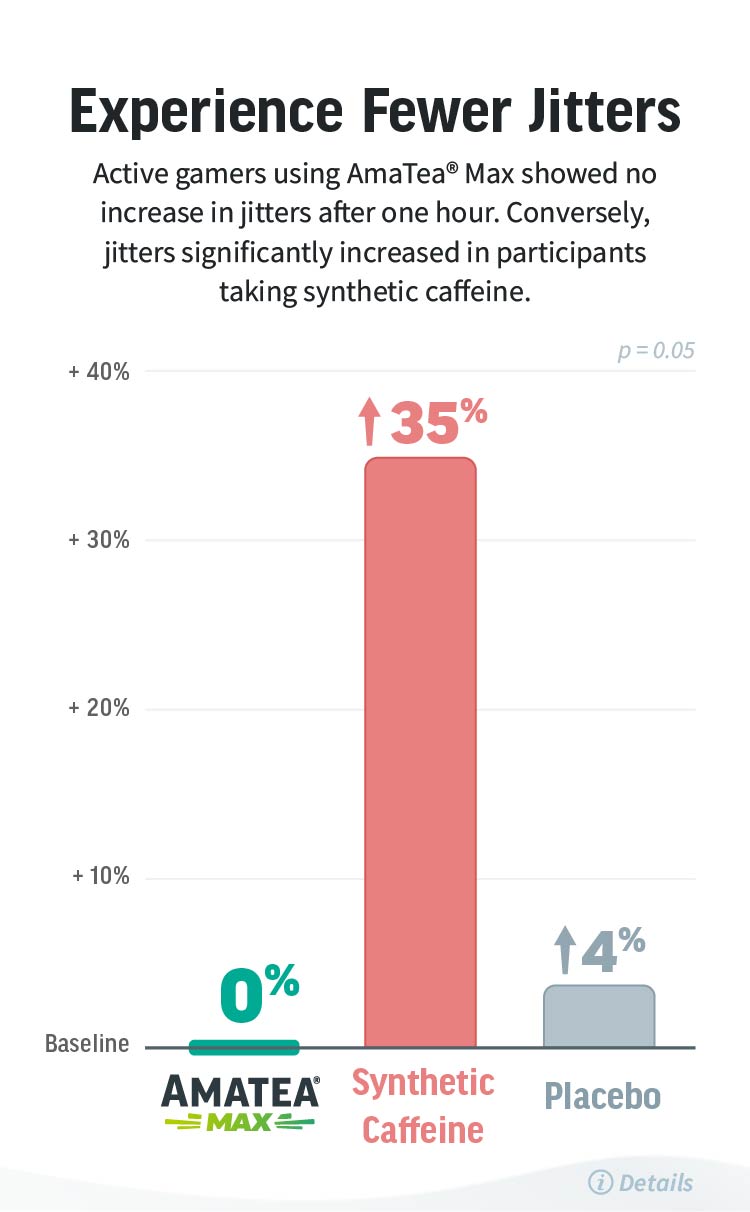
Interestingly, trending data showed a 21% increase in kills/match for the AmaTea Max group compared to the placebo group, and a 12% increase compared to the standalone caffeine group (p=0.075), and subjects reported more vigor and less fatigue with AmaTea Max than placebo.[6] Subjective jitteriness was significantly higher with synthetic caffeine than placebo (p=0.02), yet AmaTea Max showed no significant increase in jitters! Blood pressure rose slightly with both active conditions, and cortisol followed its normal daily pattern across all three groups.
Gamers on synthetic caffeine reported jitters up 35% at one hour while AmaTea Max sat at zero and placebo at 4% (p=0.05).
-
Mood and Dose-Response
The best evidence on acute mood effects comes from a 2024 peer-reviewed trial out of the University of Iowa's Health and Human Physiology department, which gave 25 healthy adults (9 men and 16 women) either 600mg or 1200mg of AmaTea Max or a placebo, in a randomized, double-blind, crossover design.[4] The 600mg dose improved Total Mood Disturbance (p=0.034), Fatigue-Inertia (p=0.008), perceived energy (p=0.02), and both motor speed and psychomotor speed (p=0.008 and p=0.005) compared to placebo. The 1200mg dose also improved psychomotor speed and cut reaction time on a motor-cognitive test, though it didn't move Total Mood Disturbance.

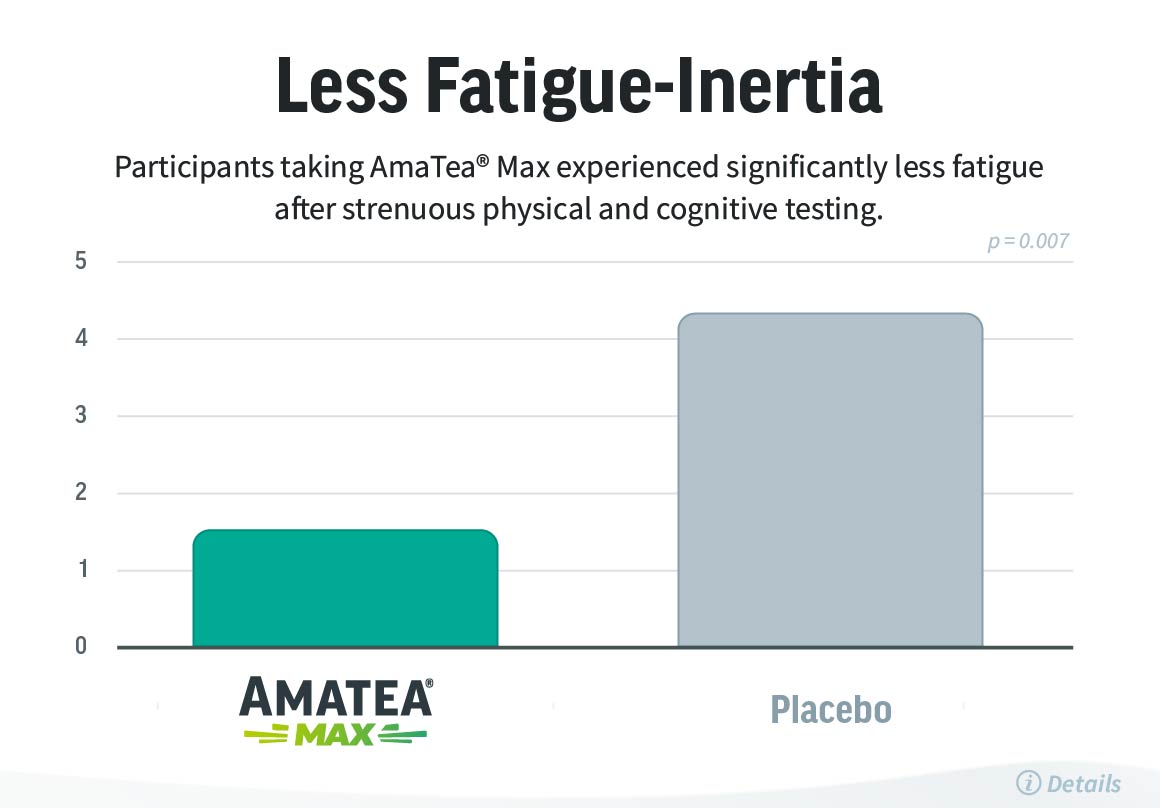
Fatigue Inertia scores landed near 1.5 with AmaTea Max versus roughly 4.3 for placebo after physical and cognitive testing (p=0.007).
The 600mg dose comes out of this trial with favorable results on several mood and performance measures, not as a universally established optimal dose. Meanwhile, the higher dose earned its keep more on the motor and reaction-time side.
An earlier 2023 University of Iowa master's thesis reported a similar acute mood comparison in 16 women, using the same 600mg and 1200mg doses under the same IRB approval (IRB 202202283, approved May 16, 2022) that the 2024 paper also cites.[7] Given that shared IRB and protocol, this looks like an earlier analysis of the same or a closely related cohort that was later expanded with nine men for peer-reviewed publication. The thesis's own analysis found the 600mg dose significantly improved Total Mood Disturbance (p=0.023) and Fatigue-Inertia (p=0.005), while 1200mg did neither, consistent with the published results above.
-
Exercise Training and Desire to Train
Additionally, that same 2023 thesis includes a second experiment that hasn't gone through peer review: a six-week, double-blind trial in 33 women who took 600mg of AmaTea Max daily alongside a supervised resistance and metabolic conditioning program.[7] This cohort is unrelated to the acute mood study above.
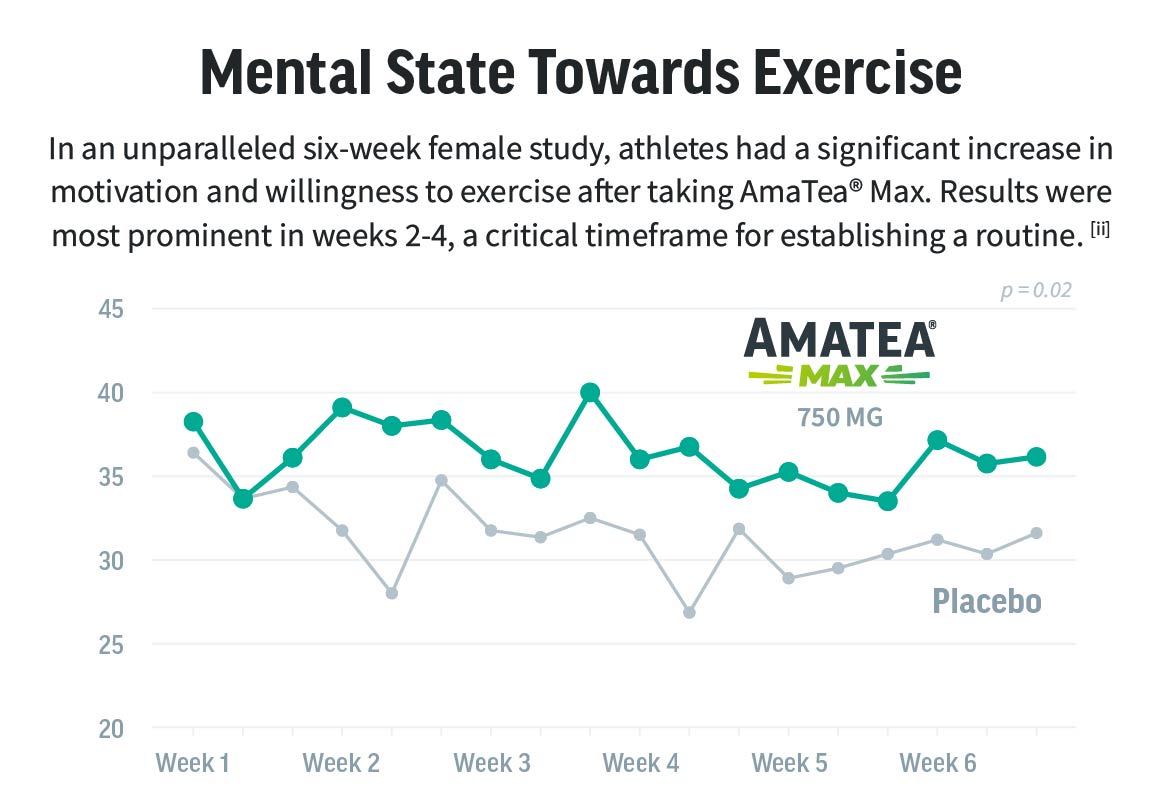
The AmaTea Max group completed 96.3% of training sessions versus 92.9% for placebo, a 3.4 percentage point difference (p=0.017), and reported a stronger desire to train and higher exercise readiness at several points across the program. The gap was most visible in weeks 2 through 4, when desire to exercise dropped in the placebo group but held steady with AmaTea Max, an early stretch when many people lose momentum on a new program.
Across six weeks of training in women, motivation to exercise stayed consistently above placebo with the widest gap in weeks 2 through 4 (p=0.02).
Total volume lifted and AMRAP set performance both trended higher in the AmaTea Max group, though neither reached statistical significance (p=0.055 to 0.061) at this sample size (they were quite close though). Body composition didn't differ between groups in a statistically significant way, though fat-free mass also trended higher with AmaTea Max (p=0.084).
As thesis-level evidence, this is a promising pilot finding, not a published, peer-reviewed result, and it would benefit from replication in a journal-reviewed trial.
-
Cognitive Performance vs. Lion's Mane
A separate 2023 trial at The Center for Applied Health Sciences in Ohio put 40 healthy men and women through a single dose of AmaTea Max (650mg, standardized to 130mg caffeine and 195mg chlorogenic acids), 1g of Nordic-grown Lion's Mane extract (MycoThrive™ Lion's Mane), and a placebo, in a randomized, double-blind, crossover design.[8]
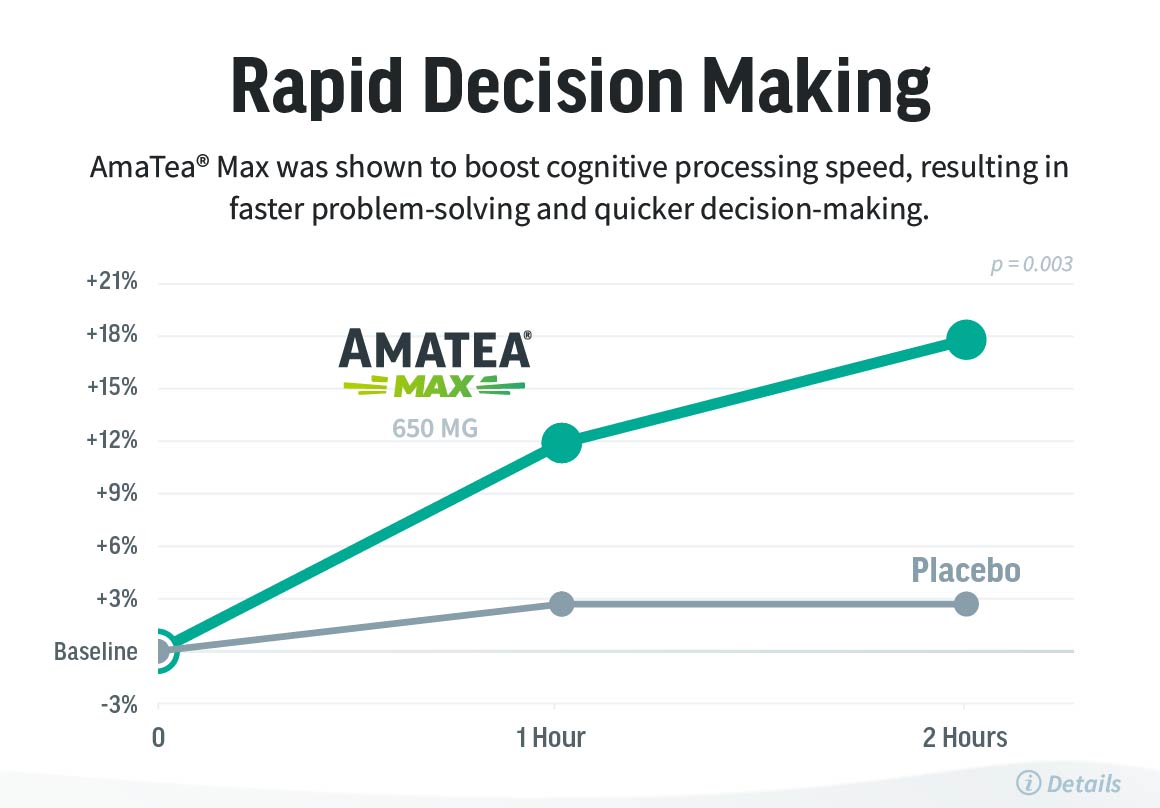
Processing speed hit about 18% above baseline at two hours on 650mg of AmaTea Max, roughly six times the placebo shift (p=0.003).
AmaTea Max improved several objective test scores from its own baseline over the two-hour testing window, including Serial Sevens attempts, N-Back total score and reaction time, and Go/No-go reaction time on Go trials (all p≤0.05). It also came with a trade-off: its No-go accuracy declined a bit between the one-hour and two-hour measurements. For consumers, these findings translate to sharper working memory, faster mental processing, and quicker reaction times, helping them think and respond more efficiently during mentally demanding tasks.
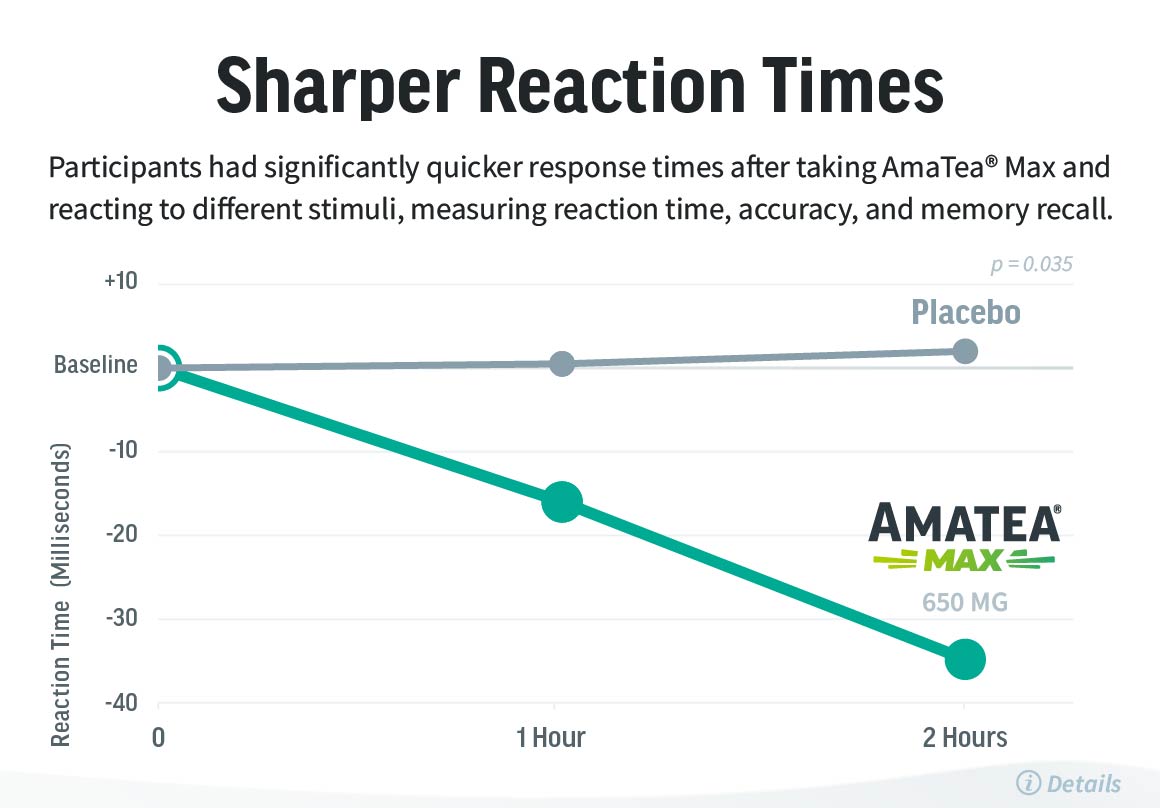
Reaction time fell roughly 35 milliseconds below baseline two hours after 650mg of AmaTea Max, while placebo sat flat (p=0.035).
On the subjective side, participants rated mental clarity, focus, concentration, and productivity higher with AmaTea Max than with both Lion's Mane and placebo at one and two hours post-dose (p<0.05), the study's clearest between-condition findings. Mood also improved from baseline over that window, though the paper doesn't report it beating both comparators the way those other four ratings did. AmaTea Max and Lion's Mane also both improved two specific happiness-scale items ("happiness compared to peers" and "getting the most out of everything"). This translates to an overall greater sense of mental clarity and the potential for a more positive mood when tackling everyday tasks.
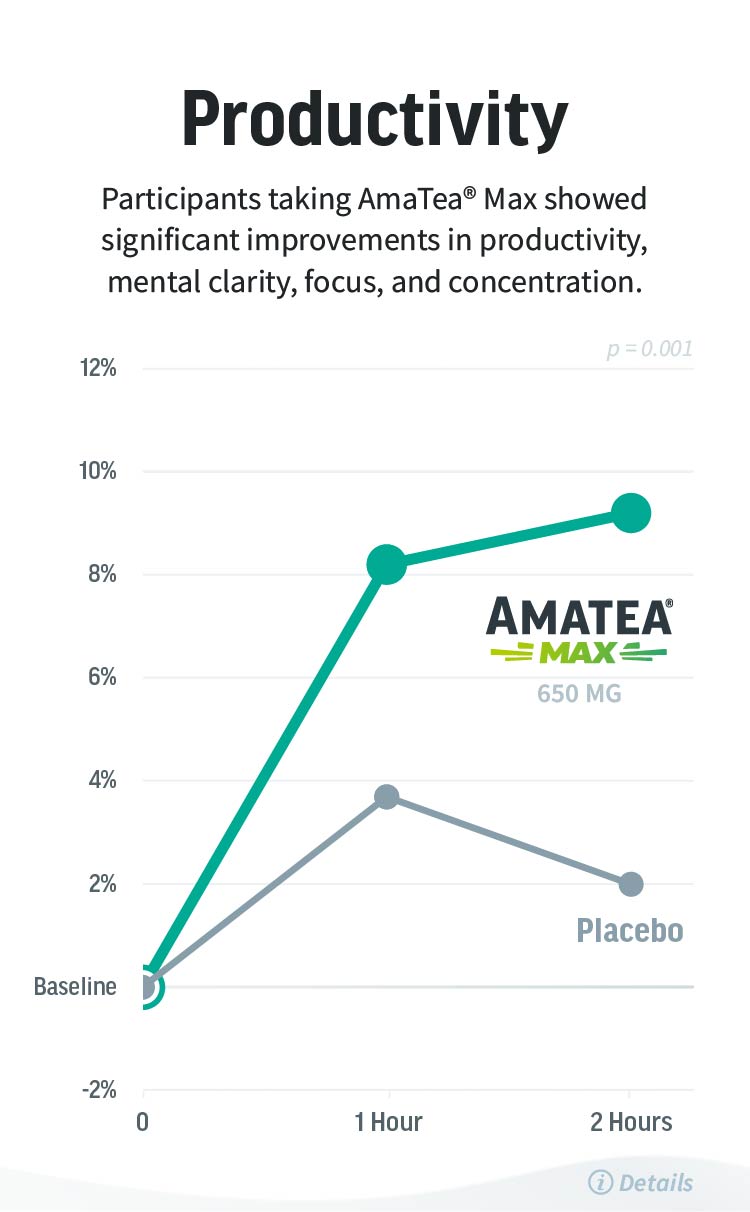
Subjective productivity ratings rose past 9% by hour two on 650mg of AmaTea Max, more than four times the placebo response (p=0.001).
AmaTea Max Benefits
-
Energy, Vigor, and Fatigue
AFS positions AmaTea Max as a smoother alternative to synthetic caffeine, and that's the question motivating most of the research above. The clearest support comes from the gaming trial, where subjects reported more vigor and less fatigue with AmaTea Max than placebo, with jitteriness in line with placebo as opposed to synthetic caffeine, which was significantly jittery. The mood trials add supporting flair, with the 600mg dose easing fatigue-related mood states in both the published trial and the earlier thesis analysis.
A smoother caffeine experience should not automatically be interpreted as "no crash." AmaTea Max still delivers the same caffeine molecule found in other caffeine sources, but it delivers that caffeine within a broader botanical matrix of naturally occurring compounds. That "entourage effect" may help explain the lower epinephrine response seen versus synthetic caffeine in the 2016 study, offering a plausible explanation for the lower-jitter experience reported in the research. The research so far builds a reasonable case that the combination simply feels different to many users.
-
Mood, Cognition, and Motivation to Train
Beyond energy, AmaTea Max has shown favorable effects on mood and several cognitive measures at 600mg and up, along with a stronger desire to train and better session attendance in the six-week thesis study. The cognitive trial against Lion's Mane found AmaTea Max ahead of both comparators on subjective focus, concentration, and productivity ratings, alongside real trade-offs on a couple of objective accuracy measures.
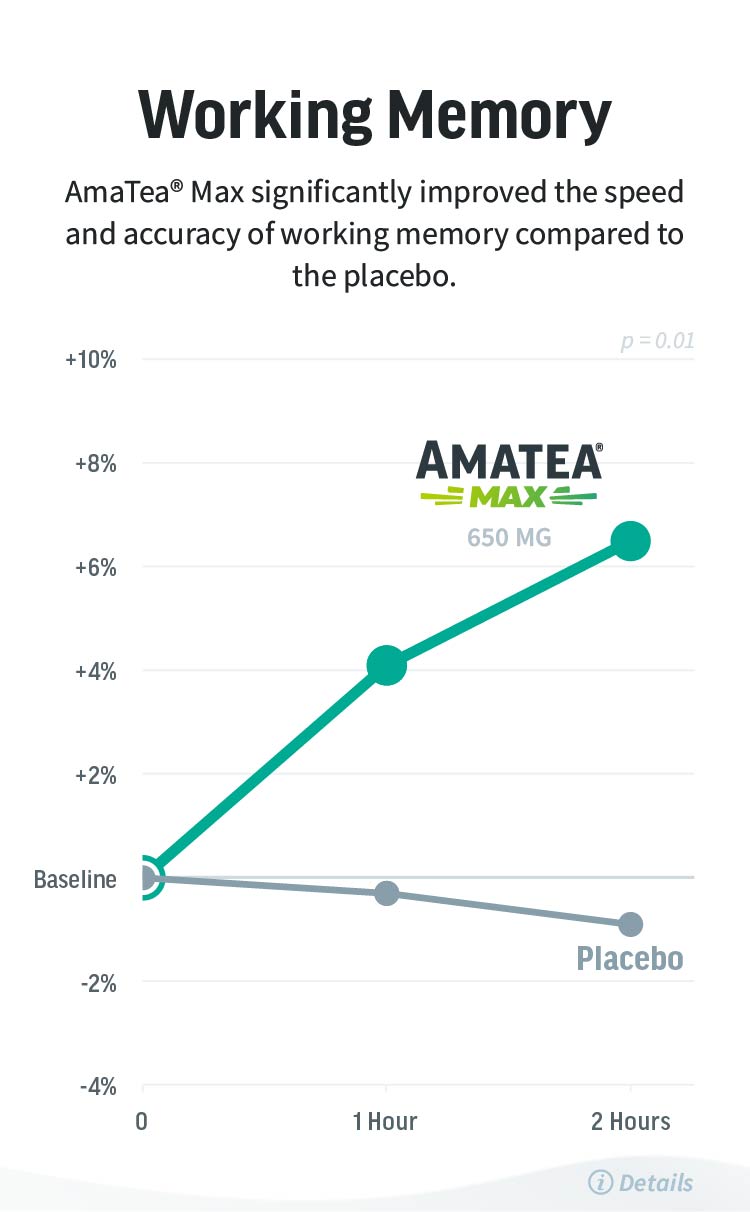
Working memory scores gained roughly 6.5% over two hours on 650mg of AmaTea Max as placebo slipped below its own baseline (p=0.01).
Taken as a set, these trials point toward AmaTea Max doing more than just delivering caffeine. The evidence is still early, and we're always excited to see additional research showing differences between natural caffeine sources and synthetically-reacted caffeine anhydrous.
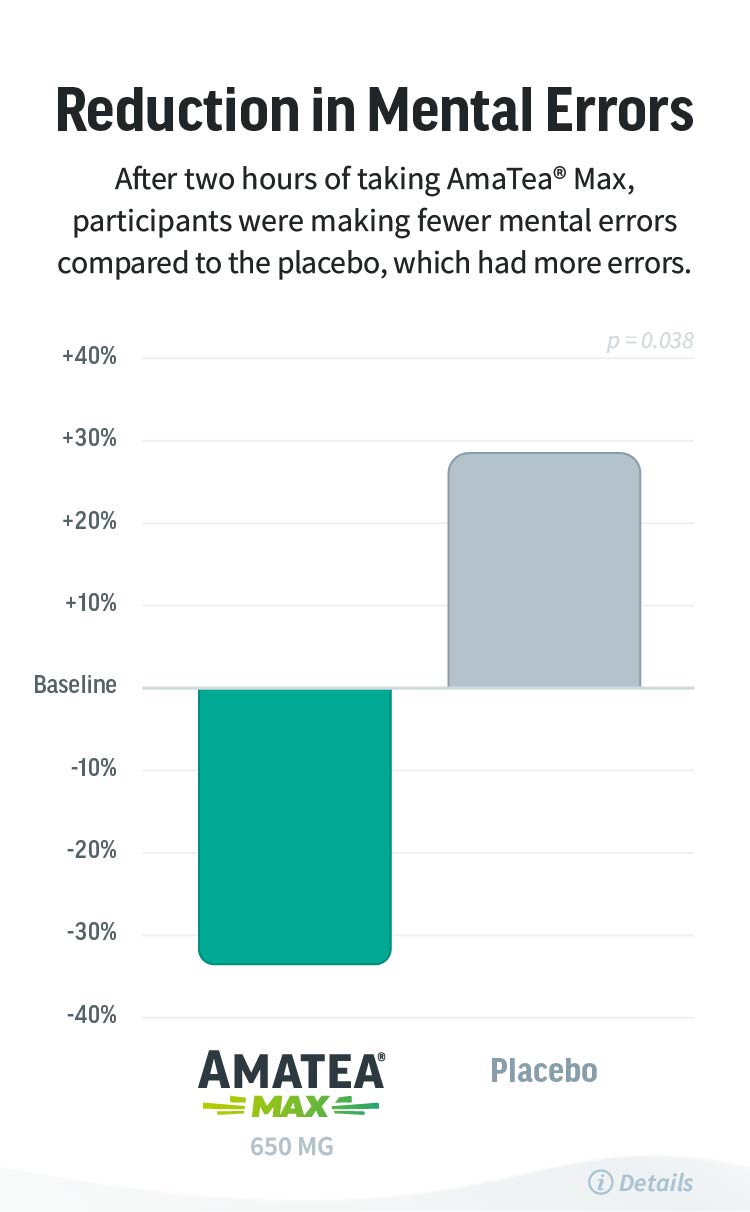
At the two hour mark, errors dropped about 33% from baseline with 650mg of AmaTea Max while the placebo group climbed close to 28% (p=0.038).
How AmaTea Max Works
Caffeine's core mechanism doesn't change based on source: it still blocks adenosine receptors in the brain, the basic pathway behind any caffeine source's stimulant effect.
Chlorogenic Acids Go Beyond Adenosine
What's different about guayusa is the chlorogenic acid that comes along with the caffeine. In lab research, chlorogenic acid derivatives bind adenosine transporters and inhibit adenosine reuptake, and a broader review of methylxanthine-containing plants has proposed that the polyphenols naturally paired with caffeine in teas like guayusa can shift how caffeine's mood and cognitive effects show up, compared to isolated caffeine alone.[9]
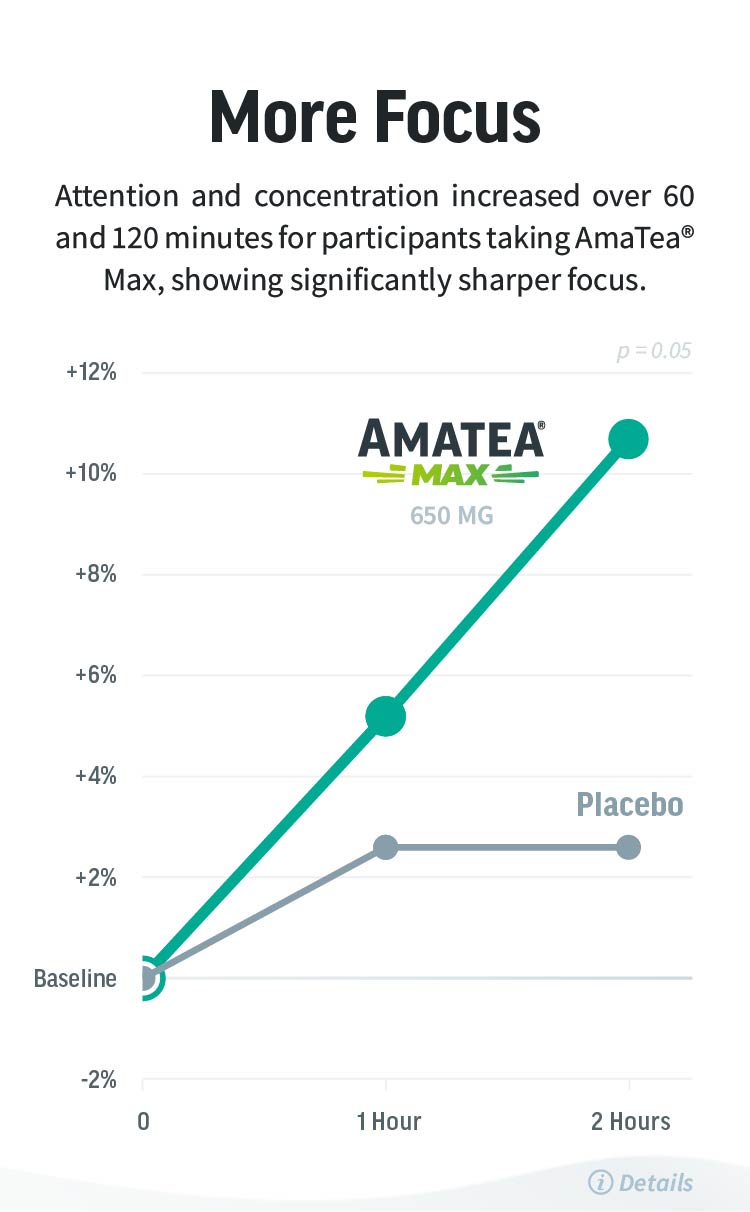
Attention ratings reached nearly 11% above baseline two hours after 650mg of AmaTea Max, with placebo stalling near 2.5% (p=0.05).
That's a reasonable explanation for why guayusa-based caffeine might behave differently in the body, but it's still a proposed mechanism rather than something the AmaTea Max human trials can prove directly. Those trials measured mood, cognition, and performance outcomes, but none of them isolated a specific chemical pathway as the cause.
GRAS Status and Regulatory Standing
AFS submitted a GRAS notice for hydroethanolic guayusa leaf extract in 2019. The FDA completed its review in March 2020 and stated it had no questions regarding AFS's GRAS conclusion under the intended conditions of use, the agency's standard language for not disputing a safety determination.[10] The notice specifically covers energy bars, energy drinks, ready-to-drink tea, carbonated beverages, coffee-like drinks, and enhanced water.

Separately, a peer-reviewed critical review of guayusa's chemical composition and history of use argued that the plant presents no greater risk than established teas like green tea or yerba mate, and that its documented safety history meets the kind of evidence bar typically required for Novel Food authorization in the EU, a different regulatory process from US GRAS.[11]
Safety and Tolerability
Across the four peer-reviewed trials, side effects tracked what you'd expect from a moderate dose of caffeine rather than anything unique to the ingredient. Blood pressure rose modestly in the trials that measured it (4mmHg to 5mmHg systolic and diastolic at 600mg to 1200mg doses), and the 2024 dose-response trial found no effect on QTc interval, an electrical measure of heart rhythm risk, at either dose. Jitteriness tracked dose, rising more in women at the higher dose.
None of the four peer-reviewed trials reported serious adverse events, though two participants in the thesis's six-week training study dropped out (one for GI discomfort, one for sleeplessness). Each trial excluded groups like pregnant or lactating women and people with certain medication use or cardiometabolic conditions, so keep that in mind. Generally healthy adult populations are what's studied, and are also who's recommended to use supplements.
Applications and Dosing
| Extract Dose | Caffeine | Chlorogenic Acids | Where It's Used |
| 100mg | ~20mg | ~30mg | Typical commercial serving, often paired with PurCaf |
| 600mg | 120mg | 180mg | Lower acute dose, 2024 peer-reviewed mood trial |
| 650mg | 130mg | 195mg | Cognitive trial against Lion's Mane |
| 1200mg | 240mg | 360mg | Higher acute dose, 2024 peer-reviewed mood trial |
| ~1000mg (calculated) | 200mg (reported) | not reported | 2016 safety trial, historical AMATEA extract |
| 1080mg | 270mg (reported) | not reported | 2022 gaming trial |
Commercial doses vary widely, from 100mg alongside PurCaf in some popular sports nutrition formulas to 750mg in novel energy drinks, so it's worth comparing a product's label against the research doses above.
Timing mirrors any other caffeine source: 30 to 60 minutes before training or whatever task calls for a lift in energy and focus. Don't take it too close to bed (it's good to know your "caffeine cut-off time"). Formats on the market so far are capsules, powders, and ready-to-drink beverages, consistent with AFS's marketed applications.
Conclusion: Guayusa's Case for a Smoother Stimulant
Green coffee extract or caffeine anhydrous. Same energy, very different read on an ingredient panel. MAC Energy named its source and put PurCaf® right on the can. More brands are doing the same, and the research explains why.
AmaTea Max gives AFS a second natural caffeine platform, built on a different plant and backed by a solid research program we don't see from other natural caffeine providers: four peer-reviewed trials plus additional academic work, more than most branded caffeine ingredients can claim.
The most interesting training data comes from university data, and what holds up consistently is a caffeine source that performs comparably to synthetic caffeine on safety and absorption, with great signals on mood, focus, and training adherence at doses well above what most commercial products currently use.
For a company that already made its name with PurCaf, AmaTea Max reads less like a departure and more like a second natural caffeine option with its own research base and its own open questions. The combination is an exciting one, especially for brands looking to differentiate in a crowded energy market.
Sign up for PricePlow's Applied Food Sciences news alerts to stay on top of what's next from the brand.

Comments and Discussion (Powered by the PricePlow Forum)