Ask a sports nutrition formulator what NuLiv Science is known for, and you'll hear AstraGin and Senactiv. Few would guess that the company's biggest seller by volume is a mushroom.
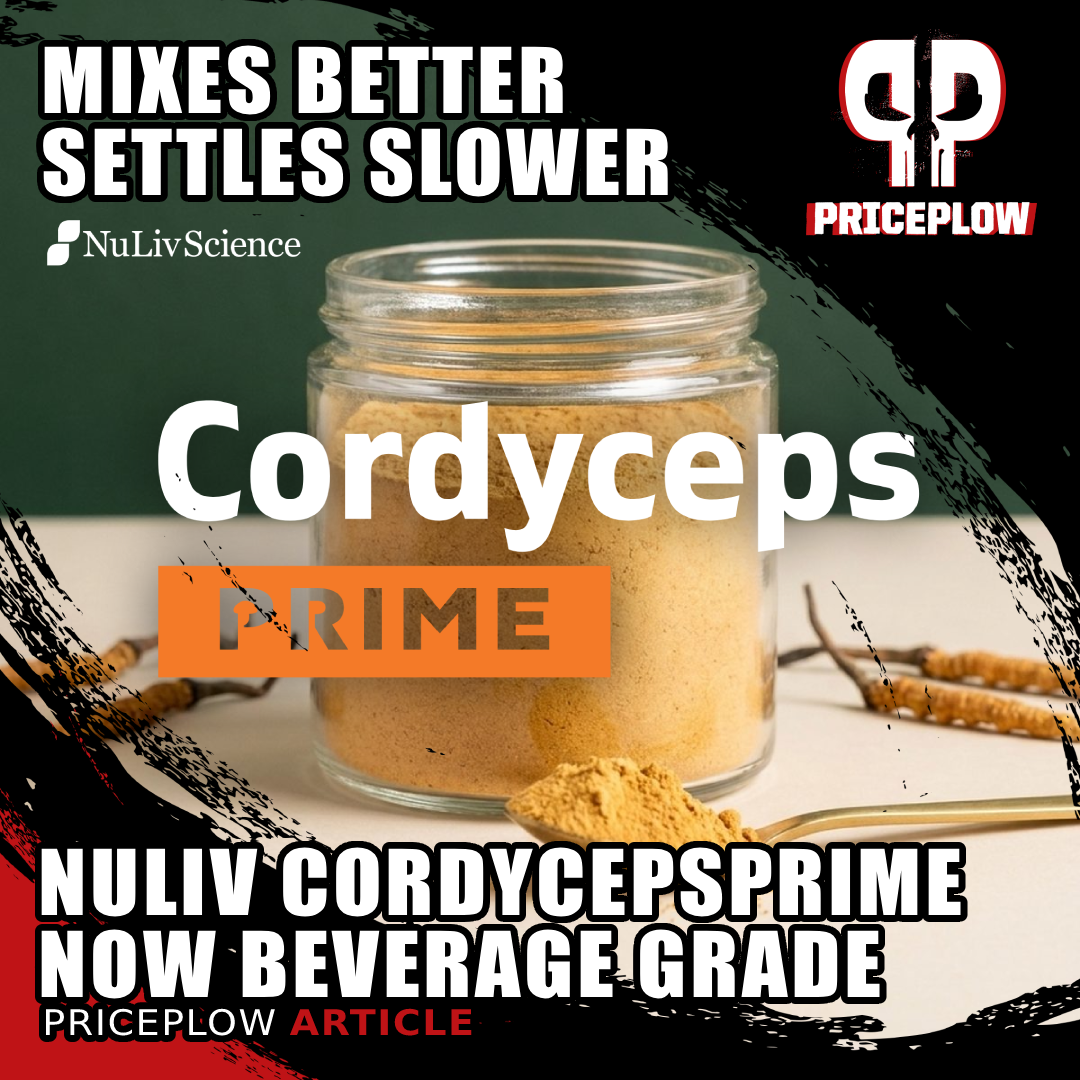
Mushroom powders don't dissolve. They settle, and your last sip tastes like sand. NuLiv Science milled CordycepsPrime down to 25 to 30 microns so it disperses smoothly and comes back with a light swirl instead of a hard shake.
That surprise came up on Episode #217 of the PricePlow Podcast, when NuLiv's VP of Sales Luis Gonzalez told us that CordycepsPrime™ moves more kilos per year than anything else in the portfolio. It's also the ingredient NuLiv was founded on in 1997, and most of that volume goes to multi-level marketing (MLM) companies rather than the sports nutrition brands we usually cover.
Now NuLiv wants to put it in drinks.
Meet the Beverage Stable Cordyceps from NuLiv Science
On October 20, 2026, the company launched CordycepsPrime Beverage Grade, a finer-milled version of the same fermented cordyceps made for ready-to-drink (RTD) beverages, energy shots, mushroom coffees, and shakes.[1] The fermentation and the mushroom stay the same. The only difference is particle size, which changes how the powder behaves in liquid.
Why Mushrooms Struggle in Beverages
Functional mushroom powders simply don't dissolve. Stir a standard-grade powder into water and it drops out of suspension quickly, settles again soon after shaking, and can leave a gritty texture that consumers notice by the last sip.
According to NuLiv, that has left beverage developers with three options for cordyceps: use an extract carried on maltodextrin, leave cordyceps out entirely, or accept the sediment.
"Cordyceps has always been tough to get into a drink without too much settling."[1]
-- Richard Wang, NuLiv Science CEO
Wang, NuLiv's Chief Executive Officer, added that this launch is a little personal for the company, since CordycepsPrime is the ingredient NuLiv started with.
What Changed With Beverage Grade
CordycepsPrime Beverage Grade uses the same liquid fermentation process as the standard grade. The only change is mesh size.
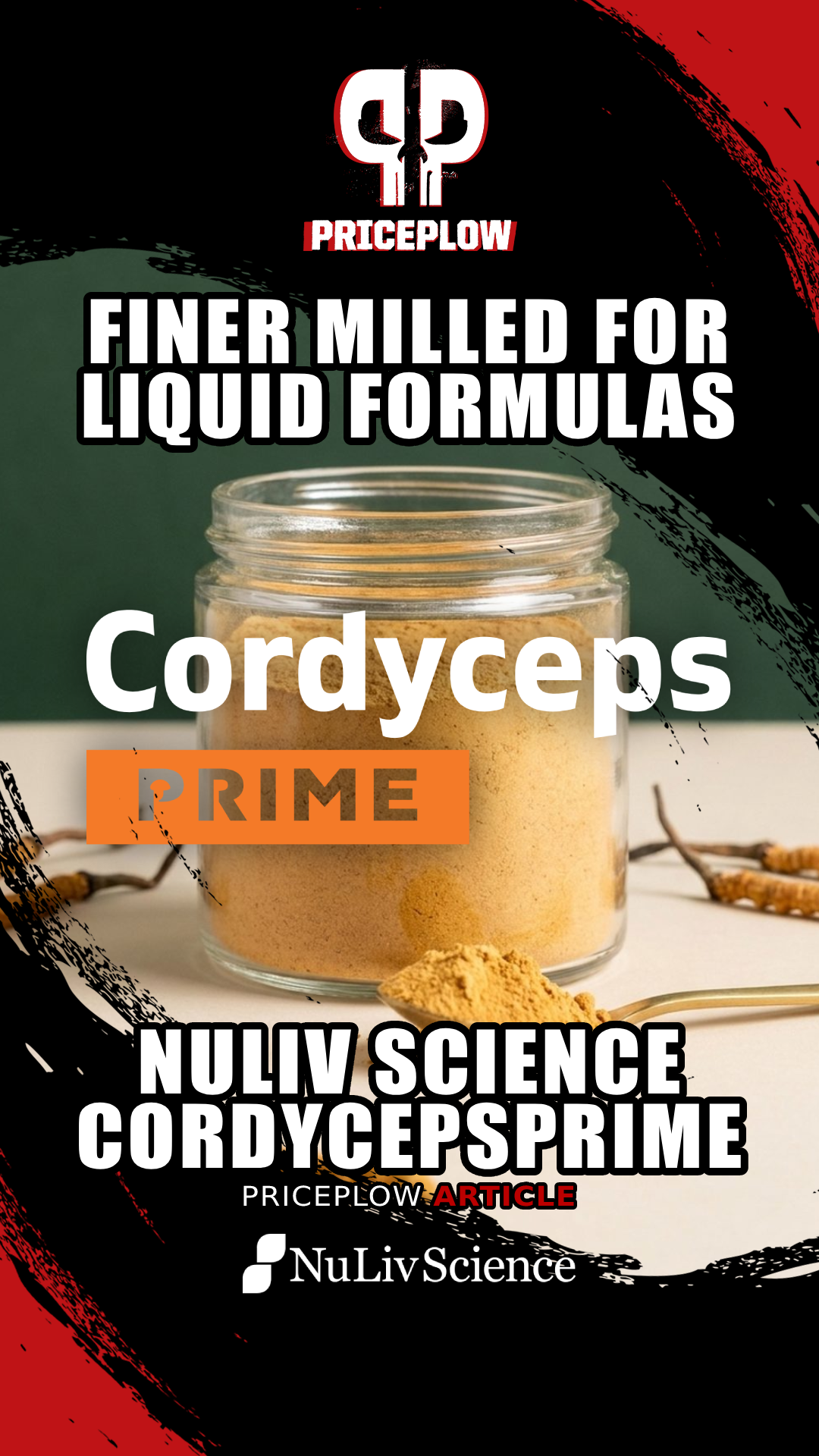
The new grade is milled to 500 mesh, or 25 to 30 microns. For scale, NuLiv puts that at about a third the width of a human hair and a quarter the size of a grain of sand. At that size, the powder disperses smoothly, settles more slowly than standard mushroom powder, and comes back together with a light swirl instead of a hard shake. NuLiv says the particles are fine enough that there's no perceptible texture in the finished drink.
The company's own comparison is miso soup: the particles drift down slowly over time, and a gentle stir brings everything back together.
NuLiv is careful not to oversell this, and we'll follow its lead. Beverage Grade still doesn't dissolve, so a finished drink made with it is still a suspension. It just behaves like a much better one.
Specs at a Glance
- Source: Cordyceps sinensis fermented mycelium (liquid fermentation), with strain identity verified by DNA fingerprinting, per NuLiv
- Particle size: 500 mesh (25 to 30 microns)
- Standardization: 8% cordycepic acid (used as a batch-consistency marker) and 0.28% adenosine
- Composition: Pure fermented mycelium with no residual growth substrate
- Certifications: Organic, Kosher, Halal, and Gluten-Free
- Documented serving: 500mg, per NuLiv
- Ordering: Selectable at the quote stage alongside NuLiv's standard and standard organic grades
Built for More Than Cans
NuLiv's launch materials list RTD beverages, energy shots, mushroom coffees, and shakes as the main targets. Its Beverage Grade landing page also names gels, gummies, sachets, and pouches as candidate formats, so the finer mesh isn't strictly a drinks play.
Where CordycepsPrime Comes From
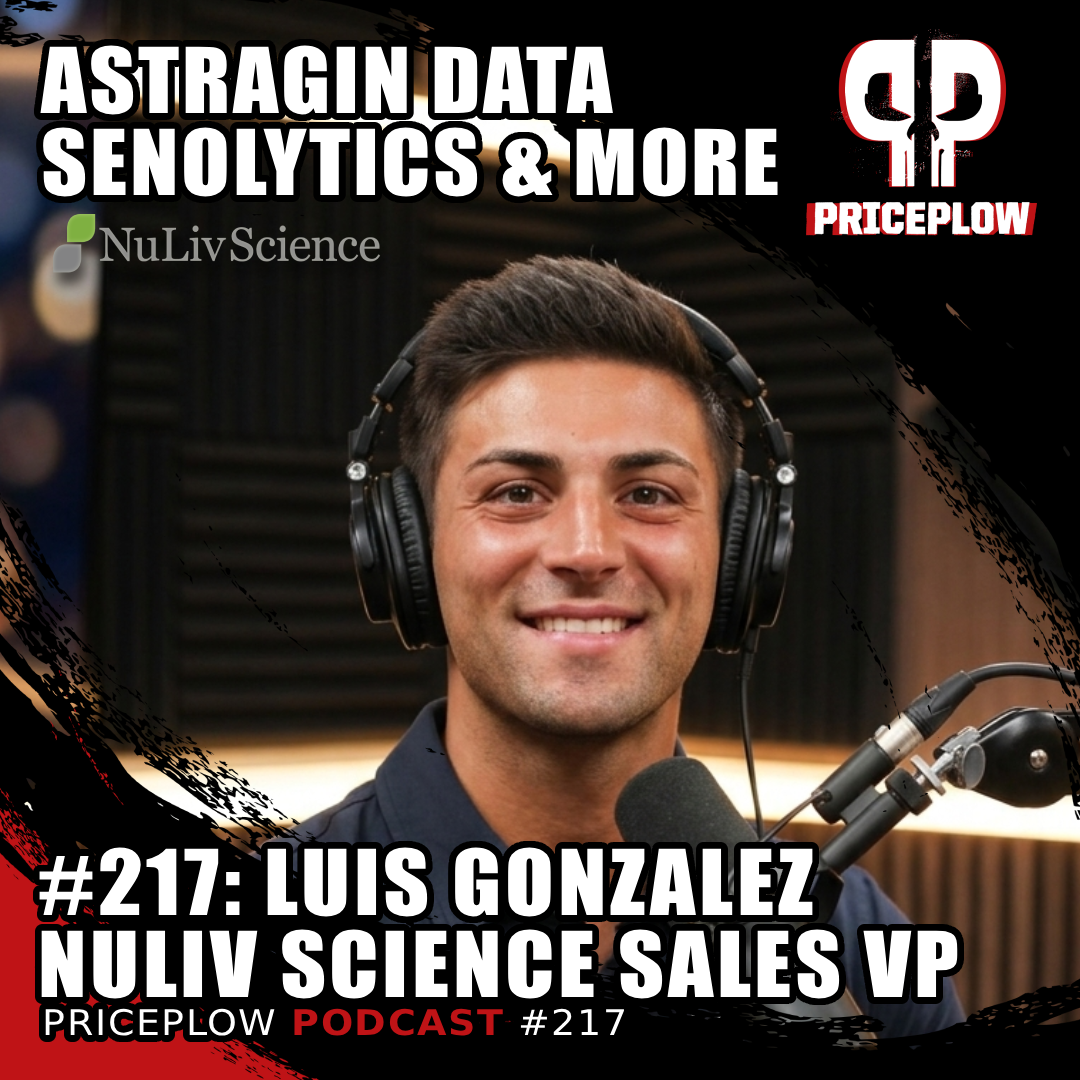
Luis Gonzalez, VP of Sales at NuLiv Science, joins the PricePlow Podcast for a thorough podcast covering the full ingredient portfolio, the groundbreaking 2026 AstraGin® whey protein absorption study, Senactiv®'s senolytic research arc, and more on Episode #217.
Wild Cordyceps sinensis grows from the head of a single type of caterpillar larva high on the Tibetan plateau. That narrow habitat has made it one of the most expensive raw materials in traditional Chinese medicine, and harvests have declined as worldwide demand has climbed.[2] Commercial supply relies on cultivation and fermentation instead.
NuLiv's story starts there. The company was founded in 1997 by brothers Michael and Austin Wang. Austin had secured one of the first patents on Cordyceps sinensis produced through liquid fermentation, and Michael agreed to help bring it to market. On the podcast, Luis explained that the original goal was supplying mushroom extracts that were safe enough to use with patients, at a time when quality material was hard to find.
NuLiv sold only mushrooms until around 2010, when AstraGin reached the U.S. market and pulled the company toward sports nutrition. Michael's son, Richard Wang, now runs the company.
Liquid Fermentation, No Grain
Many mycelium ingredients are grown on grain, and the finished powder includes that colonized substrate. NuLiv grows CordycepsPrime in a liquid medium with no grain or wood, and says no residual substrate remains in the finished powder. By NuLiv's numbers, it takes 5,000kg of growth medium to produce 1,000kg of finished ingredient.
NuLiv also says its manufacturing partner holds the only government permit in China to produce fermented Cordyceps sinensis and reishi (Ganoderma lucidum).
The Quiet Volume Leader

So how does a mushroom outsell AstraGin? According to Luis, it comes down to who's buying. He estimated that NuLiv's mushrooms can cost three or four times as much as typical market material, which keeps most sports nutrition brands away. MLM companies, on the other hand, run some of the strictest quality and safety documentation requirements in the industry, and they can't risk raw material that misses spec.
"Most of our clients don't even know we sell mushrooms."[3]
-- Luis Gonzalez
That gives Beverage Grade an interesting audience. NuLiv already works with a long list of sports nutrition and energy brands through AstraGin and Senactiv, including GHOST, which uses AstraGin in its canned energy drinks. A beverage-ready cordyceps gives those same customers a reason to look at the mushroom side of the catalog.
What Formulators Should Know
Mushroom coffees and mushroom-forward RTDs have become a common sight on store shelves, and the beverage aisle is where texture problems are hardest to hide. A few practical notes for brands considering Beverage Grade:
-
Plan for a Suspension
Slower settling is still settling. Brands should plan for a "swirl gently" direction on the label, think about whether clear packaging will show sediment over time, and run shelf-life testing on the actual finished product rather than relying on a water test.
-
Mind the Dose
NuLiv documents a 500mg serving for CordycepsPrime. Published human trials on fermented Cordyceps sinensis mycelium have used more, from roughly 1g per day in a 12-week trial[4] to 3g per day in a six-week trial.[5] Products aiming for the amounts used in clinical settings may require multiple servings per day.
That's another place where a more dispersible powder could help, since a gram of standard mushroom powder in a can is a sediment problem waiting to happen. Brands should still test sensory and settling at their actual target dose.
Same Mushroom, New Format
CordycepsPrime has spent nearly three decades as NuLiv's quiet volume leader, mostly in capsules and powders sold through channels that sports nutrition fans rarely see. Beverage Grade keeps the same fermented mycelium and makes it easier to work with in liquid, removing one of the more common reasons beverage developers have left cordyceps off the label.
Brands can request samples through NuLiv's CordycepsPrime Beverage Grade page. We'll take a closer look at the CordycepsPrime research as we learn more.
Curious which drinks pick up Beverage Grade first? Sign up for NuLiv Science news alerts below:
Comments and Discussion (Powered by the PricePlow Forum)