AstraGin® is more than a pre-workout ingredient. A 2026 clinical trial shows significant BCAA absorption improvements from whey protein, faster amino acid delivery, and a 13% drop in zonulin after 4 weeks.
A question every serious protein buyer should ask: how much of what's in the scoop actually makes it into circulation? A new peer-reviewed clinical trial published in Nutrients in February 2026 takes a direct shot at that question, and the results make a strong case for NuLiv Science's AstraGin® as a meaningful addition to protein and amino acid formulas.
The study, conducted by Zhuang, et al. at Chung Shan Medical University in Taiwan, is the first human trial to specifically test whether AstraGin (a standardized extract of Astragalus membranaceus and Panax notoginseng saponins) can enhance the pharmacokinetics of whey protein amino acid absorption.[1]
This article focuses on what the new data shows, and what it means for brands formulating with protein, BCAAs, and EAAs. But if you want the full background on how astragalosides and ginsenosides work at the transporter level, we covered that in our Astragalosides and Ginsenosides: Differentiating NuLiv Science's Ingredients deep dive.
Before explaining the study and its results, stay up to date on NuLiv Science research and new products featuring AstraGin:
Subscribe to PricePlow's Newsletter and Alerts on These Topics

Study Design and Methods

The trial used a randomized, double-blind, placebo-controlled crossover design with 30 healthy participants stratified into three age groups: 18-25, 26-59, and 60-80 years (10 per group). Each participant went through both the APS (AstraGin) and placebo interventions, with a 4-week washout period between them.[1]
The APS capsule contained 50mg of standardized extract, which is the standard clinical dose used across NuLiv Science's human trials and their standard dose recommendation in dietary supplements. The placebo capsule contained only maltodextrin. All participants consumed an unflavored whey protein isolate providing 21.6g protein and 6.23g BCAAs per 25g serving.
The study ran in two phases:
- Single-dose trial: Participants took one AstraGin or placebo capsule the evening before, fasted overnight, then consumed a second capsule with 25g whey protein in the morning. Blood draws at 0, 15, 30, 45, 60, 90, 120, 150, and 180 minutes measured immediate amino acid pharmacokinetics.
- 4-week trial: Participants supplemented twice daily (before breakfast and after exercise) with 0.8g/kg/day whey protein and a home-based resistance training protocol, with pre- and post-intervention pharmacokinetic assessments.
NuLiv Science provided the APS and placebo capsules for the study. Amino acids were quantified using UHPLC-MS/MS for high analytical precision.
The 2026 AstraGin Study Results
-
BCAA Absorption: Single Dose vs. Four Weeks
After a single dose, AstraGin produced numerically higher BCAA absorption: valine AUC up 6.67%, leucine up 3.62%, and isoleucine up 0.15% compared to placebo, but these immediate differences did not reach statistical significance.[1] The authors attribute the modest acute effect to the time required for transporter upregulation -- AstraGin's mechanism involves mTOR pathway activation and intestinal epithelial cell turnover, processes that build over days, not hours.

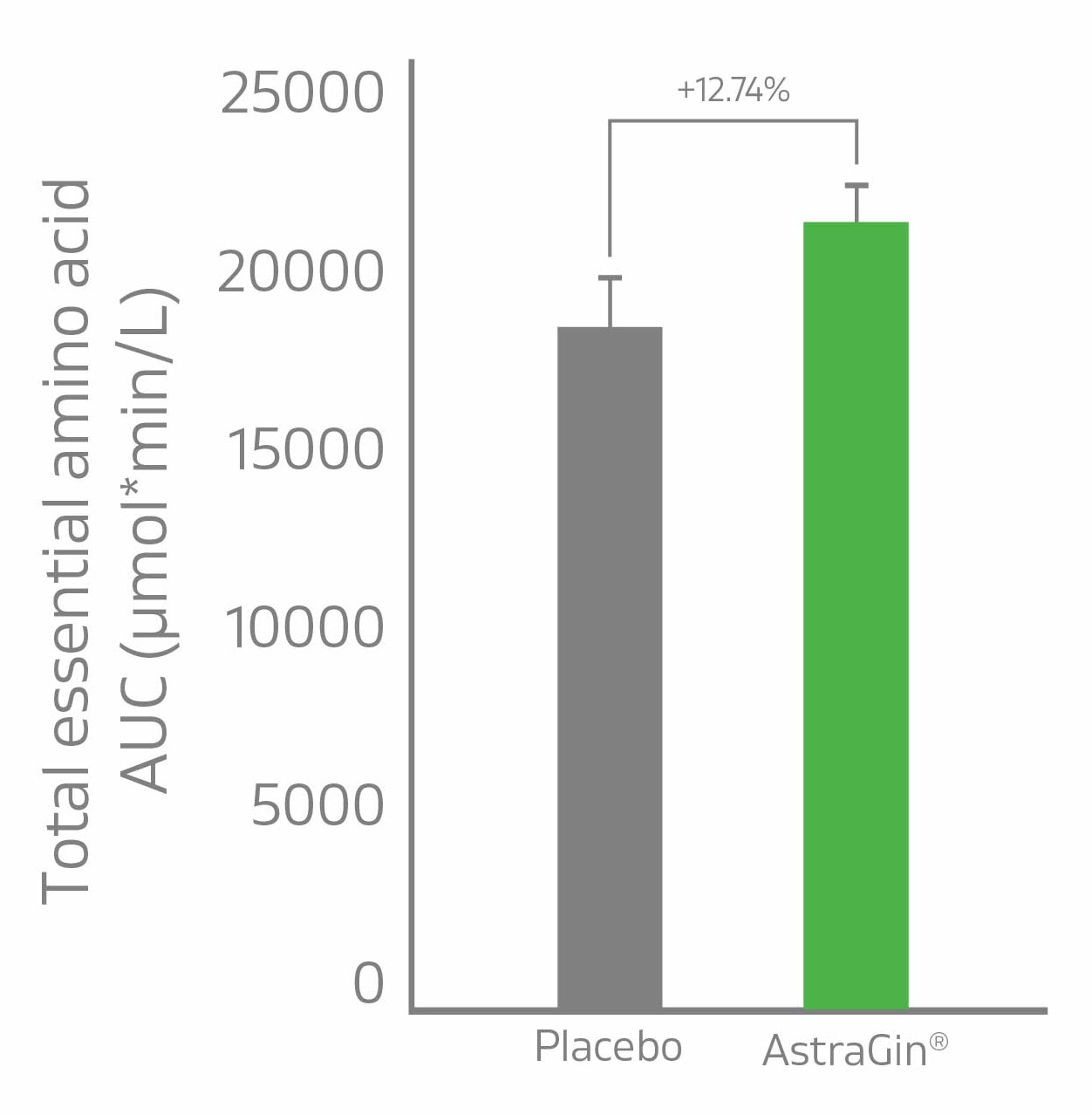
Adults aged 60 to 80 taking AstraGin absorbed 12.74% more total essential amino acids by AUC than the placebo group after 4 weeks of supplementation.[1]
Significance at Four Weeks
Four weeks of daily supplementation told a clearer story. Valine AUC increased by 14.07% (p<0.05) and leucine AUC by 8.34% (p<0.05) compared to placebo. Isoleucine AUC improved by 6.33%, though this one didn't reach significance. The two-way ANOVA also found significant main effects of treatment for both valine AUC (p<0.001) and leucine AUC (p<0.001), confirming that AstraGin supplementation (and not just the passage of time) drove the absorption gains.[1]
Absorption Speed Improvements
Not just more absorbed, but absorbed faster: after 4 weeks, valine Tmax decreased by 7.14% (p<0.05) and isoleucine Tmax by 12.40% (p<0.05) in the AstraGin group, meaning the amino acids hit peak plasma concentrations earlier. For post-workout protein timing, that's a practically relevant finding.[1]
-
The Aging Advantage: The 60-80 Year Cohort
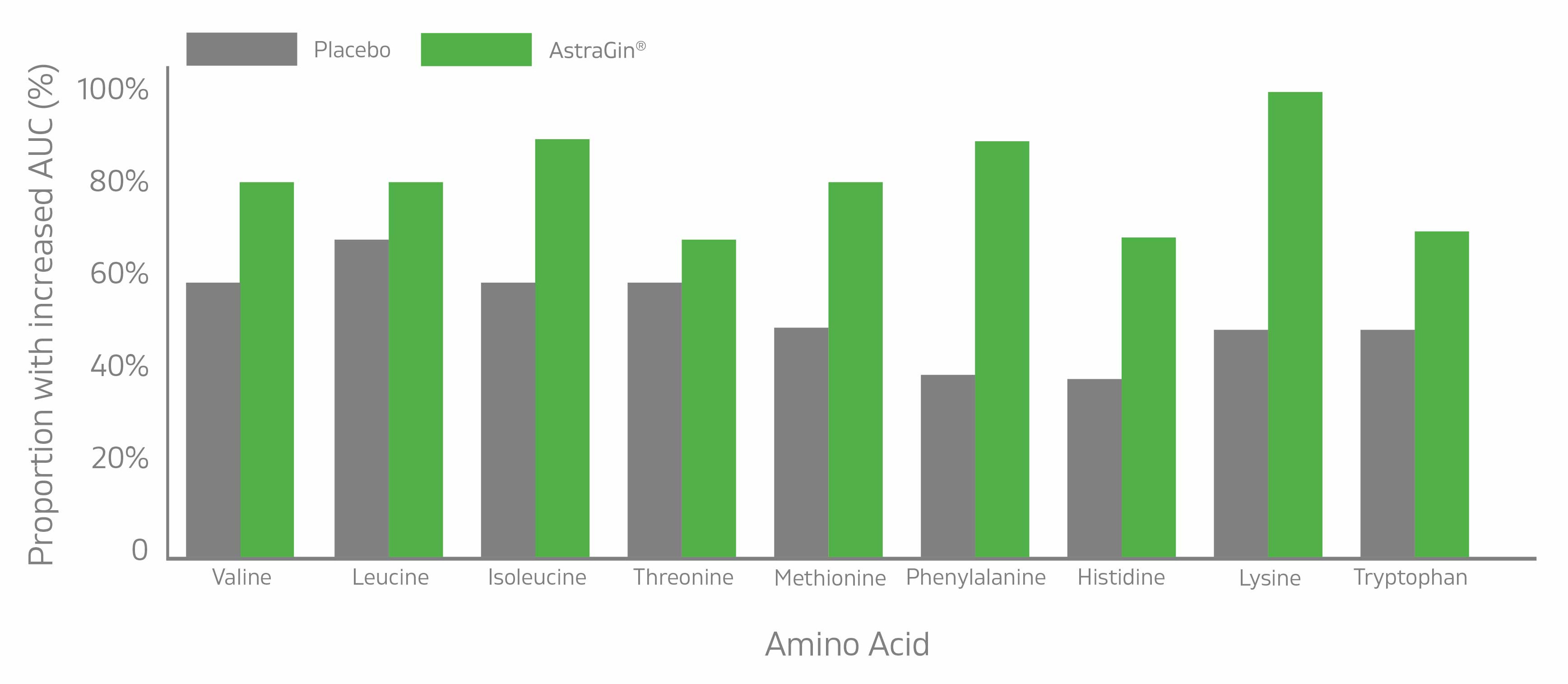
The most striking result in the entire dataset involves the oldest age group. Participants aged 60-80 years showed a 12.74% increase in total essential amino acid (EAA) AUC in the AstraGin group compared to placebo.[1] This wasn't driven by a single amino acid -- all nine EAAs showed higher responder rates in the AstraGin group within this cohort.
Lysine is worth calling out: 100% of older participants in the AstraGin group showed increased lysine AUC, compared to roughly 48% in the placebo group. Phenylalanine, methionine, and histidine followed similar patterns with markedly higher responder rates.

In adults aged 60 to 80, a greater proportion of AstraGin users showed increased AUC across all nine essential amino acids compared to placebo, with lysine reaching a 100% responder rate.[1]
Why older adults? Aging is associated with declining expression of intestinal amino acid transporters, reduced gut barrier integrity, and a condition called anabolic resistance, where muscle tissue becomes progressively less responsive to amino acid stimulation.[1] Improving the upstream step -- getting more EAAs into circulation -- directly addresses one of the core constraints on muscle protein synthesis in older adults.
This positions AstraGin as a natural fit for active aging, healthy aging, and anti-sarcopenia product lines. NuLiv will need to lean into this, these are great results.
-
Muscle Function: Grip Strength and Muscle Mass
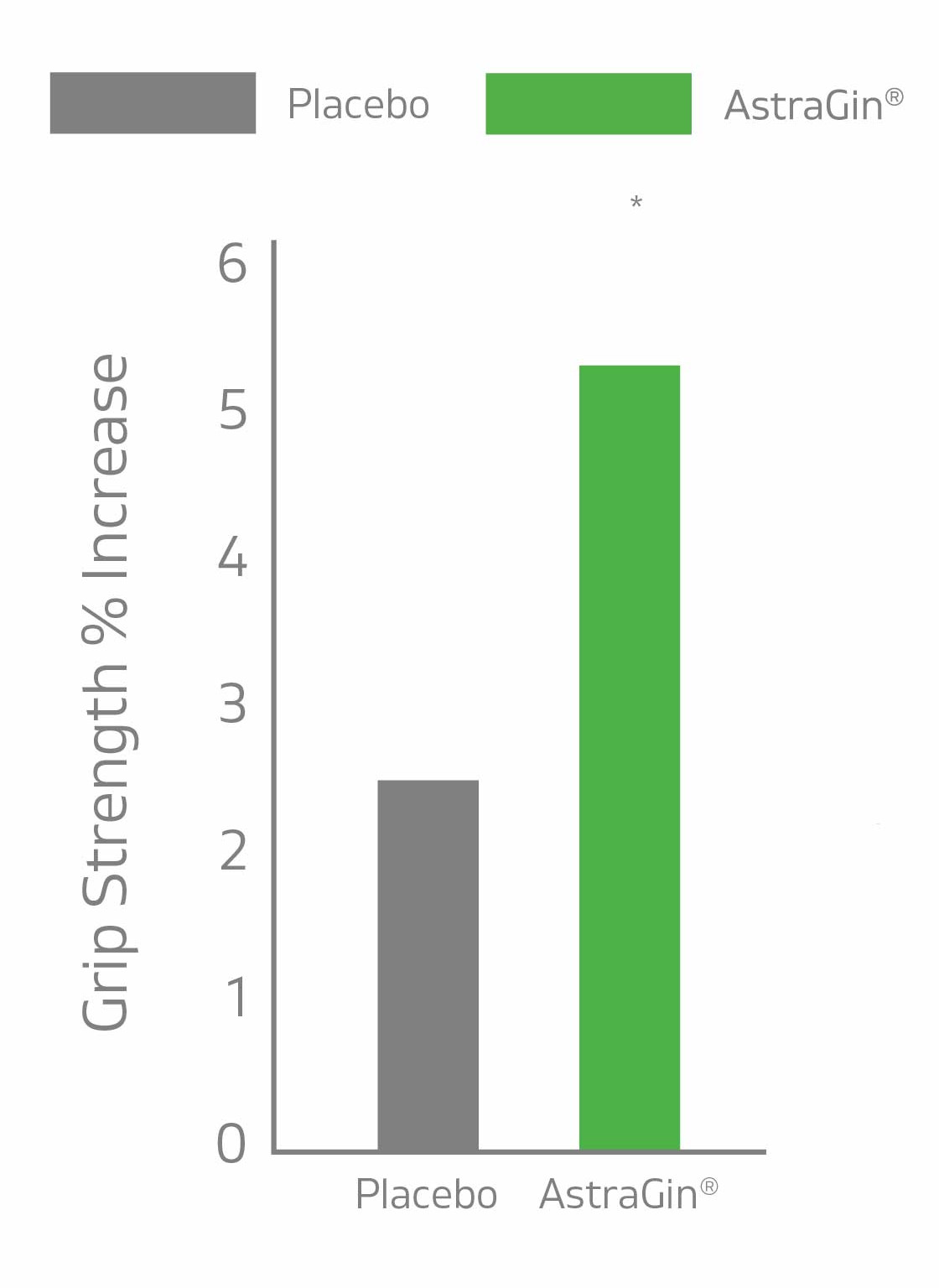
After 4 weeks of supplementation combined with whey protein and resistance training, the AstraGin group gained grip strength at more than twice the rate of placebo (+5.20% vs. +2.44%). A significant main effect of time for grip strength was detected (p=0.002), though the trial's home-based, unsupervised exercise design limits how strongly these functional differences can be interpreted.[1]

After 4 weeks of daily use, AstraGin participants gained grip strength at more than twice the rate of the placebo group (5.20% vs. 2.44%).[1]
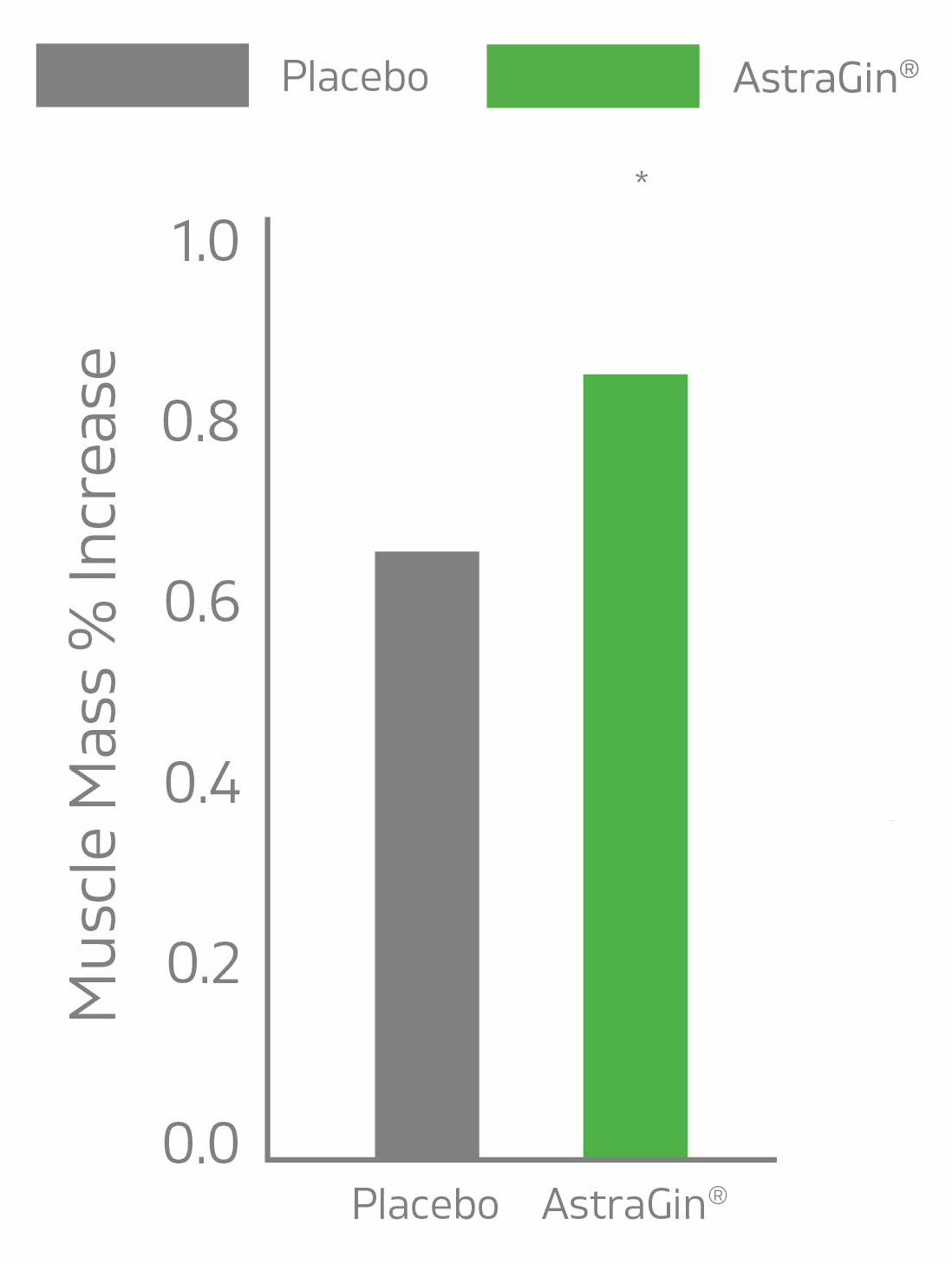
Muscle mass increased by 0.85% in the AstraGin group versus 0.68% in placebo, but this difference did not reach statistical significance. Given the short duration, small sample, and pilot-study design, these muscle composition results are still very encouraging (and consistent with what better amino acid delivery would mechanistically predict) but they need replication in a larger, supervised trial before strong claims are appropriate. Still good to see, it all goes in the right direction.
Body weight remained stable in both groups throughout, which confirms the muscle mass changes weren't confounded by overall weight fluctuations.
-
Gut Barrier Integrity: Zonulin
AstraGin supplementation reduced blood zonulin levels by 13.01% over 4 weeks, while the placebo group dropped only 0.90%.[1] Zonulin is a plasma biomarker for intestinal permeability: elevated levels indicate a compromised gut barrier (sometimes called "leaky gut"). However, between-group differences in zonulin did not achieve statistical significance (p values all above 0.1 for treatment, time, and interaction effects).
The authors offer a reasonable explanation: this was a healthy population with baseline zonulin already within normal range, leaving less room for statistically detectable improvement. The gut barrier data looks better when viewed alongside the ulcerative colitis trial (Lin et al., 2023), which found significant improvements in intestinal barrier function, microbiota composition, and reduced inflammation in participants with active gut dysfunction.[2] Taken together, the data suggest AstraGin may have its strongest gut barrier impact in populations with elevated baseline permeability.
-
Arginine Absorption

AstraGin users saw a 0.85% increase in muscle mass after 4 weeks versus 0.68% in the placebo group, a trending but non-significant difference in this pilot study.[1]
Long-term AstraGin supplementation also produced a 5.05% increase in arginine AUC from the whey protein (with no added free arginine). That's notably smaller than the 17.3% AUC increase seen in the Lin et al. 2023 trial, which used a standalone 5g arginine dose.[3] The gap is explained by context: this study delivered only 0.55g arginine via whey protein, and lysine in the full amino acid matrix competes with arginine for CAT1 transporters. The absorption enhancement story for arginine in pre-workouts and pump products remains firmly grounded in the Lin 2023 data, as this trial simply wasn't designed to test that angle. Either way, it's still great to see increases in one of the industry's favorite amino acids from whey protein alone.
Safety: No Adverse Effects
No adverse effects on liver or kidney function were observed. BUN levels increased in both groups after 4 weeks of elevated protein intake, but all values stayed within the normal clinical reference range (7-20 mg/dL). Creatinine, AST, and ALT remained stable in both groups. At the standard 50mg dose, AstraGin's safety profile is clean across all three age cohorts tested.[1]
Real-World Applications
So how's this work into the real world? Obviously, with protein powders, but we're beginning to believe that the industry needs a resurgence of post-workout supplements (that aren't just cheap carbs and proteins slammed together), and this could work there as well.
-
Protein Powders and BCAA/EAA Products
This is the study's most direct application. Whey protein is a commodity, and amino acid absorption efficiency is a meaningful differentiator brands can now substantiate with human clinical data. A 50mg capsule or inclusion of AstraGin in a formula adds negligible cost relative to whey protein ingredient costs, and it supports on-label positioning around amino acid absorption.

The 4-week requirement to achieve statistically significant BCAA AUC improvements is worth understanding: this isn't an acute, single-serving effect like a stimulant or pump agent. It's a transporter adaptation that compounds over consistent use... which, for a daily protein powder, is exactly the usage pattern your customers have anyway!
Post-Workout Speed
Additionally, as mentioned above, the speed improvements to getting to maximum amino acid levels shows that this would work extraordinarily well in a post-workout specific protein powder. Perhaps the answer isn't to get ultra-fast protein (which is additional cost in an already-increasingly-expensive category) but to add AstraGin instead.
-
Active Aging and Healthy Aging Formulas
The 60-80 age group data is where brands building for the active aging market should focus. A 12.74% improvement in total EAA absorption in older adults addresses one of the most clinically meaningful problems in geriatric nutrition: the fact that older adults need more protein to stimulate the same muscle protein synthesis response as younger adults, and they often absorb less of what they consume.[1]
AstraGin at 50mg offers a targeted, evidence-based tool for this population, and we expect NuLiv Science to lean into this, as the aging population is realizing just how important resistance training and protein intake are.
-
Pre-Workouts and Pump Products
The arginine/NO absorption story from Lin 2023 still anchors AstraGin's pre-workout positioning. This new whey protein trial reinforces the broader "absorption enhancer" identity, and brands can now point to multi-nutrient, multi-population human clinical data rather than relying solely on the arginine study or NuLiv's in-vitro Caco-2 cell data.
Conclusion: A Great Reason to Add AstraGin to Whey
What are the differences in these NuLiv Science ingredients that use similar plants? We dive into the Astragalosides and Ginsenosides inside, and break down the different constituents of four of NuLiv Science's major sports nutrition ingredients.
The Zhuang 2026 trial adds a meaningful new chapter to AstraGin's clinical record. It's the first human trial demonstrating that 50mg of AstraGin can significantly increase BCAA absorption from whey protein after 4 weeks of daily use, with the strongest effects in older adults. The muscle function data trends in the right direction, and the gut barrier findings align with prior research even if they didn't reach significance in this healthy population. Literally everything looks up with AstraGin supplementation.
As a pilot study with n=30, the authors rightly call these results hypothesis-generating -- larger, supervised, longer-duration trials are needed. But as a foundation for product differentiation in protein, EAA, and active aging formulas, this is solid, peer-reviewed human data at the dose brands are already using.
For the full mechanistic background on how astragalosides and ginsenosides drive these effects, check out our Astragalosides and Ginsenosides: Differentiating NuLiv Science's Ingredients deep dive.
Sign up below to follow future AstraGin research and new products featuring AstraGin as it's released:


Comments and Discussion (Powered by the PricePlow Forum)