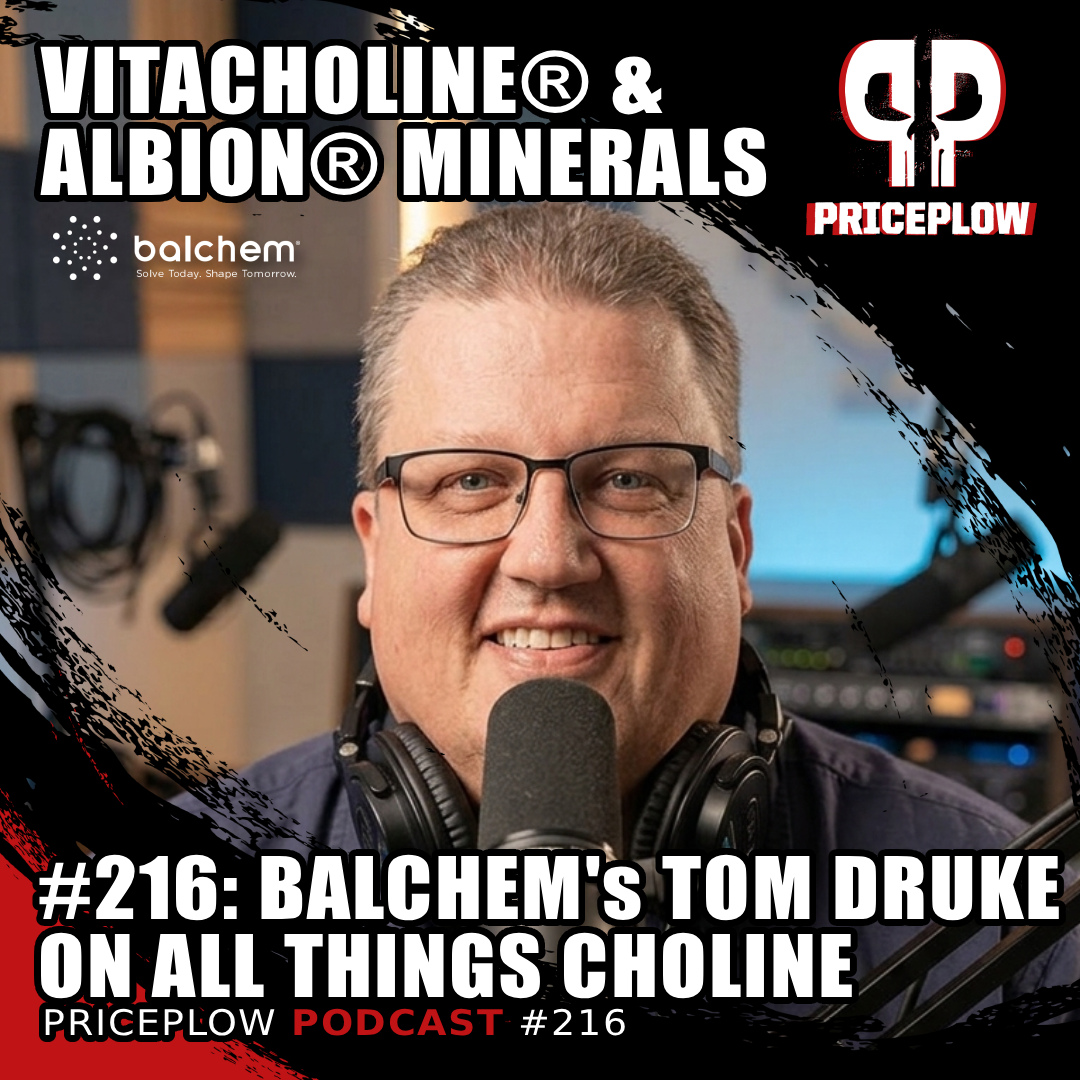
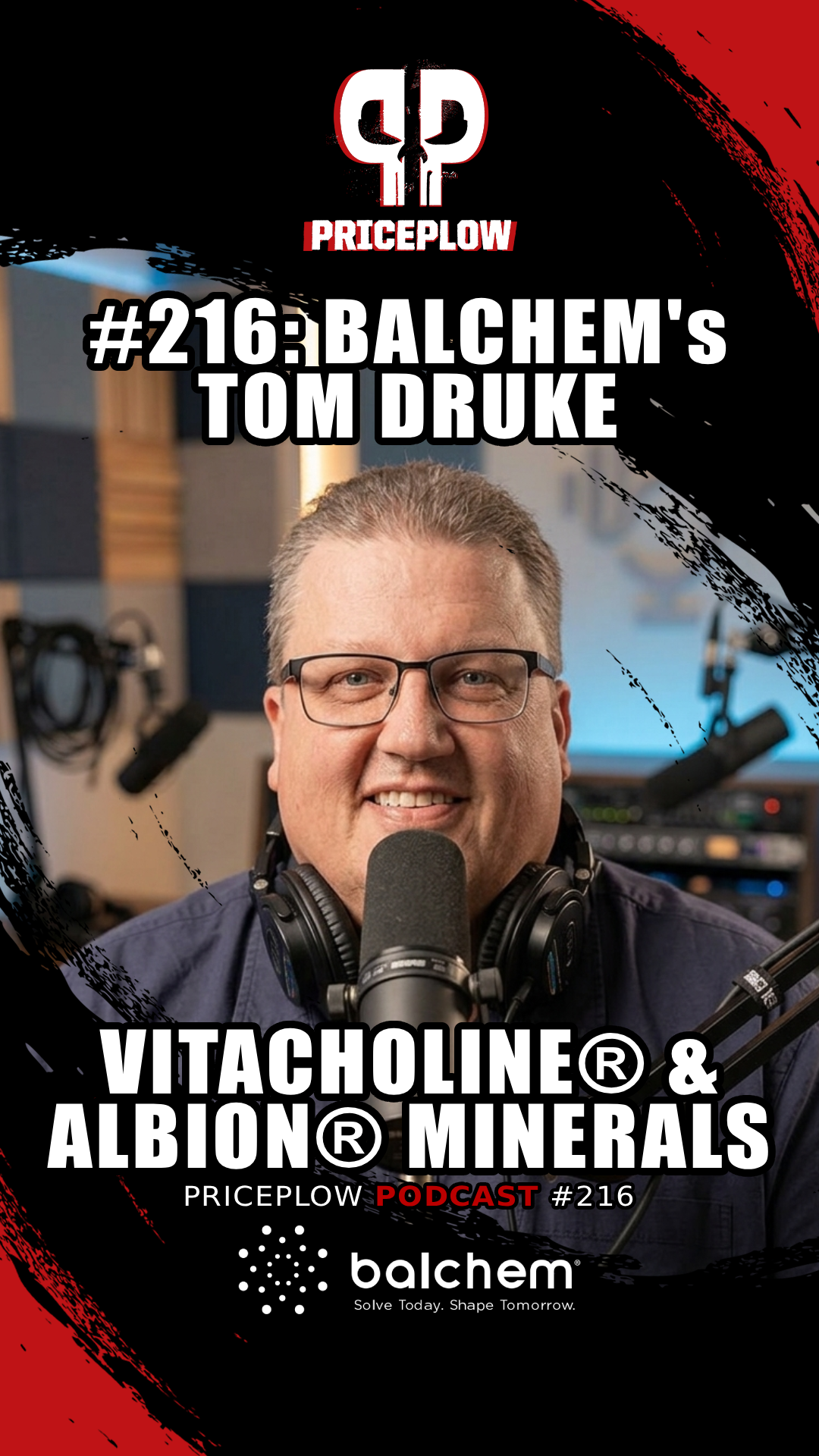
Tom Druke, Senior Marketing Manager at Balchem, breaks down the science of VitaCholine®, Albion® chelated minerals, and K2VITAL® on Episode #216 of the PricePlow Podcast. Plus: the story behind Balchem's first-of-its-kind New York Jets ingredient partnership.
Balchem makes its first appearance on Episode #216 of the PricePlow Podcast. Tom Druke, Senior Marketing Manager at Balchem's Human Nutrition & Health division, joins Mike and Ben to cover three flagship branded ingredients: VitaCholine® (choline bitartrate), Albion® Minerals (chelated mineral technology), and a first look at K2VITAL® (vitamin K2 MK-7).
Tom walks through Balchem's growth story: from roughly 30% human nutrition a decade ago to 60-70% today, driven by strategic acquisitions (Albion® in 2016, then Bergstrom Nutrition for OptiMSM® and Kappa Bioscience, which brought K2VITAL®, in 2022). He also explains the New York Jets partnership launched in May 2024, which Balchem and the Jets jointly described as the first partnership between an ingredient company and a major U.S. professional sports team.
The choline discussion covers depletion in athletes and knowledge workers, the L(+)-bitartrate vs. DL-bitartrate distinction, the connection to nitric oxide, and what a 2015 published study on visuomotor performance revealed about choline's role in focus and fine motor coordination. On the mineral side, Tom unpacks Albion's chelation technology, FT-IR quality verification, and what NOW Foods' 2022 Amazon audit revealed about third-party magnesium products.
This is an educational one, to say the least. Subscribe to the PricePlow Podcast and sign up for Balchem news alerts before diving in!
Subscribe to the PricePlow Podcast on Your Favorite Service (RSS)

Apple Podcasts

Spotify

YouTube
https://blog.priceplow.com/podcast/balchem-vitacholine-216
Video: Tom Druke of Balchem on VitaCholine®, Albion® Minerals, K2VITAL®, and the NY Jets

Podcast: Play in new window | Download (Duration: 1:04:46 — 62.0MB)
Detailed Show Notes: Balchem’s Tom Druke on VitaCholine®, Albion® Minerals, and K2VITAL®
-
0:00 - Introductions: Tom Druke and Balchem
Tom Druke brings about 20 years in consumer packaged goods and nutraceuticals to his role at Balchem. His career started at Reckitt Benckiser before he moved to Wyeth Consumer Healthcare, working on the Caltrate and Centrum businesses. When Pfizer acquired Wyeth, Tom made the jump to Balchem, where he's now been for roughly 13 years. Today he sits inside Balchem's largest division: Human Nutrition & Health, which spans food ingredient systems and the company's Minerals & Nutrients group.
Balchem's portfolio growth has come through three acquisitions: Albion Minerals in 2016, then Bergstrom Nutrition and Kappa Bioscience (maker of K2VITAL®) in 2022. The company's focus on scientifically supported, specialty-form nutrients is the thread connecting all three. Balchem trades publicly on NASDAQ as BCPC.
-
3:30 - The New York Jets Partnership
In May 2024, Balchem launched what Tom and the New York Jets both described as the first partnership between an ingredient company and a major U.S. professional sports team. The campaign promotes VitaCholine under the theme "Supercharge Body and Mind," a fit Tom sees as natural for a sport where game knowledge and in-the-moment cognition carry as much weight as pure athleticism. Dominik Mattern, Balchem's EVP of Marketing (who joined through the Kappa Bioscience acquisition), drove the concept.
Tom describes the in-stadium activation at MetLife: handing out hats and talking directly with fans before halftime. The response is consistent: people genuinely surprised they haven't heard of choline, and quickly connecting to the broader message. Choline isn't only for professional athletes. For anyone trying to be at their best, whatever that looks like, getting adequate intake matters.
-
7:00 - Why Choline Is Essential and Widely Deficient
Choline became an officially recognized essential nutrient in 1998, and the depletion-repletion studies that drove that designation are striking. When dietary choline is removed, subjects show elevated AST, ALT, and CPK (liver enzymes and a muscle damage marker), because the body cannibalizes choline from liver and muscle cells when the diet falls short.
NHANES data from the CDC puts roughly 90% of adults below the adequate intake level, with most falling short by 100 to 200mg per day. The dietary picture has gotten harder over time: liver consumption has dropped sharply, and egg yolks (a top historical source) were largely avoided for decades following the cholesterol concerns of the 1970s and 1980s. Tom notes that macro dietary shift has worked against choline intake for a long time, making supplementation an increasingly practical option for most people.
-
11:15 - VitaCholine® and Natural L(+)-Bitartrate Sourcing

Ghost Legend V4 went from 500mg to 1000mg of VitaCholine® per serving, delivering 400mg of elemental choline right before you train. Nearly 90% of Americans fall short on daily choline intake.
VitaCholine's tartaric acid carrier comes from wine production. The lees (the residue at the bottom of fermentation vats) are refined down to pure tartaric acid, and because this is a natural-origin process, the result is L(+)-tartaric acid, the isomer found in nature. VitaCholine® uses this L(+) source, landing at roughly 40% elemental choline by weight, which sits on the higher end for common choline supplement forms.
Tom addresses the "which form is best" question directly: bioavailability studies measuring the area under the curve over 24 hours show that the same absolute choline content arrives regardless of whether the delivery vehicle is choline bitartrate, Alpha-GPC, or citicoline. The extra molecular attachments in those other forms don't meaningfully change how much choline the body ultimately receives. The practical conclusion is that getting adequate choline quantity matters more than form selection, especially for those who have low-choline diets.
-
14:30 - Choline Depletion in Athletes and Knowledge Workers
Ben describes the experience many hard-training athletes recognize but can't always name: days of mental fog after intense sessions. Natural Body retailer Tim Gritzman pointed him toward high-dose post-training choline as a solution years ago. The physiology tracks: choline is the precursor to acetylcholine, the neurotransmitter that carries signals at the neuromuscular junction. Hard training depletes the substrate fast enough to leave both muscles and cognition running short.
Mike extends the same pattern to trade show and podcasting situations, where hours of concentrated conversation, decision-making, and stress create a depletion caffeine alone can't fix. He calls it the "tired-but-wired" problem: more stimulant running through the system, but the substance behind cognitive drive is still depleted. Tom draws the distinction cleanly: caffeine supports alertness and a wired state, while choline supports the dialed-in clarity and focus that drives actual performance.
-
18:00 - The 2015 Focus Study and Cholinergic Signaling

A 2015 study published in Scientific Reports tested young adults on a visuomotor point-and-click task: a target bouncing across a screen, with subjects aiming as close to center as possible.[1] The group receiving approximately 800mg of choline outperformed the placebo group on targeting accuracy. The researchers also tracked pupillary constriction as an objective marker of cholinergic activity (when the brain has greater acetylcholine availability, pupils constrict measurably), and the constriction correlated with the performance improvements.
Tom notes the study used choline bitartrate and showed onset within roughly 20 minutes, which fits the pre-workout timing window. The mechanism is fine motor coordination via the neuromuscular junction, not a vague general cognitive boost. The studied dose was 800mg of elemental choline, which translates to 2g of VitaCholine®, worth knowing for anyone building their own choline stack.
-
19:00 - GHOST Legend V4: VitaCholine® at 1 Gram
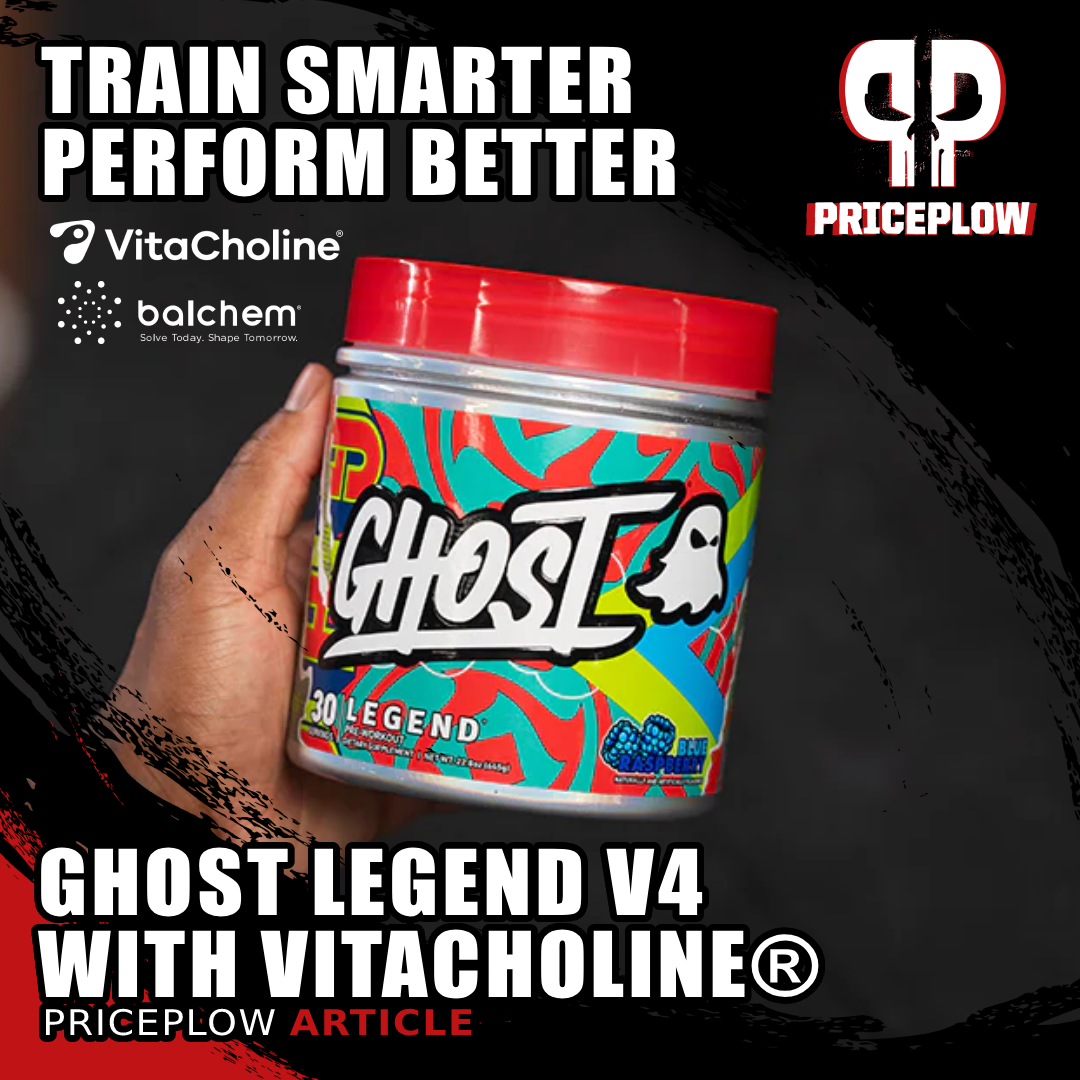
Mike holds up a tub of GHOST Legend V4 on camera to ground the conversation in a real-world application. One scoop delivers 1g of VitaCholine, providing 400mg of elemental choline (73% of the FDA's daily value), alongside 300mg natural caffeine, 6g L-citrulline, and 2.5g betaine. That doubled the VitaCholine dose from V3's 500mg and replaced Alpha-GPC, a change driven by global regulatory compliance rather than ingredient quality concerns. Our dedicated VitaCholine® and GHOST Legend V4 deep dive covers the full dose math and reasoning.
Tom describes the GHOST partnership as something Balchem is genuinely proud of, pointing to the ingredient concentration and GHOST's willingness to invest in a research-backed dose. For the GHOST-side story on V4's development and the Alpha-GPC regulatory context, Dan Lourenço's Episode #143 covers that perspective directly.
-
21:00 - L(+)-Bitartrate vs. DL-Bitartrate: Why Isomers Matter

Choline bitartrate exists in two forms based on the stereochemistry of the tartaric acid carrier. L(+)-tartaric acid is the naturally occurring form, and it's what VitaCholine uses. DL-bitartrate is a 50/50 mix of L- and D-forms, typical of synthetically produced tartaric acid. The D-form doesn't fit the body's receptors the way the L-form does. Tom uses the analogy of trying to fit your right hand into a left-handed glove.
Beyond absorption efficiency, studies have documented crystallization concerns associated with higher D-form concentrations.[2][3] This may partially explain issues in older high-dose safety studies: if the test material was DL-bitartrate rather than pure L-form, the D-fraction could account for some of the issues. Tom notes that natural-origin sourcing through wine production sidesteps the problem entirely, since nature produces only the L(+) form.
-
26:15 - Safe Dosing, Upper Limits, and Genetic Factors
The tolerable upper intake level for choline is 3.5g per day. The highest dietary intake groups in available studies came in around 800mg, so supplemental amounts above typical dietary levels aren't unusual for people with higher cognitive or physical demands. Tom frames individual needs as situation-dependent: athletes, pregnant women, and postmenopausal women all have significantly elevated requirements compared to sedentary adults.
One underappreciated variable is SNPs (single nucleotide polymorphisms), genetic variants affecting how efficiently the body metabolizes choline. Research from choline scientist Dr. Steven Zeisel at UNC Chapel Hill looked specifically at how common these variants are in the general population, finding a meaningful percentage of people who need more choline simply because of genetic inefficiency in processing it. Combined with the 90% dietary shortfall figure, it suggests that most people have some gap to fill, and a subset have a significantly larger one.
-
31:15 - Choline, Betaine, and Nitric Oxide
"Magnesium bisglycinate" on the label doesn't guarantee quality. Albion® Minerals' TRAACS® chelate is the only form backed by clinical trials showing 3–6x better absorption than oxide -- with zero GI distress.
Choline's metabolic role extends beyond the brain and neuromuscular junction. Tom describes a pathway where choline breaks down to betaine, which converts homocysteine (a pro-oxidant amino acid) into methionine. That conversion matters because homocysteine scavenges nitric oxide from the bloodstream.[4][5][6] Adequate choline helps keep homocysteine in check, which in turn supports nitric oxide availability, blood vessel dilation, and nutrient delivery to working muscles.
Tom notes this connection is part of why GHOST Legend V4 pairs 1g of VitaCholine with 2.5g of betaine (trimethylglycine): the two compounds reinforce each other through the same methylation pathway. For athletes focused on training performance and pump, the interaction between choline and nitric oxide physiology adds a meaningful layer to the ingredient beyond cognition alone.
-
34:15 - Albion® Minerals: The Science of Chelation
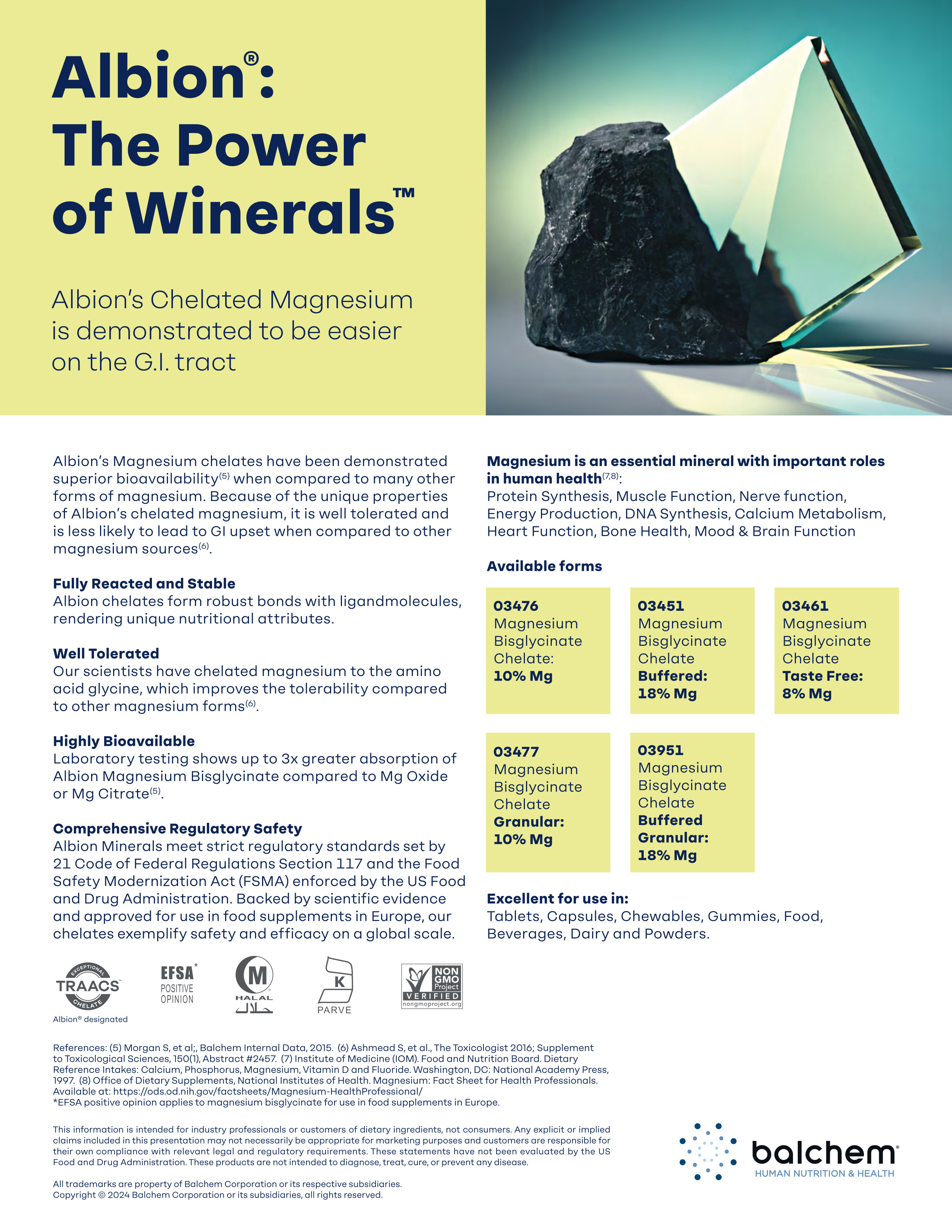
Chelation mimics how minerals appear in plants: a protective molecular structure shields the mineral through the upper digestive tract until it reaches the small intestine, where absorption is highest. Albion® uses two glycine molecules to form this structure, with the mineral centered between them like an infinity symbol at the crossing point. This protects the mineral against both early degradation and anti-nutrients like phytates and oxalates, which bind unprotected minerals before they reach the absorption site. See our Albion® Minerals deep dive for the full technical background.
Inorganic mineral salts like magnesium oxide release the mineral higher in the digestive system, where interference is more likely and gastrointestinal side effects are common at higher doses. The chelated form avoids that by delivering the mineral intact to the right absorption point. Tom summarizes it as mimicking nature: plants protect minerals in complex structures precisely because that's how the body has evolved to absorb them.
-
39:15 - Magnesium Bisglycinate: Deficiency, Bioavailability, and Sleep

Albion Minerals offers five magnesium bisglycinate chelate forms -- from 8% taste-free to 18% buffered granular -- each carrying TRAACS validation, EFSA positive opinion, and Non-GMO Project Verified status for formulators who need documented quality.
About 60% of the population doesn't meet adequate magnesium intake, though that number is difficult to confirm precisely because serum magnesium is a poor proxy for whole-body status. Mike adds the soil quality context: multiple studies have documented declining mineral content in produce over decades, driven by continuous cropping without adequate soil replacement. The practical upshot: eating "enough" vegetables by volume doesn't guarantee meeting magnesium needs at the levels crops contained a generation ago.
Beyond absorption, magnesium bisglycinate's structure delivers an incidental benefit: the glycine molecules used as the chelate support GABA signaling and correlate with higher melatonin levels in research. Tom confirms Balchem has explored this in sleep-support applications, finding a relationship between combined magnesium and glycine intake and improved melatonin production. That mechanism explains why magnesium bisglycinate became the go-to form for nighttime stacks, and it supports more than 300 enzymatic processes in the body during sleep and recovery.
-
42:45 - Quality Verification: FT-IR Testing and the Albion Brand
Balchem kept the Albion® name after the 2016 acquisition because it carried decades of hard-won equity: research by the Ashmead family, over 150 published studies, and a Gold Medallion Program that trained brands and consumers to recognize the mark as a signal of verified chelate quality. That brand recognition was part of what made the acquisition valuable in the first place.
The technical backbone of that reputation is FT-IR (Fourier Transform Infrared spectroscopy), which confirms a chelate is "fully reacted" rather than just blended. Simply mixing glycine powder with magnesium oxide produces elemental amounts that look correct on a label, but the protective chelate structure won't form without the actual chemical reaction. FT-IR catches that difference. The practice of blending and calling it chelated is common enough in the industry that NOW Foods flagged it directly in their 2022 Amazon audit:
-
47:30 - The NOW Foods Amazon Audit: Why Branded Ingredients Matter
71% of vitamin K2 supplements fail quality testing. Balchem's K2VITAL® delivers 99.7% all-trans MK-7, verified by third-party labs twice a year.
In December 2022, NOW Foods published results from testing magnesium glycinate products sold on Amazon, finding widespread label-claim failures among third-party brands. One passage stood out clearly: NOW explicitly stated it did not test most products claiming to use Albion Minerals, because those products "are known to be high-quality and specialist in fully reacted magnesium glycinate." That exclusion was a meaningful industry acknowledgment: Albion's quality standing was so well established that testing it was considered unnecessary. Read the full NOW Foods methodology and results.
Tom and Mike both note that Amazon tightened its label accuracy requirements in response to the audit. The broader point Tom draws: branded ingredients create accountability that generic powders don't have. Putting "Albion" on a label means buying from Balchem and facing the consequences of any discrepancy. The brand name works as both a consumer signal and an enforcement mechanism.
-
50:45 - K2VITAL® and Other Albion® Minerals
Tom gives a first-look overview of K2VITAL®, brought into Balchem's portfolio through the Kappa Bioscience acquisition in 2022. Produced in Norway, K2VITAL reaches 99.7% all-trans MK-7, the biologically active configuration. The cis form absorbs poorly by comparison, making the trans-to-cis ratio a meaningful quality metric. Tom's functional framing: K2 directs calcium from the bloodstream into the bones, supporting healthy skeletal mineral status. Our K2VITAL® deep dive covers the full science, including the Norway origin story and what all-trans purity means in practice.

On the broader Albion mineral portfolio, Tom walks through the "big four": calcium (with DimaCal® and Calci-K® as specialized forms for specific applications, including Calci-K® for dairy), zinc (ZincMax, launched during COVID with a higher elemental zinc percentage than prior-generation chelates), and Ferrochel® for iron.
Ferrochel® holds a distinction few ingredients earn: the World Health Organization has cited it as a model for chelated iron in food fortification programs. Balchem supplies Ferrochel in government sugar fortification initiatives, including a program in Guatemala, getting absorbable iron into a dietary staple for populations where iron deficiency is common.
-
1:00:00 - Looking Ahead: Choline Science and Longevity
Tom points to an ongoing study at the University of Vermont on choline in postmenopausal women, conducted using fMRI assessment. The science context: women have two pathways for endogenous choline production, including the PEMT pathway, which runs through estrogen and produces DHA-rich phosphatidylserine. When estrogen drops during menopause, so does that entire production route, creating a much sharper choline gap than men experience. Tom connects the observed brain fog that many postmenopausal women report to this drop in endogenous choline production, while noting clearly that this is his informed interpretation rather than established science.
The broader framing Tom closes with is longevity in its functional sense: not extending lifespan, but maintaining the physical and cognitive capacity to do the things you're doing now, for longer. That's where ongoing VitaCholine research is headed, and where he sees the greatest growth opportunity for the brand.
Where to Follow and Learn More
Connect with Tom Druke and Balchem
- Balchem Human Nutrition & Health on LinkedIn
- Balchem Corporation on LinkedIn
- Instagram: @balchem.hnh
- Balchem Human Nutrition & Health Website
Balchem Ingredient Brands
PricePlow Resources
- Balchem on PricePlow: Sign up for news and product alerts
- VitaCholine® in GHOST Legend V4: The Pre-Workout That Takes Your Brain as Seriously as Your Bench Press
- K2VITAL: All About Vitamin K2 and Why Quality Matters
- Magnesium Bisglycinate Use Surges, with Albion® Leading the Magnesium Boom
- Dan Lourenço #6: Ghost Legend V4 and the Ghost 100 Year Plan | Episode #143
External Resources
Big thanks to Tom Druke for a first-time, deep-dive look at Balchem and the science behind VitaCholine®, Albion® Minerals, and K2VITAL®. This is episode one from Balchem on the PricePlow Podcast, and a dedicated K2VITAL deep-dive episode is already on the horizon.
Thanks to PerfectShaker for sponsoring the 2026 PricePlow Podcast season. Check out their legendary shaker cups at PerfectShaker.com or grab one through PricePlow.com/perfect-shaker, and read about the brand story in Darren Thompson's Episode #209.
Subscribe to the PricePlow Podcast on any platform, sign up for Balchem news on PricePlow, and leave us a great review on iTunes and Spotify!
Subscribe to the PricePlow Podcast on Your Favorite Service (RSS)
Apple Podcasts
Spotify
YouTube


Comments and Discussion (Powered by the PricePlow Forum)