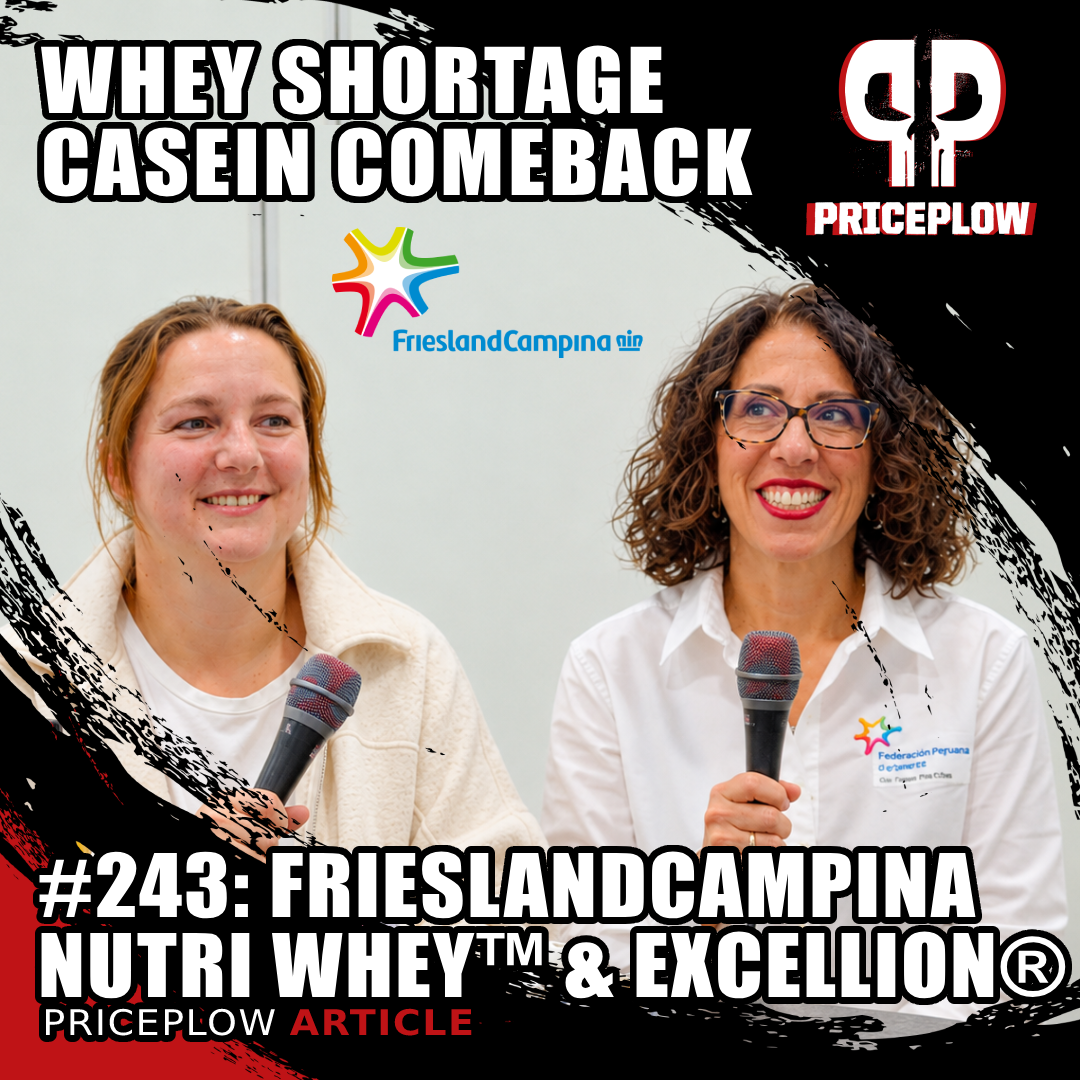
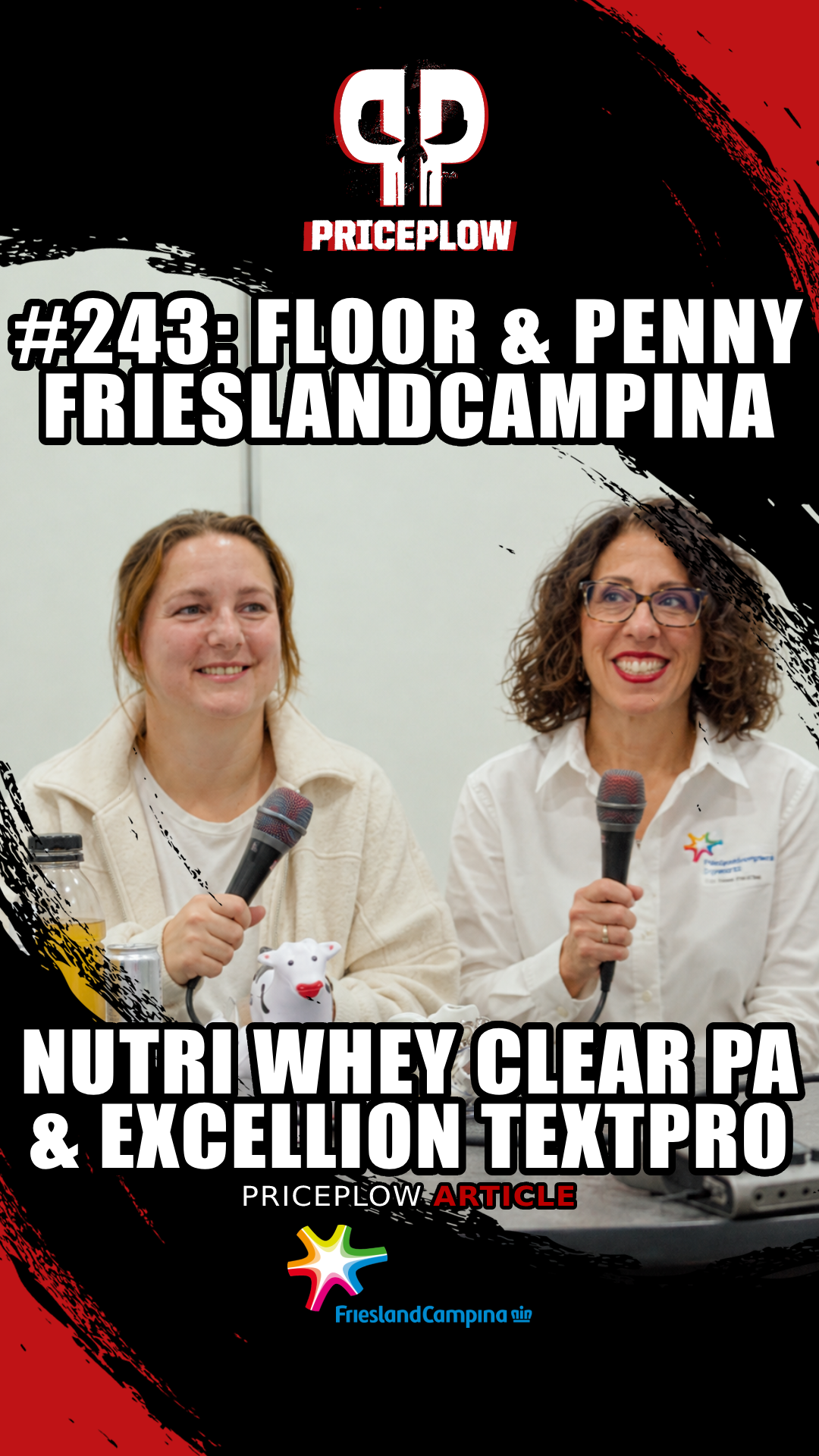
Floor van der Horst (Global Marketing Director, Performance & Active Nutrition) and Penny Antonopoulos (North America Marketing Manager) of FrieslandCampina Ingredients break down the coming whey shortage, caseinates, fermented whey, and the new Nutri Whey™ Isolate Clear PA on Episode #243 of the PricePlow Podcast.
Whey supply keeps falling behind protein demand, and FrieslandCampina expects the gap to keep growing. On Episode #243 of the PricePlow Podcast, Mike and Ben sit down at SupplySide Global 2026 with Floor van der Horst, Global Marketing Director for Performance & Active Nutrition, and Penny Antonopoulos, North America Marketing Manager for Performance & Active Nutrition. Floor shares the company's forecast of a 60 to 70 kiloton whey shortage by 2030, then walks through how the farmer-owned dairy cooperative is helping brands keep up: more whey capacity, a full lineup of caseinates, a fermented whey, and the new Nutri Whey™ Isolate Clear PA for clear protein drinks.
It's the perfect follow-up to our Casein Comeback deep dive, and what a fun episode this was. FrieslandCampina's applications team brought six concepts for us to taste, and every one of them landed. Mike's favorite was the blueberry lemon Protein NutriBites, Ben's was the Protein Harvest grain bar, and Ben called the clear drinks one of the best clear protein experiences yet, sparkling or still!
Catch every episode by subscribing to the PricePlow Podcast wherever you listen, and sign up for our news alerts before we get into it:
Subscribe to the PricePlow Podcast on Your Favorite Service (RSS)

Apple Podcasts

Spotify

YouTube
https://blog.priceplow.com/podcast/floor-van-der-horst-frieslandcampina-243
Video: Tasting FrieslandCampina’s Protein Concepts at SupplySide Global

Podcast: Play in new window | Download (Duration: 1:01:46 — 61.1MB)
Detailed Show Notes: Whey, Caseinates, and Clear Protein with Floor van der Horst and Penny Antonopoulos
-
0:00 - Introductions
Ben opens the show fired up. After months of discussing protein shortages, Ben finally gets to talk protein with a company connected to the milk itself. Mike welcomes Floor and Penny, who are new to the PricePlow ecosystem but far from new to the industry.
Floor jokes that as a "Dutchie", cows are part of the heritage. Floor has spent more than 14 years at FrieslandCampina, mostly in ingredients, and has now completed the marketing "bingo card" by leading the medical nutrition, early life nutrition, and performance and active nutrition segments. Penny joined the company about ten months ago, bringing more than 25 years of B2B ingredient experience across nutrition, personal care, functional food, and beverage.
-
2:00 - A Farmer-Owned Dairy Cooperative
FrieslandCampina is more than 150 years old, and Floor says the most important thing to understand is that it's a cooperative owned by its member dairy farmers. It's roughly a €13 to 14 billion company across consumer and business sales, and the B2B ingredients side, where Floor and Penny work, accounts for about €1.5 billion of that.
Beyond ingredients, FrieslandCampina sells dairy products and finished formulas, including infant formula, across Europe, the Middle East, Africa, South America, and Asia-Pacific. Penny adds that it also serves the professional baking world. Mike can't wait to try some of what the team brought.
-
3:15 - The Protein Boom Outruns Supply
Mike frames the problem every listener knows by now. Whey supply and pricing come up on nearly every episode, and with everyone focused on whey, the industry forgot about the other half of milk protein. Ben loves that this conversation comes straight from the source, since PricePlow mostly talks protein with finished-goods brands and alternative-protein companies.
Floor traces the demand curve back several years. Consumers are more health-conscious and more willing to spend on nutrition than ever, starting with performance athletes and now spreading to everyday shoppers. Then two big movements hit: an aging population focused on longevity, and GLP-1 medications, which created demand for companion products that help users get enough micronutrients and avoid losing too much muscle.
Together, Floor says, they "massively spiked demand for protein to such an extent that the world is not able to cope." Everyday foods and drinks are getting protein makeovers too (Floor points to Starbucks), in a market Floor puts at about $100 billion and growing fast.
-
6:30 - Racing for the Last Whey Pools
Mike asks how the shift looked from FrieslandCampina's side. Floor explains that ingredient suppliers tend to focus on the opportunity GLP-1s create: nutrient-dense products that make a difference in someone's life. The flip side is what people stop eating. Everyday foods, from cheese and basic dairy to heavily processed foods, are declining.
Whey supply was always limited by how much cheese gets made, so companies have spent years chasing the remaining whey pools, racing to see "who can get the last pools of whey." Ben notes that the GLP-1 support sets retailers rushed out faded quickly, while protein consumption kept climbing. It all moved so fast that everyone was caught off guard, Floor says. Infant nutrition draws on the same whey, so those ingredients got scarcer and pricier, too.
-
10:15 - Quality, Not Just Quantity: Consumers Blinded by Whey?!

Casein is due for a comeback, and not for nostalgia reasons. Whey prices are at record highs. Casein is 80% of milk's protein, comes from skim milk instead of the cheese vat, and the research kept supporting it the whole time it was out of fashion.
Floor brings up our Casein Comeback article and calls protein demand a structural need, so the world needs every protein source it can get. Consumers have been "blinded" by whey, Floor says, and while whey has a lot going for it, dairy has more to offer. The next step is teaching shoppers about protein quality, not just quantity, and matching protein sources to their needs, their day, and their routine.
-
11:00 - Can Cheese Keep Up?
Before the casein talk takes over, Ben asks the cheese question: if whey depends on cheese, is there a way to sell more cheese? Floor says FrieslandCampina hasn't seen a negative impact on its own cheese business or a decline in whey. If anything, it's investing more in whey and getting more out of its capacity.
Floor also sees room to rethink cheese itself as a nutrient-dense food, with new portions and formats. Ben agrees that cheese belongs in the same nutrient-powerhouse conversation as milk proteins, maybe just not American cheese singles. Floor's response: "From a European perspective, I would always say American cheese, I'm not sure whether I would call that cheese."
-
14:30 - Floor Does the Whey Math
A self-described numbers person, Floor puts the problem in context. Global cheese is still growing about 2% a year, while the health-conscious consumer segment is growing 10% or more. "So do the math", Floor says. If cheese grows at 2% and lifestyle nutrition at 10%, there's a ceiling on how much whey reaches the market.
Fortunately, whey isn't the only option. Floor lists casein from milk, plant proteins, and new developments in precision fermentation and alternative proteins, all of which the world needs for good nutrition. Mike adds that pizza, a huge outlet for mozzarella, is declining too, and that's a lot of cheese to make up for.
-
15:45 - The U.S. Market and Longevity
Penny notes that the picture differs inside and outside the United States, where GLP-1 use is especially strong and is changing eating occasions across the whole food cycle. Much of FrieslandCampina's production happens in Europe for export, though the company has a strong U.S. presence, and Penny sees a bigger conversation ahead about meeting U.S. demand.

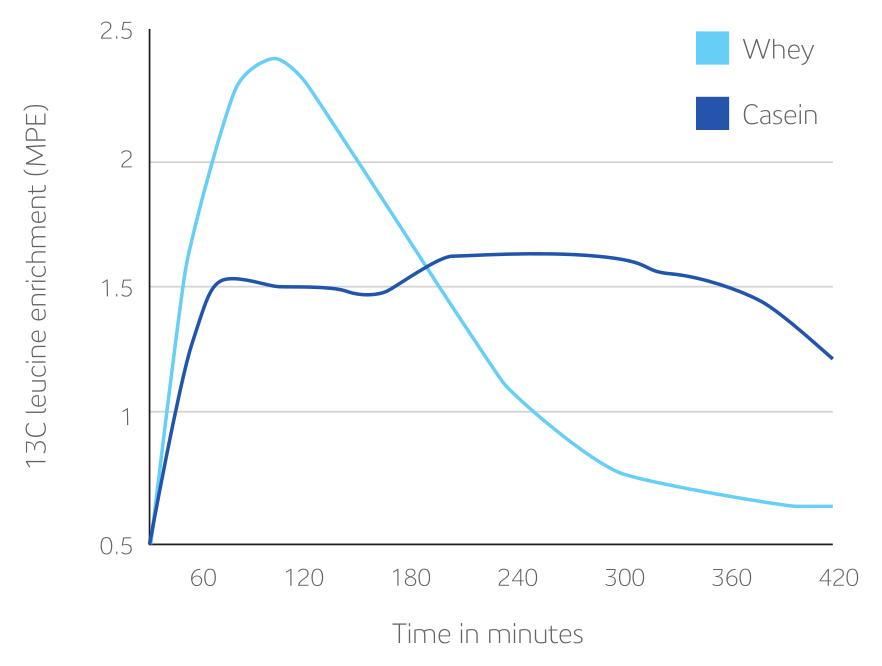
Whey spikes near the 100 minute mark then falls off, while casein holds a flat plateau out past seven hours.
Whey remains the gold standard for building muscle around workouts, Penny says. But the everyday active consumer wants protein throughout the day for longevity and mobility, and wants to hold onto lean mass with age.
-
18:30 - A 2030 Whey Shortage Forecast
Ben's theory is that growth, not falling cheese sales, is the bigger driver: demand is simply outpacing supply. Floor agrees, at least worldwide, and shares a number that got Mike's attention:
We do actually predict a 60 to 70 kiloton shortage of whey by 2030.
-- Floor van der Horst, Global Marketing Director, Performance & Active Nutrition, FrieslandCampina Ingredients
Consumers will keep looking for whey, Floor says, and the industry needs to help them find alternatives. With that, Mike asks for the portfolio tour.
-
19:15 - Whey Isolates and a Clear Newcomer
Floor starts with dairy proteins, FrieslandCampina's main focus. The whey lineup begins with whey protein isolate in instant and regular grades, and the newest addition debuts at this show: Nutri Whey Isolate Clear PA, a pre-acidified isolate built for clear beverages.
The beverage market is exploding, Floor says, and this ingredient brings refreshment and hydration together with muscle maintenance. It works in both sparkling and still drinks. Ben can't stop eyeing the unlabeled cans on the table, and Mike jokes about the "sketch baggies and unlabeled cans", so Floor promises a tasting later, with "a little bit of building up anticipation."
-
20:30 - WPC80 from Caseinate Production
Next come the WPC80s, and FrieslandCampina makes two kinds. One comes from cheese whey, the market standard. The other comes from acid whey left over from the company's caseinate production.
Mike breaks it down. Milk protein is about 80% casein and 20% whey, so when FrieslandCampina makes caseinate, whey is what's left, and that whey differs from cheese whey. Floor says it's higher in BCAAs and tastes more neutral. FrieslandCampina sells it as Nutri Whey 800 in instant and regular grades, along with Textrion® PROGEL 800 for texturizing.

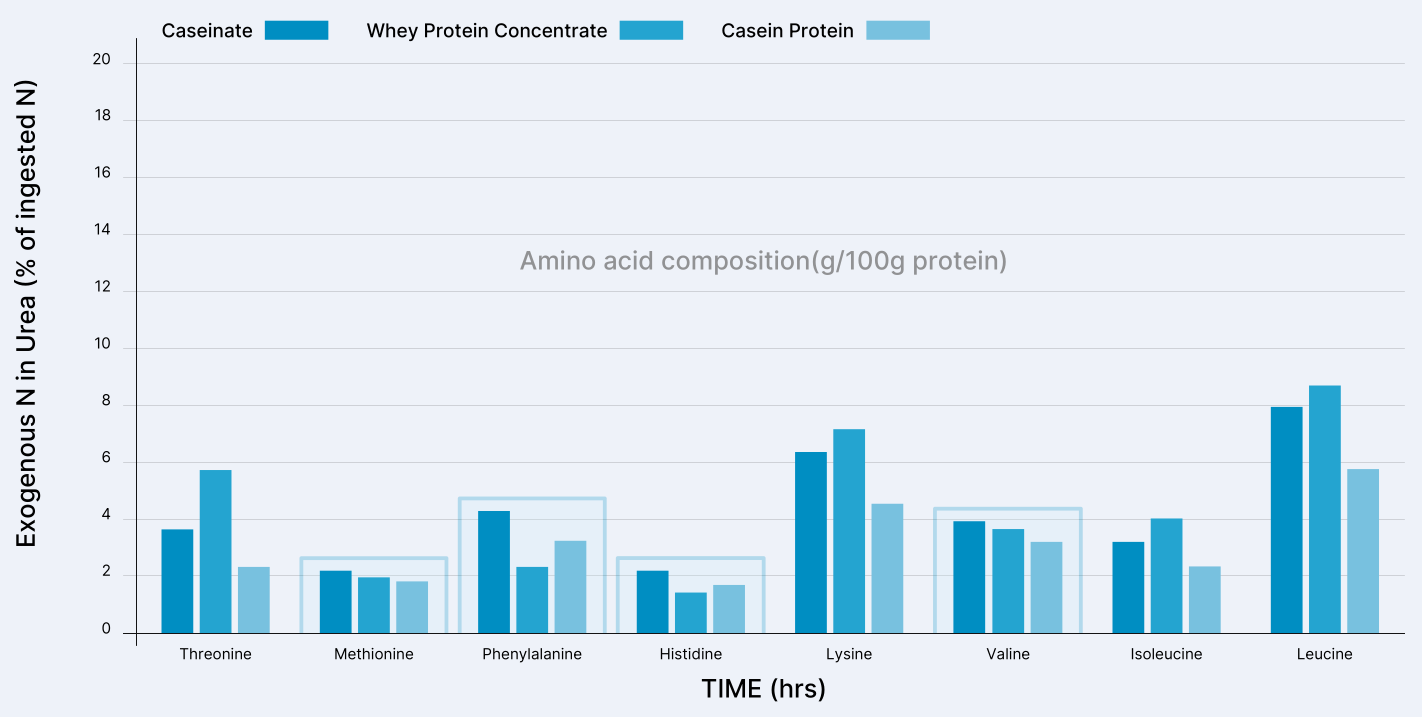
Caseinate tops both comparators in methionine, phenylalanine, histidine, and valine, while whey keeps its lead in leucine and lysine.
Supply is capped by caseinate output, which leads Ben to a fun conclusion: "So we need to sell more casein." Mike wants to try it, and Penny promises to follow up with samples.
-
23:15 - Native Whey and Micellar Casein
Ben asks whether this is native whey. It isn't, though FrieslandCampina makes native whey, too. Fresh milk goes through microfiltration, which separates the serum (whey) proteins from micellar casein. The serum proteins go into infant nutrition, while the micellar casein goes to performance and active nutrition customers, where it makes a great high-protein ready-to-drink (RTD) shake.
And that, Floor notes, is only the whey side of the portfolio.
-
24:15 - Matching Protein to Format
Mike asks a brand-side question: with chocolate and sweetener added, would you actually taste the difference between proteins? Floor says it depends on the format (bar, RTD, or ready-to-mix powder), the health benefit you want, and how much protein you're adding. That's why Floor wants a versatile milk protein portfolio on hand.
Ben and Mike float a fun experiment with identical cocoa, sweetener, and flavor, changing only the protein. Penny expects clear differences in creaminess, especially between casein and whey. Mike's advice for small brands is to talk to a supplier like FrieslandCampina directly, since there are far more options than a stock whey isolate. Ben notes the catch: contract manufacturers keep certain proteins on hand, and special orders take extra work.
-
26:30 - Tailored Ingredients, Not Commodities
Ben figures one whey must outsell the rest as a commodity, and Floor pushes back: "I don't like the word commodity." Every portfolio needs standards like WPI and cheese-based WPC80, but brands that want to stand out need tailored ingredients built for a specific job. A bar that stays soft for its whole shelf life needs something different from an RTD.

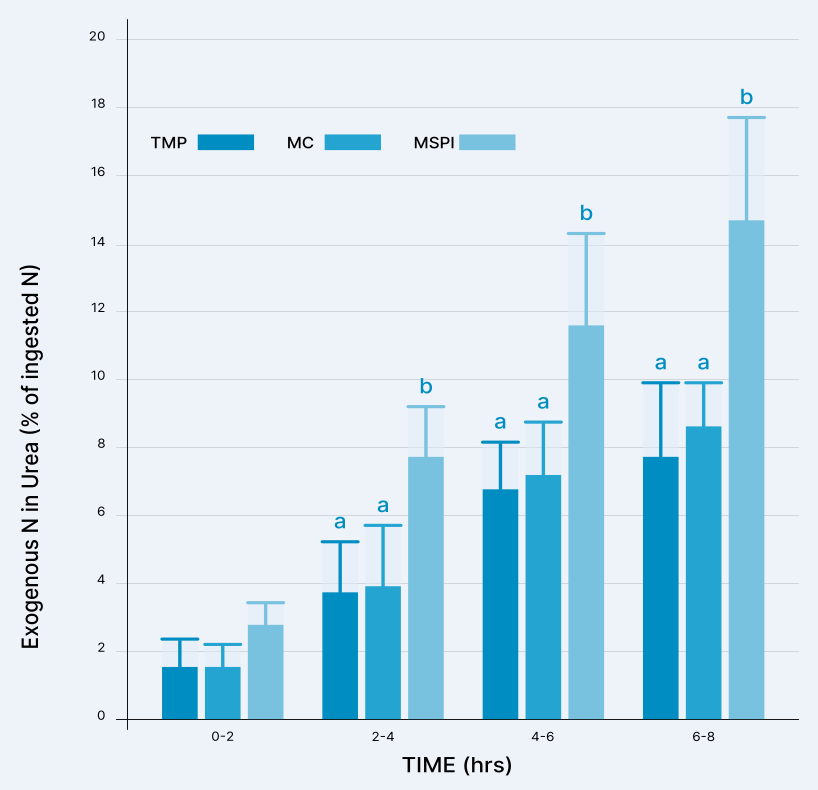
Micellar casein tracks total milk protein for eight hours while the soluble isolate burns off roughly twice as much nitrogen.
Penny adds that formats keep evolving. Ready-to-mix powders now blend several proteins, RTDs work as meal replacements and late-night snacks, and protein keeps moving into bars, baked goods, and breakfast. Each one needs the right protein spec to hit its taste and texture targets.
-
28:45 - Nutri Whey Fermentis: Fermented Whey Protein
Next is one of FrieslandCampina's proprietary ingredients: Nutri Whey Fermentis, a fermented whey combined with prebiotic galactooligosaccharides (GOS). It's built for athletes who take in a lot of protein, since big protein loads don't always sit well. Floor loves to exercise and knows the feeling. FrieslandCampina has run multiple studies on it, and Floor says they show "the digestion improves, but also that the uptake of proteins and the muscle synthesis improves."
Mike asks if this is precision fermentation, and Ben is glad Mike asked. It isn't. FrieslandCampina ferments the protein itself with probiotic-type cultures and adds prebiotics, so the finished ingredient delivers fermented protein, prebiotic, and postbiotic together. As Ben puts it, this is "much more of a traditional thing."
-
31:00 - Tasting the Protein NutriBites
Time to eat. Penny hands over the blueberry lemon Protein NutriBites, built on Nutri Whey Fermentis and GOS prebiotic fiber. Three bites deliver 15g of protein and 8g of fiber, about 5g of protein per bite, and the fermentation gives them a yogurt-like flavor that fits the kefir trend.
"This is so good", Mike says, and Ben thought the center tasted like jelly (in a good way). Mike's only question is how they'll hold up after nine months on the shelf. Floor's answer: they also contain Excellion® Textpro, FrieslandCampina's proprietary caseinate ingredient, which keeps them just as chewy at nine months as they are today.
Ben would use them post-workout, if only they were bigger. Floor explains the size: these were made for GLP-1 users who need smaller portions that still taste great.
-
34:00 - Vivinal GOS, a Milk-Based Prebiotic

Mike asks where the fiber comes from. FrieslandCampina adds the GOS, and it's dairy-based: the company makes it from lactose in the Netherlands and sells it as Vivinal® GOS. Floor says it's in almost every premium infant nutrition product around the world. It's also sold on its own, and it shows up again later in the episode.
-
35:00 - Four Caseinates, Four Minerals
With whey and the proprietary ingredients covered, Floor moves to milk proteins. FrieslandCampina makes a full range of caseinates for different needs, including calcium, sodium, magnesium, and potassium versions, plus roller-dried grades.
Mike lights up at potassium and magnesium, since nearly all the research and marketing focus on calcium and sodium. Floor notes that magnesium caseinate is a specialty product used in medical nutrition today, with more potential ahead. Consumers started by asking how to hit their protein macros, Floor says, and now they're asking which type of protein. Caseinates can deliver benefits beyond the protein itself.
-
36:30 - Casein 101 with Miss Muffet
Ben asks for a beginner's explanation, and Penny reaches for Little Miss Muffet's curds and whey. About 80% of milk protein is casein, and casein curdles in the stomach, which helps keep hunger at bay longer. To make caseinate, FrieslandCampina skips the cheese step, acidifies the milk to separate the casein, and then adds a mineral salt that changes how the protein behaves.
Calcium and sodium caseinates are the two main options in performance nutrition, but Penny sees magnesium and potassium as a way for brands to differentiate in the "protein plus" trend. Mike wants to bring back nighttime casein, and Penny calls a magnesium version a two-in-one that could also suit recovery products. How much magnesium per serving? Penny promises to follow up.
-
39:30 - The Caseinate Research Sports Nutrition Missed

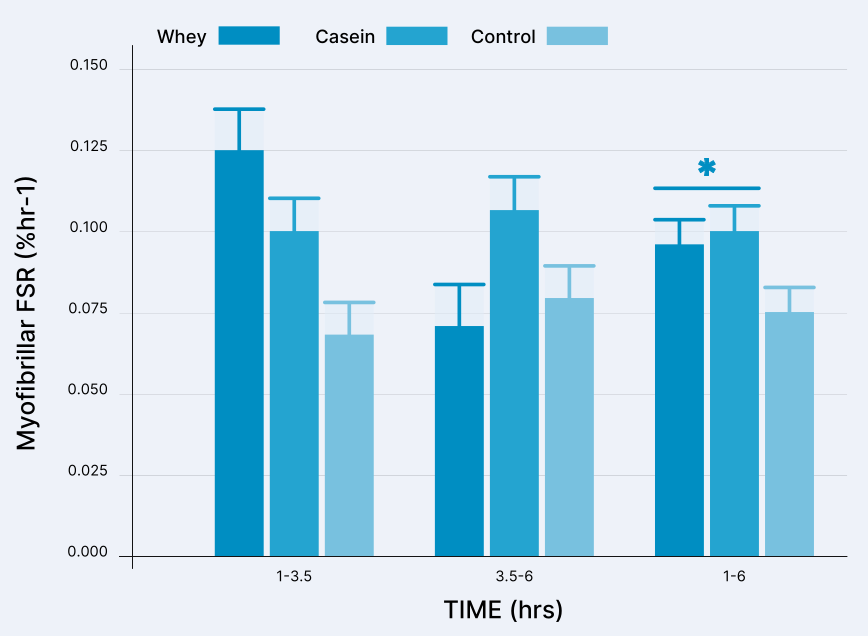
Whey leads in the first 3.5 hours, casein takes over from 3.5 to 6, and the two tie across the full window.
Mike lays out the history. Back in the day, you weren't cool unless you took casein before bed and whey after training. Then whey took over, thanks to its higher leucine content and speed, and sports nutrition moved on. But most of those classic whey-versus-casein studies used micellar casein, and caseinate research kept going after the industry stopped watching. We covered that research in the Casein Comeback, and Mike suggests brands that want research-backed options start there.
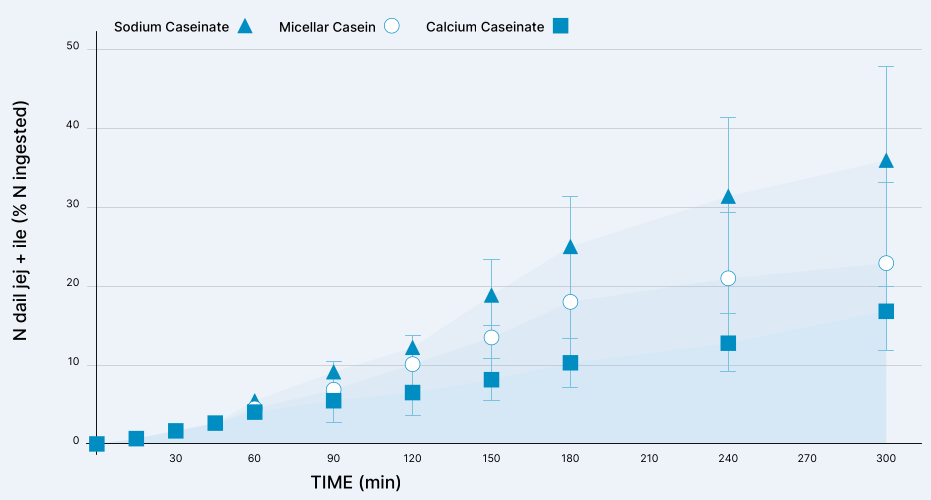
Penny adds that sodium caseinate has an absorption profile very similar to whey's, a point one of FrieslandCampina's nutrition scientists made at the Sports and Active Nutrition Summit, while calcium caseinate digests more slowly. That lets brands choose a faster or slower casein. Mike's personal interest is potassium and magnesium, both shortfall nutrients, and a nighttime casein story that practically writes itself.
-
42:00 - Total Milk Protein and Satiety
Mike points to research suggesting a mix of whey and casein offers the best of both worlds. FrieslandCampina sells a total milk protein that combines the two, Floor says, and the applications team helps customers find the right ratio instead of selling a fixed blend. The caseinate brings creaminess and sensory appeal along with nutrition.
Floor also flags satiety, which got far less attention back in the 2010s. Whey is great, but it digests fast, and hunger can come back quickly. A slower protein like calcium caseinate, slower than both sodium caseinate and whey, keeps blood sugar and fullness steadier through the day, Floor says. Mike calls it getting off the sugar-crash roller coaster.
-
44:00 - Why Skip Ultra-Filtered Milk?
Mike asks if FrieslandCampina plays in ultra-filtered milk. Floor finds the trend interesting but points to a couple of limitations. Ultra-filtered milk has to be processed within hours, so the dairy plant needs to sit close to the customer's factory. With most of FrieslandCampina's factories in the Netherlands, that doesn't make economic sense, though it can for some U.S. manufacturers with scale. Nutritionally, Floor says, it's basically a milk protein concentrate (MPC) with "a really good marketing story to it."
-
45:15 - Coconut Energy Protein Water

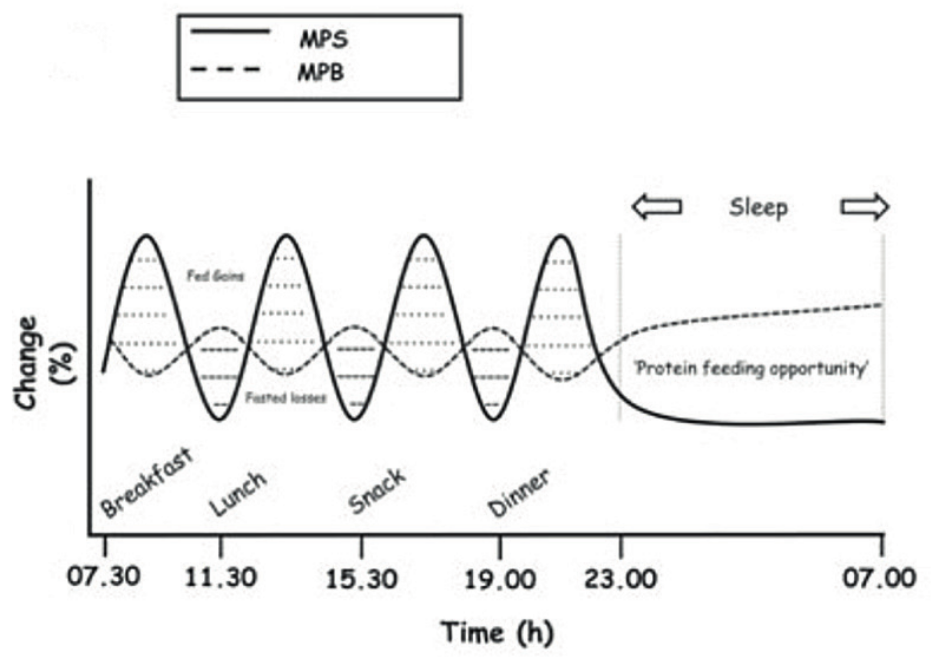
Four meals drive synthesis peaks, then breakdown climbs through the overnight gap that pre sleep protein is meant to fill.
Finally, the cans! Penny pours the still drink first: a Coconut Energy Protein Water built on Nutri Whey Isolate Clear PA. It packs 30g of protein, natural electrolytes from coconut water, and vitamins B5, B6, and B12, all in a tropical flavor.
Ben's first words: "Great job getting rid of the astringency." Mike agrees the astringency is dialed way down, and as a coconut fan, Mike loves it, even at room temperature. Ben likes the electrolytes and the drink's body. Floor says FrieslandCampina is super excited about this ingredient, which comes to market in 2027.
-
46:45 - More Than Doubling Whey Capacity
Back to Ben's question: is Floor worried about the coming shortage? Not for the industry. FrieslandCampina is heavily invested in helping customers keep up:
- U.S. production: Earlier in 2026, FrieslandCampina acquired Wisconsin Whey Protein, giving it locally sourced and locally produced whey protein in the United States.
- A bigger isolate plant: The company just finished expanding its whey protein isolate factory in the Netherlands, and in 2027 it'll shift part of that capacity to pre-acidified clear isolate.
- More WPC80: Additional WPC80 capacity also comes online in 2027.
All told, Floor says FrieslandCampina is "more than doubling our capacity" to grow with its customers. And whey is only part of the story, alongside milk proteins and the company's bioactives portfolio.
-
48:15 - Rocket Pop and Two Application Labs
Next comes the sparkling drink: a Rocket Pop Clear Sparkling Protein Beverage with a little nostalgia, 20g of protein, and 4g of fiber from Vivinal GOS.
Ben asks if these are in-house creations, and Penny takes the chance to promote the labs. FrieslandCampina runs a global center of excellence in Wageningen, the Netherlands, and officially opened a North American application center in Paramus, New Jersey in spring 2026. The concepts at the show started there as lab-scale prototypes, with plenty of collaboration from the global team, which handles much of the development work before the regional labs tailor it to local markets.
-
49:15 - Clear Protein Without the Astringency

Sodium caseinate clears fastest over five hours, micellar casein sits in the middle, and calcium caseinate trails as the slowest of the three.
Mike is glad to see another clear protein player, since demand is high and a lot of suppliers have been selling out, and calls this upper-tier stuff. Penny adds that an external sensory survey found the new ingredient beat the competition on clean taste and overall sensory appeal.
Ben agrees. Some protein sodas sell well despite their astringency, but this was "one of the best experiences I've had from a clear protein, whether it's the carbonated or the still." The concept card lists sucralose as the sweetener, and Penny notes the ingredient also works in ready-to-mix powders, such as a clear peach iced tea concept.
-
50:45 - 10 Grams or 15?
Mike would add a little acesulfame potassium (Ace-K) on the back end, which Floor jokingly calls cheating. Ben points out that the coconut water packs 30g of protein with no collagen.
That sparks a debate. Mike's play would be a 10g protein drink that tastes insane, while Ben would meet in the middle at 15g. Floor sees big innovation potential here. Today's drinks suit performance consumers, and lowering the protein while pushing taste further could open up the much broader beverage market, which is where FrieslandCampina plans to focus its innovation in the coming years. Ben's takeaway: brands can take these SupplySide concepts home and adapt them for their own customers.
-
52:45 - Mini Protein Muffins
Floor has caught Ben eyeing the muffins all episode, and they finally come out. A typical serving is five mini muffins for 10g of protein, about 2g each, from a blend of calcium caseinate, Nutri Whey Isolate, and a Nutri Whey concentrate.
Ben compares them to 100-calorie packs of mini muffins, and Penny confirms that was the inspiration. Mike's favorite part is that they don't taste "protein-y." The team could've blasted in a ton of protein, but the balance makes them easy to eat. "Great job", Mike says.
-
54:00 - A Dubai Chocolate Protein Bar
Bars are booming, so Floor brings out an indulgent one: a Dubai chocolate protein bar with 25g of protein (not in the little sample piece, Ben jokes). The protein comes from Excellion Textpro, a calcium caseinate, plus Nutri Whey Isolate, with soy crisps adding crunch.
Penny explains that Excellion Textpro keeps the bar soft through shelf life, which is the key to a candy-bar experience in a category so many different consumers buy. The verdict? Ben calls it a "definitely indulgent candy bar experience."
-
55:30 - Brands Can Borrow These Concepts
Mike points out that brands could essentially take these formulas, buy the ingredients from FrieslandCampina, and be ready to go. Penny confirms they can, and FrieslandCampina works with them to do it. Floor adds that the team helps introduce a concept at a brand's contract manufacturer or in its own factories, or builds something new when a brand arrives with an idea. Brands also come to FrieslandCampina for inspiration and market insight, Penny says, depending on where they are in their protein journey.
-
56:15 - The Protein Harvest Grain Bar
The final concept is new for this show: the Protein Harvest bar, inspired by cereal bars. It carries 14g of protein and 3g of prebiotic fiber, with protein in both the dough and the filling.
Floor says this one is tailored to the American breakfast and wouldn't fit typical European routines, which is exactly why FrieslandCampina runs regional labs. Penny sees it as an on-the-go breakfast or an afternoon coffee companion with a little sweet kick. Ben's verdict: "This is delicious."
-
58:45 - Favorites and Final Verdicts
"Hats off to your applications team", Mike says. When Floor asks for favorites, Ben picks the Protein Harvest bar and Mike picks the blueberry lemon Protein NutriBites, noting that snacks win at trade shows, where nobody eats enough.
For business, though, Mike expects the clear acidified whey to win the most, since clear protein drinks keep coming and there may not be anything like this coconut formula on the market. Penny hasn't seen another clear protein made with coconut water, and Ben calls it a great recovery-style drink.
-
59:45 - Perfect Shakers and Mixed Minerals
Mike points listeners to the Casein Comeback for the science and promises a deeper science episode down the road. As a thank-you, Darren Thompson of Perfect Shaker is sending the FrieslandCampina team laser-etched stainless steel shakers with the company logo.

Mike sneaks in one last question: could FrieslandCampina mix minerals in one caseinate, the way brands combine BHB salts, with a custom ratio of potassium, magnesium, and sodium? In principle, yes, Floor says, but it adds a lot of supply chain complexity, so it depends on the opportunity. Mike wraps up thrilled that the casein comeback they'd joked about turned out to have research behind it.

Connect with Floor van der Horst, Penny Antonopoulos, and FrieslandCampina Ingredients
- FrieslandCampina Ingredients on LinkedIn
- Floor van der Horst on LinkedIn
- Penny Antonopoulos on LinkedIn
- FrieslandCampina Ingredients: Performance & Active Nutrition
- FrieslandCampina on PricePlow
- The Casein Comeback: How Sports Nutrition Forgot 80% of Milk's Protein
- Video: Casein Protein vs Whey: The 80% of Milk We Forgot
Thanks again to Floor and Penny for the portfolio tour and the midday snacks, which we very much needed. With FrieslandCampina forecasting a 60 to 70 kiloton whey shortage by 2030, its answer is more whey capacity plus a deep bench of caseinates, fermented whey, and clear isolate for brands that want to stand out. A deeper casein science episode is on the list for down the line.
Big thanks to Perfect Shaker for helping get us to SupplySide Global and supporting these episodes. Ben's gold metal shaker goes everywhere, from flavor reviews to pre-workout before the gym, and you can find yours at PricePlow.com/perfect-shaker.
Subscribe to the PricePlow Podcast on any platform, sign up for FrieslandCampina news on PricePlow, and leave us a great review on iTunes and Spotify!
Subscribe to the PricePlow Podcast on Your Favorite Service (RSS)
Apple Podcasts
Spotify
YouTube


Comments and Discussion (Powered by the PricePlow Forum)