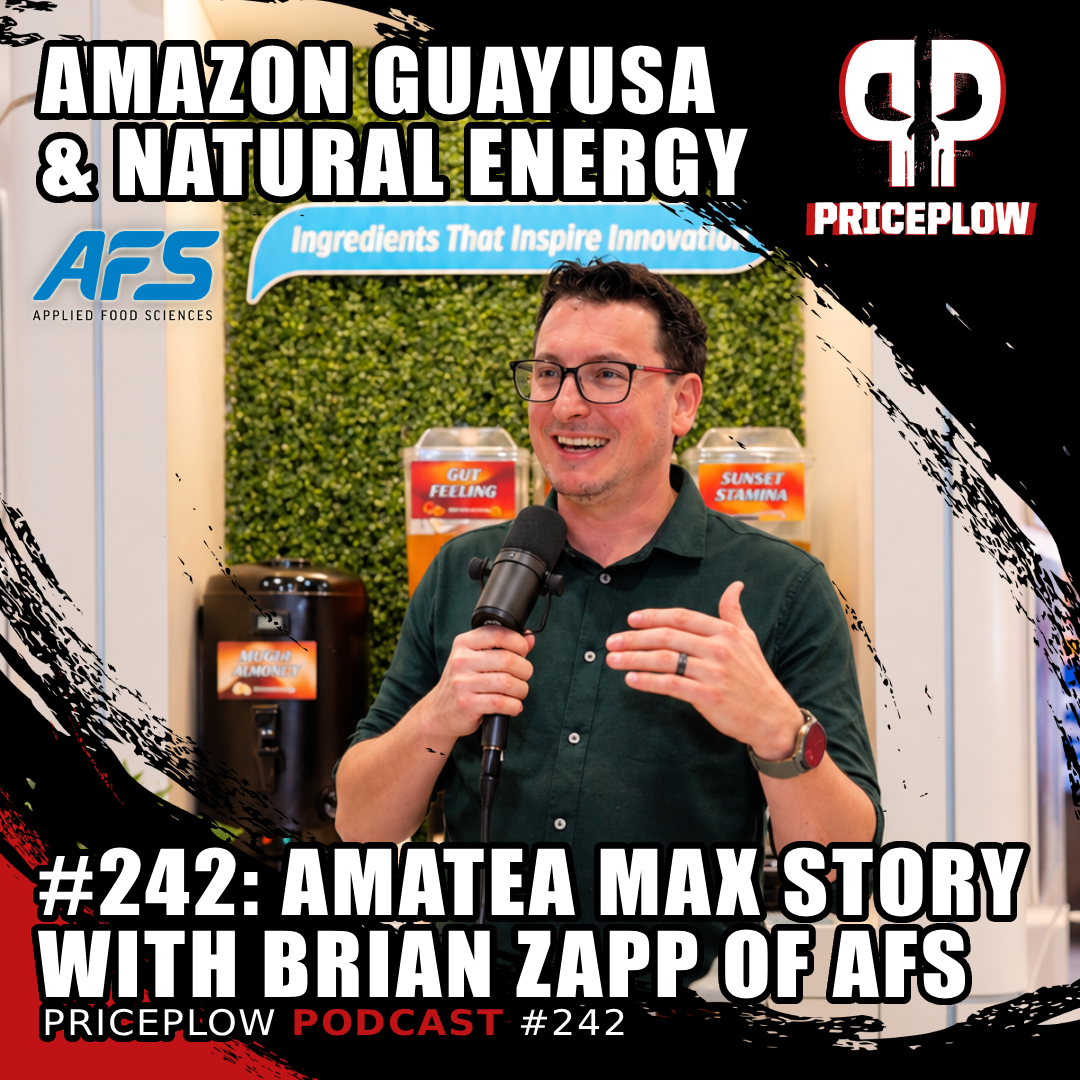
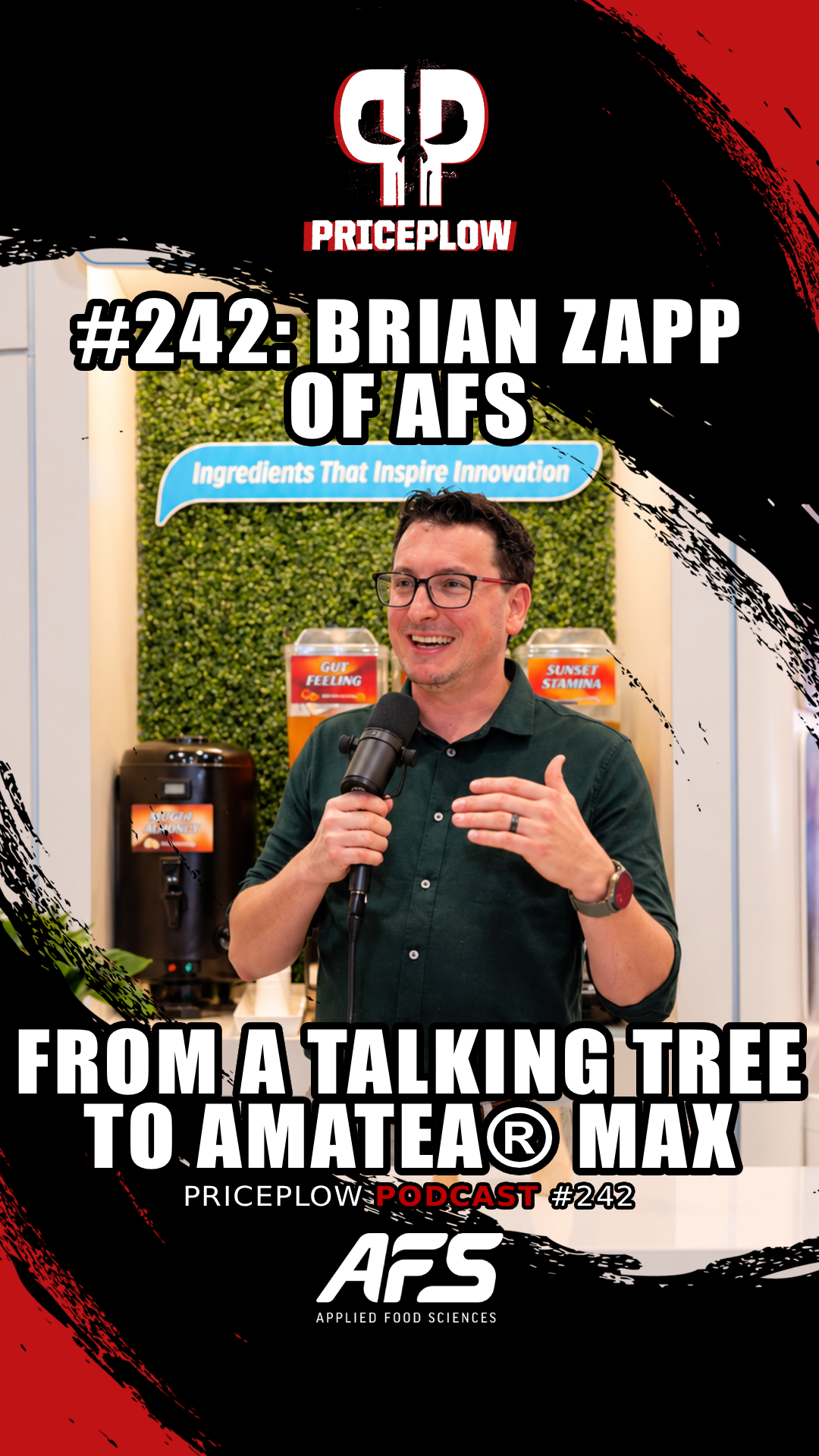
Brian Zapp, Creative Director of Applied Food Sciences, shares the Kichwa origin story of guayusa and breaks down AmaTea® Max, PurCaf® natural caffeine, and lion's mane quality standards on Episode #242 of the PricePlow Podcast.
Brian Zapp grew up chasing botanicals. His mother, Loretta Zapp, is the CEO of Applied Food Sciences (AFS), and his middle school spring breaks meant hunting for herbs in botanical gardens across China and Brazil. On Episode #242 of the PricePlow Podcast, Mike and Ben belly up to the bar at the AFS booth at SupplySide Global 2026, where Brian, AFS's Creative Director, plays storyteller and bartender at the same time.
The stories start with PurCaf®, the green coffee caffeine AFS began extracting back when the industry asked who'd ever want natural caffeine. Then comes AmaTea® Max, the patented guayusa extract rooted in a Kichwa legend about a talking tree, and Brian tells it better than anyone we've heard. Along the way, he pours booth demos built on cordyceps, ginseng, and lion's mane, and makes the case for real lion's mane quality standards before the ingredient goes the way of CBD.
What a fun episode this was.
Before diving in, subscribe to the PricePlow Podcast on your favorite platform and sign up for our alerts:
Subscribe to the PricePlow Podcast on Your Favorite Service (RSS)

Apple Podcasts

Spotify

YouTube
https://blog.priceplow.com/podcast/brian-zapp-242
Video: Brian Zapp Tells the Guayusa Story at SupplySide

Podcast: Play in new window | Download (Duration: 1:03:02 — 63.4MB)
Detailed Show Notes: Guayusa, Natural Caffeine, and Lion’s Mane with Brian Zapp
-
0:00 - Introductions
Brian opens with an impromptu rap from behind the AFS booth's bar (we'll spare you the explicit lyrics). Mike and Ben are recording live from SupplySide Global 2026, where AFS built a sample bar complete with blenders and functional beverage concepts.
Mike sets the agenda. Plenty of listeners know AFS from PurCaf, its natural caffeine from green coffee beans, and we've recently covered Conor McGregor's MAC Energy, which runs on it. Mike's also excited to dig into AmaTea Max, so he asks Brian to introduce himself and the company before the fun begins.
-
1:15 - Growing Up in the Ingredient Business
Brian's officially been part of AFS for about 15 years, but unofficially he's been in the industry his whole life. In middle school, spring break meant trips to China and Brazil, touring botanical gardens in search of herbs with long traditions of use.
Before AFS, his mother ran a quality lab that verified what was actually in products and whether they met their specs. The United Natural Products Alliance (UNPA) later honored her with its "Queen of Quality" award, which Brian takes a lot of pride in. Mike wants her on the podcast, though Brian jokes she rarely mixes with "us commoners" at the booth. Ben adds that Brian has always "gotten it" in their conversations, which is high praise from this crew.
-
2:45 - Earning His Place at AFS
Brian started out at a nonprofit supporting people with developmental disabilities (where he met his wife), but the work didn't pay the bills. He asked his mom where he could help, even volunteering to drive the van. AFS was selling a glucarate-based hangover shot called GTOX at the time, and when Brian pitched ideas in leadership meetings, the answer was often "Go do it". He surrounded himself with experts, the same approach behind AFS's science department. Today, AFS employs more scientists than salespeople.
Nepotism didn't earn him a pass. His older brother relayed their mom's message: nobody will micromanage you, so add value, or it'll look like the family's just hiring kin. Brian still loses sleep over letting down his hardworking coworkers.
-
5:00 - From Oncology Research to Natural Caffeine
AFS took its current form in 2001, after starting out in oncology research, where grant money was always hard to come by. The natural products, functional foods, and nutraceuticals markets looked like a better opportunity, so the company pivoted. Its first pillars were glucarate (still in the portfolio as CelluThrive™ D-Glucarate) and green coffee extract.
Green coffee turned AFS into coffee extraction experts, and around 2004 or 2005 the team started pulling organic caffeine from the beans. The industry thought they were crazy. Who on earth wanted natural caffeine? At shows like Expo West, AFS went from "the natural caffeine guys" to "the PurCaf guys", and eventually to a partner brands wanted to innovate with.
-
7:30 - Natural Caffeine's Trusted Promise
Ben notes how many brands now lean into natural caffeine, even though most of it sells at 99% purity, much like synthetic caffeine anhydrous. AFS doesn't stop at the trend, he says, and keeps digging into what's actually beneficial.

Brian explains that natural caffeine carries a simple premise and a trusted promise. Energy drink labels can feel intimidating (what the heck is taurine, BHB, or ketones?), but "Powered by green coffee caffeine" lands differently. Shoppers have had coffee and trust how it feels, and that familiarity is a powerful entry point. Ben agrees, adding that consumers' all-natural ideals often collide with price and taste, yet many still prefer a natural source.
-
9:45 - Green Coffee Extract on the Label
Mike notes that "caffeine anhydrous" looks scary to a normal shopper, but AFS offers grades where "caffeine" doesn't need to appear on the ingredient list. Coffee's two main components are caffeine and chlorogenic acids, Brian explains, so lowering the caffeine shifts the statement of identity toward the whole plant. PurCaf® + Coffee Fruit brings in the coffee fruit, and PurCaf® + Antioxidants (40% caffeine, 45% chlorogenic acids) is declared as green coffee extract.
That helps cold brew brands. Creamers and flavors dilute the coffee, and natural caffeine content swings batch to batch. Fortifying with coffee-derived caffeine keeps the label clean and puts the same dose, say 120mg, in every can (AFS still recommends disclosing total caffeine). Our PurCaf® deep dive covers all three grades.
-
12:15 - Bringing Back Coffee's Antioxidants
Ben drinks coffee for far more than caffeine, and he'd love those extra benefits in his energy drinks. Brian points out that coffee is a major source of dietary antioxidants, but roasting destroys much of its chlorogenic acid content. Green coffee keeps it, and Brian calls chlorogenic acid one of the most bioavailable antioxidants you can get.

The Kichwa people of Ecuador have brewed guayusa for generations. Applied Food Sciences turned it into AmaTea Max, a patented caffeine extract with four human trials behind it.
Adding it back moves a drink toward a "whole picture" coffee experience. The difference in feel is subtle, Brian says, but you notice it. For brands making natural premium energy products, that subtle lift helps deliver on their promise, and it's what drives repeat purchases.
-
14:00 - Guayusa and Its Holly Cousins
Mike has been covering beverages for Bevlab and admits most new drinks feel like the same thing over and over, so he wants differentiators. Brian starts with AmaTea Max, AFS's guayusa extract (spelled G-U-A-Y-U-S-A, though Ecuadorians say it a bit differently).
Guayusa is a cousin of yerba mate, and Brian says the "awkward cousin" packs more caffeine and more antioxidant polyphenols. The third cousin, yaupon holly, is North America's only native caffeine-containing plant. Brian loves it steeped, but AFS couldn't extract it economically because its active compounds run too low. Our AmaTea Max deep dive covers the four human trials behind AFS's extract.
-
15:15 - The Kichwa Origin Story of Guayusa
Guayusa is central to Ecuador's indigenous Kichwa communities, and Brian shares the origin story they tell around the fire. An aging man with grown kids feels depleted and sore. His wife sends him out to hunt, and he wanders until he falls asleep under a tree beside a lake. A woman's voice wakes him, singing, "Take my leaves and chew them." It's the tree.
He chews the leaves and feels new life surge through him, and the tree tells him to share them. Heading home, he kills a large water rodent and slings it over his shoulder. His wife barely recognizes the strong young man walking up to their hut. To the Kichwa, the story is about vigor, youth, and longevity.
-
17:45 - Runa, GRAS, and Epinephrine
Brian says guayusa "hits different", and that feeling is why AFS believed in it. The company invested in Runa, the guayusa beverage brand co-founded by Tyler Gage, whom Brian calls wise beyond his years. AFS did the supply chain legwork, and in 2020 its guayusa extract became the first caffeine-containing botanical to receive an FDA "no questions" letter on its GRAS notice.

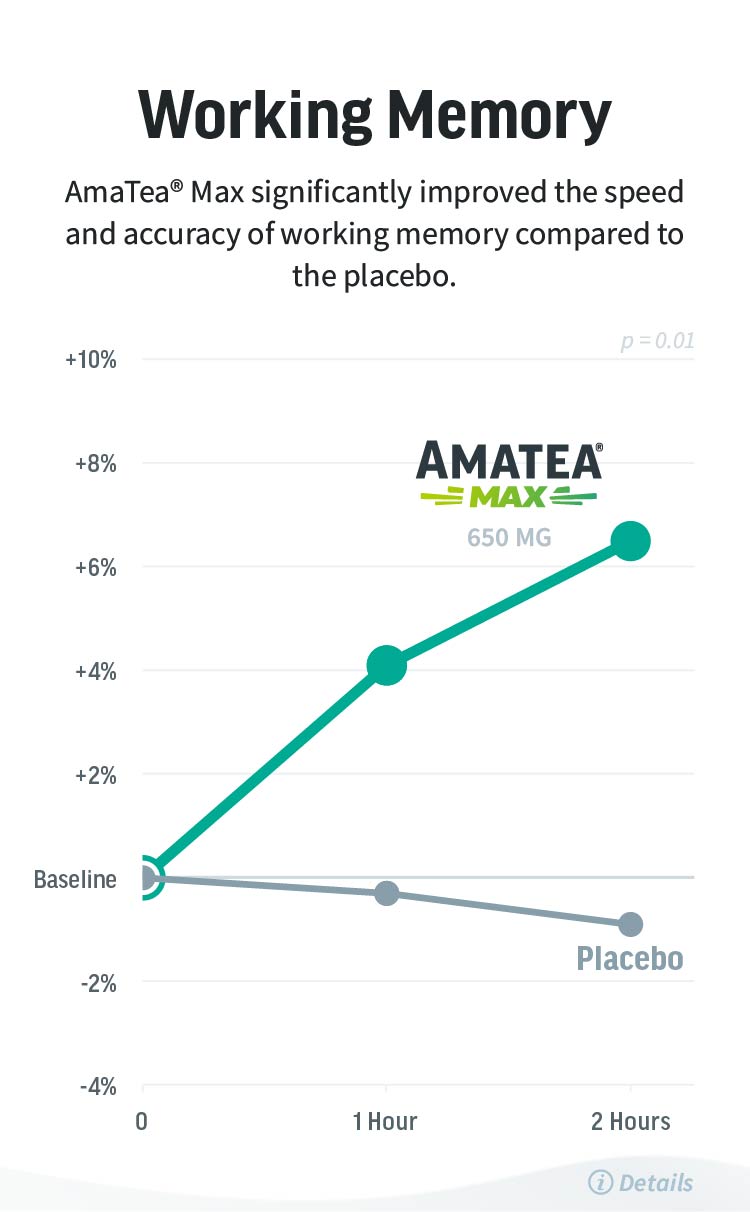
Working memory scores gained roughly 6.5% over two hours on 650mg of AmaTea Max as placebo slipped below its own baseline (p=0.01).
Then AFS studied the compounds. Caffeine typically triggers an epinephrine (adrenaline) response, the fight-or-flight signal behind jitters, but Brian says guayusa blunts it despite its caffeine. That fits the Kichwa night watchmen, who drank concentrated guayusa to stay perfectly still yet laser-focused through the night. AFS has since run several human clinical trials on the extract.
-
19:45 - Hunting for the Mechanism
Ben asks whether AFS has pinned down why guayusa feels different. Brian admits they don't fully know and may never know, though he suspects the gut-brain axis plays a role (a theme that returns later with lion's mane). Mike figures the caffeine pathway is the same, with something else dampening the edges.
Guayusa's main compounds, caffeine and chlorogenic acids, also show up in green coffee, but Brian notes the chlorogenic acid isomers differ. When AFS compared the two, green coffee still spiked epinephrine while guayusa produced a much smaller rise. Guayusa also brings compounds like rutin, which Mike identifies as a bioflavonoid that works alongside quercetin.
-
21:45 - Is Caffeine There for Us?
Mike loves the origin story (though he's skeptical a wife wouldn't recognize her own husband), and it raises a question he often asks. Caffeine works as a natural pesticide in many plants, he notes, much like nicotine in tobacco. So is it there purely for the plant, or did God, Mother Nature, or evolution put it there to give animals like us a lift so we'd spread the plant? The guayusa story almost seems to want to be shared.
Brian adds another Kichwa belief: humans didn't dream until they discovered guayusa. Dreams are central to guayusa's role in Kichwa culture, and Brian connects them to intuition, which the Kichwa say guayusa unlocks.
-
23:15 - Amazon John's Overnight Guayusa
When AFS got into guayusa, Brian's first call was to John Easterling, better known as "Amazon John". Easterling described a second way to take guayusa: a few leaves left in water overnight, almost like a cold brew. Scientifically, Brian says, that method shouldn't extract much of the active compounds.
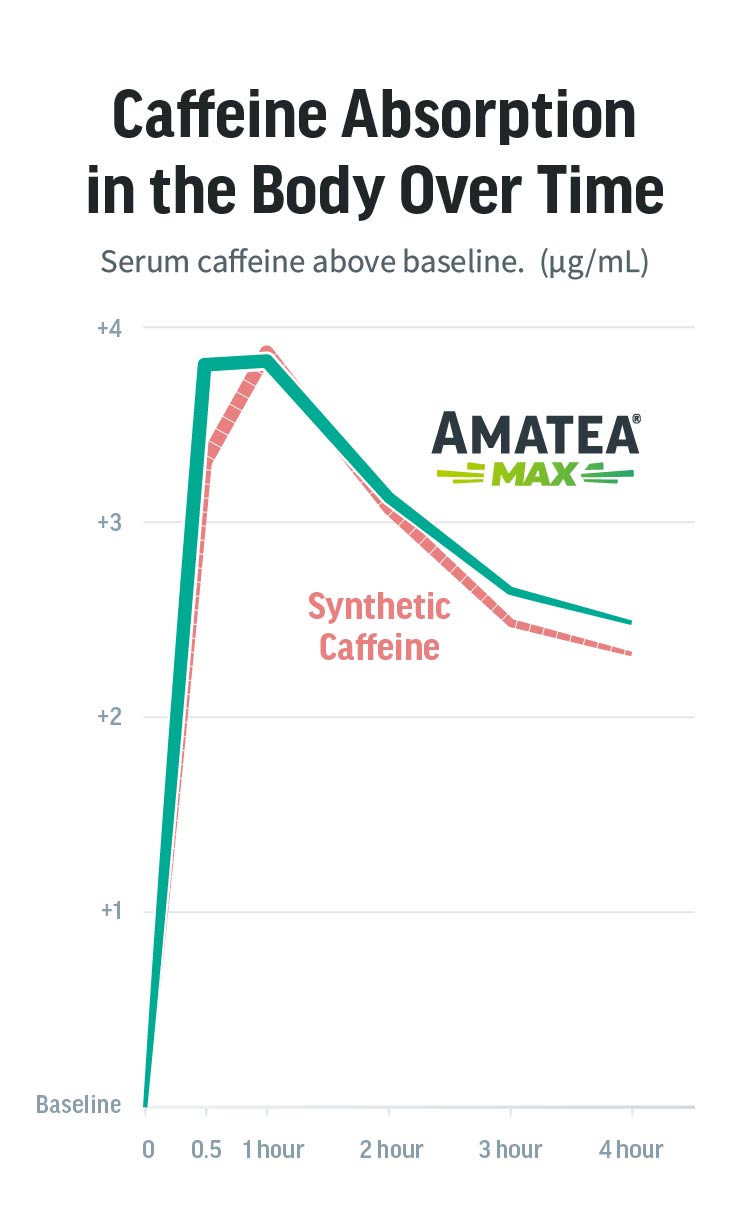
Serum caffeine tracks almost identically for both sources across four hours, which is how the guayusa extract met FDA bioequivalence standards against synthetic caffeine.
The stories kept coming anyway. Easterling found a design he'd been helping a friend create hanging in a restaurant as a painting. He knew his brother was calling before picking up the phone, back before caller ID. Then, driving home, a never-before-recalled childhood memory surfaced, which is rare for a man over 40. He connected it all to his new low-dose guayusa habit.
-
25:00 - Waking Up Before the Birds
In certain Kichwa villages, mornings begin with a guayusa ceremony long before sunrise. Around 2 AM, the elder women start a pot brewing, and by 4 AM the community trickles in. Each person sips guayusa from a coconut shell and sprays it into a fine mist, which the Kichwa believe cloaks them in protection. Then the elders discuss dreams and foresight.
Why so early? "We have to wake up before the birds", they told Brian. Once the jungle wakes up, the noise pulls you from your thoughts, much like reaching for your phone first thing today. Brian has tried the misting, too. His first attempt was perfect, and his second sprayed all over somebody. Ben's already plotting a ceremony before next year's SupplySide.
-
26:45 - Chakra Gardens and Kichwa Farming Families
Guayusa only grows in the upper Amazon basin, and most of AFS's supply comes from Ecuador, with some from Peru. Customers sometimes ask to tour the guayusa farm, but there isn't one. Guayusa grows in Kichwa chakra gardens, agroforestry plots shared with roughly 50 hardwood species and 90 medicinal herbs, in family backyards that run right into the rainforest.
AFS works with more than 4,000 independent Kichwa farming families, who sell their guayusa through cooperatives AFS helped create for a fairer market. Brian's candid, though. Sourcing models that work in India or China don't translate to the Amazon, and anyone claiming a perfect sustainability model would raise red flags for him. AFS is still "not even close to perfect".
-
28:00 - Trailblazing Has a Cost
Guayusa became Brian's big project three or four years in, when AFS invested in Runa and Tyler Gage took the team to Ecuador. (Brian recalls Channing Tatum, then a Runa investor, backflipping off every bridge he saw.) Brian's puzzled that so many suppliers sell the same things when much of the botanical kingdom remains unstudied. Trailblazing costs time and money, and the first one in takes the darts.
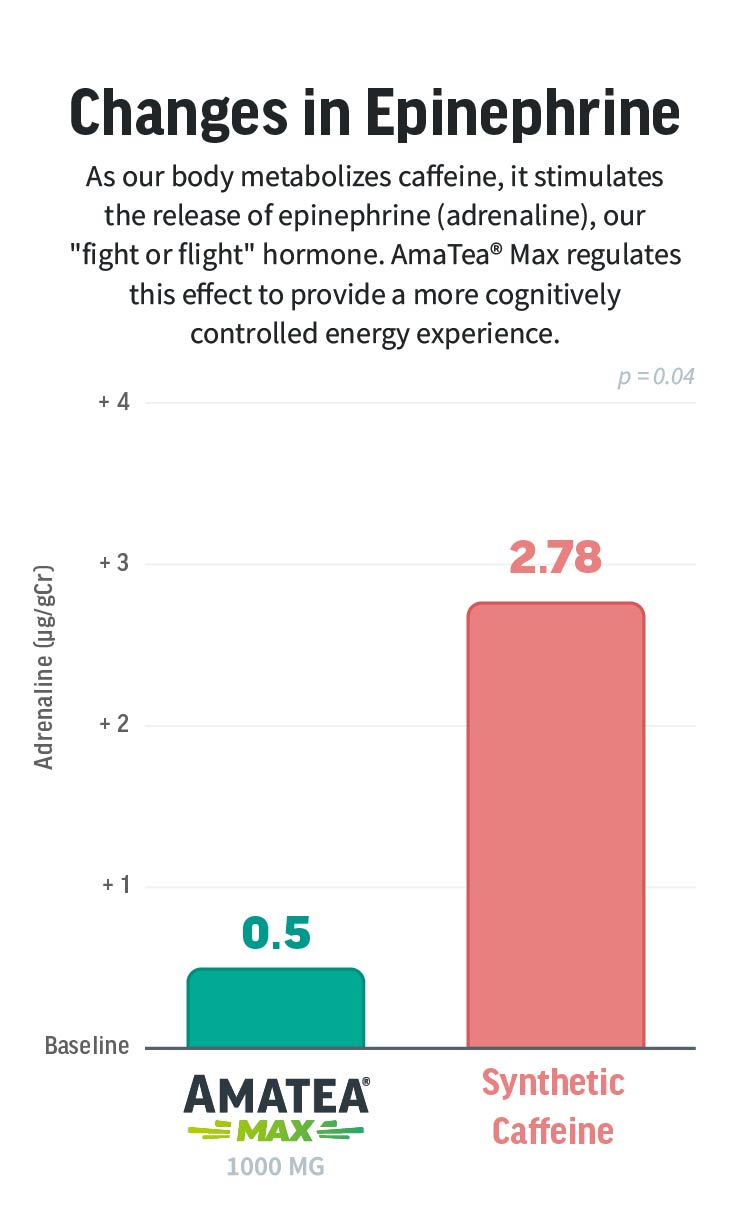
At 1000mg of extract, urinary adrenaline rose just 0.5µg/gCr against 2.78µg/gCr for synthetic caffeine, the 2016 finding behind the smoother energy argument (p=0.04).
It can also go sideways. Brian describes a fast-growing customer that lost its soul after an acquisition, pushing out its true believers as sales collapsed. Farmers who'd ramped up suddenly heard, "Don't pick anymore". AFS built economic value around guayusa and now has to sustain it. Luckily, Brian says, guayusa sells itself once people try it.
-
30:45 - Waiting on Guayusa's Moment
Ben came to talk energy drinks, and he points out that yerba mate is having a moment, partly thanks to Andrew Huberman. Has guayusa had its own? Not yet, Brian says. He drank loose-leaf yerba mate in college about 20 years ago and felt the difference, but guayusa lacks yerba mate's sex appeal as a word. It doesn't roll off the tongue.
AFS loves the Yerba Madre team, and the admiration is mutual. The two companies have looked for ways to collaborate, though Yerba Madre wants to stay squarely identified with yerba mate. Mike sees an opening in Latin American-inspired energy branding, where the guayusa story could land a hundred times harder.
-
32:45 - Leaning Into the AmaTea® Max Name
Beverage brands want clean labels, so many list "green coffee caffeine" instead of PurCaf, and AFS supports that. AFS tried the same approach with guayusa, but Brian calls guayusa a "skip word". Shoppers stumble on it and keep reading. A branded name like AmaTea Max can sound foreign at first, the way Cognizin® once did, yet people get behind it. (The "Ama" stands for Amazon, Ben learns.)
The bigger payoff is curiosity. Shoppers can pick up a product, ask AI or Google what AmaTea Max is, and instantly find the origin story, the sustainability story, and the clinical studies. That pairs curiosity with immediate answers, so AFS is leaning into the name and encouraging customers to do the same.
-
34:30 - Brands Already Using AmaTea®
For anyone who wants to try it, Brian names a few office favorites. Taste Salud makes Salud Energy + Focus stick packs that pair AmaTea with PurCaf, and its team traveled deep into the Ecuadorian jungle with AFS, riding a boat down the Amazon at 2 AM (you can find the trip on YouTube).
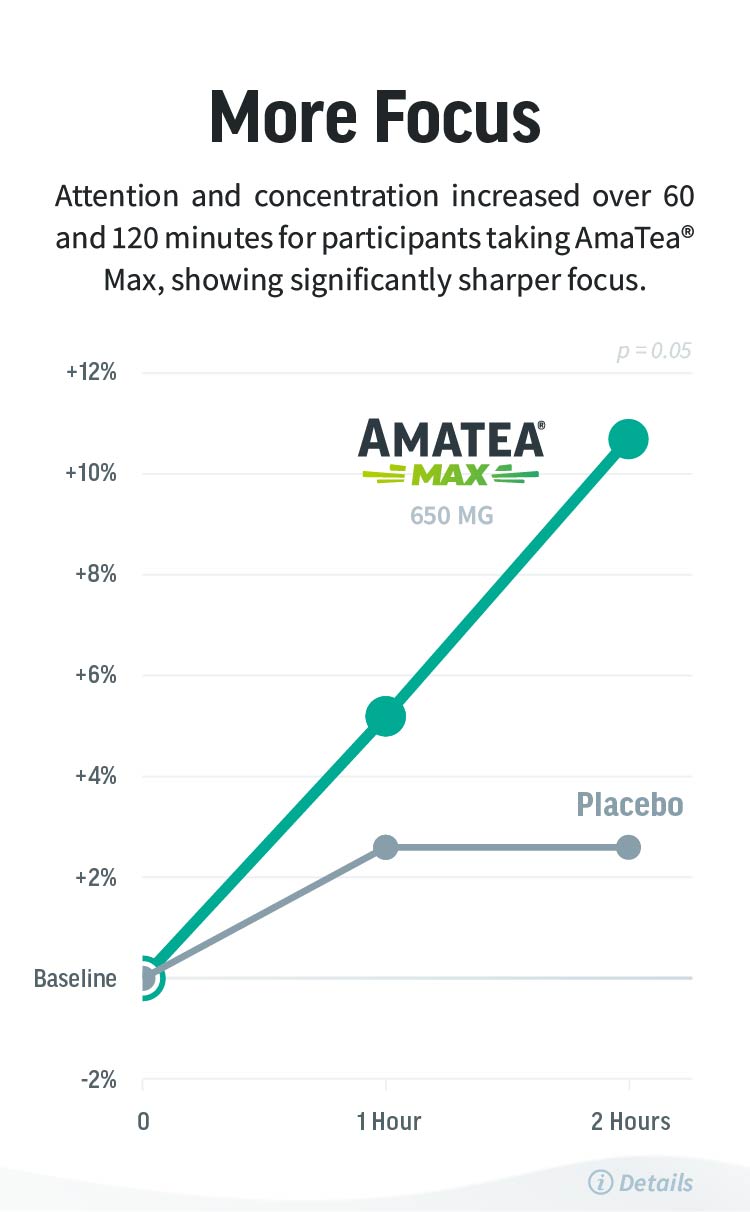
Attention ratings reached nearly 11% above baseline two hours after 650mg of AmaTea Max, with placebo stalling near 2.5% (p=0.05).
Rekt Energy, which Mike says went heavily into AmaTea, earns a "get rekt, nerd" from Brian, and Joggy rounds out the list. All three make great-tasting drinks and believe in the ingredient, Brian says. Meanwhile, Mike and Ben head back to the bar for seconds.
-
35:45 - Uplift Tea: A Guayusa Tea Base
Guayusa's taste impresses people. Brian says it has about 70% fewer tannins than yerba mate and roughly 40% more antioxidants, giving it an earthy sweetness. With ready-to-drink tea booming, the booth's raspberry guayusa "Uplift Tea" shows what a guayusa tea base can taste like. AFS formulator Anderson made it with the extract rather than brewed leaves.
That's the selling point. Instead of wrestling with the quality concerns of milled, dried tea leaves, brands get a standardized, sterilized extract that stays consistent batch to batch, which matters at scale. Brian sums up AFS's baseline as "clean quality stuff on time" (after swapping out a saltier word). Everything else is a bonus.
-
37:45 - Sunset Stamina: Social Buzz, No Booze
Ben asks about other concepts, and Brian pours a non-alcoholic one. People drink to unwind, to loosen up at happy hour, or to pregame something big. Brian felt that gap during a Dry January Broncos-Bills playoff game, ordering green tea after green tea while his friends drank and he sat in his nerves.
That inspired Sunset Stamina, built on MycoThrive™ Cordyceps and PurGinseng™ (Panax ginseng). Brian credits cordyceps with an oxygen uplift tied to VO2 max and ginseng with adaptogenic stress support, for a low-key buzz. AFS first paired them as a stim-free pre-workout (a clinical is about to publish), but the team kept noticing how it felt. Nobody drinks just for a margarita's taste, so an NA drink has to make you feel something.
-
41:00 - Non-Alcoholic Drinks Need Complexity
Mike loves how this ties into recent episodes. NA beer has been around forever, but the non-alcoholic world is now merging with functional ingredients as Gen Z drinks less. Brian adds a piece he thinks gets missed: complexity. He's not interested in a sugary mocktail, and a premium-priced functional drink shouldn't go down like a crushable sparkling water. It needs to slow you down.
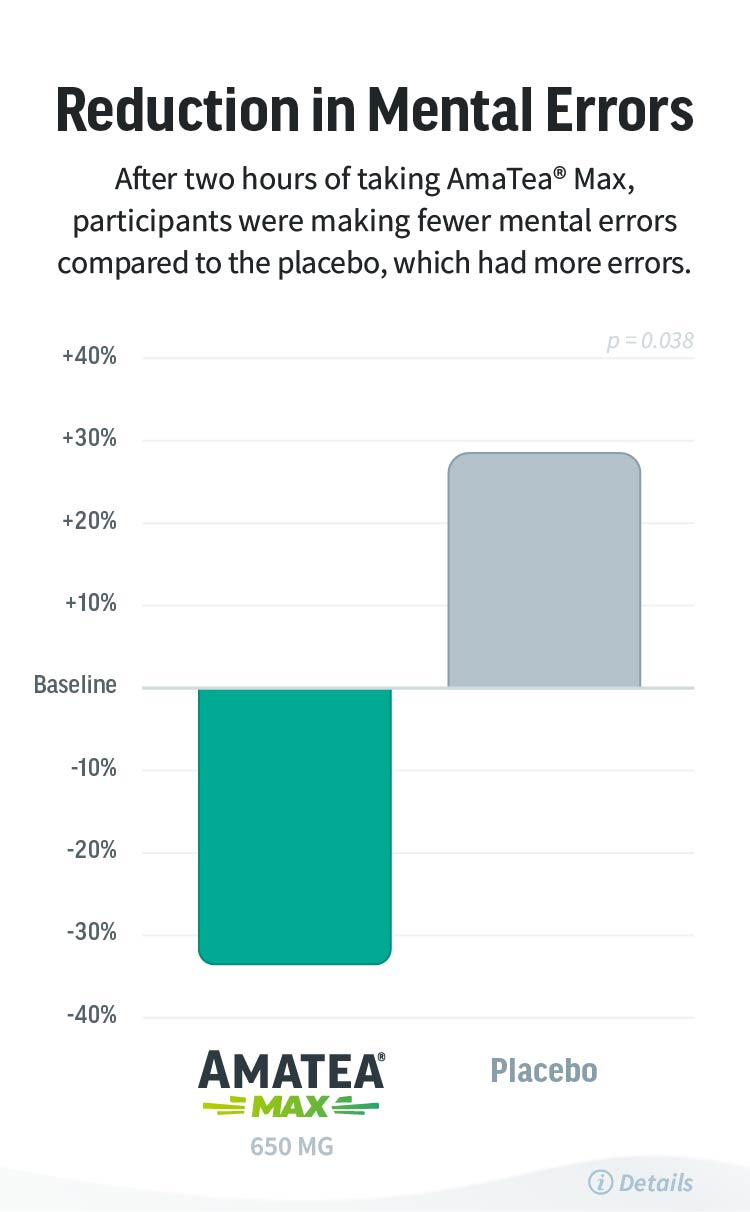
At the two hour mark, errors dropped about 33% from baseline with 650mg of AmaTea Max while the placebo group climbed close to 28% (p=0.038).
Sunset Stamina's tropical top notes and lower spice notes turn each sip into a puzzle for your palate, and as you slow down, you notice the cordyceps and ginseng. ZoomEssence handled the flavors, and Brian highly endorses them. Both actives are water-soluble and standardized (ginsenosides for the ginseng), and AFS sells them as separate ingredients.
-
43:15 - Studying Ingredients Together
Ben recalls that AFS has data on the pair, and Brian confirms the human clinical includes individual arms plus a combined arm. Ben calls that rare, since brands usually stack ingredients and assume each one's data carries over. Brian agrees. AFS's preclinical work suggests the two drive different types of energy, from ATP production to VO2 max, but synergy isn't guaranteed. Unless ingredients are studied together in the final formula, "you're kind of rolling the dice".
His advice for sports nutrition brands: run a small clinical on the finished formula, even with a modest sample. His bigger worry is trend-chasing: notable ingredients sprinkled in at non-efficacious doses for label recognition. For the record, AFS's Cordyceps militaris is standardized to cordycepin and adenosine.
-
46:30 - Ginseng: Better Taste, Bottom-Up Energy
Ginseng gum in the 1990s was Mike's first adaptogen, and he suspects underdosed energy drinks hurt ginseng's reputation. Brian says taste is the reason. Ginseng is a root with a twangy earthiness that's tough to formulate around, so AFS strips out insoluble compounds and standardizes to the actives. A customer just told AFS it's the best-tasting ginseng they've used.
Brian would love to see more ginseng paired with caffeine. He says caffeine absorbs within about 45 minutes with a four-to-five-hour half-life, while ginseng ramps up over about an hour and lasts much longer. Caffeine is top-down energy, Brian says, and ginseng is bottom-up. "It's the roots", Mike jokes, before reminding everyone that caffeine is an adenosine blocker, not a direct energy source.
-
49:45 - Gut Feeling: Lion's Mane as Prebiotic
The next demo, Gut Feeling, is positioned like a spa water, but Brian sees the concept landing in prebiotic sodas like Poppi. It features MycoThrive™ Lion's Mane. AFS's first lion's mane study found acute cognitive results within one to two hours, flipping the long-held view that lion's mane only works after 30 to 60 days of use.
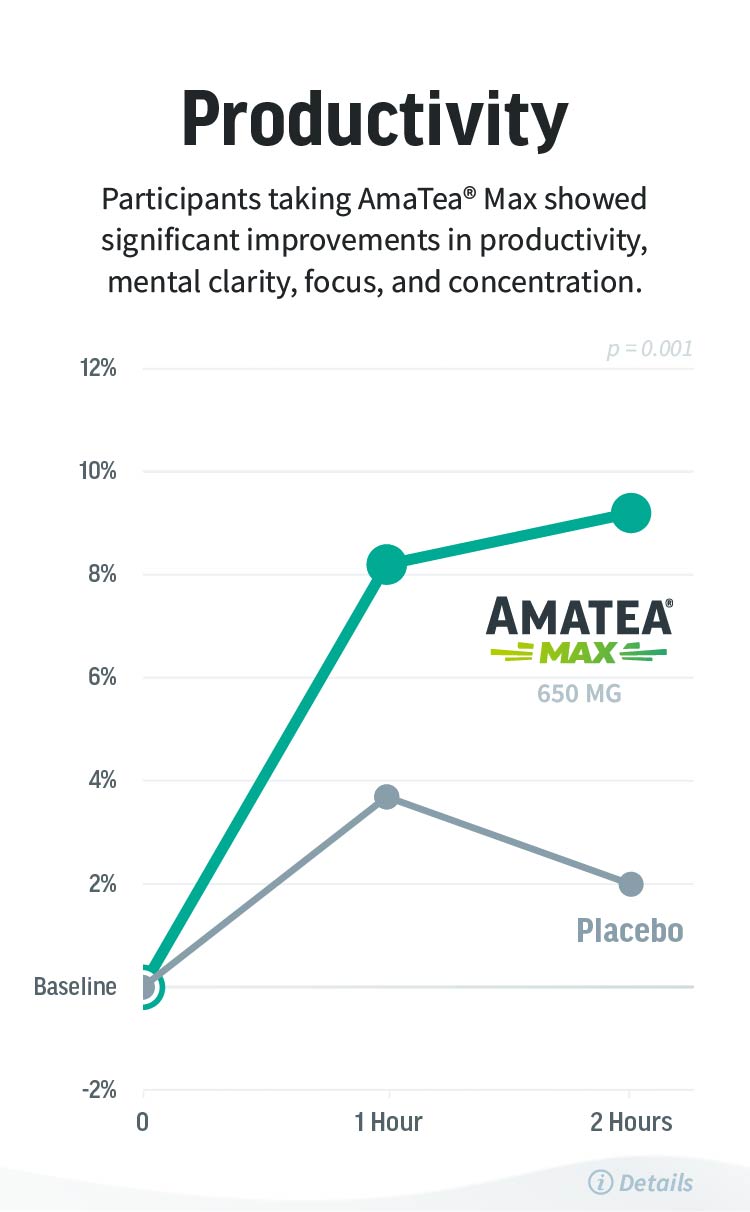
Subjective productivity ratings rose past 9% by hour two on 650mg of AmaTea Max, more than four times the placebo response (p=0.001).
To understand why, AFS ran a longer study that included a gut microbiome arm. Brian says lion's mane appeared to act as a precision prebiotic, feeding a keystone gut bacterium, Faecalibacterium prausnitzii, that produces a postbiotic tied to cognition. It's the same gut-brain axis Brian floated for guayusa, and it fits the booming prebiotic beverage category.
-
51:30 - PurGinger® and the Mushroom Stories
The other half of Gut Feeling is PurGinger®, which leaves a pleasant tickle in the back of Ben's throat. Like natural caffeine, it's an easy story: organic ginger with the insoluble parts removed and no carrier, standardized to gingerols, the compounds behind ginger's bite. That brings consistency to a flavor that's notoriously hard to control.
Mike, a big ginger and blood orange fan, notes that other mushroom suppliers talk about fiber, but nobody seems to capitalize on the prebiotic angle while everyone chases cordycepin and VO2 max. Ben loves that every mushroom company does it differently, as long as it's done with quality, and jokes they could record three mushroom podcasts in a day without repeating a story.
-
53:00 - Lion's Mane Needs an Identity Standard
Brian could geek out on mushrooms all day, but he calls identity the most urgent story. Many lion's mane products standardize to beta-glucans, which are valuable from fungi but also come from grain, and synthetic adulterants can mimic them. Telling them apart takes expensive testing, which leaves a fast-moving ingredient like lion's mane at high risk of adulteration.
The answer is testing secondary compounds, but no method had been widely adopted. So AFS published a single-laboratory validated method in Molecules in February 2026 that any quality lab can run on raw materials, extracts, or finished products.[1] Brian's shortcut: if hericenones and ergosterol show up, it's lion's mane. He says the goal is raising the bar so the industry can share one standard.
-
55:30 - Lion's Mane and the CBD Warning
Brian points to CBD as the cautionary tale. It blew up, brands sprinkled it into everything, and the Wild West approach sent the category crashing. He admits he still buys products just because they say lion's mane, even knowing a generic 10:1 extract isn't the same as a clinically studied one with measurable hericenones. If the industry doesn't mature now, Brian warns, lion's mane could plummet rather than level off. Consumers would decide it did nothing for them, and repeat sales would disappear.
Green coffee extract or caffeine anhydrous. Same energy, very different read on an ingredient panel. MAC Energy named its source and put PurCaf® right on the can. More brands are doing the same, and the research explains why.
Mike asks about ingredient names, and Brian confirms MycoThrive™ is AFS's umbrella brand for Lion's Mane, Cordyceps, and Chaga. AFS wants the same quality model across every mushroom it sells, and Brian admits that's neither easy nor cheap.
-
57:15 - Quality Isn't Cheap
Brian steps onto his soapbox. AFS recently spoke with a company that promised to go to the ends of the earth for the highest-quality, most efficacious ingredients, then cited a very sensitive price point in the next breath. When consumers invest in their health, they expect a payoff, and brands promising results while pinching pennies aren't in alignment.
Buy enough cheap stuff on Amazon and you learn that quality matters. Brian sees supplement shoppers increasingly willing to learn and invest, and he credits PricePlow with educating ingredient-minded consumers. Next, brands need to go all in, choosing guayusa over plain natural caffeine. If you're already making a natural premium energy product, he says, make it something people will feel, notice, and come back to.
-
59:30 - Making the Story the Brand's Own
Mike calls Brian an excellent storyteller. Ingredients like these need a story, and when a brand pays a premium for one, the brand has to tell that story too. It changes how Mike sees MAC Energy, where Conor McGregor chose PurCaf even though he probably didn't need to.
Brian's goal is to tell a story so transparent that it stops being AFS's story and becomes the brand's. AFS is a small team with limited reach, so brands that carry the message make the ingredient irreplaceable. Then consumers turn into ambassadors, asking friends if they've ever heard of guayusa or handing them an NA drink with cordyceps. AFS wants the answers waiting when that curiosity hits.
-
1:01:30 - Wrapping Up
Brian says there's plenty more in the AFS portfolio, but this is a good start. Mike thanks Darren Thompson and Perfect Shaker for sponsoring the podcast, and promises Brian a laser-etched stainless steel shaker cup with AFS branding.
To learn more, Brian recommends looking up the ingredients and browsing the article feed on the Applied Food Sciences website, most of which he writes himself. AFS supplies raw materials, so it can't ship samples to your dorm room, but it's happy to educate. Mike signs off by pointing PurCaf fans to MAC Energy and AmaTea fans to Rekt.

Where to Follow and Learn More
Connect with Brian Zapp and Applied Food Sciences
- LinkedIn: Brian Zapp
- Applied Food Sciences Website
- Instagram: @appliedfoodsciences
- LinkedIn: Applied Food Sciences
- Applied Food Sciences on PricePlow - Sign up for news alerts
Resources Mentioned
- AmaTea Max: A Patented Guayusa Extract From Applied Food Sciences for Smoother Energy
- Why Smart Brands Turn to Natural Caffeine Sources Like PurCaf®
- Applied Food Sciences at SupplySide Global 2026: Natural Caffeine and More at Booth 5730
- Previous Episode #232: Marc Lobliner on TruShield™ Certified and MAC Energy
- AFS Lion's Mane Method: Simultaneous UHPLC-UV Determination of Hericenones, Hericenes, Erinacines and Ergosterol (Molecules, 2026)
- Raising the Standard for Lion's Mane Supplements (Applied Food Sciences)
- How AFS Brought the Feel to Functional Beverages at IFT FIRST (Applied Food Sciences)
Products Discussed
Few guests can carry a booth conversation like Brian, and this one ran from a Kichwa legend to a lion's mane lab method without losing steam. Thanks to Brian and the entire Applied Food Sciences team for hosting us at Booth 5730, and for sponsoring this episode. We'll be watching for that cordyceps and ginseng clinical, along with whatever AFS pours at its next sample bar.
Thanks as always to Darren Thompson and the crew at Perfect Shaker for backing the podcast. Their laser-etched stainless steel shaker cups are waiting at PerfectShaker.com, and you can hear how the company got started in Darren Thompson: Inside PerfectShaker in Episode #209.
Subscribe to the PricePlow Podcast on any platform, sign up for Applied Food Sciences news on PricePlow, and leave us a great review on iTunes and Spotify!
Subscribe to the PricePlow Podcast on Your Favorite Service (RSS)
Apple Podcasts
Spotify
YouTube


Comments and Discussion (Powered by the PricePlow Forum)