![]Animal Creatine Chews Gets Sour Surge: Creatine for Muscle and Mind](https://blog.priceplow.com/wp-content/uploads/animal-creatine-chews-sour-surge-priceplow.png)
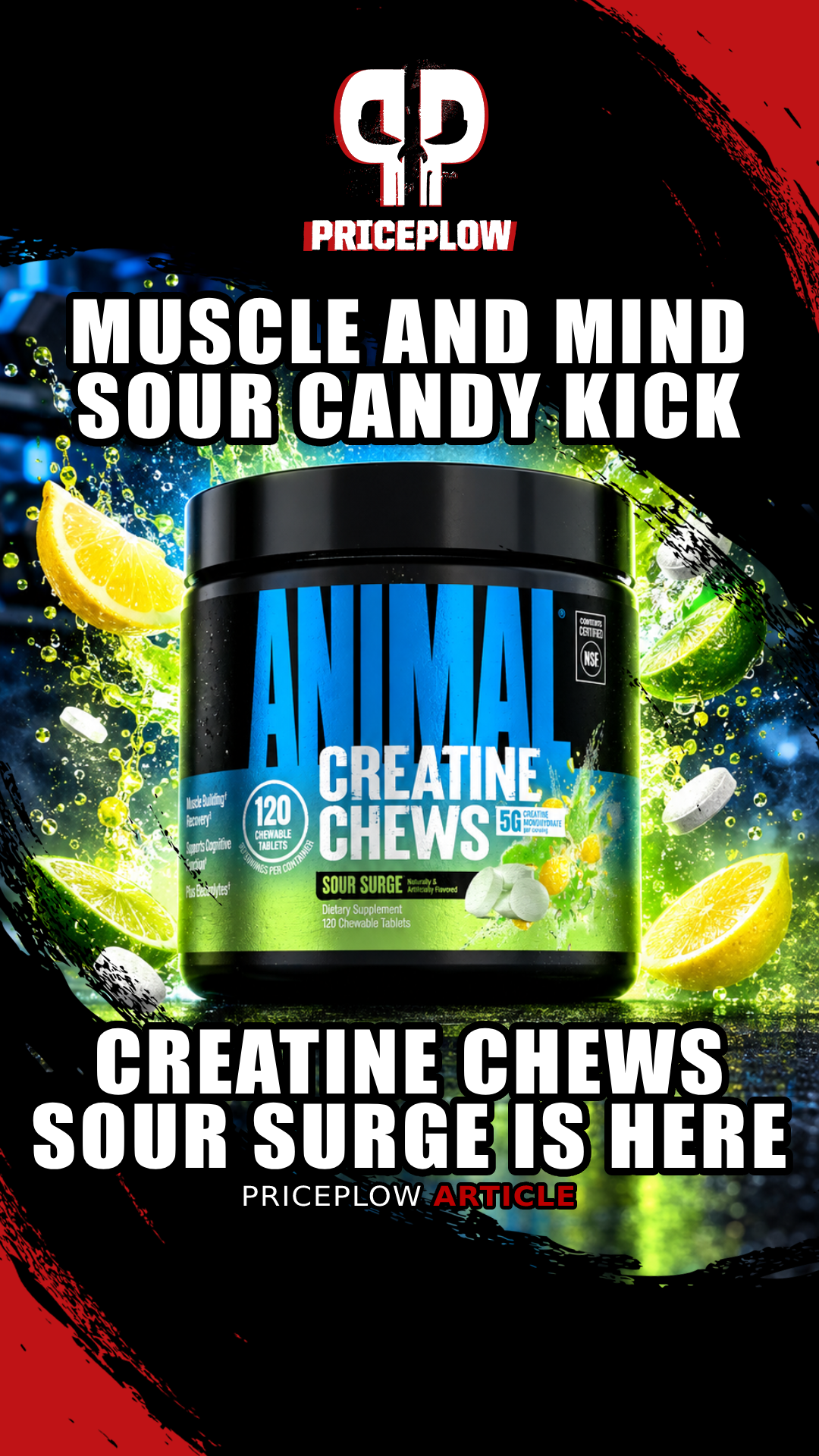
Animal Creatine Chews Sour Surge tastes like the sour candy aisle and works like creatine monohydrate. Four chews, 5g, 120 tablets per tub, and a lime green label that tells you exactly what you're biting into.
Animal Creatine Chews just added a flavor for the sour candy crowd: Sour Surge. The pitch is the same one Universal Nutrition's Animal brand has been making since 2022: 5g of creatine monohydrate in four chewable tablets, with no shaker, no scoop, and no water required.
We first covered the format in our original Animal Creatine Chews article, and Animal has kept new flavors coming ever since, most recently Watermelon Lime. Creatine monohydrate is one of the most-studied sports supplements around, and a chewable format makes the daily habit far easier to keep than measuring powder every morning.
This time, we're going further than a standard flavor announcement. Animal's Sour Surge marketing makes four promises:
- 5g of creatine in four chews,
- on-the-go convenience,
- "big gains", and
- "brain power".
Below, we put each one up against the research, with extra attention on the brain claim, since it's the one most lifters don't expect from a creatine product. Before diving in, check prices and availability and sign up for our news alerts on Animal Creatine Chews:
Universal Animal Creatine Chews – Deals and Price Drop Alerts
Get Price Alerts
No spam, no scams.
Disclosure: PricePlow relies on pricing from stores with which we have a business relationship. We work hard to keep pricing current, but you may find a better offer.
Posts are sponsored in part by the retailers and/or brands listed on this page.
This area is reserved for Team PricePlow's upcoming videos.
Subscribe to our channel and sign up for notifications so you catch it when it goes live!

Sour Surge: Sour Candy Meets Serious Creatine
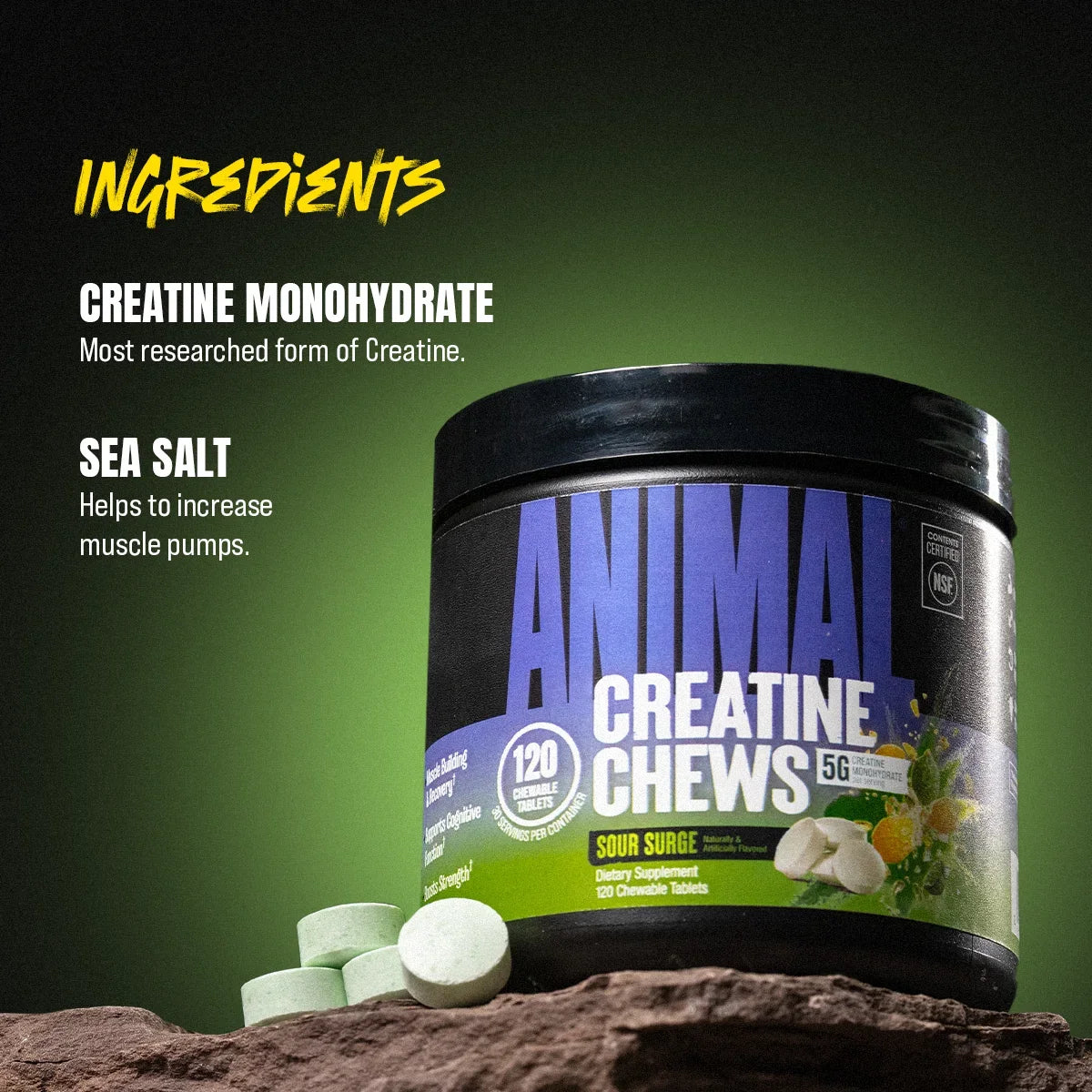
Animal lets the name do most of the talking, but the label fills in the rest. The tub wears bright lime green with a citrus-and-fruit splash, and the Other Ingredients list includes both citric acid and malic acid, the same food acids behind the pucker in most sour candy. Turmeric and spirulina extract handle the coloring, which gives the tablets their pale "mint-green" look (but not taste). Sour Surge is naturally and artificially flavored, and it's sweetened with a combination of sugar, dextrose, sucralose, and acesulfame potassium.
Each serving is four chewable tablets, and each tub holds 120 tablets for 30 servings. There's nothing to mix and no liquid to measure. Animal recommends taking your chews pre- or post-workout and sticking to four chews per day.
Animal Creatine Chews Ingredients
A serving comes in at 10 calories and 2g of carbohydrate, all of it added sugar. Here's what's in each four-tablet serving of Sour Surge:
-
Creatine Monohydrate – 5g
Creatine monohydrate is the form behind nearly all of the creatine research. A 2022 critical review concluded it's still the only source of creatine with substantial evidence supporting its bioavailability, efficacy, and safety.[1]
Inside your cells, creatine is largely stored as phosphocreatine. Through the creatine kinase reaction, phosphocreatine donates a phosphate group to adenosine diphosphate (ADP) to rapidly rebuild adenosine triphosphate (ATP), buffering sudden spikes in energy demand.[2] Supplementing raises muscle creatine stores, which helps explain the improvements in high-intensity exercise performance and training adaptations seen across the research.[3]
Dosing: Why 5g Works
Four chews deliver 5g, the top of the standard 3g to 5g per day range (or 0.1g/kg of body weight) recommended for daily use.[4] A loading phase of roughly 20g per day for five to seven days saturates muscle faster, but it isn't required, since smaller daily doses reach saturation over about a month. Because Animal recommends no more than four chews per day, think of Creatine Chews as your daily maintenance dose rather than a loading tool.

Animal Creatine Chews bring a fun and simple way to get creatine in - and they've got us hooked!
Creatine also has a long safety record. The International Society of Sports Nutrition's position stand reports that short- and long-term supplementation, up to 30g per day for five years, has been safe and well tolerated in healthy people.[3] If you have kidney disease or another medical condition, check with your doctor first.
Carbs and Creatine: Pair It With a Meal
A classic 1996 study found that following 5g of creatine with 93g of simple carbohydrate, four times daily for five days, raised total muscle creatine 60% more than creatine alone, an effect that appeared to be insulin-driven.[5] Sour Surge's 2g of sugar won't do that on its own. If you want the carb assist, take your chews alongside a carb-containing meal, such as your post-workout plate.
We dive into some of the other benefits of carbs in the context of Creatine Chews in our glycogen reload article.
"Big Gains": What the Strength Research Shows
The muscle-building claims are the best-supported part of Animal's pitch.
A meta-analysis of 53 randomized trials found creatine improved upper-body strength (bench press and chest press) in efforts lasting under three minutes, and the benefit held regardless of who took it, how they trained, or the dose and duration used.[6] In older adults (average ages of 57 to 70) lifting two to three days per week, a meta-analysis of 22 studies and 721 participants found creatine produced 1.37kg more lean tissue mass than placebo, along with greater chest press and leg press strength.[7]
The "size" claim needs one qualifier, though. Part of creatine's effect on the scale is water: in a small trial of female collegiate dancers, creatine increased total body water along with DXA-measured lean mass.[8] When researchers limited their analysis to direct imaging (MRI, CT, or ultrasound), creatine plus resistance training produced a small additional increase in muscle thickness, roughly 0.10cm to 0.16cm, in both the upper and lower body.[9] The authors called it a small effect, and it comes on top of what training alone builds.
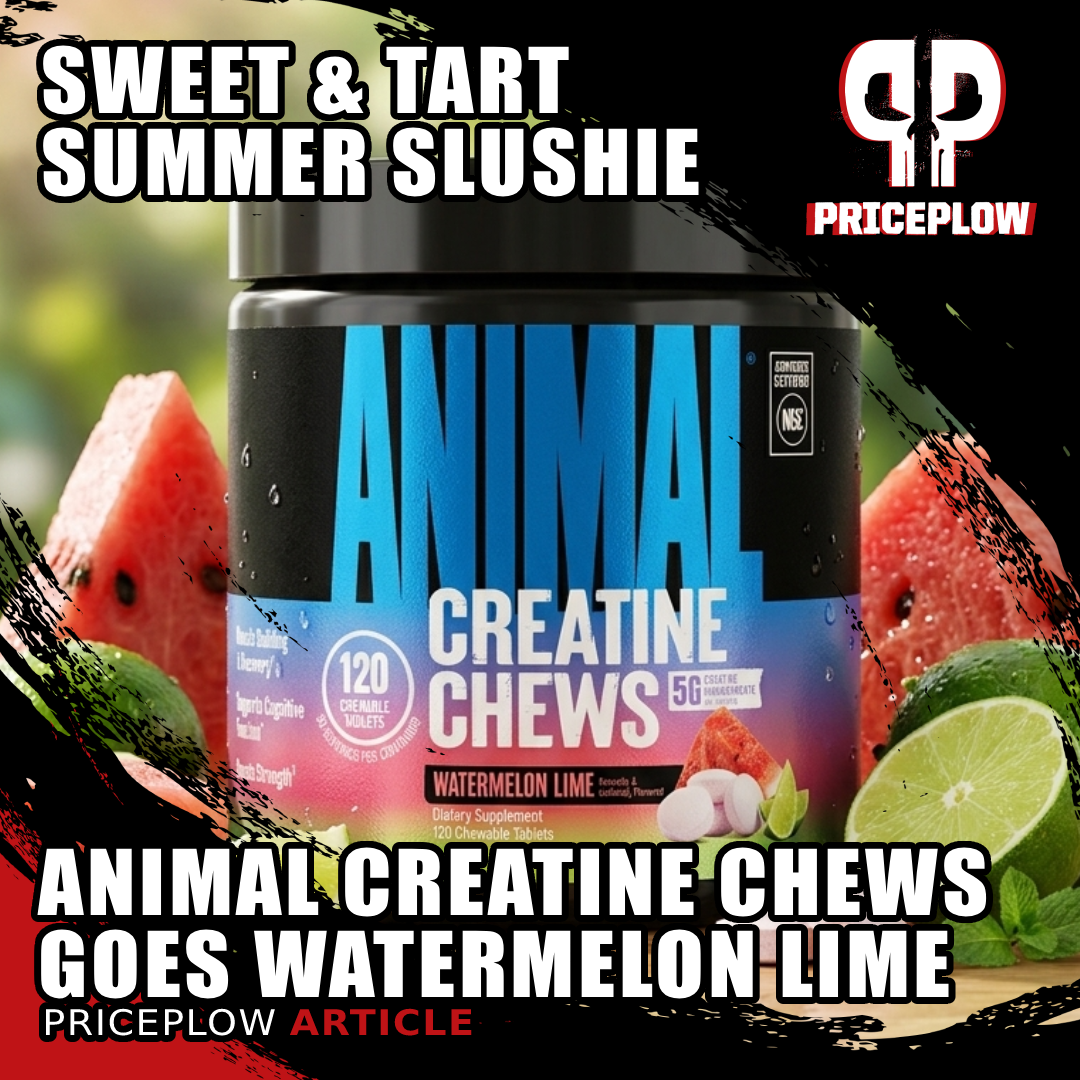
Animal Creatine Chews in Watermelon Lime brings sweet watermelon up front and tart lime on the finish. No shaker, no scoop, no water needed.
Animal's "endurance" claim fits best as work capacity: more quality reps and repeated sprints. A meta-analysis in soccer players found creatine's benefits concentrated in anaerobic tests, without a clear advantage for aerobic performance.[10]
"Brain Power": What the Cognition Research Shows
This is the claim that sets Sour Surge's marketing apart from a typical creatine label, especially one from a hardcore sports nutrition brand like Animal, so let's dive in.
Your brain is a metabolically demanding organ -- it relies on creatine for energy metabolism, and there's evidence that supplementation can raise brain creatine stores.[11] The catch is that the brain takes up creatine far more slowly than muscle, so detectable changes in brain levels have typically required weeks of daily dosing.[12] That puts even more weight on consistency (all the better when you have delicious chews).
In Well-Rested Adults
A systematic review of six randomized trials covering 281 healthy people found creatine may improve short-term memory and reasoning, while results for attention, executive function, reaction time, and mental fatigue were mixed.[13] Younger participants generally saw no change, and the authors pointed to aging and stressed individuals as the most likely beneficiaries.
Age appears to matter in most other research, too. In a 2023 memory meta-analysis, adults aged 66 to 76 showed a large improvement in memory scores with creatine, while participants aged 11 to 31 showed essentially none.[11]
At the exact dose in four chews, the largest cognition trial at the time of its publication gave 123 adults 5g per day for six weeks in a crossover design. Creatine produced a small, borderline improvement in working memory (backward digit span, p = 0.064) and no clear effect on reasoning or eight exploratory tasks, and vegetarians didn't benefit more than meat eaters.[14] The researchers concluded creatine might have a small benefit that larger studies need to confirm.
Under Stress and Short Sleep

The most consistent signals show up when the brain is under strain. After loading at 20g per day for a week, young adults who stayed awake for 24 hours with intermittent exercise showed less decline in reaction time, balance, mood, and demanding prefrontal tasks than the placebo group.[15] A follow-up pushed wakefulness to 36 hours and found an advantage on complex executive tasks only.[16]
In ten rugby players, a single creatine dose of 50mg/kg or 100mg/kg helped maintain passing accuracy after restricted sleep.[17] And in 2024, a single large dose of 0.35g/kg (about 25g for a 70kg adult) given to 15 healthy adults during roughly 21 hours of sleep deprivation improved cognitive performance and processing speed while shifting brain energy markers measured by spectroscopy.[12]
Most of these studies used far more creatine than four chews provide, so they show what creatine can do for a stressed brain, not what Sour Surge will do after one bad night. Creatine isn't a substitute for sleep, either.
Where the Evidence Stands
The science isn't fully settled, though. In 2024, the European Food Safety Authority's nutrition panel evaluated 21 human intervention studies submitted with an application from a creatine manufacturer and concluded that a cause-and-effect relationship between creatine supplementation and improved cognitive function hadn't been established.[18] Note, of course, that EFSA is very (reasonably) conservative with these types of decisions on claims.
So where does that leave "brain power"? Animal frames it as support for cognitive health, and that's a fair reading of a promising body of research, with the strongest results in older adults and in people pushing through stress and short sleep. For a lifter, it's best treated as a bonus that rides along with the daily habit, while the muscle and performance research remains the main reason to take creatine every day.
-
Sea Salt – 25mg

Sea salt is the second active on the label, and Animal's marketing says it helps increase muscle pumps. The numbers keep that in perspective: the label lists 25mg of sea salt, and the entire serving contains just 10mg of sodium. That's a flavor-sized amount, far short of what hydration and pump products use.
If you want sodium doing real work in your training, Animal has a dedicated product for it. Animal HydroDrive delivers 1000mg of sodium per stick, 100 times what a serving of Sour Surge provides. The two pair easily, since one's a drink and the other doesn't need one.
On-the-Go Creatine: Why Format Matters
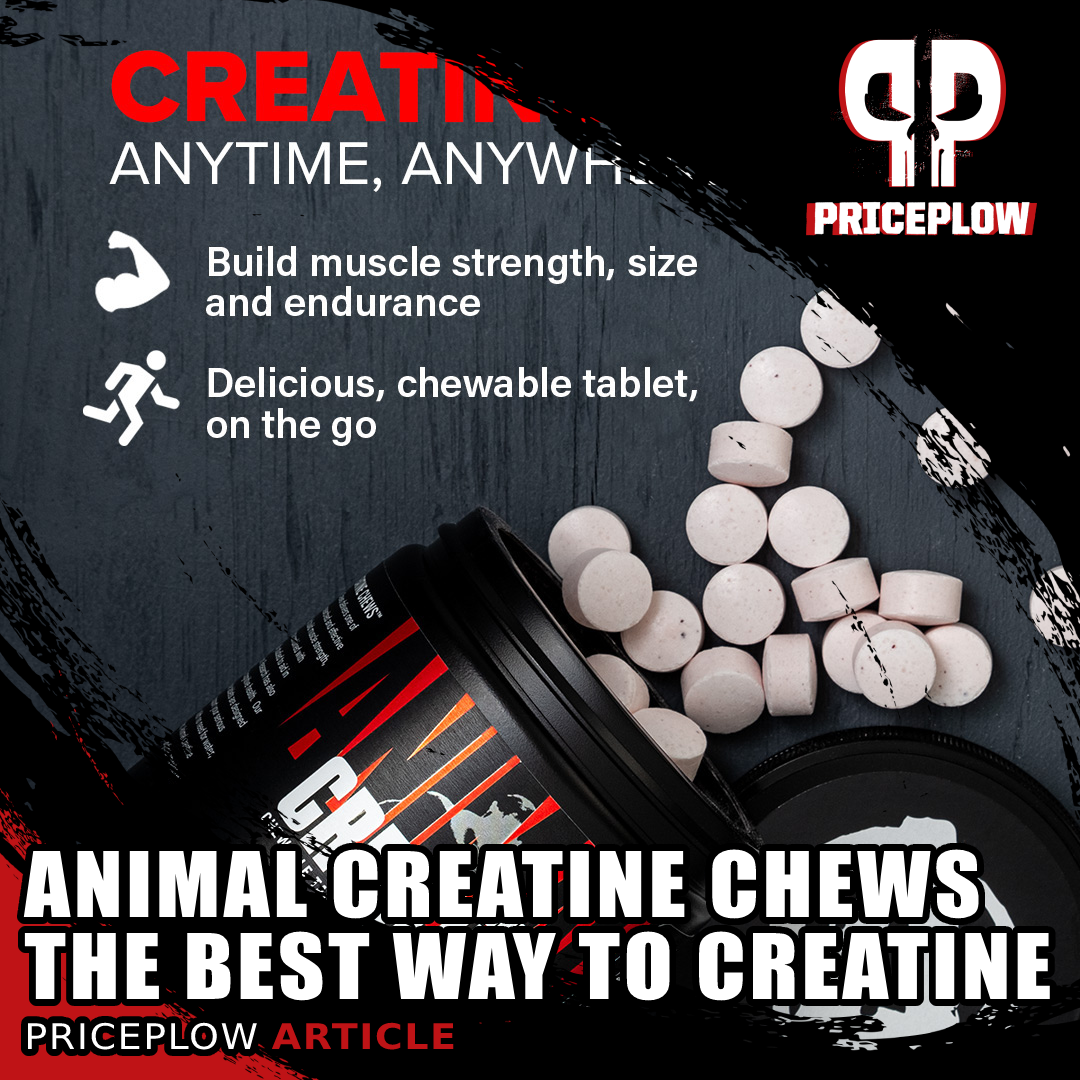
Animal's "anywhere, anytime" promise is the easiest one to verify: there's no water, shaker, or powder involved. Easy peasy. Creatine works through accumulation, building muscle stores over weeks of daily intake, and brain stores fill even more slowly. Missed days slow the process, so the best creatine product is the one you'll take every day, whether you're at the gym, at your desk, or on the road.
Creatine Chews are dry-pressed tablets rather than gummies, which Animal points to as a stability advantage, since water in the gummy-making process can degrade creatine into creatinine. Each tub also carries the NSF Contents Certified mark, meaning NSF tests the product to verify its label claims and screen for unsafe levels of contaminants. That's a different program from NSF Certified for Sport, which adds banned-substance screening, so drug-tested athletes should keep the distinction in mind.
Take four chews daily, pre- or post-workout per Animal's directions, and keep taking them on rest days so your stores stay topped off.
Flavors Available
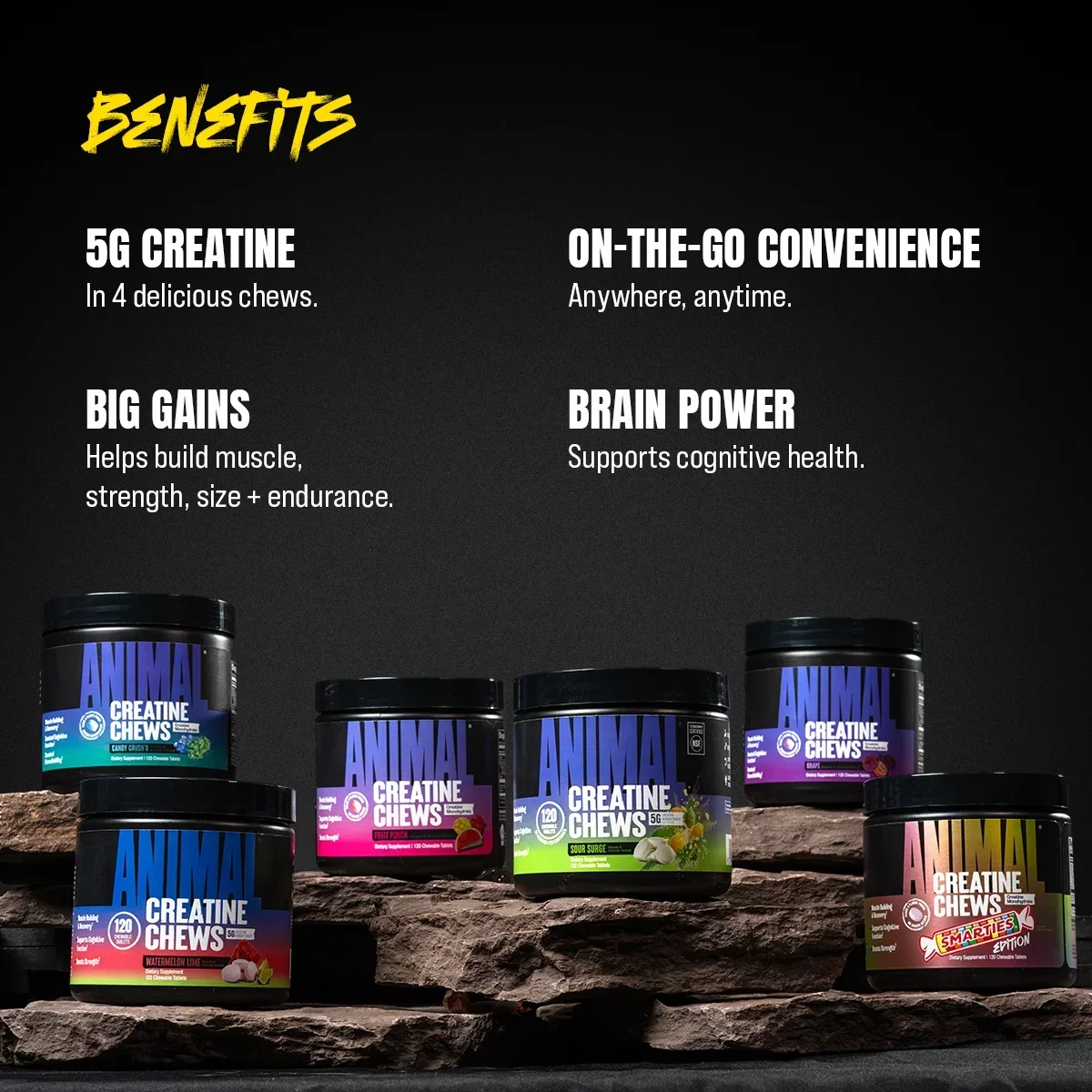
Sour Surge is now available alongside Animal Creatine Chews' established lineup.
Here's an up-to-date list of all Animal Creatine Chews flavors:
Conclusion: Sour Candy, Serious Creatine
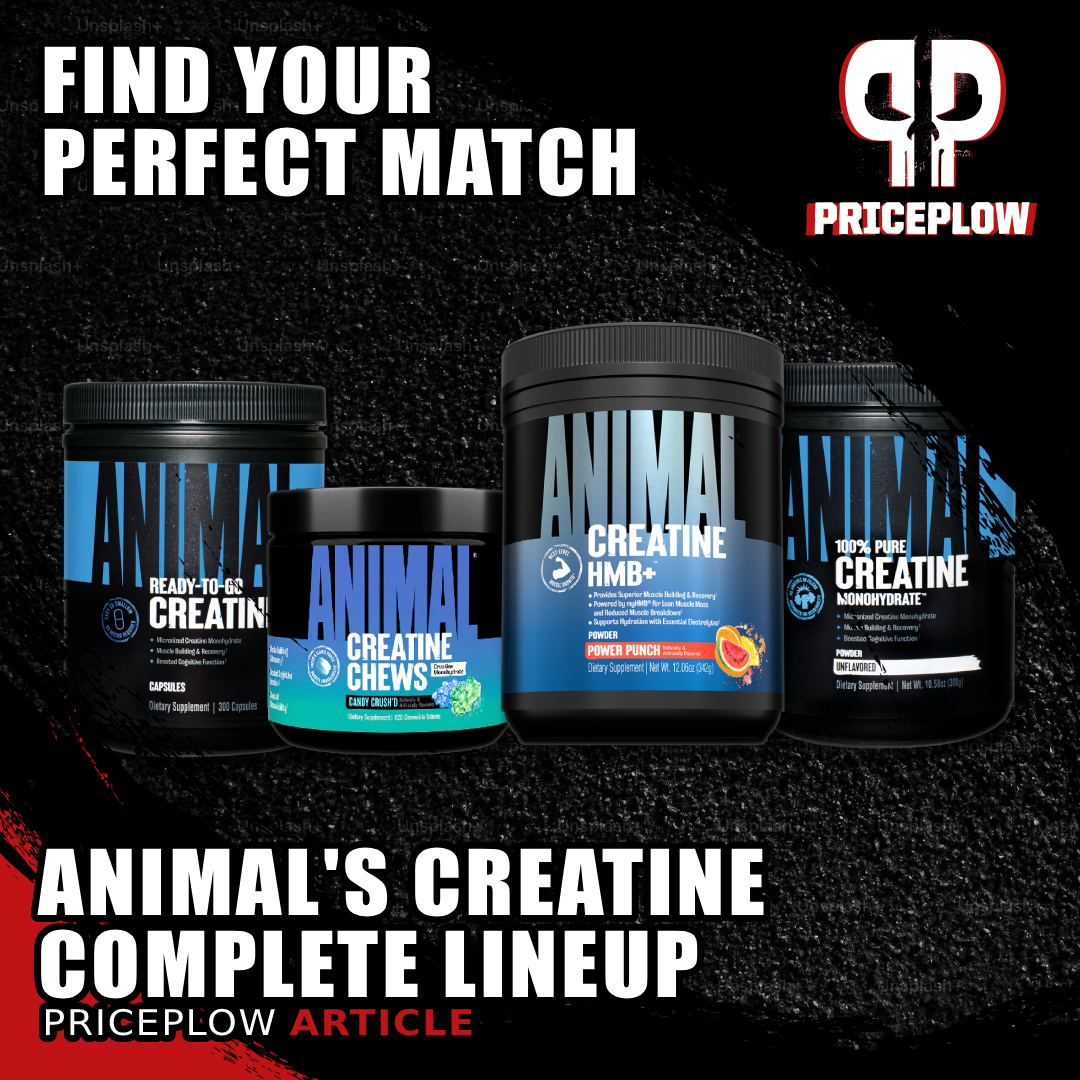
Animal covers every creatine need with 4 distinct products: convenient chews with glycogen support, synergistic HMB+ combinations, pure micronized powder for loading, and travel-ready capsules. Each targets specific goals from muscle growth to cognitive enhancement.
Sour Surge gives Animal Creatine Chews a flavor built for the sour candy crowd, with the same 5g of creatine monohydrate in four tablets that has anchored the line since day one.
After running Animal's marketing through the research, the core claims hold up. Creatine monohydrate has strong evidence for strength, lean mass, and repeated high-intensity work. The brain power angle is promising, with the best results so far in older adults and in people pushing through stress and short sleep, and it comes along with the same daily habit. If you'd rather load, pair creatine with HMB, or keep powder at home and chews in your bag, our complete Animal creatine lineup breakdown covers every option.
Check PricePlow for current Animal Creatine Chews Sour Surge prices and availability, and sign up for Animal alerts so you'll know when the next flavor drops.
Universal Animal Creatine Chews – Deals and Price Drop Alerts
Get Price Alerts
No spam, no scams.
Disclosure: PricePlow relies on pricing from stores with which we have a business relationship. We work hard to keep pricing current, but you may find a better offer.
Posts are sponsored in part by the retailers and/or brands listed on this page.