The U.S. Anti-Doping Agency (USADA) now points athletes to TruShield™ Certified!
TruShield Certified is now one of USADA's five recommended certification programs. From one flagship brand in October 2025 to a USADA recommendation in just over a year.
On November 12, 2026, TruShield announced that USADA had named it one of five recommended third-party certification programs for dietary supplements, after USADA completed a comprehensive review in 2026 and expanded its list. TruShield's logo now sits on USADA's Supplement Connect page, right where athletes go to learn how to lower their risk from supplements.
USADA Adds TruShield™ Certified to Its Recommended Certification Programs
We've followed TruShield since it launched with its first flagship brand in October 2025, and Lori Bestervelt and Thane Campbell told the whole story on Episode #193 of the PricePlow Podcast a month later. The idea from day one has been to bring an elite anti-doping lab's testing depth to the supplements athletes actually take. Now the national anti-doping organization for U.S. Olympic and Paralympic sport is sending athletes its way.
The recommendation also puts a spotlight on how much TruShield checks before a product can carry its mark. For every certified batch or lot, TruShield verifies:
- 480+ banned substances, screened in TruShield's ISO 17025, WADA-experienced lab against current WADA and professional sports league prohibited lists
- GMP manufacturing, with proof that the product came from a GMP-certified facility
- Label claims, through Certificates of Analysis (CoAs) showing the product contains what its label says
- Heavy metals, through CoAs showing heavy metals testing for each submitted lot
Sign up for PricePlow's TruShield Certified news alerts, and then let's get into what USADA's recommendation means for athletes and brands:
Subscribe to PricePlow's Newsletter and Alerts on These Topics
What USADA's Recommendation Means
USADA's advice to athletes is simple: if you're going to use supplements, "use only dietary supplements that have been certified by a third-party program".[1] The agency currently names five programs as "the best way to reduce an athlete's risk from supplements", and TruShield Certified is one of them. Given how extraordinarily well-equipped their lab is, we argue it's a top option, too.
The recommendation carries major weight because USADA doesn't vouch for products itself. Its guidance clearly states that USADA "does not evaluate, certify, approve, or endorse any dietary supplement or any dietary supplement company", and that "no dietary supplement can be guaranteed to be 100 percent risk-free". Certification is how USADA tells athletes to manage that risk, so a spot on its short list tells athletes, coaches, and dietitians which marks they can lean on.
TruShield says USADA expanded its recommendations to include TruShield following that comprehensive 2026 review. Bestervelt, who leads certification services at TruShield, put the stakes this way:
"Athletes put their careers, reputations and eligibility on the line every time they compete."
-- Lori Bestervelt, Senior Vice President of Certification Services, TruShield™ Certified
That's the problem TruShield's certification is built to solve, and the research shows just how common it is:
Why Tested Athletes Need Certified Supplements
-
Contamination Is Well Documented
Most athletes use supplements. A 2023 review in Frontiers in Sports and Active Living reported that 60% to 80% of athletes use them now or have used them. While the industry has certainly cleaned up manufacturing practices over the past couple of decades, older studies have repeatedly found anabolic steroids or steroid derivatives in supplements.[2]
The amount of adulteration climbs in high-risk categories. Researchers from the Doping Authority Netherlands bought 66 sports supplements from Dutch web shops, all marketed for hormone support, muscle gain, fat loss, or energy. 25 of the 66 products (38%) contained undeclared doping substances.[3] The list included stimulants like oxilofrine, BMPEA, and DMAA, anabolic steroids like boldione, the beta-2 agonist higenamine, and even the beta-blocker bisoprolol.
A 2022 review pooled 50 studies published between 1996 and 2021 and found undeclared substances in 875 of the 3,132 supplements they analyzed. The most common were sibutramine (in 248 products), a withdrawn drug found mainly in weight-loss supplements, and anabolic steroids (in 228).[4] Note that the pool spans 25 years of testing worldwide, so it isn't a snapshot of today's mainstream shelves, but it's important to note that the problem isn't solved, either.
-
The Supplements Behind Positive Tests
Under anti-doping rules, athletes are strictly liable for what shows up in their sample, no matter how it got there. So how often does a supplement turn out to be the culprit?

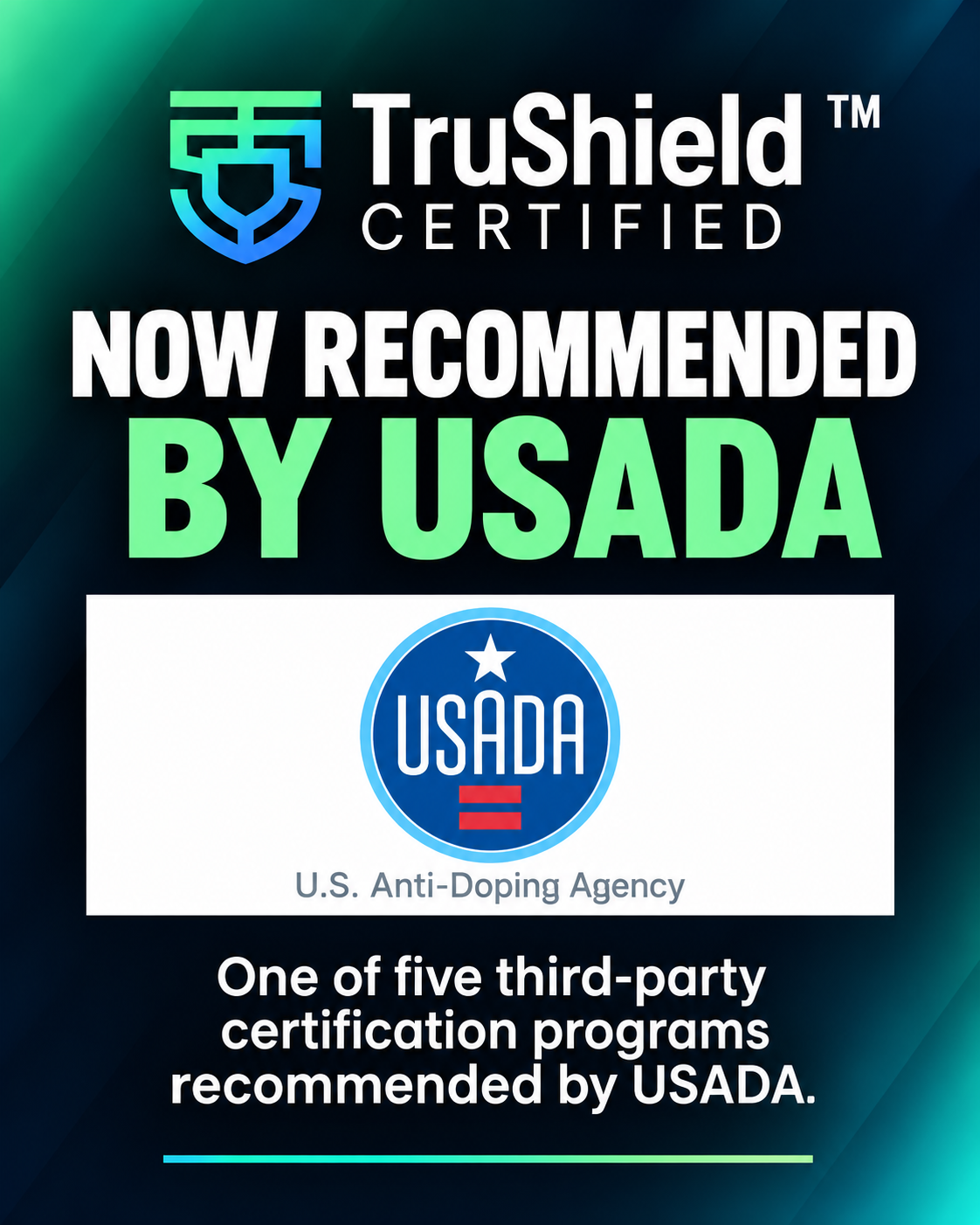
WADA's 2026 prohibited list is now in effect. New banned substances include BAM15, flmodafinil, and fladrafinil--all found in supplements. One contaminated product can end an Olympic career. Testing depth matters more than ever.
A study of 18 years of doping control data from Anti-Doping Norway found that athletes blamed a dietary supplement in 49 of the 192 analytical anti-doping rule violations recorded from 2003 to 2020 (26%).[5] Evidence backed up the athlete's claim in 27 of those cases, or 14% of all analytical violations.
Stimulants were the substance group most often tied to supplements (24 cases), and methylhexanamine (DMAA) alone accounted for 16 of them, from the first in 2011 to the latest in 2020. The products behind those cases were mostly multi-ingredient pre-workouts (20) and fat burners (4). DMAA hasn't been a mainstream pre-workout ingredient in years, but that 2020 case shows it can still turn up if you go looking. Keep in mind that this is one national program's data, and the numbers are small: 27 cases with supporting evidence in 18 years. For a drug-tested athlete, though, one is enough.
-
Labels Aren't Always Accurate, Either
Banned substances aren't the only gap between a label and what's in the tub. When Australian researchers tested 15 pre-workout supplements commonly used by Australian consumers, caffeine ranged from 91mg to 387mg per serving, or 59% to 176% of what the packaging claimed.[6] Only 6 of the 15 labels listed caffeine content at all, and all but one product showed caffeine swings of 40mg or more per serving within and between batches.
More recently, researchers led by Pieter Cohen bought 25 melatonin gummy products online and reported in a 2023 JAMA research letter that 22 of them (88%) were inaccurately labeled. Only 3 came within 10% of the melatonin on their labels, the measured amounts ran from 74% to 347% of the label, and one product had no detectable melatonin at all.[7] While melatonin isn't a banned substance, it still goes to show that manufacturing is not a perfected science.
What TruShield™ Certification Verifies
TruShield Certified launched last October with one brand partner. Eleven months later it has two sessions at The Outlook on Active Nutrition, and three past PricePlow Podcast guests are on the panels.
TruShield's anti-doping lab runs the banned-substance screening itself. The rest of the certification is checked batch by batch through documents the brand submits before a lot can carry the mark: a label review for regulatory compliance, proof of GMP certification, and CoAs covering label claims and heavy metals.
-
480+ Banned Substances, Every Batch
Finished-product samples from each batch and lot go to TruShield's ISO 17025, WADA-experienced lab, where they're screened against more than 480 prohibited substances on current WADA and professional sports league lists. TruShield is run by EagleDX, a subsidiary of the Sports Medicine Research and Testing Laboratory (SMRTL) in Salt Lake City, and its panel has grown from 400+ substances at launch. It includes categories like glucocorticoids and HIF stabilizers, which we covered when the 2026 WADA Prohibited List took effect.
Note also that the number of banned substances TruShield checks -- currently 480 -- seems to grow every time we write an article about them! As you can learn in Episode #193, the TruShield team is not going to let anything slip by them as the arms race continues through time.
-
GMP-Certified Manufacturing
Most supplement certification programs screen around 290 banned substances. TruShield™ Certified covers 480+, and that standard now extends to certified ingredients. ReDaxin™ and AstaReal® Astaxanthin softgels are the first ingredient inputs to complete the process.
For each batch, the brand has to show proof that its manufacturing facility holds a GMP certification. Good Manufacturing Practices are the FDA's quality rules for supplement makers, and federal regulations define quality as a supplement that consistently meets its specifications for identity, purity, strength, and composition, along with limits on contaminants.[8] The 2023 review linked above describes mislabeling and adulteration as signs of poor quality control and a failure to comply with GMPs.[2]
-
Label Claims
Each submitted lot also needs CoAs proving its label claims, on top of the label review. That's the check aimed at the kind of label gaps in the pre-workout study above, where a scoop could deliver well under or far over the caffeine its label promised.
-
Heavy Metals
The same CoAs have to document heavy metals testing for every submitted lot. With heavy metals in the mix, TruShield's certification covers all three areas that third-party certification programs typically test, according to the 2023 review: prohibited substances, heavy metals, and labeling accuracy.[2]
-
Every Certified Lot Is Public
Once a lot passes, TruShield issues a certificate for that specific lot and lists it publicly on its certified products page and in its mobile app. Athletes can check the exact lot in their hands before they take it.
Bestervelt summed up the program's priorities in one line:
"Protecting athletes is at the center of everything we do."
-- Lori Bestervelt
TruShield's Road to USADA
TruShield got here fast. Here's how the past year played out:
- October 2025: TruShield launched with Con-Cret as its flagship brand partner, covered in our TruShield Certified introduction.
- November 2025: Lori Bestervelt and Thane Campbell joined Mike and Ben on Episode #193 of the PricePlow Podcast.
- January 2026: The 2026 WADA Prohibited List took effect, including new prohibited compounds that have turned up in supplements.
- February 2026: NO:NAME expanded its TruShield coverage across its lineup.
- April 2026: The first two raw ingredients cleared TruShield's ingredient-level certification.
- July and August 2026: Doug Grant of Optimal Health Systems and Marc Lobliner of CleanForm Nutrition came on the podcast to explain why they chose TruShield. CleanForm's BHB shots notably need testing as some professional teams are using them, especially to combat head injuries.
- September 2026: TruShield headlined two sessions at The Outlook on Active Nutrition.
- November 2026: USADA added TruShield to its recommended certification programs.
Congratulations, TruShield!
TruShield is now one of USADA's five recommended certification programs, and it earned the spot with a certification that screens every batch for 480+ banned substances and checks GMP manufacturing, label claims, and heavy metals before the mark goes on a label. For tested athletes, that's one more program USADA tells them to look for. For brands, it's a mark USADA now points athletes to.
We've watched TruShield go from one flagship brand to a USADA-recommended program in just over a year, and we can't wait to see which brands and ingredients sign on next! At some point, we'll need to celebrate their 500th banned substance tested.
Want to know when the next product or ingredient earns the TruShield mark? Sign up for our TruShield Certified news alerts:

Comments and Discussion (Powered by the PricePlow Forum)