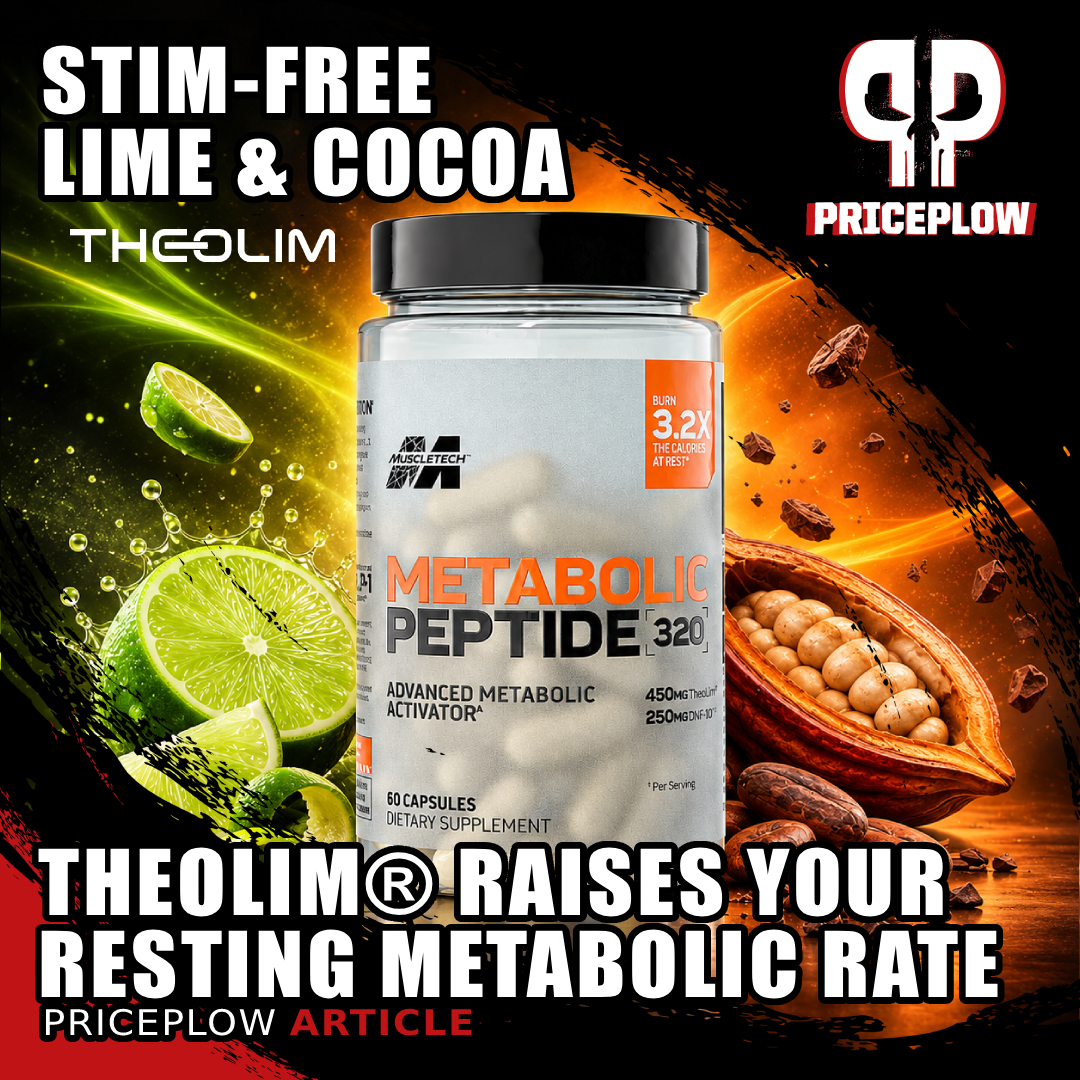
MuscleTech's label says TheoLim® helps you burn 3.2x the calories at rest. We went and checked what that number actually means. It compares the rise above baseline three hours after one 450mg dose, roughly 0.26 kcal/min versus 0.08 on placebo.
For decades, the thermogenic aisle has run on stimulants. Caffeine, synephrine, yohimbine, and their cousins can push energy expenditure up, but they bring the jitters, the racing heart, and the 3pm crash along for the ride. Now that the GLP-1 era has everyone talking about what gets lost during a diet (see our coverage of "GLP-1 drag"), the bar for a fat-loss ingredient is higher than ever: raise metabolism, protect lean mass, and support the body's own appetite signals, all without hammering the nervous system.
Can a Lime Peel and Cocoa Extract Raise Your Metabolism Without Stimulants?
That's the pitch behind TheoLim®, a patented 2:1 blend of key lime (Citrus aurantifolia) fruit rind extract and cocoa (Theobroma cacao) seed extract from Laila Nutraceuticals. PricePlow readers have already met it inside MuscleTech Metabolic Peptide 320 and MuscleTech EFF'N Cut!, and Iovate's new CEO Raza Bashir built Hydroxycut GLP-1 Elite Shred around it, too.
TheoLim earns a full guide because of its research stack. Six published studies now cover it, including two human trials at the same 450mg dose that MuscleTech uses:
- A single 450mg dose raised resting metabolic rate over three hours, beating placebo at the two- and three-hour marks, with blood pressure and heart rate staying in normal ranges.
- Sixteen weeks of daily use cut body weight by 4.25kg versus 0.96kg with placebo, nearly all of it fat, while lean mass held steady.
- Blood levels of GLP-1 and adiponectin rose over those 16 weeks, while the hunger hormone ghrelin fell. TheoLim contains no GLP-1 and isn't a GLP-1 agonist: it supports the body's own production.
This is PricePlow's TheoLim science guide, the page future TheoLim coverage will link back to. Sign up for our TheoLim news alerts, and then let's get into it:
Subscribe to PricePlow's Newsletter and TheoLim Alerts
What Is TheoLim?
TheoLim is a standardized botanical composition that researchers have published under the codes LN19183 and CL19183. It's made in a cGMP-certified facility in Vijayawada, India by blending two extracts at a fixed 2:1 ratio:[1]
- Key lime fruit rind (Citrus aurantifolia), extracted with a 50% water-ethanol mix
- Cocoa seed (Theobroma cacao), extracted with water
The finished blend is standardized by HPLC to at least 5.0% citric acid, 0.5% theobromine, and 0.3% hesperidin. Those three marker compounds give quality control something to measure batch after batch, which matters for a two-plant blend where the ratio itself is the patent. MuscleTech's labels list TheoLim under US Patent 11,801,277.[2]
-
Key Lime Rind: Citrus Flavonoids
Lime peel carries more of the fruit's flavonoids than the juice does. Hesperidin, naringenin, and nobiletin are stated as the rind's notable compounds, and earlier citrus research ties those flavonoids to fat and glucose metabolism through the AMPK and PPAR pathways.[1] Note that the rind extract here is lime, not the bitter orange (Citrus aurantium) used for synephrine. Different species, different chemistry, and no stimulant amines in the standardization.
-
Cocoa Seed: Theobromine Without the Caffeine Load
Cocoa brings theobromine, the gentler methylxanthine that gives dark chocolate its mild lift, along with cocoa flavan-3-ols. The researchers describe TheoLim as a negligible source of caffeine. At 0.5% theobromine, a 450mg dose guarantees only about 2mg or more of theobromine, which is a tiny fraction of the hundreds of milligrams used when brands dose theobromine for energy. Whatever TheoLim is doing, it isn't acting like a stimulant stack.
Why a 2:1 Blend?
The ratio came out of cell screening. In the first TheoLim paper, researchers treated mouse fat cells with the lime extract, the cocoa extract, or the combined blend and measured fibroblast growth factor 21 (FGF-21), a hormone tied to energy expenditure. The blend raised FGF-21 by 43% to 64% across three doses compared to untreated cells, and it beat each extract on its own by roughly 1.3- to 2.3-fold, which the authors call synergy.[3] That cell work picked the combination, and the rat and human studies below tested it.
The Problem With Stimulant Thermogenics
Most fat burners raise energy expenditure the blunt way: they push the sympathetic nervous system. That works on a calorimeter, but it shows up on a blood pressure cuff and a heart rate monitor, too, and plenty of people can't or won't take 300mg+ of caffeine every morning.

The TheoLim researchers built that concern into their trial design. The crossover study described below tracked blood pressure and heart rate at every metabolic measurement, at rest and during exercise, to check whether the metabolic boost came with stimulant-style side effects.[1] It didn't, and that's the practical answer for readers: TheoLim is a non-stimulant ingredient that can stand alone (as in Metabolic Peptide 320) or sit next to a moderate caffeine dose (as in EFF'N Cut!).
The second gap is body composition. Fast weight loss that strips muscle is the knock on GLP-1 drugs, and it's the knock on aggressive diets in general. A fat-loss ingredient earns its place when the scale drop is mostly fat, so the 16-week trial measured body composition by DEXA scan rather than relying on the scale alone.
TheoLim Clinical Evidence
Two randomized, double-blind, placebo-controlled human trials have tested TheoLim, both at 450mg in overweight (not obese) adults with a BMI of 25 to 29.9. Both were industry-funded and run at hospitals in Andhra Pradesh, India, with co-authors from the supplier's research partner COSMAX BIO and from Louisiana's Pennington Biomedical Research Center.
-
The 2024 Crossover Trial: A Single Dose
In the first human study, 60 overweight men and women aged 20 to 39 took one 450mg TheoLim capsule or a matched placebo before breakfast on two consecutive days, then switched to the other capsule after a 10-day washout.[1] Each person acted as their own control. On day 1, researchers measured resting metabolic rate (RMR) by indirect calorimetry before the dose and at 60, 120, and 180 minutes. On day 2, they measured metabolic rate before the dose and then during and 20 minutes after a bike workout.

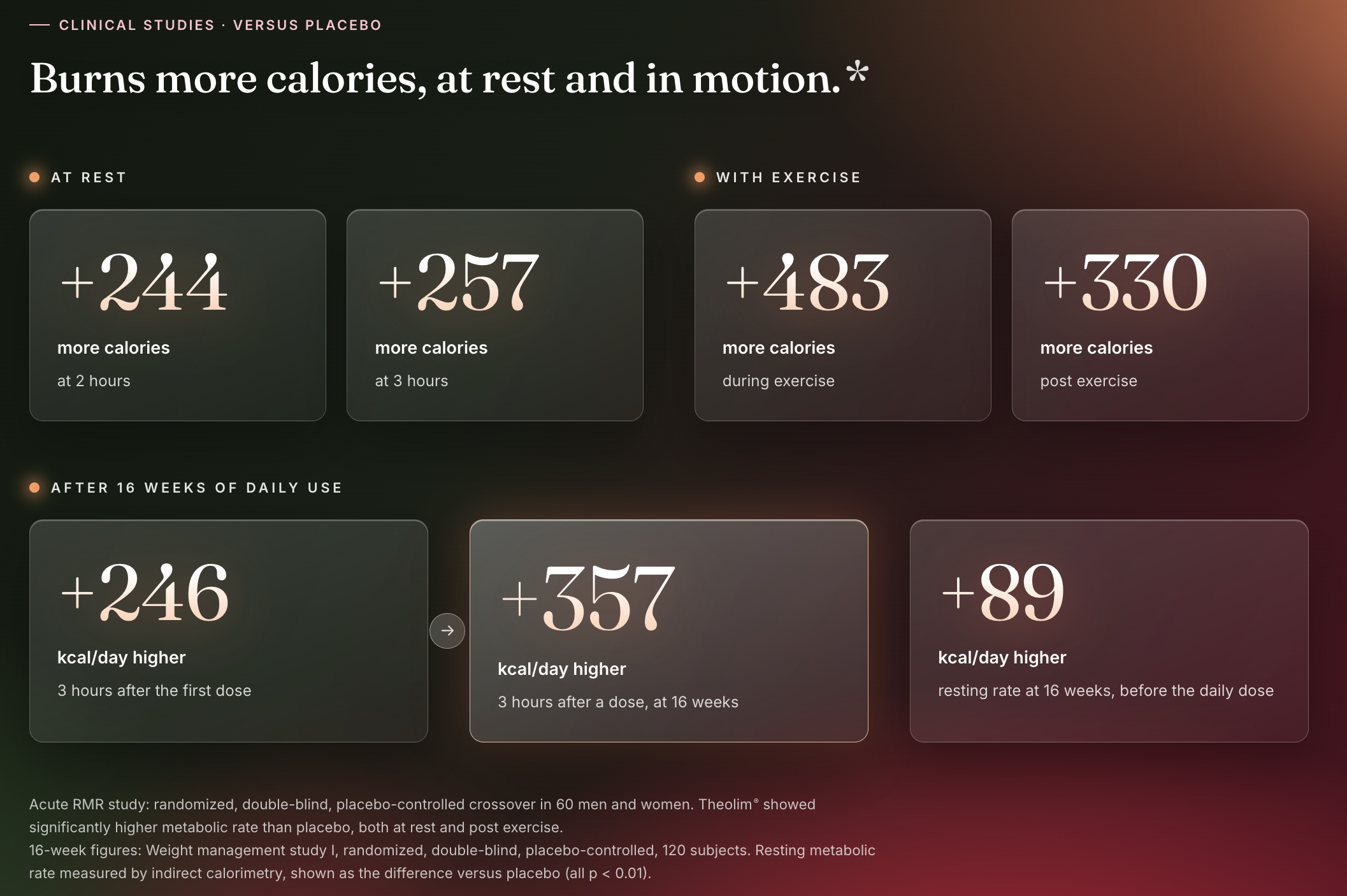
Calorie burn figures above placebo from both human trials, covering rest, exercise, and resting rate after 16 weeks of daily 450mg use.
A single 450mg dose of TheoLim raised resting metabolic rate by 10.19%, 19.44%, and 24.07% at 60, 120, and 180 minutes compared to pre-dose. Placebo crept up too, by 8.18% at 180 minutes, so the fair comparison is between groups: TheoLim's RMR was significantly higher than placebo's at 120 minutes (p = 0.0014) and 180 minutes (p = 0.0002), but not yet at 60 minutes.[1]
Fat burning moved with it. Compared to placebo, TheoLim significantly increased fat oxidation at 120 and 180 minutes after the dose (up 17.68% and 20.91% from pre-dose, versus essentially flat with placebo). On the exercise day, metabolic rate rose more during the workout with TheoLim than with placebo (212.5% versus 174.49% above pre-dose), and it stayed elevated 20 minutes afterward (22.91% above pre-dose) while placebo's dropped back slightly. Fat oxidation 20 minutes after exercise was also significantly higher than placebo.
Blood pressure and heart rate tracked placebo closely. Heart rate was two to three beats per minute higher than placebo at two time points, which reached statistical significance but stayed in the normal range. Clinical chemistry, blood counts, and urinalysis didn't change, and no participant reported an adverse event.[1]
Where the “3.2x” Number Comes From
MuscleTech's labels say TheoLim helps you "burn 3.2x the calories at rest", and our earlier coverage repeated it. Here's exactly what that figure means. It comes from this crossover study at the 180-minute mark, and it compares the increase in resting metabolic rate above each person's pre-dose baseline: about 0.26 kcal/min with TheoLim versus about 0.08 kcal/min with placebo, per MuscleTech's label reading of the study's metabolic rate figure. In percentage terms from the paper's text, that's the 24.07% versus 8.18% rise described above.

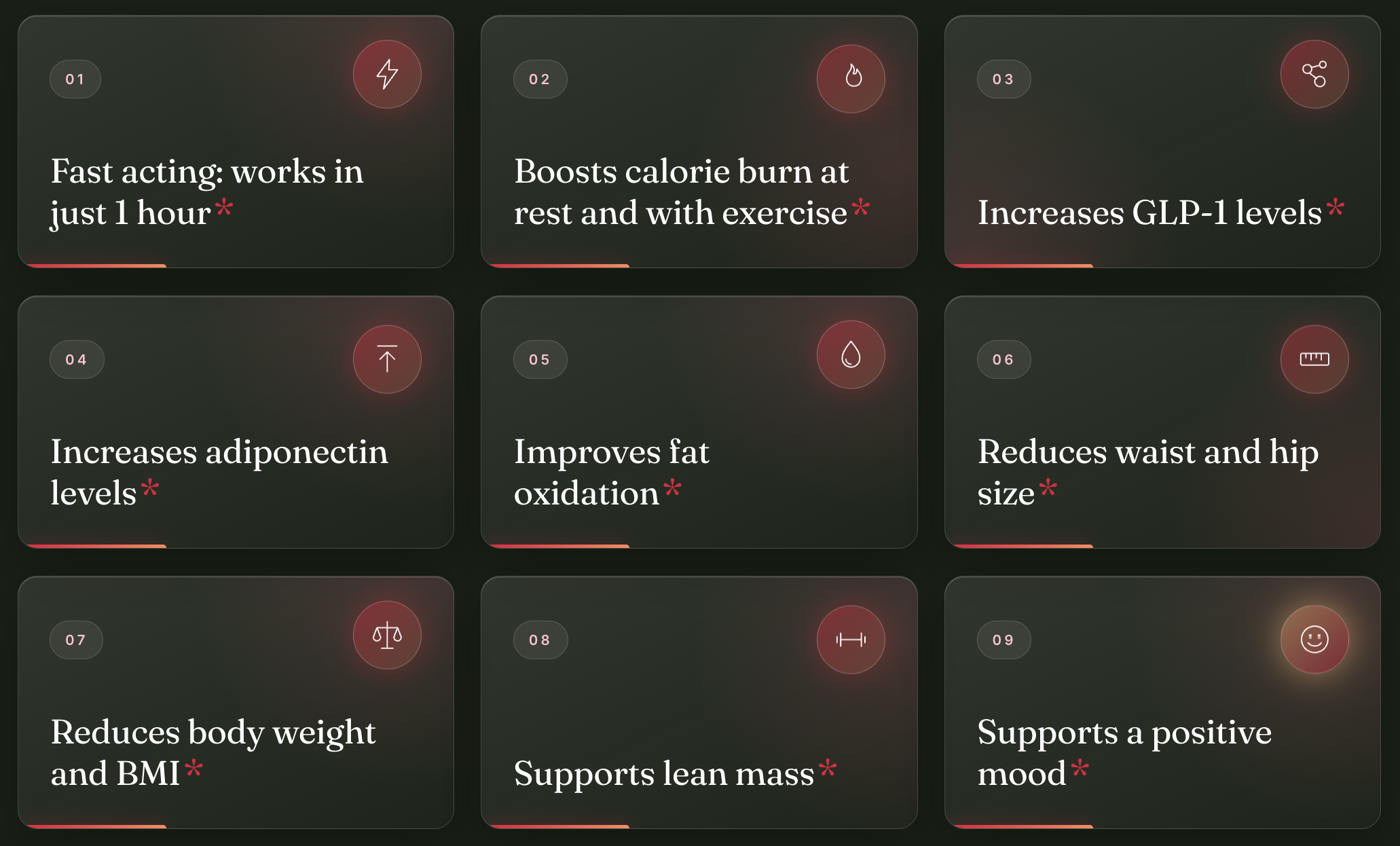
Nine structure/function claims made for TheoLim, from one-hour onset and calorie burn to GLP-1, adiponectin, lean mass, and mood.
So the precise claim is this: three hours after one 450mg dose, the rise in resting calorie burn was about three times larger with TheoLim than with placebo. It doesn't mean subjects burned three times their total resting calories. Total resting metabolic rate rose by about a quarter.
-
The 2025 16-Week Trial: Body Composition
The crossover study showed an acute effect. The bigger question was whether daily use would change body composition, so the team ran a 16-week multicenter trial in 120 overweight adults aged 25 to 55.[4] Half took one 450mg TheoLim capsule daily and half took a maltodextrin placebo. Everyone kept their usual diet (about 2,000 calories a day, which didn't differ between groups) and agreed to walk 30 minutes a day, five days a week. Researchers measured body composition by DEXA scan, a much better tool than a bathroom scale for separating fat from lean mass.
The results were impressive:
- Body weight dropped 4.25kg (about 9.4 pounds) with TheoLim versus 0.96kg (about 2.1 pounds) with placebo, a significant between-group difference that first showed up at week 2
- Total body fat fell 4.28kg with TheoLim versus 0.85kg with placebo, and body fat percentage was significantly lower than placebo's by the end of the trial
- Lean body mass rose slightly (up 0.17kg) with TheoLim while it dipped 0.14kg with placebo, a significant difference in change from baseline
- Waist circumference shrank 4.32cm with TheoLim versus 2.10cm with placebo, and hip circumference showed the same pattern

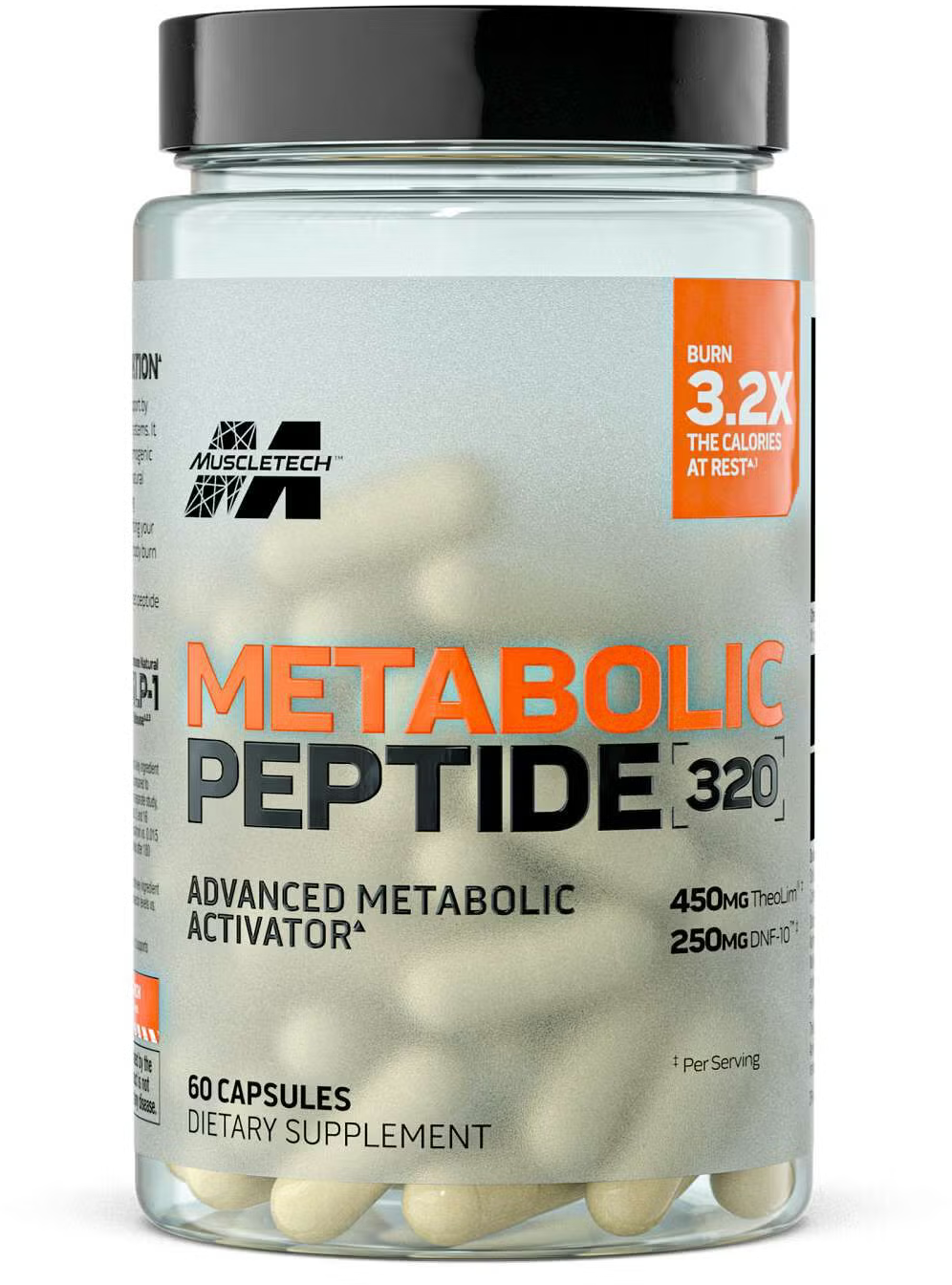
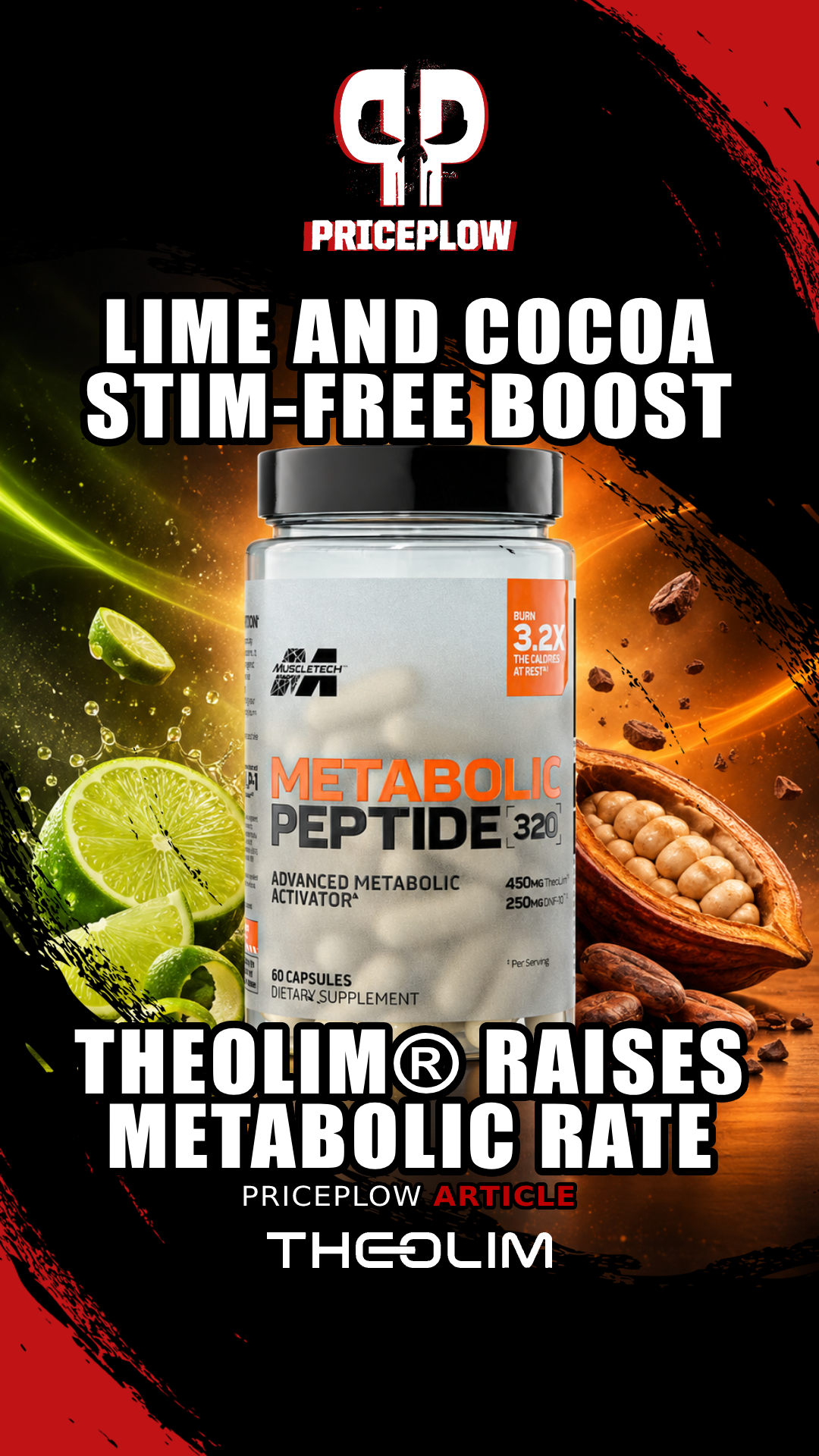
The stim-free 60-capsule bottle, with its 3.2x resting calorie burn callout drawn from the TheoLim crossover trial.
Put those bullets together and you get the headline: the weight TheoLim users lost was essentially all fat. That's the body-composition story the GLP-1 conversation keeps asking for. Note that the walking program and diet tracking applied to both groups, so they don't explain the gap between them. Three TheoLim users and five placebo users dropped out after week 4, and the analysis kept everyone who took at least one dose.
Resting Metabolic Rate Over 16 Weeks
The 16-week trial measured RMR at baseline, week 8, and week 16, each time before and after that day's capsule. Two findings stand out from the paper's Table 4.
First, the acute effect from the crossover study replicated. On day 1, before anyone had taken TheoLim regularly, the 450mg dose raised RMR by about 264kcal/day at 180 minutes, versus about 17kcal/day with placebo (p < 0.0001).[4] At week 16, the same-day rise from that morning's pre-dose value was about 312kcal/day with TheoLim versus about 45kcal/day with placebo, by our math from the reported means. Those are the "15x" and "7x" comparisons on MuscleTech's label, and like the 3.2x figure, they compare increases, not total calorie burn.
Second, fasting RMR itself drifted up with daily use. Measured before that day's capsule, RMR at week 16 averaged 1,477kcal/day with TheoLim versus 1,388kcal/day with placebo (p = 0.0049). From the day-1 baseline, that's a rise of about 148kcal/day with TheoLim versus about 58kcal/day with placebo, and the difference between those changes was significant (p = 0.0463). The respiratory exchange ratio also fell after dosing at weeks 8 and 16, which signals the body leaning more on fat for fuel.
GLP-1, Adiponectin, and Ghrelin
This is where TheoLim's "GLP-1" positioning comes from, so the details matter. The researchers measured three appetite and metabolic hormones at baseline, week 8, and week 16:[4]
- GLP-1 rose 20.69% at week 8 and 33.05% at week 16 compared to baseline in the TheoLim group, and the week-16 level was significantly higher than placebo's (p = 0.0138). Placebo didn't change significantly.
- Adiponectin, a fat-cell hormone associated with healthy insulin sensitivity and fat metabolism, rose 40.48% and 51.90% from baseline at weeks 8 and 16. That was 26.33% and 32.09% higher than placebo at those time points.
- Ghrelin, the hunger hormone, fell significantly versus baseline and placebo at both weeks 8 and 16.

MuscleTech EFF'N Cut! brings clinical thermogenics to an effervescent format. TheoLim increased metabolic rate 3.2x above baseline in studies, while the FZZR™ beadlet system makes daily fat burning something you'll actually look forward to.
TheoLim contains no GLP-1, and it isn't a GLP-1 agonist or a drug. These results show it supporting the body's natural GLP-1 production within a normal range, measured in blood samples alongside a calorie intake that didn't change. The trial didn't measure appetite ratings directly, so we'll stop short of saying people ate less.
Insulin Sensitivity, Lipids, and Mood
The 16-week trial also tracked HOMA-IR, a calculated marker of insulin sensitivity from fasting glucose and insulin. It dropped significantly with TheoLim versus placebo by week 16 (p = 0.0057), with no significant change in the placebo group.[4] LDL cholesterol and the LDL-to-HDL ratio also came down modestly but significantly versus placebo, from an LDL baseline of about 107mg/dL in the TheoLim group.

Both human trials also gave participants the Profile of Mood States questionnaire. Total mood disturbance scores dropped with TheoLim versus placebo in both studies, which fits a non-stimulant profile.
TheoLim Preclinical Research: Rat and Cell Studies
The human data carries this article, but four lab studies explain how TheoLim might work. Everything in this section comes from rats or cells, and none of it should be read as a human result.
-
FGF-21 and Resting Energy Expenditure in Rats
The first TheoLim paper paired the cell screening described above with a 56-day rat study.[3] Rats ate a high-fat diet for 28 days to gain fat, then kept eating it for another 28 days with or without daily TheoLim at 100 or 250mg/kg body weight. In rats, both doses significantly reduced weight gain, total fat mass, and liver weight, and they raised resting energy expenditure by about 25 and 48 kcal per kg per day compared to the high-fat-diet group.
In the cells, TheoLim increased beta-3 adrenergic receptor (β3-AR) and uncoupling protein 1 (UCP-1) in a dose-dependent way. UCP-1 lets fat cells release energy as heat instead of storing it. In rats, the higher dose also raised fat oxidation and UCP-1 in white fat tissue. The authors propose an FGF-21 → β3-AR → UCP-1 chain as TheoLim's thermogenic route.
-
Dose-Response in the 2024 Rat Arm
Raza Bashir, the new CEO of Iovate Health Sciences, unveils Hydroxycut GLP-1 Elite Shred and discusses Muscle Peptide 185, CellTech's TikTok resurgence, and his path from R&D to the top job on Episode #235 of the PricePlow Podcast.
The crossover paper included its own rat study before the human trial.[1] High-fat-diet rats received TheoLim at 45, 90, or 180mg/kg for 28 days. In rats, resting energy expenditure rose 23.26%, 38.38%, and 43.64% versus the high-fat-diet group, a clean dose-response. Total fat mass fell significantly at the two higher doses.
The liver tissue showed higher activated (phosphorylated) AMPK and ACC, plus increases in CPT-1α (which shuttles fat into mitochondria for burning) and the GLP-1 receptor. Serum adiponectin recovered toward normal at the two higher doses, while leptin fell at the top dose.
-
AMPK and Fat Cell Formation
A 2025 study from COSMAX BIO and Laila looked at the fat-storage side.[5] In mouse fat cells, TheoLim reduced lipid accumulation in a dose-dependent way and lowered markers of new fat cell formation (PPAR-γ, C/EBPβ, SREBP-1, FABP4, and FAS), while raising markers of fat breakdown and thermogenesis (CPT-1, PPARα, PGC-1α, and UCP-1).
In rats on a high-fat diet, 100mg/kg of TheoLim for 28 days produced about 15% lower body weight than the high-fat-diet group, without a significant change in food intake. Triglycerides, leptin, blood glucose, and fat-pad weights all came down, with fat-pad indices about 27% lower than in the high-fat-diet group.
-
GLP-1 Secretion in Human Gut Cells
The newest study asked how TheoLim could raise GLP-1, the hormone that rose in the 16-week trial.[6] GLP-1 comes from L-cells in the gut lining, and those cells carry the same bitter taste receptors found on the tongue. Lime rind and cocoa are both bitter for a reason: they're loaded with polyphenols and alkaloids.

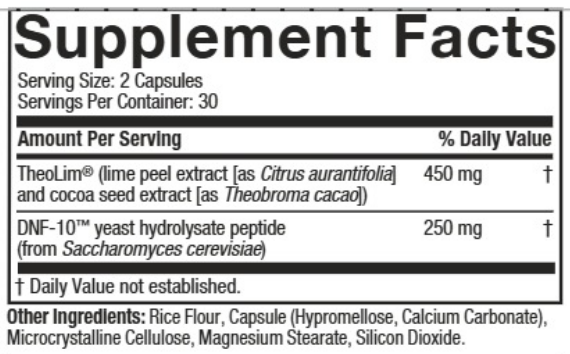
Two capsules deliver 450mg TheoLim alongside 250mg of DNF-10 yeast hydrolysate peptide, matching the clinical TheoLim dose.
In cells from a human L-cell line, TheoLim raised GLP-1 secretion in a dose-dependent way, reaching significance at the highest concentration tested. It increased gene expression of three bitter taste receptors (hTAS2R3, hTAS2R45, and most strongly hTAS2R46), the signaling protein α-gustducin, and the GLP-1 precursor proglucagon. Blocking phospholipase C or the downstream calcium channel shut the effect down. In cells, then, TheoLim appears to "taste" bitter to gut L-cells and nudge them to make and release more of their own GLP-1. This study reported no outside funding.

How TheoLim Works: Putting It Together
Pulling the human, rat, and cell data together, TheoLim appears to act on three connected fronts:
- Thermogenesis: raising resting energy expenditure and fat oxidation without a stimulant signature, with the FGF-21, β3-AR, and UCP-1 chain as the leading explanation from cell and rat work
- Metabolic signaling: raising adiponectin (shown in humans) and activating AMPK, the cell's energy sensor (shown in rats)
- Gut hormone support: supporting natural GLP-1 production (shown in humans) through bitter taste receptor signaling on gut L-cells (shown in cells), along with lower ghrelin
The mechanism chain is still mostly preclinical. The human trials measured outcomes (calorie burn, body composition, and blood hormones) rather than tissue-level pathways, so treat the pathways as the best current explanation for results that the human trials did show.
TheoLim Safety and Tolerability
TheoLim has been run through a full set of OECD-guideline toxicology studies before the long human trial.[7] The Laila-funded package found:
- Acute toxicity: an oral LD50 above 5,000mg/kg in rats, with no deaths or clinical signs
- 90-day subchronic toxicity: no treatment-related changes in blood work, urine, organ weights, or tissue histology in rats at 500 to 2,000mg/kg daily, giving a no observed adverse effect level (NOAEL) of 2,000mg/kg per day, the highest dose tested
- Genetic toxicity: no mutagenic effects in bacterial tests and no chromosome damage in human blood cells or mouse bone marrow
For perspective, the human dose of 450mg works out to roughly 6mg/kg for a 75kg adult, far below the rat NOAEL even after standard animal-to-human scaling.
In people, the 16-week trial reported no serious adverse events. Minor complaints included runny nose, headache, nausea, and cough, and blood chemistry, blood counts, urinalysis, and vital signs stayed in normal ranges. The crossover trial reported no adverse events at all.
As with any supplement, follow the label. MuscleTech's TheoLim products are for adults only and aren't for pregnant or nursing women, and anyone with a medical condition or taking medication should talk to their doctor first.
TheoLim Dosing and Timing
The clinical dose is 450mg once daily, and both TheoLim products on the market match it per serving. Timing details from the trials:
- Fasted on test days: In both trials, subjects took TheoLim before breakfast on measurement days, and the metabolic rate increases above were measured in that fasted state.
- Daily use in the 16-week trial: On non-test days, subjects took their capsule after breakfast. Both MuscleTech labels call for taking it fasted, before the first meal of the day.
- Onset: The metabolic rate increase built over the first two to three hours after a dose and was significantly above placebo by the two-hour mark.
Because TheoLim isn't a stimulant, it stacks easily. In EFF'N Cut! it sits alongside 200mg of caffeine, and in Hydroxycut GLP-1 Elite Shred Raza told us it's paired with a modest 135mg of caffeine. Users who want a stim-free option can take it on its own in Metabolic Peptide 320.
TheoLim: A Thermogenic for the GLP-1 Era

It's official. Raza Bashir, the innovation mind behind EuphoriQ, the Peptide Series, and EFF'N Energy, is now CEO of Iovate Health Sciences, parent company of MuscleTech. A four-time PricePlow Podcast guest just took the top job. Congrats, Raza!
TheoLim checks the boxes that stimulant fat burners never could. It's a non-stimulant blend of two foods people already eat, key lime peel and cocoa, standardized and patented as a 2:1 composition. One 450mg dose raised resting calorie burn over three hours, with the rise about three times what placebo produced. Sixteen weeks of daily use took off about 4kg of fat while lean mass held, and it supported the body's own GLP-1 and adiponectin along the way.
That's a rare combination for a branded ingredient: human trials at the marketed dose, a full toxicology package, and lab work that explains the results. We're most interested in seeing the next round of research, whether that's longer trials, trials in women and older adults, or studies that pair TheoLim with GLP-1-era priorities like protein intake and resistance training. With MuscleTech and Hydroxycut both behind it, there'll be plenty to cover.
Sign up for our TheoLim news alerts to catch new research and new products as they land:


Comments and Discussion (Powered by the PricePlow Forum)