Ever wish someone took our collaborative XPO NRG concept formula from 2024 and made it into a finished product? That's exactly what we have here today!
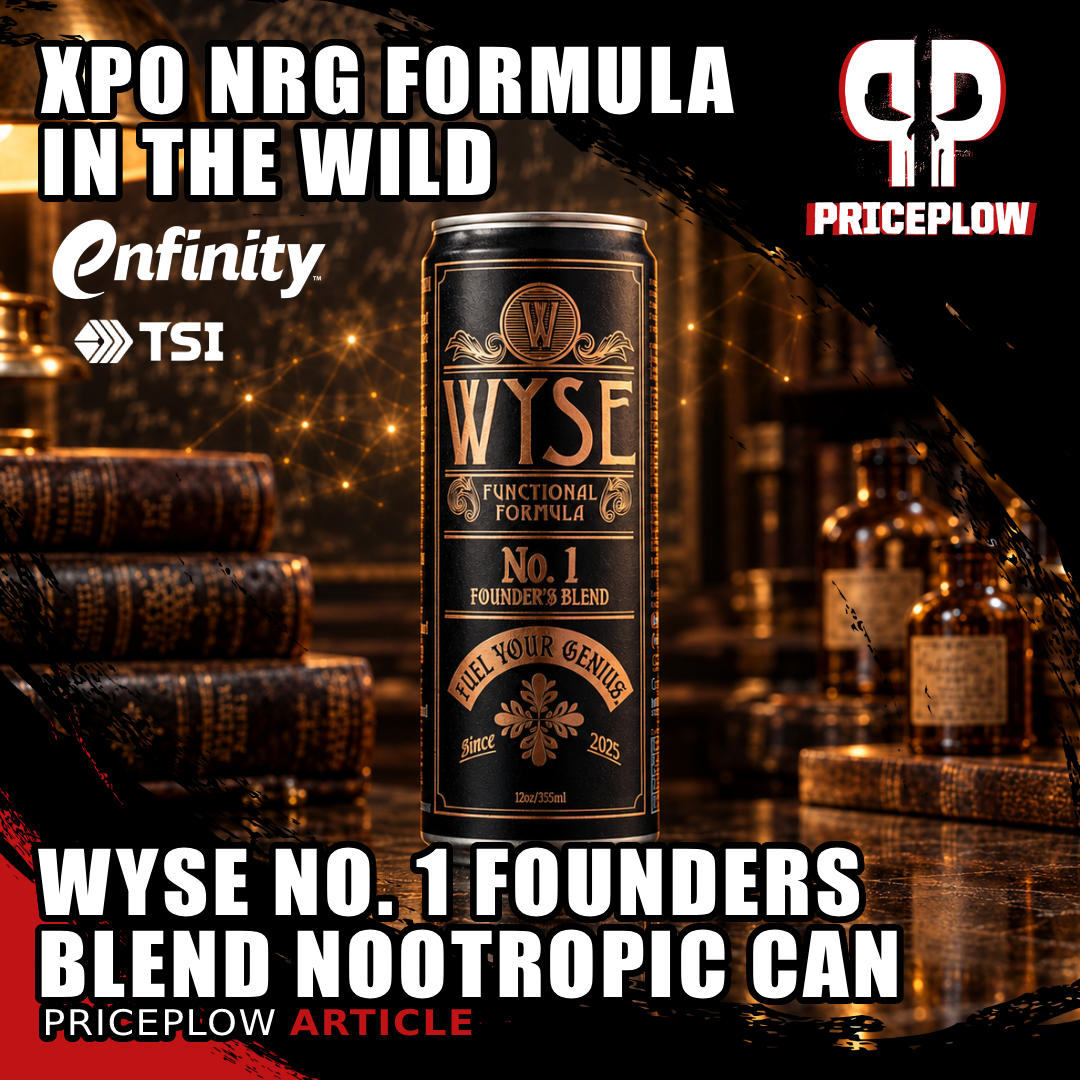
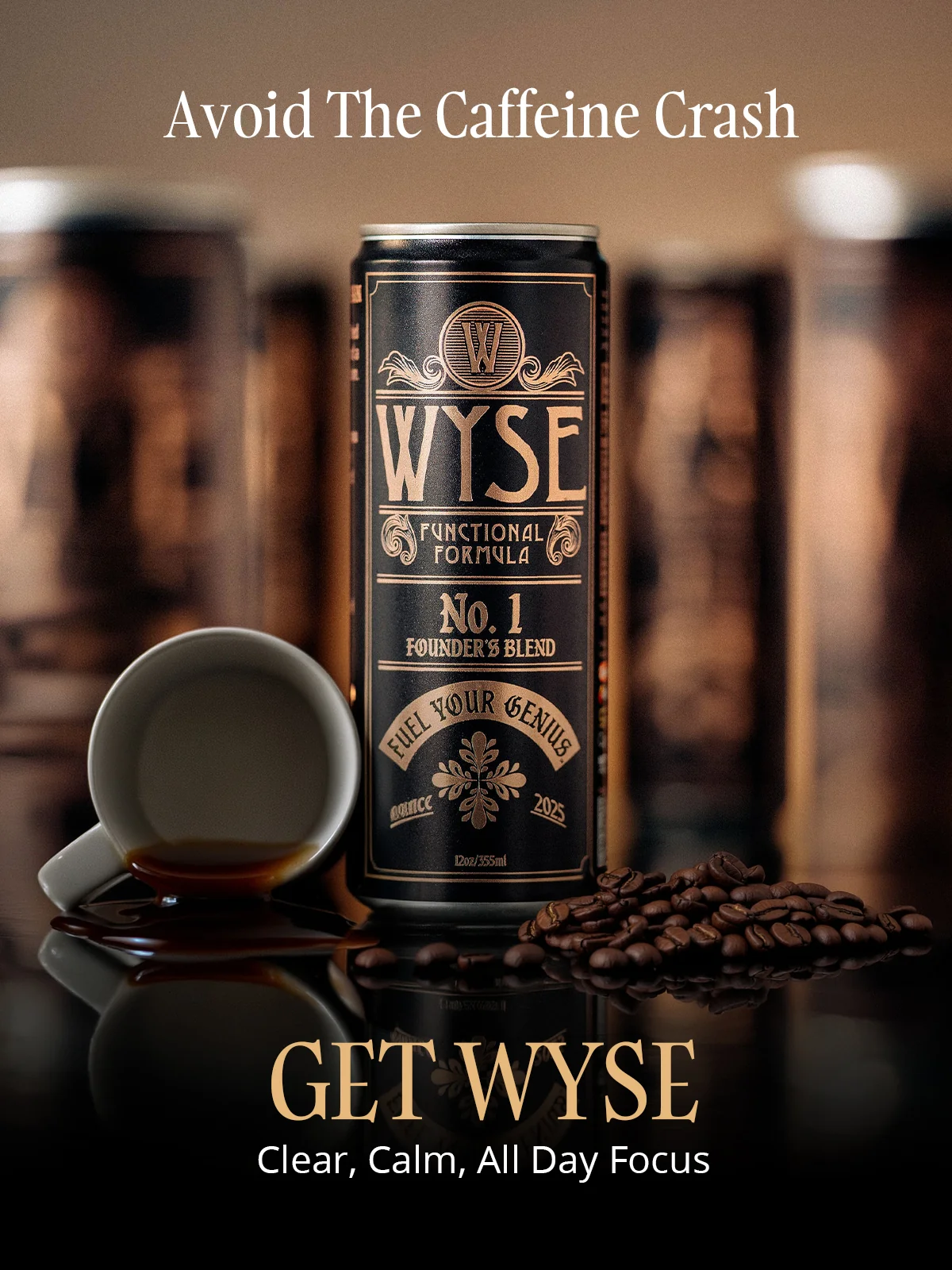
Caffeine-free, but not stimulant-free. Wyse No. 1 Founders Blend leads with 200mg of enfinity® paraxanthine, the main compound your body makes from caffeine, so the can skips the conversion step entirely.
Wyse No. 1 Founders Blend is a caffeine-free, zero-sugar nootropic drink built around five branded ingredients, and TSI Group's enfinity® paraxanthine leads the formula at 200mg per 12oz can. Paraxanthine is the main compound your body makes from caffeine, so Wyse delivers that metabolite directly instead of the caffeine itself. We've covered how that plays out for slow and fast caffeine metabolizers, and Wyse applies the idea to a lightly carbonated can.
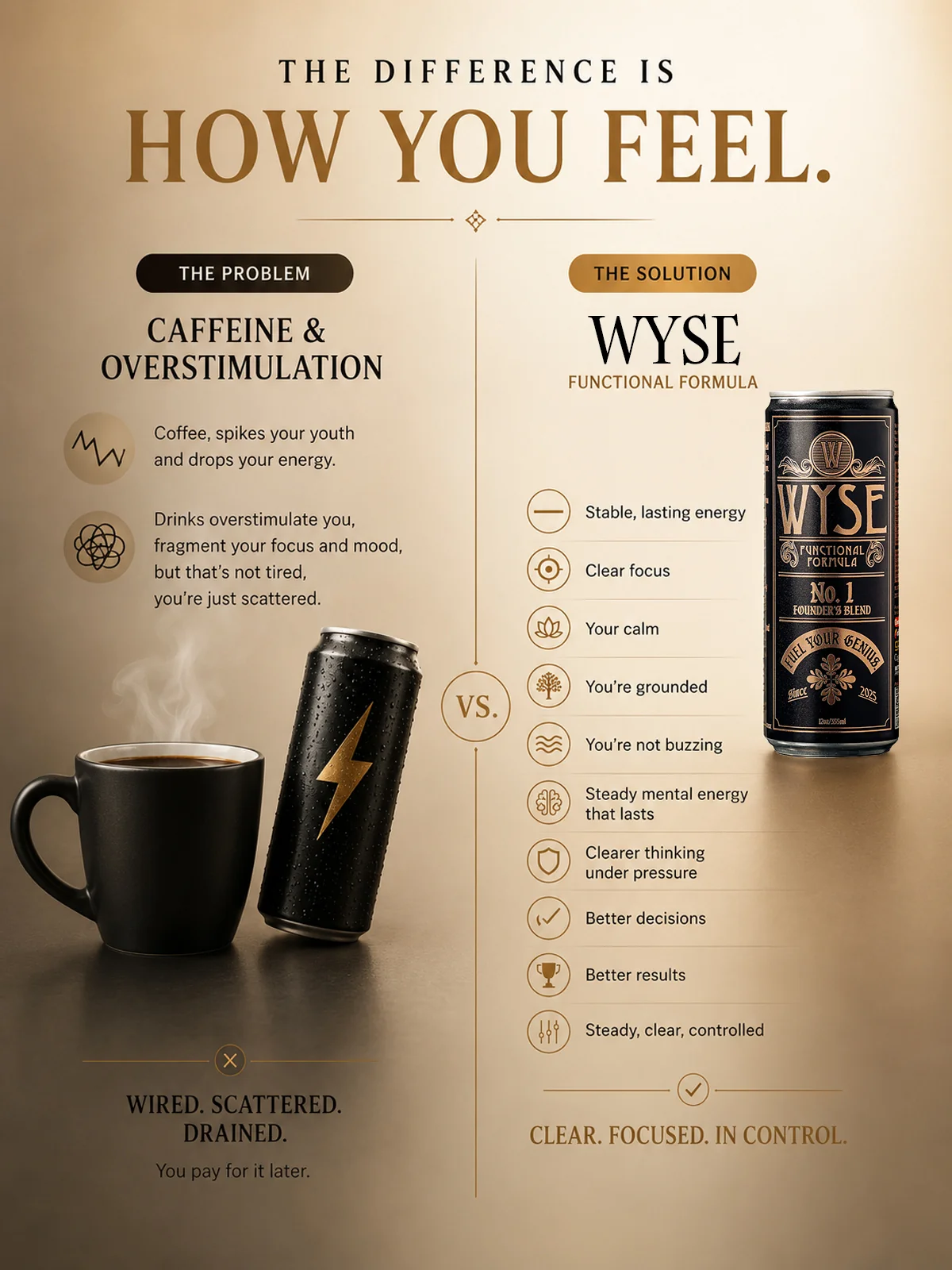
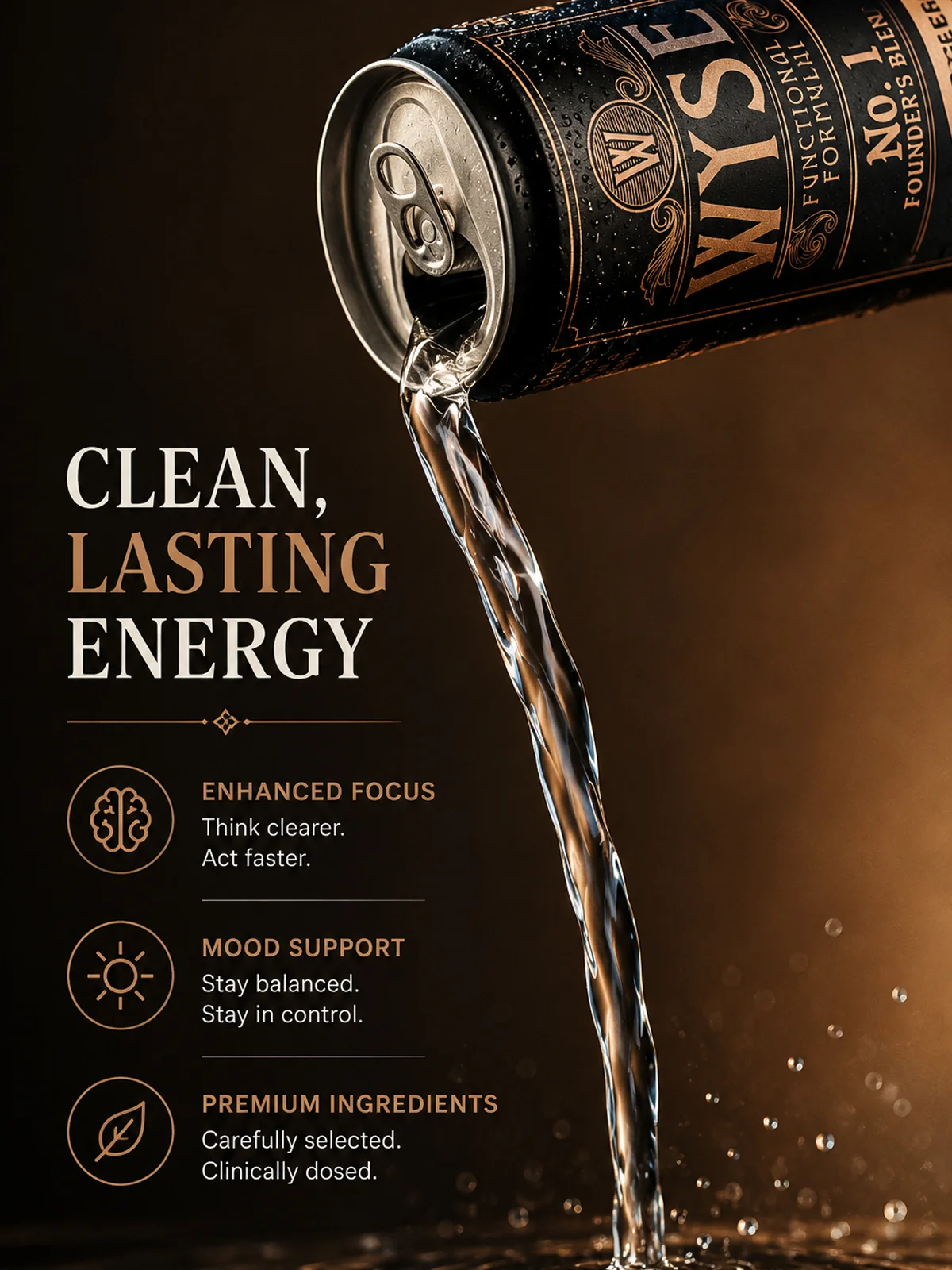
Wyse Holdings' founder, Scott, has spent more than 20 years in manufacturing and owns a contract manufacturing company. He began formulating the drink for himself, using patented and clinically studied ingredients rather than trendy blends. By his account, he built the formula on a ketone base, layered in three nootropics, and finished with paraxanthine as the caffeine-free alertness piece. The angle is steady, calm focus instead of a stimulant jolt, and the brand also sells the same active doses in a 4oz shot.
If the ingredient list looks familiar, it should. Wyse pairs enfinity® with L-BHB ketones, Cognizin®, MitoPrime®, and Zembrin®, the same five branded ingredients PricePlow coordinated in XPO NRG, the collaborative energy drink we ran for SupplySide West 2024. TSI Group supplied enfinity for that project, alongside Kyowa Hakko (Cognizin), NNB Nutrition (MitoPrime), and PLT Health Solutions (Zembrin).
Below, we go through what each ingredient does in the can, starting with enfinity.
TSI Group – Deals and Price Drop Alerts
Get Price Alerts
No spam, no scams.
Disclosure: PricePlow relies on pricing from stores with which we have a business relationship. We work hard to keep pricing current, but you may find a better offer.
Posts are sponsored in part by the retailers and/or brands listed on this page.
This area is reserved for Team PricePlow's upcoming videos.
Subscribe to our channel and sign up for notifications so you catch it when it goes live!

Wyse No. 1 Founders Blend Ingredients
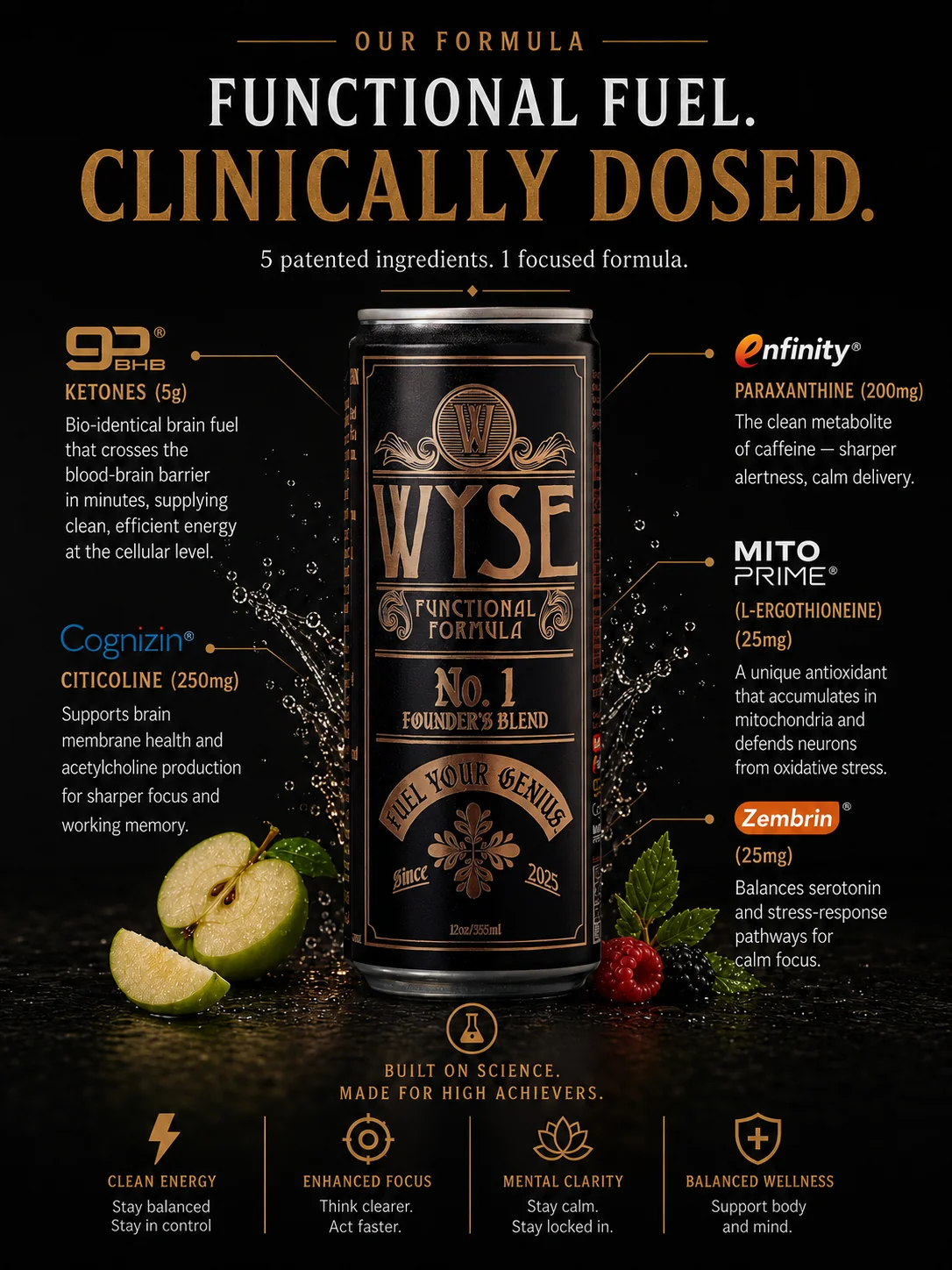
Each 12oz can provides the following:
-
Paraxanthine (enfinity™) - 200mg
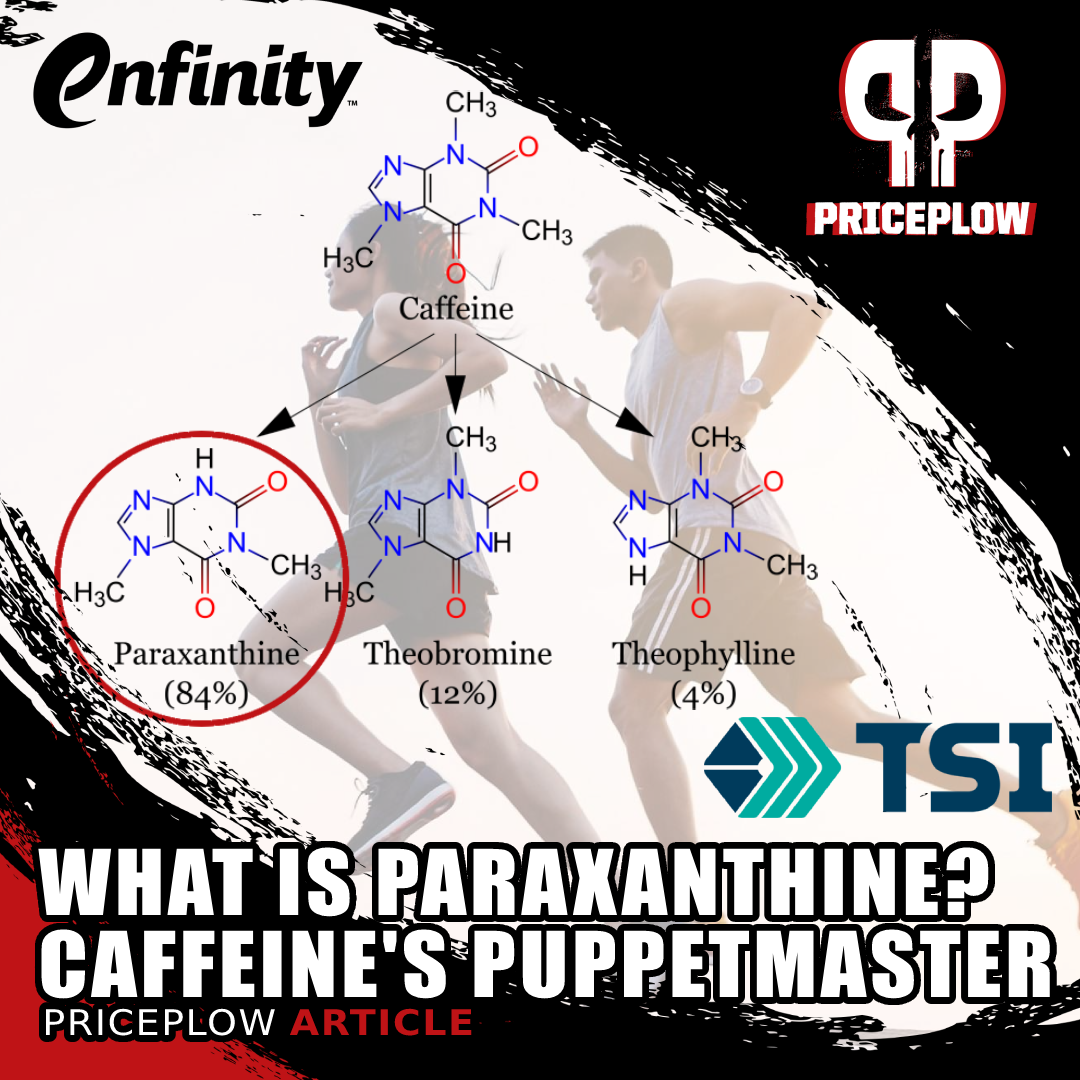
enfinity® is TSI Group's branded form of paraxanthine (1,7-dimethylxanthine), the main compound the body produces when it breaks down caffeine. On average, about 80% of a caffeine dose converts to paraxanthine.[1] enfinity supplies it directly, which is how the formula delivers alertness with zero caffeine.
The human trials below used enfinity, and each of the four discussed here included the 200mg amount found in these cans. In a placebo-controlled crossover trial of 13 healthy adults, 200mg produced fewer card-sorting errors at hour six and better-sustained vigilance at hours two and four.[2] A dose-response trial in 12 volunteers found the most consistent cognitive effects at 100mg and 200mg, with no clinically significant side effects over seven days of daily use.[3] In 12 trained runners, 200mg taken before a 10-kilometer run led to fewer perseverative errors than 200mg of caffeine afterward, and adding caffeine to paraxanthine brought no extra benefit.[4] Separately, 200mg raised energy expenditure in 21 adults without changing heart rate or blood pressure.[5]
Two of these studies are specifically covered in our articles, "Paraxanthine Outperforms Caffeine in Post-10k Cognitive Tests" and "Paraxanthine Increases Energy Expenditure, Reduces Heart Rate and Hunger in 2024 Study".
The Mechanisms: Similar to Caffeine, But Without The Downfall
Like caffeine, paraxanthine blocks adenosine receptors. Rodent work suggests it also inhibits cGMP-preferring phosphodiesterases and raises striatal dopamine, effects caffeine didn't show in the same experiments.[6] In a 90-day rat study, enfinity caused no toxic effects at up to 300mg/kg per day, and genotoxicity tests were negative.[7]

Paraxanthine is the primary metabolite of caffeine, providing most of caffeine's beneficial effects. Now you can take it directly with enfinity!
Paraxanthine works so well because it side-steps the two other metabolites of caffeine (theophylline and theobromine), which are longer-lasting and side-effect-driving. Without conversion to them, you get a smoother ride, shorter halflife, more consistency between individuals, and fewer side effects.
Note, of course, that paraxanthine isn't caffeine, but it's still a stimulant. In a 12-person crossover study it raised diastolic blood pressure and epinephrine, matching caffeine at 4mg/kg and producing smaller responses than caffeine at 2mg/kg.[1] A 200mg dose falls near 2mg/kg to 3mg/kg for adults between roughly 145 and 220 pounds. The 200mg per can here matches the amount most often studied, which gives Wyse a research-backed foundation for caffeine-free alertness.
You can read more details in our article, "Paraxanthine: Caffeine's Major Metabolite for Laser-Targeted Energy".
-
L-Beta-Hydroxybutyrate Acid - 5,000mg
Beta-hydroxybutyrate (BHB) is the ketone body your liver makes during fasting or low-carbohydrate eating. BHB is the brain's primary alternative fuel to glucose, which is why exogenous ketones show up in focus formulas.[8] At 5g per can, it's the largest ingredient in Wyse by weight.
Ketone salts, one of the two common oral forms, typically raise blood ketones to roughly 0.5mM to 1.5mM for up to a few hours, a low-to-moderate level of ketosis limited by mineral load and gut tolerance. Brain-imaging work reviewed in the same paper found the brain takes up ketones in proportion to their blood concentration, and that ketone uptake stays intact in older brains even as glucose uptake declines.[8]

However, this is free acid BHB, so it's not bound to a salt. That works better in liquids and provides you with 100% ketone acid, rather than adding in a ton of sodium or other minerals used in the powders.
Most human data on ketones and cognition come from older adults or clinical populations, so evidence in healthy adults is still preliminary.[8] Even so, 5g of BHB gives Wyse a fuel-based anchor that works differently from the stimulant side of the formula, and it carries the steady-energy idea the rest of the stack builds on.
Anecdotally, the L-BHB version is better for cognition than D-BHB or a D/L-BHB blend, although we're waiting on published research to confirm that.
-
Citicoline (Cognizin®) - 250mg
Citicoline, also known as CDP-choline, is a form of choline the body uses to build phosphatidylcholine, a major structural fat in brain cell membranes. After absorption it releases choline and cytidine, and it crosses the blood-brain barrier.[9] Cognizin®, Kyowa Hakko's branded citicoline, is the form used in several of the trials below.
The 250mg in Wyse matches the lower dose in two placebo-controlled trials in healthy people. In 60 women aged 40 to 60, both 250mg and 500mg daily for 28 days reduced commission errors (responding when they shouldn't have) on a sustained-attention test, and 250mg also reduced omission errors.[10] In 75 healthy adolescent males, 250mg or 500mg of Cognizin for 28 days improved attention and psychomotor speed versus placebo.[11] Higher-dose Cognizin research points the same way. Adults aged 50 to 85 with age-associated memory impairment who took 500mg daily for 12 weeks improved on episodic memory tests,[12] and 500mg or 2,000mg raised phosphocreatine and ATP in the frontal lobe of healthy adults.[13]
Most of these trials gave citicoline daily for weeks, and the memory study used twice the amount in one can. In Wyse, citicoline supplies the cholinergic, attention-focused piece of the formula, alongside enfinity's alertness role.
-
L-Ergothioneine (Mitoprime®) - 25mg
Planning to quit caffeine? Wait. ~50% of people are slow caffeine metabolizers who get jitters, insomnia, and anxiety. The fix isn't quitting stimulants--it's switching to paraxanthine (enfinity), caffeine's primary metabolite without the genetic lottery.
L-Ergothioneine is a unique antioxidant in the best possible way. It's a sulfur-containing derivative of the amino acid histidine that's produced by certain fungi and bacteria, while humans and other animals don't make it ourselves. We have to get it from the diet, with mushrooms among the richest known food sources.[14]
The body has specialized machinery to capture and hold onto it, though, which shows how important it is. OCTN1, or the ergothioneine transporter (ETT), moves ergothioneine into cells with remarkable selectivity. Cells expressing ETT can accumulate and avidly retain ergothioneine, while cells without it absorb almost none because ergothioneine itself barely crosses the cell membrane.[15] In other words, the body doesn't make ergothioneine, yet it has a dedicated system for importing, distributing, and conserving it.
Ergothioneine is more resistant to spontaneous oxidation than common low-molecular-weight thiols such as glutathione. That stability allows it to accumulate and turn over slowly, and researchers have proposed that it may act less like a rapidly consumed first-line antioxidant and more like a reserve buffer when oxidative stress rises.[16] It also reaches the brain, where OCTN1/SLC22A4 has been identified in neurons, neural stem cells, and microglia, adding to interest in ergothioneine's possible role in brain function.[17]
MitoPrime® is NNB Nutrition's patented, branded ergothioneine, and Wyse provides 25mg. That's a notable dose because it exactly matches the higher-dose arm of a 16-week randomized, placebo-controlled trial in 147 adults aged 55 to 79 with subjective memory complaints. At 25mg per day, plasma ergothioneine increased roughly 16-fold by week 16. Composite memory improved within the 25mg group at week 4, although the effect wasn't sustained, while reaction time improved over time in both groups. Subjective prospective memory and sleep initiation also improved dose-dependently, with significant effects at 25mg.[18]
Human ergothioneine research is still young, but this is far more interesting than simply adding "another antioxidant" to the label. At 25mg, Wyse gets a clinically tested dose of a diet-derived antioxidant that the body actively transports, concentrates, and retains. That's a very different lane from the rest of this stack, which is largely built around fuel, alertness, attention, and mood.
-
Sceletium tortuosum (aerial parts extract) (Zembrin®) - 25mg
Zembrin® is a standardized extract of Sceletium tortuosum, a South African succulent (also called kanna) with a long history of traditional use as a masticatory. Its pharmacology is reported to combine serotonin reuptake inhibition with PDE4 inhibition.[19]
The 25mg in Wyse is the dose used in the core human trials. In a crossover pharmaco-fMRI study of 16 healthy volunteers, a single 25mg dose reduced amygdala reactivity to fearful faces under low-load conditions.[19] In 21 cognitively healthy adults, 25mg daily for three weeks improved cognitive set flexibility and executive function compared with placebo.[20] Stress-response findings are mixed. In two small studies of young healthy volunteers, one 25mg dose lowered subjective anxiety before a simulated public-speaking task but had no effect in a multitasking stress study.[21]
Because its proposed mechanism involves serotonin reuptake inhibition, anyone taking serotonergic medication should check with a healthcare provider before using Wyse. Within the formula, Zembrin covers the calm side of the focus equation, at the amount used in the studies above.
-
Zero-Sugar Sweeteners: Sucralose and Acesulfame Potassium
Wyse gets its taste from natural flavoring plus two non-nutritive sweeteners, sucralose and acesulfame potassium (Ace-K), which keep the can at zero sugar. The brand says the goal is flavor without sugar or an effect on blood glucose. The label also lists no artificial colors or flavors.
How to Use
- When to take it: Wyse recommends drinking it during the day, when you need to perform, and describes it as designed for daily use.
- Other notes: The label advises against more than two servings per day and against combining Wyse with caffeine or other stimulants. If you're pregnant or under ongoing medical care, check with your physician first.
Who It's For
- Knowledge workers with long focus blocks: Wyse targets founders, operators, and anyone who writes, sells, or strategizes all day and wants steady, calm focus without a caffeine ramp.
- Caffeine and sugar avoiders: A zero-caffeine, zero-sugar can gives people who skip both a way to keep an energy-drink-style ritual.
Conclusion: A Familiar Stack in a Can
Wyse No. 1 Founders Blend puts enfinity paraxanthine at the center of a caffeine-free (but again, not stimulant-free) formula, at the 200mg amount used in the enfinity human cognition trials. Around it, there's the added 5g of ketone fuel, Cognizin® brings 250mg of citicoline at a dose matched to two 28-day attention trials, MitoPrime® contributes 25mg of ergothioneine, and Zembrin® supplies 25mg, the amount used in its human studies. Four of the five actives sit at amounts used in human research, and the label stays zero sugar and zero caffeine.

For readers who followed XPO NRG, this is the same five-ingredient lineup in a commercial can. TSI Group's enfinity was part of that PricePlow-coordinated collaboration, and it leads the formula here too, alongside the same branded ingredients.
If a caffeine-free routine sounds appealing, check PricePlow for current Wyse availability and prices, and sign up for brand alerts so you'll see the next update.
TSI Group – Deals and Price Drop Alerts
Get Price Alerts
No spam, no scams.
Disclosure: PricePlow relies on pricing from stores with which we have a business relationship. We work hard to keep pricing current, but you may find a better offer.
Posts are sponsored in part by the retailers and/or brands listed on this page.

Comments and Discussion (Powered by the PricePlow Forum)