Planning to quit caffeine? Wait. ~50% of people are slow caffeine metabolizers who get jitters, insomnia, and anxiety. The fix isn't quitting stimulants--it's switching to paraxanthine (enfinity), caffeine's primary metabolite without the genetic lottery.
Every January, millions of people resolve to cut back on caffeine. They're tired of the jitters, the afternoon crashes, and the 3AM ceiling-staring sessions after drinking coffee, pre-workout, or an energy drink too late. Yet most will fail within weeks, because caffeine itself may not be the real culprit.
Skirting the Caffeine Challenge for Slow Metabolizers
The problem runs deeper: a genetic lottery determines how your body processes caffeine. Roughly half the population metabolizes caffeine slowly, making them far more vulnerable to its downsides. For these individuals, one cup of coffee in the early afternoon can feel like drinking espresso at midnight. It's just not clearing out of the system well enough before bedtime.
The solution isn't necessarily quitting stimulants altogether. It's understanding why caffeine works differently for different people, and exploring an alternative that bypasses the genetic variability: paraxanthine, sold as enfinity® by TSI Group.
This article explains how enfinity paraxanthine can give you the stimulating effects you want from caffeine, but without the side effects you don't want. Before diving in, sign up for our TSI Group news alerts so that you don't miss out on new research:
Subscribe to PricePlow's Newsletter and Alerts on These Topics

The Genetic Lottery of Caffeine Metabolism
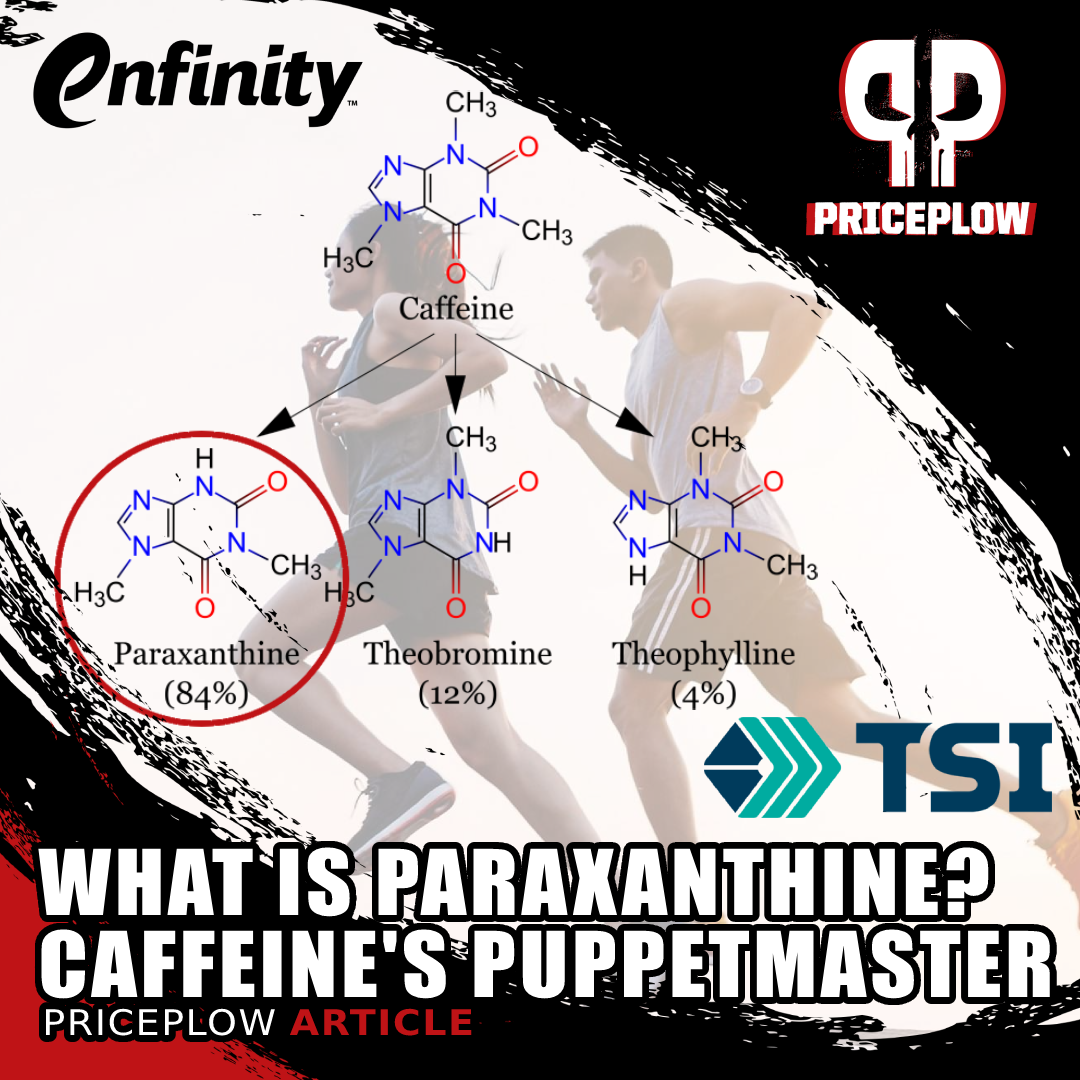
When you drink coffee, the caffeine travels to your liver where an enzyme called CYP1A2 breaks it down into three metabolites:[1]
- paraxanthine (about 78%),
- theobromine (about 14%), and
- theophylline (about 8%).
The critical variable is how quickly your liver performs this conversion. The CYP1A2 gene has a well-studied polymorphism at position rs762551 that creates three distinct categories of caffeine metabolism:[2]
The Three Metabolizer Types
- AA genotype (fast metabolizers): These individuals rapidly clear caffeine and typically experience its benefits without pronounced side effects. They can often drink coffee late in the day with minimal sleep disruption.
- AC genotype (intermediate metabolizers): This group experiences moderate caffeine sensitivity, falling somewhere between fast and slow metabolizers in both benefits and side effects.
- CC genotype (slow metabolizers): These individuals process caffeine significantly slower, resulting in prolonged exposure that increases the likelihood of jitteriness, anxiety, elevated heart rate, and insomnia, even from relatively small doses consumed earlier in the day.
Research across populations from Italy, Arkansas, and China found that only 20-37% are fast metabolizers, with 51-67% intermediate and 12-13% slow metabolizers.[1] The takeaway: roughly half the population doesn't metabolize caffeine optimally.
The Half-Life Problem
Caffeine's average half-life is 4.1 hours, but this number obscures enormous individual variation. For any given person, caffeine's half-life can range from 1.5 hours to 9.5 hours.[3]

Consider a practical scenario: the 90th percentile caffeine intake in the U.S. is approximately 380mg per day. A fast metabolizer with a 1.5-hour half-life who consumes this amount at noon would have only about 6mg remaining in their system by 9pm, a negligible amount with minimal impact on sleep.
A slow metabolizer with a 9.5-hour half-life, however, would still have roughly 190mg circulating at 9pm! That's equivalent to drinking a massive cup of coffee right before bed.
The Metabolite Problem: Theobromine and Theophylline
Caffeine's conversion into its metabolites creates additional complications. While paraxanthine delivers most of caffeine's beneficial effects with a relatively short half-life of 3.1 hours, the other two metabolites are more problematic.[3]
Theobromine has a 6.2-hour half-life and produces minimal central nervous system stimulation while having outsized effects on heart rate. It provides cardiovascular stress without the mental benefits.[3]
Theophylline is arguably the most problematic metabolite, with a 7.2-hour half-life. It's actually a prescription bronchodilator, and at elevated concentrations can cause nausea, diarrhea, gastrointestinal distress, tremors, tachycardia, and arrhythmias.[4]
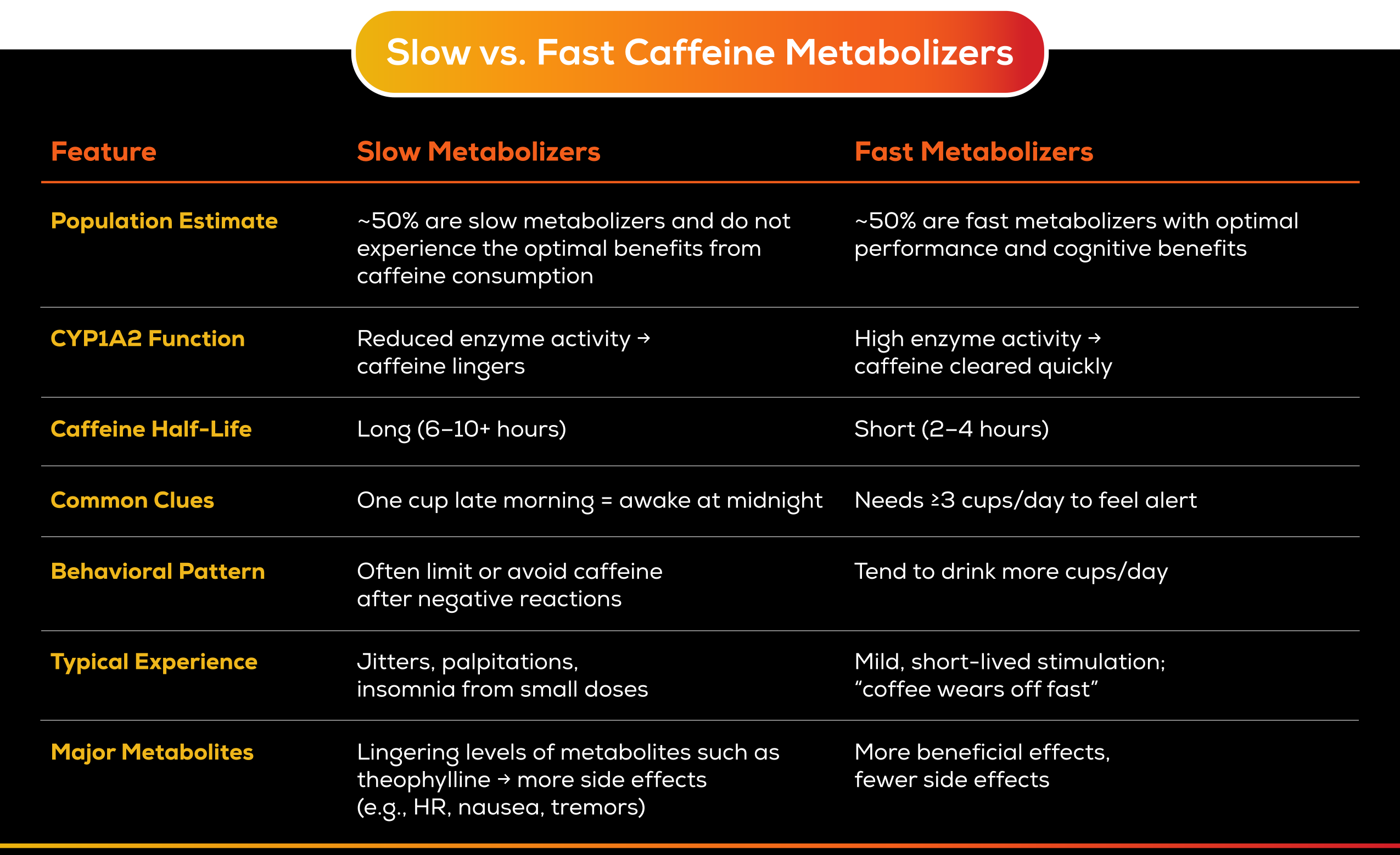
For slow metabolizers, these metabolites accumulate to even higher levels and persist longer, amplifying caffeine's unwanted effects.
Health Consequences of Slow Metabolism
The genetic divide between fast and slow metabolizers has real health implications beyond sleep disruption.
-
Cardiovascular Risk
Individuals with the AC or CC genotype (slow metabolizers) have elevated risk of myocardial infarction and hypertension with increasing caffeinated coffee consumption, while those with the AA genotype show no such risk.[2]
In fast metabolizers, caffeine may even be protective against hypertension. Researchers have found an inverse correlation between blood pressure and urinary excretion of caffeine and paraxanthine in this group.
-
Athletic Performance Impairment

Paraxanthine is the primary metabolite of caffeine, providing most of caffeine's beneficial effects. Now you can take it directly with enfinity!
Perhaps most striking: caffeine doesn't uniformly enhance performance. In a study of competitive male athletes performing a 10-km cycling time trial, those with the CC genotype (slow metabolizers) showed a 13.7% worse performance after consuming 4mg/kg caffeine compared to placebo. Meanwhile, fast metabolizers (AA genotype) improved by 4.8% at the 2mg/kg dose and 6.8% at 4mg/kg.[2]
The researchers theorized that slower caffeine clearance impairs adenosine-mediated coronary vasodilation during exercise, reducing myocardial blood flow when it's most needed.
-
Lucky... or Unlucky? It's Genetic.
Whether caffeine helps or harms your performance, health, and sleep isn't determined by your choices. It's determined by your genes. And roughly half the population drew the short straw.
Enter enfinity® Paraxanthine: The Genetic Equalizer
If paraxanthine delivers most of caffeine's benefits while the other metabolites cause most of the problems, why not supplement with paraxanthine directly? This approach bypasses the genetic lottery entirely. It took some time for the scientific community and supplement industry to figure it out, but TSI Group has it nailed with enfinity®.
-
Bypassing Toxic Metabolites
By taking paraxanthine rather than caffeine, you avoid generating theobromine and theophylline altogether. You get direct access to caffeine's primary active metabolite without the baggage of its less desirable breakdown products.

Caffeine has three major metabolites, and one of them (paraxanthine) does the heavy lifting. The other two have very long half-lives, which could be interfering with your experience. Image courtesy TSI Group
Research supports this distinction. Paraxanthine shows lower toxicity than caffeine and is less anxiogenic (anxiety-producing), less clastogenic (chromosome-damaging), and less harmful to hepatocytes than caffeine or theophylline.[5]
-
Shorter, More Consistent Half-Life
Paraxanthine's half-life averages 3.1 hours compared to caffeine's 4.1 hours.[3] For someone whose caffeine half-life runs toward 9 hours, their paraxanthine half-life would be closer to 6.75 hours.
More importantly, paraxanthine metabolism involves two enzymatic pathways (CYP1A2 and CYP2A6) rather than just one.[1] CYP2A6 polymorphism is far less common (only 1% of Caucasians and 20% of Asians possess known variants), meaning there's greater than 99% probability of having at least one normal enzyme pathway handling paraxanthine clearance. Enzymatic bottlenecking is far less likely.
-
Similar Efficacy
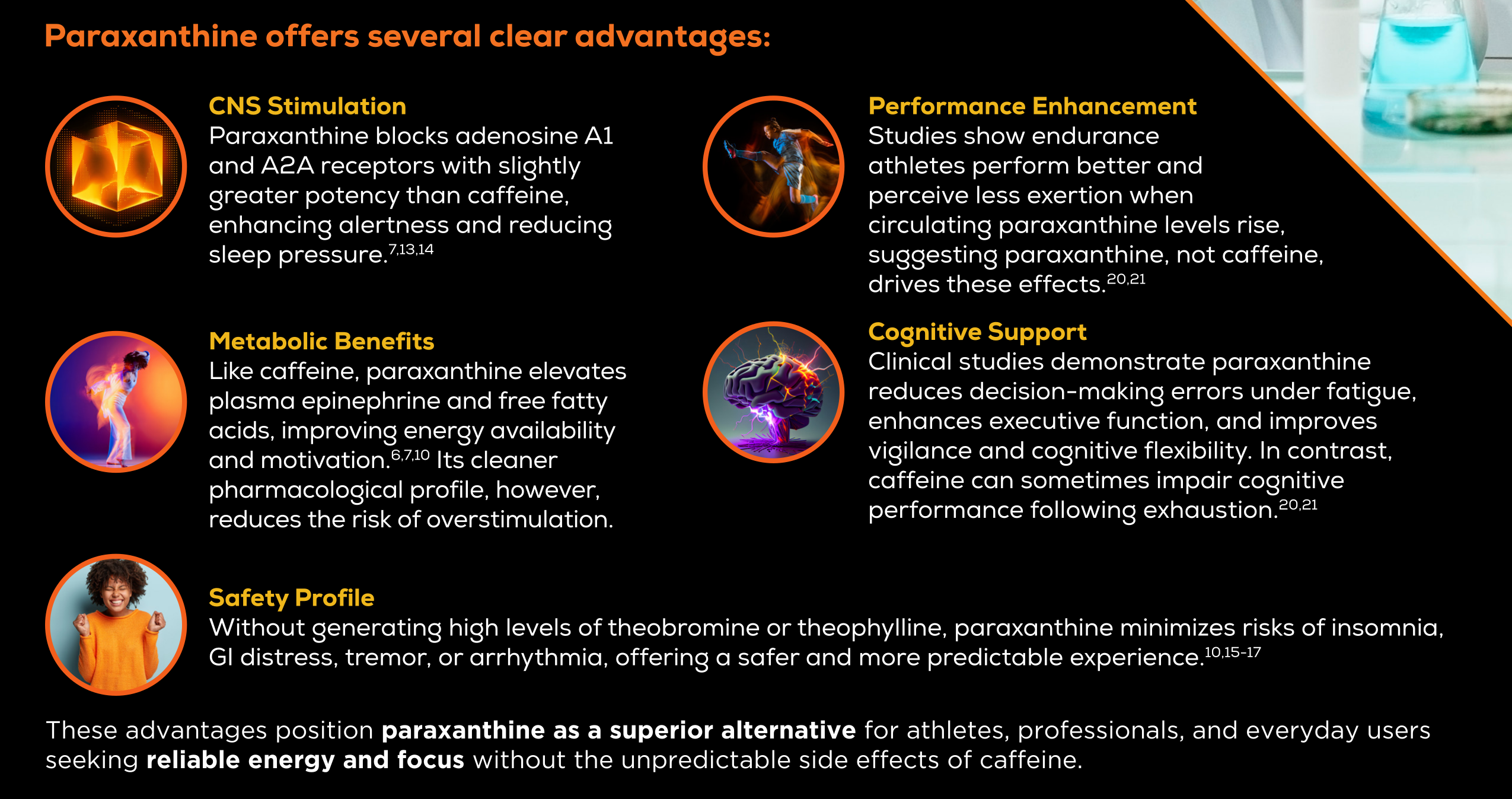
Paraxanthine isn't weaker than caffeine. It blocks adenosine A1 and A2A receptors with potency equal to or slightly greater than caffeine, enhancing alertness and reducing sleep pressure.[6]
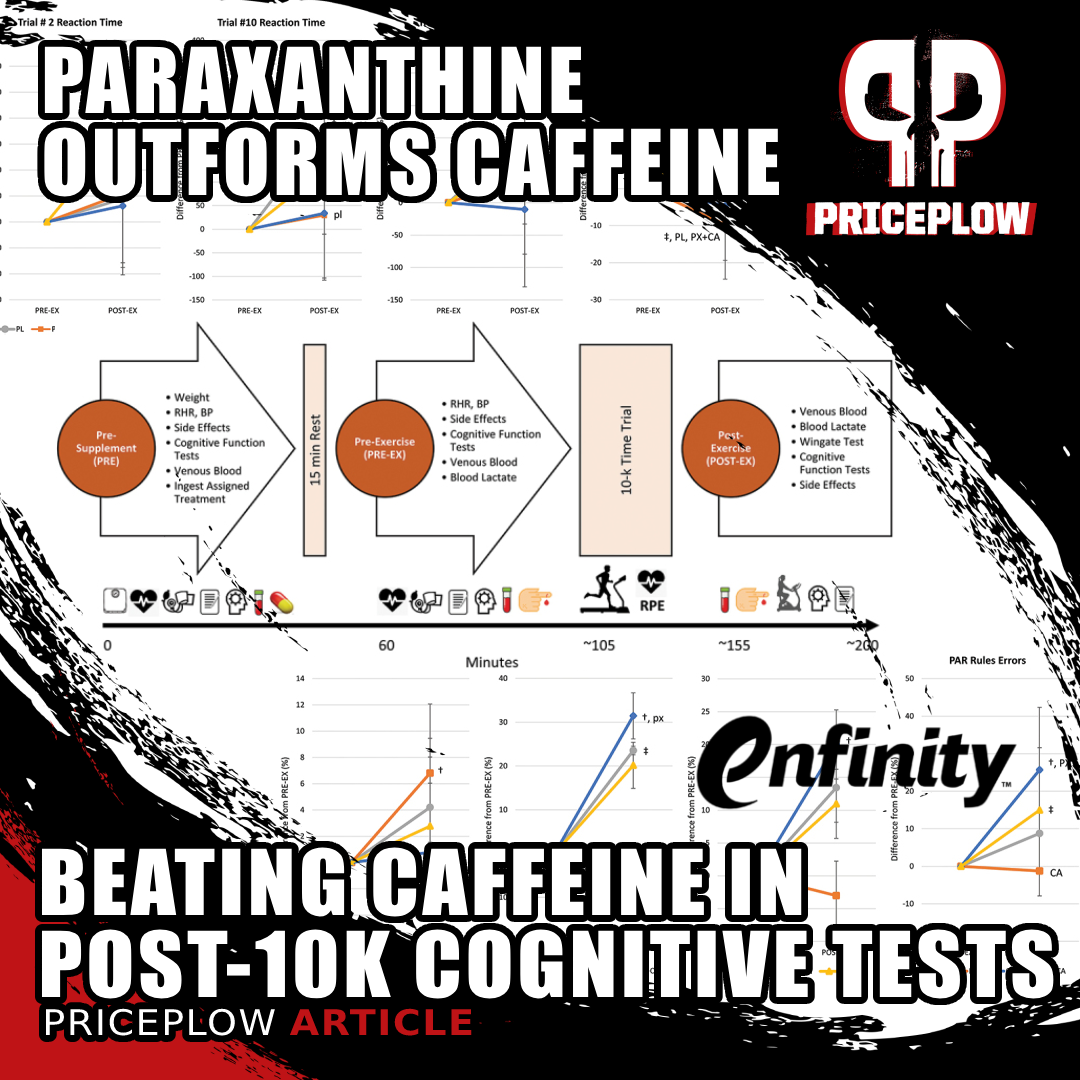
In head-to-head human studies, paraxanthine has shown advantages over caffeine for cognitive function. A 2024 study found that after completing a 10-km run, paraxanthine provided greater improvement in cognitive function and psychomotor vigilance than caffeine.[7] Caffeine increased perceptions of tachycardia, shortness of breath, and nervousness after exercise, while paraxanthine did not.
A new study finds paraxanthine (found in enfinity®) outperforms caffeine in boosting cognitive function after a 10k run.[8] Clear thinking under pressure is key to winning, and paraxanthine could be the edge you need.
Earlier research demonstrated that paraxanthine reduced decision-making errors, enhanced executive function, and improved vigilance and cognitive flexibility under fatigue.[5]
-
Superior Safety Profile
Research on paraxanthine's sympathomimetic effects found that while both caffeine and paraxanthine activate similar cardiovascular and metabolic responses, paraxanthine produces a cleaner experience.[9]
Studies examining paraxanthine across multiple safety parameters (blood counts, liver function, kidney function, vital signs) have found it well-tolerated, with no evidence that acute paraxanthine ingestion promotes side effects.[7]

Who Should Consider Switching
Paraxanthine may be especially valuable for:
- Sleep-disrupted caffeine users: If you can't drink coffee past noon without lying awake at night, you're likely a slow metabolizer. Paraxanthine's shorter half-life offers more control over when the stimulation ends.
- Jittery or anxious responders: Those who experience anxiety, restlessness, or racing heart from moderate caffeine doses may find paraxanthine's cleaner profile provides energy without the edge.
- Athletes concerned about performance: Given that slow metabolizers can actually experience impaired performance from caffeine, paraxanthine offers a way to access ergogenic benefits without the risk of genetic mismatch.
- Cardiovascular-conscious consumers: For those worried about caffeine's relationship with blood pressure and heart health, particularly slow metabolizers, paraxanthine sidesteps the metabolites most associated with cardiovascular stress.
- Anyone looking to dial caffeine use down: Paraxanthine is an excellent tool to step down caffeine use. You may find that you don't need to go to zero of both - you just need stop using caffeine.
What to Expect
Users transitioning from caffeine to paraxanthine typically report a cleaner energy curve with less abrupt onset and offset. Sleep quality often improves, and the reduced anxiety and jitters allow for a more productive experience. Many describe the difference as "clean" versus "dirty" stimulation.
The enfinity® brand of paraxanthine, distributed by TSI Group, is currently available in various supplements including pre-workouts, nootropics, and thermogenic fat burners.
Conclusion: Beyond the Caffeine Lottery
If you're planning to cut caffeine in 2026, pause before abandoning stimulants entirely. The unpredictable experience of caffeine, the jitters for some and ineffectiveness for others, isn't an inherent property of methylxanthine stimulation. It's a consequence of genetic variability in caffeine metabolism.

Caffeine can be thought of as a middleman. Its benefits largely depend on conversion into paraxanthine, while many of its drawbacks stem from theobromine and theophylline. By supplementing with paraxanthine directly, you bypass this inefficient and variable conversion process.
Whether you're a slow metabolizer who's never tolerated caffeine well, a fast metabolizer who wants cleaner energy, or simply someone interested in optimizing their stimulant use, paraxanthine offers a genotype-independent solution. Your response to it won't be determined by a genetic coin flip.

Comments and Discussion (Powered by the PricePlow Forum)