Creatine has outgrown the bodybuilding aisle. Runners, hybrid athletes, busy professionals, women from all walks of life, and people who'd never call themselves gym rats now take it daily. Yet, most creatine still looks like it was designed for a bodybuilding stage. MuscleTech, the brand behind classic heavy-hitters like Cell-Tech, is taking a new and different approach.
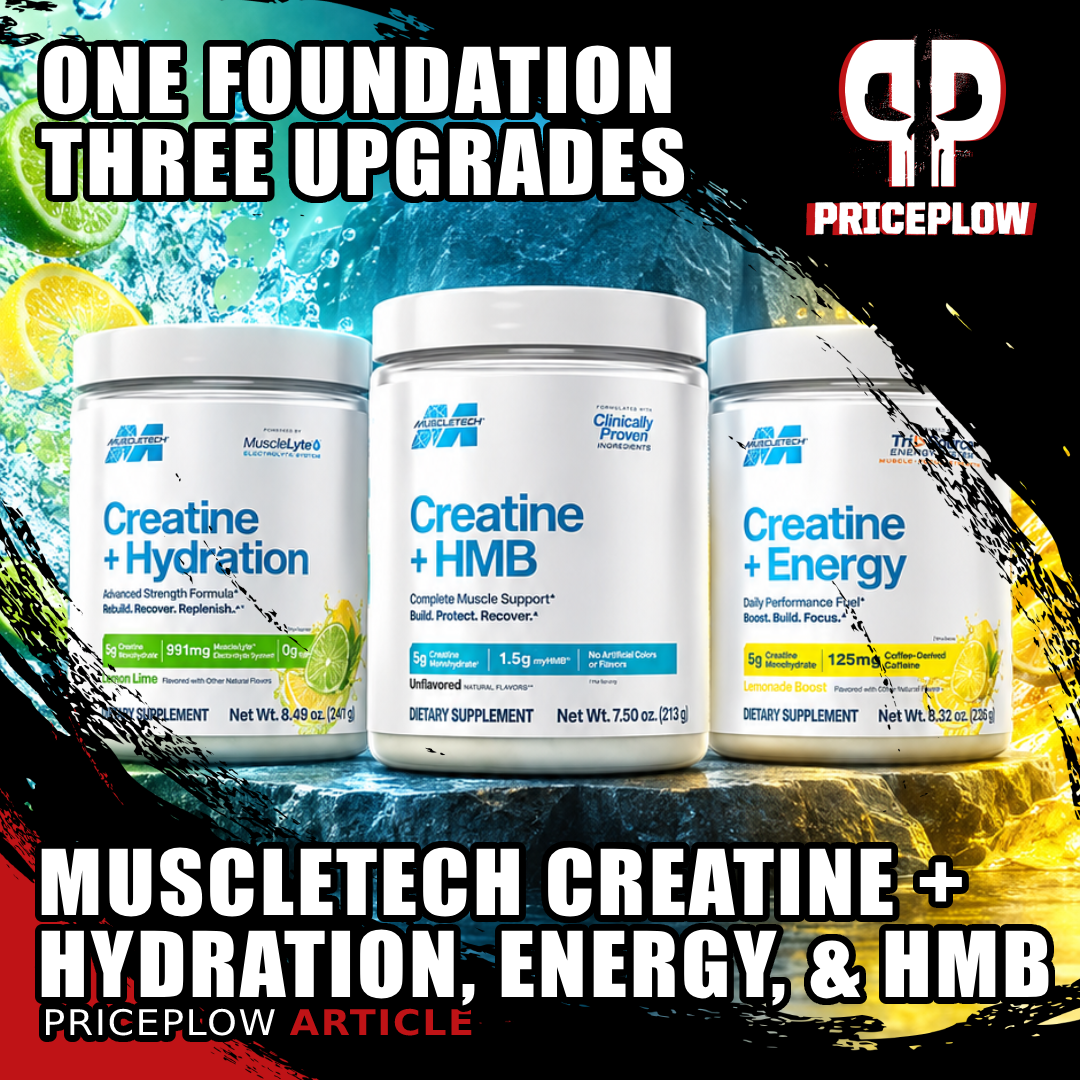
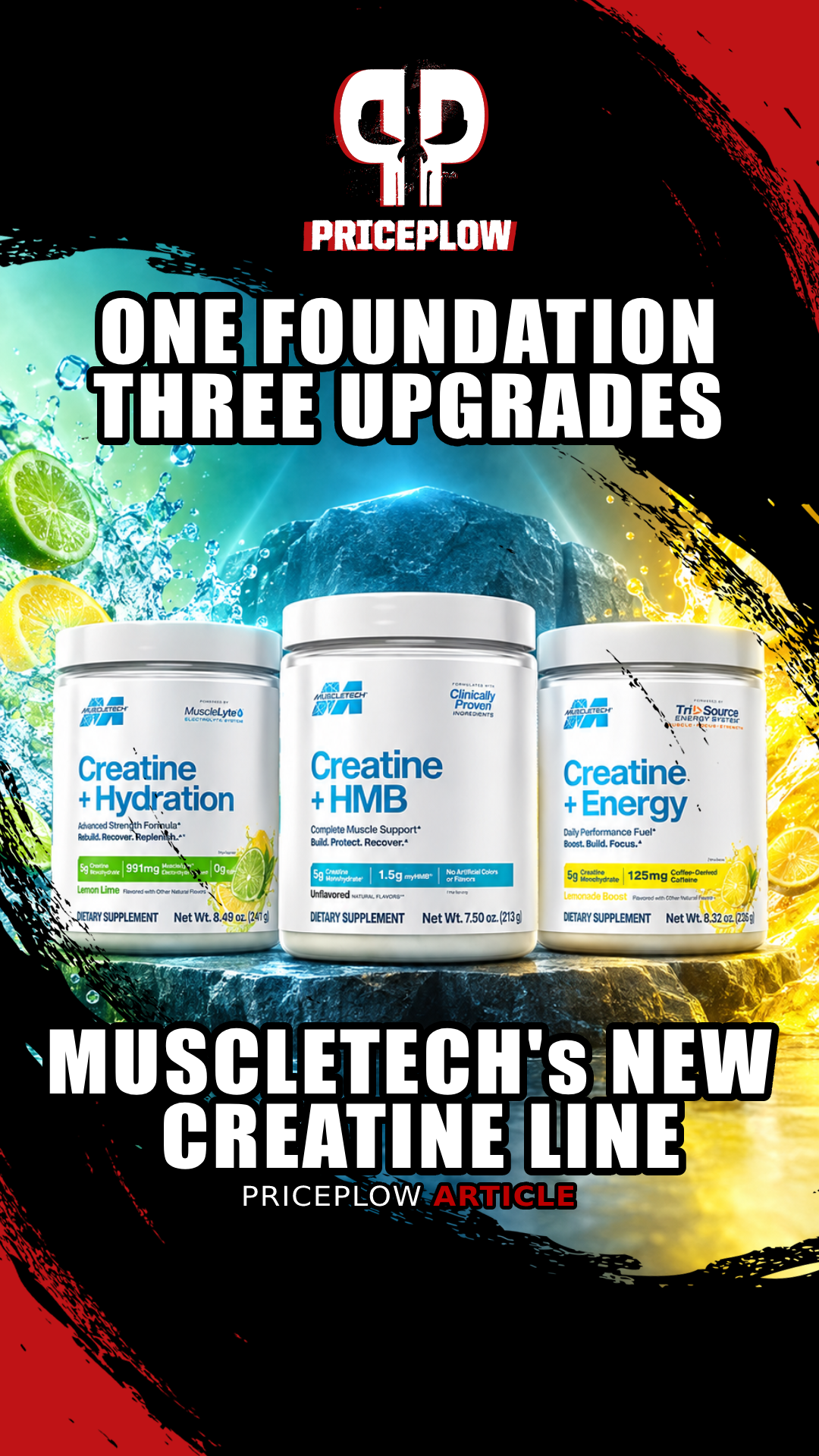
Same 5g creatine base, three different jobs. MuscleTech Creatine + Hydration is stimulant-free with 150mg sodium and 160mg potassium. Creatine + Energy runs 125mg caffeine for mornings. Creatine + HMB is unflavored with 1.5g myHMB for lifting days.
In October 2026, the company introduced a new creatine line built for everyday performance, with bright white packaging, zero sugar, and no synthetic dyes.
Creatine, Simply Done Better
MuscleTech's campaign for the line is called Creatine, Simply Done Better, and the idea is straightforward: one creatine foundation, three ways to use it. Every formula starts with 5g of creatine monohydrate per scoop, then adds one clearly defined upgrade for hydration, energy, or muscle building. The target audience is broader than MuscleTech's traditional base, too. These are built for men and women who run, lift, compete in HYROX-style races, and want creatine to fit into a workday as easily as a workout.
The new line sits alongside MuscleTech's more advanced creatine products rather than replacing them. Creatine Peptide 447, for example, pairs creatine with peptide technology for a more hardcore user. These three formulas go the other direction, with fewer ingredients, familiar doses, and a cleaner label.
Hydrate, Energize, Build: The Three Formulas
- MuscleTech Creatine + Hydration - 5g creatine plus the 991mg MuscleLyte™ Electrolyte System, stimulant-free, in Blue Raspberry and Lemon Lime
- MuscleTech Creatine + Energy - 5g creatine plus 125mg of coffee-derived caffeine, L-tyrosine, and choline, in Lemonade Boost
- MuscleTech Creatine + HMB - 5g creatine plus 1.5g of myHMB® and vitamin D, unflavored for mixing into shakes and smoothies
Check PricePlow for prices across the line and sign up for MuscleTech news alerts below. Then we'll start with Creatine + Hydration, since its breakdown covers the creatine science behind all three formulas.
MuscleTech – Deals and Price Drop Alerts
Get Price Alerts
No spam, no scams.
Disclosure: PricePlow relies on pricing from stores with which we have a business relationship. We work hard to keep pricing current, but you may find a better offer.
Posts are sponsored in part by the retailers and/or brands listed on this page.
This area is reserved for Team PricePlow's upcoming videos.
Subscribe to our channel and sign up for notifications so you catch it when it goes live!

Your Primer on Creatine Monohydrate
Creatine monohydrate is the common thread through all three products, so we'll cover it in depth once, here. Creatine has more than 500 peer-refereed publications behind it, and monohydrate is the form most of that research used.[1] According to the Creatine + Hydration label, MuscleTech uses HPLC-tested creatine monohydrate (high-performance liquid chromatography, a lab method used to confirm identity and purity).
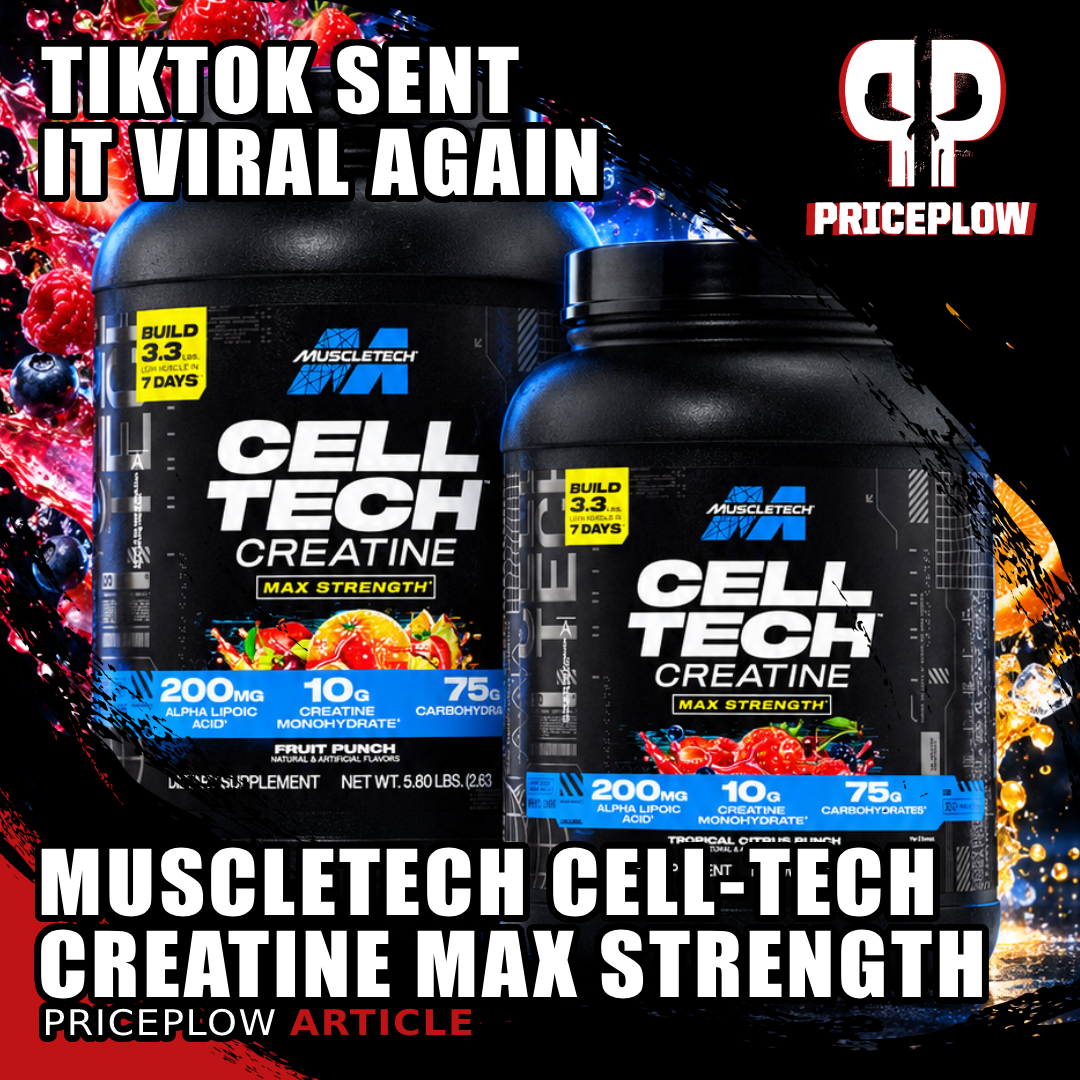
Cell-Tech is back, and TikTok did it. MuscleTech Cell-Tech Creatine Max Strength runs 5g creatine monohydrate, a 38g multi-stage carb blend, and alpha lipoic acid, the same trio MuscleTech built its research reputation on decades ago.
How Creatine Works
Your body converts creatine into phosphocreatine, a fast-access reserve your cells use to regenerate ATP (adenosine triphosphate, the cell's energy currency) during short, intense efforts. Daily creatine turnover runs about 2g to 4g, and roughly half of that is made in the body from the amino acids arginine, glycine, and methionine. The rest comes from food, mainly meat and fish, but a full pound of either supplies only about 1g to 2g.[2] Matching one 5g scoop through diet alone would take several pounds of meat or fish per day, which is why supplementing is the practical route.
Strength, Muscle, and Body Composition
Paired with resistance training, creatine has a long track record. A 2023 meta-analysis using direct imaging (MRI, CT, and ultrasound) found that creatine plus resistance training produced a small increase in muscle size in both the upper and lower body compared to training alone.[3] Another 2023 meta-analysis in adults under 50 found that creatine plus resistance exercise led to a small drop in body fat percentage (about 1.2%), though absolute fat mass didn't change significantly.[4]
Creatine for Women
Most creatine research has been done in men, but the studies in women are encouraging, and they speak directly to this line's audience. In 22 college-age women, a five-day creatine loading protocol improved quadriceps power output without significant changes in body weight, thigh circumference, or fat-free mass.[5] In older women following a 12-week resistance training program, 5g per day (the same dose in every scoop of this line) produced greater gains in strength, fat-free mass, and muscle mass than placebo, with no change in body weight or body fat percentage.[6]
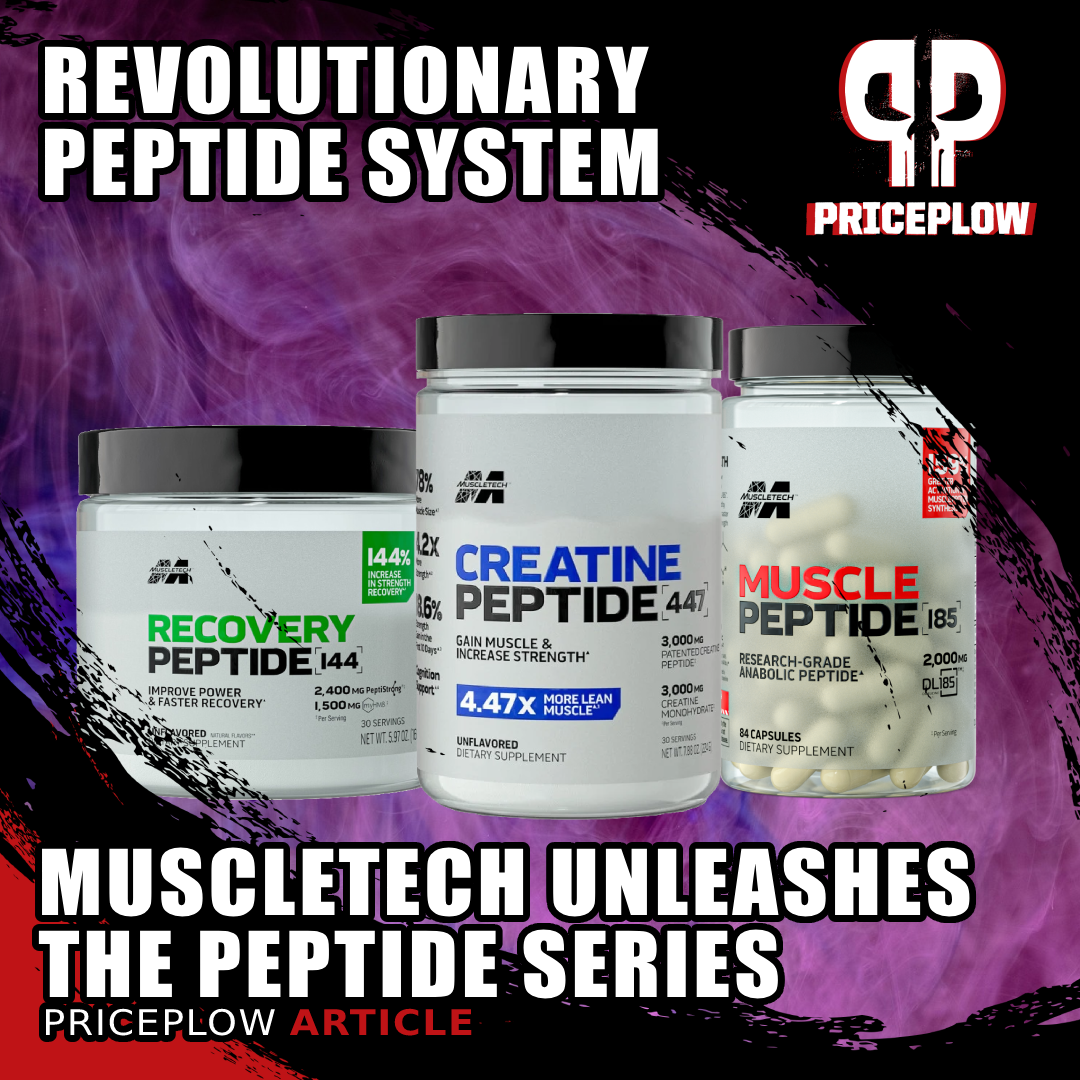
MuscleTech Peptide Series uses targeted peptide technology instead of basic amino acids for 70-80% better absorption. Muscle Peptide 185 (dileucine) delivers 159% greater muscle protein synthesis vs baseline. Plus Creatine Peptide 447 & Recovery Peptide 144!
Creatine and the Brain
Your brain is a heavy energy user too, and MuscleTech's labels point out that creatine supports ATP production in both muscle and brain. A 2023 meta-analysis of randomized controlled trials found that creatine improved memory overall, with the clearest benefit in adults aged 66 to 76 and no significant effect in younger participants (ages 11 to 31).[7] A large 2023 trial with 123 participants taking 5g daily for six weeks found evidence for only a small cognitive benefit, so treat brain support as a potential bonus rather than the main reason to take creatine.[8]
Does Creatine Dehydrate You?
It's one of the most persistent creatine myths, and it's worth addressing in a product built around hydration. A systematic review with meta-analyses found no evidence that creatine hinders the body's ability to dissipate heat or negatively affects fluid balance, and controlled trials of athletes exercising in the heat showed no adverse effects at recommended doses.[9] Creatine does increase how much water your body holds. In female collegiate dancers, six weeks of creatine raised total body water alongside lean mass estimates, the opposite of dehydration.[10] Since creatine doesn't create a hydration problem, pairing it with electrolytes is simply a convenient way to cover two daily habits at once.
How Much to Take
Research commonly uses 3g to 5g per day (or about 0.1g per kilogram of body weight), and creatine is well tolerated at those intakes.[1] One scoop of any product in this line covers the top of that range, so there's no need to combine them for creatine's sake.
Now let's get into the specific products:
MuscleTech Creatine + Hydration: The Hydrate Formula
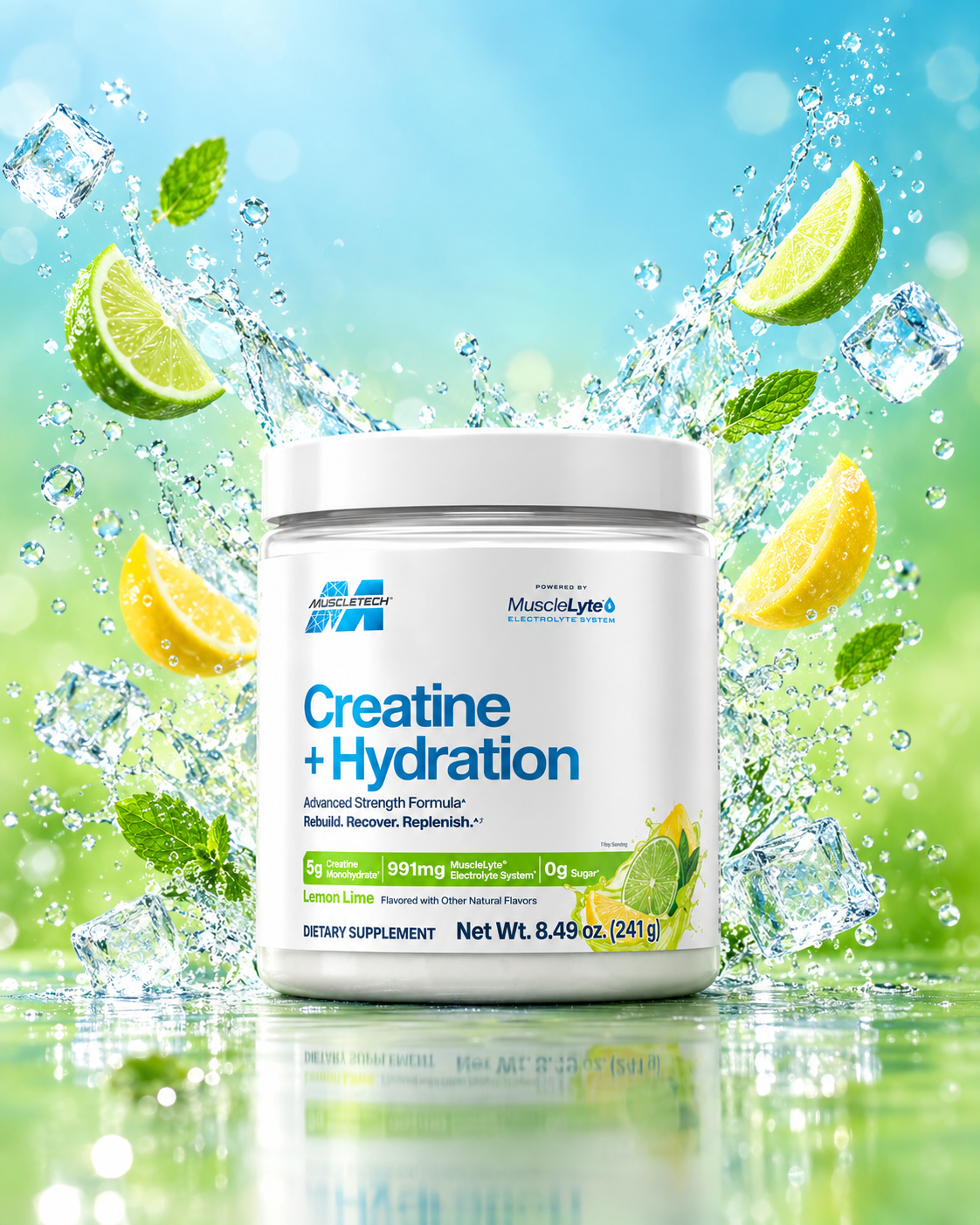
Creatine + Hydration is the stimulant-free foundation of the line, built for sweaty sessions, outdoor training, and active recovery days. It combines daily creatine with a full electrolyte system in one glass, with zero sugar and stevia for sweetness. If you want a creatine you can drink any time of day, this is the one.
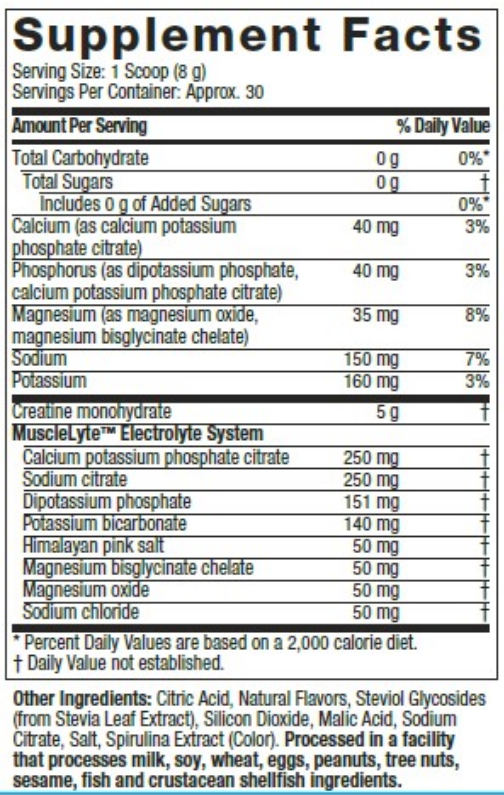
Each 1-scoop (8g) serving, mixed in 10oz of water, provides:
-
Creatine Monohydrate - 5g
As explained above, a full 5 grams of creatine monohydrate, the tried-and-true. On top of that come the electrolytes:
-
MuscleLyte™ Electrolyte System - 991mg
MuscleTech previously brought electrolytes to its effervescent EFF'N Hydrate. Here, the MuscleLyte™ Electrolyte System is built from eight mineral salts:
- Calcium potassium phosphate citrate - 250mg
- Sodium citrate - 250mg
- Dipotassium phosphate - 151mg
- Potassium bicarbonate - 140mg
- Himalayan pink salt - 50mg
- Magnesium bisglycinate chelate - 50mg
- Magnesium oxide - 50mg
- Sodium chloride - 50mg
The numbers above are the compound weights, not mineral amounts. The top of the Supplement Facts panel lists what the salts actually deliver: 150mg sodium, 160mg potassium, 35mg magnesium, 40mg calcium, and 40mg phosphorus. The two sets of numbers describe the same ingredients counted two ways, so don't add them together. Below, we break MuscleLyte down by mineral, since that's what your body uses.
-
Sodium - 150mg
Sodium comes from the blend's sodium citrate, sodium chloride, and Himalayan pink salt, with a little more from the salt and sodium citrate in the flavor system. It's the electrolyte you lose most in sweat, and losses vary enormously from person to person. Among professional football players, sweat sodium losses ranged from 642mg to 6.7g per hour.[11] Replacing those losses with low-sodium fluids leads to incomplete rehydration, and while some people cover their losses through normal meals, others lose enough that increased sodium intake is essential.[12]
Mixed in 10oz of water, Creatine + Hydration works out to roughly 22mmol/L of sodium. That's in line with the 10mmol/L to 25mmol/L range typical of commercial sports drinks, and well below the 50mmol/L to 90mmol/L that may be needed for optimal rehydration after heavy sweat losses.[13] In other words, this is a daily hydration dose. Salty sweaters and anyone training long in the heat will likely need more sodium from food.

The 250mg of sodium citrate also isn't a buffering dose. Sodium citrate is studied as a buffer against exercise-induced acidity, but at doses large enough that stomach upset is a common side effect, and even then, a review rated its performance evidence as weak.[14] Here it's simply a sodium source.
-
Potassium - 160mg
Potassium comes from dipotassium phosphate, potassium bicarbonate, and calcium potassium phosphate citrate. It's the most abundant electrolyte inside your cells, where the sodium-potassium pump (Na+/K+-ATPase) maintains the gradient that keeps nerves and muscles firing, and only a very small amount is lost through sweat.[15] Its value here is mostly as a dietary top-up, and that still matters, since potassium was named a shortfall nutrient by the 2010 Dietary Guidelines Advisory Committee.[16] At 3% of the Daily Value, 160mg is a small contribution, so fruits, vegetables, and potatoes still need to do the heavy lifting.
-
Magnesium - 35mg
Magnesium comes from magnesium oxide and magnesium bisglycinate chelate. It's a cofactor in more than 300 enzymatic reactions, including the ATP-dependent reactions behind energy production, and it's needed for normal muscle contraction.[17] Your magnesium needs also climb as your activity level goes up.[18] Supplementation studies use considerably more than this, though. In one trial, 350mg per day for 10 days reduced muscle soreness and improved perceived recovery after an eccentric bench press session.[19] At 35mg (8% DV), MuscleLyte's magnesium is a modest daily contribution. Magnesium oxide carries far more elemental magnesium per milligram than the chelate, so it likely supplies most of that total.
-
Calcium and Phosphorus - 40mg Each
Calcium comes from calcium potassium phosphate citrate, while phosphorus comes from that same salt plus dipotassium phosphate. Calcium is the signal that triggers muscle contraction, and phosphorus, in the form of phosphate, is part of the same ATP and phosphocreatine molecules that creatine helps keep stocked. At 3% DV each, these are finishing touches that round out a complete electrolyte profile.
Both flavors at launch (blue raspberry and lemon lime) use natural flavors and stevia (steviol glycosides) for sweetness, with zero sugar, no sucralose, and no synthetic dyes.
Check current Creatine + Hydration pricing and availability below:
MuscleTech Creatine + Hydration – Deals and Price Drop Alerts
Get Price Alerts
No spam, no scams.
Disclosure: PricePlow relies on pricing from stores with which we have a business relationship. We work hard to keep pricing current, but you may find a better offer.
Posts are sponsored in part by the retailers and/or brands listed on this page.
MuscleTech Creatine + Energy: The Energize Formula
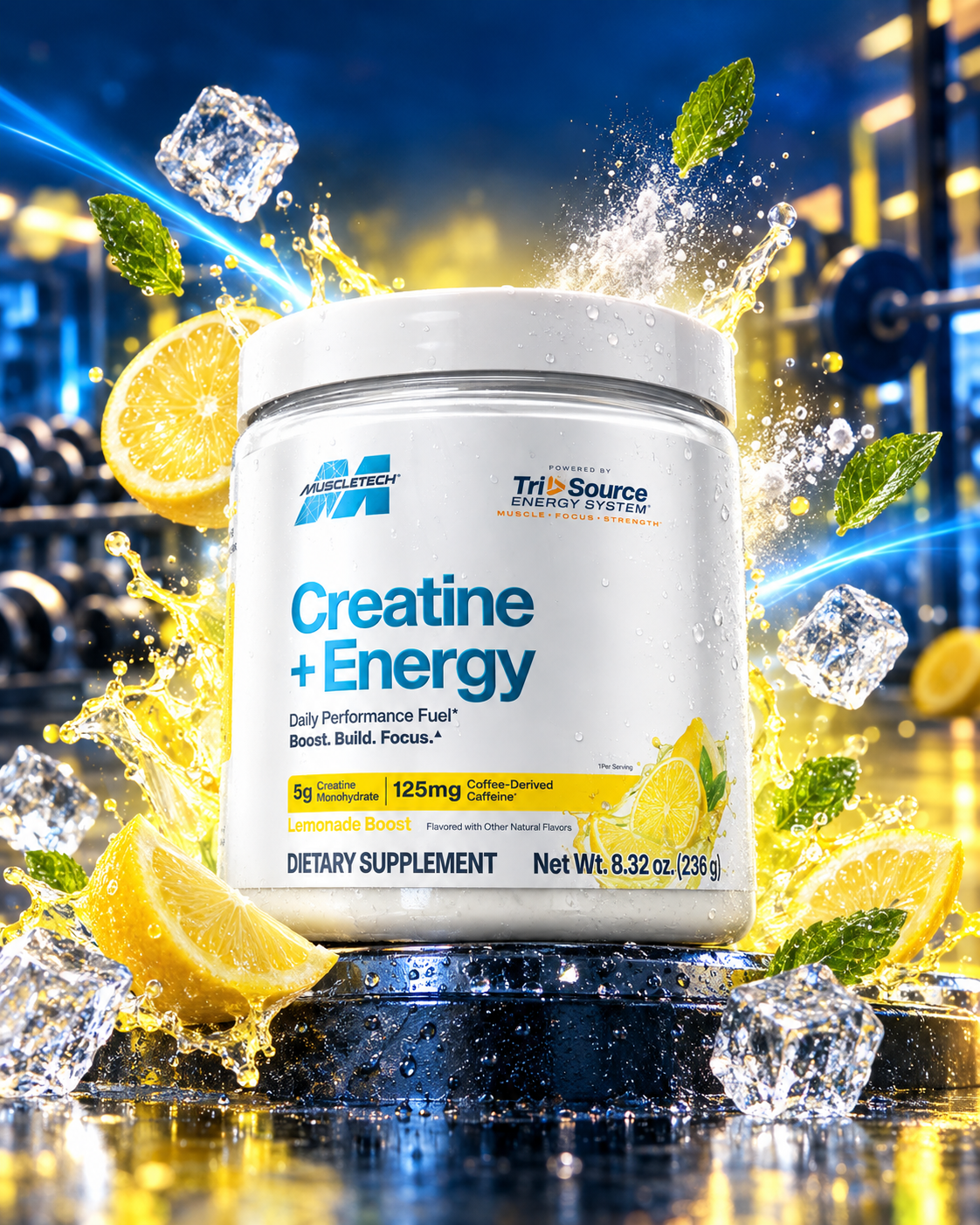
Creatine + Energy is the line's caffeinated option, built for morning workouts, commutes, and the jump from desk to gym. It pairs the same creatine foundation with MuscleTech's Tri-Source Energy System™ and two B vitamins in a Lemonade Boost flavor, sweetened with sucralose and stevia (Reb A) and colored with an unknown dose of beta-carotene (a vitamin A precursor). The directions call for one scoop in 8oz of water once daily, with no more than one scoop in 24 hours.
Compared to Creatine + Hydration, the 5g of creatine monohydrate is identical, but there's no MuscleLyte system here. Sodium drops from 150mg to 40mg, and the other electrolytes are gone. In their place are three energy and focus ingredients (L-tyrosine, choline bitartrate, and caffeine from coffee seed extract), plus vitamin B6 and vitamin B12, all of which are new to the series.
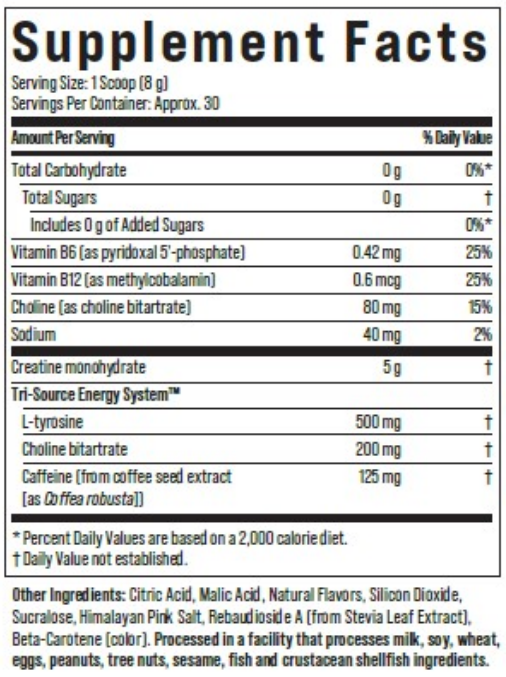
Each 1-scoop (8g) serving provides:
-
Creatine Monohydrate - 5g
This is the same 5g dose of creatine monohydrate found in Creatine + Hydration. We cover the research in full up top.
-
Tri-Source Energy System™
The Tri-Source Energy System™ is MuscleTech's three-part energy and focus blend. No total amount is printed, but each component is individually dosed.
-
L-Tyrosine - 500mg
L-tyrosine is the amino acid precursor to dopamine and norepinephrine, neurotransmitters tied to motivation, alertness, and focus. Its best-supported benefit is protecting cognitive performance during short-term stress or demanding mental work, when those neurotransmitters run low. A review found that tyrosine does little for an unstressed brain and has minimal potential for improving physical exercise performance.[20] Creatine + Energy's 500mg is half of what MuscleTech uses in Creatine Peptide 447.
-
Choline Bitartrate - 200mg (80mg Choline)
Choline bitartrate is a common choline salt, and choline is a precursor to acetylcholine.[21] The label lists choline twice (80mg of choline at 15% DV, yielded from this 200mg of choline bitartrate), but those are the same ingredient counted two ways, so don't add them together.
In a placebo-controlled study, a large 2g dose of choline bitartrate (ten times this dose) helped participants hit targets more precisely in a visuomotor task, an effect the researchers linked to choline's role in nerve-to-muscle communication.[22] Physical performance results are less impressive, since a large choline dose didn't improve performance in soldiers after a four-hour load-carrying march.[23] At this dose, choline plays a supporting cognitive role next to caffeine and tyrosine.
-
Caffeine (from Coffee Seed Extract) - 125mg
Creatine + Energy gets its lift from 125mg of caffeine sourced from coffee seed extract (Coffea robusta), which the label compares to about 1.5 cups of coffee. The International Society of Sports Nutrition's position stand concludes that caffeine consistently improves exercise performance at 3mg to 6mg per kilogram of body weight, notes that the minimum effective dose may be as low as 2mg/kg, and finds that caffeine improves attention and vigilance in most people.[24] Caffeine's benefits extend to strength as well, with a meta-analysis showing small but significant improvements in upper-body strength and muscle power.[25] For a 140-pound (64kg) person, 125mg works out to about 2mg/kg, so this is a lighter, coffee-style dose aimed at daily alertness more than an all-out pre-workout experience.
-
-
Vitamin B6 (as Pyridoxal 5'-Phosphate) - 0.42mg
Most supplements use pyridoxine HCl, but Creatine + Energy uses pyridoxal 5'-phosphate (P5P), the active coenzyme form of vitamin B6. B6 works as a coenzyme in amino acid, carbohydrate, and fat metabolism, which is why it often appears alongside amino acids like tyrosine in energy formulas. In cell research, the nerve toxicity associated with very high-dose B6 supplements was traced to pyridoxine rather than P5P, though at 0.42mg (25% DV), dose isn't a concern here.[26]
-
Vitamin B12 (as Methylcobalamin) - 0.6mcg
Vitamin B12 comes as methylcobalamin, one of the natural forms found in the human body and in animal foods.[27] Like the rest of the B vitamins, B12 doesn't supply energy directly but acts as a cofactor in energy metabolism.[28] At 0.6mcg (25% DV), think of it as nutritional support rather than an energy booster.
-
Sodium - 40mg
Creatine + Energy's 40mg of sodium comes from the Himalayan pink salt in its flavor system. It's a small amount compared to Creatine + Hydration, where we cover sodium in detail.
Check current Creatine + Energy pricing and availability below:
MuscleTech Creatine + Energy – Deals and Price Drop Alerts
Get Price Alerts
No spam, no scams.
Disclosure: PricePlow relies on pricing from stores with which we have a business relationship. We work hard to keep pricing current, but you may find a better offer.
Posts are sponsored in part by the retailers and/or brands listed on this page.
MuscleTech Creatine + HMB: The Build Formula
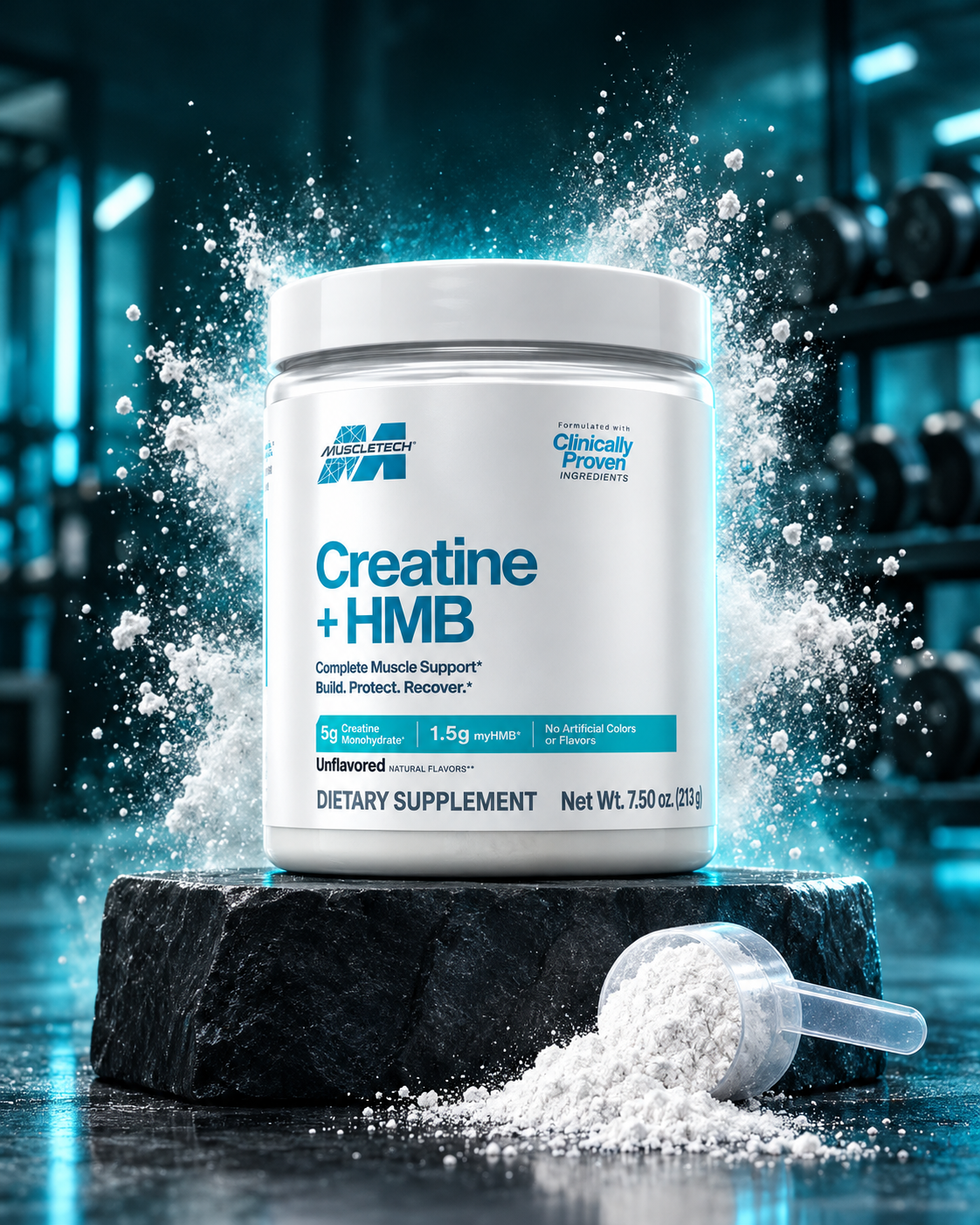
Creatine + HMB is the strength-focused member of the line, built for lifting and functional training. It's unflavored and unsweetened, with no added colors (MuscleTech uses a touch of natural flavor only to cut bitterness), so it disappears into a protein shake, smoothie, or whatever you're already drinking. The daily serving is one scoop (7g) in 6oz of water, and the label suggests two scoops in 12oz "for maximum results".
Compared to Creatine + Hydration, the 5g of creatine monohydrate per scoop is the same, with 10g at two scoops. There are no added electrolytes and no stimulants. What's new is 1.5g of myHMB® calcium HMB, which also accounts for the label's 200mg of calcium, plus 6.7mcg of vitamin D.
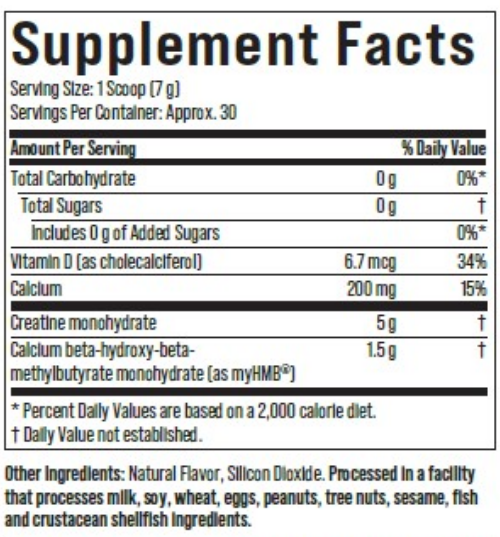
Each 1-scoop (7g) serving provides:
-
Creatine Monohydrate - 5g
This is the same 5g of creatine monohydrate found above. Two scoops of course brings it to 10g.
-
Calcium HMB (as myHMB®) - 1.5g (200mg Calcium)
HMB (beta-hydroxy-beta-methylbutyrate) is a metabolite of the amino acid leucine, and this product uses myHMB®, TSI Group's calcium HMB monohydrate. In healthy young men, about 3g of calcium HMB increased muscle protein synthesis and reduced muscle protein breakdown.[29]
The case for pairing HMB with creatine is that the two appear to work through different mechanisms. In a three-week study of young men starting a weight training program (using a creatine loading protocol and 3g of HMB daily), creatine, HMB, and the combination produced lean mass gains of 0.92kg, 0.39kg, and 1.54kg over placebo, and the effects on lean mass and strength were additive.[30] In elite rowers, 10 weeks of creatine plus 3g of HMB improved aerobic power more than either supplement alone, without changing body composition, which is relevant for this line's endurance and hybrid athletes.[31]
On dosing, one scoop's 1.5g has some support. Early research found that both 1.5g and 3g of HMB per day reduced markers of exercise-induced muscle breakdown and led to larger gains in muscle function with resistance training.[32] The ISSN's HMB position stand reviews human studies using 1.5g to 6g per day and discusses 38mg per kilogram of body weight daily, about 3g for a 176-pound (80kg) person.[33] That makes the label's two-scoop option (3g of HMB plus 10g of creatine) the closest match to most of the research. Expectations should also scale with training status, since in athletes, HMB's effects on body composition look small, with the clearest potential benefit when protein intake is below 1.6g/kg per day.[34]
The 200mg of calcium on the label (15% DV) comes from the HMB itself. Calcium HMB monohydrate is roughly 13.7% calcium by weight, so 1.5g supplies about 205mg. MuscleTech has used this same 1.5g myHMB plus vitamin D pairing before in Recovery Peptide 144.
-
Vitamin D (as Cholecalciferol) - 6.7mcg (268 IU)
The vitamin D here has a specific purpose. The three patent numbers on the Creatine + HMB label cover nutritional uses of calcium HMB combined with vitamin D, a pairing that traces back to research suggesting vitamin D status influences HMB's results. In a year-long study of older adults taking HMB with arginine and lysine, lean mass increased regardless of vitamin D status, but strength improved only in those with adequate vitamin D levels (at least 30ng/mL).[35] A later 12-month trial in older adults with insufficient vitamin D found that 3g of calcium HMB plus 2,000 IU of vitamin D3 daily improved lean mass, knee extension strength, and physical function in participants who weren't exercising.[36]
That's a much higher vitamin D dose than Creatine + HMB provides, at 268 IU per scoop (34% DV) or 536 IU at two scoops. Treat it as a contribution to your overall vitamin D intake rather than a match for the studied dose, and this is good, because brands do need to consider a person's overall intake and try not to go over the upper daily safe limit of 4000IU, which too many flirt with.
Check current Creatine + HMB pricing and availability below:
MuscleTech Creatine + HMB – Deals and Price Drop Alerts
Get Price Alerts
No spam, no scams.
Disclosure: PricePlow relies on pricing from stores with which we have a business relationship. We work hard to keep pricing current, but you may find a better offer.
Posts are sponsored in part by the retailers and/or brands listed on this page.
Stacking & Choosing Your MuscleTech Creatine
All three formulas share the same 5g creatine foundation, so the choice comes down to what you want riding alongside it.
| Formula | Creatine | Standout Ingredients | Caffeine | Best For |
| Creatine + Hydration | 5g | 991mg MuscleLyte™ (150mg sodium, 160mg potassium, 35mg magnesium) | None | Daily hydration, sweaty sessions, outdoor training |
| Creatine + Energy | 5g | Tri-Source Energy System™ (L-tyrosine, choline, caffeine), B6, B12 | 125mg | Morning workouts, commutes, workday focus |
| Creatine + HMB | 5g (10g at 2 scoops) | 1.5g myHMB® (3g at 2 scoops), vitamin D | None | Strength training, mixing into shakes and smoothies |
A few ways to use the line:
- Energy in the morning, hydration on other days: Use Creatine + Energy before an early workout or commute, and save Creatine + Hydration for rest days, hot afternoons, or days you're skipping caffeine.
- Build it into your shake: Creatine + HMB is unflavored and unsweetened, so it mixes into a post-workout protein shake or smoothie without adding a flavor of its own.
Keep two things in mind. First, every scoop already delivers a full 5g of creatine, so you don't need more than one of these products per day to cover your creatine. Combining two brings you to 10g, the same as Creatine + HMB's two-scoop option. Second, Creatine + Energy's label caps use at one scoop per 24 hours and says not to combine it with other caffeine sources, so skip the coffee and pre-workout on days you use it.
Conclusion: Creatine Beyond the Gym
For years, MuscleTech's creatine story was told in black tubs and bodybuilding terms. This new line keeps the creatine monohydrate science that built the category but presents it for a much wider audience: people who run, lift a few days a week, race in hybrid events, and want their supplements to fit the rest of their day.
The structure is easy to follow, too: Creatine + Hydration pairs 5g of creatine with the 991mg MuscleLyte™ electrolyte system for a stimulant-free daily drink. Creatine + Energy adds 125mg of coffee-derived caffeine with L-tyrosine and choline for mornings and commutes. Creatine + HMB brings 1.5g of myHMB® and vitamin D in an unflavored powder that disappears into a shake. All three have zero sugar and no synthetic dyes.
If you've followed MuscleTech's more advanced launches, like the Peptide Series, this line sits at the other end of the spectrum, with fewer ingredients and a cleaner label built for consistency. Check PricePlow for current prices and availability across all three formulas, and sign up for MuscleTech alerts so you don't miss new flavors or deals.
MuscleTech – Deals and Price Drop Alerts
Get Price Alerts
No spam, no scams.
Disclosure: PricePlow relies on pricing from stores with which we have a business relationship. We work hard to keep pricing current, but you may find a better offer.
Posts are sponsored in part by the retailers and/or brands listed on this page.

Comments and Discussion (Powered by the PricePlow Forum)