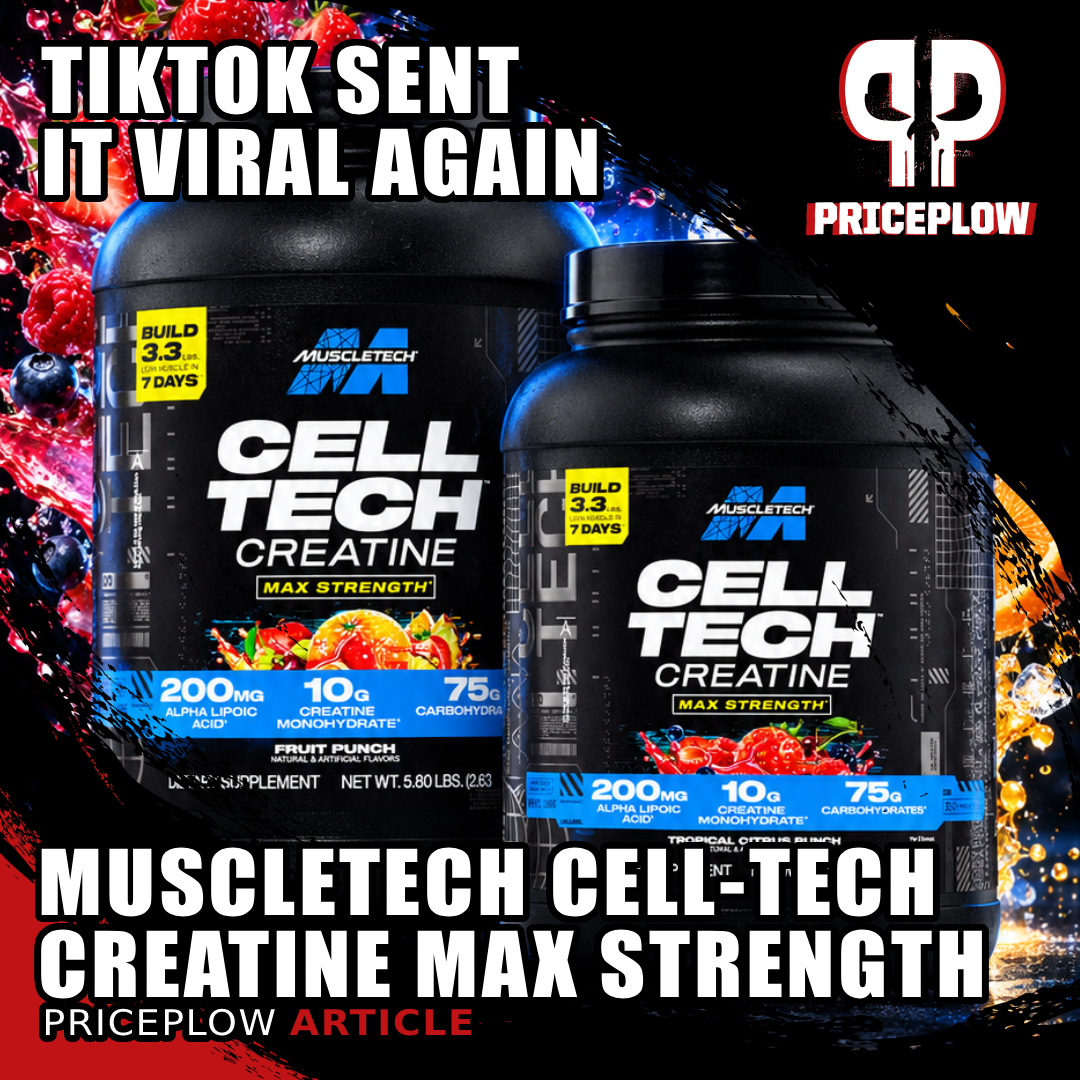
Cell-Tech is back, and TikTok did it. MuscleTech Cell-Tech Creatine Max Strength runs 5g creatine monohydrate, a 38g multi-stage carb blend, and alpha lipoic acid, the same trio MuscleTech built its research reputation on decades ago.
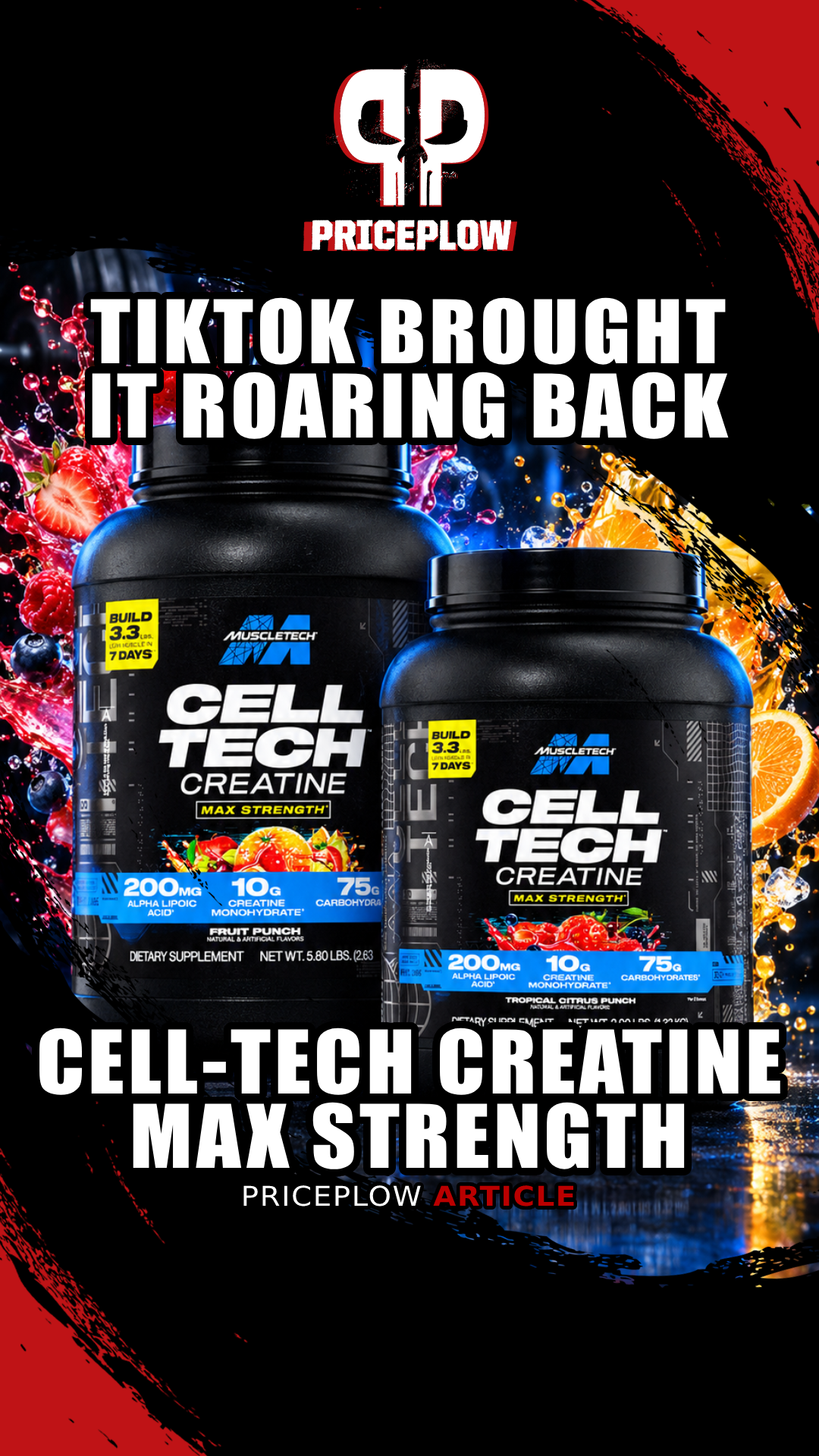
MuscleTech's Cell-Tech Creatine has been part of the brand's creatine lineup for years, but it's currently having a moment nobody at the company scripted: a viral resurgence on TikTok. The latest formula, currently under the name MuscleTech's Cell-Tech Creatine Max Strength, has five grams of creatine monohydrate, a heavy carbohydrate blend, and alpha lipoic acid, which is the same combination that shaped MuscleTech's early research reputation, long before short-form video existed. It's available now in Fruit Punch and Tropical Citrus Punch, and word is that more flavors are on the way.
Iovate CEO Raza Bashir touched on the trend during a recent appearance on Episode #235 of the PricePlow Podcast, noting that Nitro-Tech and Cell-Tech are where the company's research focus first took shape, built around testing creatine monohydrate alongside carbohydrates and alpha lipoic acid against creatine alone, against whey alone, and against creatine mixed with plain fruit juice. "None of that is new, but TikTok introduced it to a generation that never knew the backstory", he said.
The current Max Strength formula builds on that three-ingredient base with an added modern layer: a 2:1:1 BCAA matrix, B vitamins, and Senactiv®, a ginsenoside-based ingredient from NuLiv Science aimed at exercise recovery. The rest of this article breaks down what's actually in the tub, scoop for scoop, along with the research behind each piece.
MuscleTech Cell-Tech Creatine – Deals and Price Drop Alerts
Get Price Alerts
No spam, no scams.
Disclosure: PricePlow relies on pricing from stores with which we have a business relationship. We work hard to keep pricing current, but you may find a better offer.
Posts are sponsored in part by the retailers and/or brands listed on this page.
This area is reserved for Team PricePlow's upcoming videos.
Subscribe to our channel and sign up for notifications so you catch it when it goes live!

MuscleTech Cell-Tech Creatine Max Strength Nutrition Facts
The following is what you'll get in a full single scoop serving. If that's too low for your macros and goals, you can double it with another scoop.
-
Calories - 160
-
Total Carbohydrate - 38g
-
Total Sugars - 15g
-
Added Sugars - 14g
-
-
-
Vitamins and Minerals
-
Vitamin B6 (as pyridoxine HCl) - 1.3mg, 76% DV
-
Vitamin B12 (as cyanocobalamin) - 2.4mcg, 100% DV
-
MuscleTech Cell-Tech Creatine Max Strength Ingredients
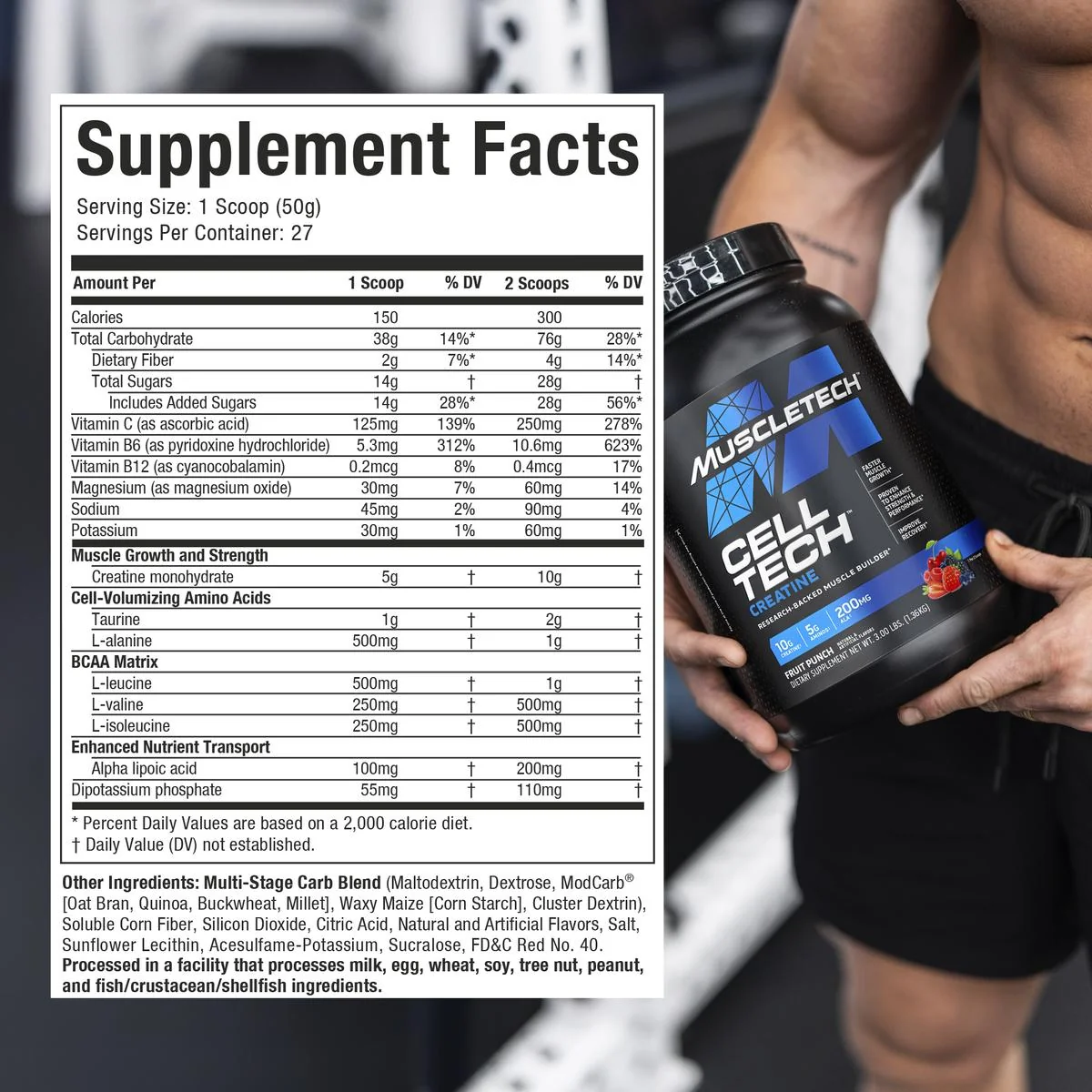
Each single-scoop serving provides the following:
-
Multi-Stage Carb Blend - 38g (total) in one scoop
Cell-Tech delivers 38g of carbohydrate per scoop and 75g at two scoops from maltodextrin, dextrose, ModCarb®, modified food starch, and highly branched cyclic dextrin.
Dextrose is simply D-glucose, making it rapidly available for restoring muscle glycogen after hard training. Classic work from Ivy et al. showed that consuming carbohydrate immediately after exercise produced a substantially faster rate of muscle glycogen storage during the first two hours of recovery than waiting two hours.[1] Later research reviews found that the highest short-term glycogen synthesis rates occur when substantial carbohydrate is supplied soon after exercise, when muscle glucose transport and glycogen synthase activity are elevated.[2]
That's only half the Cell-Tech story, though. Carbohydrate also plays directly into the creatine research discussed next, where raising insulin through carbohydrate co-ingestion has repeatedly been used to increase creatine retention. So the hefty carb dose isn't just there for calories. It's part of the original Cell-Tech strategy: replenish glycogen while creating a nutrient-delivery environment that works alongside creatine and alpha lipoic acid.
-
Creatine Monohydrate - 5g
Creatine monohydrate anchors Cell-Tech Creatine Max Strength, and it's the same form of creatine used in the vast majority of exercise and clinical research. The International Society of Sports Nutrition's position stand describes creatine as one of the most well-studied ergogenic aids available, with consistent evidence for increased intramuscular creatine stores, improved high-intensity exercise capacity, and downstream training adaptations.[3] A 2023 systematic review and meta-analysis found that creatine supplementation combined with resistance training produced greater site-specific muscle hypertrophy than resistance training alone, using direct imaging measures like MRI and ultrasound.[4]

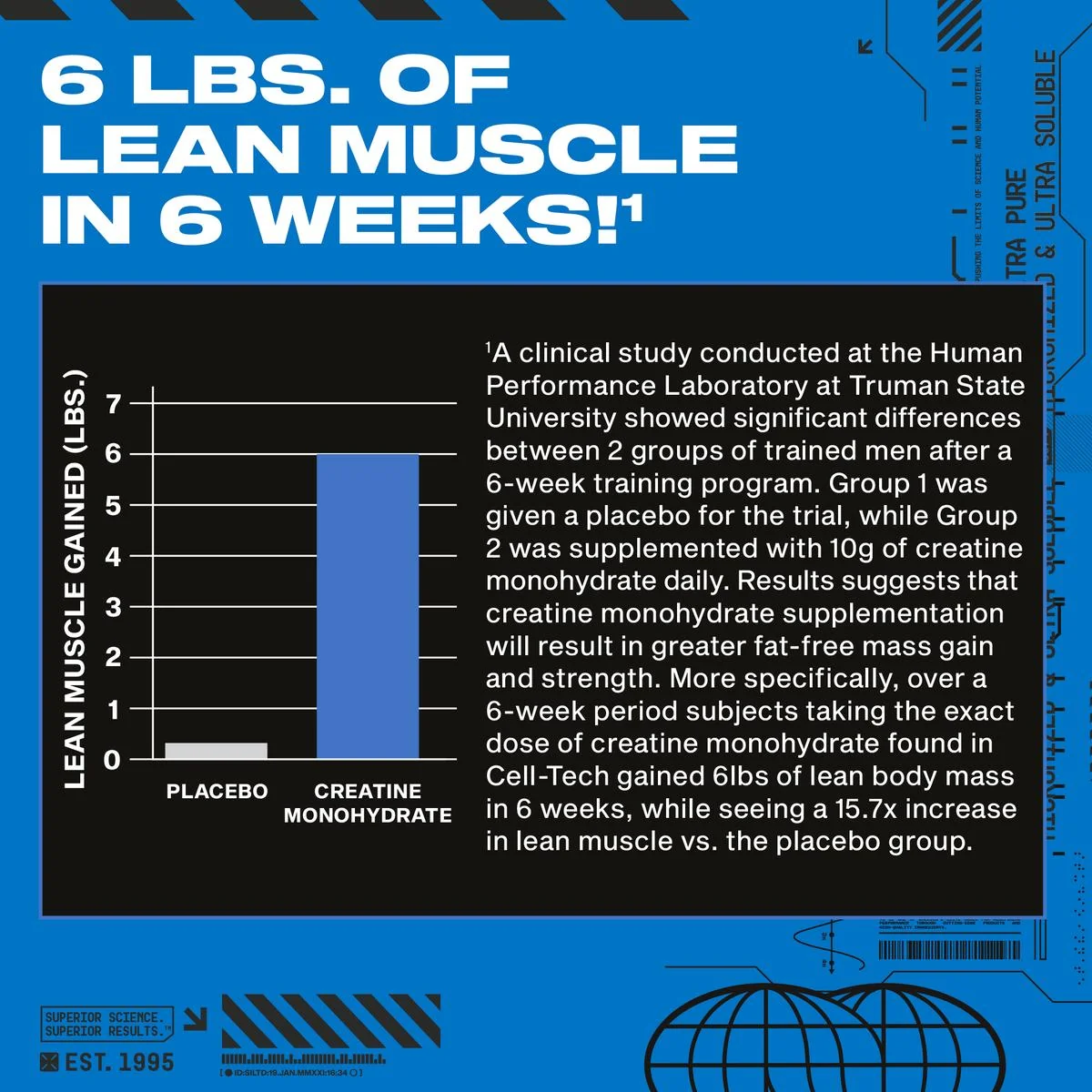
MuscleTech's chart from a six-week Truman State trial, where trained men on 10g daily creatine monohydrate gained six pounds of lean mass against a near-flat placebo bar.
What sets this formula apart from a plain scoop of creatine monohydrate is the carbohydrate load sitting right next to it. A now-classic study found that pairing 5g of creatine with a large dose of simple carbohydrate increased muscle creatine retention by 60% compared to creatine alone, an effect tied to the sharp insulin response that carbohydrate ingestion triggers.[5] Cell-Tech's Multi-Stage Carb Blend, detailed further below, is built around that same principle.
Rehashing the 2003 Cell-Tech Study
As Raza Bashir told us in our latest podcast, the Cell-Tech combination was studied very early on. Burke et al. took the carbohydrate concept a step further by adding alpha-lipoic acid, another ingredient found here and detailed below.
In a five-day study, 16 recreational weightlifters received 20g/day of creatine alone, creatine plus 100g/day of sucrose, or creatine plus sucrose and 1,000mg/day of alpha-lipoic acid. Muscle biopsies showed that the alpha-lipoic acid group increased phosphocreatine from 87.6 to 106.2mmol/kg dry mass and total creatine from 137.8 to 156.8mmol/kg, significantly greater increases than either creatine alone or creatine plus sucrose.[6]
Interestingly, Cell-Tech's current seven-day loading protocol also supplies 20g of creatine per day across four scoops, along with roughly 150g of carbohydrate, but only 400mg of alpha-lipoic acid. So the creatine dose closely matches Burke's protocol, while the alpha-lipoic acid dose is lower. The study still provides direct human muscle-biopsy evidence for the creatine-carbohydrate-alpha-lipoic acid concept, but it shouldn't be read as a clinical validation of the current formula at its labeled doses. MuscleTech Research and Development funded the study.
Finally, note that there are some versions of Cell-Tech with different forms of creatine out there, but this is the OG.
-
L-Leucine - 500mg
The two-scoop serving stacks 10g of creatine monohydrate with 75g of carbohydrate, which is the size and strength angle MuscleTech leads with.
L-Leucine is the branched-chain amino acid most directly tied to muscle protein synthesis. It activates mTORC1, a signaling pathway that switches on the muscle-building process, and research comparing leucine, BCAAs, and full essential amino acid (EAA) blends found that anabolic signaling increased in that order, with EAAs producing the strongest response.[7]
However, Cell-Tech's 500mg to 1000mg of leucine sits well below the multi-gram doses, often 5g or more, used in standalone BCAA research.[8] A 2017 review also cautions that BCAAs taken without the rest of the essential amino acid profile have a smaller effect on muscle protein synthesis than marketing around them often implies.[9] In this formula, leucine works best as a complement to the creatine and carbohydrate base rather than as a standalone driver of muscle growth.
Point being: you still need to get your full day's worth of protein -- this isn't a protein supplement!
-
L-Isoleucine - 250mg
L-Isoleucine stands in the middle of the formula's 2:1:1 branched-chain amino acid ratio, matching the ratio the International Society of Sports Nutrition references in its essential amino acid position stand.[10] It plays a smaller direct role in muscle protein synthesis than leucine, but research has connected it to skeletal muscle glucose uptake, which lines up with this formula's broader nutrient-transport angle.
-
L-Valine - 250mg (1 scoop)
L-Valine completes the 2:1:1 BCAA ratio. Of the three branched-chain aminos, valine has the least independent research behind it. Its main contribution is metabolic rather than signaling: valine is glucogenic, feeding into energy production pathways distinct from leucine's more direct route to muscle tissue, and keeping the classic 2:1:1 ratio intact avoids the amino acid competition for shared transporters that an imbalanced blend could introduce. It's also known to be the amino acid that breaks down into the "exercise signaling molecule" known as L-BAIBA, which increases when exercise is underway. For this reason, it's potentially good to have some valine handy so that L-BAIBA doesn't need to be generated from active muscle cells (or, if it is, it can be easily replaced).
-
Alpha Lipoic Acid - 100mg
Loose powder spilling from the tub, next to MuscleTech's reminder that Cell-Tech has been on shelves for over twenty years.
Alpha lipoic acid (ALA) is a naturally occurring sulfur-containing compound that acts as a cofactor for several mitochondrial enzyme complexes involved in energy metabolism. It's also well known for its redox activity, including its ability to interact with other antioxidant systems. But in Cell-Tech, the more interesting reason for its inclusion is its relationship with glucose disposal and insulin-sensitive nutrient transport.
Some of the foundational work here dates back to 1996. Estrada et al. found that ALA increased glucose uptake in cultured muscle cells and promoted redistribution of both GLUT1 and GLUT4 glucose transporters toward the cell membrane, an effect that shared elements of the insulin-signaling pathway.[11] This wasn't a human supplementation trial, so it doesn't establish an effective sports-nutrition dose, but it helped establish the mechanistic basis for using ALA alongside nutrients whose uptake is influenced by insulin.
And that's where the Burke study discussed above becomes especially relevant. In that five-day human trial, adding 1,000mg/day of alpha lipoic acid to 20g/day of creatine and 100g/day of sucrose produced significantly greater increases in muscle phosphocreatine and total creatine than creatine alone or creatine plus sucrose.[6] That's direct muscle-biopsy evidence for the same creatine-carbohydrate-ALA strategy Cell-Tech is built around. Of course, those were using some monster doses, so to match that, you'll need four scoops and even then the ALA dose is still less.
Either way, this is the key ingredient driving insulin sensitivity and carbohydrate/nutrient transport.
-
Senactiv® - 25mg (1 scoop)

Senactiv® is a patented ingredient from NuLiv Science combining an extract of Panax notoginseng (Tienchi ginseng) with dog rose (Rosa canina) fruit extract. The notoginseng component supplies ginsenoside Rg1, a compound studied for its effects on muscle-level recovery after exercise. In a randomized, double-blind, crossover trial in trained men, a 5mg dose of Rg1 taken before a squat session lowered perceived exertion and reduced expression of p16INK4a, a marker associated with cellular senescence, in muscle tissue to a greater degree than exercise alone.[12]
A more recent trial builds on that work, reporting that Rg1 supplementation increased markers of muscle stem cell abundance following resistance exercise.[13] Both trials used isolated Rg1 rather than the full Senactiv® extract, so the doses studied aren't an exact match to the label's 25mg to 50mg range, but they do test the components and provide even more.
-
Vitamin B6 (as pyridoxine HCl) - 1.3mg (76% DV)
Vitamin B6 is a coenzyme for more than 100 enzymatic reactions in the body, many of them tied to amino acid metabolism, the same pathways leucine, isoleucine, and valine run through on their way to becoming muscle tissue. Cell-Tech's dose (76% to 153% of the Daily Value) sits comfortably within a normal supplemental range and rounds out the formula's amino acid-supporting nutrients rather than serving as a standalone highlight.
-
Vitamin B12 (as cyanocobalamin) - 2.4mcg (100% DV)
Vitamin B12 supports red blood cell formation and plays a central role in cellular energy metabolism, which is why it shows up in most pre- and post-workout formulas. A 28-day trial testing a B-complex containing B1, B2, B6, and B12 together found improvements in running performance and reduced fatigue in healthy adults, though that result reflects the full complex rather than B12 alone.[14] At 100% to 200% of the Daily Value, Cell-Tech's dose is well within normal supplemental ranges.
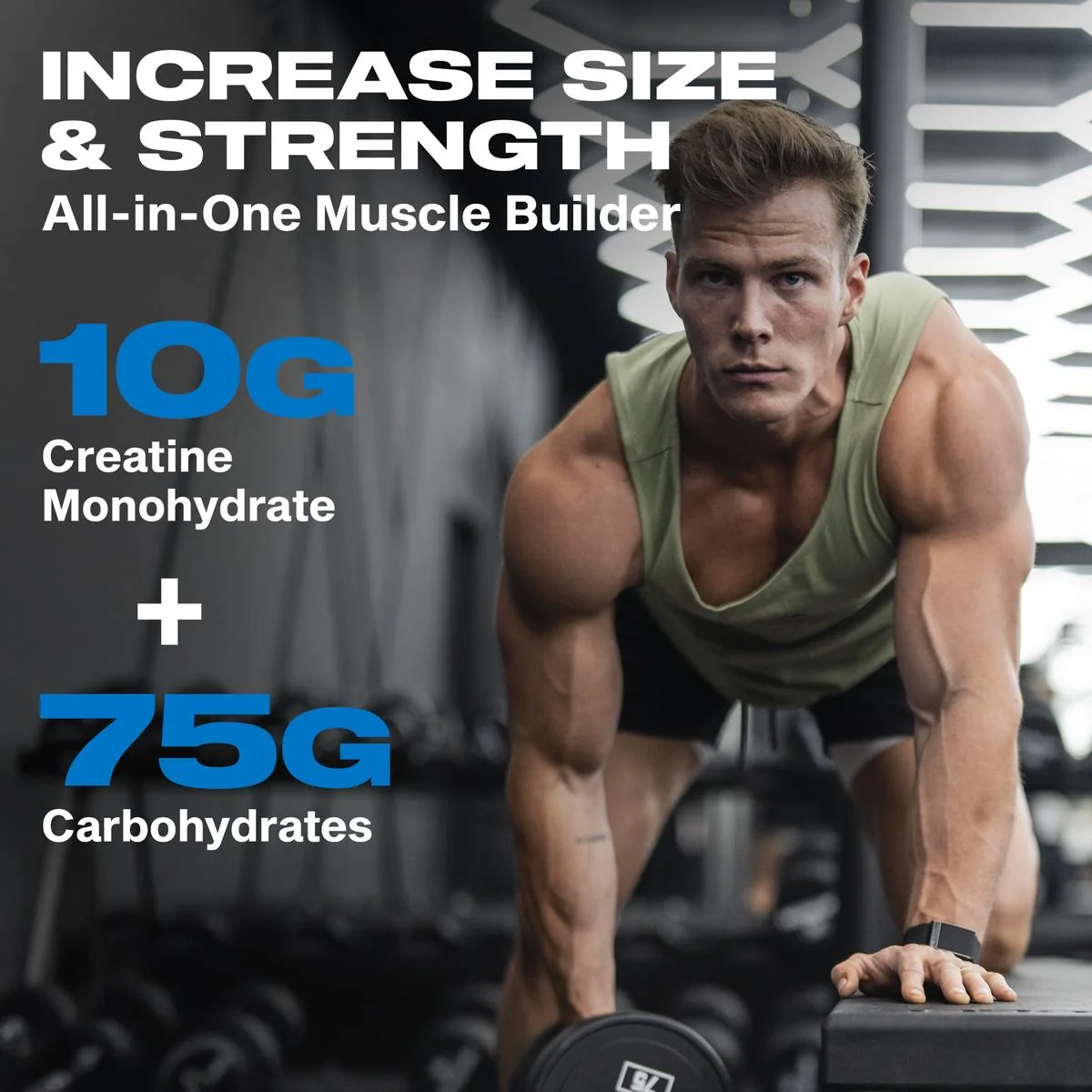
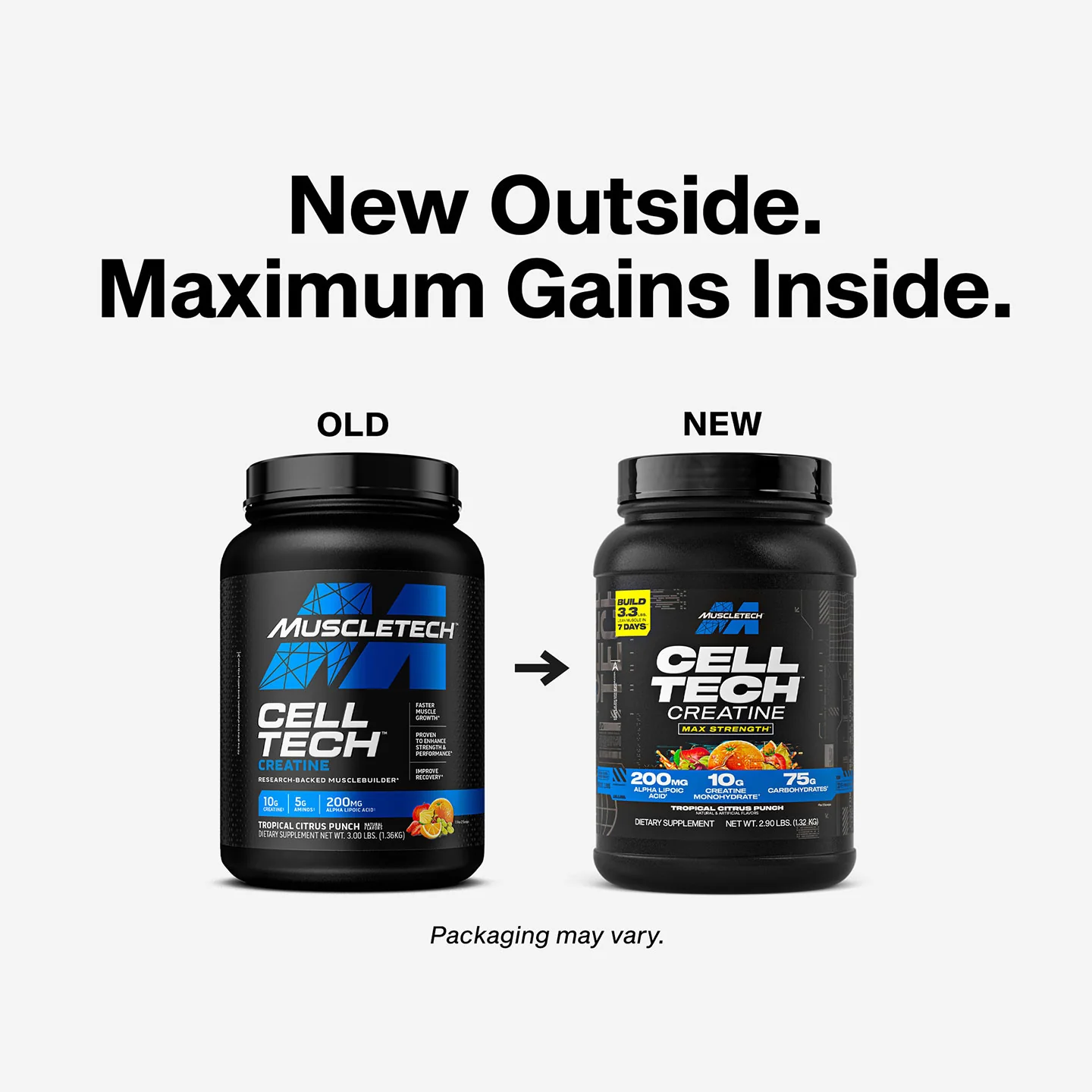

Lifter mid-set under MuscleTech's pitch for faster lean gains and better recovery, tied to the insulin-driven creatine transport that carbs enable.
Flavors Available
Cell-Tech Creatine Max Strength currently comes in Fruit Punch and Tropical Citrus Punch, both sweetened with sucralose and Rebaudioside A, a stevia-derived glycoside, layered on top of the sweetness the dextrose in the carb blend already provides.
Here's an up-to-date list of all flavors of MuscleTech Cell-Tech Creatine Max Strength:
How to Use
- When to take it: Take Cell-Tech post-workout on training days and first thing in the morning on rest days, following the standard 1-scoop protocol, or bump to 2 scoops for the "Better Results" dose.
- With or without food: No specific food requirement here. Mix with 6oz of water for 1 scoop or 12oz for 2 scoops and drink.
- Other notes: For faster saturation, the label outlines an optional 7-day loading phase (4 scoops per day, split between morning and post-workout, for 20g total), followed by a 2-scoop (10g) maintenance dose going forward.
Stacks Well With
- Muscle Peptide 185: Built around a dileucine ingredient rather than the modest BCAA matrix in Cell-Tech, Muscle Peptide 185 targets muscle protein synthesis more directly and can round out the anabolic side of a stack built on Cell-Tech's creatine and carbohydrate base.
- EuphoriQ Pre-Workout: EuphoriQ runs on paraxanthine instead of straight caffeine, positioned for smoother energy with less of a crash. Taking it before training and Cell-Tech after covers both ends of a session.
Who It's For
- Creatine users who want the classic mass-and-strength stack: If the goal is training volume and muscle growth support through a straightforward creatine-plus-carbohydrate approach, Cell-Tech's core combination of creatine, carbs, and alpha lipoic acid is the same one MuscleTech has leaned on for years.
- Newer lifters discovering creatine through social media: For anyone who found Cell-Tech through a short clip rather than a supplement facts panel, the science behind the core formula is decades old and well established, giving newer users a well-documented entry point into creatine supplementation.
Conclusion: An Old-School Stack for a New Generation
Cell-Tech Creatine Max Strength isn't a new product, and MuscleTech isn't positioning it as one. What's changed is the audience. A formula built around creatine monohydrate, a carbohydrate blend, and alpha lipoic acid, the same combination the brand leaned on when it first built its research reputation with Nitro-Tech and Cell-Tech, is reaching a wave of lifters who found it through a short clip instead of a label read.
The current Max Strength formula updates that base with a 2:1:1 BCAA matrix, B vitamins, and Senactiv®, giving the classic three-ingredient core some modern company without changing what made it work in the first place. The carbohydrate load still plays an active role alongside the creatine, and the dosing protocols on the label, whether you use the standard, "Better Results", or the 7-day loading phase, still follow the same structure MuscleTech has used for years.
Carbs are back, and Dat Dere Cell-Tech is the king of carb-based creatine supplements. Just make it fit your goals and your daily carb budget. Check PricePlow for current pricing and availability across both flavors and tub sizes.
MuscleTech Cell-Tech Creatine – Deals and Price Drop Alerts
Get Price Alerts
No spam, no scams.
Disclosure: PricePlow relies on pricing from stores with which we have a business relationship. We work hard to keep pricing current, but you may find a better offer.
Posts are sponsored in part by the retailers and/or brands listed on this page.


Comments and Discussion (Powered by the PricePlow Forum)