In today's installment of our Formulator's Corner Series, we create a hypothetical nighttime recovery powder that combines stress management, sleep optimization, and intelligent hydration. Will a forward-thinking brand bring this science-backed evening ritual to market?
The Evening Dilemma: When Stress Meets Dehydration
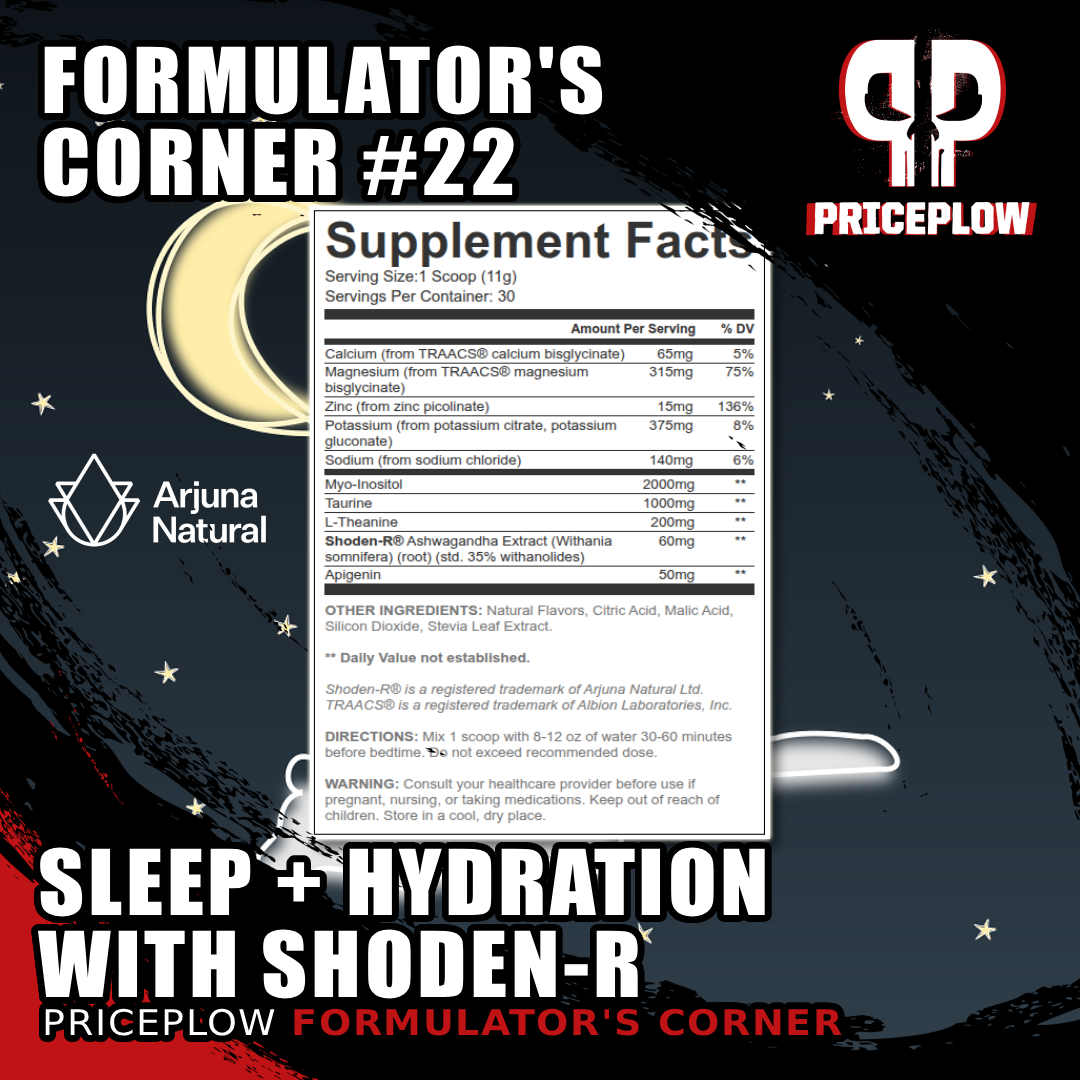
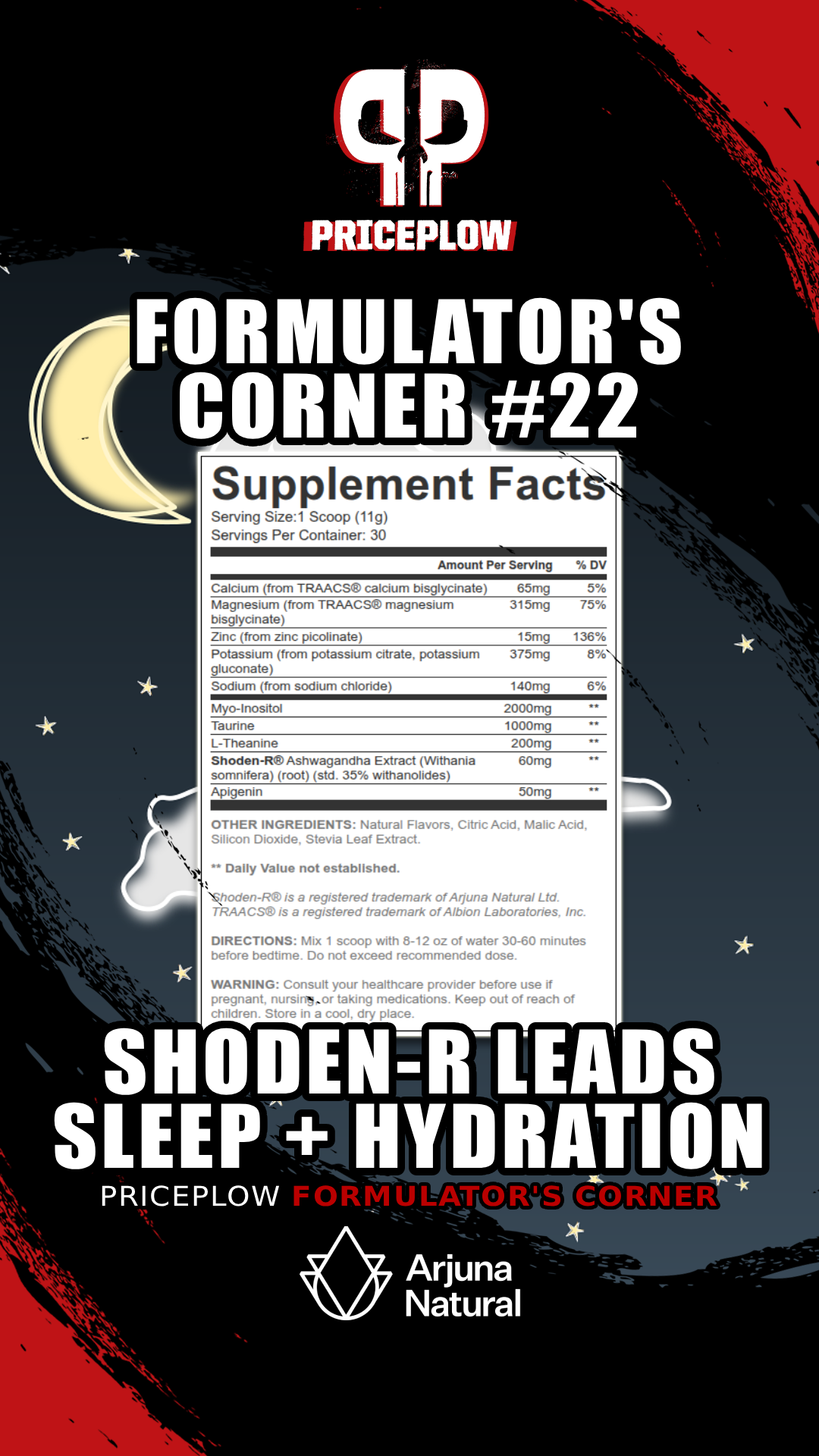
What if one evening formula could tackle stress, sleep, AND hydration? Formulator's Corner #22 designs a nighttime recovery powder with Shoden-R ashwagandha, glycine minerals, and smart osmolytes. Will a brand bring it to market?
The modern supplement consumer faces a paradox every evening. They know hydration matters for recovery and morning vitality. They recognize that elevated cortisol sabotages sleep quality. They understand that mineral balance and neurotransmitter support enhance rest. Yet the market forces them to choose between incomplete solutions: basic magnesium powders that address relaxation without hydration, sleep aids that ignore stress management, or electrolyte formulas that do nothing for the racing mind.
Natural Vitality's CALM pioneered the evening magnesium category long ago, establishing consumer acceptance for nighttime powder supplements. But we're here to step it up a notch or ten, addressing the cortisol dysregulation driving poor sleep for millions of adults. More than just magnesium, we want stronger GABAergic support for the overactive mind, and a powerful glycine-based mineral profile needed for cellular hydration and neurotransmitter synthesis.
So we're here to ideate a next-generation evening formula that addresses stress, sleep, and hydration through multiple synergistic pathways. And thanks to one ingredient specifically, this convergence of ingredient innovation and consumer sophistication makes it possible in ways that weren't feasible five years ago:
Shoden-R: Water-Soluble Ashwagandha Changes Everything
Enter Shoden-R, Arjuna Natural's breakthrough ashwagandha extract that solves the formulation challenge that has kept ashwagandha out of powders and beverages for decades. This isn't another "water-dispersible" extract that creates cloudy suspensions with floaters. Shoden-R is 100% water soluble, delivering clinical-strength ashwagandha at just 60mg while remaining completely clear in solution.
This article details our latest and greatest Formulator's Corner, one that takes sleep formulas to the next level with several key ingredients, all fronted by the clinically-supported Shoden-R. Before diving in, sign up for our Arjuna Natural news alerts, then let's get into it:
Subscribe to PricePlow's Newsletter and Alerts on These Topics

Our Nighttime Hydration + Sleep Formula Ingredients
-
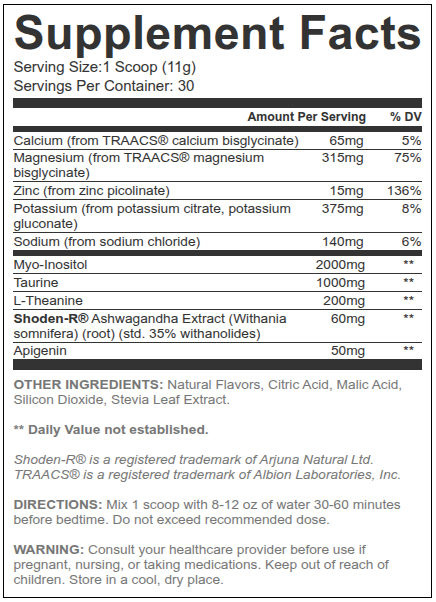
Shoden-R Ashwagandha (Withania somnifera) Extract (root) (std. 35% withanolides) - 60mg
It all begins with Shoden-R, the new water-soluble, root-based ashwagandha ingredient standardized to a powerful 35% withanolides that only needs 60mg to get the job done. Here's how it works:
The Glycoside Advantage: Why 60mg Outperforms 600mg
Most ashwagandha extracts require 300-600mg daily doses because they're standardized to withanolide aglycones, the "unbound" forms that demonstrate poor absorption and rapid degradation in aqueous environments. Shoden-R takes a fundamentally different approach: it preserves and concentrates withanolide glycosides, where protective glucose molecules remain attached to the core withanolide structure.
The pharmacokinetic data is remarkable. In a head-to-head crossover study, researchers compared Shoden against a standard ashwagandha extract, with both delivering 185mg total withanolides.[1] The dose difference? 480mg of Shoden versus 7,400mg of standard extract.
Despite using 15 times less material, Shoden demonstrated:[1]
- 18 times higher total withanolide AUC (area under curve)
- 6 times higher maximum concentration (Cmax)
- 4.13 times longer mean residence time in bloodstream
The glucose molecule acts as a biological transport enhancer, facilitating absorption across intestinal barriers. Once absorbed, enzymatic processes cleave the glucose, releasing the withanolide with substantially higher bioavailability than directly consuming aglycone forms. This creates a paradox: consuming withanolides in glycoside form yields higher plasma levels of free withanolides (aglycones) than consuming aglycones directly.
This explains why 60mg of Shoden-R delivers clinical effects that would require 300-600mg of conventional ashwagandha. For evening formulations, this dose efficiency is transformative.
Clinical Validation: Sleep Quality and Cortisol Control
The sleep research on Shoden validates its role in nighttime formulations. A randomized, double-blind, placebo-controlled study examined 150 healthy adults with non-restorative sleep, using sophisticated actigraphy to measure objective sleep parameters.[2]
Just 120mg of Shoden daily for six weeks produced a 72% improvement in self-reported sleep quality, more than double the 29% improvement in the placebo group.[2]
Actigraphy revealed the mechanisms behind this subjective improvement:[2]
- Increased sleep efficiency (percentage of time in bed actually sleeping)
- Reduced sleep onset latency (faster time to fall asleep)
- Improved total sleep time
- Decreased wake time after sleep onset
The cortisol angle is equally important. Multiple studies demonstrate that Shoden significantly reduces cortisol levels through modulation of the hypothalamic-pituitary-adrenal (HPA) axis. One trial showed cortisol reductions of 66-67% at doses as low as 60-120mg daily.[3] This cortisol-lowering effect directly addresses one of the primary drivers of poor sleep: elevated evening cortisol that prevents the natural circadian decline needed for sleep onset.
The Science Behind the Stress-Sleep Connection
Ashwagandha's sleep benefits don't stem from sedation but from stress-system normalization. The herb works through multiple complementary mechanisms:
- HPA Axis Modulation: By reducing excessive cortisol output, Shoden-R allows the natural evening cortisol decline that signals the body to prepare for sleep. Chronic stress keeps cortisol elevated when it should be dropping, directly interfering with sleep onset and architecture.
- GABAergic Enhancement: Research indicates ashwagandha enhances GABA signaling, the primary inhibitory neurotransmitter that promotes neural relaxation and calmness. This complements rather than replaces endogenous GABA function, avoiding the dependency issues associated with pharmaceutical GABAergics.
- Neuroinflammation Reduction: Elevated inflammatory markers in the central nervous system correlate with sleep disturbances. Ashwagandha's anti-inflammatory properties help create the neural environment conducive to restorative sleep.
- Serotonin Modulation: While the primary mechanism appears cortisol-focused, evidence suggests ashwagandha influences serotonin pathways involved in mood regulation and sleep-wake cycles.
This multifaceted approach explains why ashwagandha improves both sleep onset and sleep quality. It addresses the root causes of poor sleep rather than forcing sedation through a single neurochemical pathway.

Arjuna Natural's Shoden-R ashwagandha just won Ingredient Idol at SupplySide Global 2025. The root-only extract is water-soluble, works at 60mg, and finally makes ashwagandha viable in beverages, gummies, and RTD formats.
For a nighttime formula, Shoden-R's dual action is ideal. It doesn't sedate like pharmaceutical sleep aids or even heavy-dose melatonin. Instead, it normalizes the stress response that prevents natural sleep. Users report waking more mentally alert rather than groggy, a distinction that sets ashwagandha apart from most sleep supplements.
To learn more, we dive into the Shoden Revolution in our article titled "Shoden and the Ashwagandha Evolution: The Rise of Glycoside-Enhanced Extracts", and also specifically discuss the Shoden-R launch in "Shoden-R: Arjuna Natural's Award-Winning Ashwagandha Root Extract Breaks New Ground".
We'll get more into its formulation benefits below, but next, let's discuss the rest of the formula:
-
Myo-Inositol - 2g
Myo-inositol brings a unique dual benefit to evening formulations: direct sleep quality improvements backed by clinical research, combined with osmolyte function that supports intelligent cellular hydration.
Sleep Quality Enhancement
A randomized, double-blind, placebo-controlled trial examined 2000mg myo-inositol supplementation in 60 women over 10 weeks.[4] The results demonstrated significant improvements across multiple sleep parameters:[4]
- Global sleep quality scores improved (p = 0.047)
- Subjective sleep quality enhanced (p = 0.006)
- Sleep duration increased (p = 0.022)
- Habitual sleep efficiency improved (p = 0.022)
The mechanisms likely involve inositol's role as a glial cell marker. Glial function influences brain regions controlling sleep architecture, and inositol serves as a key component in cellular signaling pathways that regulate neurotransmitter systems.
The Osmolyte Advantage
Shoden brings a new era to ashwagandha supplements with 35% glycowithanolide standardization. Research shows it delivers powerful effects at just 60-120mg daily, compared to 600mg+ with traditional extracts.
Beyond sleep, myo-inositol functions as one of the brain's primary organic osmolytes alongside taurine. These molecules help cells maintain proper hydration by regulating water balance without disrupting ionic strength. In combination with our formula's taurine content, myo-inositol creates a synergistic osmolyte profile that supports cellular hydration throughout overnight recovery.
-
Taurine - 1g
Taurine complements myo-inositol as the formula's second organic osmolyte, supporting cellular hydration through mechanisms distinct from electrolyte-based approaches. Rather than relying solely on ionic balance, taurine helps cells maintain proper water content by regulating intracellular volume without disrupting cellular function.[5] This osmolyte synergy between taurine and myo-inositol creates a foundation for optimal cellular hydration throughout overnight recovery.
Beyond hydration, taurine contributes to the formula's relaxation profile through modulation of GABAergic pathways and calcium signaling. While not binding to GABA receptors directly, taurine influences inhibitory neurotransmission through interactions with both GABA and glycine receptors, supporting the neural relaxation needed for quality sleep.[6] Its calcium-modulating effects help prevent the cellular overexcitation that interferes with sleep onset.
The mitochondrial angle matters for nighttime formulations. Taurine conjugates with mitochondrial tRNA to support proper synthesis of respiratory chain proteins, maintaining the electron transport function that drives cellular energy production during rest and recovery.[7] Combined with this formula's magnesium and glycine content, taurine helps create the metabolic environment needed for restorative sleep and morning vitality.
-
L-Theanine - 200mg
L-theanine complements this formula's stress-management approach through its unique ability to promote relaxation without sedation. Found naturally in tea leaves, this amino acid modulates neural activity through multiple pathways that synergize with Shoden-R's cortisol-lowering effects.

Mechanisms: GABA Enhancement and Glutamate Modulation
L-theanine's primary mechanism involves inhibiting neuronal glutamine uptake, likely competing for the ASCT2 glutamine transporter.[8] By limiting glutamine's conversion to glutamate, theanine reduces excitatory neurotransmission while promoting GABAergic signaling (the brain's primary inhibitory system). This explains why theanine increases alpha wave generation, the brain wave pattern associated with relaxed alertness.[8]
Research demonstrates that 200mg L-theanine reduces stress-induced sympathetic activation, decreasing heart rate and salivary immunoglobulin A responses to acute stress.[8] Preclinical studies indicate theanine also increases dopamine and serotonin levels in brain regions governing mood and sleep regulation, including the prefrontal cortex and hippocampus.[8]
The 200mg dose creates relaxation through anxiolysis rather than sedation, meaning it normalizes stress responses without causing morning grogginess... a critical distinction for evening supplementation.
-
Apigenin - 50mg
Apigenin is a flavonoid that enhances sleep through mechanisms distinct from other ingredients in this formula. Research links low dietary apigenin intake to poor sleep quality, establishing its importance for healthy sleep architecture.[9]
Dual-Action GABAergic and Glutamatergic Modulation
Apigenin modulates both GABA and glutamate systems through a novel mechanism. In cultured neurons, it reduced spontaneous inhibitory postsynaptic currents mediated by GABAA receptors while simultaneously acting as an NMDA receptor antagonist with similar potency (IC50 ~10μM).[10] This NMDA antagonism is not mediated through benzodiazepine receptors, instead producing sedation through reduced network excitability.[11]
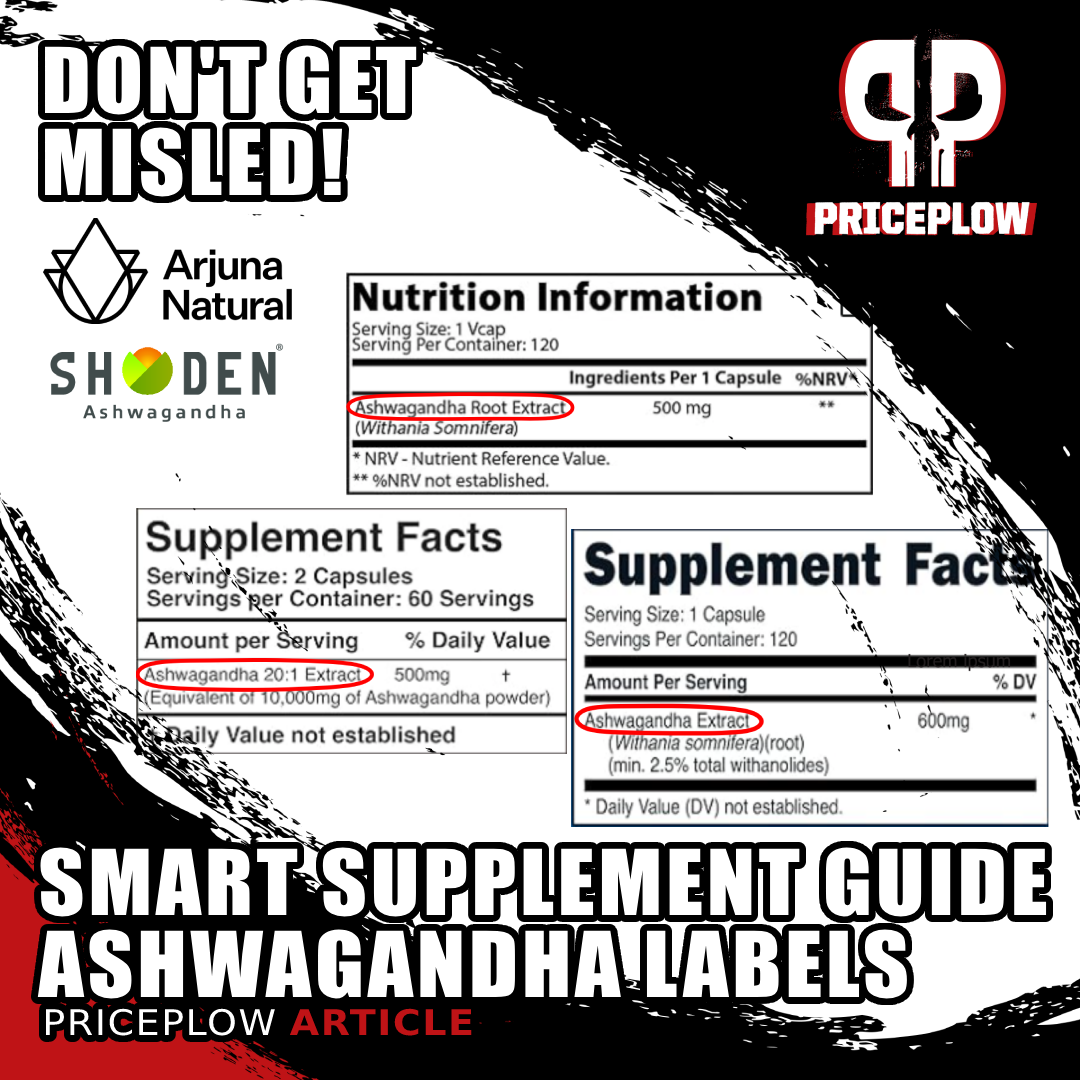
Not all ashwagandha extracts are created equal. This guide explains why standardization matters, why extract ratios can be misleading, and how to identify quality products when shopping for this popular adaptogen.
Animal studies reveal apigenin reduces corticosterone levels and increases hippocampal BDNF, CREB, and serotonin, all supporting healthy sleep.[12] The 50mg dose provides meaningful GABAergic support.
-
Magnesium-Led Glycine-Based Mineral Blend
It's not a sleep formula without magnesium. But we've made it better by using magnesium (and calcium) glycinate, getting us a yield of 3g glycine, which is clinically-studied to support sleep.[13]
-
Magnesium Bisglycinate (Albion TRAACS) - 3.15g yielding 315mg elemental magnesium (75% DV)
Magnesium bisglycinate delivers 315mg of highly bioavailable elemental magnesium through Albion's TRAACS® chelation technology. The amino acid chelate bypasses competition for mineral transporters, instead using amino acid pathways for superior absorption.
Research comparing magnesium bisglycinate to magnesium oxide found the chelated form achieved significantly higher blood magnesium levels (AUC) in human subjects.[14] The glycine molecules protect magnesium from inhibitory binding while creating dual absorption routes.
For sleep, magnesium functions as a natural NMDA receptor antagonist, modulating excessive glutamate activity.[15] This mechanism supports neural relaxation without sedation, addressing stress-driven sleep disruption.
The strategic benefit: this 3.15g dose yields approximately 2.75g glycine. Combined with calcium bisglycinate below, the formula delivers over 3g total glycine, matching clinical doses shown to improve sleep onset, reduce nighttime awakenings, and enhance next-day alertness.[13]
Note: this provides the remaining ~2.75g glycine.
-
Potassium Blend - 375mg yield (8% DV)
Arjuna Natural showcased BCM-95 turmeric chocolates and Shoden ashwagandha beverages at SupplySide Global 2025. Attendees tasted these functional food innovations firsthand at Booth #6517.
Potassium drives fundamental cellular recovery processes through the sodium-potassium ATPase pump, which maintains membrane potential and cellular volume regulation.[16] This electrogenic pump exchanges three sodium ions for two potassium ions, controlling membrane excitability in muscle and nerve tissue critical for overnight restoration.
The body loses potassium through sweat at concentrations of approximately 4-7 mEq/L during daily activities and exercise, making evening replenishment relevant for those with active lifestyles.[17] Unlike sodium, sweat potassium concentrations remain stable regardless of sweating intensity, creating consistent daily losses requiring replacement. The 375mg dose complements this formula's sodium and magnesium content, supporting balanced electrolyte status during the extended overnight recovery period when no fluid or mineral intake occurs.
-
Sodium Chloride (Salt) - 140mg yield (6% DV)
The formula includes 140mg sodium, a moderate amount strategically positioned within the cardiovascular health sweet spot identified in large-scale population studies.[18] Research from over 100,000 participants demonstrates a J-shaped relationship between sodium intake and health outcomes, with both very low intake (below 3g daily) and excessive intake (above 7g daily) associated with increased cardiovascular risk.[18]
For overnight hydration, sodium's role extends beyond simple electrolyte replacement. The ingestion of plain water triggers rapid drops in plasma sodium concentration and osmolarity, leading to decreased vasopressin production and increased urine output.[19] Sodium prevents this diuretic cascade. When sodium accompanies fluid intake, vasopressin levels remain elevated, suppressing urine production and maximizing fluid retention throughout the night.[19] This creates the osmotic environment necessary for optimal cellular hydration during recovery hours.
-
Calcium Bisglycinate (from Albion TRAACS) - 350mg yielding 65mg elemental calcium (5% DV)
Calcium's role extends beyond bone health into fundamental aspects of muscle function and overnight recovery. As a primary signaling molecule, calcium mediates muscle contraction and relaxation through voltage-dependent mechanisms that trigger release from the sarcoplasmic reticulum.[20] The ion controls everything from neurotransmitter release at motor endplates to the conformational changes in troponin that permit actin-myosin interaction.[21]
The bisglycinate form delivers dual benefits: highly bioavailable calcium alongside approximately 275mg of glycine, contributing to our formula's clinically-relevant 3g glycine total. This modest 5% DV calcium dose complements our magnesium-dominant mineral profile without interfering with magnesium absorption, while slightly boosting calcium intake in the evening aligns with bone remodeling processes that peak during sleep. Research demonstrates calcium supplementation helps preserve bone mineral density during periods of metabolic stress, with 1g daily doses normalizing elevated bone turnover markers.[22]

Note: this provides the remaining ~0.275g glycine, getting the glycine total over 3g.
-
Zinc Picolinate - yielding 15mg elemental zinc (136% DV)
Zinc picolinate rounds out the formula's neurotransmitter support system through mechanisms distinct from but complementary to magnesium and ashwagandha. While zinc's sleep benefits require longer-term supplementation to manifest fully, its inclusion here addresses multiple pathways supporting overnight recovery.[23]
The picolinate form leverages the body's natural zinc absorption mechanism. Picolinic acid functions as a zinc-binding ligand (ZBL) in the gastrointestinal tract, the same transport system the body produces from tryptophan metabolism.[24] By binding zinc to this natural carrier, absorption increases significantly compared to standard forms like zinc oxide or sulfate.
For sleep, zinc works through GABAergic and serotonergic pathways. Research shows zinc enhances GABA release while modulating glutamate receptors, creating the inhibitory neurotransmitter balance needed for neural relaxation.[25] Zinc also supports the tryptophan-to-serotonin-to-melatonin conversion pathway, synergizing with the formula's magnesium and glycine to optimize neurotransmitter synthesis.
At 15mg, zinc functions as long-term neurological support rather than an acute sleep driver, complementing the formula's stress-management and mineral-balance foundation.
-




More on the Benefits of Shoden-R in Beverages and Powders
You simply couldn't easily do this with an efficacious dose of ashwagandha. Here's what Shoden-R changes:
Formulation Properties That Matter
Shoden-R's technical specifications make it uniquely suited for powder beverages:
- Water Solubility: Truly dissolves, creating clear solutions without emulsifiers, stabilizers, or agitation. No cloudiness, no settling, no texture issues.
- Taste Profile: Virtually no taste and no smell, eliminating the need for heavy masking flavors. This allows cleaner formulations with fewer sweeteners and simpler flavor systems.
- Heat Stability: Maintains integrity through standard beverage processing, enabling pasteurization without potency loss.
- Acid Stability: Functions in low-pH environments, making it compatible with citric acid (common in powder beverages) and fruit juice matrices.
- Dose Efficiency: At 60mg, it consumes minimal label space and bulk, leaving room for comprehensive mineral and amino acid profiles that higher-dose ashwagandhas would crowd out.
For formulators who've struggled to incorporate ashwagandha into beverages without creating taste, texture, or stability problems, Shoden-R removes every barrier.
Shoden-R in an Evening Formula: Strategic Dosing
For our nighttime hydration + sleep formula, 60mg of Shoden-R hits the optimal range demonstrated in clinical research. This dose:

- Provides meaningful cortisol modulation based on studies showing efficacy at 60-120mg
- Leaves room for added mineral and amino acid support without excessive serving sizes
- Avoids the higher doses (240mg+) that showed efficacy but aren't necessary for sleep applications
- Enables cost-effective formulation while maintaining premium positioning
Shoden-R's water solubility eliminates the texture and taste issues that plagued previous attempts to add ashwagandha to evening beverages. Combined with its clinical validation for sleep and stress, it becomes the logical foundation for a next-generation CALM alternative.
The Bottom Line: Engineering Evening Recovery
This Shoden-R-powered nighttime formula, if it were to come to life, would be more than an incremental improvement over existing products. It's a real reconceptualization of what evening supplementation should accomplish: stress management through cortisol control, sleep optimization through multiple neurotransmitter pathways, and intelligent hydration through synergistic minerals and amino acids.
The formula addresses the reality that poor sleep rarely stems from a single deficiency. Magnesium helps, but insufficient magnesium isn't the only problem. Stress management matters, but ashwagandha alone won't optimize hydration. The power emerges from strategic combinations where ingredients work through distinct but complementary mechanisms.
The stress-sleep-hydration triad creates synergistic effects:
- Shoden-R normalizes cortisol, enabling natural sleep onset while supporting HPA axis recovery during rest
- Magnesium and glycine provide GABAergic support and NMDA receptor modulation for neural relaxation
- Taurine and inositol function as osmolytes supporting cellular hydration while contributing to neurotransmitter balance
- Apigenin and L-theanine enhance GABA signaling through distinct pathways, amplifying the relaxation response
- Zinc and light electrolytes support dozens of enzymatic processes involved in sleep architecture, hormone regulation, and recovery
For brands ready to move beyond single-mechanism sleep aids or basic magnesium formulas, this represents an opportunity to lead in the rapidly growing sleep wellness category. The science is solid, the ingredients are available, and consumer demand for comprehensive solutions continues growing.
Call to Action: The Market Is Ready

Bennito Russo, Keely Johnson, and Nipen Lavingia from Arjuna Natural's team reveals the science behind Shoden ashwagandha's superior bioavailability and their industry-leading botanical standardization on the PricePlow Podcast #171.
The sleep supplement category continues explosive growth, but most products offer either pharmaceutical sedation or single-mechanism support. Consumers want powerful solutions that respect the complexity of human physiology.
Shoden-R makes this possible. Its water solubility removes the formulation barriers that kept high-quality ashwagandha out of powder beverages. Its clinical validation provides the evidence formulators need to justify premium positioning. Its dose efficiency allows comprehensive formulations without excessive serving sizes.
For brands with the vision to see beyond "magnesium + melatonin", this formula blueprint offers a roadmap to differentiation in a crowded category. The ingredients exist. The research exists. The consumer demand exists.
The only question: who will bring it to market first?
Stay updated on ingredient innovations by subscribing to PricePlow's Arjuna Natural and Shoden news alerts:


Comments and Discussion (Powered by the PricePlow Forum)