
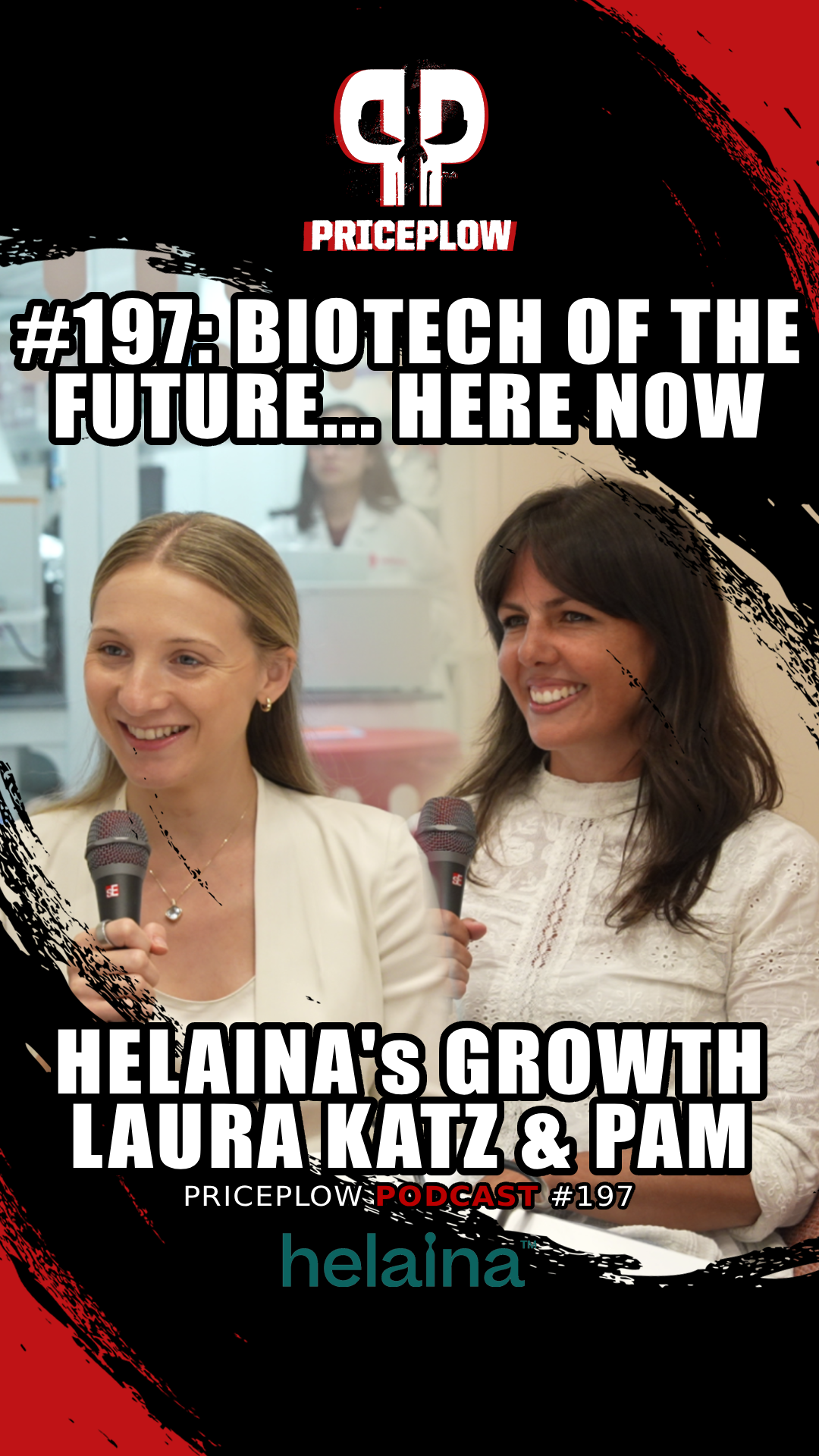
Laura Katz and Pamela Besada-Lombana take us inside Helaina's Manhattan R&D facility to reveal the precision fermentation science, clinical breakthroughs, and empathy-driven culture behind effera® lactoferrin on Episode #197 of the PricePlow Podcast.
Welcome back to Episode #197 of the PricePlow Podcast, where we take you inside Helaina's Manhattan research and development facility for an in-depth conversation with CEO Laura Katz and Pamela Besada-Lombana (Pam), Director of Early R&D. After our initial online episode with Laura back in June, we traveled to New York to experience firsthand the groundbreaking precision fermentation work happening in the heart of Midtown Manhattan. This episode reveals the sophisticated science, collaborative culture, and clinical validation driving effera® lactoferrin from a novel ingredient to an industry-changing reality.
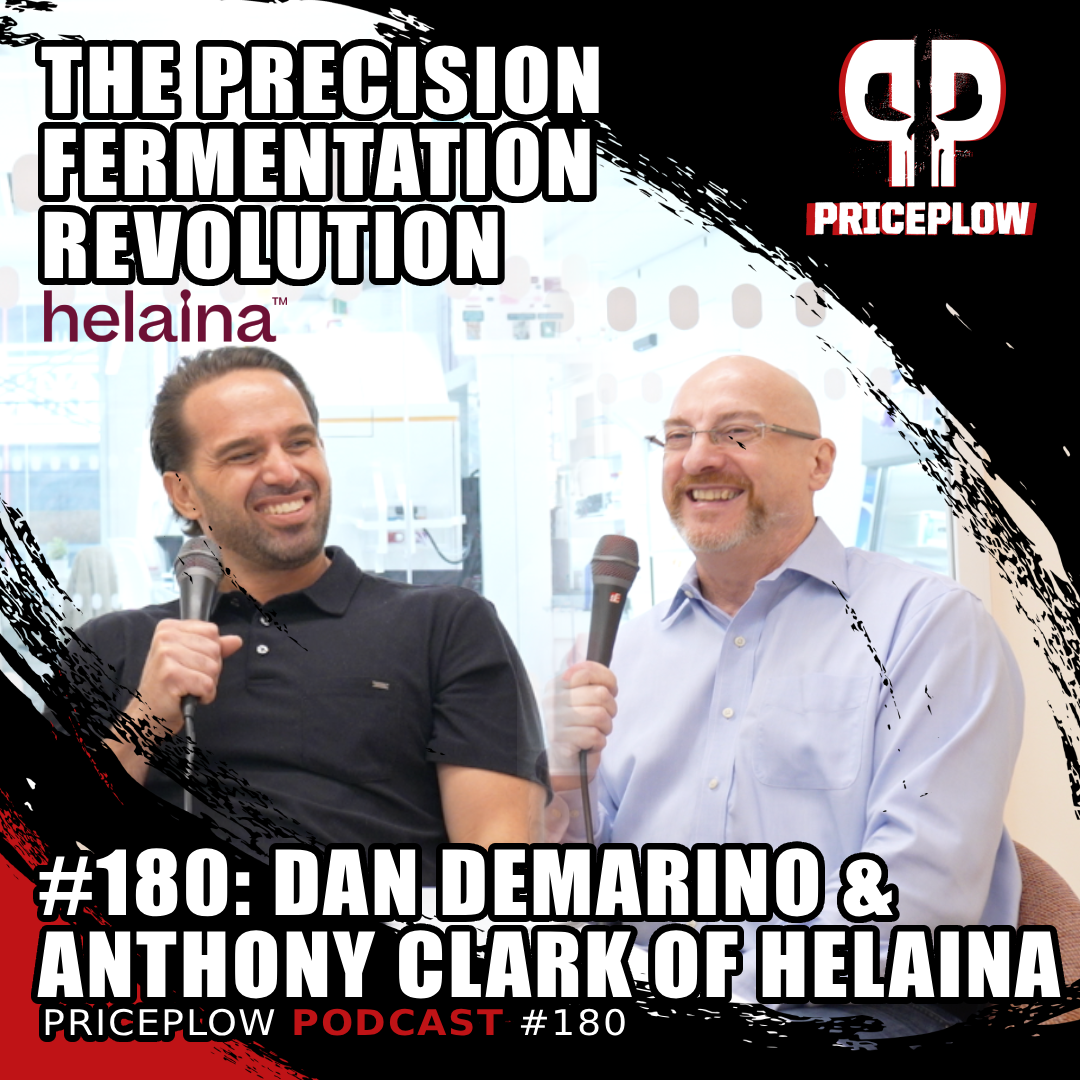
In this conversation, Pam takes us deep into the yeast engineering process that makes effera possible, explaining how her team designs, builds, and optimizes microbial factories to produce human-equivalent lactoferrin more efficiently with each iteration. Laura shares recent clinical breakthroughs, including the landmark alloimmunization study that proved effera triggers no immune response while bovine lactoferrin does, along with emerging data on gut permeability and microbiome health. The discussion also explores Helaina's empathy-driven culture, their data infrastructure capturing 170 million rows of metabolic information, and how they're attracting innovative brands that value genuine science and transparency. This episode complements our earlier conversation with Helaina's Dan DeMarino and Anthony Clark from the same New York trip.
Subscribe to the PricePlow Podcast on your favorite platform and sign up for Helaina news alerts before diving in.
Subscribe to the PricePlow Podcast on Your Favorite Service (RSS)

Apple Podcasts

Spotify

YouTube
https://blog.priceplow.com/podcast/helaina-laura-katz-pamela-lombana-197
Video: Inside Helaina’s Manhattan Lab with Laura Katz and Pam Besada-Lombana

Podcast: Play in new window | Download (Duration: 54:08 — 55.5MB)
Detailed Show Notes: The Science and Strategy Behind effera® Lactoferrin
-
0:00 - Welcome to Helaina's Manhattan Research Facility
Ben and Mike arrive at Helaina's 15,000 square foot R&D facility in Midtown Manhattan, a remarkable space housing molecular biology, immunology, bioprocessing, analytics, and chemistry labs in the middle of New York City. Laura Katz returns to the podcast (following Episode #167) alongside Pamela Besada-Lombana, Director of Early R&D, who gave the team an extensive tour earlier. The episode sets up to explore the sophisticated precision fermentation process behind effera while capturing the collaborative energy driving Helaina's mission to make human bioactives accessible to everyone.
-
2:00 - Pam's Background in Yeast Engineering
Pam explains her expertise in yeast engineering and how Helaina produces effera through precision fermentation. The process involves designing yeast strains to efficiently secrete human-equivalent lactoferrin by programming the microorganisms and screening them at small scale before scaling up. Her role focuses on designing multiple yeast variants to maximize effera production and reduce costs. The team maintains rigorous correlation studies between small-scale cultivation, bench-scale bioreactors in Manhattan, and commercial-scale production. This systematic approach ensures consistency while continuously improving productivity to make effera more accessible across consumer and adult nutrition markets.
-
3:30 - The Product Stays the Same, Production Gets Better
Laura emphasizes a critical distinction: effera itself remains unchanged throughout their R&D process. The human-equivalent lactoferrin is thoroughly characterized through immunology studies and mass spectrometry to ensure structural and functional identity with lactoferrin found in the human body. Helaina's research focuses exclusively on making more effera per production cycle, addressing the fundamental challenge with precision fermentation products (their high cost per gram). Any modifications to improve efficiency and reduce cost of goods cannot alter effera's quality, requiring extensive testing after every R&D cycle. This constraint creates an interesting challenge for Pam's team, balancing productivity improvements with maintaining the exact protein structure and functionality.
-
5:30 - Reprogramming Yeast: Fighting 5,000 Genes
Pam explains the complexity of introducing the lactoferrin gene into yeast, noting that yeast naturally doesn't make lactoferrin. Once the gene is inserted, approximately 5,000 genes work against production because the organism doesn't naturally want to produce this foreign protein. Her team's focus involves adding "helping factors" (co-factors and supporting genetic modifications) that make it easier for the yeast to produce more lactoferrin efficiently. This ongoing optimization increases productivity with each iteration. The challenge isn't simply inserting one gene, but rather orchestrating an entire metabolic symphony where multiple genetic edits work together to coax maximum lactoferrin secretion from cells that naturally resist producing it.
-
8:00 - Understanding Non-Conventional Yeast Metabolism

Helaina's effera™ is revolutionizing supplements with the first human-equivalent lactoferrin. Research shows better bioavailability and reduced immune response compared to bovine sources.
The team uses Pichia pastoris, a non-conventional yeast, rather than baker's yeast (Saccharomyces cerevisiae), which has extensive published literature. While they draw inspiration from baker's yeast research, Pichia pastoris behaves differently, requiring Helaina to become experts in characterizing its unique metabolism. They examine which genes turn on or off at specific times during cultivation and monitor pools of amino acid precursors (like cysteine and methionine) that become the lactoferrin protein. By understanding these metabolic patterns, they can tweak cellular processes to help yeast make lactoferrin more efficiently. This metabolic engineering represents years of accumulated knowledge about their specific organism.
-
14:30 - Scaling the Innovation: 300 Edits Every Five Weeks
The productivity improvements have been remarkable since Helaina developed their screening workflow. They now test approximately 300 genetic edits on yeast every five weeks, an incredible pace that compounds progress over time. Initially, establishing this workflow took considerable effort to stitch together all the necessary steps and optimize the process. Over time, the team refined this system to prepare for future proteins beyond effera. The fundamental nature of effera remains constant while the yeast manufacturing platform evolves. This rapid iteration cycle demonstrates how precision fermentation can achieve exponential improvements through systematic engineering and data-driven optimization.
-
18:00 - Capturing 170 Million Rows of Data
Helaina has captured over 170 million rows of data from their R&D processes, creating a powerful foundation for future protein development. This extensive dataset allows them to quickly identify what yeast cells are missing when producing new proteins, dramatically accelerating development timelines. The knowledge they're building doesn't just apply to effera but creates a platform for efficiently producing other human bioactive proteins. Their data infrastructure represents a significant competitive advantage, encoding years of experimentation, metabolic insights, and optimization strategies that can be leveraged for rapid innovation. This systematic approach to capturing and analyzing fermentation data sets Helaina apart in the precision fermentation space.
-
19:00 - The Design-Build-Assess-Learn Cycle
effera™ human-identical lactoferrin demonstrates no alloimmune response in groundbreaking clinical trial, while bovine lactoferrin triggered antibody responses in over 50% of participants. First study to definitively answer the alloimmunization question for precision-fermented proteins.
Pam walks through their structured DBAL (Design-Build-Assess-Learn) workflow, which follows established bioengineering principles. The Design phase happens in silico (on computers), where scientists hypothesize which genes, transcription factors, or metabolic programs might improve lactoferrin production. In the Build phase, they physically stitch together DNA sequences and introduce them into yeast through electroporation (shocking cells to create pores for DNA entry). The Assess phase involves culturing these programmed yeast in very small bioreactors (similar to 48-well plates with eight-drop cultivation volumes) to test if genetic programs actually improve lactoferrin secretion. Finally, the Learn phase analyzes results to inform the next design cycle, creating a continuous improvement loop.
-
23:00 - From Small-Scale Screening to Commercial Production
The workflow starts with individual yeast colonies picked from plates, where each colony region is genetically identical since it originated from a single cell. These colonies are cultured in micro-scale bioreactors to assess how different genetic programs affect lactoferrin production. Sample tracking becomes critical at this stage, since the clear liquid cultures look identical and only data layers distinguish one variant from another. Automation and rigorous data management ensure that insights from thousands of tiny experiments translate accurately to bench-scale bioreactors and eventually commercial-scale fermentation. This scalability from microliters to thousands of liters represents one of precision fermentation's most challenging technical achievements.
-
28:00 - A Decade of Precision Fermentation Expertise
Pam reflects on her 10 years of experience in precision fermentation, noting that recombinant insulin has been produced this way for decades. Helaina benefits from this accumulated industry knowledge while innovating in their specific application. Their advantage lies in effera being a relatively low-inclusion ingredient, meaning brands don't need massive quantities per serving. This makes the economics work even as they continue driving down production costs. The combination of established fermentation principles, modern genetic engineering tools, and thoughtful product design allows Helaina to compete effectively against conventional bovine lactoferrin while offering superior functionality due to human equivalence.
-
32:00 - Pam's Journey to Helaina
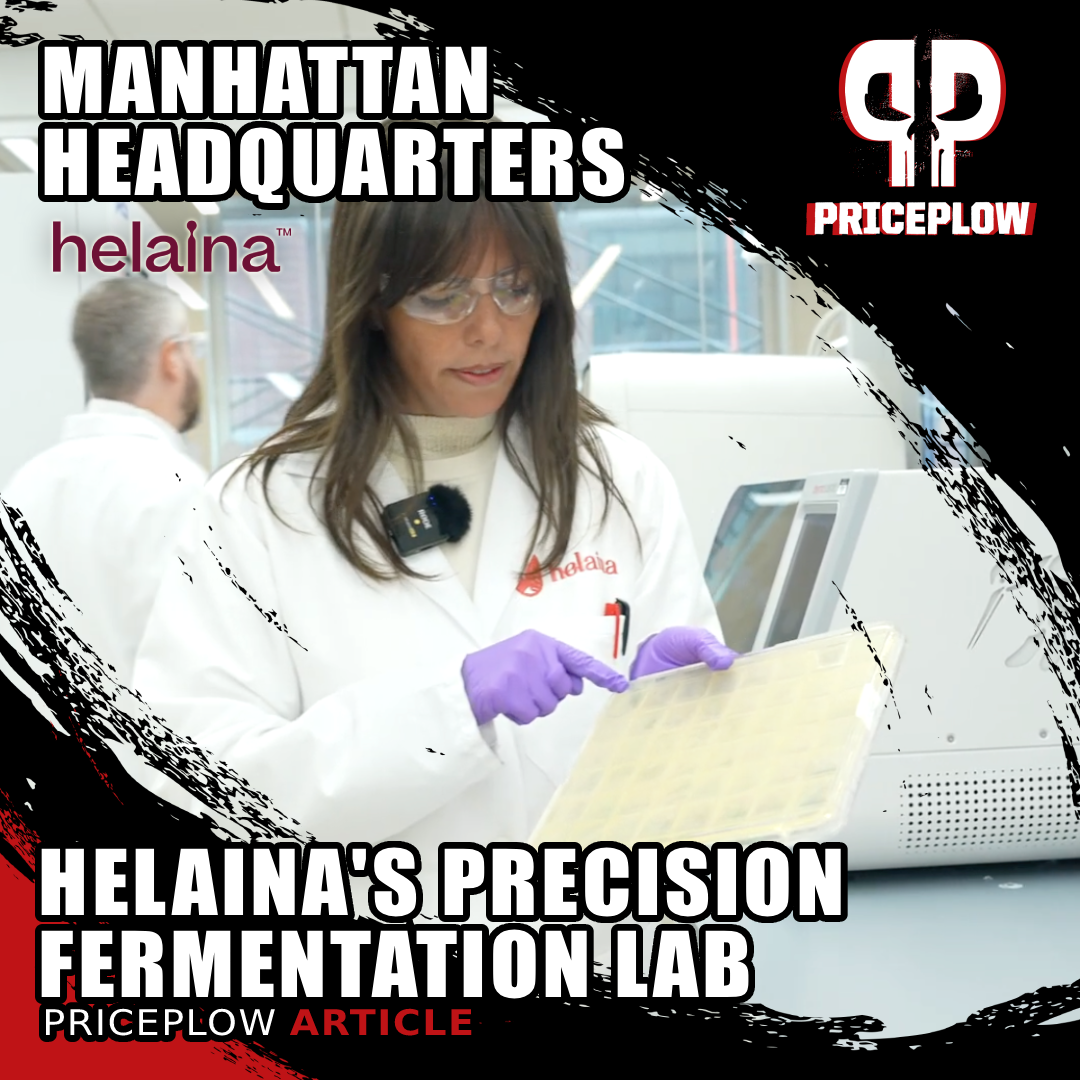
We went behind the scenes at Helaina's Manhattan lab to see how they make human-identical effera™ lactoferrin through precision fermentation.
Pam discovered Helaina through a LinkedIn post from Laura when her son was 10 months old. As a mother struggling with breastfeeding and having a large baby, she understood the importance of human milk proteins firsthand. With her expertise in yeast engineering and passion for making these proteins accessible, she flew her family from California to New York to join the mission. This personal connection to Helaina's purpose exemplifies the company culture (empathy in action), where scientific expertise meets genuine understanding of why this work matters. Her decision to relocate demonstrates the compelling nature of Helaina's mission to provide human bioactives for every baby and adult.
-
36:40 - Recent Clinical Data and Product Launches
Laura updates the audience on major developments since Episode #167 earlier in the summer. Multiple products containing effera have launched this year with several more coming to market soon. In two days from recording, the final patient would complete their current clinical study examining gut permeability in adults. Lactoferrin plays a crucial role in infant gut development, helping improve tight junction proteins that create gut integrity for the first time in sterile infant guts. Results from this adult study are expected later in 2025 for publication. Previous clinical work showed improved microbial diversity and short chain fatty acids in stool samples, building a compelling evidence base for effera's functional benefits beyond just iron homeostasis.
-
37:40 - Empathy as a Core Value
When asked about company culture, Laura immediately identifies empathy as Helaina's most important and challenging value to practice. The team includes people from diverse backgrounds and expertise areas (strain engineers, bioprocess engineers, screening specialists, sales, finance, food scientists, supply chain), requiring genuine effort to understand each person's constraints and perspective. Empathy enables the collaborative feedback loop that has driven real progress. This value extends to brand partnerships, where Helaina seeks companies that appreciate their scientific rigor and dedication. The concept resonates throughout the organization, from Pam's team dynamics to customer relationships to how they approach their mission of revolutionizing nutrition.
-
40:00 - The Story Behind Helaina's Wall of Women
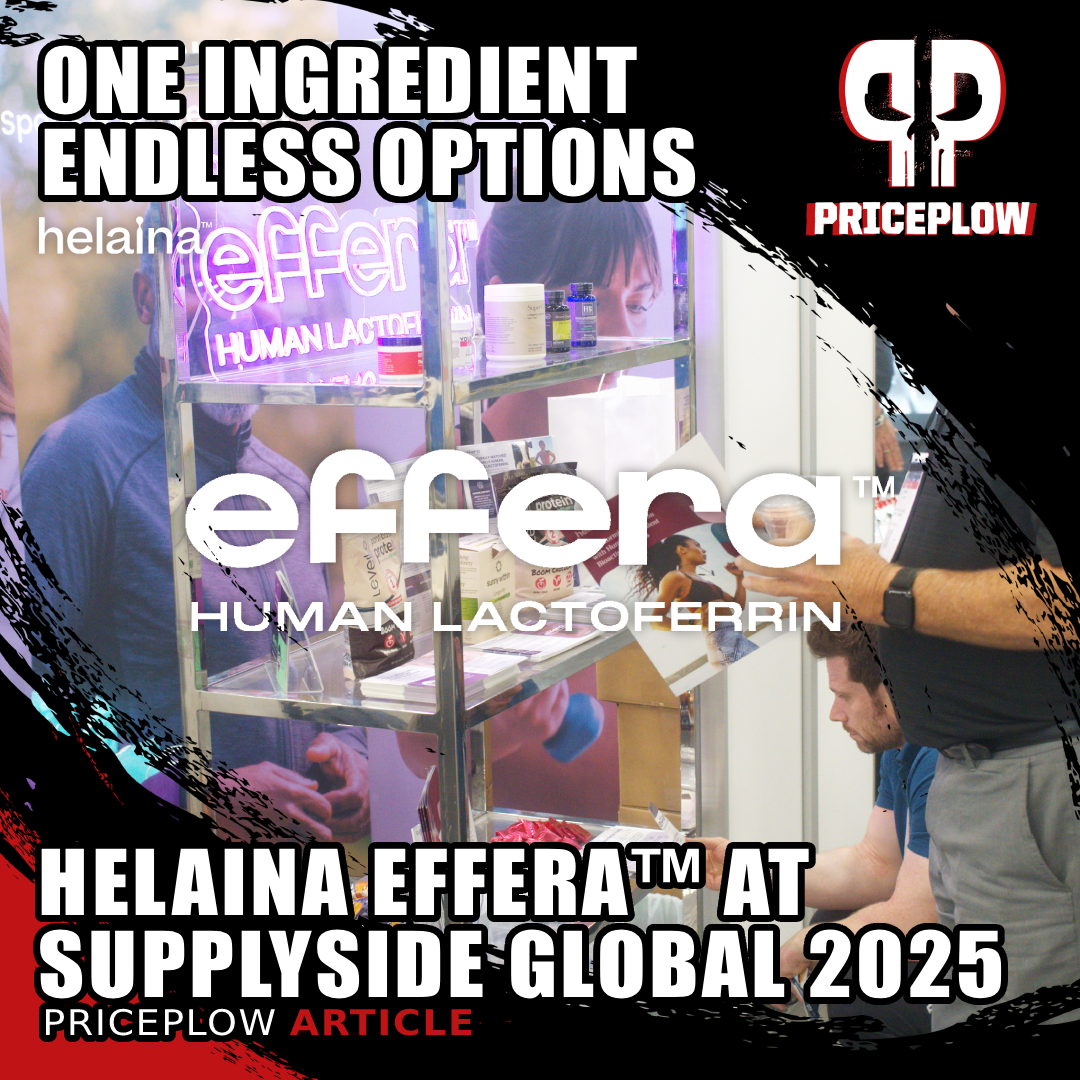
Helaina brought effera™ human-identical lactoferrin to SupplySide Global 2025 with three product concepts: protein bars for athletes, menopause-focused chocolates, and longevity bites. Plus two new commercial launches showing the ingredient's versatility.
The team discusses Helaina's distinctive "wall of women" featuring pioneering female scientists. This visual element reflects the company's values and leadership. Laura hired Pam when Helaina was just five people with minimal funding and limited proof of concept, demonstrating both companies' commitment to taking bold risks on talented individuals. Pam joining from California represented a significant personal and professional leap of faith. The decision paid off, as her team has been instrumental in driving effera's success. This story illustrates how purpose-driven companies attract passionate talent willing to make sacrifices to be part of something meaningful.
-
41:00 - The Landmark Alloimmunization Study
Laura shares one of Helaina's most significant moments: results from their clinical study comparing immune responses to effera versus bovine lactoferrin. The primary concern was whether human bodies would produce anti-lactoferrin antibodies (an alloimmune response) against effera since it was made by yeast rather than human mammary glands. Helaina hypothesized that human-equivalent structure would be recognized as "self" while bovine lactoferrin would trigger antibody production. They designed a three-arm study: two groups taking different effera doses and one group taking bovine lactoferrin. The study remained fully blinded until completion, meaning researchers saw antibody responses without knowing which group each participant belonged to.
-
44:00 - The Friday Evening Result
When results came back showing some participants had developed anti-lactoferrin antibodies, the team felt concerned since they didn't know if responses were distributed across all groups or concentrated in one. Laura was leaving the lab around 5 PM on a Friday when immunology director Anthony flagged her down to reveal the data had been unblinded: the antibody responses occurred exclusively in the bovine lactoferrin group. This moment vindicated Helaina's hypothesis that human bodies recognize effera as self while treating bovine lactoferrin as foreign. The result was groundbreaking because no published clinical study had ever directly compared alloimmune responses between human and bovine lactoferrin.
-
45:00 - Taking the Risk on Comparative Clinical Research
Dan DeMarino and Anthony Clark from Helaina dive deep into precision fermentation technology and effera™ human-equivalent lactoferrin, revealing how 5-week development cycles and machine learning models are revolutionizing bioactive protein production on Episode #180 of the PricePlow Podcast.
The alloimmunization study represented significant risk for Helaina. Industry advisors warned that directly comparing effera to bovine lactoferrin could expose the company to unfavorable results. However, Laura and the team believed that if they were building a company on the premise that human is better, they needed to prove it definitively with science. This willingness to subject their hypothesis to rigorous testing, even with potential downside, demonstrates genuine scientific integrity. The positive results validated their approach and provided unprecedented evidence for human lactoferrin's advantages, though the study required considerable courage to undertake when the outcome remained uncertain.
-
46:00 - Lab Space Constraints and Mindful Growth
The Manhattan facility is reaching capacity, with limited open space remaining as the team grows. Laura acknowledges they're maximizing every square foot to justify the expense of operating a lab in Midtown Manhattan, though the location offers significant advantages for recruiting talent and maintaining company culture. Rather than rushing to expand, Helaina is growing mindfully to avoid overextending like many startups do when gaining momentum. Laura's long-term vision includes an R&D facility with integrated office space and an on-site daycare where current employees' children could eventually work as teenage babysitters, creating a multi-generational community that reflects the company's family-focused mission.
-
47:45 - Building the Data Science Team
When asked about hiring needs, Pam identifies data scientists as the ideal addition to further leverage their extensive dataset. However, she praises the resourcefulness of current team members who step in to solve problems across disciplines. Helaina uses machine learning models they've developed internally along with cloud infrastructure rather than maintaining on-site servers. The team captures every pipetting operation and every data point from lab equipment into a structured data lake, enabling powerful querying and analysis. They leverage both enterprise-grade large language models and custom machine learning tools, plus academic models for predicting reaction efficiency without knowing specific organism details.
-
50:10 - AI-Assisted Hypothesis Generation
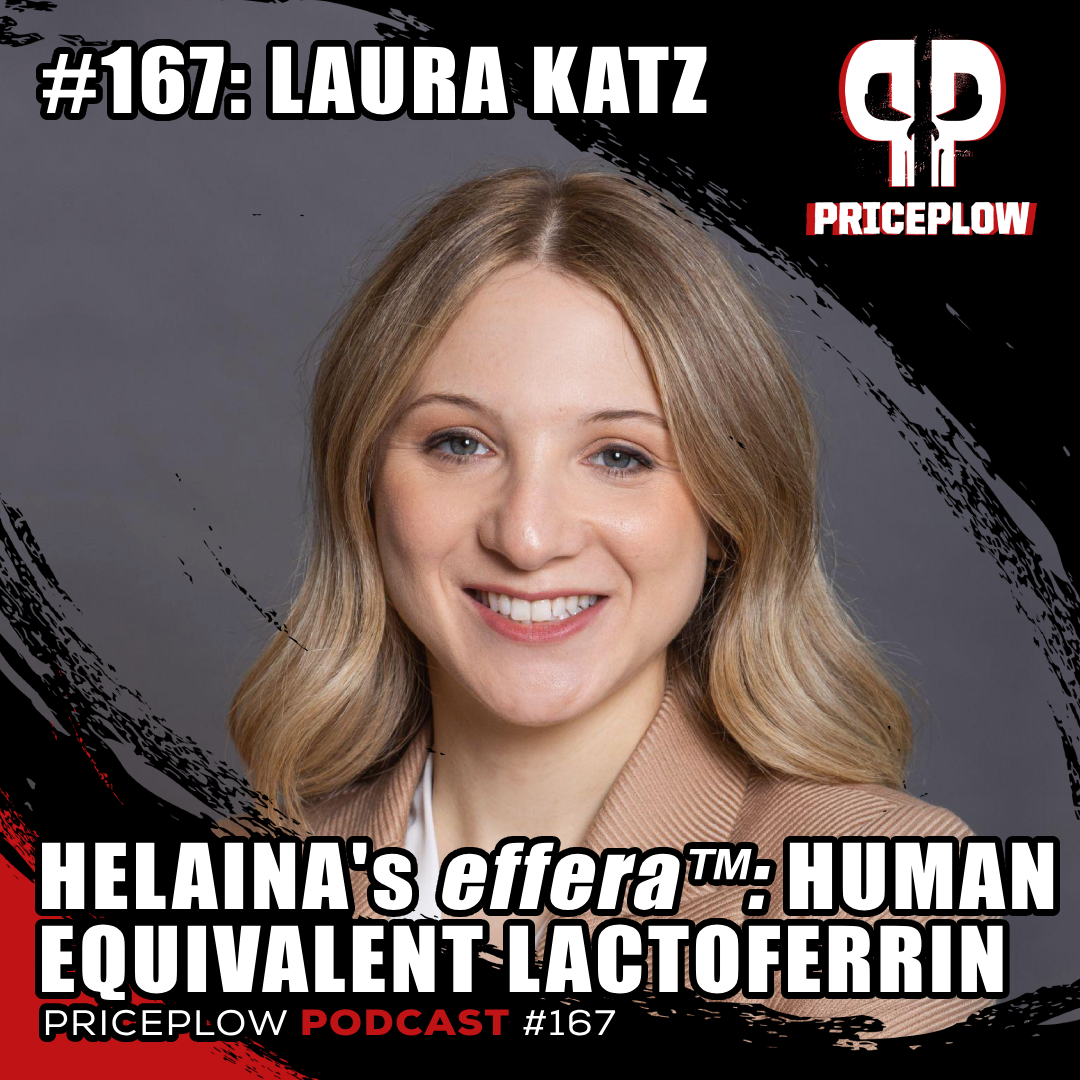
Laura Katz, founder and CEO of Helaina, discusses the revolutionary effera™ human-identical lactoferrin technology and precision fermentation platform on Episode #167 of the PricePlow Podcast.
Helaina uses artificial intelligence tools to generate and test diverse hypotheses about yeast optimization. Each of their 300 programs tested every five weeks represents a different hypothesis, drawing from published literature, proprietary machine learning models, and academic research. They intentionally leverage as many different model types as possible to maximize the diversity of approaches tested. This systematic exploration, powered by both human expertise and computational tools, allows them to test more ideas faster than manual hypothesis generation alone would permit. The integration of AI with human scientific insight represents the future of precision fermentation development.
-
50:50 - The Data Behind the Platform
Over 100 pieces of lab equipment operate around the clock in Helaina's facility, capturing data every few seconds throughout the day. This continuous data stream feeds directly into their infrastructure, creating an extraordinary volume of information about making human proteins through precision fermentation. This dataset isn't just about effera (it represents platform knowledge applicable to future proteins). The ability to query this structured data using natural language through large language models makes insights accessible to scientists without requiring specialized data science training. This democratization of data access accelerates innovation throughout the organization.
-
51:50 - Explaining Lactoferrin to a Friend
In a refreshingly accessible explanation, Laura describes lactoferrin as a protein found anywhere the human body has a microbiome: colostrum, breast milk, sweat, tears, saliva, and all secretions. Its primary role involves supporting immune health by managing iron transport, either moving iron where it needs to go or taking it away from pathogens trying to infect us. This mechanism builds the immune system, reduces inflammation, and improves overall iron homeostasis. effera differs from existing bovine lactoferrin because human bodies don't recognize cow proteins the same way. By designing effera to match human lactoferrin exactly, Helaina created a protein that bodies recognize and use as their own.
-
53:00 - The Ethics of Bovine Colostrum

The conversation touches on an important ethical consideration: conventional bovine lactoferrin and colostrum come from a mother cow's first milk meant for her calf. While the industry has operated this way for years, it raises questions about whether taking this critical early nutrition from calves represents the best approach. Laura's current breastfeeding experience gives her perspective on why mothers produce colostrum (it contains concentrated bioactives needed to establish infant health). The team acknowledges that while they appreciate the agricultural sector, precision fermentation offers an alternative that doesn't require taking resources meant for young animals. This ethical dimension adds another layer to effera's value proposition.
-
54:00 - Closing: Empathy and Excellence
The episode concludes with appreciation for Helaina's unique culture centered on empathy, a value uncommon in the sports nutrition space where PricePlow typically operates. Laura and Pam demonstrate how empathy enables collaboration across diverse scientific disciplines, drives authentic partnerships with brands, and ultimately supports the mission of revolutionizing nutrition through human bioactive proteins. The team's willingness to take scientific risks, invest in rigorous clinical research, and maintain transparency about their process sets a standard for the precision fermentation industry. This episode captures both the sophisticated science and the human elements driving effera's transformation of the lactoferrin category.
Where to Find Laura Katz, Pamela Besada-Lombana, and Helaina
- Laura Katz on LinkedIn: https://www.linkedin.com/in/laurahkatz/
- Pamela Besada-Lombana on LinkedIn: https://www.linkedin.com/in/pamela-b-besada-lombana/
- Helaina Website: https://www.myhelaina.com/
- Subscribe for Helaina News on PricePlow: https://www.priceplow.com/helaina
- Learn About effera Lactoferrin: effera™: Revolutionary Human-Equivalent Lactoferrin Goes Beyond Bovine
- Read About the Alloimmunization Study: The Landmark Lactoferrin Trial That Changed Everything
- Watch the Lab Tour: Inside Helaina's Manhattan Lab: A Deep Dive into Precision Fermentation
Thank you to Laura and Pam for welcoming us into Helaina's remarkable Manhattan facility and sharing both the scientific depth and human stories behind effera. We're grateful for their transparency in discussing everything from yeast engineering challenges to clinical study anxieties, and for demonstrating what empathy-driven innovation looks like in the precision fermentation space. Their willingness to take scientific risks through comparative clinical trials sets an example for the entire industry.
Subscribe to the PricePlow Podcast on any platform, sign up for Helaina news on PricePlow, and leave us a great review on iTunes and Spotify!
Subscribe to the PricePlow Podcast on Your Favorite Service (RSS)
Apple Podcasts
Spotify
YouTube


Comments and Discussion (Powered by the PricePlow Forum)