In today's installment of our Formulator's Corner series, we design a hypothetical high-protein snack (protein power balls) built around a clinically studied peptide ingredient and a surprisingly complete muscle support stack. Will a forward-thinking brand bring this to market?
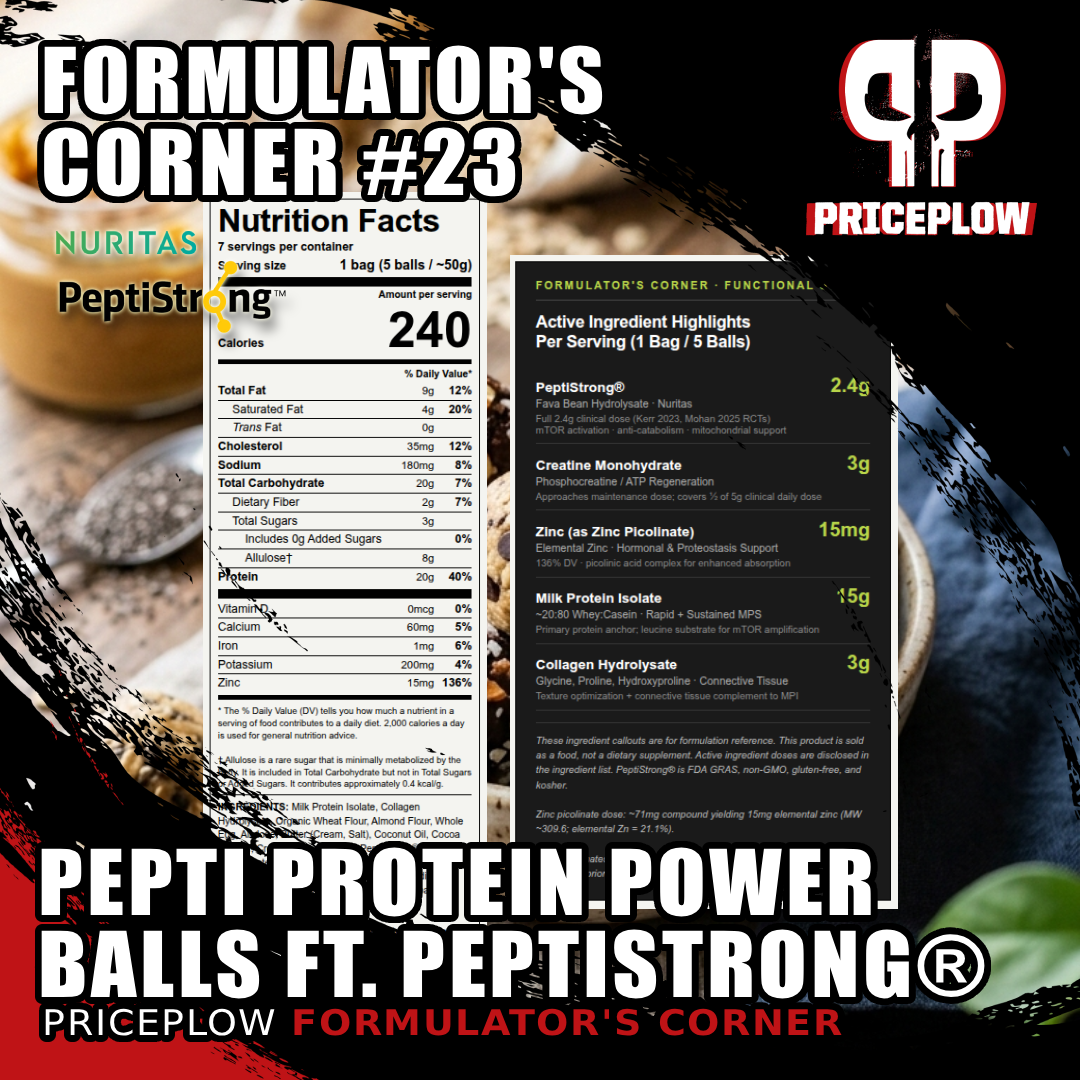
What if your morning snack worked like a recovery formula? In Formulator's Corner #23, we design a hypothetical high-protein power ball built around PeptiStrong® and a surprisingly complete muscle support stack. Will a forward-thinking brand bring this to market?
Nuritas is heading to Natural Products Expo West 2026 with something we haven't seen before: PeptiStrong® formulated into a drinkable yogurt. It's a smart move: yogurt is a familiar, trusted format that consumers already reach for when they want protein and gut health together. Putting a clinically studied muscle-support peptide into that vehicle makes the science feel approachable rather than intimidating.
But if yogurt is the spoon, what's going with it? Can you dip something more into it? In our perfect world, we'd reach for a protein power ball.
That's the premise here. Nuritas is expanding PeptiStrong® into everyday food formats, and nothing pairs better with a morning yogurt than a protein-dense, portable snack you can grab without thinking twice. The functional food conversation has always been stuck in the same tired territory: protein bars loaded with sugar alcohols, chalky bites with dubious ingredient lists, or clean-label snacks that deliver no meaningful dose of anything functional.
Consumers want real nutrition in real food. Brands keep underdelivering on one or the other. What if we made a snack that genuinely did both?
Pepti Protein Power Balls: A High-Protein Functional Snack
At the center of this concept is PeptiStrong®, the clinically studied fava bean hydrolysate developed by Nuritas using AI-guided peptide discovery. PeptiStrong® isn't a protein source in the traditional sense. While it doesn't contribute meaningful amounts of protein to the formula, it more importantly signals your cells to use protein more efficiently. That distinction matters for a snack that already delivers ~20g of protein per serving: you're not just stacking macros, you're amplifying the body's anabolic response to those macros.
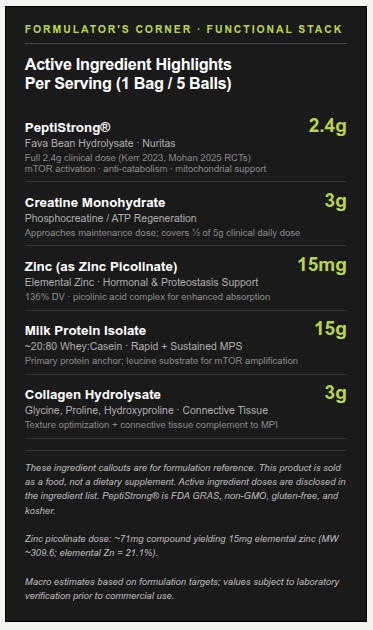
We're pairing PeptiStrong® at its full 2.4g clinical dose with creatine monohydrate, a protein blend from milk protein isolate and hydrolyzed collagen, and some zinc, making for a lean but purposeful supporting cast. The result is a snack that looks and tastes like something you'd actually want to eat, but works like a recovery formula baked into your breakfast.
Before we break down the science, sign up for PricePlow's Nuritas and PeptiStrong® news alerts so you don't miss updates on this ingredient and what's coming next:
Subscribe to PricePlow's Newsletter and Alerts on These Topics
The Formula: Muscle Science Meets Everyday Snacking
A formula like this lives or dies on its hero ingredient. Everything else in the stack earns its place by complementing what PeptiStrong® does at the cellular level, and by delivering the protein payload that gives the powerful ingredient something to work with.
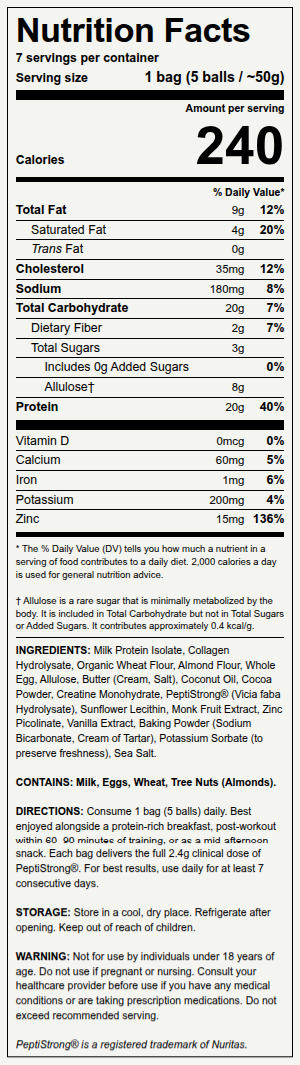
Each power ball weighs approximately 10g and delivers about 4g of protein. A single serving is one bag of five balls: roughly 50g of food, ~20g of protein, and the full 2.4g clinical dose of PeptiStrong® distributed across the serving. Formulators could size balls up or down, but five per bag at this weight is a sensible starting point for a portable, individually packaged snack.
We'd also provide a week's supply as a box of seven bags, to be eaten one per day, which you'll see is supported by a new unpublished case study Nuritas has done.
Estimated Nutrition Per Serving (1 bag / 5 balls, ~50g):
-
Calories: ~240
-
Protein: ~20g
-
Carbohydrates: ~20g
-
Fat: ~9g
-
PeptiStrong® (2.4g): The Anabolic Signal
PeptiStrong® is a hydrolyzed fava bean (Vicia faba) protein hydrolysate developed by Nuritas, an Irish biotech company that uses proprietary AI platforms to identify bioactive peptides from plant and natural food sources. What sets PeptiStrong apart from a conventional plant protein is that it was specifically selected, from millions of candidate peptides, for its ability to activate muscle-building and muscle-preservation pathways in human cells.
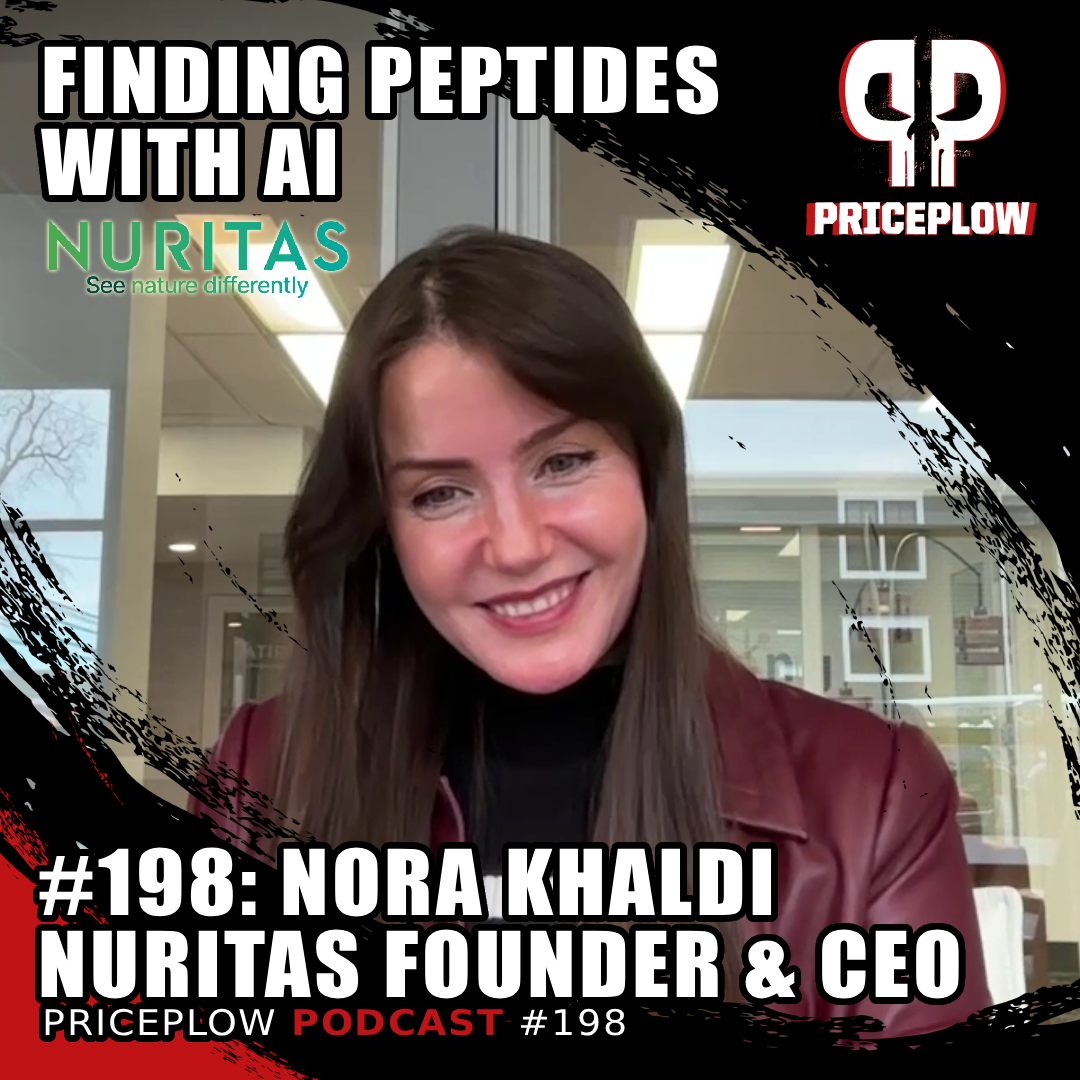
You can read our full breakdown in our PeptiStrong ingredient deep dive, and hear directly from Nuritas founder Nora Khaldi in Episode #198 on our podcast, as well as the earlier PeptiStrong overview podcast with Neil Foster.
How PeptiStrong Works: Three Synergistic Mechanisms
PeptiStrong affects muscle health through three distinct but complementary modes of action, which is why it can serve multiple product positioning angles simultaneously.
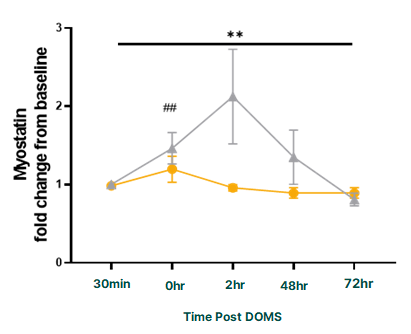
- Mechanism 1: Reducing muscle breakdown. PeptiStrong suppresses myostatin, a protein that actively limits muscle growth, while also modulating Atrogin-1 and MuRF1, two key enzymes in the ubiquitin-proteasome pathway responsible for tagging muscle proteins for degradation. By dialing back this breakdown signal, PeptiStrong helps preserve muscle mass that would otherwise be lost during periods of stress, recovery, or low activity.[1][2]
- Mechanism 2: Stimulating muscle protein synthesis. The peptides in PeptiStrong activate the mTOR (mechanistic target of rapamycin) pathway and downstream Phospho-S6 signaling, the same anabolic cascade triggered by leucine and resistance exercise. This drives increased rates of muscle protein synthesis, effectively telling your cells to build more muscle tissue.[1][2]
- Mechanism 3: Supporting cellular energy production. Preclinical data shows PeptiStrong increases mitochondrial mass and activity, supporting the energy infrastructure your muscle cells need to perform and recover consistently.
Together, these three mechanisms make PeptiStrong a genuinely different category of ingredient: not just a substrate for muscle building, but an active signal that improves how your body uses the protein it receives.

Clinical Validation
Three human randomized controlled trials have studied PeptiStrong across different populations and contexts.
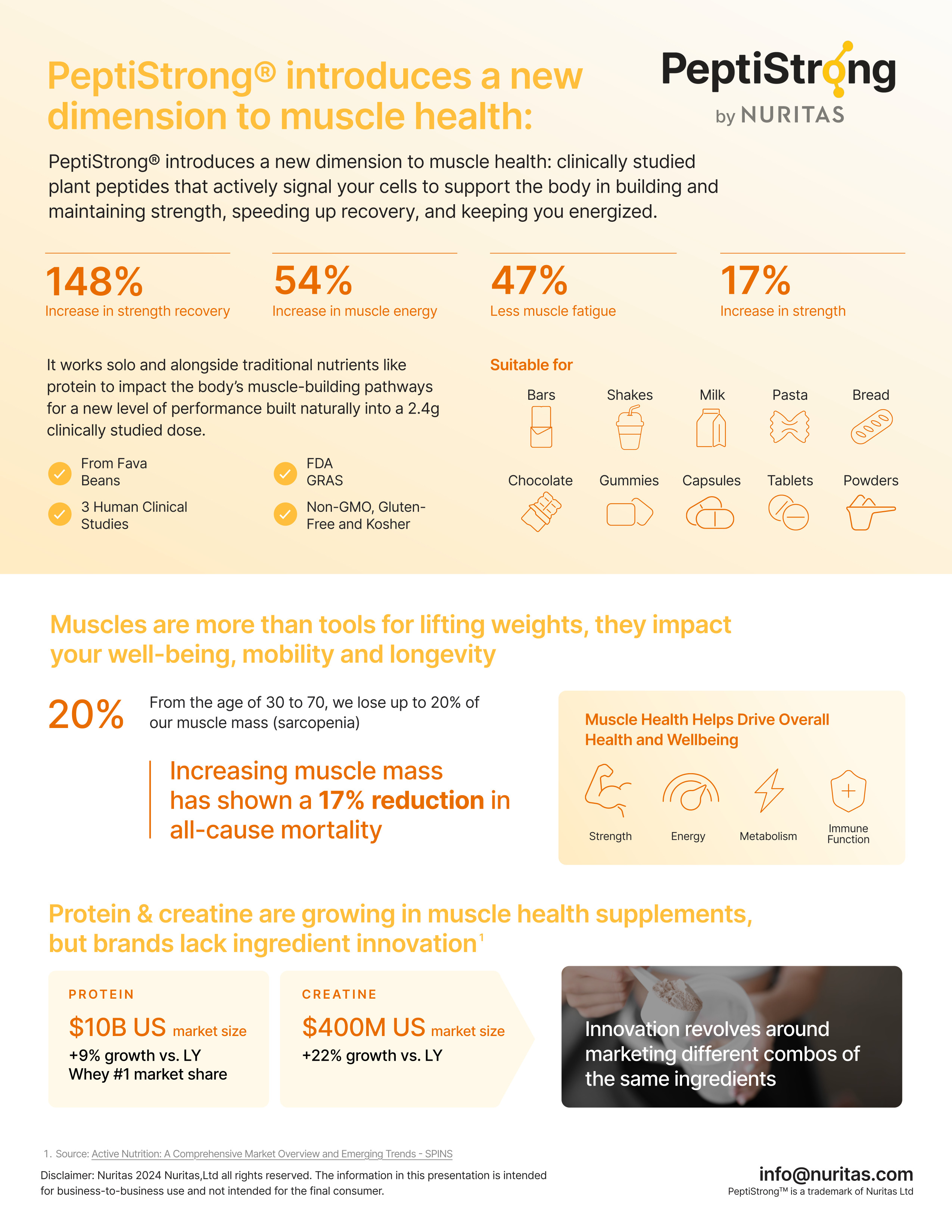
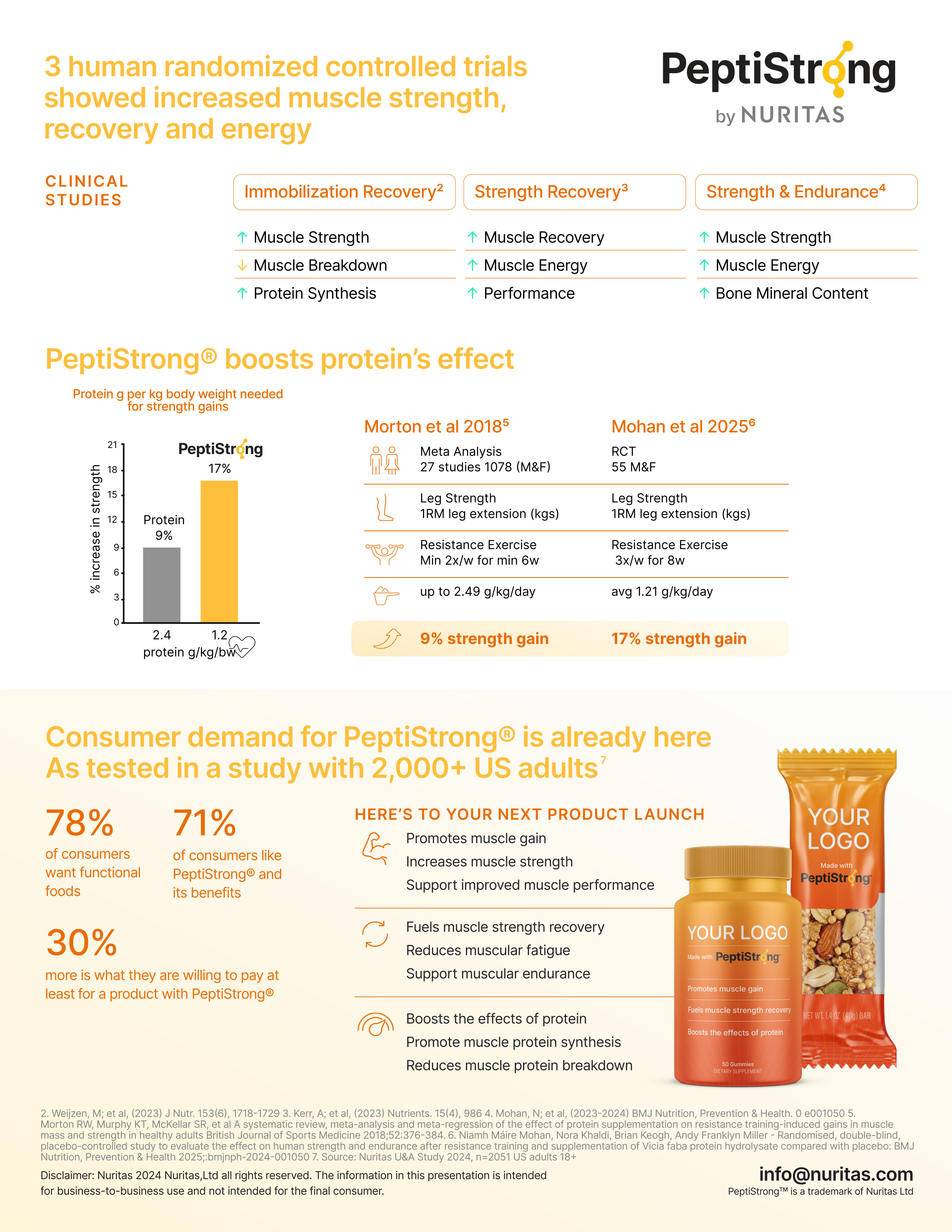
- Kerr et al. (2023) conducted a 17-day crossover study in 30 healthy males supplementing 2.4g per day. Subjects using PeptiStrong showed 148% greater strength recovery, 54% more muscle energy, and 47% less fatigue compared to placebo, with plasma myostatin significantly suppressed at the 48 and 72-hour timepoints.[3]
- Mohan et al. (2025) ran a double-blind, placebo-controlled RCT over 56 days with 72 male and female participants performing resistance training three times per week. The PeptiStrong group achieved a 17% increase in leg strength (1RM leg extension) compared to 9% in the placebo group, nearly double the strength gains from training alone at comparable protein intakes. The PeptiStrong group also performed double the reps to exhaustion at 80% of their 1RM by the end of the study.[4]
- Weijzen et al. (2023) used a different model: 30 healthy young males were immobilized for six days and then remobilized over 14 days, supplementing a much higher dose of 20g per day of PeptiStrong protein hydrolysate as a primary protein source rather than at the 2.4g bioactive dose used here.[5]
That context differs significantly from this formula, where PeptiStrong is serving as a peptide signal alongside ~18g of protein from milk protein isolate and other food ingredients. Still, the study showed elevated muscle protein synthesis rates during the recovery phase, supporting the view that PeptiStrong peptides contribute to recovery signaling across dose ranges.
7 Day Case Study: The Kildare Lilywhites Gaelic Football Club
Beyond the RCTs, Nuritas conducted a 7-day team case study with the Kildare Lilywhites Gaelic football club. Twenty healthy male athletes (aged 18 to 35) took 2.4g of PeptiStrong daily, with the acute dose administered 30 minutes before countermovement jump testing on day one. This was an unpublished case study rather than a randomized controlled trial, so the observations should be interpreted accordingly and no formal performance claims follow from it.

Nuritas used AI to discover PeptiStrong, a fava bean peptide network that activates mTOR and significantly boosts muscle strength, recovery, and endurance. Three human trials back the 2.4g dose. This is how AI is transforming supplement research.
That said, the athletes who used PeptiStrong showed observed improvements in jump height, explosive ability, and concentric impulse relative to the control group over the seven-day window. It also mirrors a concept worth building on for this snack: a one-week box of seven individually bagged servings could represent a meaningful and trackable trial period for a new customer.
Taken together, the data shows PeptiStrong® working in multiple contexts: active training adaptations, acute recovery windows, and longer-term muscle preservation.
What this also means for us is that we'd package these Pepti Protein Power Balls with at least 7 servings total in the box, each with a bag containing one serving as labeled here.
Dosing Rationale
2.4g is the clinically studied dose in both the Kerr 2023 and Mohan 2025 trials, and it's the dose Nuritas uses across its commercial messaging. There's no reason to go below this threshold. In a food format like protein power balls, 2.4g integrates cleanly into the batch without affecting taste or texture, especially after we add our flavoring and sweetener.
Additionally, if you were to mix this with something like a drinkable yogurt with PeptiStrong®, you'd get even more of the active ingredient!
-
Milk Protein Isolate (10g to 15g): The Protein Foundation
Milk protein isolate delivers the natural whey-to-casein ratio found in bovine milk (roughly 20:80), combining a "fast" and "slow" protein fraction in a single ingredient. Whey drives rapid aminoacidemia and an acute spike in muscle protein synthesis (MPS), while casein digests slowly, sustaining elevated blood amino acids for several hours and attenuating protein breakdown.[6] In a rat model, milk protein's area under the FSR curve (534.61) exceeded both whey (473.46) and caseinate (498.22) alone, supporting the idea that the combined fraction prolongs the synthetic response better than either in isolation.[6]

PeptiStrong, a fava bean-derived peptide network, delivers 148% improved recovery, 54% more muscle energy, and 47% less fatigue at 2.4g daily. Works across multiple formats with FDA GRAS status and three human clinical trials backing efficacy.
That sustained aminoacidemia matters here because PeptiStrong's mTOR amplification needs amino acid substrate (especially leucine) to translate signaling into actual synthesis. MPI's leucine content makes it the logical protein anchor for this formula. In a 12-week resistance training trial, chronic post-exercise milk consumption produced significantly greater lean mass and Type II muscle fiber gains than isonitrogenous soy or carbohydrate controls.[7]
In vitro data from Nuritas also shows that combining PeptiStrong with leucine at otherwise inactive doses generates more rpS6 phosphorylation (a downstream marker of protein synthesis) than either ingredient alone, in both young and aged human cells. In plain terms: the peptides amplify leucine's anabolic signal.
At 10g to 15g per serving (with exact dosage depending on how much collagen and egg used) contributing the majority of this snack's ~20g protein target, MPI sits in the dose range research identifies as effective for supporting myofibrillar protein synthesis post-exercise in younger adults.[8]
So a snack that delivers ~20g of protein alongside 2.4g of PeptiStrong isn't just additive; the cellular response to that protein should be meaningfully greater.
-
Creatine Monohydrate (3g): Cellular Energy Currency
Creatine monohydrate is the most researched performance ingredient in sports nutrition, with decades of human trials supporting its safety and efficacy.[9] It works by saturating muscle tissue with phosphocreatine, the rapid-turnover substrate your cells use to regenerate ATP during high-intensity efforts. When phosphocreatine stores are higher, you can sustain peak output longer before fatigue sets in.[10]
PeptiStrong clinical data shows 17% strength gains while amplifying protein's effectiveness at lower doses. Consumer research reveals 78% want functional foods and 71% are interested in PeptiStrong specifically, supporting a 30% price premium.
Over time, that translates into meaningful training adaptations. A systematic review with meta-analysis found creatine supplementation combined with resistance training produced significantly greater lean tissue gains than training alone.[11]
At 3g per serving, this formula approaches the standard maintenance range. Daily consumption accumulates toward full muscle saturation, and two servings per day covers the clinical dose entirely. The ATP regeneration creatine supports pairs naturally with PeptiStrong's mitochondrial support: creatine handles the immediate energy burst, while PeptiStrong's mitochondrial activity helps sustain output over longer efforts and recovery windows.
(Formulators could push this to 5g for a full clinical daily dose if serving size allows, but 3g is a solid single-serving contribution that leaves room for additional creatine use.)
-
Collagen Hydrolysate (3g to 5g): Texture, Structure, and Connective Tissue Support
Collagen hydrolysate earns its place in this formula on two levels. First, practically: at 3g to 5g per serving, hydrolyzed collagen improves moisture retention and bite texture in baked snacks in ways that whey or casein fractions don't. It's a formulator-friendly ingredient that makes the eating experience better without disrupting the protein or flavor targets.
The secondary benefit is real, if modest at this dose. Collagen's distinctive amino acid signature (being roughly one-third glycine with substantial proline and hydroxyproline) supplies raw material for connective tissue maintenance that milk protein isolate simply doesn't cover.[12] A 24-week study in athletes with activity-related joint discomfort found collagen hydrolysate supplementation may help support joint comfort during training.[13]

PeptiStrong's effect on myostatin, a protein that inhibits muscle growth.[3]
At 3g to 5g, this isn't a therapeutic joint dose -- it's a complement to the MPI-dominant protein stack, covering connective tissue needs that complete proteins leave unaddressed.
-
Zinc Picolinate (15mg): Micronutrient Foundation
Zinc picolinate delivers elemental zinc bound to picolinic acid, a metabolite your body produces naturally during tryptophan metabolism. That pairing matters because picolinic acid acts as a transport ligand in the intestine, improving zinc absorption over inorganic forms like zinc oxide.
At 15mg (roughly 136% of the daily value), this dose targets the hormonal and structural side of muscle health. Zinc is a cofactor in hundreds of enzymatic reactions, and it plays a direct role in supporting normal testosterone production. In a controlled study, marginal zinc deficiency correlated with reduced serum testosterone in both young and elderly men, and supplementation in marginally deficient individuals helped restore levels.[14] That hormonal environment shapes how well your body responds to the protein and PeptiStrong signals in every serving.
Zinc also supports proteostasis, the balance of muscle protein synthesis and breakdown your cells manage continuously. Exercise shifts zinc distribution across tissues, and athletes with suboptimal status show measurable effects on both health markers and training adaptation.[15] At 15mg daily from a food source, this formula helps keep that foundation covered.
-
Food and Texture Ingredients
Nora Khaldi, founder and CEO of Nuritas, discusses AI-powered peptide discovery, clinical validation, and the science behind PeptiStrong, PeptiSleep, PeptiYouth, and PeptiControl on Episode #198 of the PricePlow Podcast.
The dough base of these power balls comes from a blend of organic wheat and almond flour, whole egg, and added fats from butter and coconut oil, which together deliver the structural integrity and fat content that make the format work.
Natural flavors centered on cocoa (with added vanilla) define the eating experience.
Allulose and monk fruit extract provide sweetness without meaningfully impacting blood sugar. Sunflower lecithin serves as an emulsifier for texture consistency, potassium sorbate handles shelf stability, and baking powder and salt complete the base.
These are functional baking decisions as much as nutritional ones. They exist to make a product consumers want to eat every day, not just tolerate in service of their macros.
Synergistic Effects: Signal, Supply, and Energy
-
mTOR Amplification: PeptiStrong + Milk Protein Isolate
The most direct synergy in this formula is between PeptiStrong's peptide signaling and the leucine supplied by milk protein isolate. Leucine activates mTOR by binding to Sestrin2 and releasing its inhibition of the GATOR1 complex. PeptiStrong appears to enhance this downstream signaling, and in vitro data shows that combining PeptiStrong with leucine drives more rpS6 phosphorylation than leucine alone. A high-leucine protein like MPI at 10g to 15g per serving gives PeptiStrong a meaningful substrate to work with, producing a combined anabolic signal that exceeds what either delivers independently.[1]
-
Energy and Endurance: PeptiStrong + Creatine Monohydrate

PeptiStrong's mitochondrial support and creatine's ATP regeneration address cellular energy through two distinct but complementary pathways. Creatine buffers phosphocreatine stores for explosive, short-duration efforts. PeptiStrong's support for mitochondrial mass and activity operates over longer training bouts and recovery windows. Together, they cover both the acute and the sustained dimensions of muscular energy, a gap no single ingredient in this stack fills alone.[3]
-
Recovery and Tissue Integrity: PeptiStrong + Collagen Hydrolysate
PeptiStrong addresses muscle tissue preservation through the myostatin and ubiquitin-proteasome pathway. Collagen covers the connective tissue layer: tendons, ligaments, and the extracellular matrix that muscles depend on for structural support. These are genuinely different recovery targets. Training stress tears down both. A formula that supports rebuilding both makes sense for anyone training consistently.[5]
-
Hormonal and Anabolic Support: Zinc Picolinate + the Full Stack
Zinc underpins the hormonal environment in which the rest of this formula does its work. Adequate zinc supports normal testosterone levels and IGF-1 responsiveness, both of which influence how effectively muscle protein synthesis rates respond to training and nutrition. Supplementing 15mg of zinc picolinate in a daily snack is a low-cost insurance policy on the hormonal signaling that amplifies everything else in this formula.
Dosage and Usage Protocol
These power balls are designed as a daily, flexible-timing snack rather than a strict pre- or post-workout product. The most practical use cases:
Neil Foster of Nuritas joins the PricePlow Podcast to discuss PeptiStrong, the natural pro-anabolic peptide network for muscle growth and recovery
- Morning alongside yogurt (the Nuritas pairing concept) for a sustained protein and muscle-support start to the day
- Post-workout, within 60 to 90 minutes of training, to deliver protein and creatine into the recovery window
- Mid-afternoon, as a high-satiety snack that replaces energy-dense but nutritionally hollow alternatives
At 2.4g PeptiStrong, you're hitting the full clinical dose in a single serving.
Who Should Use This Formula
- Active individuals who want functional nutrition built into everyday eating, not just their supplement stack
- Resistance training athletes who are already using protein powder and want a food-format way to add PeptiStrong and creatine
- Healthy aging consumers (40+) focused on maintaining strength and muscle mass as a long-term strategy
- GLP-1 users or anyone in a caloric deficit who wants to preserve lean mass while managing overall intake
- Brand formulators and food innovators looking for a PeptiStrong application beyond powders and capsules
Safety Considerations
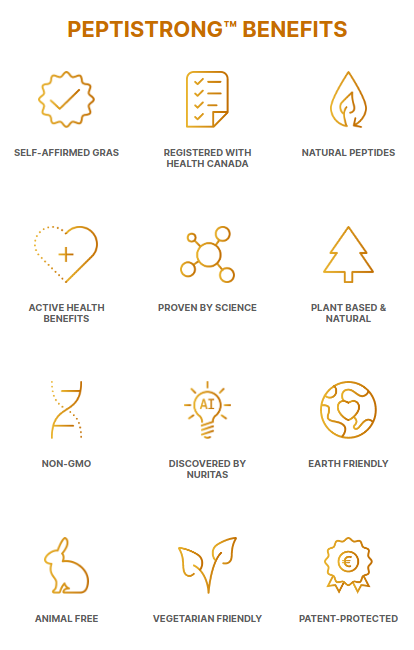
PeptiStrong is FDA GRAS, non-GMO, gluten-free, and kosher. At the 2.4g clinical dose, it has shown a clean safety profile across all three human RCTs. Creatine monohydrate has an extensive safety record with no meaningful adverse effects at the doses used here. This formula contains dairy (milk protein isolate, butter) and eggs, which are relevant allergen disclosures for the label.
Conclusion: The Snack the Functional Food Aisle Has Been Missing
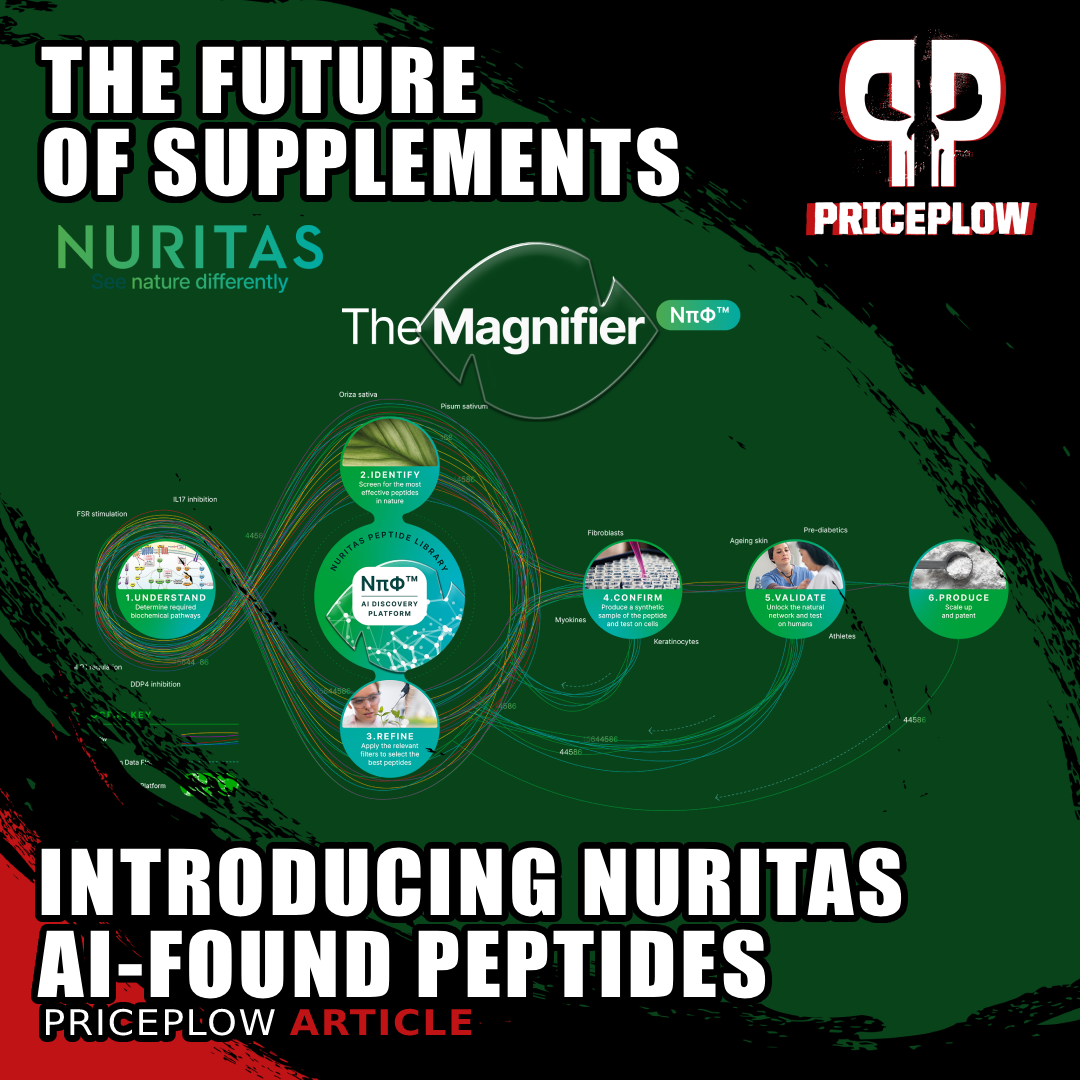
Nuritas uses artificial intelligence to discover peptide ingredients that couldn't exist without AI. PeptiStrong® boosts muscle recovery by 144%. PeptiSleep™ adds 38 minutes of sleep per night. Both backed by clinical trials.
Nuritas is already showing the industry what's possible. Their Expo West 2026 PeptiStrong yogurt prototype makes the point clearly: PeptiStrong belongs in food formats that consumers eat without thinking about supplementation. The yogurt is a brilliant starting point. Protein power balls are the natural companion.
What this formula does is stack intentionally. The 2.4g of PeptiStrong® is doing something none of the other ingredients can do: it signals the body to build and preserve muscle tissue more efficiently. The milk protein isolate gives those signals something to act on. Creatine handles the energy side. Collagen covers connective tissue and improves product texture. Zinc shores up the hormonal foundation. At roughly 20g protein, 20g carbohydrates, and 9g fat per serving, this is a snack that earns its place in a performance nutrition context without looking like one.
It's all available and ready to go... all that's missing is a food brand willing to put real clinical science into a format that consumers already reach for every day.
For brands ready to move beyond the protein bar status quo, the starting point is PeptiStrong®. For the full science background, we strongly recommend listening to our conversation with conversation with Nora Khaldi, CEO and founder of Nuritas.


Comments and Discussion (Powered by the PricePlow Forum)