On a Supplement Facts panel, whey protein always gets reduced to a single number: 26g protein. That's useful, but it leaves out a lot of biology.
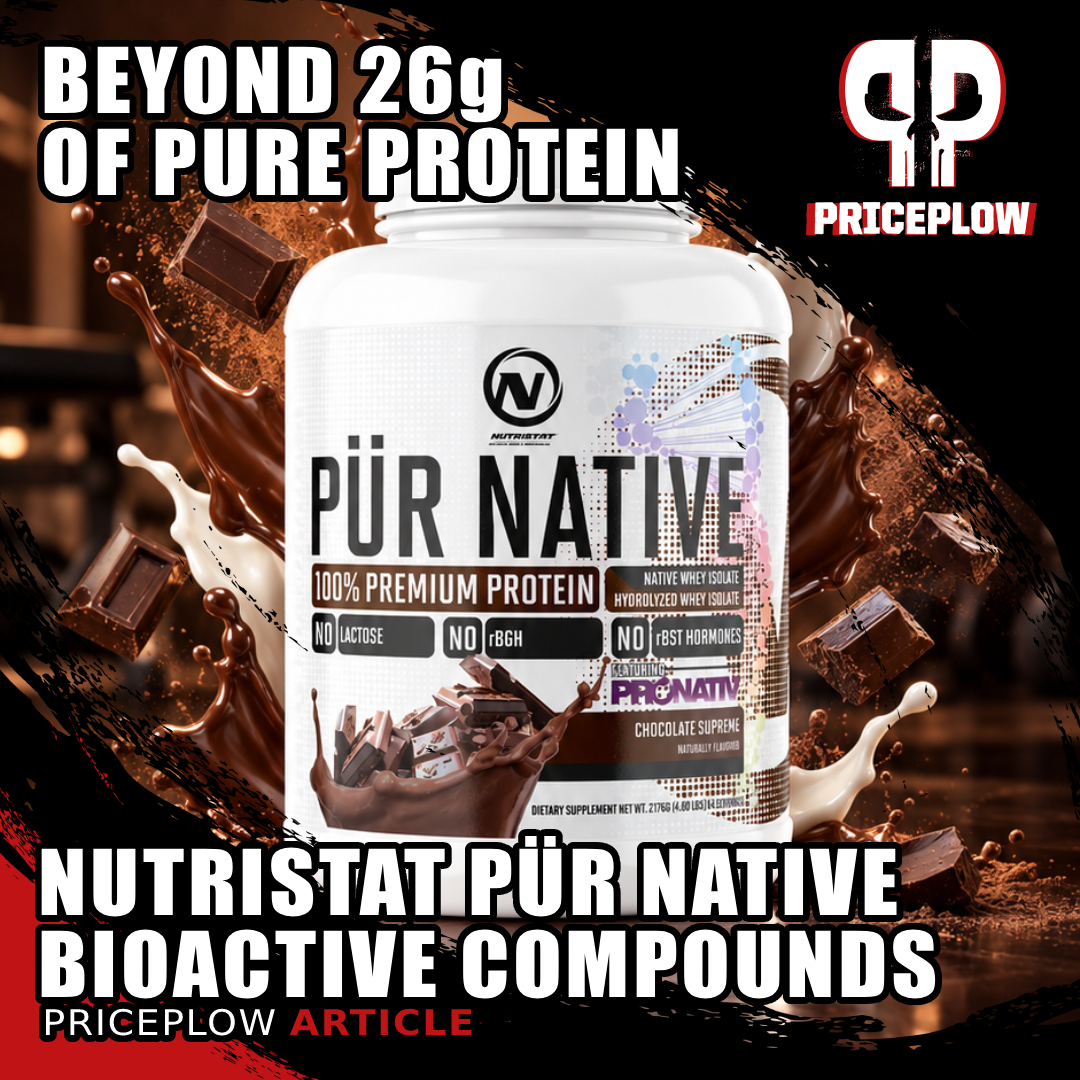
Whey isn't one protein. Inside PÜR NATIVE's native whey are four distinct proteins plus hydrolyzed peptides that go well beyond the 26g on the label.
Milk doesn't contain one generic substance called "protein", and even "whey protein" is a fairly generic term. Its whey fraction is made of distinct proteins, including beta-lactoglobulin, alpha-lactalbumin, lactoferrin, and immunoglobulins, each with its own structure, amino acid makeup, and job to do. Digestion, or manufacturing, can also cleave smaller peptides out of these proteins, adding a third layer to the story.
We've already covered why Nutristat's PÜR NATIVE starts with whey separated directly from milk, and we've gone deep on its amino acid profile, leucine content, and native whey processing. Our Native Whey Protein Ultimate Guide takes that processing story even further.
This time, we're going beyond leucine and treating whey the way it actually exists: not one ingredient, but a mixture of distinct proteins in a shared liquid, plus whatever peptides get released as those proteins are broken down. What else is actually inside whey, what does each piece do, and why does PÜR NATIVE's combination of native whey isolate and hydrolyzed native whey make the story more interesting than a single protein number? Before digging in, see PricePlow price comparisons and availability, and then it's time to explore the science:
Nutristat PÜR NATIVE – Deals and Price Drop Alerts
Get Price Alerts
No spam, no scams.
Disclosure: PricePlow relies on pricing from stores with which we have a business relationship. We work hard to keep pricing current, but you may find a better offer.
Posts are sponsored in part by the retailers and/or brands listed on this page.
This area is reserved for Team PricePlow's upcoming videos.
Subscribe to our channel and sign up for notifications so you catch it when it goes live!

Meet the Proteins in the Soup
Milk protein splits into two families: casein, which accounts for roughly 80% of it, and whey, the fraction that stays dissolved when casein curdles out. Native whey processing, the technology behind PÜR NATIVE, separates that whey fraction directly from milk instead of waiting for cheesemaking to do it, which is why the proteins inside arrive closer to their original, undamaged shape.[1] It's closer to the source than traditional whey protein powder since it's not a mere byproduct of the cheese production, so there's less harsh treatment. It's whey that was targeted for the whey.
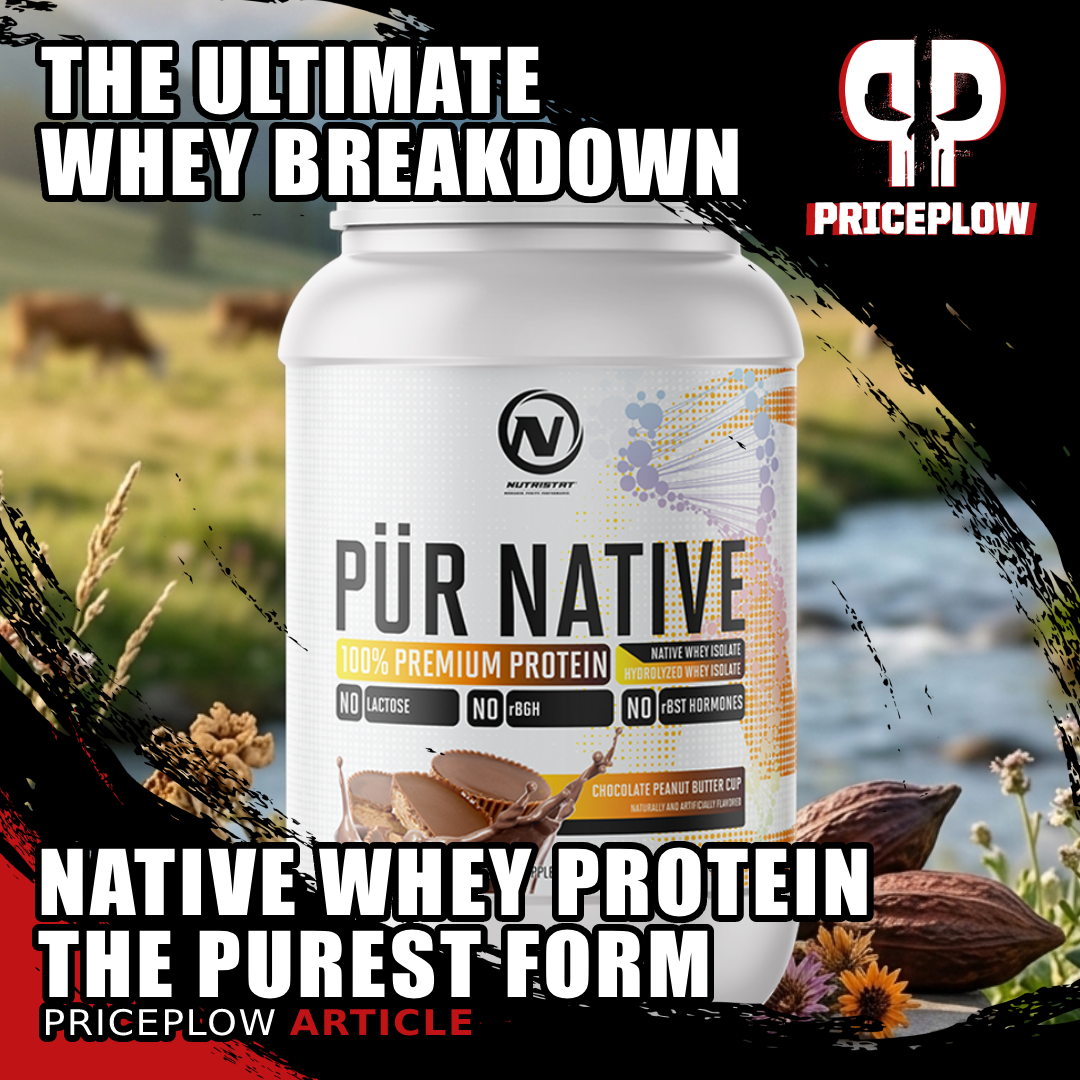
Most whey protein is a cheese byproduct. Native whey skips that process entirely -- filtered from fresh milk with more leucine, intact bioactive fractions, and real digestibility benefits.
But that whey fraction isn't one protein, and the mix isn't evenly split. Beta-lactoglobulin does most of the heavy lifting by mass, making up roughly 45% to 57% of total whey protein. Alpha-lactalbumin is a distant second, and lactoferrin and immunoglobulins are minor components by weight, sometimes barely measurable in a standard whey isolate.[2] That imbalance isn't an accident of nature. A mammary gland does two jobs at once: feed the offspring and protect it. The abundant proteins are built to supply amino acids in bulk. The minor ones are built to do specific defensive or regulatory work, and they don't need to be abundant to matter, the same way a hormone doesn't need to outweigh the blood it circulates in to change how a body functions.
Three Levels within Whey Protein
It helps to think about whey on three levels:[1]
- First are the amino acids, the building blocks that become available after digestion.
- Second are the intact proteins just described, each with its own structure and job before digestion breaks it apart.
- Third are the peptides, shorter sequences freed when those larger proteins are digested in the gut or intentionally hydrolyzed during manufacturing.
A 2026 review covers these whey proteins together with several of their derived peptides, treating whey as a complex biological mixture rather than a bag of interchangeable amino acids.[1]
This is also where a common protein discussion needs more precision. Denaturing a protein doesn't automatically destroy its amino acids. Denaturation changes a protein's higher-order structure, not its underlying building blocks. Depending on the conditions, that can affect unfolding, aggregation, oxidation, enzyme accessibility, and how sensitive fractions like alpha-lactalbumin hold up compared to beta-lactoglobulin. Research on whey oxidation notes that processing stress, especially high thermal loads and extensive processing, can modify these proteins unevenly.[3] So two powders can both deliver 26g of protein while arriving there with different protein structures and peptide distributions. The "protein" number on a label really measures molecules containing nitrogen. There's more going on beneath it.
Whey prices hit record highs as GLP-1 drugs reshape supply. See why Nutristat PÜR NATIVE and native whey sidestep the crisis entirely.
One clarification before going further, though: Nutristat's label discloses total protein and a full amino acid breakdown, not a milligram amount for each individual protein described below. So we don't know how much exact beta-lactoglobulin, alpha-lactalbumin, lactoferrin, or immunoglobulin we have here. The key, however, is that the process of creating Native Whey destroys less of it compared to cheese-based whey processes. So the rest of this article describes what these proteins are and what the research on them shows in general, not a measured dose inside this particular tub.
Beta-Lactoglobulin: The Major Bovine Whey Protein
Beta-lactoglobulin (BLG) is the dominant protein in bovine whey by weight, and it's an odd one: humans don't make it, and it isn't in human breast milk at all. It's unique to ruminant milk, which is part of why it's one of the more common dairy allergens. Structurally, it's a small, water-soluble globular protein that has a pocket that can bind and carry hydrophobic molecules like retinol and fatty acids, a transport function that has nothing to do with its amino acid content.[2]
-
A Fast Protein
Digestion-wise, BLG behaves as a "fast" protein. In human studies comparing labeled BLG to casein, BLG moved through the stomach and into the small intestine largely intact and much faster than casein, which clots and empties slowly.[4] That speed is the mechanism behind whey's characteristic early amino acid spike, part of what researchers call the "fast and slow protein" model of dietary protein.[5] We've covered what that speed means for leucine delivery and muscle protein synthesis in our Native Whey Protein Ultimate Guide, so here we'll focus on what BLG does beyond amino acid delivery.
-
Stimulates Insulin Release
BLG has a well-documented insulinotropic effect, meaning it stimulates insulin release more strongly than an equivalent amount of standard whey protein isolate.[6] Interestingly, in a crossover trial in people with type 2 diabetes, isolated BLG raised insulin more than standard whey protein isolate did, but it also elevated glucagon and paradoxically raised post-meal glucose slightly more than whey protein isolate, an effect the researchers attributed to that glucagon rise working against the extra insulin.[7] It's a useful reminder that "more insulin" and "better blood sugar control" aren't automatically the same outcome -- but when it comes to post-training effects, this can be a powerful thing.

After 30, aging muscle needs more leucine to build. Native whey delivers it faster and in higher amounts. That's why Nutristat PÜR NATIVE matters.
BLG-derived peptides also show up in cardiovascular research. In a 2016 trial, 56g per day of whey protein isolate (a protein that's mostly BLG) for eight weeks lowered ambulatory systolic blood pressure by about 3.9mmHg and improved flow-mediated dilation, a marker of blood vessel function, in adults with prehypertension or mild hypertension.[8] The researchers pointed to BLG-derived peptides that inhibit angiotensin-converting enzyme (ACE), the same enzyme class targeted by several blood pressure medications, as a likely contributor.
Separately, a specific peptide cut from BLG, which researchers label IIAEK, reduced cholesterol more effectively than a common plant sterol in hypercholesterolemic rats, apparently by limiting cholesterol absorption in the gut.[9] This is of course animal data on an isolated peptide, not human evidence from a whey protein powder, so treat it as an interesting mechanism if nothing else. BLG also accounts for roughly half of raw milk's natural antioxidant capacity in laboratory testing, a mild effect but a measurable one.[10]
Long story short: BLG has a lot of leucine, and it really pulls the leucine number up when we have BLG intact from our protein.
Alpha-Lactalbumin: Small Fraction, Interesting Profile
Alpha-lactalbumin is the second-most abundant whey protein by weight, but "second" undersells its importance. In human breast milk, alpha-lactalbumin makes up about 22% of total protein. In bovine milk, it's closer to 3.5%.[11] That gap is a big part of why infant formula makers add extra bovine alpha-lactalbumin: it's one of the few whey proteins that lets a cow's-milk-based formula better resemble the original.
Its job inside the mammary gland has nothing to do with feeding anyone. Alpha-lactalbumin is a required subunit of lactose synthase, the enzyme complex that produces lactose in the first place, and without it, milk wouldn't reach its normal sugar content or volume.[11]
Once it's in a shake, alpha-lactalbumin's amino acid profile stands out for elevated tryptophan content compared to beta-lactoglobulin or casein. Tryptophan is the amino acid precursor to serotonin, and that connection has made alpha-lactalbumin one of the more studied whey fractions for mood, stress, and sleep. Early trials found that alpha-lactalbumin supplementation raised the ratio of tryptophan to other large neutral amino acids competing for transport into the brain, and that shift came with reduced cortisol and improved mood under acute stress in vulnerable subjects.[12] A related trial found the same tryptophan shift came with improved cognitive performance in stress-vulnerable subjects specifically.[13]
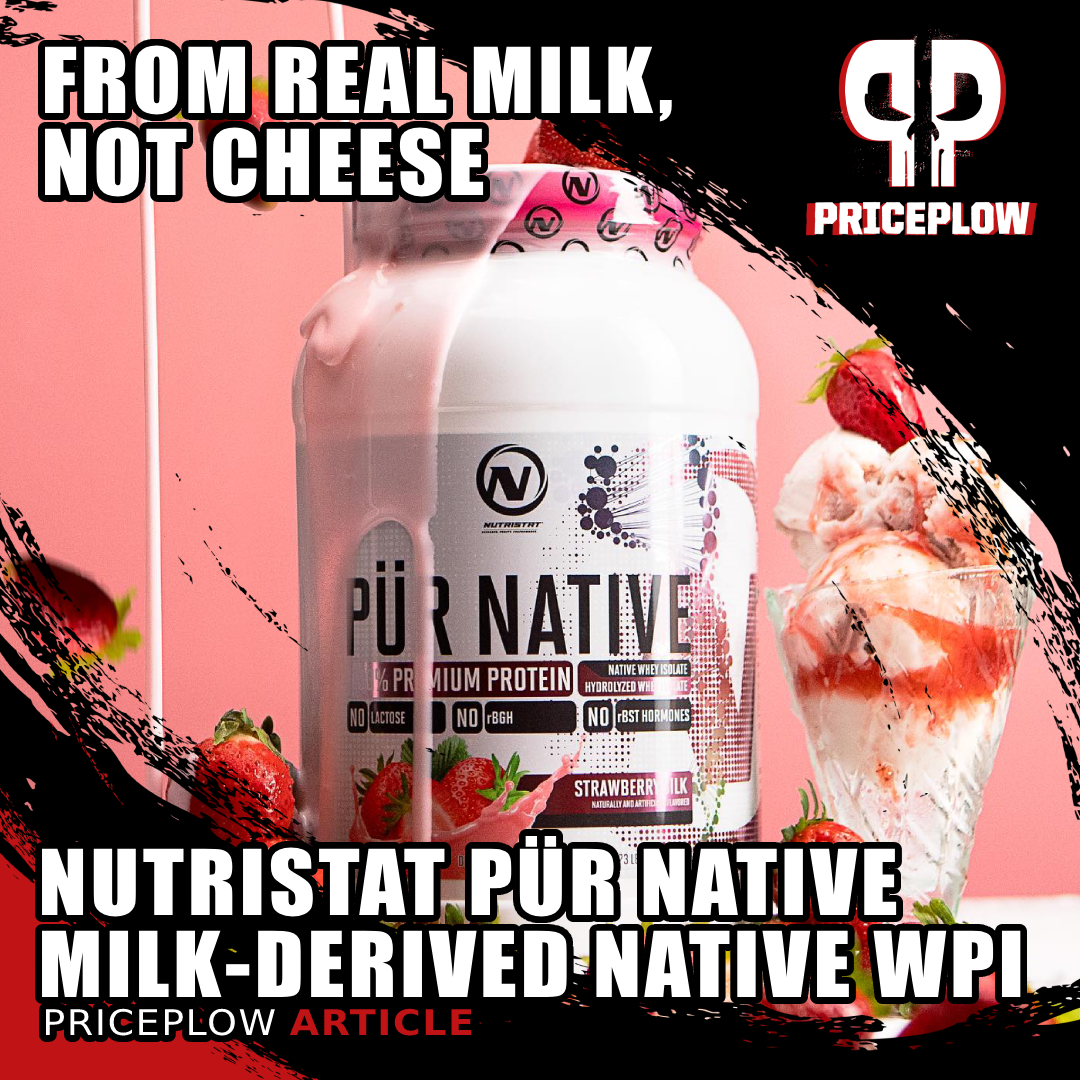
Nutristat PÜR NATIVE delivers Native Whey Protein extracted directly from milk, not cheese production. Lab-tested with 3.1g+ leucine per serving and enhanced with NativeZyme technology for superior absorption. Research shows faster recovery and better gains.
The sleep research is messier, but is worth digging into while we're here. A 2024 systematic review found that most available trials, generally small studies using 20g to 60g doses, reported some sleep benefit.[14] A short-term crossover trial from the same research group found altered sleep architecture and a faster morning reaction time after several nights of pre-sleep supplementation.[15] But a follow-up trial in trained athletes who already had sleep difficulties found that a week of pre-sleep alpha-lactalbumin didn't improve habitual sleep or next-day performance, and came with slightly more nighttime awakenings than control.[16] Put simply, the tryptophan content and its downstream effects on the brain aren't in dispute, but "measurable effect on brain chemistry" and "reliably improves your sleep" are two different claims, especially in people who already struggle to sleep well.
That's fine, we're not really here to promote Native Whey as a sleep whey anyway -- it's just an interesting part of intact milk (especially human breast milk). This is also a reason why you see babies get "milk drunk" when they've had a good serving of their mother's milk.
Alpha-lactalbumin isn't indestructible, either. Human digestion studies show it unfolds and breaks down quickly once stomach pH drops, well before it would reach the intestine as an intact protein.[17] That's expected, though: Digestion is supposed to break protein down, and the peptides released along the way have their own activity. Lab work has isolated antioxidant peptides from digested alpha-lactalbumin hydrolysates, evidence that the story continues after the intact protein is gone.[18]
Lactoferrin: An Iron-Binding Whey Protein
Lactoferrin is a minor protein by weight and a major one by reputation. It's an iron-binding glycoprotein, and that iron-binding ability is the root of most of what it does. Bacteria need free iron to grow, and lactoferrin is good at grabbing that iron before pathogens can use it, a defense strategy researchers call nutritional immunity. Lactoferrin also has direct antimicrobial and proteolytic activity (it can break down proteins) against bacterial virulence factors independent of iron binding, which is why reviewers describe it as a "moonlighting" protein, one molecule doing several unrelated jobs.[19]
Your body can make its own creatine. It just isn't free. Every molecule costs a whole glycine, part of an arginine, and a methyl group from SAM. Supply creatine externally and the body makes less of its own. Nutristat uses Creapure in every creatine product.
Lactoferrin's research base extends well past mechanism papers. A systematic review and meta-analysis of lactoferrin supplementation in humans found that most included studies reported lower systemic inflammatory markers, improved immune cell measures, and fewer or shorter respiratory tract infections in adults taking lactoferrin.[20] Separately, lactoferrin has a well-reviewed role in intestinal health, including gut barrier support and interaction with the gut microbiome.[21] Digestion can also release smaller active fragments of lactoferrin itself, including peptides called lactoferricin and lactoferrampin, that carry some of its antimicrobial activity independently.
Pound for pound, it's one of the better-studied minor proteins in dairy, and we've covered it extensively on this blog. We basically recommend lactoferrin supplementation to everyone, especially those who are low dairy.
Immunoglobulins: Milk's Antibody Proteins
Immunoglobulins are antibodies, the Y-shaped proteins an animal's immune system builds to recognize specific pathogens. In bovine milk, immunoglobulin G (IgG) dominates the mix, with smaller amounts of IgA and IgM alongside it. Concentrations are far higher in colostrum, the first milk produced after birth, which is how a calf receives a batch of ready-made immune protection before its own immune system is fully online. By the time milk matures into what eventually becomes a whey protein isolate, immunoglobulin levels have already dropped well below colostrum levels, part of why they show up as a minor fraction rather than a headline ingredient.
The open question is what oral bovine immunoglobulins do for a human adult, since they weren't built for us and have to survive digestion to matter at all. A 2025 systematic review catalogued which milk-derived proteins and peptides have actually been detected in human blood after dairy digestion and found a decent but mixed evidence base.[22] A broader review of whey proteins and immunity places immunoglobulins alongside lactoferrin and beta-lactoglobulin-derived peptides as contributors to whey's immune-related activity, while noting how much of that evidence still comes from cell and animal models rather than finished dairy products tested in humans.[1]
Cystine, Cysteine, and the Glutathione Connection
Here's one area where we do have PÜR NATIVE-specific numbers. In the independent Eurofins amino acid testing we've previously published for PÜR NATIVE, tested flavors contained roughly 697mg to 739mg of cystine per serving.
Everyone knows the fog after a lost night of sleep. A 2024 study found a single high dose of creatine partly offset it, with brain imaging to show why. The catch? At that dose, purity matters. Nutristat Creatine uses Creapure® from the same maker in the study.
Cystine and cysteine are related, but they're not interchangeable terms. Cystine consists of two cysteine residues linked by a disulfide bond. Those sulfur-containing amino acids matter because cysteine availability can be important for synthesis of glutathione, one of the body's endogenous redox compounds.
There's human research connecting this idea to undenatured whey. In a 3-month study of 120 adults with type 2 diabetes, researchers used an undenatured WPI specified to contain 2.7% native cysteine and at least 0.7% lactoferrin. The study reported changes in glutathione-related, oxidative-stress, and inflammatory markers compared with placebo.[23]
Overall, the study shows that the cysteine and lactoferrin content of an undenatured whey isolate, the same two components we just walked through above, can be biologically relevant enough to study directly, rather than treated as leftovers from leucine delivery.
Bioactive Peptides: Information Hidden Inside Protein
A useful way to think about bioactive peptides is as sequences "encrypted" inside larger proteins. The sequence is already there, but it may not become biologically active until digestive enzymes or manufacturing hydrolysis cleave the parent protein, the same mechanism behind the cholesterol-lowering BLG fragment and the antioxidant alpha-lactalbumin fragments described above.
Across whey research, peptides have been investigated for antioxidant, antimicrobial, intestinal, immune, and ACE-related activities. The key word is investigated. A lot of peptide work comes from in vitro systems, simulated digestion, or animal models rather than finished-product human trials.[1]
NativeZyme Changes the Story
This is where PÜR NATIVE gets a boost. Its ingredient list doesn't contain only Native Whey Protein Isolate. It also contains NativeZyme Hydrolyzed Native Whey Protein Isolate.
Hydrolysis intentionally breaks peptide bonds, so it's inaccurate to say every protein in PÜR NATIVE is preserved completely intact -- part of the formula is explicitly hydrolyzed.
A better way to understand the product is that it combines two states of native whey starting material: an intact native whey isolate fraction and a hydrolyzed native whey isolate fraction. The first preserves larger proteins before digestion, while the second begins breaking protein into smaller peptides before you consume it.
That's an interesting and impressive design, giving the best of both worlds.
What We Can Verify in PÜR NATIVE
| Component | What We Can Verify |
| Protein | 26g per serving on the current label |
| Leucine | 3.11g to 3.31g per serving in prior Eurofins testing across tested flavors |
| BCAAs | 5.92g to 6.29g per serving in prior Eurofins testing |
| EAAs | 12.8g to 13.4g per serving in prior Eurofins testing |
| Cystine | 697mg to 739mg per serving in prior Eurofins testing |
| Lactoferrin | A native whey protein with a substantial research literature, but finished-product amount isn't known |
| Immunoglobulins | Natural milk proteins, but no PÜR NATIVE finished-product IgG aren't known |
| Beta-Lactoglobulin / Alpha-Lactalbumin | Major whey proteins, but PÜR NATIVE-specific amounts aren't known |
| Hydrolyzed Peptides | A hydrolyzed native whey fraction is listed, but its ratio, degree of hydrolysis, and peptide distribution aren't known |
PÜR NATIVE: Protein Quality Has Another Layer
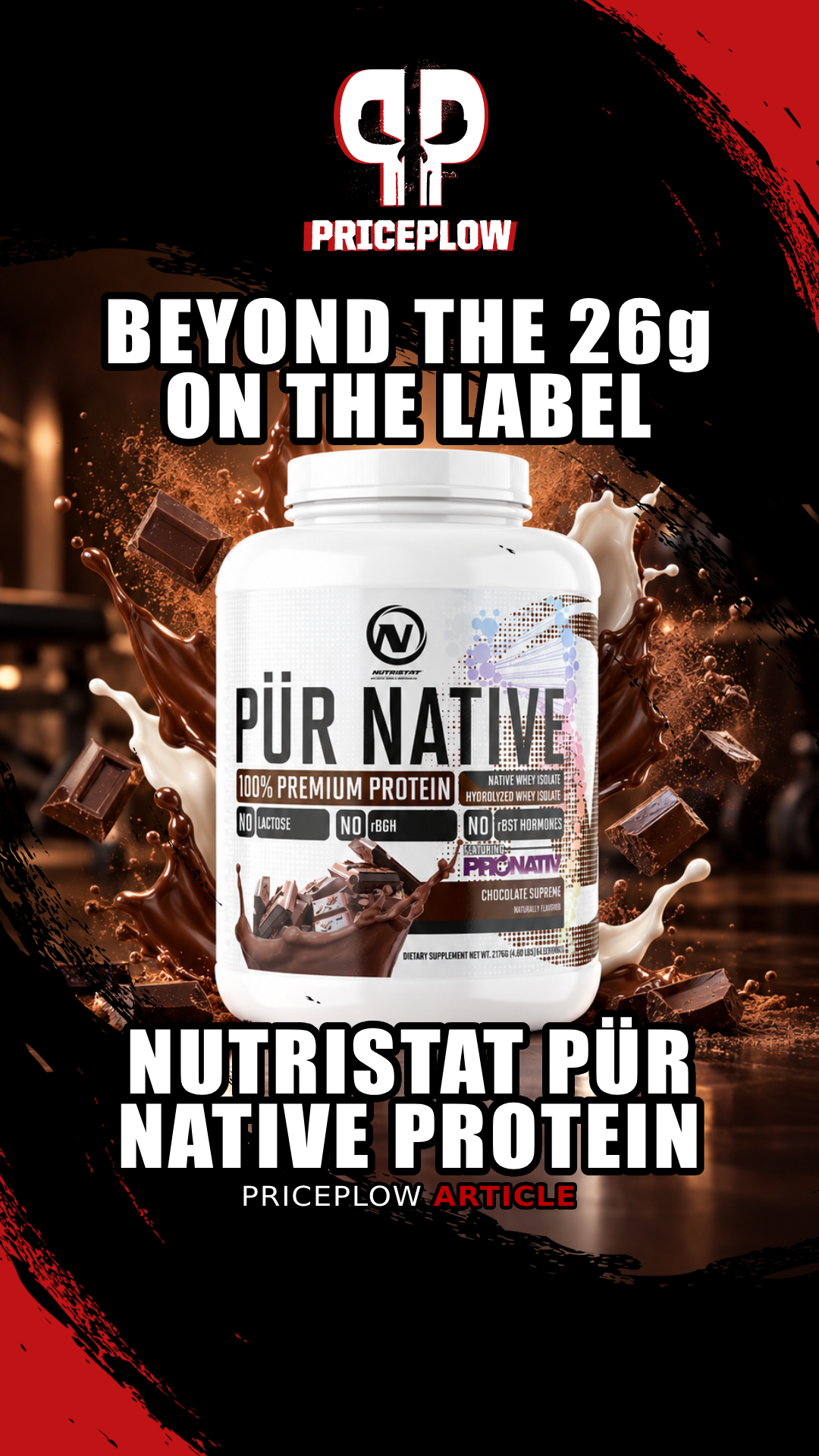
Protein grams matter. Amino acid composition matters. PÜR NATIVE's leucine and EAA numbers are already strong enough to stand on their own.
But native whey gives us another layer to think about: four separate proteins that make up whey in vastly different amounts, the additional amino acids tied to antioxidation support, and the peptide sequences that can emerge as those proteins are digested or hydrolyzed.
That's also why we like seeing Nutristat publish actual amino acid testing instead of asking consumers to rely on a generic whey-protein assumption.
Ultimately, PÜR NATIVE is a high-protein native whey formula with independently tested amino acid numbers, plus a protein architecture, and four separate native proteins working alongside hydrolyzed peptides. This gives us far more to investigate beyond the simple 26g on the label (which also, by the way, is more than your average scoop)!
Check the current flavors and PricePlow-powered pricing for PÜR NATIVE here.
Nutristat PÜR NATIVE – Deals and Price Drop Alerts
Get Price Alerts
No spam, no scams.
Disclosure: PricePlow relies on pricing from stores with which we have a business relationship. We work hard to keep pricing current, but you may find a better offer.
Posts are sponsored in part by the retailers and/or brands listed on this page.