Everyone knows the fog after a lost night of sleep. A 2024 study found a single high dose of creatine partly offset it, with brain imaging to show why. The catch? At that dose, purity matters. Nutristat Creatine uses Creapure® from the same maker in the study.
Everyone's had one of those nights: three hours of sleep before an early flight, a newborn who won't settle, a deadline that eats into your bedtime. Morning shows up anyway, and your brain has to function through it.
Trending new research on creatine and sleep deprivation offers an unexpected angle on that problem. A 2024 study found that a single dose, notably larger than the standard daily amount, can partially offset the cognitive fog that comes with a night of lost sleep, with brain imaging to show why. It's been in the news, but it turns out that it's not an isolated finding. Researchers have tested the creatine-sleep connection for almost two decades. The newest study is simply the first to pair a single dose with a same-night mechanism.
High-Dose Creatine to Offset Sleep Deprivation? Better Get Quality Creatine
But as you'll see, the dose is pretty high. And when the dose is high, you want as few impurities as possible. And that's where Nutristat's use of Creapure® makes sense.
We've covered Nutristat's Creapure® sourcing before, in The Nutristat Creapure Connection and on Episode #173 of the PricePlow Podcast with AlzChem's own team. This time, the research points somewhere new: how much creatine researchers used, and why the source of that creatine matters even more once the dose gets bigger.
Check current pricing on Nutristat's Creapure-based creatine lineup below, and sign up for Nutristat news alerts so you don't miss what's next:
Nutristat Creatine – Deals and Price Drop Alerts
Get Price Alerts
No spam, no scams.
Disclosure: PricePlow relies on pricing from stores with which we have a business relationship. We work hard to keep pricing current, but you may find a better offer.
Posts are sponsored in part by the retailers and/or brands listed on this page.
This area is reserved for Team PricePlow's upcoming Product Review video.
Subscribe to our channel and sign up for notifications so you catch it when it goes live!

The 2024 Study: One Big Dose, Same Night
Most creatine research on the brain needs weeks of daily loading before researchers can detect a change. That's what makes Gordji-Nejad et al.'s 2024 trial stand out.[1] Fifteen healthy adults completed two overnight sessions at least five days apart, each involving about 21 hours without sleep. On one night, they took a single oral dose of creatine monohydrate at 0.35g per kilogram of bodyweight, around 28g for a 175-pound adult. On the other, they took a matched placebo. Neither the subjects nor the researchers knew which session was which until the team unblinded the results afterward.
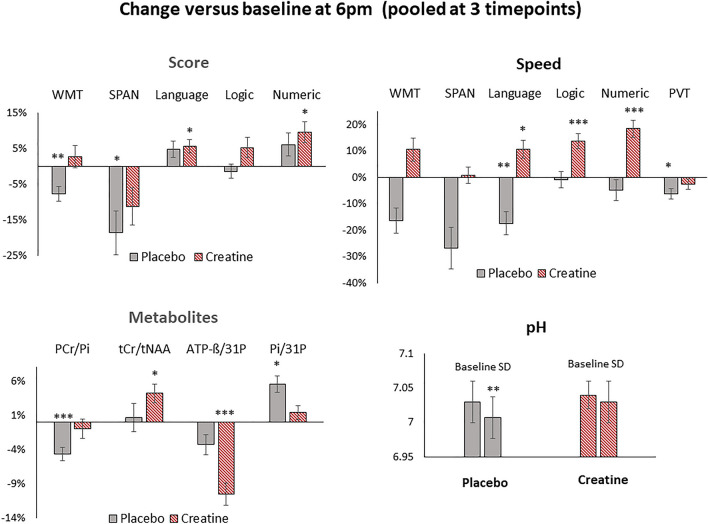
Pooled across an all-nighter, one 0.35g/kg creatine dose beat placebo on memory and processing speed while raising brain energy markers and holding pH steady.[1]
At four points through the night, researchers scanned each subject's brain with phosphorus and proton magnetic resonance spectroscopy while running a battery of cognitive tests covering word memory, digit span, spatial working memory, and multiple-choice tasks in language, logic, and numeric reasoning.
The creatine dose changed brain chemistry within hours. It raised phosphocreatine relative to inorganic phosphate, prevented the drop in brain pH that sleep deprivation typically causes, and increased total brain creatine relative to N-acetylaspartate, the reference marker researchers use to normalize these signals.[1]
-
Cognitive Performance Beyond Biomarkers
Even more importantly, cognitive performance moved with it: subjective fatigue dropped about 8% relative to placebo, word memory accuracy improved by roughly 10%, and processing speed across the language, logic, and numeric tasks improved between 16% and 29%.[1]
-
Sourced From Creapure®, Not Generic Creatine
Here's the detail that made this study worth a feature on its own: the creatine monohydrate used in the trial came from AlzChem, Trostberg, Germany, the exact manufacturer behind Nutristat's creatine supplements, which all include Creapure®. This isn't a study run on a generic sample with Creapure's reputation borrowed after the fact. Creapure is what the study measured.
Not the First Study on Creatine and Sleep Loss
Creatine's connection to sleep deprivation didn't start in 2024. Researchers have tested it under sleep-deprived conditions since at least the mid-2000s, just using different protocols than the 2024 trial.
McMorris et al. ran two related studies in 2006 and 2007, both using a week-long loading protocol instead of a single dose: 5g of creatine monohydrate four times daily (20g total per day) for seven days before sleep deprivation testing began.[2] In the 2006 study, subjects performed cognitive and psychomotor tests at 6, 12, and 24 hours of sleep deprivation alongside light intermittent exercise. By 24 hours, the creatine group showed significantly less decline from baseline than the placebo group on tests of random movement generation, memory recall, and reaction time.[2]
The 2007 follow-up extended testing to 36 hours and added cortisol and melatonin measurements alongside a central executive function task.[3] The creatine group performed significantly better on that task by the 36-hour mark, with a steady improvement over the course of the trial that the placebo group didn't show.[3]
Cook et al. took a different approach in 2011, closer in spirit to the 2024 trial: a single acute dose of either 50mg/kg or 100mg/kg, taken 90 minutes before testing and compared directly against caffeine (1mg/kg or 5mg/kg) and placebo.[4] Ten elite rugby players ran a passing skill test after nights of 7 to 9 hours of sleep, then again after nights of just 3 to 5 hours. Sleep deprivation caused a significant drop in passing accuracy under placebo. Neither creatine dose showed that drop, matching caffeine's protective effect on this particular motor skill.[4]
None of these three studies used a dose as large as the 2024 trial's 0.35g/kg, and the McMorris studies relied on a week of loading rather than one dose. What they establish is that creatine blunting some of sleep deprivation's cognitive cost has held up across several protocols and research groups over almost 20 years. The 2024 study is the one that finally paired a single, larger dose with brain imaging to show a real-time mechanism behind it.
The Mechanism: Why Brain Creatine Matters for Sleep
Sleep is partly a brain energy-restoration process. One hypothesis for why creatine might blunt sleep deprivation's effects builds on that idea: top up the brain's high-energy phosphate reserves from an outside source, and the pressure to sleep may ease slightly, at least in the short term.
A 2017 rat study offers preclinical support for that idea. After four weeks of oral creatine supplementation, rats showed reduced total sleep time and less non-rapid eye movement (NREM) sleep during their inactive period, along with reduced NREM delta activity, a marker of sleep pressure, following six hours of forced sleep deprivation.[5] Brain phosphocreatine trended upward after supplementation while ATP levels declined, a pattern the researchers linked to the reduced drive for sleep.[5]
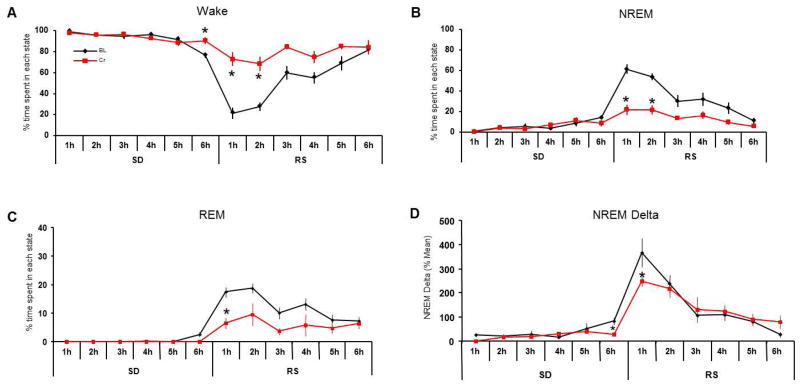
After four weeks of creatine, rats showed less deep NREM sleep and lower delta activity during recovery, signs of eased sleep pressure versus baseline.[5]
This is animal data from a chronic four-week protocol, not a single human dose, so it doesn't directly confirm what happens after one 28g serving. But it does offer a plausible explanation for the human findings above: give the brain more accessible energy currency, and some of sleep's restorative job may get handled another way.
Why Purity Isn't Optional at Higher Doses
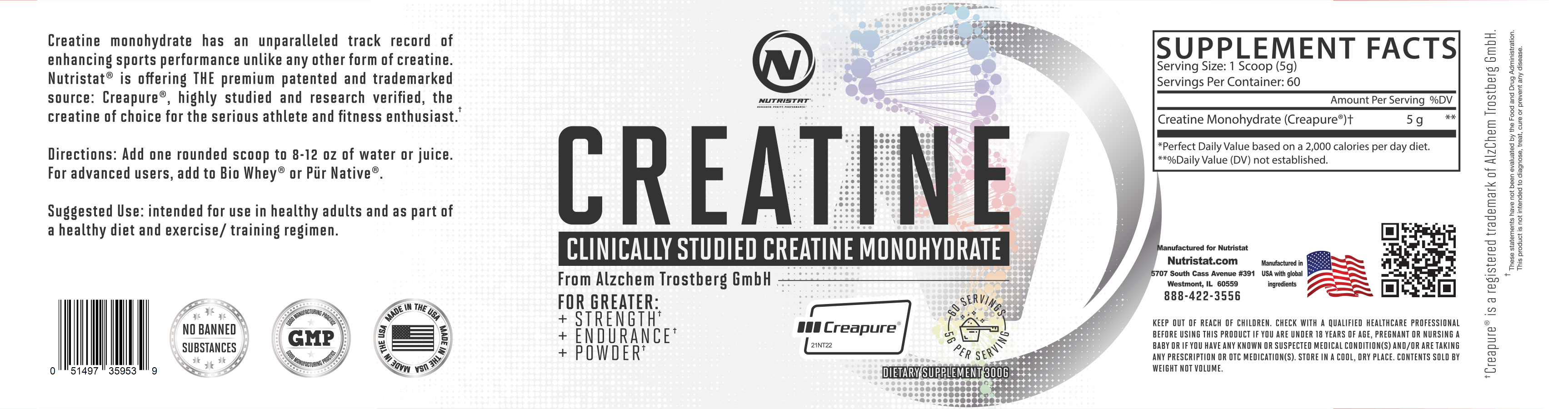
We made this same argument in The Creapure Connection at the standard 5g daily dose: generic creatine tested at 96% purity still leaves 4% unaccounted for, and 4% of a 5g dose is 200mg of something that isn't creatine.
At the dose used in the 2024 sleep study, that math gets more serious.
A 28g single dose, the amount a 175-pound adult would take under the 0.35g/kg protocol, at 96% purity leaves roughly 1.1g of non-creatine material in one sitting: more than five times the 200mg figure at a standard 5g serving. Nasty!

Quality matters in creatine. Nutristat uses premium Creapure® in all their products, ensuring 99.9% purity without harmful impurities.
The categories that matter here are the same ones we detailed previously: dicyandiamide (DCD), dihydrotriazine (DHT), and creatinine, all byproducts of lower-quality synthesis routes that the European Food Safety Authority tracks with specific limits. AlzChem manufactures Creapure® to stay well below those thresholds, tests every batch, and registers it on the Cologne List® for drug-tested athletes.
Creatine monohydrate has a well-established safety profile at recommended doses, backed by decades of controlled research.[6] That research record is built on the creatine molecule itself, not on whatever else happens to be in a given batch. The bigger the single dose, the more that distinction matters.
AlzChem remains the only creatine monohydrate manufacturer in the Western Hemisphere, running production out of a single dedicated German facility rather than sourcing from multiple, less consistent suppliers. That's also, as it happens, exactly where the creatine used in the 2024 sleep-deprivation trial came from. It's a more specific, checkable claim than a general purity promise: the same manufacturer behind Nutristat's Creapure® supplied the material in the study driving this entire article.
Nutristat's Creapure® Lineup
Nutristat builds its entire creatine range around Creapure®, across three products depending on how you plan to use it.
- Nutristat Creatine Monohydrate, the unflavored standalone powder, is the simplest way to test a larger, occasional dose like the one used in the 2024 study, without added carbohydrates or stimulants complicating the picture.
- Crea Script pairs 5g of Creapure® with a 30g hydrolyzed rice oligodextrin carb-loading system built for daily peri-workout use.
- Pre Script delivers that same 5g of Creapure® inside a full pre-workout stack alongside L-citrulline and BioATP®.
For the deeper story on why Nutristat sources exclusively from AlzChem, read The Creapure Connection, or hear it directly from AlzChem's Mirko Holzmüller and Stefan Schweyer on Episode #173 of the PricePlow Podcast, where they cover German manufacturing, batch testing, and where creatine research is headed next.
Conclusion: High-Dose Creatine is No Time for Cheap Creatine
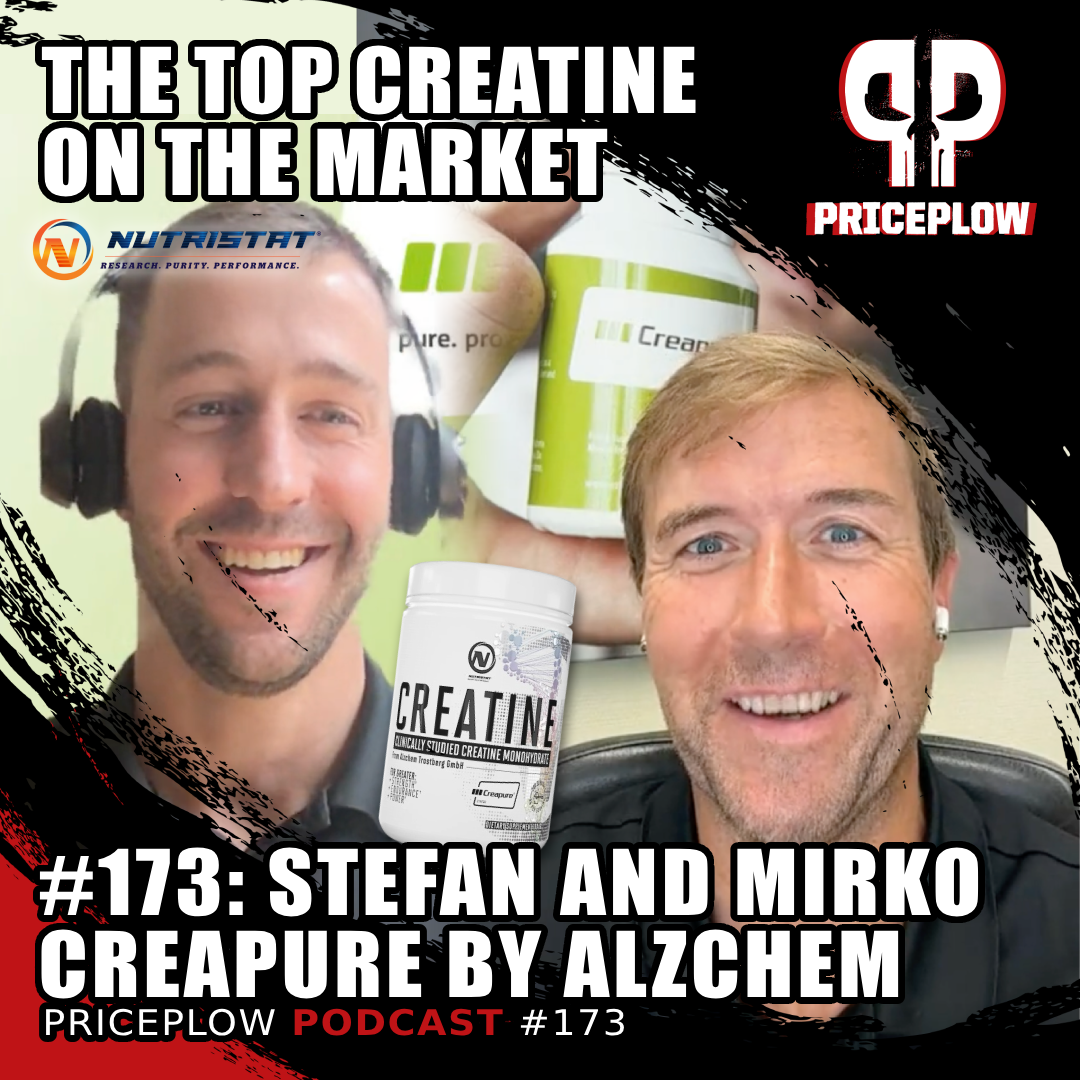
Mirko Holzmüller and Stefan Schweyer from Creapure reveal the manufacturing secrets behind Germany's 99.99% pure creatine monohydrate and explore creatine's expanding applications beyond sports performance on Episode #173 of the PricePlow Podcast.
None of this is a substitute for sleep. The research above describes cognitive and metabolic changes measured under controlled lab conditions, not a reason to treat all-nighters as routine. What it does suggest is that creatine, already one of the most studied supplements available, may have a same-day use case beyond the daily 5g maintenance dose most people know it for.
If you're curious enough to test that idea, the purity math above makes the sourcing question worth asking, especially at a dose several times the norm. Nutristat's answer is the same across its whole creatine lineup: Creapure®, from AlzChem, batch-tested, and now the same material behind the research making headlines.
Check current pricing on Nutristat's creatine lineup below, and sign up for news alerts to stay on top of what Nutristat covers next.
Nutristat Creatine – Deals and Price Drop Alerts
Get Price Alerts
No spam, no scams.
Disclosure: PricePlow relies on pricing from stores with which we have a business relationship. We work hard to keep pricing current, but you may find a better offer.
Posts are sponsored in part by the retailers and/or brands listed on this page.

Comments and Discussion (Powered by the PricePlow Forum)