Your body can make its own creatine. It just isn't free. Every molecule costs a whole glycine, part of an arginine, and a methyl group from SAM. Supply creatine externally and the body makes less of its own. Nutristat uses Creapure in every creatine product.
Over the past few years, we've repeatedly written some version of the following sentence: "creatine is metabolically expensive for your body to make."
Usually, we'll cite a 2011 paper literally titled "The Metabolic Burden of Creatine Synthesis",[1] explain that supplementation reduces some of that burden, and move on to whatever creatine research we're actually covering.
But what does "metabolically expensive" really mean?
Does making creatine burn a bunch of calories? Does it cost ATP? Which raw materials does the body need? If you take creatine instead, does the body actually stop making as much of its own? And when it does, what happens to the substrates it no longer needs to commit to creatine synthesis?
Your Body Wants Creatine Made One Way or Another...
It's worth knowing the answers to those questions because they give us a completely different way to think about creatine supplementation. Yes, strength, power, lean mass, recovery, and cognition get most of the attention. But before creatine can do any of those things, your body has a more basic problem to solve: it continuously loses creatine and has to replace it!
You can manufacture that replacement yourself. You can (and should) get a lot from animal foods. But additionally, you can supplement it.
As we'll see in today's article, the human data is clear: when you supply creatine externally, the body turns down its own production. In some biological contexts, that's not a good thing (e.g. when your body can no longer make its own testosterone because you've injected so much exogenously). But in other contexts, it's good -- because you reduce demand for some surprisingly important nutritional substrates that could be used elsewhere.
Nutristat: Research. Purity. Performance.
This is the real biochemical argument for making at least a small amount of high-quality creatine part of your daily routine. And when the discussion turns to quality, Nutristat has been extremely consistent: every creatine-containing product they make uses Creapure® from AlzChem, made in Germany.
First, though, let's finally explain what that "metabolically expensive" line actually means.
Nutristat – Deals and Price Drop Alerts
Get Price Alerts
No spam, no scams.
Disclosure: PricePlow relies on pricing from stores with which we have a business relationship. We work hard to keep pricing current, but you may find a better offer.
Posts are sponsored in part by the retailers and/or brands listed on this page.
This area is reserved for Team PricePlow's upcoming Research Study video.
Subscribe to our channel and sign up for notifications so you catch it when it goes live!

Subscribe to PricePlow's Newsletter and Alerts on These Topics
You Lose Creatine Every Day (1-2g/day)
Creatine isn't a permanent resident in your muscles.
A small fraction of the body's creatine and phosphocreatine spontaneously converts into creatinine every day, and the creatinine is excreted through the kidneys. Unlike creatine cycling between creatine and phosphocreatine during energy metabolism, this loss has to be replaced with new creatine.
In humans, this continuous loss is generally on the order of 1g to 2g per day, with the amount influenced heavily by total muscle mass. Brosnan and colleagues estimated creatinine loss around 2g per day in a 70kg male between 20 and 39 years old, with lower average losses in women and older adults as average muscle mass declines.[1]
Direct work on creatine synthesis similarly describes a 1g to 2g daily loss that requires comparable replacement from food/supplementation, endogenous synthesis, or some combination of the two.[2]
For a typical omnivore, food can handle a decent portion of the job. Meat and fish contain creatine, and reviews from the Brosnan group estimate that a normal mixed diet may supply up to roughly half of a 70kg man's approximate 2g daily requirement. The body synthesizes the remainder.[3]
That means endogenous synthesis isn't some emergency backup pathway. It's normal daily metabolism.
But that metabolism needs raw materials. That's where the story gets important.
How Your Body Makes Creatine
Creatine synthesis is usually simplified into two major steps involving three amino acids.
-
Step 1: Make Guanidinoacetate
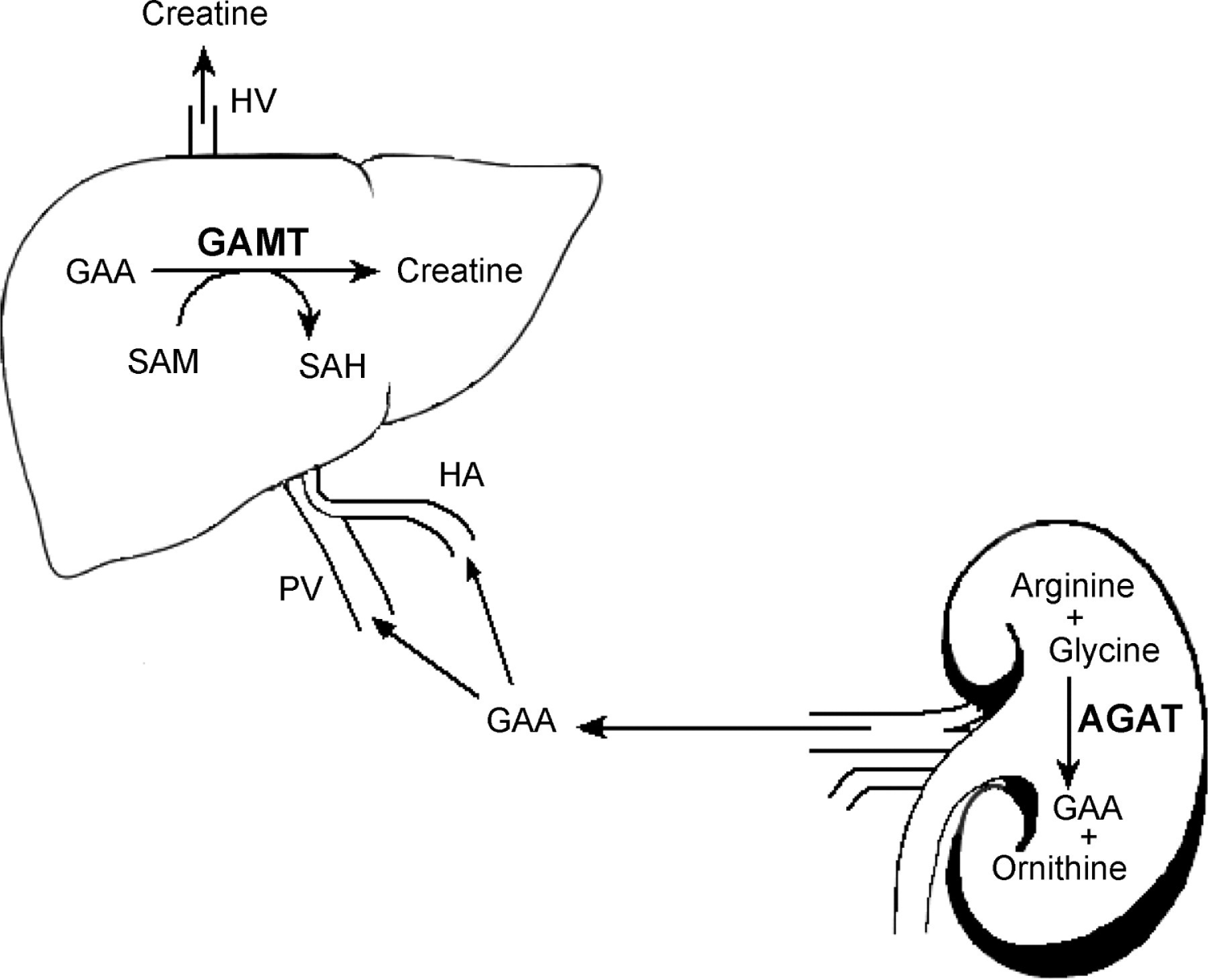
The enzyme L-arginine:glycine amidinotransferase (AGAT) takes arginine and glycine and transfers an amidino group from arginine onto glycine.
The products are ornithine and guanidinoacetate (GAA), the immediate precursor to creatine.

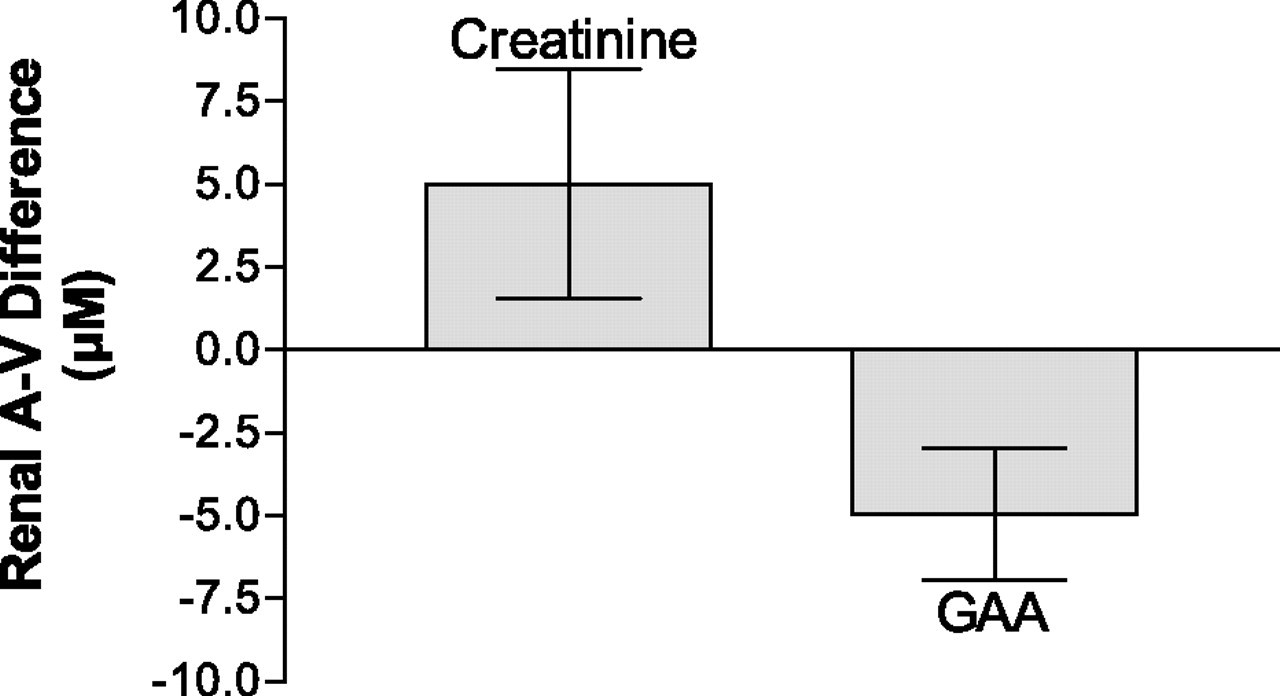
Kidneys in rats fed a creatine free diet released guanidinoacetate into the blood while pulling creatinine out of it.[2]
The kidney is an important site for this reaction. Researchers have directly measured GAA production by human kidneys in vivo, where GAA then travels to other tissues for the second step.[2]
-
Step 2: Spend a Methyl Group
Next, guanidinoacetate methyltransferase (GAMT) converts GAA into creatine.
But GAMT needs a methyl donor.*
That donor is S-adenosylmethionine (SAM), which is generated from methionine through methionine adenosyltransferase.
SAM hands its methyl group to GAA, GAA becomes creatine, and SAM becomes S-adenosylhomocysteine (SAH). SAH sits inside the broader methionine and homocysteine cycle.
Research in liver models shows how tightly these pathways connect. Adding methionine raises intracellular SAM and drives greater conversion of GAA into creatine.[4]
So your simplified creatine manufacturing bill looks like this:
Creatine = glycine + part of arginine + a methyl group ultimately supplied through methionine/SAM chemistry.

The kidney assembles guanidinoacetate from arginine and glycine, then the liver spends a methyl group from SAM to finish the molecule.[4]
That's where the metabolic burden gets interesting.
The Metabolic Bill Comes Due
Calling creatine synthesis "expensive" can sound vague until you start accounting for what goes into it.
The 2011 Brosnan paper did exactly that:[1]
-
Glycine: The Whole Molecule
The first cost is easy to visualize because the entire glycine molecule is consumed in the creatine synthesis pathway.
That doesn't automatically mean healthy adults are walking around desperately short on glycine. Humans can synthesize glycine, and Brosnan and colleagues specifically argued that creatine synthesis probably isn't a major burden on adult glycine metabolism for that reason.[1]

Quality matters in creatine. Nutristat uses premium Creapure® in all their products, ensuring 99.9% purity without harmful impurities.
Still, glycine has to come from somewhere. Every creatine molecule manufactured through this route requires one.
-
Arginine: A Large Amidino Demand
Arginine is different because the body doesn't consume the whole molecule.
AGAT removes its amidino group, transferring that group to glycine while producing ornithine.
Brosnan and colleagues estimated that creatine synthesis accounts for roughly 20% to 30% of the amidino groups supplied by arginine, whether that arginine comes from food or endogenous synthesis.[1]
That's a serious amount of flux through just one pathway.
Arginine also participates in numerous other biological processes, but this is where we sports nutrition folks need to avoid racing ahead of the evidence. Reducing arginine demand for creatine synthesis doesn't automatically prove that the spared arginine gets redirected into more nitric oxide, more protein synthesis, or some other specific outcome. Not everything turns into pumps.
But the safe conclusion is simpler: if you make less creatine, you need less arginine-derived amidino substrate to make it. That's the fair take... but we'll still "kinda" argue that saving some arginine will secondarily support our pumps, because that's who we are and what we do and we're not going to change.

Methionine and Methyl Groups
Everyone knows the fog after a lost night of sleep. A 2024 study found a single high dose of creatine partly offset it, with brain imaging to show why. The catch? At that dose, purity matters. Nutristat Creatine uses Creapure® from the same maker in the study.
Anyway, this next part is probably the most interesting part of the entire story.
The GAMT reaction that turns GAA into creatine requires a methyl group from SAM. That puts endogenous creatine synthesis directly inside one-carbon and methyl-group metabolism.
Methylation reactions aren't niche chemistry, as you likely know. Health fanatics talk about methylation a lot -- possibly too much even. That's because they participate in the synthesis and regulation of a huge range of biological compounds, and methionine ultimately supplies much of that methyl economy through SAM.
What nobody really talks about is that creatine synthesis is one of the largest users.
The 2011 Brosnan review estimated that endogenous creatine synthesis accounts for around 40% of the labile methyl groups supplied by SAM, which is why the authors described the pathway as an appreciable burden on methionine metabolism.[1]
A bigger review of methylation nutrition similarly identified creatine and phosphatidylcholine (another preferred supplement target) synthesis as major methyl-group consumers. The authors argued that supplying already-methylated end products such as creatine can spare methionine demand under some circumstances.[5]
Some older estimates sometimes even claimed creatine synthesis consumed more than 70% of SAM-derived methyl groups, but going that high is probably a bit of a stretch:
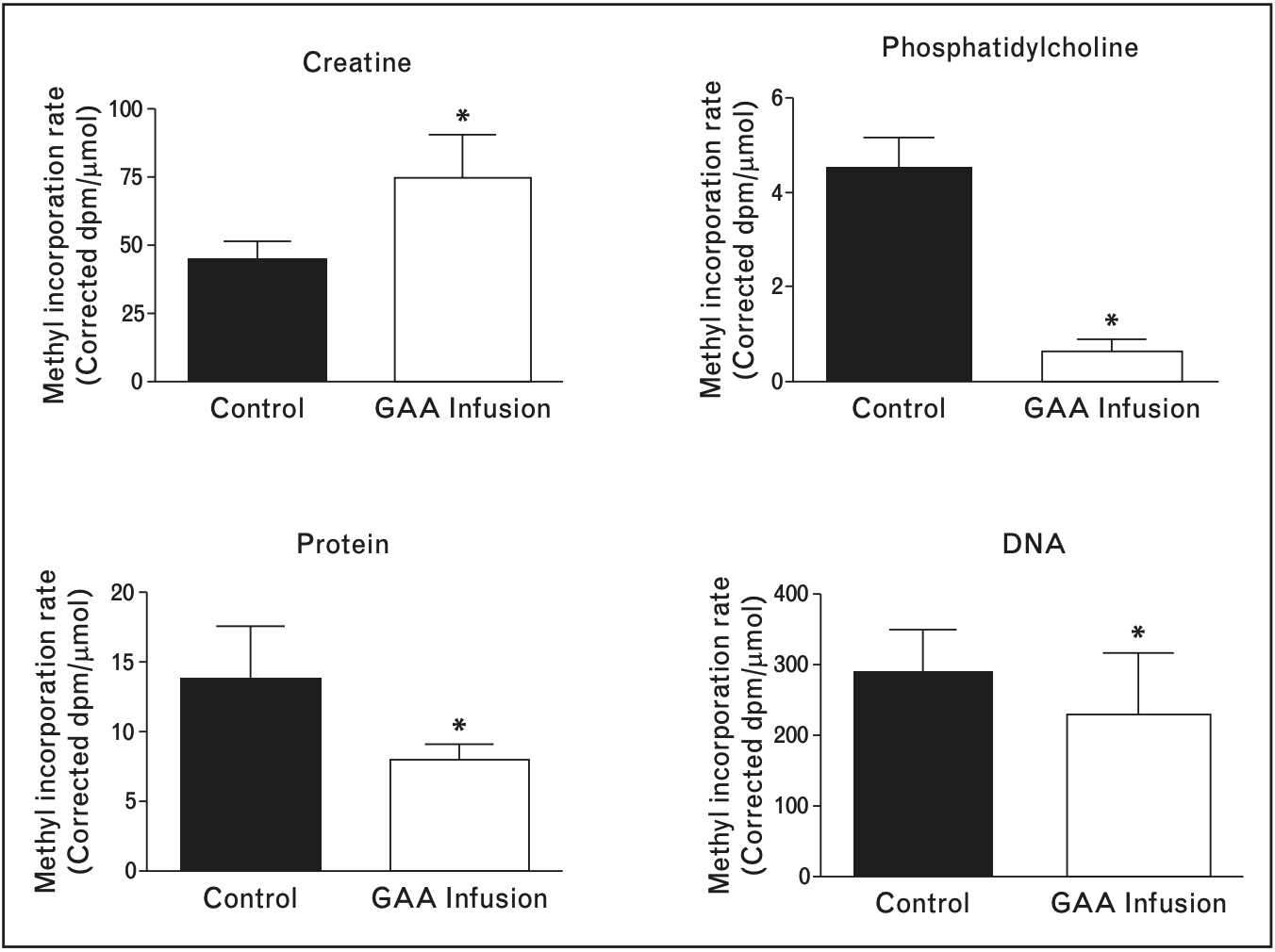
Adding guanidinoacetate drove methyl groups toward creatine synthesis and left less available for phosphatidylcholine, protein, and DNA.[5]
Stead and colleagues revisited the accounting in 2006 and argued that older estimates had overestimated endogenous creatine synthesis because they didn't adequately account for dietary creatine. If an omnivore gets a large portion of daily creatine replacement directly from food, that fraction never needs to be synthesized in the first place. The authors also argued that phosphatidylcholine synthesis had likely been underestimated as a competing methyl sink.[6]
Mudd reached a similarly cautious conclusion a year later when reviewing human methyl balance. Obviously, creatine synthesis is clearly one of the incredibly important SAM-dependent pathways, but precise whole-body methyl flux depends on diet, physiology, competing pathways, and assumptions used in the calculations.[7]
At some point it becomes a bit too academic, so we'll stick with the more conservative takeaway:
Creatine synthesis uses a lot of methyl-group capacity. The exact percentage isn't a universal constant, but it's relatively large and significant.
As an aside, this all lends a hand towards a theory that "methylation problems" could sometimes literally be as simple as a "meat deficiency".
This Isn’t a Calorie Claim
There's another point worth making, since "metabolically expensive" can easily be misunderstood.
Most pre-workouts use 1-2.5g betaine to check the box. NutriStat Pre Script uses 3g of betaine because research shows dose-dependent benefits. Betaine enhances cellular hydration under stress AND supports creatine synthesis. When training hard, that extra 500mg matters.
The above literature isn't showing that endogenous creatine synthesis secretly burns hundreds of calories per day.
The metabolic burden discussed by these researchers is mainly a substrate and methylation burden. Your body has to allocate glycine, arginine-derived amidino groups, methionine-linked methyl chemistry, enzyme capacity, and interorgan transport to keep creatine replacement running.[1][5]
But that actually makes our argument stronger, not weaker. You're not going to "burn more calories by making your body generate its own creatine" by eating a low creatine diet. And if it did by some tiny measure, the cons would vastly outweigh the pros. We don't need to invent a giant caloric cost. The actual biochemical cost is proof enough.
Take Creatine, Turn Down the Factory
All of this would be academic trivia if supplemental creatine didn't change endogenous synthesis... but it does.
And we have both the regulatory mechanism and human evidence to show it, and it's been known for decades:
-
The Feedback Switch
In a 1984 rat experiment, dietary creatine dramatically repressed kidney AGAT, the enzyme controlling the first committed step of creatine synthesis. Rats consuming a diet containing 0.3% creatine had only 26% of the kidney AGAT activity seen in rats eating a creatine-free diet. The relative rate of AGAT synthesis fell to 21% of control, while functional AGAT mRNA fell to 37%.[8]
That's classic negative feedback. The pathway's final product comes in from the diet, and the body responds by reducing production near the front of the pathway. Simple enough. Does it happen in humans, too? Yes;
-
Humans Turn It Down Too
Derave and colleagues put 16 healthy young volunteers through a double-blind protocol using either creatine monohydrate or placebo.
The creatine group took 20g per day for one week, followed by 5g per day for another 19 weeks.

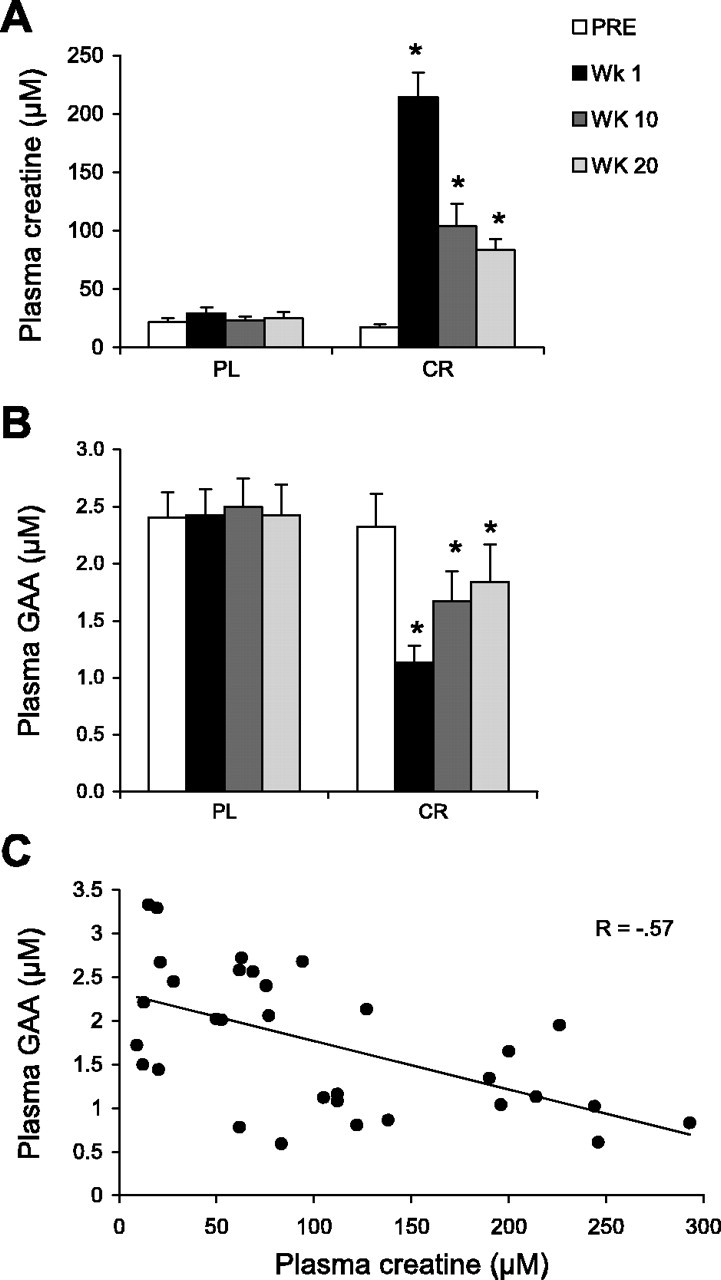
Supplemented subjects held higher plasma creatine and lower guanidinoacetate through week 20, and the two markers moved in opposite directions.[9]
After the loading phase, plasma GAA fell by about 50%. More importantly for people interested in ordinary long-term supplementation, GAA remained roughly 30% lower throughout the 5g/day maintenance phase.[9]
Remember, GAA is the immediate creatine precursor produced by AGAT. When it falls during creatine supplementation, that's a strong biochemical sign that endogenous production has been turned down.
A later human study went even further and measured creatine kinetics directly:
Kalhan studied eight men and seven women between 20 and 30 years old using stable-isotope tracers to quantify whole-body creatine synthesis. After five days of 21g/day creatine supplementation, plasma creatine increased roughly tenfold, GAA fell about 50%, and both the fractional and absolute rates of creatine synthesis decreased significantly.[10]
Now that's the direct evidence we were looking for. It's not simply that GAA moved down -- researchers measured less endogenous creatine being synthesized.
So what's this all mean?
-
Even 3g Per Day Works
You don't need a 20g loading protocol to detect the effect. Peters and colleagues ran a large double-blind randomized trial. One group received 3g of creatine per day for 12 weeks, while another received placebo.
Plasma GAA fell 10.6% in the creatine group, while it increased nonsignificantly by 3.7% in the placebo group. The between-group difference was highly significant.[11]
That's a more useful result for us: The metabolic argument for daily creatine doesn't depend on treating every day like a loading phase. Even 3g/day measurably reduced a marker of endogenous synthesis over time. Those methyl groups all got to get put to use elsewhere.
What Does Sparing Buy You?
A normal daily intake in the neighborhood of 3g to 5g isn't merely supplying creatine to the body's pool. It's also reducing how hard the endogenous synthesis pathway has to work.
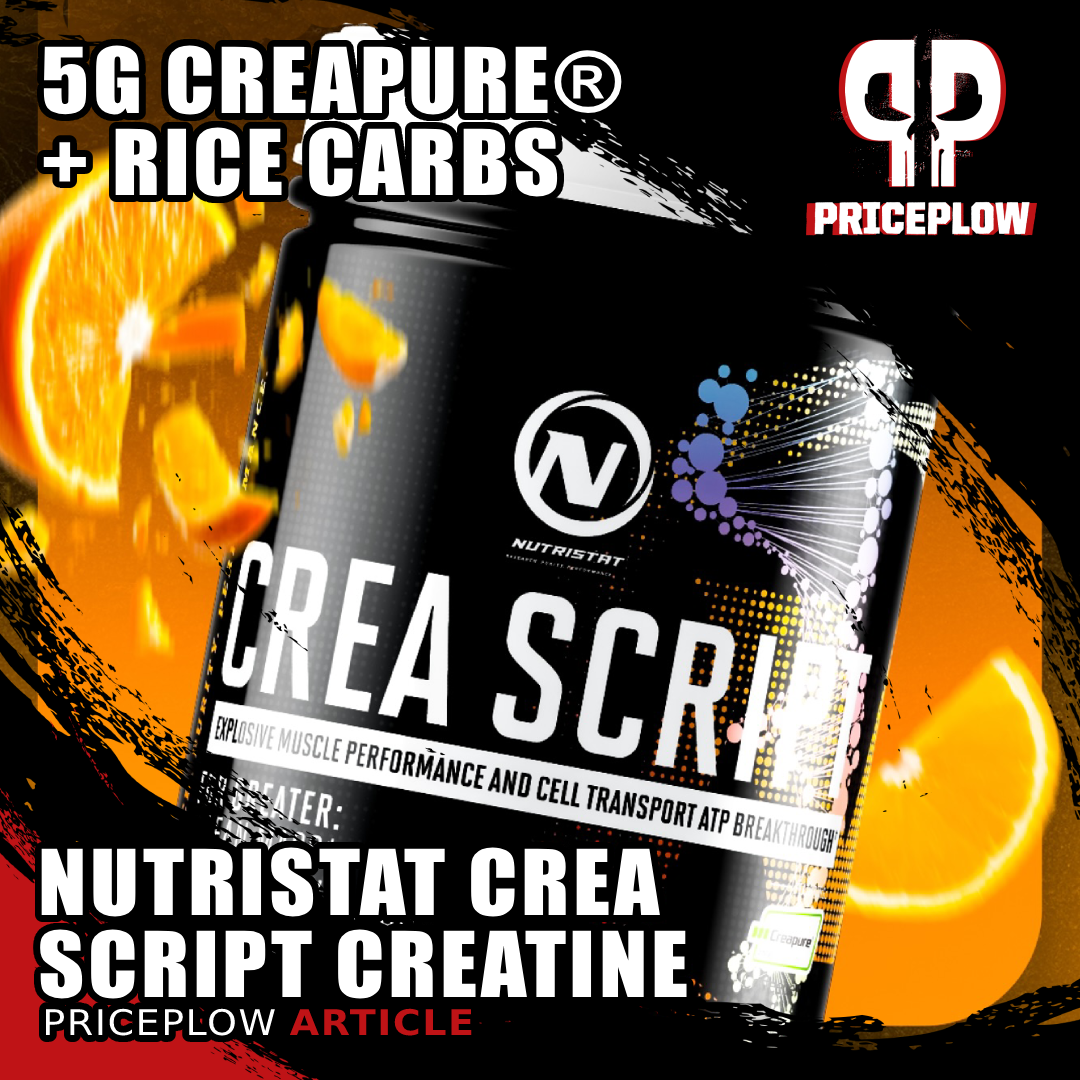
Nutristat Crea Script builds carb-assisted creatine loading around hydrolyzed rice oligodextrin, a novel allergen-free carb that empties from the stomach faster than simple sugars and may help drive greater creatine uptake into muscle.
If creatine supplementation makes you synthesize less creatine, and creatine synthesis consumes glycine, arginine-derived amidino groups, and SAM-derived methyl groups, then supplementation should leave more of those resources available elsewhere.
Biochemically, that's reasonable. But realize, even though we're 100% confident that creatine supplementation reduces substrate demand, it doesn't mean we know exactly where those spared substrates go or if they provide specific benefits!
So let's keep going:
Homocysteine Is the Reality Check
Homocysteine gives us a nearly perfect example of why.
When SAM donates a methyl group during the conversion of GAA to creatine, it becomes SAH, which feeds into homocysteine metabolism. It therefore makes sense to ask whether reducing creatine synthesis could reduce methylation demand enough to lower circulating homocysteine.
Animal experiments made that hypothesis look attractive.
Stead and colleagues fed rats either GAA or creatine for two weeks. Increasing GAA, which creates additional methylation demand because GAA must be converted into creatine, increased plasma homocysteine by roughly 50%. Feeding creatine produced the opposite direction, with plasma homocysteine roughly 25% lower, while kidney AGAT activity was also suppressed.[12]
There is some supportive human evidence as well. Korzun reported that adults taking creatine alongside multivitamins for four weeks had an average plasma homocysteine change of -0.9μmol/L, compared with +0.2μmol/L in the multivitamin-only control group.[13]
But larger and later human experiments complicate the story. In the Peters trial, creatine clearly reduced GAA, meaning endogenous synthesis had been downregulated. Yet 3g/day creatine did not significantly lower average plasma homocysteine compared with placebo (it went down, but not significantly so).[11]
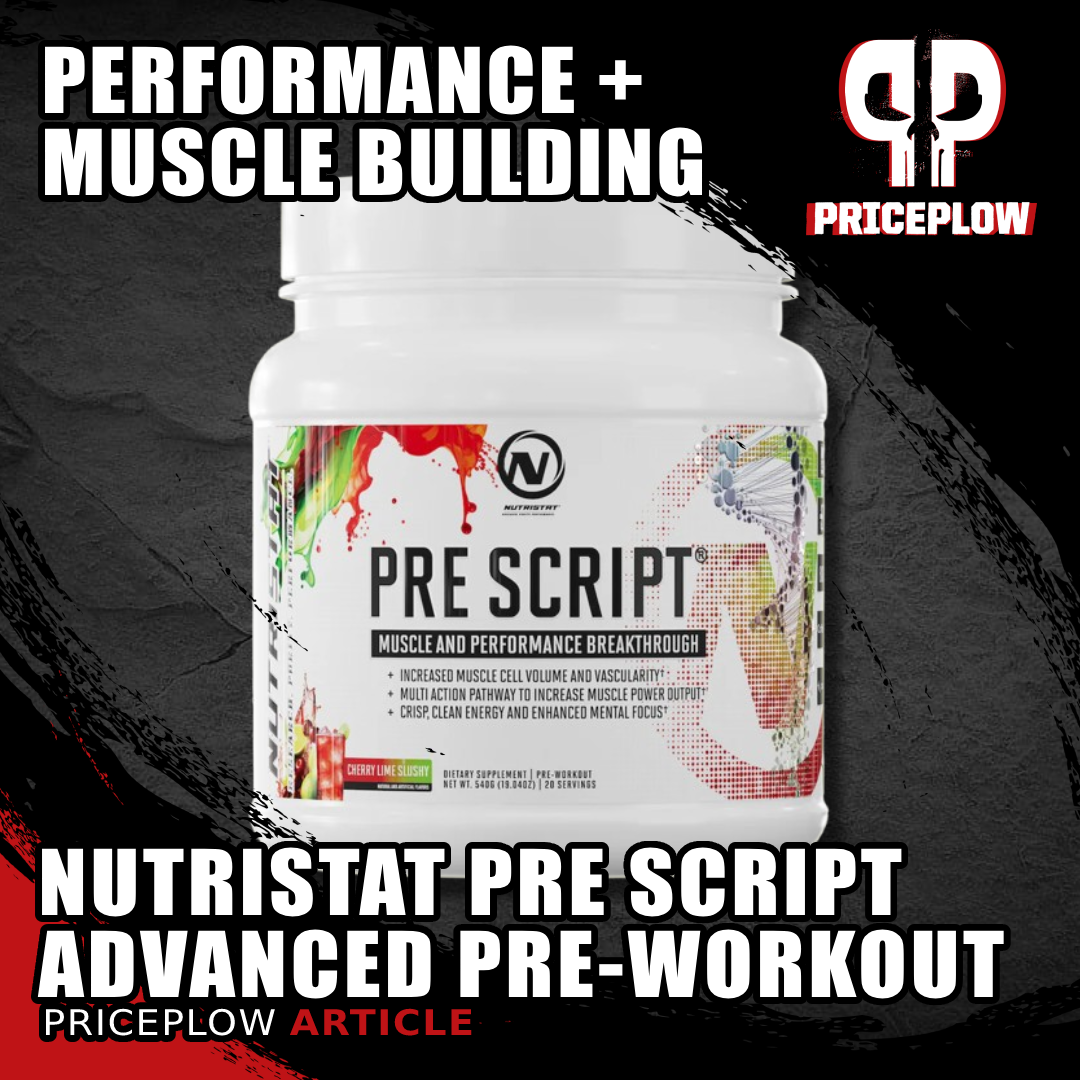
Nutristat Pre Script isn't your typical pre-workout. With 6g pure L-citrulline, 5g Creapure® creatine, and the first-ever inclusion of BioATP® (triacetyl adenosine), it's a complete performance enhancement system that builds muscle while boosting training intensity.
So yes, creatine can reduce demand on the pathway. But no, we're not going to turn that into "creatine supplementation lowers homocysteine" as a blanket claim. The methyl groups are likely spread across numerous pathways.
The same should go for arginine and glycine. We can't promise that this automatically increases nitric oxide, glutathione, collagen, protein synthesis, or any other pathway those substrates might participate in. But hey, it still can't hurt to free some of it up. This would need more research to really determine.
Quality Matters Here, Too
Now we get to Nutristat.
First, we're not claiming that Creapure uniquely suppresses endogenous creatine synthesis while other properly manufactured creatine monohydrate doesn't. But, if we're trying to avoid our bodies from dealing with "unnecessary nonsense", we should be fueling it with as pure of a product as possible.
If you're going to consume creatine every day, what quality of creatine do you want to consume?
That's where Nutristat has been consistent.
We've already covered the sourcing story in The Creapure Connection: Why Nutristat Only Uses Premium Creatine Monohydrate. Nutristat uses Creapure® across its creatine-containing product line, sourcing from AlzChem's dedicated production operation in Trostberg, Germany.
Creapure's appeal isn't a claim that its creatine molecule does different chemistry once it enters your bloodstream. It's really about manufacturing control, high purity, batch consistency, raw-material traceability, and tight control over creatine-production byproducts.
And when you use it daily or in high doses, those details matter more, not less.
In our article on Creatine and Sleep Deprivation, we covered a 2024 trial whose creatine came from AlzChem in Trostberg, the manufacturer behind Creapure, and it was a high dose, where we want as little "other stuff" as possible.
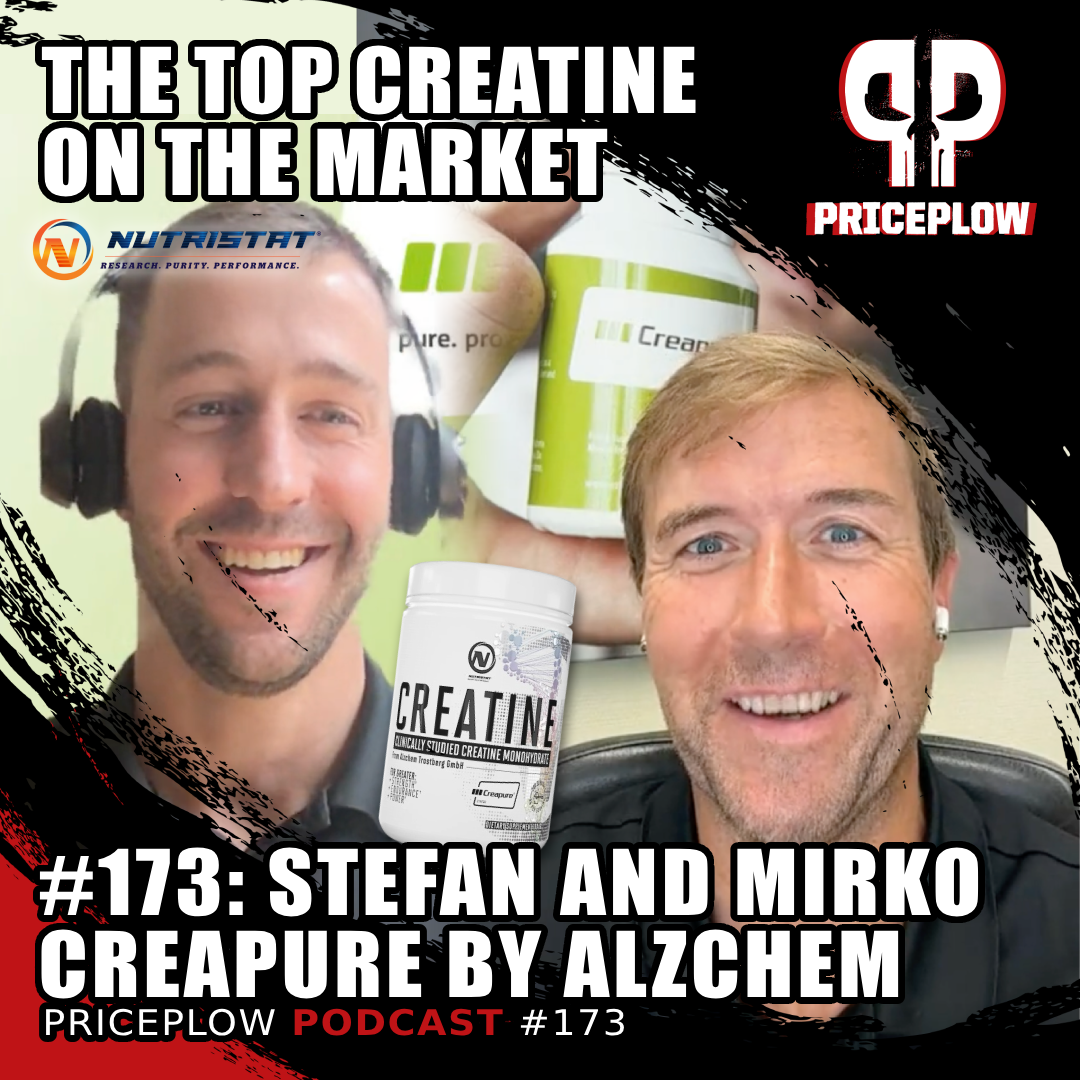
If you want the manufacturing side directly from the people who live it, we spent an entire podcast on it. Episode #173 with Mirko Holzmüller and Stefan Schweyer covers Creapure production, quality control, creatine research, and AlzChem's approach to the category.
The science in today's article gives us a different reason to care.
We're not talking about taking creatine only when you want a bigger bench press or a faster sprint. We're talking about supplying a nutrient that your body otherwise has to manufacture continuously.
If that's going to become a boring, everyday habit, boring >99.9% consistency in the raw material is exactly what you want.
Nutristat Makes Creapure the Default
Nutristat gives you a few ways to handle that daily creatine intake depending on how complicated you want the rest of the product to be.
-
Nutristat Creatine
Nutristat Creatine is the simple option.
It's standalone creatine for someone who doesn't need carbohydrates, stimulants, pumps, or anything else attached to the dose.
That's probably the cleanest fit for the metabolic argument in this article. The Peters study showed measurable suppression of GAA at just 3g/day. Derave showed that suppression remained during a long-term 5g/day maintenance protocol.
Mirko Holzmüller and Stefan Schweyer from Creapure reveal the manufacturing secrets behind Germany's 99.99% pure creatine monohydrate and explore creatine's expanding applications beyond sports performance on Episode #173 of the PricePlow Podcast.
You don't need to chase a huge dose every day to make the body rely less heavily on endogenous synthesis.
-
Nutristat Crea Script
Nutristat Crea Script takes a different approach, pairing 5g of Creapure with a 30g hydrolyzed rice oligodextrin carbohydrate system plus additional nutrient-transport and hydration ingredients.
It's built for the athlete who wants creatine inside a peri-workout carbohydrate strategy rather than as an isolated powder.
We covered the entire product, including its carbohydrate-creatine rationale, in our dedicated Crea Script article.
-
Nutristat Pre Script
Nutristat Pre Script also supplies 5g of Creapure, this time inside Nutristat's larger pre-workout formula. It also has betaine, providing more methyl groups, as mentioned above.
That means some Nutristat users may already be getting a full creatine dose through a product they're taking for training.
The point isn't to pile multiple creatine products together simply because you can (even though, well, you can)... If your Pre Script or Crea Script serving already gives you 5g, you don't need another 5g of standalone creatine just to satisfy the metabolic argument made here.
The real goal is consistency.
For people who use those products only on training days, standalone Nutristat Creatine gives you an obvious way to keep creatine intake steady on the days when a pre-workout or peri-workout product isn't part of the plan.
It Gets Made One Way Or Another... Might as Well Help a Body Out

Creatine is awesome because we already have plenty of reasons to take it. You can talk about high-intensity performance. You can talk about muscle. You can talk about recovery. You can talk about the expanding body of research on cognition and the brain.
But there's a simpler argument underneath all of those: Your body needs creatine every day.
It continuously loses some as creatinine. When your diet doesn't replace all of that loss, you manufacture the difference using glycine, arginine-derived amidino groups, and methyl-group chemistry tied to methionine and SAM.
So that's what we've meant all these years when we've written that creatine is metabolically expensive to make.
And unlike some biochemical theories that sound great on paper, we can watch the body respond when creatine arrives from outside. You give the body creatine, and it makes less of its own, and we need less precursor activities and reactions.
So if you're looking for another reason to keep a little creatine in your routine every day, here it is: you can supply something your body otherwise has to spend resources manufacturing for itself. Make some gains and save it for something else.
And if you're going to make that a daily habit, Nutristat's preference makes sense. Use a tightly controlled source, keep the dose consistent, and let Creapure handle part of a job your body would otherwise have to do on its own.
Stay tuned to PricePlow for more Nutristat research, products, and deep dives:
Nutristat – Deals and Price Drop Alerts
Get Price Alerts
No spam, no scams.
Disclosure: PricePlow relies on pricing from stores with which we have a business relationship. We work hard to keep pricing current, but you may find a better offer.
Posts are sponsored in part by the retailers and/or brands listed on this page.


Comments and Discussion (Powered by the PricePlow Forum)