After 30, aging muscle needs more leucine to build. Native whey delivers it faster and in higher amounts. That's why Nutristat PÜR NATIVE matters.
After 30, you start losing muscle. It's slow at first, maybe 1% per year, but the rate accelerates. By the time most people notice something is off (strength declining, recovery slower, body composition shifting without obvious cause), the process has been underway for years.
The condition has a name: sarcopenia, the age-related loss of skeletal muscle mass and strength. It's not something that only affects people in their 70s. Research places the onset in the mid-30s to early 40s, well before most people factor it into how they approach training and nutrition.
The standard advice is to eat more protein. That's not wrong, but it's incomplete. What the research shows is that protein quality matters just as much as quantity, and that aging biology changes how your muscles respond to the protein you eat. Leucine content, the speed of amino acid delivery, and the integrity of the protein source all become more important with age, not less.
PÜR NATIVE: A Better Protein Powder for Combating Muscle Loss
That's where native whey enters the picture. If you've read our Native Whey Protein Ultimate Guide, you know the production method preserves protein fractions that conventional cheese-derived whey processing degrades. What we haven't focused on is what that means specifically for older adults, a population where the case for native whey's amino acid profile is arguably the strongest it gets.
Nutristat PÜR NATIVE is built on native whey isolate with NativeZyme enzymatic processing technology. This article examines what the science says about protein quality and aging muscle, and why this product's specs matter in that context.
Nutristat PÜR NATIVE – Deals and Price Drop Alerts
Get Price Alerts
No spam, no scams.
Disclosure: PricePlow relies on pricing from stores with which we have a business relationship. We work hard to keep pricing current, but you may find a better offer.
Posts are sponsored in part by the retailers and/or brands listed on this page.

What Is Sarcopenia?
Sarcopenia is the gradual, age-related loss of skeletal muscle mass and function. The term comes from the Greek for "poverty of flesh," and while it's often discussed in the context of elderly care, the process starts earlier than most people expect.
Research places meaningful muscle loss beginning around age 35 to 40, with the rate typically accelerating after 60. By that point, older adults show measurably lower rates of muscle protein synthesis in response to the same protein doses that work reliably in younger individuals.[1] The practical effects are familiar: strength that takes more work to maintain, recovery that takes longer, and body composition that shifts toward fat even when diet and exercise habits haven't changed.
The consequences go beyond aesthetics. Muscle tissue is metabolically active. It plays a role in how your body handles blood glucose, how well you recover from illness or injury, and how functionally capable you stay as you age.
If you're in your 40s or 50s and thinking seriously about long-term performance and health, sarcopenia is worth understanding now. The inputs that support healthy muscle maintenance -- training load, protein intake, and protein quality -- are worth optimizing before the decline accelerates, not after.
Why Standard Protein Falls Short for Aging Muscle
The problem isn't just that older adults lose muscle. It's that aging muscle becomes harder to rebuild.
Researchers call this anabolic resistance: the blunted capacity of older skeletal muscle to respond to the same anabolic signals that work reliably in younger tissue. Feed a 25-year-old 20g of whey and you'll see a robust increase in muscle protein synthesis (MPS). Feed the same protein to a 65-year-old and the response is measurably smaller.[1]
Most whey protein is a cheese byproduct. Native whey skips that process entirely -- filtered from fresh milk with more leucine, intact bioactive fractions, and real digestibility benefits.
Part of the mechanism runs through mTORC1, the central hub of anabolic signaling in skeletal muscle. With age, mTORC1 responsiveness to amino acid inputs declines. The kinase p70S6K, which sits downstream and governs translation of muscle proteins, requires a stronger stimulus to activate at the same level.
That stronger stimulus is leucine. The concept of a leucine threshold -- the minimum blood leucine concentration needed to trigger MPS -- is well established in the literature. What's less appreciated is that this threshold rises with age. Older adults need a higher peak blood leucine level to achieve the same mTORC1 activation that younger adults reach at lower concentrations.[2]
The practical consequence: a standard whey protein serving that easily cleared your leucine threshold at 25 may not do so at 55. Same grams, same protein, but a different biological result.
Native Whey’s Leucine Advantage
Native whey starts with a structural edge. Because it's produced by cold membrane filtration of fresh milk and not as a byproduct of cheese production, it retains a fundamentally different amino acid profile than WPC-80.
The most relevant difference is leucine content. Hamarsland and colleagues found that native whey delivered 2.7g of leucine per 20g serving versus 2.2g for WPC-80 and 2.0g for milk, roughly a 23% gap between native whey and WPC-80, and 35% over milk.[3,4]
Not Made From Cheese = No Unnecessary Cheese Components
Whey prices hit record highs as GLP-1 drugs reshape supply. See why Nutristat PÜR NATIVE and native whey sidestep the crisis entirely.
Part of this advantage is structural. Conventional cheese whey contains glycomacropeptide (GMP), a casein-derived fraction that's low in essential amino acids and dilutes the leucine yield per gram of protein. Native whey, produced without the cheese-making step, is essentially GMP-free. The result is a higher proportion of anabolically relevant amino acids in every gram.
The kinetic picture is equally important. In a five-protein crossover trial, recreationally active men consumed 20g servings of native whey, WPC-80, hydrolyzed whey, microparticulated whey, or milk after a resistance training session. Native whey produced both the fastest rise and the highest peak blood leucine of all five proteins tested, and this lead was clear in the first hour post-ingestion.[3]
Both the speed and the peak matter when the goal is clearing an elevated leucine threshold. A slow rise that plateaus below the threshold is functionally equivalent to not clearing it at all. Native whey's combination of higher leucine content and faster aminoacidemia addresses both sides of that problem.
What the Research Shows in Older Adults
The most directly relevant evidence comes from Hamarsland and colleagues' 2018/2019 work in elderly individuals, including one acute study and one 11-week training trial, both in adults aged 70 and older.
-
Leucine Kinetics in the Elderly
In the acute study, 21 healthy elderly men and women completed a bout of lower-body resistance exercise and then consumed 20g of native whey, WPC-80, or milk. Blood leucine was measured over the following five hours alongside muscle biopsies tracking p70S6K phosphorylation and fractional synthetic rate (FSR), the direct measure of muscle protein synthesis (MPS).[5]

Nutristat PÜR NATIVE delivers Native Whey Protein extracted directly from milk, not cheese production. Lab-tested with 3.1g+ leucine per serving and enhanced with NativeZyme technology for superior absorption. Research shows faster recovery and better gains.
The leucine kinetics finding was clear and consistent with the younger-adult data: native whey drove higher peak blood leucine than WPC-80 (P < 0.05), and both wheys exceeded milk. Native whey's leucinemia advantage held up in a 70+ population just as it had in recreationally active young men.
Both wheys outperformed milk on MPS 1-3 hours post-exercise (P = 0.026 for native whey vs. milk), but not each other. This is hypothesized to be from a leucine saturation ceiling. The researchers noted that both supplements likely delivered enough leucine to push past the elevated threshold in this population, leaving little room for additional leucinemia to produce a measurable MPS difference. When both conditions clear the threshold, the downstream signaling responses converge.
The long-term training data reinforces this interpretation. In an 11-week strength training trial in elderly adults, native whey and milk produced equivalent gains in muscle mass and strength, with both groups improving significantly from baseline.[5]
-
The Practical Takeaway
The ceiling-effect interpretation cuts both ways. Under controlled research conditions, both proteins were dosed at 20g, a quantity large enough to deliver meaningful leucine to even elderly subjects. In real-world settings, servings are smaller, protein quality is more variable, and appetite is often reduced with age.
That's where native whey's leucine kinetics advantage has its most direct practical application: it clears the elevated threshold more reliably per gram of protein, with less margin for error. You're not relying on a large total dose to compensate for a lower-leucine source. The protein does more of the work at a lower dose.
Why PÜR NATIVE Fits This Need
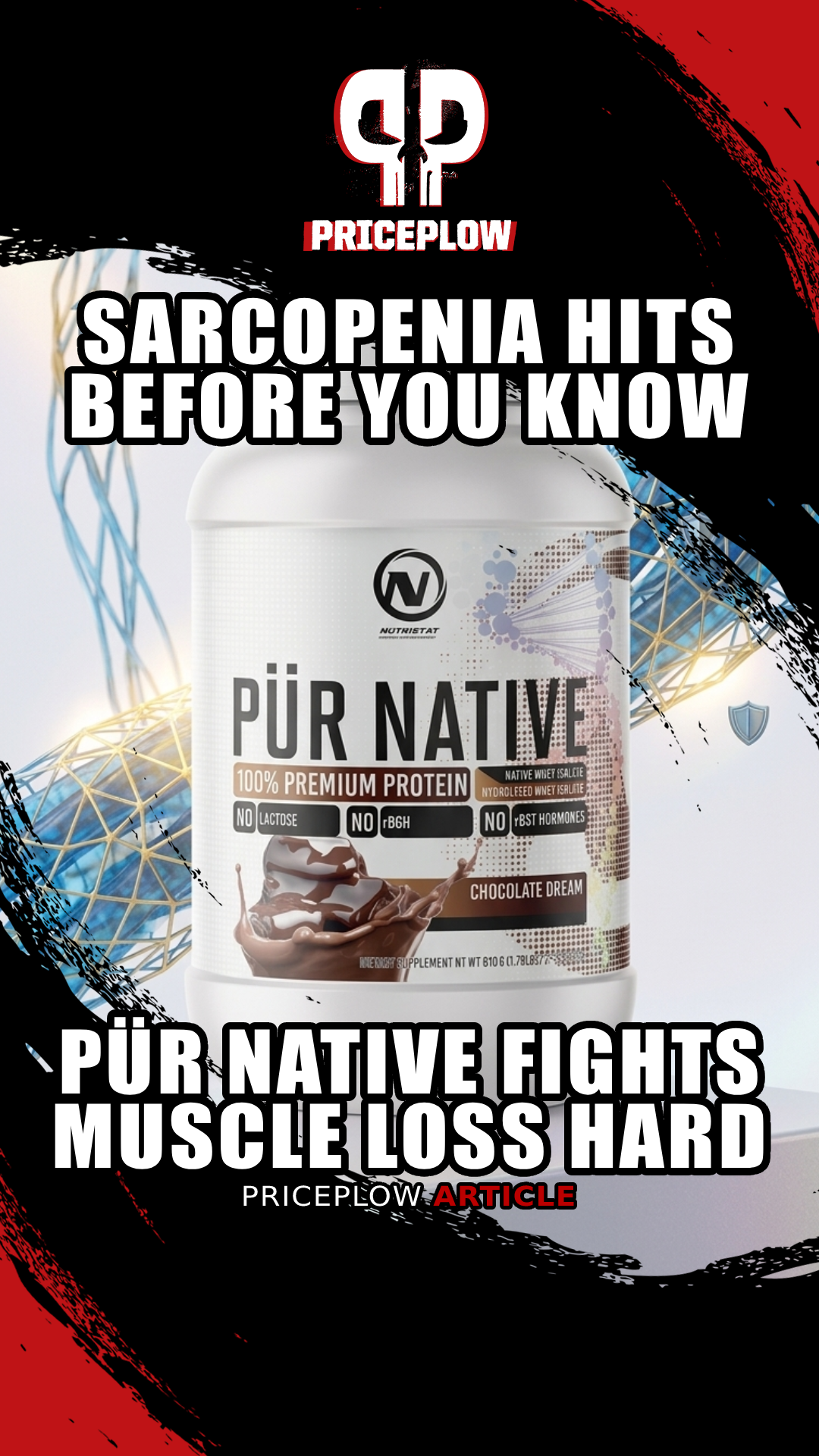
Most protein supplements aren't designed with aging muscle biology in mind. They're built for the gym-oriented 25-year-old, and the leucine content, protein integrity, and source quality often reflect that.
Nutristat PÜR NATIVE starts with a fundamentally different protein source. Native whey isolate, extracted directly from fresh milk through cold membrane filtration, skips the heat and acid exposure that cheese-derived whey undergoes. That processing is exactly what degrades leucine content and bioactive fractions in conventional products.
Lab testing on PÜR NATIVE confirms more than 3.1g of leucine per serving, which is on the high end of what you'll find in any protein supplement. For someone navigating the age-related shifts in how muscle responds to protein, that margin is meaningful. You're not hoping to clear the leucine threshold, you're clearing it with room to spare.
NativeZyme, the enzymatic processing technology in PÜR NATIVE, is also designed to support absorption. The combination of a high-integrity protein source and digestion-optimized delivery makes this a practical fit for older adults who want both the amino acid profile and confidence in how well the protein is actually absorbed and used.
The formula is also clean: no lactose, no hormones, and no unnecessary additives. That matters for a demographic that's typically more thoughtful about what's in their supplements and more likely to be keeping an eye on their health markers overall.
Conclusion: The Right Protein at the Right Time
Sarcopenia isn't a problem that appears overnight, and it doesn't require a clinical diagnosis to start thinking about. For most people, the window to meaningfully support long-term muscle health spans decades, and the choices made about protein quality during those years add up.
"Just eat more protein" is a reasonable starting point. But if you're taking muscle maintenance seriously as you age, the leucine content, speed of amino acid delivery, and integrity of the protein source all factor into whether that protein is actually doing the job your biology requires.
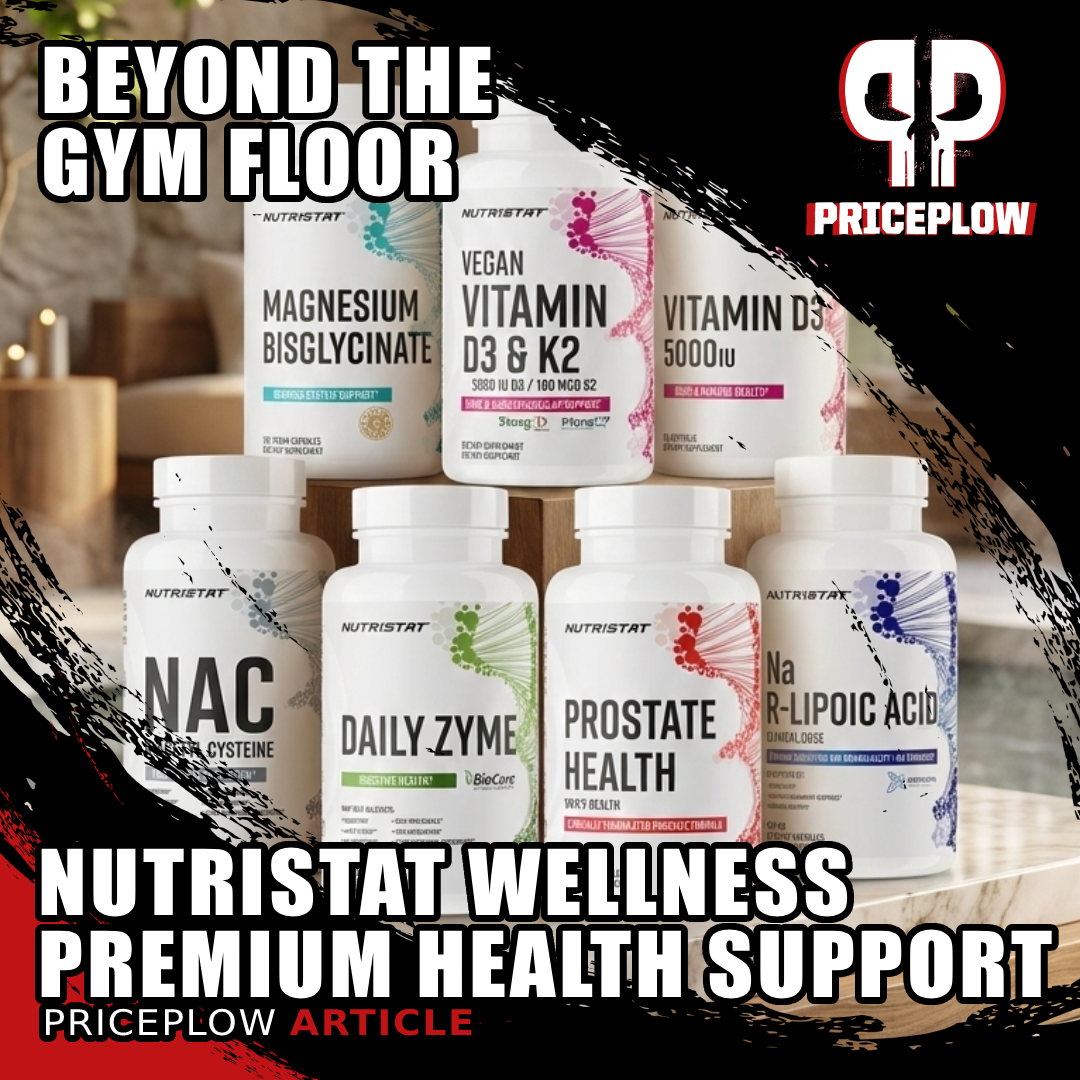
Nutristat's wellness line uses the same premium ingredient philosophy that made their performance products stand out. Vegan-friendly options, research-backed forms, clinical doses.
Native whey's amino acid profile is better matched to aging muscle's elevated demands than conventional cheese-derived whey, and PÜR NATIVE is one of the most complete native whey products available. The leucine numbers are confirmed by third-party lab testing, the source is traceable, and the formula doesn't cut corners to hit a lower price point. And with whey prices at record highs, native whey provides a solution.
For the full production science behind why native whey is different, our Native Whey Protein Ultimate Guide covers it in depth. To see how this fits within Nutristat's broader commitment to premium ingredients across their entire lineup, the Nutristat Wellness line coverage is worth a look. For pricing, flavors, and availability on PÜR NATIVE, see below.
Nutristat PÜR NATIVE – Deals and Price Drop Alerts
Get Price Alerts
No spam, no scams.
Disclosure: PricePlow relies on pricing from stores with which we have a business relationship. We work hard to keep pricing current, but you may find a better offer.
Posts are sponsored in part by the retailers and/or brands listed on this page.