Protein is having a moment... and it's not slowing down.
In late 2025, Starbucks added Protein Lattes and Protein Cold Foams to its permanent menu across the U.S. and Canada, using premium whey to deliver up to 36 grams of protein per drink.[1] In early 2026, PepsiCo followed with three new protein-forward launches: a reformulated Muscle Milk, a whey-based Propel Clear Protein powder, and a Starbucks Coffee + Protein RTD.[2] According to Starbucks' own research, 80% of Americans now prioritize protein in their daily diet.[3]
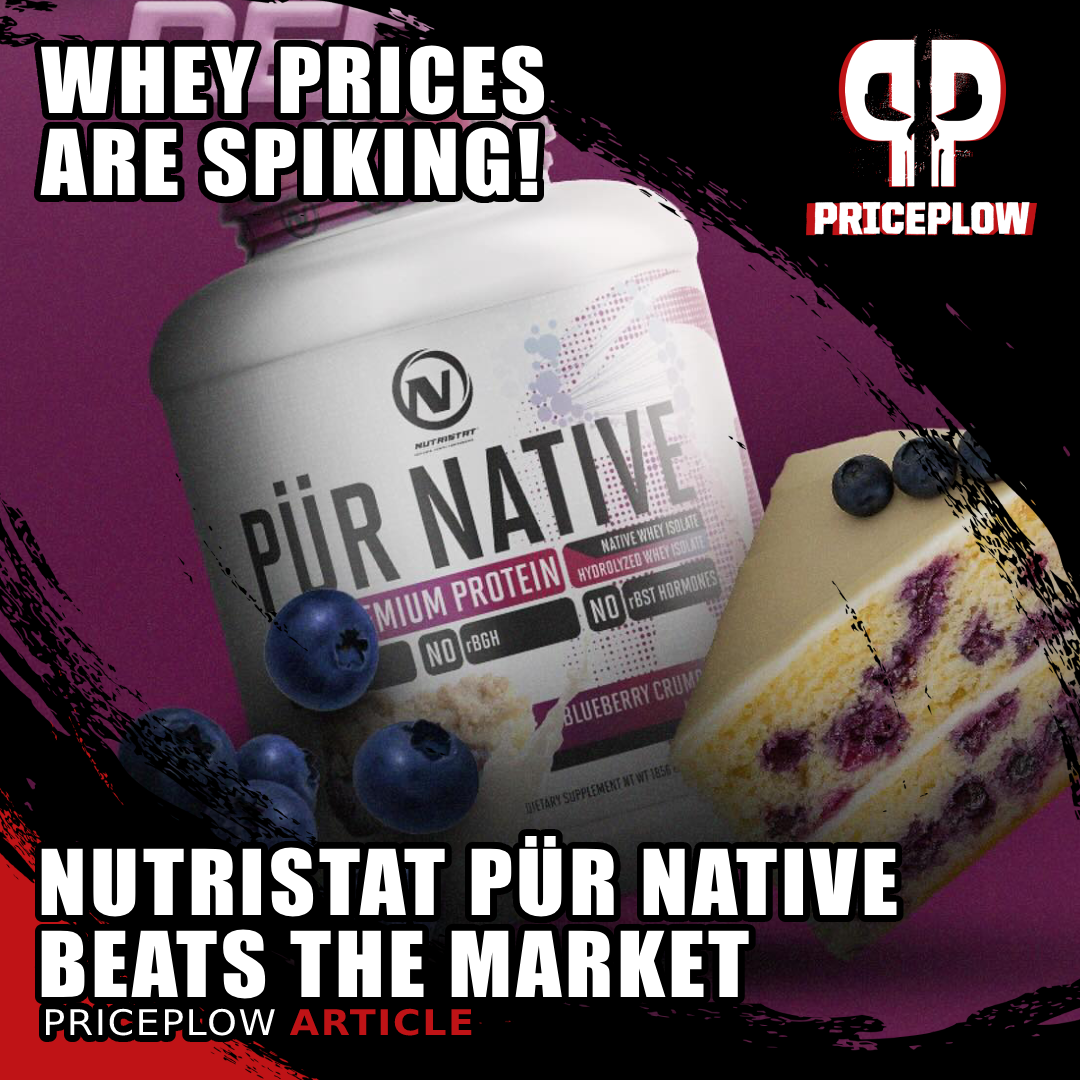
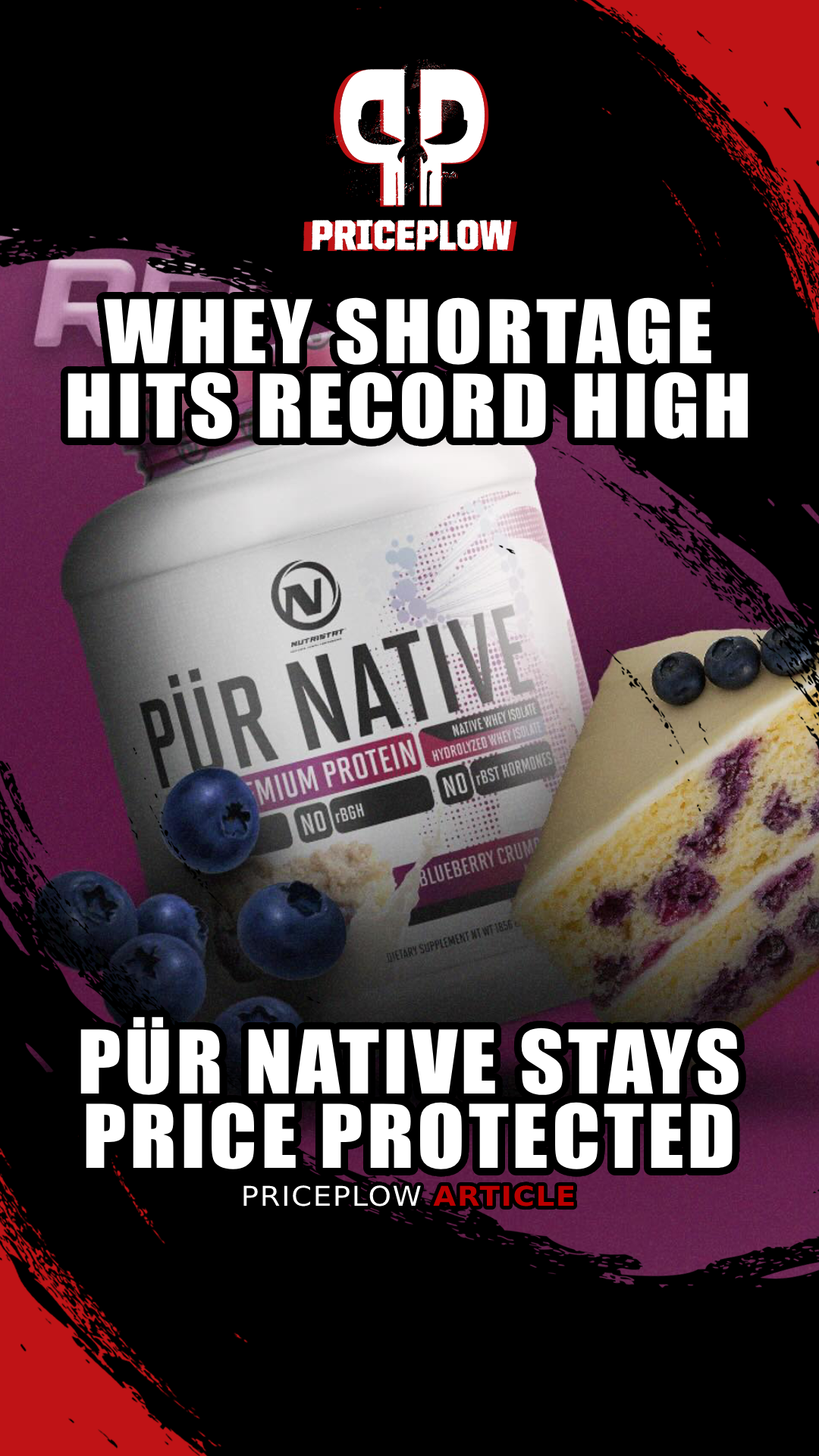
Whey protein prices are up 50–110% since 2024. GLP-1 drugs are driving demand up while quietly shrinking supply. Nutristat PÜR NATIVE uses native whey, which sits outside that supply chain entirely.
Whey Protein No Longer Belongs Just to Sports Nutrition...
The category no longer just belongs to the sports nutrition segment. When billion-dollar beverage brands start competing for the same whey supply that smaller supplement companies depend on, something has to give. In this case, it's prices.
Raw U.S. whey protein isolate (WPI) hit $11 per pound in late 2025 -- levels never previously seen in the market.[4] Prices rose 50% to 110% from 2024 to 2025, and analysts expect further pressure through 2026. Major suppliers have contracts sold out well into the year, leaving new buyers with few options.[4]
If you've noticed your go-to protein tub costs more than it used to, this is why. And given a potential oil crisis on the horizon, it may get even worse than it was already going to be.
One Way Around the Issue
In this article, we'll break down why whey prices are where they are, why the structural problem isn't going away soon, and why native whey (the type used in Nutristat's PÜR NATIVE) sits outside that supply chain entirely. Along the way, we'll look at what the native whey process actually preserves that conventional production loses, and why that matters beyond just the economics.
Sign up for Nutristat alerts below so you don't miss new products or restocks, then let's get into it.
Nutristat PÜR NATIVE – Deals and Price Drop Alerts
Get Price Alerts
No spam, no scams.
Disclosure: PricePlow relies on pricing from stores with which we have a business relationship. We work hard to keep pricing current, but you may find a better offer.
Posts are sponsored in part by the retailers and/or brands listed on this page.

The GLP-1 Paradox
The story behind the shortage is a strange one. The single biggest driver of whey demand growth is the same trend quietly constraining supply: GLP-1 medications like Ozempic and Wegovy.
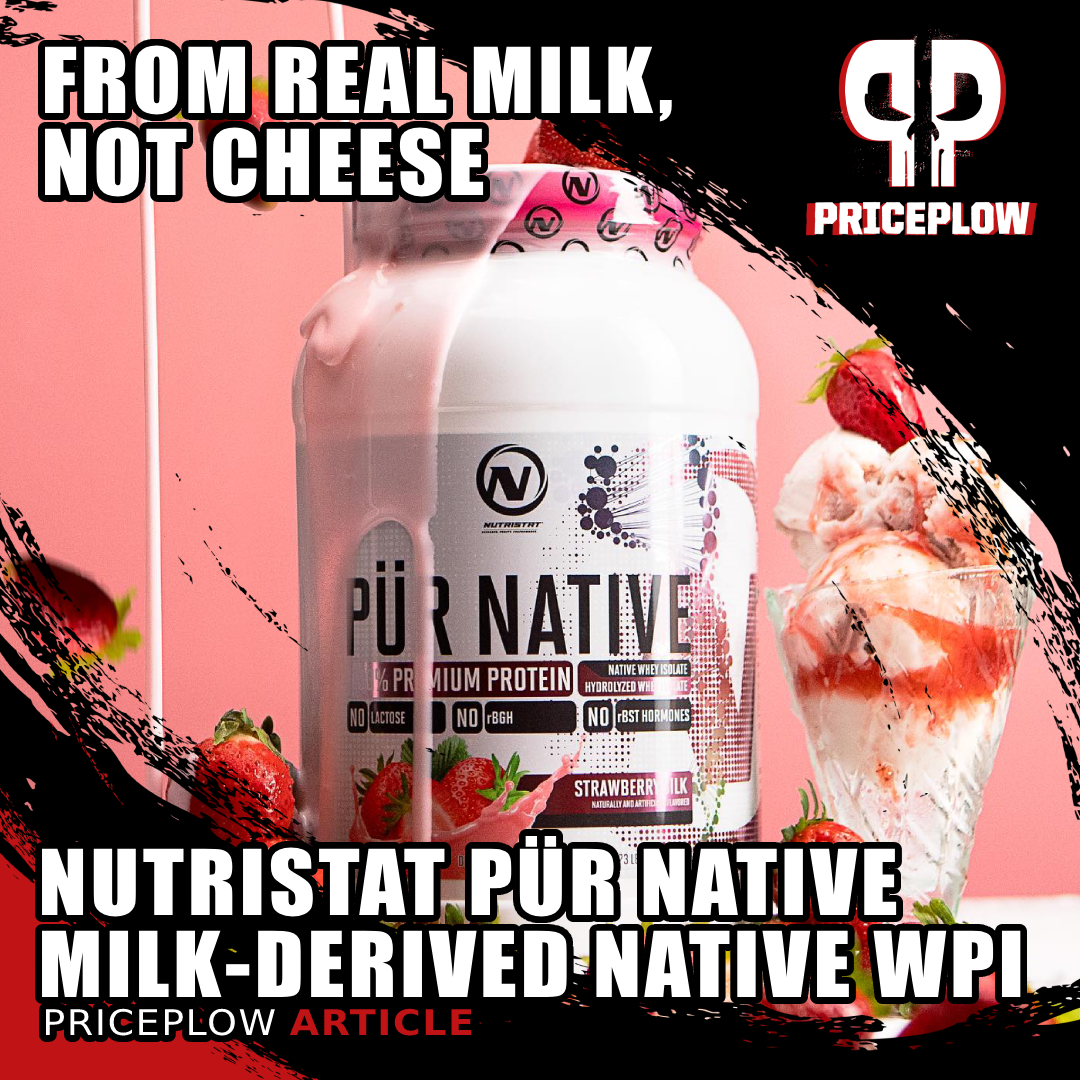
Nutristat PÜR NATIVE delivers Native Whey Protein extracted directly from milk, not cheese production. Lab-tested with 3.1g+ leucine per serving and enhanced with NativeZyme technology for superior absorption. Research shows faster recovery and better gains.
On the demand side, roughly 12% of U.S. adults now use GLP-1 medications, and whey protein is commonly recommended alongside them to preserve muscle mass during rapid weight loss.[5] That single shift has added millions of new whey consumers to the market overnight. Add the broader cultural protein trend beyond sports nutrition (aging-related muscle preservation, general dieting, and the emergence of clear protein beverages) and total protein supplement sales reached $8.6 billion in 2025, up 12.4% year over year.[6]
On the supply side, however, there's a structural constraint that most consumers never think about: conventional whey is a byproduct of cheese manufacturing. To make WPI or WPC, you first have to make cheese. More whey means more cheese.
The problem is that dieters aren't just buying more protein supplements. GLP-1 users are also buying less cheese. Research from Cornell University found that households with at least one GLP-1 user reduced cheese purchases by 7.2%.[7] At scale, softening cheese demand removes the financial incentive to build new cheese processing capacity, which is the only way to generate more conventional whey streams.
The industry is caught in a loop: demand for whey is surging, but the mechanism that produces whey is being undermined by the same trend creating the demand. Processing capacity has been maxed out trying to shift liquid whey toward WPI production, and the ability to shift more is essentially capped.[8]
Why Conventional Whey Supply Can't Simply Scale
When producers want more whey, they need more cheese plants online. That process takes years: facilities need to be built, staffed, and certified. Whey processing infrastructure needs to be added alongside the cheese side. Quality testing adds further delays (especially for WPI, which has strict purity specifications).[9]
None of this changes quickly. The result is a market where demand continues to climb while supply responds slowly, and prices stay elevated for an extended period.
Is this even the best way to get whey?
There's also a product quality consideration that tends to get lost in this conversation. The cheese manufacturing process exposes the milk to heat and acidification. The whey that comes out the other side has already been through significant processing before a single filtration step begins. This is the real story behind "cold filtered" whey, which is a common marketing claim. Yes, the filtration step is cold -- but the raw input has already been acidified and heated for cheese making. The "cold" part only applies to what happens after the fact.
As Nutristat's founder has pointed out, native whey is what cold-filtered whey is really trying to imply. It's filtered directly from fresh milk, before any heat or acidification takes place. If any whey deserves to be called cold-filtered, it's this. Let's explore:
Native Whey: A Different Supply Chain Entirely
Native whey doesn't need cheese to exist. It's extracted from fresh milk using membrane filtration technologies (microfiltration and ultrafiltration) at low temperatures. The process has nothing to do with cheese manufacturing whatsoever, which means native whey supply can grow independently of cheese production trends.
That's a structural advantage in today's market. A brand sourcing native whey isn't exposed to the same supply chain constraints as a brand sourcing conventional WPC or WPI. The raw input is fresh milk, and the bottleneck is cold-process filtration capacity rather than cheese plant economics.
For a more complete breakdown of how the native whey process compares to conventional production, and why the differences matter at the molecular level, our article titled "Native Whey Protein: The Ultimate Guide" covers the full science.
The Quality Dividend
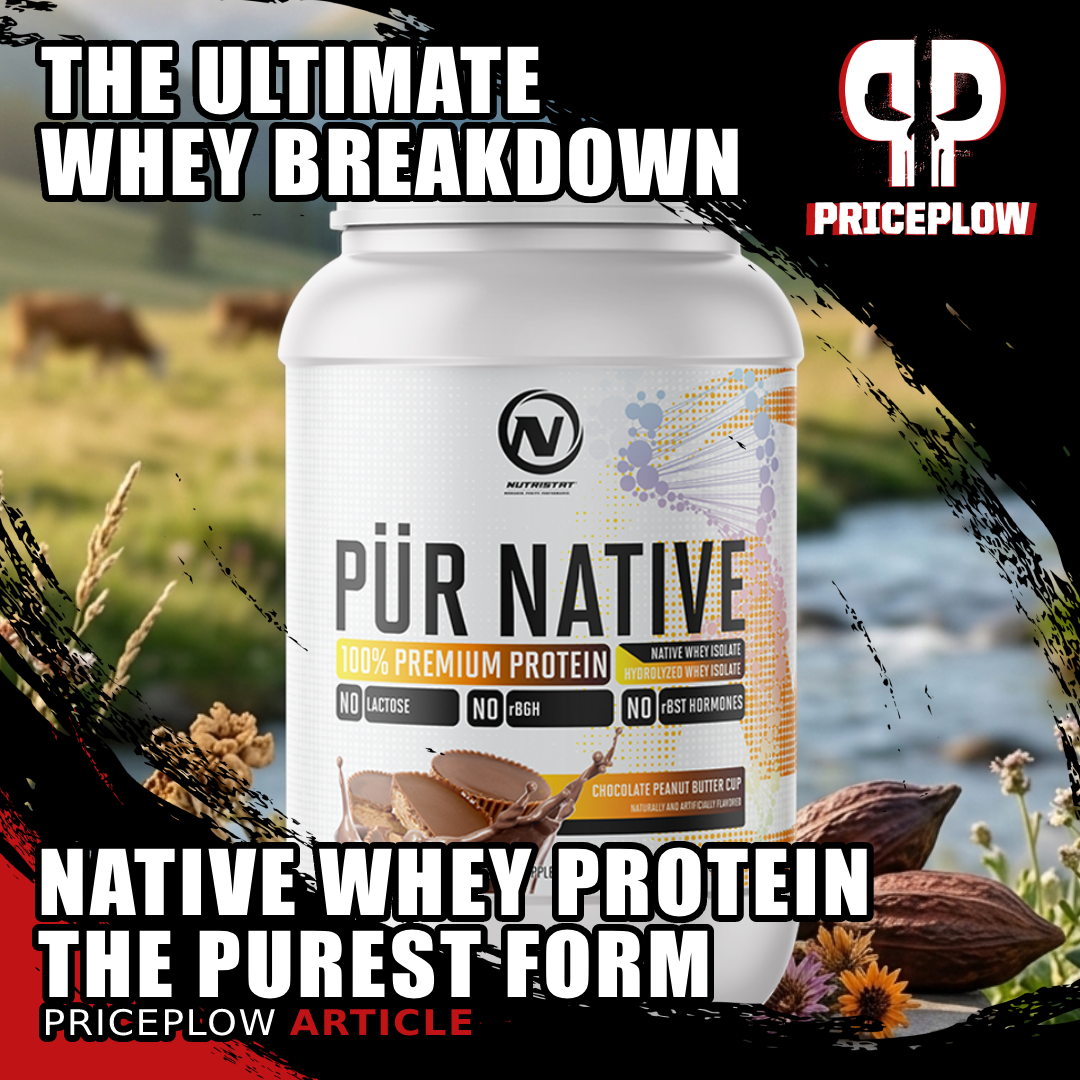
Most whey protein is a cheese byproduct. Native whey skips that process entirely -- filtered from fresh milk with more leucine, intact bioactive fractions, and real digestibility benefits.
Supply chain resilience is useful, but native whey's nutritional case is what originally drove brands like Nutristat to adopt it.
Because the proteins are extracted from fresh milk without heat or acid exposure, the molecular structure stays intact. Conventional whey processing denatures a meaningful portion of the protein, which affects both amino acid composition and bioactive fractions.
Two areas stand out. First, native whey carries a higher leucine content than conventional whey, and leucine is the primary amino acid that triggers muscle protein synthesis. The ingredient Nutristat uses in PÜR NATIVE contains 12.2g of leucine per 100g of protein, compared to approximately 10.5g in standard WPC/WPI. That gap matters for athletes, but it especially matters for older adults where leucine sensitivity declines with age.
Second, native whey preserves the cystine (the disulfide-bonded form of cysteine) that conventional processing tends to break down through thermal hydrolysis. Cysteine availability is the rate-limiting factor in the body's production of glutathione, the primary intracellular antioxidant. As the Nutristat founder has noted, the cysteine-to-glutathione conversion data that exists specifically applies to native, undenatured whey... not to the denatured cysteine found in cheese-derived whey protein. When the protein molecules are less disrupted, they perform closer to their original biological function.
Native whey is also free of glycomacropeptide (GMP), a peptide fraction generated during cheese production that dilutes the amino acid quality of conventional WPC and WPI.
For the full science on leucine thresholds, cysteine bioavailability, and how these translate to real-world outcomes including a sarcopenia reversal study, check our native whey deep dive.
Nutristat PÜR NATIVE
Nutristat PÜR NATIVE was built around these principles before the supply crisis made them a mainstream talking point. The formula uses native whey protein isolate at 95% protein on a dry-matter basis, sourced via the same cold-process membrane filtration described above, with no cheese manufacturing in the chain.
In a market where conventional WPI is constrained and prices are at record highs, a product that was engineered around native whey from the start is positioned differently than brands scrambling to find supply.
Check current prices and availability below, and sign up for alerts to stay updated on new Nutristat products and flavors.
Nutristat PÜR NATIVE – Deals and Price Drop Alerts
Get Price Alerts
No spam, no scams.
Disclosure: PricePlow relies on pricing from stores with which we have a business relationship. We work hard to keep pricing current, but you may find a better offer.
Posts are sponsored in part by the retailers and/or brands listed on this page.

Comments and Discussion (Powered by the PricePlow Forum)