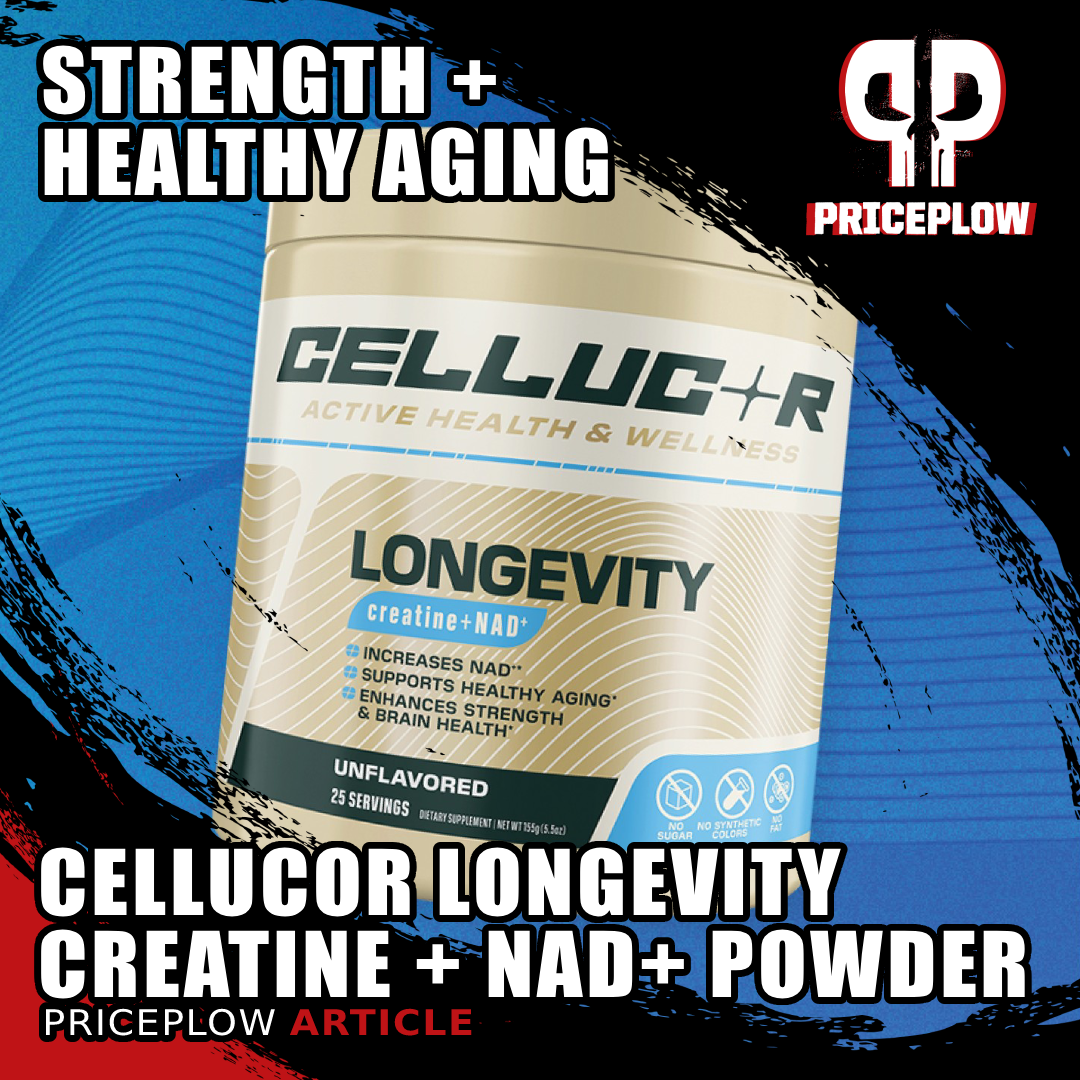
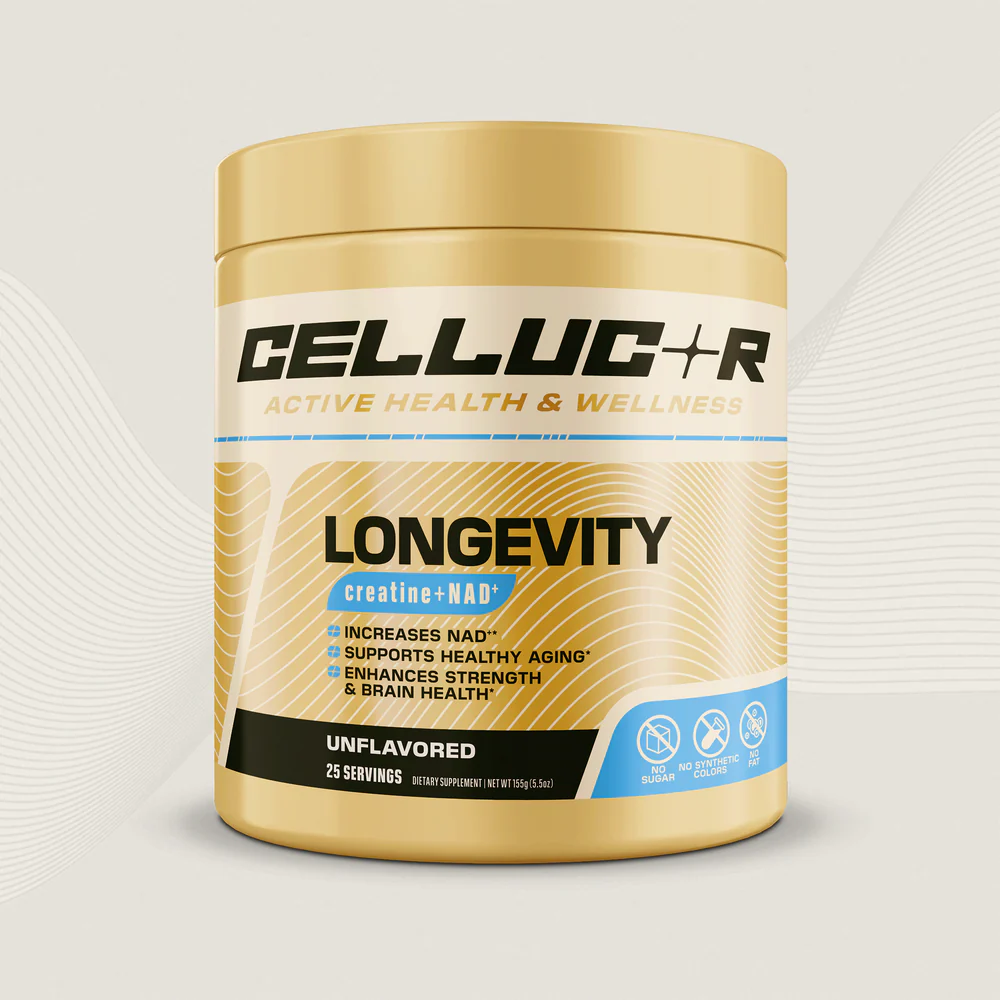
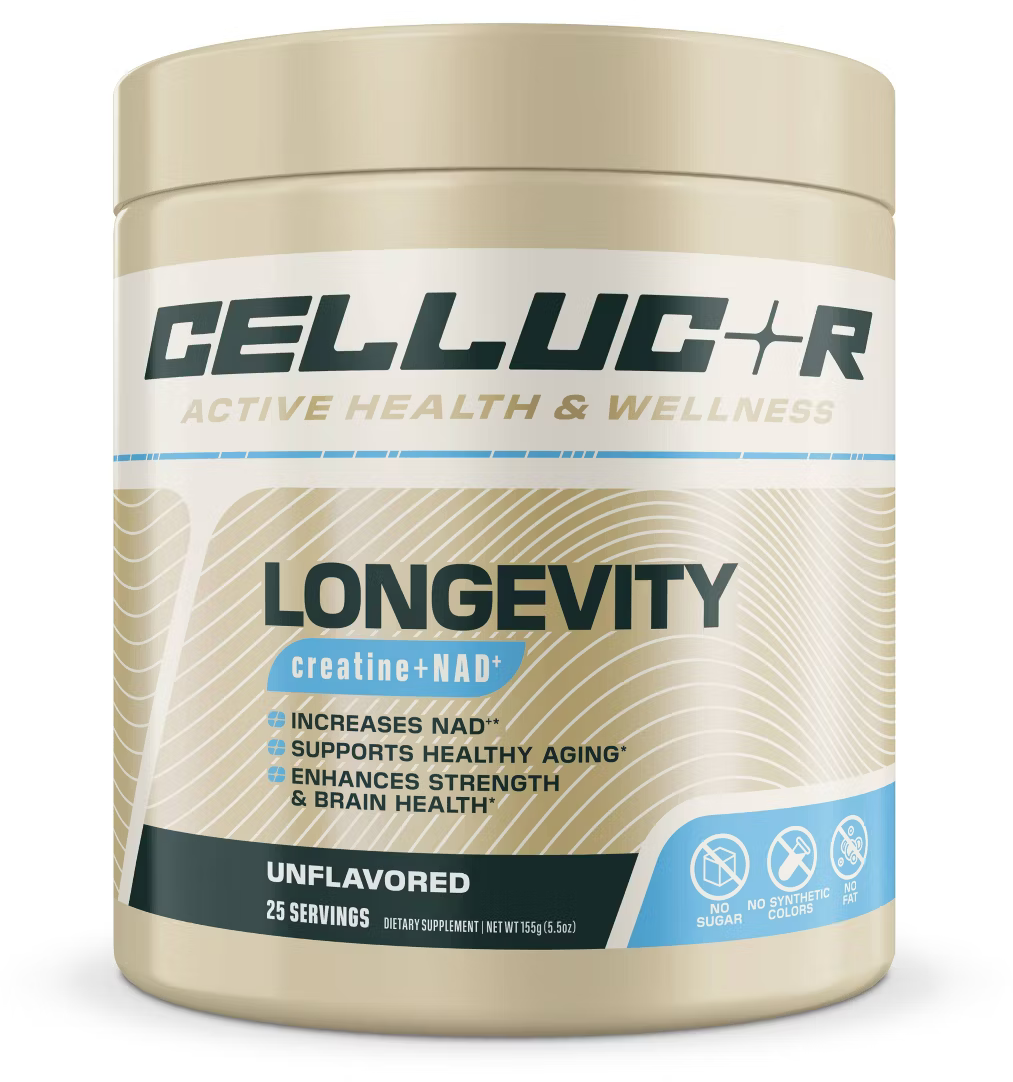
Cellucor Longevity Creatine Powder with NAD+ hits with 5g creatine, 250mg NMN, BioSNEDS NADPro quercetin cocrystal, and ApigenSol apigenin. It supplies NAD+ precursors and blocks the enzymes that break them down. Smart formula, fair price.
Cellucor has wiped the slate clean. The brand recently reset its social media presence and is pushing back into powder supplements with a sharper identity: Active Health & Wellness. Cellucor® Longevity Creatine Powder with NAD+ is the opening statement in that push, a formula that sits at the crossover of sports performance and the fast-growing active longevity category. It's priced very fairly given the formula, unflavored, and designed to fold into whatever you're already taking.
Creatine and NMN with a Whole Lot More
The formula leads with a full 5g of creatine monohydrate, anchoring it in familiar performance territory, and builds on the direction Cellucor was already heading with the COR-Performance Creatine flavor launch in late 2024. Paired with the creatine is a NAD+ support stack built around NMN (Nicotinamide Mononucleotide), niacin via niacinamide, and two branded BioSNEDS™ delivery-enhanced ingredients: BioSNEDS™ NADPro™ (quercetin + niacinamide cocrystal) and BioSNEDS™ ApigenSol™ (apigenin). Together, they approach NAD+ from two angles: supplying precursors and blocking the enzymatic degradation that depletes the pool in the first place.
This is one of the more technically sophisticated powder launches we've seen from Cellucor, and the brand has been signaling a renewed push into dietary supplements since 2024. Longevity looks like the flagship of the next leve of that effort. Cellucor has also teased a follow-up formula called Vitality (Collagen Peptides + Creatine), so this Active Health & Wellness line appears built for expansion. If you want to stay ahead of what's next from Cellucor, sign up for alerts below.
Cellucor Longevity - Creatine + NAD+ – Deals and Price Drop Alerts
Get Price Alerts
No spam, no scams.
Disclosure: PricePlow relies on pricing from stores with which we have a business relationship. We work hard to keep pricing current, but you may find a better offer.
Posts are sponsored in part by the retailers and/or brands listed on this page.
This area is reserved for Team PricePlow's upcoming videos.
Subscribe to our channel and sign up for notifications so you catch it when it goes live!

An Introduction to BioSNEDS
Before we get into the label itself, we need to get into the underlying technology used to boost the non-creatine ingredients.
BioSNEDS™, developed by Verdant Nature, is a lipid-based oral delivery technology targeting a core limitation of most botanical supplements: poor water solubility. Both quercetin and apigenin are highly lipophilic compounds that the body absorbs poorly from a standard powder dose.[1]
BioSNEDS™ belongs to a class called Self-Nanoemulsifying Drug Delivery Systems (SNEDDS). When these formulas contact GI fluids, they spontaneously form nanoscale oil-in-water droplets, typically under 200nm, dramatically expanding the surface area available for intestinal absorption.[2] Those droplets are taken up via the lymphatic system rather than the portal vein, bypassing hepatic first-pass metabolism where much of the degradation typically occurs.[3]
That pathway explains the label's dose math: 12mg of quercetin stated as bioequivalent to 500mg standard form, and 80mg of ApigenSol™ stated as bioequivalent to 100mg standard apigenin. Taking Longevity alongside a small amount of dietary fat may further support the lipid-based absorption process. The ingredient sections below detail the research behind BioSNEDS™-enhanced delivery for each of those compounds.
With that explained, let's get into creatine (which most readers understand at this point), and then into the BioSNEDS-enhanced ingredients.
Cellucor Longevity Ingredients
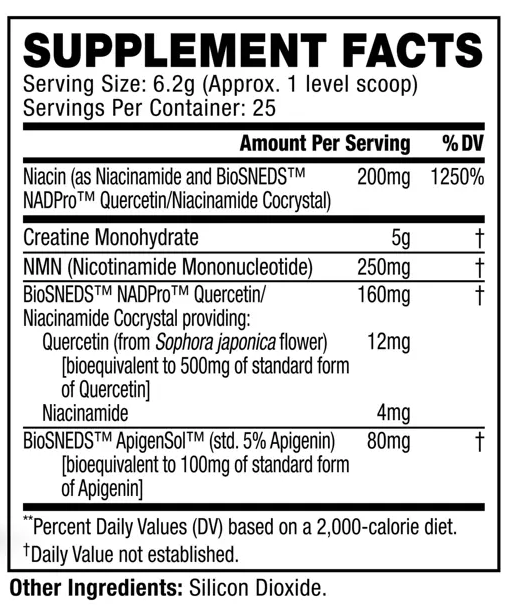
Each 6.2g (approx. 1 level scoop) serving provides the following:
-
Creatine Monohydrate - 5g
Creatine Monohydrate is the most thoroughly researched ergogenic in sports nutrition, and its value in a longevity formula is well-earned. Creatine replenishes phosphocreatine stores, which the body uses to regenerate ATP for everything from muscle contractions to neural signaling.[4]
Creatine in the context of aging
The aging angle is where creatine's case gets most interesting. Multiple meta-analyses show creatine supplementation during resistance training increases lean tissue mass and strength beyond training alone,[5][6] helping counter sarcopenia, the accelerating muscle loss that drives functional decline after age 50.[7] Creatine may also help reduce oxidative stress in aging cells, where declining mitochondrial efficiency allows reactive oxygen species to accumulate.[7]
Cognitive health rounds out the picture. Supplementation can increase brain creatine content by roughly 5-15%, and research finds the largest memory benefits in older adults, where the brain's energy demands may outpace endogenous creatine synthesis.[8][9]
At 5g daily, this lands at the clinically validated dose, and it shares mitochondrial energy territory with the NMN and niacinamide in this formula.
-
NMN (Nicotinamide Mononucleotide) - 250mg
NMN (beta-nicotinamide mononucleotide) is a direct precursor to NAD+ (nicotinamide adenine dinucleotide), a coenzyme central to cellular energy production and hundreds of regulatory processes. NAD+ levels decline measurably with age across multiple tissues, and that decline is linked to reduced mitochondrial efficiency, impaired DNA repair, and decreased activity of sirtuins, a family of enzymes that regulate cellular stress responses and metabolic homeostasis.[10][11]

Once absorbed via the SLC12A8 intestinal transporter, NMN enters the NAD+ salvage pathway, bypassing the rate-limiting NAMPT step to efficiently restore intracellular NAD+ levels.[12] This mechanism is relevant because NAMPT activity declines with age, making direct NMN supplementation an increasingly useful compensatory strategy.
In a placebo-controlled trial, 250mg NMN daily in healthy older men elevated blood NAD+ concentrations and produced nominally significant improvements in gait speed and grip strength over 12 weeks.[13] A six-week double-blind trial in active runners also found NMN improved oxygen utilization and aerobic capacity relative to placebo, with researchers attributing the effect to enhanced skeletal muscle O2 utilization.[14] Across published human trials, NAD+ responses are well-established at 250mg, and the dose here matches that studied in the Igarashi trial directly.
NMN is also 100% legal as a dietary supplement, as it has been since 2018 (and fully acknowledged in 2022). The FDA (illegally) attempted to ban NMN despite having no safety issues, so the industry sued them over the clear misstep and prevailed. This means there are no longer any concerns from the regulatory or safety point of view.
-
BioSNEDS™ NADPro™ Quercetin/Niacinamide Cocrystal — 160mg
(This cocrystal is a part of the source of the Niacin declaration on the label: 200mg total / 1250% DV, combining 4mg of niacinamide from the cocrystal with added standalone niacinamide also in the formula.)
NADPro™ is a cocrystal of niacinamide and quercetin, both delivered via the BioSNEDS™ system. The pairing is mechanistically deliberate: niacinamide feeds NAD+ synthesis via the salvage pathway, while quercetin inhibits CD38, a major NADase enzyme that actively degrades NAD+ and whose activity accelerates with age.[15] By combining a precursor with a CD38 inhibitor in a single delivery vehicle, NADPro™ targets both the supply and consumption sides of the NAD+ equation simultaneously.

Working alongside NMN, which bypasses the rate-limiting NAMPT step entirely, the three ingredients together approach NAD+ repletion from multiple angles. Preclinical research also found that quercetin and apigenin raised liver NAD+ levels and SIRT1 activity through CD38 inhibition (apigenin is present separately in this formula via ApigenSol™).[15]
-
Niacinamide - 4mg
Niacinamide enters the NAD+ salvage pathway via NAMPT (nicotinamide phosphoribosyltransferase), refilling the intracellular nicotinamide adenine dinucleotide pool that mitochondria, sirtuins, and PARP enzymes depend on.[16] NAMPT activity tends to fall with age and metabolic stress, progressively slowing niacinamide's conversion rate and making exogenous precursor support more relevant over time.[15]
At 200mg total niacin (1250% DV) across both standalone niacinamide and the 4mg inside of the NADPro™ cocrystal, the formula provides ample substrate for ongoing NAD+ synthesis. There's a nuance worth noting: niacinamide noncompetitively inhibits SIRT1 (a limitation that "flush niacin" as nicotinic acid doesn't share),[17] but as mentioned above, quercetin and apigenin will make up for that. Either way, niacinamide still meaningfully supports NAD+ availability for broader cellular energy function.
-
Quercetin (from Sophora japonica flower) — 12mg
(Label-stated as bioequivalent to 500mg standard quercetin)
Quercetin is a polyphenolic flavonoid with documented antioxidant and cardiovascular-supporting properties.[18] Its antioxidant activity centers on scavenging free radicals and activating Nrf2, which regulates cellular oxidative stress defenses.[19] It also inhibits NF-κB and suppresses downstream cytokines including TNF-α and IL-6, with human trial data showing reductions in circulating inflammatory markers at 500mg daily.[20] As introduced above, CD38 inhibition is quercetin's most direct contribution to the NAD+ stack in this formula.
Quercetin also has emerging preclinical senolytic activity. As part of a formula, it has been shown to support selective clearance of senescent cells from human adipose tissue and improved physical function in aged mice, with post-treatment survival increasing 36% in animal models.[21]
Standard quercetin oral bioavailability is estimated at roughly 1% in humans, owing to poor water solubility and extensive first-pass hepatic metabolism.[19] SNEDDS delivery improves quercetin Cmax approximately 3-fold by forming nanoscale oil-in-water droplets that absorb via lymphatic pathways.[22] That absorption gain supports improved uptake and a reduced dosage required, and there are bioequivalence claims directly on the label.
-
-
BioSNEDS™ ApigenSol™ (std. 5% Apigenin) - 80mg
Label-stated as bioequivalent to 100mg of standard-form apigenin.
ApigenSol™ is a BioSNEDS™-enhanced form of apigenin, a flavone concentrated in chamomile, parsley, and celery that has attracted serious research attention for its effects on both cellular aging and neurological function.[23]
Within this formula, apigenin's primary role is CD38 inhibition. CD38 also degrades NMN directly, so apigenin helps protect the very precursor the previous two ingredients work to supply.[24] Alongside the quercetin in NADPro™, the two flavonoids converge on CD38 from the same angle, reinforcing the formula's conservation side of the NAD+ equation.[25]
Beyond NAD+ support, apigenin modulates neuronal excitability through GABA-A receptor interactions and NMDA receptor antagonism in preclinical models.[26] Animal studies also show improvements in learning and memory in older subjects and reversal of stress-induced behavioral deficits.[25][27]

The delivery rationale is straightforward: standard apigenin has an aqueous solubility of just 2.16 µg/mL, classifying it as a BCS Class II compound with poor and erratic oral absorption.[28] Bio-SNEDDS delivery forms 57nm droplets that maintain over 95% of apigenin in solution through simulated intestinal transit, yielding a 2.04-fold increase in relative bioavailability versus raw powder in vivo.[28] The 80mg dose here (providing 4mg active apigenin) targets meaningful NAD+ conservation and neurological support at an amount that would be poorly delivered in a conventional capsule format.
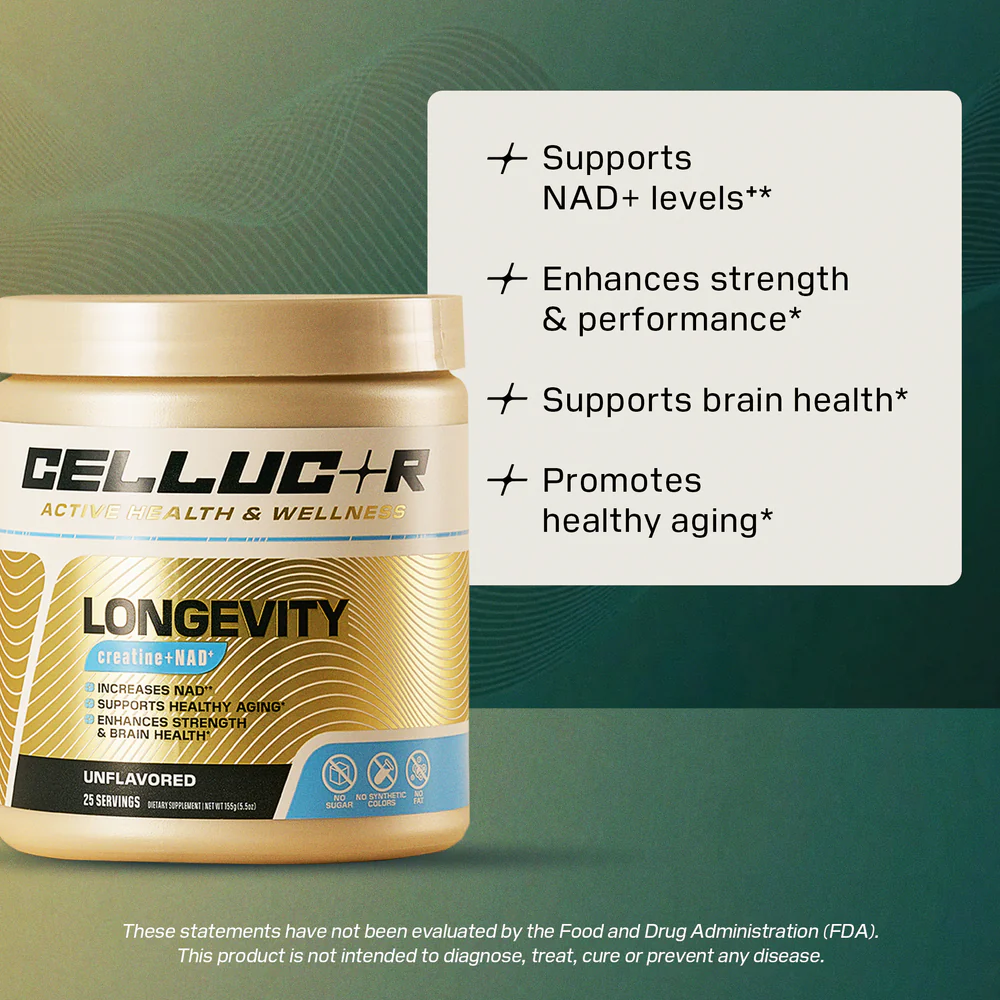
How to Use
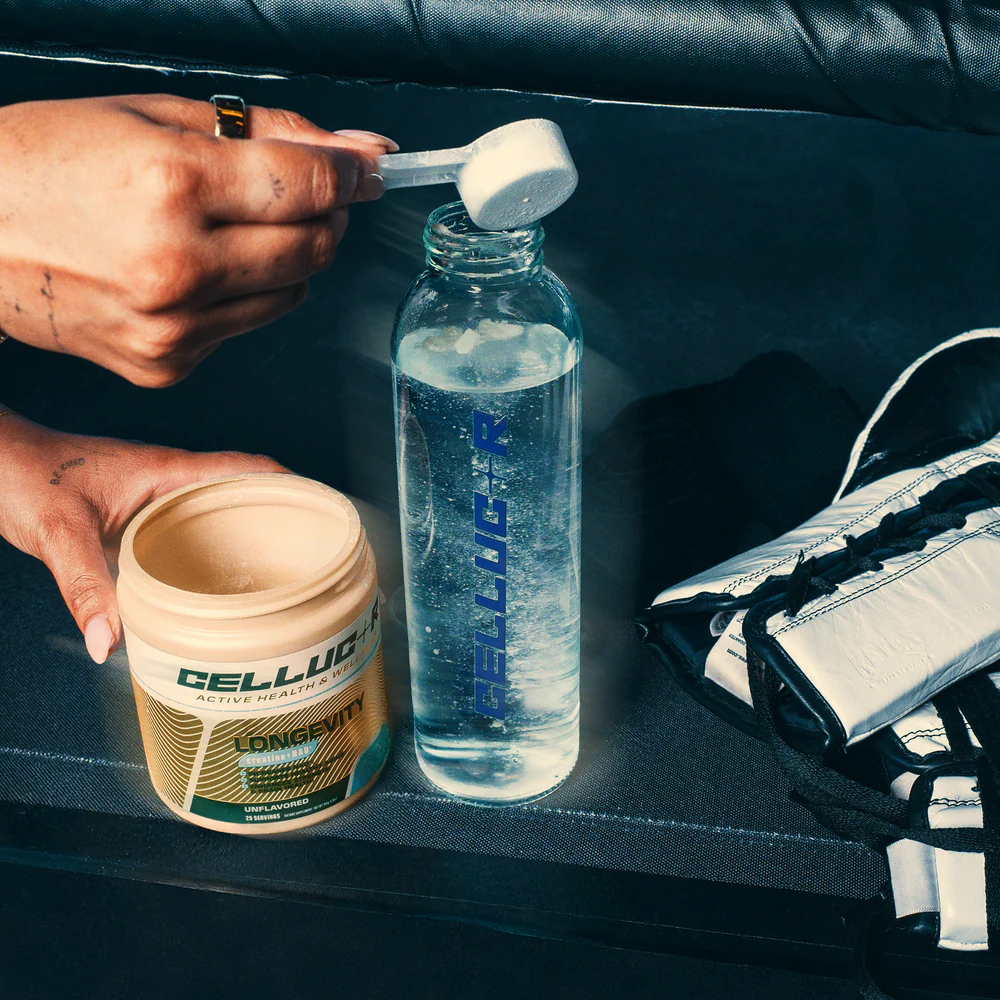
- When to take it: One scoop daily, any time of day, with or without a workout.
- With or without food: Either works, though the lipid-based BioSNEDS™ delivery system may absorb most efficiently alongside a small amount of dietary fat.
- Other notes: Unflavored and mixes cleanly into water, a protein shake, or any other beverage, such as C4. Consistent daily use lets creatine build tissue saturation over time for best results.
Stacks Well With
- C4 Pre-Workout: Nutrabolt's fifth-generation C4 lineup covers everything from entry-level to elite-tier pre-workout performance. Adding Longevity gives your stack a daily creatine and cellular health layer that runs underneath your training, on workout and rest days alike.
Who It's For
It's generally marketed for active adults 30 and older: Longevity is built for people who want creatine's performance benefits alongside cellular energy and brain health support. It's a good fit for anyone thinking about the long game, not just the next PR.
But don't worry, if you're in your 20s, it's still a phenomenal formula worth trying.
Conclusion: Cellucor Means Business Again
Longevity is a clear signal of intent. After years of Nutrabolt's energy centering on pre-workouts and energy drinks, the Cellucor brand has been reasserting itself as the home for serious powder supplements. Longevity Creatine + NAD is a technically ambitious formula in the opening salvo. The formula shows real sophistication: NMN and niacinamide supply NAD+ precursors through two distinct pathway entry points, while quercetin and apigenin inhibit CD38, which otherwise actively degrades the NAD+ pool. Most products in this category address one side or the other. Longevity addresses both.

Nutrabolt, the company that owns Cellucor. Follow PricePlow to stay tuned!
The price is also very fair for a formula that goes well beyond plain creatine. The BioSNEDS™ delivery technology from Verdant Nature is the clearest differentiator in a crowded creatine field. You're getting quercetin and apigenin delivered in a form the body can actually absorb at meaningful levels, not just checkbox doses on a label.
With Vitality already teased and the broader C4 portfolio set well in stone, it looks like Cellucor's Active Health & Wellness line is just getting started. Check PricePlow below for pricing and availability on Cellucor Longevity, and sign up for alerts to stay on top of what Cellucor launches next.
Cellucor Longevity - Creatine + NAD+ – Deals and Price Drop Alerts
Get Price Alerts
No spam, no scams.
Disclosure: PricePlow relies on pricing from stores with which we have a business relationship. We work hard to keep pricing current, but you may find a better offer.
Posts are sponsored in part by the retailers and/or brands listed on this page.


Comments and Discussion (Powered by the PricePlow Forum)