How much OptiMSM® do you actually need? 1g for exercise recovery, 2g for joint comfort, 3g for post-training soreness. Part 2 of this OptiMSM® series breaks down the clinical evidence behind each one.
Every hard training session leaves a bill. Muscles fire, connective tissues absorb load, and the body's antioxidant systems work overtime to clear the cellular debris left behind. Most recovery supplements address the muscle side of that equation, often with protein, creatine, and amino acids. Far fewer address the structural foundation underneath: the joints, tendons, and ligaments that make movement possible in the first place.
That's the territory covered in Part 2 of this OptiMSM® series. As detailed in Part 1, OptiMSM® from Balchem is a bioavailable methylsulfonylmethane (MSM) ingredient built around dietary sulfur. The first part explored the underutilized use-case in the beauty-from-within category, but MSM's most recognized application is joint and exercise recovery support.
This article covers what the clinical evidence shows: what it found, at what doses, and in which populations. Before diving in, subscribe to PricePlow's Balchem news alerts so that you don't miss any future studies or announcements:
Subscribe to PricePlow's Newsletter and Alerts on These Topics

Sulfur and the Active Body: What Makes MSM Relevant for Movement
MSM (methylsulfonylmethane) is an organic sulfur compound found naturally in plant and animal foods. As a supplement, it serves as a direct dietary source of sulfur, which matters for anyone who moves regularly, well beyond basic general nutrition.
Sulfur is the third most abundant mineral in your body, and it's what gives hair, skin, and nails their structure. OptiMSM® by Balchem delivers bioavailable sulfur with clinical results at just 1g per day. The missing piece in most beauty from within formulas.
Joint cartilage is built from proteoglycans and collagen, both of which require sulfur for their structural integrity. Tendons and ligaments, the connective tissues that stabilize joints under load, are also sulfur-dependent. When physical activity places repeated stress on these structures (such as through running, lifting, or sustained daily movement), the body needs adequate sulfur to maintain and repair the underlying matrix.
Sulfur is also a key component of glutathione, the body's primary intracellular antioxidant. Exercise generates oxidative stress as a normal byproduct of effort, and glutathione is a central part of how the body manages it. OptiMSM® delivers bioavailable sulfur across both of these channels simultaneously: structural support for connective tissue and raw material for the antioxidant system that clears the cellular burden of hard training.
Joint Comfort That Reaches Healthy Adults
Studied for several decades, most of MSM's earlier joint research enrolled people with diagnosed conditions. The picture changed in 2023.
Published in Nutrients, a randomized, double-blind, placebo-controlled trial enrolled 88 healthy adults (age 20 and older) who experienced mild knee discomfort during daily activities -- not patients being treated for anything, just people whose knees made themselves known. Participants consumed 2g/day of OptiMSM® or a matched placebo for 12 weeks. Outcomes were tracked using the Japanese Knee Osteoarthritis Measure (JKOM), a validated questionnaire covering pain, physical function, and overall health status.[1]

71% of vitamin K2 supplements fail quality testing. Balchem's K2VITAL® delivers 99.7% all-trans MK-7, verified by third-party labs twice a year.
The results were significant. Total JKOM scores were meaningfully lower in the MSM group versus placebo at 12 weeks (p=0.046), with health condition scores also improving significantly (p=0.032). Participants taking OptiMSM® reported a 55% improvement in their perception of knee health and a 52% improvement in self-assessed overall health status. Morning knee comfort improved by 38%, nighttime comfort improved by 80%, and comfort while standing improved by 42%. Physical function measures also reached significance. [1]
The researchers flagged this as the first clinical trial of MSM supplementation in a healthy general population, rather than patients with diagnosed joint conditions. That distinction matters because the findings speak directly to people most likely to pick up a sports nutrition or active lifestyle supplement.
Ramifications for "Active Aging"
Active aging is where this becomes especially relevant. Staying comfortable and mobile as decades accumulate is one of the primary reasons adults over 40 buy supplements. OptiMSM® at 2g/day, studied in a healthy population spanning age 20 and above, produced measurable improvements in both physical function and daily joint comfort. For anyone who wants to keep moving well over the long haul, not just recover from this week's workout, this represents a different kind of data point than most recovery ingredients offer.
Bouncing Back From Hard Effort
Beyond structural support, a separate body of research addresses what happens in the hours after strenuous exercise and whether OptiMSM® changes that recovery window.
"Magnesium bisglycinate" on the label doesn't guarantee quality. Albion® Minerals' TRAACS® chelate is the only form backed by clinical trials showing 3–6x better absorption than oxide -- with zero GI distress.
- A 2013 trial examined the resistance training context. Twenty-four moderately exercise-trained men supplemented with 3g/day of OptiMSM® for 14 days, then performed a demanding leg extension protocol across two sessions 48 hours apart. VAS pain scores were significantly lower in the OptiMSM® group than placebo from baseline to 2 hours post-exercise (1.55 vs. 3.75, p=0.012), meaning substantially less muscle discomfort in the recovery window that follows hard strength sessions.[2]
- Another study focused on the inflammatory side of recovery. Physically active men supplemented with 3g/day of OptiMSM® for 28 days before performing 100 eccentric knee extension repetitions. Cytokine markers were tracked over 72 hours post-exercise. MSM supplementation appeared to dampen the release of pro-inflammatory signaling molecules in response to exercise while still preserving the cells' capacity to mount an appropriate immune response afterward. The authors characterized this as MSM supporting a less excessive post-exercise inflammatory environment without suppressing normal adaptation signals.[3]
Reducing the Markers of Muscle Damage with MSM
Earlier research also found that MSM supplementation (at approximately 50mg per kilogram of body weight) significantly reduced markers of muscle damage and improved antioxidant capacity in untrained men following a 14km run, compared to placebo.[4]

The pattern across these studies holds across modalities: MSM supplementation is associated with reduced post-exercise pain and a better controlled inflammatory response, in both endurance and resistance training contexts. Both OptiMSM®-specific studies in this section used 3g/day, which is the dose range where these outcomes have been validated.
However, lower doses are now shown to be effective as well:
The 1-Gram Discovery: OptiMSM® and Post-Exercise Gene Expression
The most recent and arguably most formulation-significant study in the OptiMSM® exercise library was published in Nutrients in 2025 by Brian McFarlin and colleagues at the University of North Texas.[5]
The study enrolled 10 experienced runners (mean age 38 years) on a progressive dosing schedule: 0.5g/day of OptiMSM® for the first 27 days, stepping up to 1g/day for the final three days before a half-marathon. Blood samples were collected before the race and at 2 and 4 hours after finishing. Rather than tracking a handful of conventional biomarkers, the researchers used Nanostring technology to analyze expression across 700 mRNA transcripts associated with immune response pathways, providing a far more granular view of what supplementation is doing at the cellular level.[5]
They identified 29 mRNAs whose expression changed uniquely in the MSM group but not placebo, organized across four biological pathways. Based on the physiological roles of those transcripts, the researchers concluded that MSM supplementation may:
- Support muscle recovery through improved macrophage response to exercise-induced damage
- Speed tissue restoration by influencing pathways linked to repairing damaged muscle
- Improve resistance to oxidative stress at the cellular level following exercise
- Maintain innate immune responsiveness by preserving the body's ability to respond to damage signals after strenuous effort
What sets this study apart is the dose. All prior human exercise research with MSM had used 2g/day or higher. This study detected meaningful gene expression changes at just 1g/day, and it was the first peer-reviewed human data showing MSM effects at that dose level in an exercise context. The authors noted that Nanostring mRNA analysis likely made these lower-dose effects detectable where conventional biomarkers may not have.[5]
For everyday consumers, the message is practical: a single gram can influence how the body processes the cellular stress of hard effort. For anyone running a multi-ingredient recovery stack, 1g of OptiMSM® sits comfortably alongside creatine, protein, or other recovery ingredients without pushing serving sizes or costs into uncomfortable territory.
How Much OptiMSM® to Take
The evidence across this article points to a tiered picture by application:
- 1g/day is where the new gene expression data lands (McFarlin 2025), making it the starting point for exercise recovery support in daily supplementation. This dose works practically in multi-ingredient formulas.
- 2g/day is the dose validated for joint comfort and physical function improvements in healthy adults per the Toguchi 2023 trial. For anyone using OptiMSM® primarily for joint support, this is the clinical reference point.
- 3g/day is where the post-exercise pain and cytokine research has been conducted with the branded ingredient (Kalman 2013, van der Merwe 2016). Consumers dealing with notable post-training soreness, or using OptiMSM® as a primary recovery tool, are aligned with the validated evidence base at this level.
As covered in Part 1 of this series, Balchem identifies a general-use range of 1 to 5g/day for OptiMSM®. The same dose flexibility that makes it practical in beauty formulas applies equally in sports and active lifestyle products.
OptiMSM® in Finished Products
For readers who want a clean way to work with OptiMSM® across the evidence-backed dose range, Doctor's Best MSM Powder is a practical option. It delivers OptiMSM® in unflavored, scoopable form with no fillers. This lets you land at 1g for recovery support, 2g for joint comfort, or 3g for the validated soreness-management dose.
Doctor's Best MSM – Deals and Price Drop Alerts
Get Price Alerts
No spam, no scams.
Disclosure: PricePlow relies on pricing from stores with which we have a business relationship. We work hard to keep pricing current, but you may find a better offer.
Posts are sponsored in part by the retailers and/or brands listed on this page.
It stacks cleanly with creatine, collagen, protein, or any other recovery regimen without affecting flavor or texture.
The Long Game of Staying Active
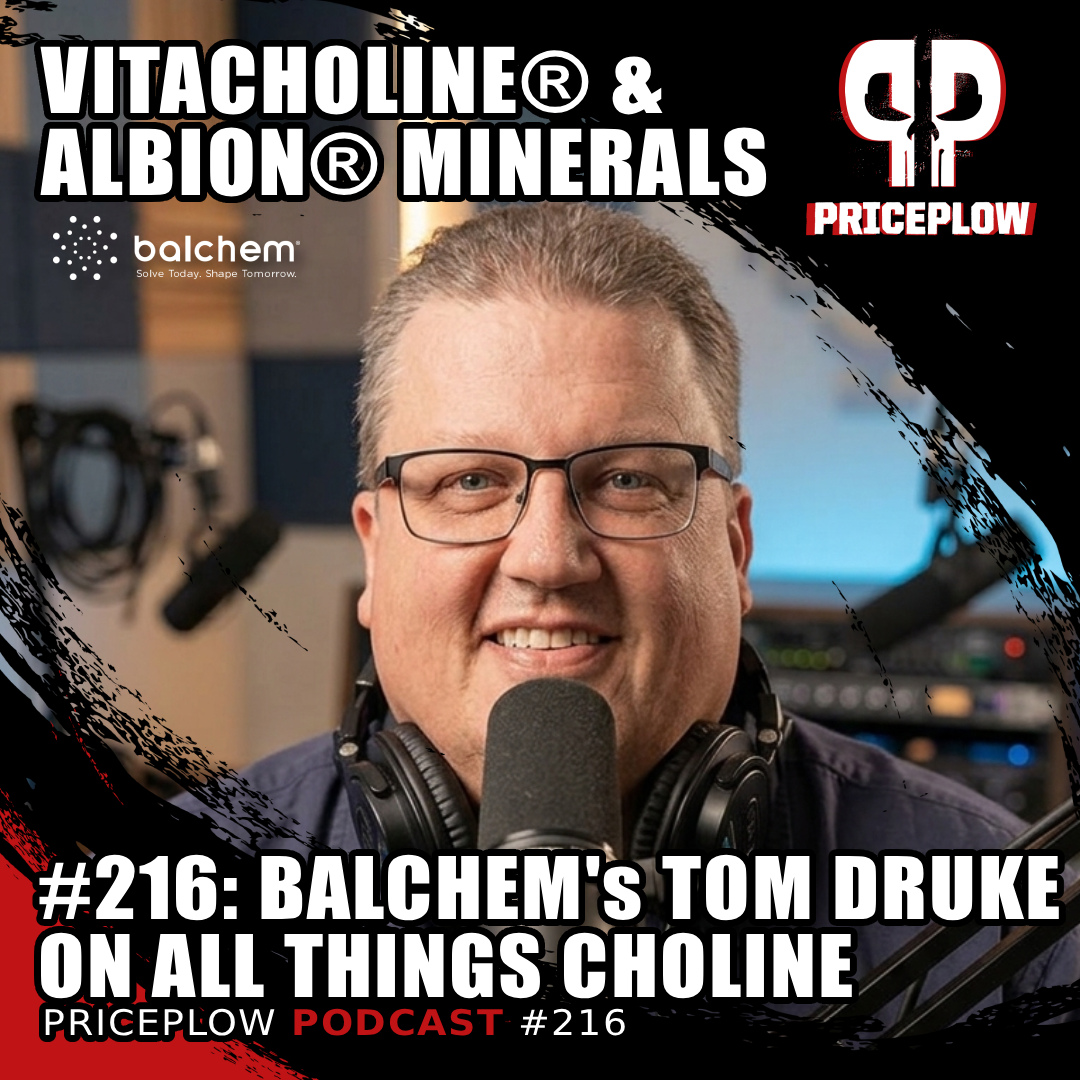
Tom Druke, Senior Marketing Manager at Balchem, breaks down the science of VitaCholine®, Albion® chelated minerals, and K2VITAL® on Episode #216 of the PricePlow Podcast. Plus: the story behind Balchem's first-of-its-kind New York Jets ingredient partnership.
The conventional joint supplement category starts with glucosamine and chondroitin. Numerous forms of curcumin are popular as well. OptiMSM® doesn't replace that foundation, it augments them, addressing the sulfur substrate that connective tissue needs to maintain structure under physical load.
The exercise recovery story, especially with the McFarlin 2025 gene expression findings, adds a layer that traditional joint ingredients don't offer: evidence that a single gram influences how the body processes the cellular stress of hard effort. Combined with the Toguchi 2023 data showing joint comfort improvements in healthy adults at 2g/day, the full picture is an ingredient that supports both the structural foundation of movement and the recovery processes that keep training consistent over time.
As covered in Part 1, OptiMSM® delivers the same sulfur chemistry across very different applications. Beauty from within and performance from within are two angles on one ingredient. Whether the goal is keeping joints comfortable through decades of activity, recovering better between sessions, or staying mobile enough to keep doing what matters, OptiMSM® brings a clinical track record built over more than 35 years of Balchem manufacturing and research.
Subscribe to PricePlow's Newsletter and Alerts on These Topics
Note: This is part 2 of a multi-part series on OptiMSM®. Part 1, covering skin, hair, and beauty from within, can be found below.


Comments and Discussion (Powered by the PricePlow Forum)