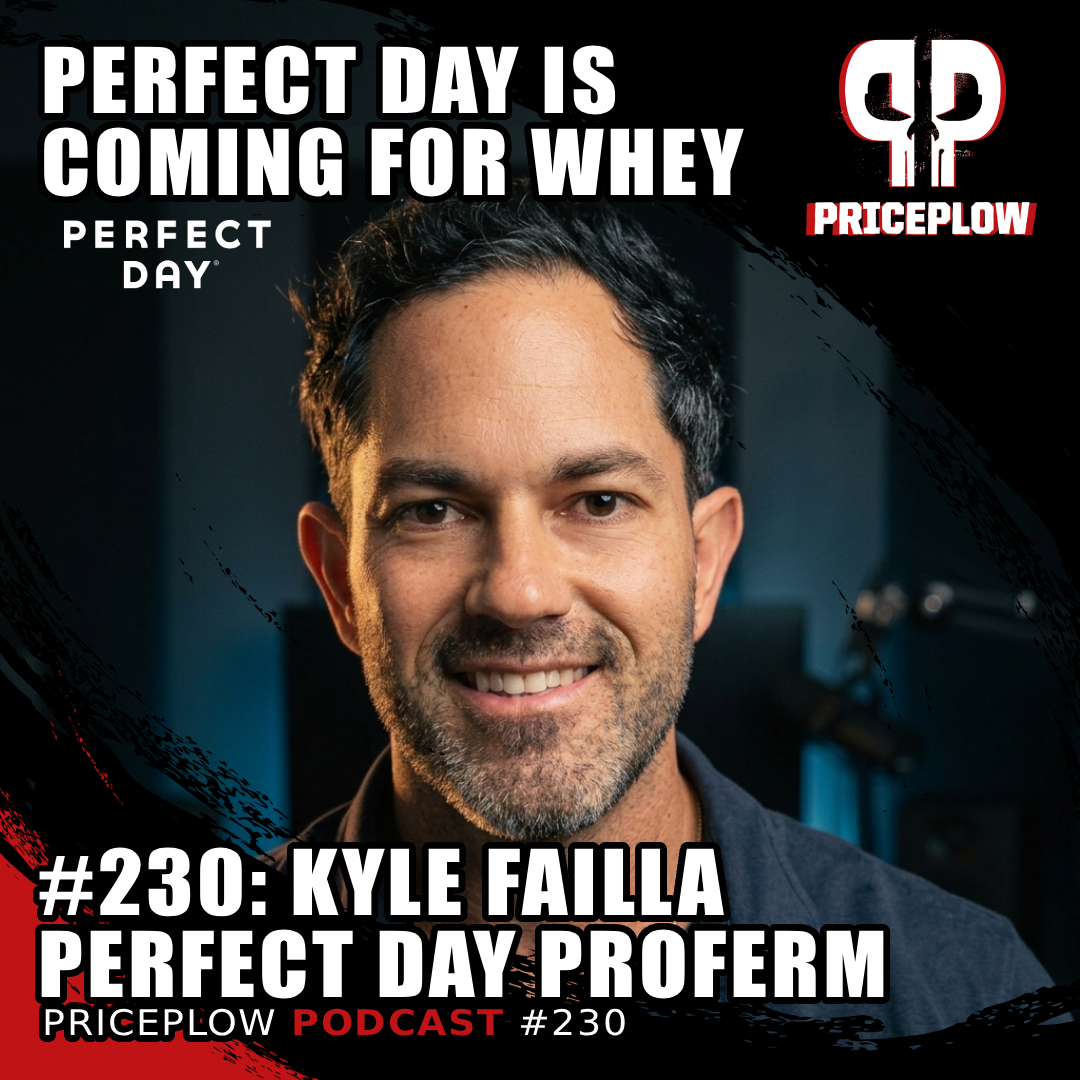
Kyle Failla, Head of Commercial at Perfect Day, breaks down precision-fermented BLG protein, the whey protein supply crisis, and Perfect Day's new manufacturing plant on Episode #230 of the PricePlow Podcast.
Whey protein isolate keeps getting more expensive, and the reasons go deeper than most people realize. In Episode #230 of the PricePlow Podcast, Mike and Ben sit down with Kyle Failla, Head of Commercial at Perfect Day, to unpack why whey protein prices have climbed so far, and what the company's new precision fermentation plant means for the supply side of the equation.
Perfect Day's ingredient, ProFerm™, is a fermented version of beta-lactoglobulin (BLG), the dominant and most anabolic fraction of whey protein. Instead of pulling BLG from cow's milk, Perfect Day grows it in a fermentation tank using a genetically engineered fungus, sidestepping the cheese production bottleneck that's been squeezing whey supply for years -- especially with cheese consumption dropping in the GLP-1 drug era.
Kyle walks through the science, the regulatory approvals across five countries, why Perfect Day went quiet for two years, and how the company's new manufacturing plant changes its ability to serve the sports nutrition, GLP-1, and RTD markets at scale.
Subscribe to the PricePlow Podcast on your favorite platform and sign up for Perfect Day alerts before diving in.
Subscribe to the PricePlow Podcast on Your Favorite Service (RSS)

Apple Podcasts

Spotify

YouTube
https://blog.priceplow.com/podcast/perfect-day-protein-kyle-failla-230
Video: Kyle Failla on Perfect Day’s ProFerm and the Whey Protein Crisis

Podcast: Play in new window | Download (Duration: 1:02:24 — 51.3MB)
Detailed Show Notes: Kyle Failla on ProFerm, Precision Fermentation, and the Whey Protein Crisis
-
0:00 - Introductions
Mike opens by introducing Kyle Failla, Perfect Day's Head of Commercial, framing the episode around two themes the podcast has covered before: precision fermentation and the rising cost of whey protein. Kyle explains that Perfect Day's new manufacturing plant addresses both the cost and supply problems facing brands that rely on whey protein isolate (WPI).
Kyle previews the episode's arc: the science behind Perfect Day's fermented protein, the macroeconomic forces driving up dairy protein prices, and how the company plans to bring high-quality whey protein back within reach for sports nutrition brands.
-
1:15 - What Is ProFerm? Beta-Lactoglobulin Explained
Kyle starts with the fundamentals: whey protein isolate isn't just one protein, it's a complex of several, and beta-lactoglobulin (BLG) makes up roughly 55% of that complex. BLG is the most anabolic fraction, carrying more leucine and essential amino acids than the complex as a whole. That's why purified BLG has mostly shown up in medical nutrition products, where patients like post-surgical or elderly populations need a lot of protein in a small volume.
ProFerm™ is Perfect Day's fermented version of that same protein. Because BLG has always been expensive to extract at scale, it's stayed mostly confined to niche medical applications. Perfect Day's pitch is bringing that same high-performance protein fraction to mainstream sports nutrition and beverage brands at a price point that works.
-
4:15 - The Whey Protein Supply Crisis
Mike asks Kyle to explain what's broken in the whey protein market. Kyle frames it as a supply and demand problem, driven partly by GLP-1 medications and partly by a broader "protein halo" effect where consumers want protein added to everything. Protein now shows up in Starbucks drinks and Pop-Tarts, proof that major CPG brands have fully bought in and are pulling more volume from a whey supply that isn't growing as fast.
Kyle also flags an unusual pricing dynamic: longtime bodybuilders who remember $30 protein tubs are frustrated by $50 to $60 price points, while newer GLP-1 customers, who never had a reference price, are more willing to pay it. That's part of why brands have passed along cost increases without losing sales. This is an excellent argument that we haven't heard yet (or thought of), even after about a dozen episodes on this very topic.
-
9:15 - Tariffs, Glucose, and Precision Fermentation's Edge
Kyle breaks down Perfect Day's specific cost drivers, which look nothing like a dairy producer's. Tariffs and the price of glucose (the sugar that feeds the fermentation process) matter far more to Perfect Day than the price of milk or the number of dairy cows in production. That's the core of the company's pitch: precision fermentation decouples protein supply from dairy market swings entirely.
He also pushes back on the idea that brands can just reformulate their way out of the crisis. Swapping clear whey protein isolate for clear pea protein sounds simple, but the flavor and protein-load tradeoffs are steep enough that most formulators won't make the switch. Reformulation takes some pressure off, not all of it.
-
11:30 - Why Perfect Day Skips Cheese Entirely

Ben asks whether the whey crisis is a demand problem or also tied to falling cheese consumption. Kyle explains the math: roughly 80% of milk's protein becomes casein for cheese, and only 20% becomes whey. As GLP-1 users eat less pizza and fewer burgers, cheese demand drops even as whey protein demand climbs, leaving dairy producers stuck with a byproduct nobody wants as much of anymore.
Because Perfect Day makes BLG directly through fermentation, it skips that equation entirely. There's no cheese, lactose, or minerals to offload, just a leftover fungal biomass that gets upcycled into things like fertilizer and pet food.
-
14:15 - Inside the Fermentation Tank
Ben asks Kyle to walk through the fermentation process. Kyle compares it to "23andMe for cows": Perfect Day pulls the genetic code for BLG and inserts it into Trichoderma reesei, a fungus used safely in food enzyme production for decades. The engineered organism then goes into a fermentation tank (Kyle compares the scale to a six-story brewery tank) and gets fed a slurry of glucose and micronutrients.
From there, the microorganism metabolizes the sugar and produces BLG directly, which Kyle describes as the process "printing out" the amino acid sequence. The body doesn't register it as coming from a fungus. It reads the resulting amino acid profile as dairy protein, because structurally, that's exactly what it is.
-
18:30 - Safety Data and Global Regulatory Approvals
Mike asks Kyle to address safety concerns about a genetically modified organism producing the protein. Kyle explains that Perfect Day's downstream filtration (standard dairy steps like microfiltration and ultrafiltration) separates the fungal biomass and its genetic material from the finished BLG, and the company had to prove no DNA remains in the powder as part of its FDA GRAS approval.[1,2] ProFerm has since been approved in Israel, India, Colombia, the UAE, and Singapore, with UK approval in progress and an EU submission underway that Kyle expects to take roughly 24 months.
Kyle also mentions an outside nonprofit of former food safety regulators helping Perfect Day and roughly a dozen other companies navigate that EU process [VERIFY - org name unclear in transcript].
-
22:30 - A Second FDA GRAS Filing

Whey isolate got expensive and stayed that way. Perfect Day spent two years building a plant instead of pitching. ProFerm™ is fermented beta-lactoglobulin with 37% more leucine than WPI, and first truckloads hit in Q4 2026.
Mike points out that Perfect Day pursued full FDA GRAS approval rather than a self-affirmed GRAS determination,[1,2] and Kyle confirms the company is now refiling for an updated GRAS notice, something biomanufacturers typically do every few years as they refine their process. Perfect Day continues improving fermentation titers and product purity, and Kyle notes that several of the company's own team members previously worked at Novozymes, one of the largest enzyme manufacturers built on precision fermentation.
Kyle believes Perfect Day will be the first precision fermentation protein company to complete a second FDA GRAS filing, calling it a way to set the standard for the category rather than a response to any new safety concern.
-
24:30 - Why Perfect Day Went Quiet for Two Years
Mike notes that PricePlow first covered a Perfect Day-powered product back in 2022, then coverage went quiet. Kyle explains that Perfect Day went into "incognito mode" for about two years to refocus on what customers needed: more supply, better pricing, and a path to profitability. He's candid about the earlier era, when investors funded ideas and growth stories rather than profitability, letting Perfect Day raise more than $750 million before capital markets tightened and forced a harder look at the business.
That shift pushed Perfect Day to build its own plant instead of relying on contract manufacturers, a process Kyle describes as full of friction: shipping fermented liquid to one facility for spray drying, then to another country for final processing into a ready-to-mix powder.
-
32:00 - Building Perfect Day's Own Plant
Ben points out how expensive it is to ship liquid protein between contract manufacturers and countries, and Kyle agrees that was a major hidden cost. As outside capital dried up, Perfect Day committed fully to a vertically integrated plant where fermentation, spray drying, and agglomeration all happen under one roof, set to start commercializing by the end of the year.
Even before the new plant comes online, Perfect Day already has customers selling ProFerm-based products. Kyle name-checks Brickhouse Whey, a ready-to-mix protein powder, and NUR Protein, a stick-pack brand that pairs protein with hydration or energy, as two examples already on shelves.
-
37:15 - Finding the Right Brand Partners
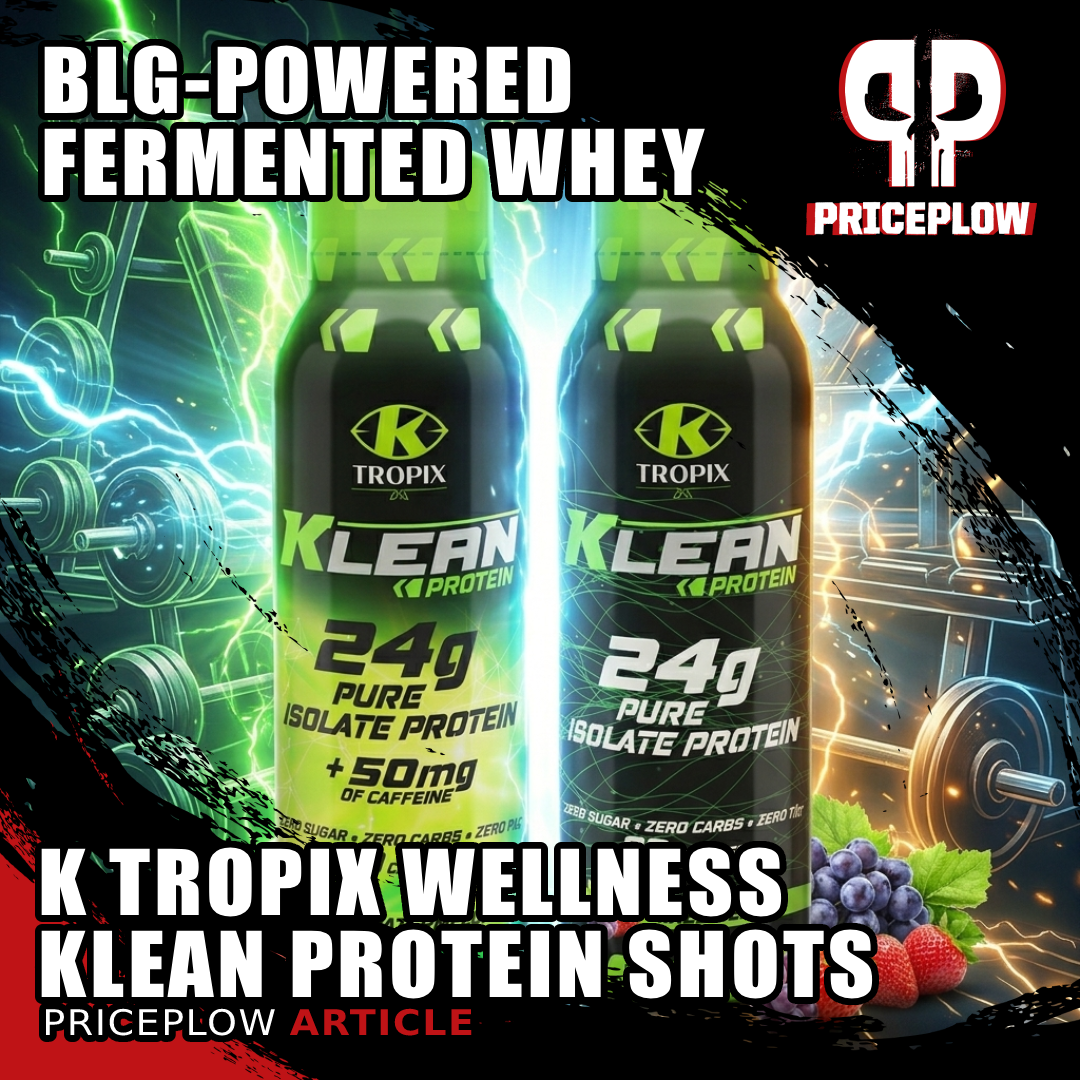
24g of protein in a 3.4 oz bottle? K Tropix Wellness KLEAN Protein uses fermented beta-lactoglobulin (BLG) to pack roughly 50% more leucine per gram than standard whey isolate.
Mike shifts the conversation toward brand strategy: how should a company figure out if BLG is right for its customers? Kyle says it comes down to application. BLG's clarity and heat stability make it especially strong in ready-to-drink formats, protein sodas, and protein shots, categories where standard whey protein isolate struggles to stay in solution or survive aggressive heat processing.
Protein shots are the toughest test case, since fitting 20+ grams of protein into a few ounces of liquid without it tasting chalky or falling out of solution is no small technical feat. Kyle says BLG is built for exactly that kind of application, which is why it's shown up first in the shot category rather than in traditional powders.
-
39:15 - K-Tropix, Set Protein, and the Shot Boom
Mike asks about the products Kyle is holding up during the interview. Kyle confirms Perfect Day's ingredient is already in K-Tropix's KLEAN Protein shots, and that Set Protein, an aluminum-can shot brand with what Kyle calls "beautiful packaging", will launch with ProFerm soon as well.
Kyle ties the shot category's growth directly to GLP-1 medications like tirzepatide and semaglutide, where users often can't tolerate a full-size protein shake anymore. A compact, flavorful shot solves that problem, and Kyle says demand is intense enough that Perfect Day is fielding inquiries from nearly every protein shot brand entering the market.
-
44:45 - Can Perfect Day Move the Market?
Mike asks directly: can Perfect Day's new capacity bring whey protein prices down industrywide? Even just a bit? Kyle is blunt that it can't, at least not yet. Perfect Day's plant will only produce about 2,000 to 3,500 metric tons of BLG in year one, while a single major brand's annual WPC purchase alone can run into the tens of thousands of metric tons. Ben calls that transparency rare for a branded ingredient supplier.
Kyle frames the opportunity differently: brands that lock in ProFerm allocation early get preferred pricing and guaranteed supply while capacity stays scarce, plus an edge over rivals who can't access the same ingredient. As Perfect Day scales toward roughly 7,000 metric tons with a second plant and 14,000 with a third, that early-mover advantage compounds.
-
49:45 - Scaling Faster Than Dairy Plants

Ben asks whether precision fermentation has a scaling advantage that traditional dairy infrastructure can't match. Kyle agrees: building a sister plant takes 12 to 16 months once the first is running, compared to roughly four years and a billion dollars for a new dairy facility. Perfect Day doesn't have to build every new plant from scratch either, since idle fermentation capacity already exists at other companies, and joint ventures that repurpose that capacity could bring new BLG supply online even faster.
Kyle's bigger point is about maintaining momentum. If Perfect Day's volume growth ever stalls, it risks slowing adoption of the technology itself, so continuing to scale isn't optional. It's core to proving precision fermentation can compete with dairy long-term.
-
54:00 - A Kids' Shot and Protein-Plus Ideas
Mike wraps up and asks Kyle to brainstorm concepts nobody has launched yet. Kyle's first idea is a protein shot built for kids, dosed around 12 grams rather than the 20+ grams typical of adult shots, arguing there's real appetite for the format outside the usual gym-going audience.
He also floats several "protein plus" combinations built for GLP-1 users managing side effects like dehydration and slower digestion, pairing protein with hydration, fiber, or digestive enzymes rather than just maximizing protein content alone.
-
55:00 - Pure Genius, Chromium Picolinate, and Avoiding Copycats
Kyle name-checks Pure Genius, the protein shot brand co-founded by Mel Robbins, as the category leader to beat, especially after its nationwide Target launch. He predicts more big energy and beverage brands will notice that success and move into the shot category themselves.
One ingredient pairing Kyle likes for GLP-1 formulas is chromium picolinate, which he sold earlier in his career at Glanbia. He explains chromium picolinate may support insulin sensitivity at a microgram dose, and notes that it carries weight-management claims. Kyle's closing advice is to avoid copycat launches and find genuine white space instead.

Where to Follow and Learn More
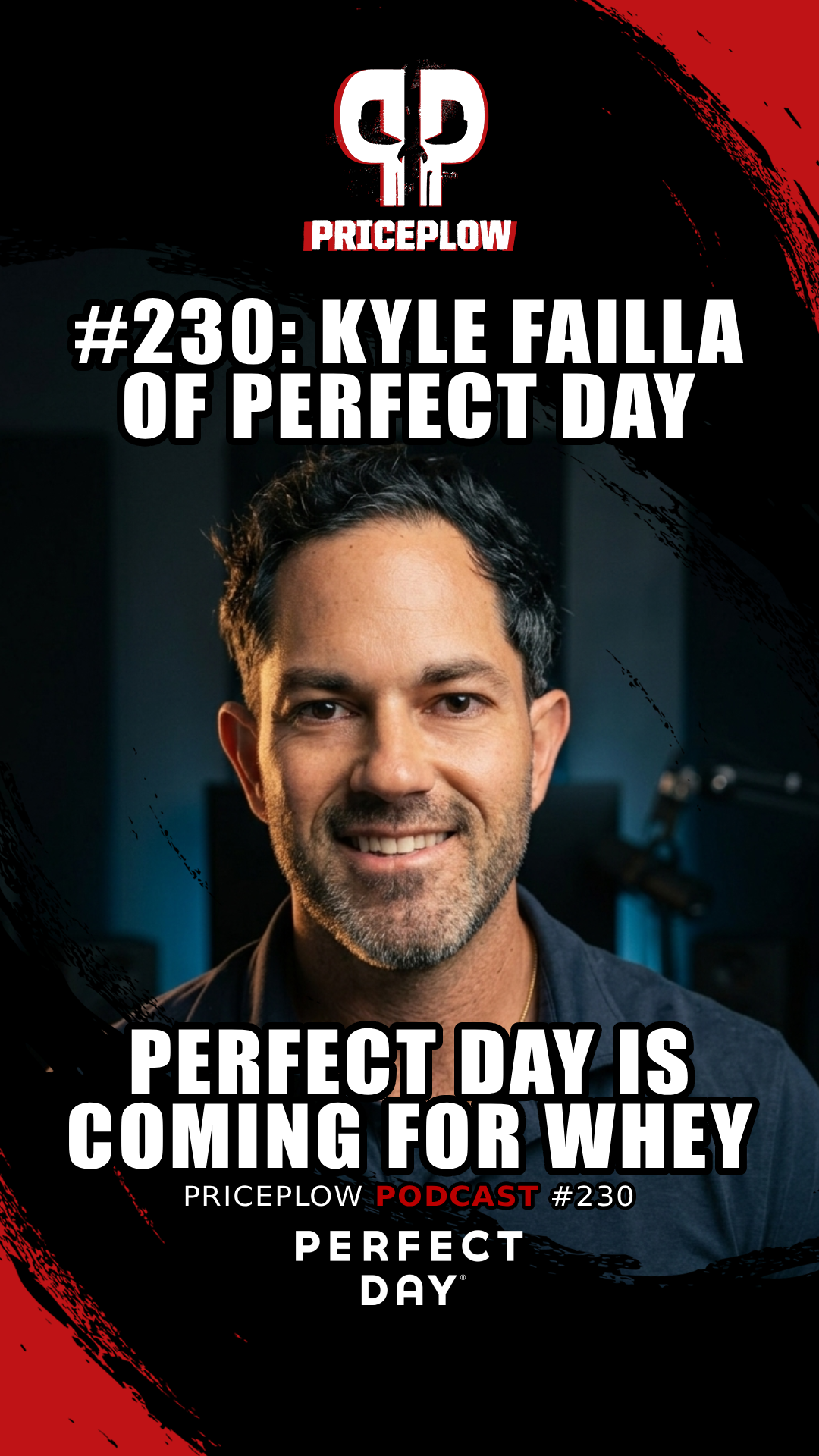
Connect with Kyle Failla and Perfect Day
- LinkedIn: Kyle Failla
- Instagram: @perfectdayfoods
- LinkedIn: Perfect Day
- Perfect Day on PricePlow - Sign up for news alerts
Resources Mentioned
- ProFerm™ by Perfect Day: Precision-Fermented BLG and the New Plant That Changes the Protein Supply Math
- Myprotein "Whey Forward": Animal-Free Protein Made with Fermented BLG by Perfect Day (PricePlow's first coverage of Perfect Day's ingredient, 2022)
- Chromax Chromium Picolinate: 25+ Years of Insulin Sensitivity Improvement
- Perfect Day / ProFerm Official Site
- Episode #209: Darren Thompson - Inside PerfectShaker
Products Discussed
Kyle's rundown makes one thing clear: Perfect Day's new plant won't single-handedly fix the whey protein market, but it gives brands willing to commit early a real shot at supply security and a genuinely different protein story. Thanks to Kyle Failla for walking through the science and the business case in such detail. We'll be watching closely as the plant ramps toward its first commercial shipments.
Big thanks as always to Perfect Shaker for sponsoring this episode. Check out their shaker cups at PricePlow.com/perfect-shaker or PerfectShaker.com, and catch our conversation with co-founder Darren Thompson in Episode #209 if you haven't already.
Subscribe to the PricePlow Podcast on any platform, sign up for Perfect Day news on PricePlow, and leave us a great review on iTunes and Spotify!
Subscribe to the PricePlow Podcast on Your Favorite Service (RSS)
Apple Podcasts
Spotify
YouTube


Comments and Discussion (Powered by the PricePlow Forum)