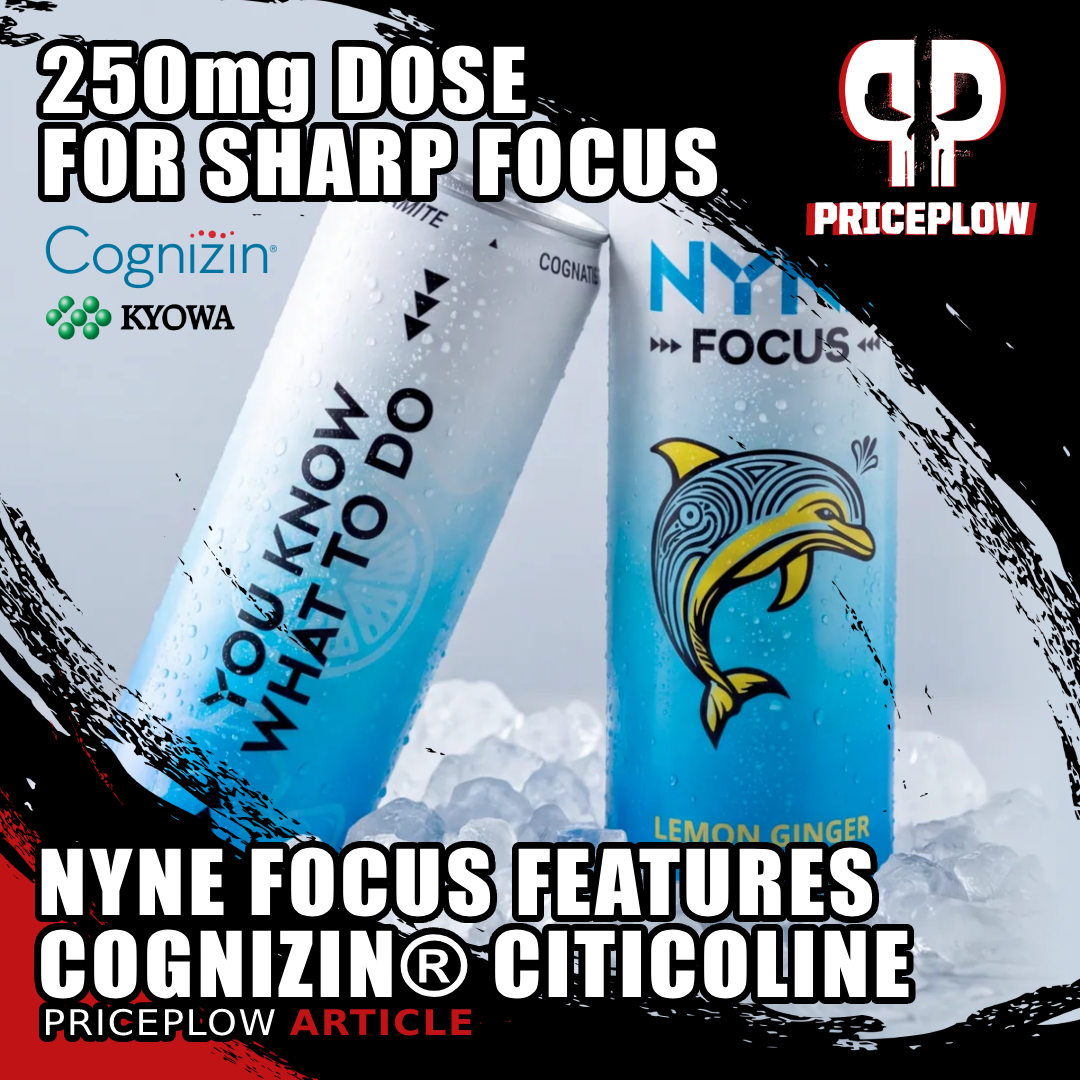
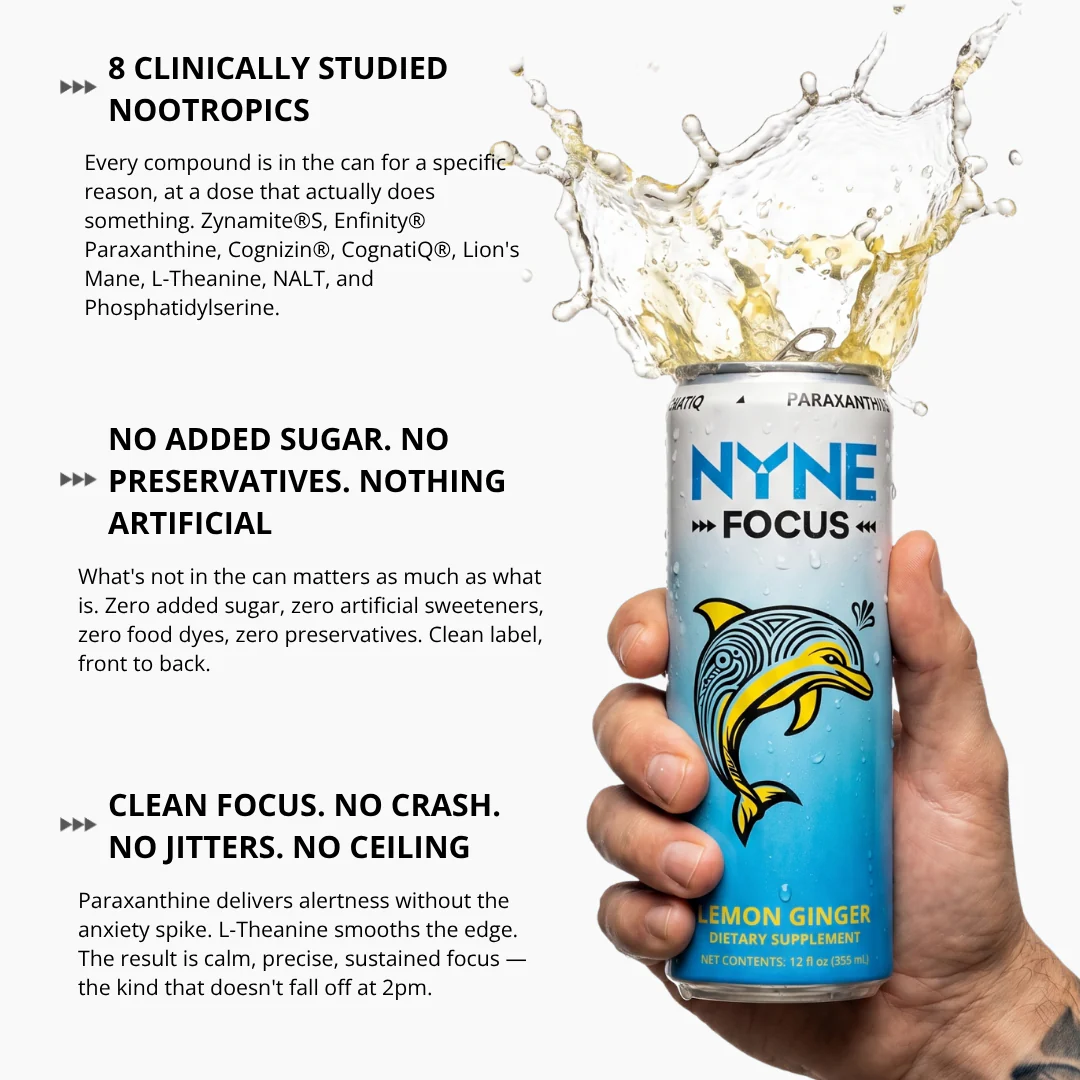
NYNE Focus goes fully caffeine-free and builds around paraxanthine instead. Eight disclosed nootropics, led by 250mg of Cognizin® Citicoline, aim for steady attention through a full workday.
NYNE Focus is the debut release from nootropic beverage brand NYNE, a ready-to-drink formula built for hours of clear, steady mental output instead of a quick jolt. The first flavor, Lemon Ginger, ships in 12-packs of 12 fl oz cans, and it leads with an unusual choice for the energy drink category: no caffeine at all. Its active stimulant is paraxanthine, a caffeine metabolite the brand positions as a cleaner route to alertness.
That paraxanthine base sets up the rest of the formula. NYNE Focus combines eight nootropics at fully disclosed doses, built around a clean label with zero added sugar, zero artificial sweeteners, zero dyes, and zero preservatives. The pitch is steady focus that holds through a full workday, without the jittery feeling or afternoon drop-off that comes from stacking multiple coffees.
One of the eight is Cognizin® Citicoline, dosed at 250mg and supplied by Kyowa Hakko. Cognizin has become a fixture in the focus and energy drink category, and we've covered its research base in depth in our Cognizin® Citicoline: The Brain Choline guide. Kyowa Hakko continues to expand that research portfolio, including a study on citicoline and memory in older adults, adding to what's already one of the more extensively studied choline sources on the market.
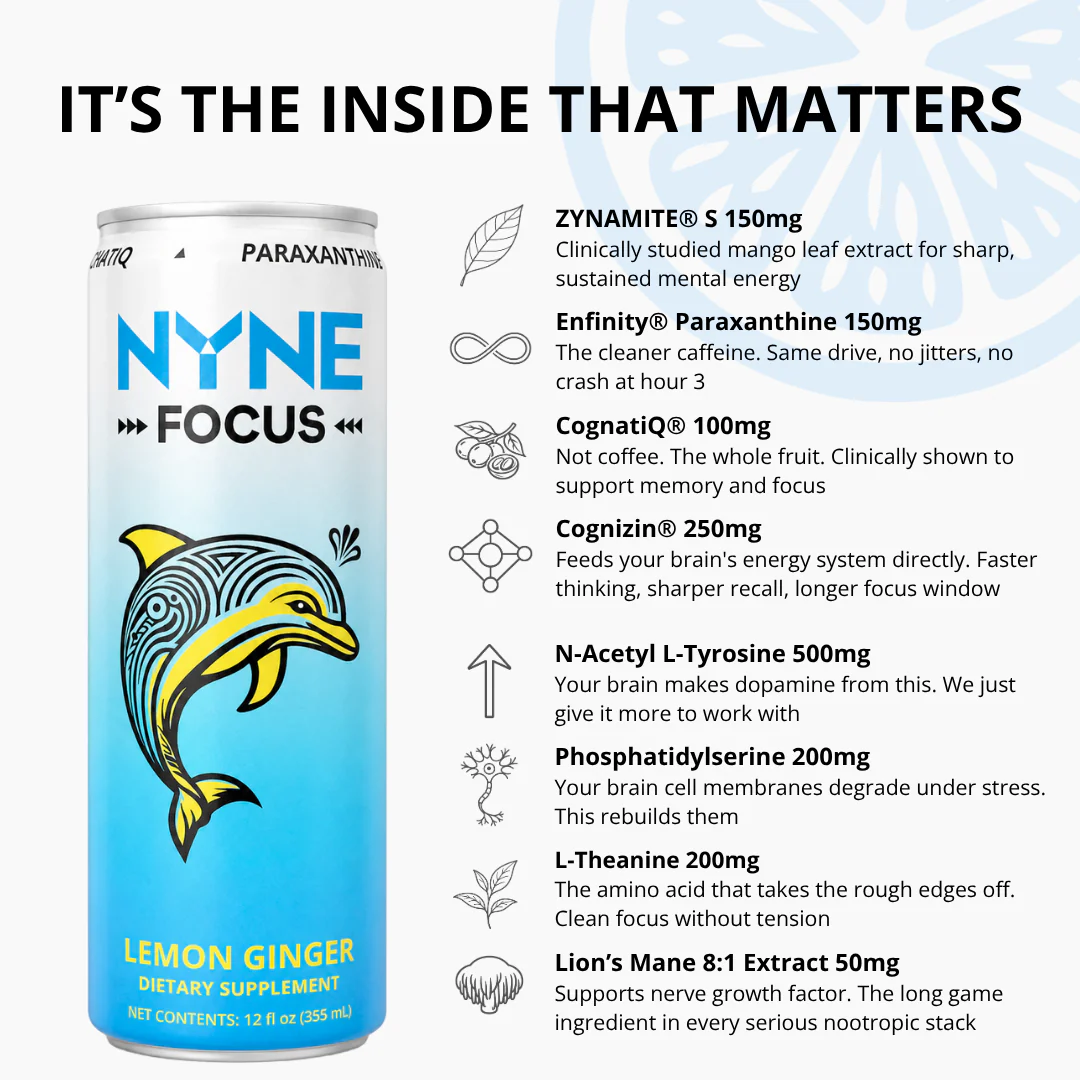
Cognizin isn't working alone, either. The rest of the stack includes Zynamite® S mango leaf extract, enfinity® Paraxanthine, CognatiQ® coffee fruit extract, N-Acetyl-L-Tyrosine (NALT), Phosphatidylserine, L-Theanine, and RealLionsMane® Lion's Mane extract, each disclosed at its own dose rather than folded into a blend.
NYNE Focus – Deals and Price Drop Alerts
Get Price Alerts
No spam, no scams.
Disclosure: PricePlow relies on pricing from stores with which we have a business relationship. We work hard to keep pricing current, but you may find a better offer.
Posts are sponsored in part by the retailers and/or brands listed on this page.
This area is reserved for Team PricePlow's upcoming videos.
Subscribe to our channel and sign up for notifications so you catch it when it goes live!

NYNE Focus Ingredients
Supplement Facts Serving Size: 12 fl oz (355 mL) Servings Per Container: 1
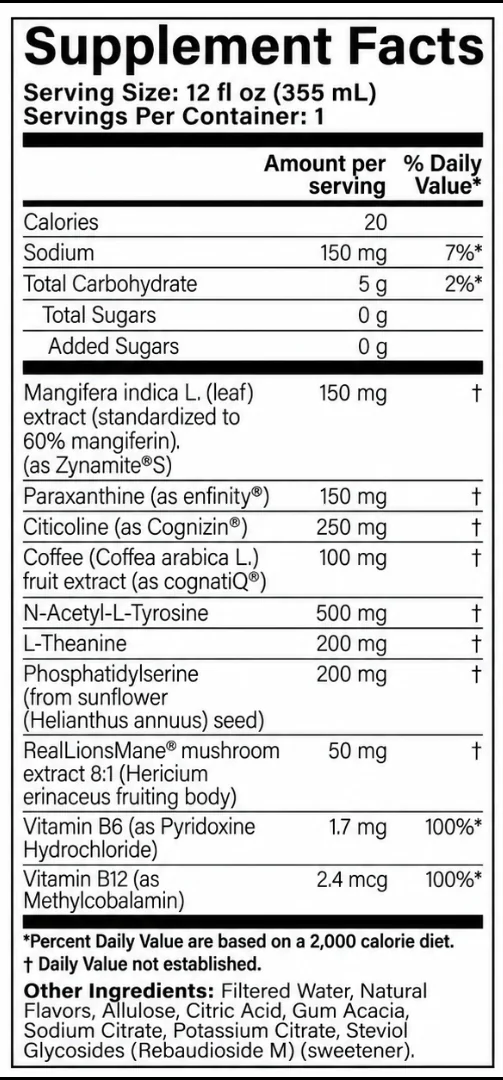
- Calories - 20
- Total Carbohydrate - 5g (2% DV)
- Total Sugars - 0g
- Added Sugars - 0g
- Sodium - 150mg (7% DV)
Other Ingredients: Filtered Water, Natural Flavors, Allulose, Citric Acid, Gum Acacia, Sodium Citrate, Potassium Citrate, Steviol Glycosides (Rebaudioside M) (sweetener).
-
Cognizin® Citicoline - 250mg
Cognizin® is Kyowa Hakko's patented, branded form of citicoline (cytidine-5'-diphosphocholine), a compound found naturally in every cell of the body. Once ingested, citicoline splits into two components: choline and cytidine. The body converts cytidine into uridine, which crosses into the brain and helps rebuild phosphatidylcholine, the primary structural phospholipid in neuronal cell membranes. That same choline pool feeds acetylcholine synthesis, the brain's main attention-related neurotransmitter, and research indicates citicoline also supports normal dopamine and norepinephrine activity in the central nervous system.[1]
Imaging research has found that citicoline supplementation increased markers of brain energy metabolism and phospholipid membrane synthesis in the frontal cortex, though that study used doses of 500mg to 2000mg daily, above what's in NYNE Focus.[2] Reason to drink two cans in a day, though!
-
Zynamite® S - 150mg
Zynamite® S is a standardized Mangifera indica (mango leaf) extract containing at least 60% mangiferin, its primary active polyphenol. In vitro testing shows mangiferin selectively inhibits catechol-O-methyltransferase (COMT), the enzyme that breaks down dopamine and norepinephrine, one proposed mechanism behind its reported effects on reaction time and mental sharpness.[6]

In a randomized, double-blind, placebo-controlled crossover study, a single 300mg dose of the extract improved measures of cognitive performance and mood in 70 healthy adults, assessed before dosing and again at 30 minutes, three hours, and five hours afterward.[7] NYNE Focus includes 150mg, half that studied dose, positioning Zynamite S here as a supporting contributor to processing speed alongside the rest of the stack rather than a standalone, dose-matched ingredient on its own.
-
enfinity® Paraxanthine - 150mg
enfinity® Paraxanthine is a direct metabolite of caffeine and the primary stimulant in NYNE Focus. It sidesteps two of the other caffeine metabolites that drive its longer half-life and side effect profile, making it a cleaner stimulant.
In a dose-response crossover trial, healthy adults took 50mg, 100mg, or 200mg of paraxanthine over one week, with cognitive benefits on tests of executive function and reaction time reported emerging around the 200mg mark.[8] NYNE Focus's 150mg sits between the doses tested there.
There's been some great research showing paraxanthine as an excellent caffeine replacement. In a separate crossover trial, trained runners who took 200mg of paraxanthine before and after a 10km run showed greater improvement on cognitive testing than those given an equal dose of caffeine.[9] As a metabolite the body already produces from caffeine, paraxanthine carries a shorter half-life, which is why NYNE recommends avoiding it within 4 to 5 hours of bedtime.
This is a light dose, and will probably feel like roughly ~125mg caffeine, but last a shorter amount and bring fewer side effects / downsides.
-
CognatiQ® - 100mg
CognatiQ® (also sold as NeuroFactor) is a standardized extract of the whole Coffea arabica fruit, including the pulp typically discarded in coffee processing, and contains only trace caffeine. Early pilot research found a single 100mg dose raised plasma brain-derived neurotrophic factor (BDNF), a protein tied to neuron growth and synaptic plasticity, by 91% within an hour.[10] However, a larger 2023 crossover trial testing that same 100mg dose in 72 healthy adults found no cognitive or mood benefit versus placebo, and even flagged small increases in mental fatigue and reduced attention accuracy at 60 minutes.[11] The evidence at this dose is mixed, and NYNE Focus includes it alongside seven other ingredients rather than as a standalone driver of the formula's effects.
-
N-Acetyl-L-Tyrosine (NALT) - 500mg
N-Acetyl-L-Tyrosine (NALT) is an acetylated form of the amino acid tyrosine, the direct biochemical precursor to dopamine and norepinephrine through the rate-limiting enzyme tyrosine hydroxylase. Research indicates tyrosine supports cognitive performance specifically under conditions that deplete these catecholamines, such as sleep deprivation, cold exposure, or intensive training, rather than at rest in unstressed individuals.[12] Most of that research uses free tyrosine at 2g or more daily, sometimes dosed by body weight up to 150mg per kilogram, several times higher than NYNE Focus's 500mg of the acetylated form.[13] Whether NALT reliably converts to usable tyrosine in the bloodstream at this dose hasn't been directly studied, but we're confident that a good bit of it will indeed get used.
-
Phosphatidylserine - 200mg
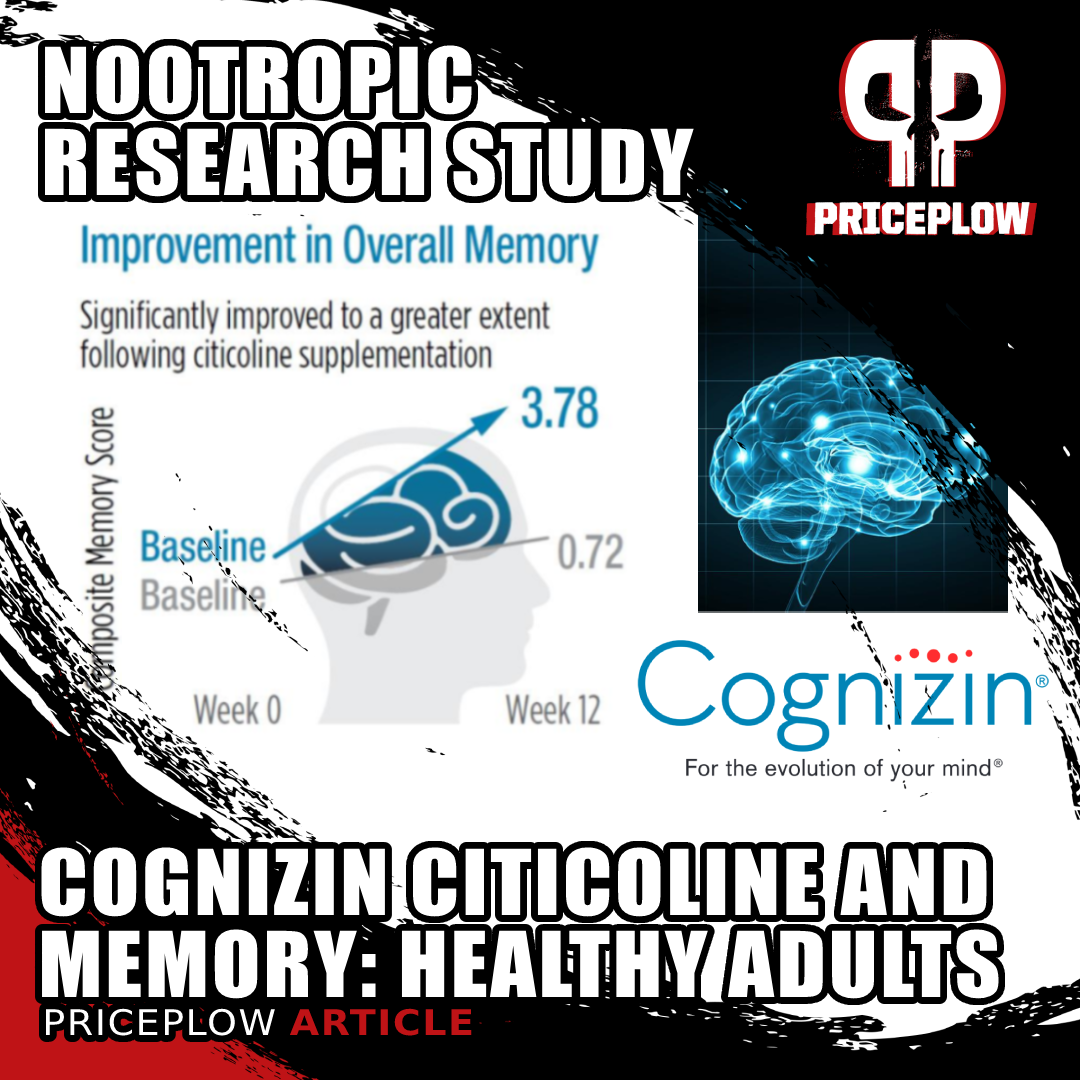
The latest study performed on Cognizin® Citicoline was published in 2021, showing improved memory in healthy older adults.[14]
Phosphatidylserine is a phospholipid found in every cell membrane, most concentrated in the brain, where it supports normal membrane signaling, fluidity, and structure.[15] In a 10-day, double-blind, placebo-controlled crossover trial in healthy men, 600mg of phosphatidylserine daily blunted the rise in cortisol that follows a bout of moderate-intensity cycling, compared to placebo, a finding tied to its role in the body's endocrine stress response and its downstream effects on recovery.[16] NYNE Focus includes 200mg, a third of that studied dose, and uses sunflower-derived phosphatidylserine rather than the original soy-derived form, a common substitution made across the industry for allergen and sourcing reasons.
-
L-Theanine - 200mg
L-Theanine is an amino acid found almost exclusively in tea leaves that crosses into the brain and promotes alpha wave activity, the EEG marker of relaxed, wakeful calm, at oral doses between 50mg and 200mg.[17] In older adults, a single dose around 100mg reduced reaction time on an attention task and improved accuracy on a working-memory task compared to placebo, though the same benefit wasn't sustained after 12 weeks of daily use.[18] Most research pairing L-theanine with a stimulant uses caffeine rather than paraxanthine, but NYNE Focus applies the same calming rationale at 200mg, near the high end of theanine's studied range.
-
RealLionsMane® Lion's Mane Extract - 50mg
RealLionsMane® is a standardized 8:1 extract of the Hericium erinaceus fruiting body, concentrated from roughly 400mg of raw mushroom material. Hericenones, one of its two main active compound classes, stimulate nerve growth factor (NGF) production in astrocyte cell models, a mechanism tied to neuron survival and long-term plasticity.[19]
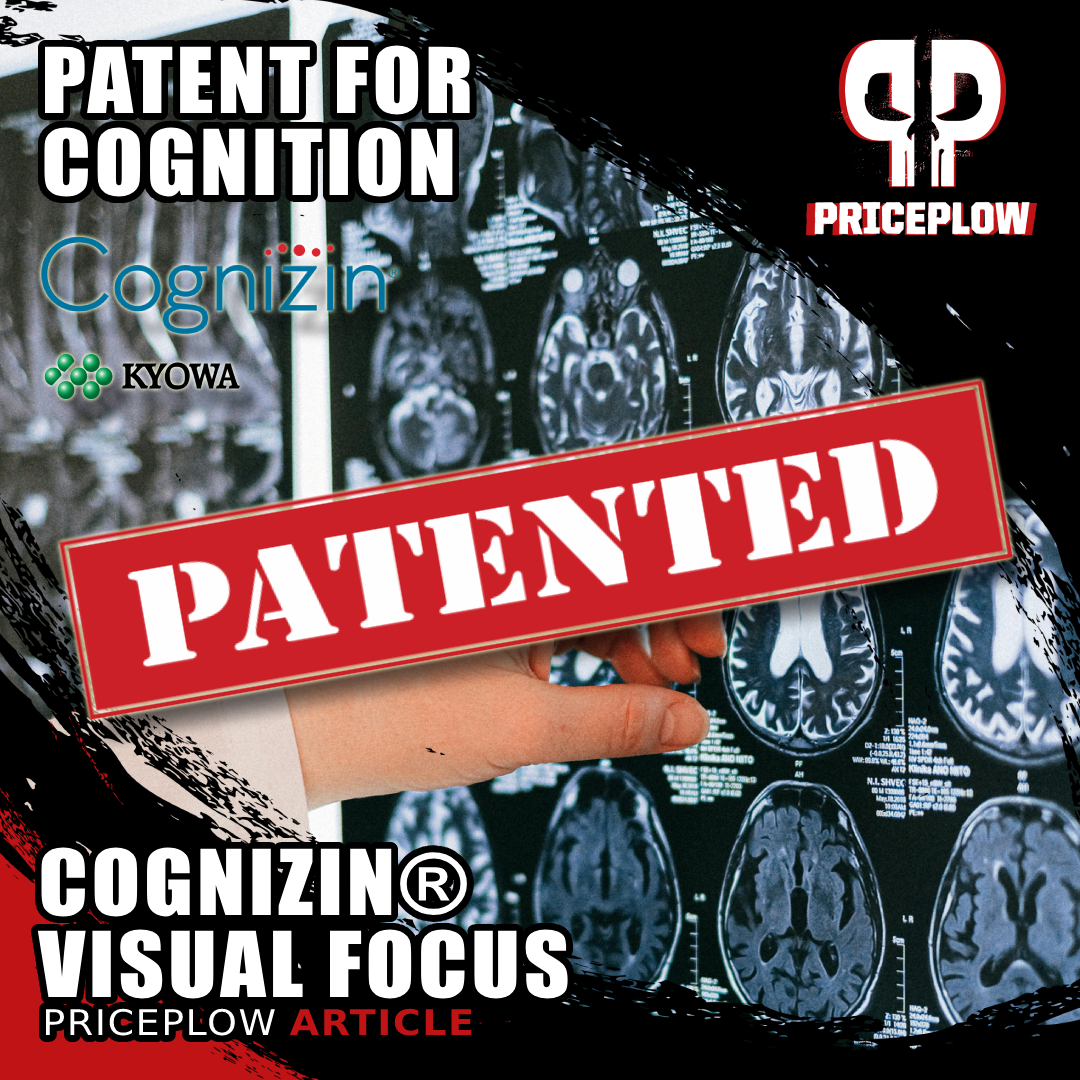
Kyowa Hakko USA earns 4th patent for Cognizin Citicoline, further validating visual attention & cognitive performance benefits. New IP covers methods for enhancing attention, motor function & processing speed.
Human trials showing cognitive benefits, including a single dose that improved Stroop task speed within an hour, have used 1g to 1.8g of fruiting body material daily, well above NYNE Focus's 50mg.[20] At this dose, Lion's Mane is best understood as a smaller supporting piece of the eight-ingredient stack rather than a dose-matched, standalone driver of the formula's effects.
-
Added Vitamins and Minerals
Vitamin B6 (as Pyridoxine HCl) - 1.7mg
Vitamin B6 (as pyridoxine HCl) is a coenzyme required for more than 100 enzymatic reactions in the body, including the synthesis of dopamine, serotonin, and other neurotransmitters, alongside amino acid and energy metabolism.[21] NYNE Focus includes it at 100% of the Daily Value, a standard supportive addition rather than a headline ingredient.
Vitamin B12 (as Methylcobalamin) - 2.4mcg
Vitamin B12 (as methylcobalamin) is a cofactor the body needs for red blood cell formation, nervous system maintenance, and cellular energy metabolism. In a 28-day trial in healthy adults, a B-complex containing B12 alongside B1, B2, and B6 reduced measures of physical fatigue and improved exercise performance compared to placebo.[22] NYNE Focus includes B12 at 100% of the Daily Value alongside B6, rounding out the formula's energy-metabolism support.
Support for Attention and Accuracy at 250mg
NYNE Focus doses Cognizin at 250mg, a level with direct human support for attention and accuracy. In a double-blind, randomized, placebo-controlled trial, 60 women between 40 and 60 years old took either 250mg or 500mg of citicoline daily for 28 days. On the Continuous Performance Test II, a standard measure of sustained attention, the 250mg group made significantly fewer omission and commission errors than placebo, while the 500mg group improved on only one of those two measures.[3] A separate 28-day trial in 75 adolescent males given 250mg or 500mg citicoline found improved attention and psychomotor speed versus placebo on tests including the Ruff 2&7 Selective Attention Test and Finger Tap Test, and higher weight-adjusted doses predicted better task accuracy, signal detection, and fewer impulsive errors.[4]
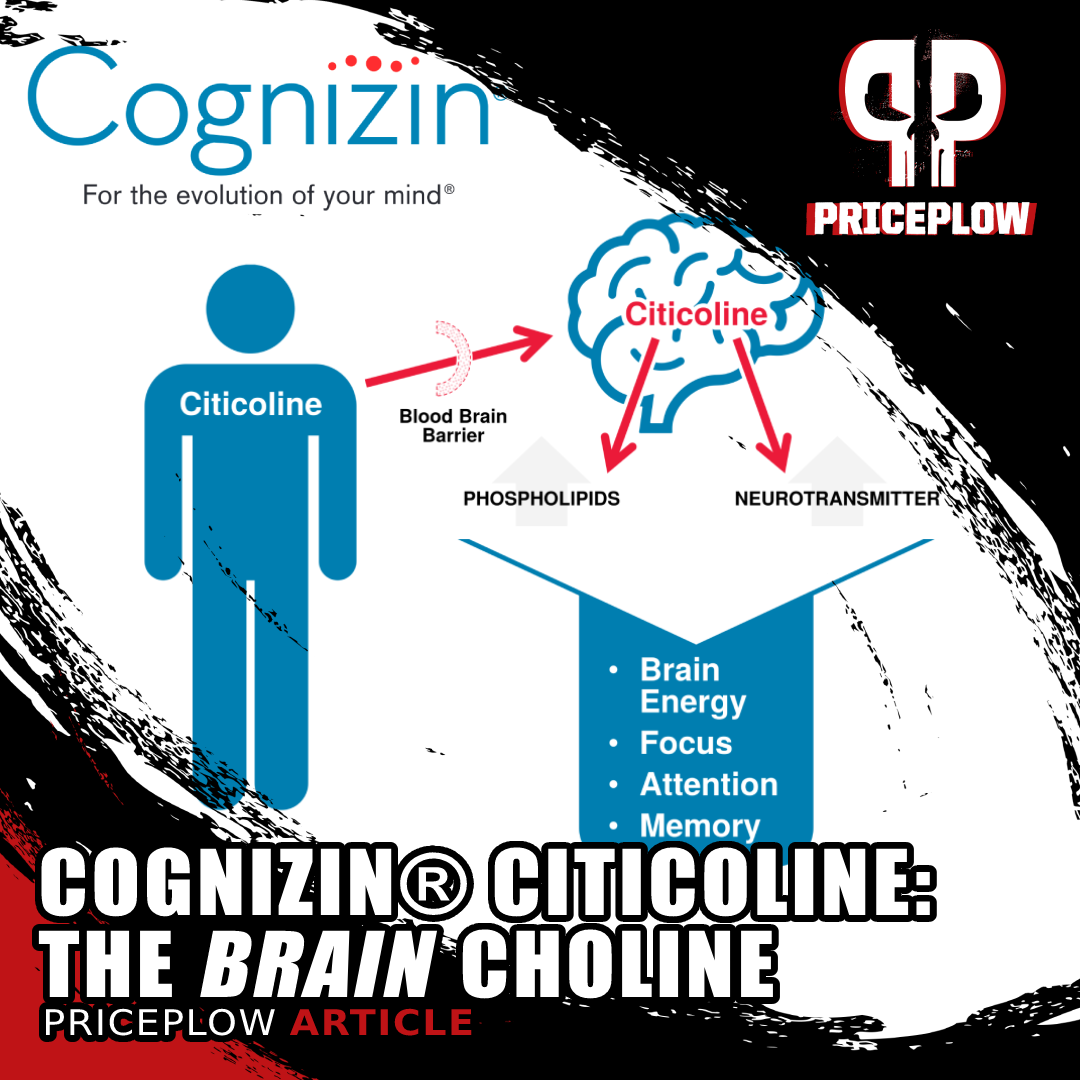
Cognizin® Citicoline is dubbed the The Brain Choline not just because it provides choline, but because it also supplies cytidine, which is also needed for the synthesis of phosphatidylcholine
Most of Cognizin's memory-focused research uses higher doses. A 12-week trial in 100 older adults with age-related memory concerns, for example, tested 500mg daily, twice what's in this can, in a population and outcome measure that differs from what NYNE Focus targets.[5] At 250mg, Cognizin's human evidence base points specifically toward attention, accuracy, and staying on task, which is how NYNE Focus positions the ingredient here rather than as a memory-support addition.
That focus-and-accuracy profile fits the rest of the stack. Paraxanthine supplies the stimulant push, L-theanine rounds out the calmer side of the experience, and Cognizin adds a non-stimulant route to sustained attention rather than duplicating either one. Across the trials cited here, researchers reported no significant safety differences between citicoline and placebo groups, consistent with citicoline's status as a compound the body already produces on its own. At 250mg, Cognizin is best understood in NYNE Focus as a steady, everyday contributor to focus and accuracy, not a stimulant and not a memory aid.
How to Use NYNE Focus
The brand recommends drinking NYNE Focus 20 to 30 minutes before a block of focus work, whether that's a deep-work session, a meeting, or the mental transition back to work after training. Since paraxanthine is the active stimulant, avoid drinking it within 4 to 5 hours of your intended bedtime to protect your sleep. NYNE positions Focus as suitable for daily use, citing its transparent label and disclosed doses throughout.
One can a day is a great pick-me-up. But ultimately, for the best effects, we're thinking that two cans a day will really get the best research, not just for Cognizin but also Zynamite and paraxanthine.
Who NYNE Focus Is For
NYNE Focus targets people whose schedules don't fit a standard 9-to-5: long workdays, back-to-back meetings, multiple jobs, or training sessions that need to transition straight into focused work. It's built for anyone looking to replace a multi-coffee habit or a complicated nootropic stack with a single can that delivers a steadier, more controlled state of alertness.
Flavors Available
NYNE Focus launches with a single flavor, Lemon Ginger, sold in 12-packs of 12 fl oz cans.
Conclusion: An Excellently-Focused Energy Drink
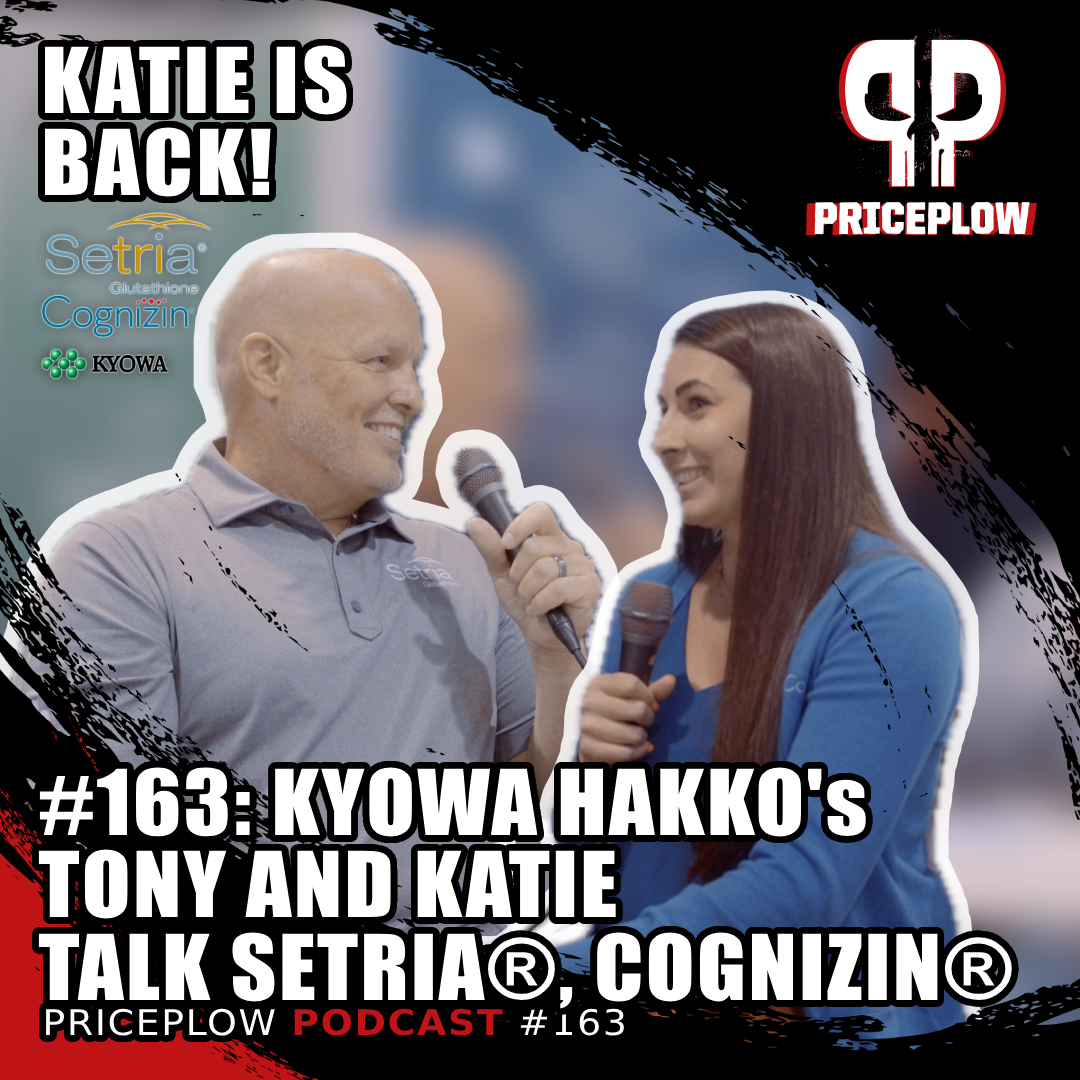
Katie Emerson and Tony Miano of Kyowa Hakko join PricePlow to discuss the latest Cognizin and Setria research developments at Expo West 2025 in Episode #163.
NYNE Focus enters a crowded nootropic beverage market with a formula that leans on disclosed doses over blends and a caffeine-free approach few RTDs commit to fully. Whether the eight-ingredient stack holds up to its no crash, no jitters promise comes down to how those doses work together, with citicoline (Cognizin®) supplying Kyowa Hakko-backed focus and attention support at a clinically-relevant 250mg.
The combination of paraxanthine (instead of caffeine) and a solid dose of L-theanine mean that this is not a stim-bomb. But it is chock full of nootropics. For big / important days, drinking two cans throughout the day should really bring some great feel.
For more on the ingredient anchoring this formula, check out our Cognizin® Citicoline: The Brain Choline guide, and hear directly from Kyowa Hakko's science team on our Setria Glutathione & Cognizin Research Updates podcast episode. Keep an eye on PricePlow for where to find NYNE Focus and current pricing as it becomes available.
NYNE Focus – Deals and Price Drop Alerts
Get Price Alerts
No spam, no scams.
Disclosure: PricePlow relies on pricing from stores with which we have a business relationship. We work hard to keep pricing current, but you may find a better offer.
Posts are sponsored in part by the retailers and/or brands listed on this page.

Comments and Discussion (Powered by the PricePlow Forum)