Women's iron needs change at every life stage, and standard iron supplements don't account for that. This piece covers the research on lactoferrin from menstruation through perimenopause and what it means for ferritin, hair loss, and pregnancy outcomes.
You've been told to eat more iron. You take your supplement. You push through the fatigue. And yet your ferritin stubbornly refuses to move, your hair keeps thinning, and the GI side effects from ferrous sulfate make consistent supplementation feel impossible.
Here's what the "just take more iron" advice misses: iron needs in women aren't static. They shift dramatically across life stages, and the biology behind each shift is distinct. Consider a teenage girl losing iron with every cycle, a pregnant woman doubling her blood volume, and a perimenopausal woman navigating hormonal flux. All three have fundamentally different iron challenges, and none of them is well-served by a one-size-fits-all approach that treats iron like a simple input.
Iron and a Woman’s Life Cycle
This article follows iron across four key phases of a woman's life:
- The menstruating years
- Pregnancy
- The hair-and-ferritin connection that cuts across all stages
- Perimenopause and beyond
At each stage, the same molecule keeps showing up as a smarter solution: lactoferrin, and specifically effera®, Helaina's precision-fermented human-identical version.

If you're new to how lactoferrin works at the mechanistic level (hepcidin, ferroportin, the iron-inflammation cycle), start with our foundational piece, Iron Homeostasis and effera® Human Lactoferrin: Beyond the "More Iron" Myth. This article builds on that foundation, looking at it through the lens of a woman's life through time.
Sign up below to stay current on effera® and Helaina research as it develops:
Subscribe to PricePlow's Newsletter and Alerts on These Topics

Why Women Face a Different Iron Challenge
Iron deficiency is the world's most common nutritional deficiency, and women bear most of that burden.[1] The RDA for iron in women ranges from 7 to 18mg/day depending on life stage, compared to 8mg/day for the average adult man.[2] The gender gap makes sense, as it reflects real, recurring iron losses through menstruation, a dramatic surge in iron demand during pregnancy, and hormonal shifts at menopause that reshape how the body regulates iron at the molecular level.
That last point is where most iron education falls short. Hormonal changes don't just affect mood and metabolism. Estrogen directly influences hepcidin, the liver-produced hormone that controls iron absorption and circulation throughout the body.[3] As estrogen levels rise and fall across a woman's life, so does the body's ability to mobilize and absorb iron. The supplement industry's response -- just increase the dose -- doesn't address this regulatory reality.
That's the argument for a regulatory approach to iron. We covered the full mechanism in Iron Fit: How Lactoferrin's Molecular Design Solves What Ferrous Sulfate Can't. Here, we apply it to where women actually live.
The Menstruating Years: Monthly Loss Meets the “More Iron” Problem
Menstruation creates a recurring iron deficit that many women never fully recover from between cycles. Those with heavy menstrual bleeding (HMB) face an even steeper climb, losing substantially more iron than the standard estimates used to set dietary guidelines.[1] The default clinical response -- ferrous sulfate supplementation -- runs directly into the problem we've described in this series: when inflammation is present, elevated hepcidin blocks iron absorption regardless of how much you take! And ferrous sulfate itself can worsen that inflammation by generating oxidative stress in the gut, compounding the very problem it's meant to fix.
The cycle is frustrating, and it's why so many menstruating women feel stuck despite "doing everything right" with their supplementation.
What Lactoferrin Changes During Menstruation

Ueno et al. ran a randomized crossover study examining a lactoferrin formula in women experiencing menstrual distress. The lactoferrin group showed significant improvements in psychological symptoms associated with menstruation, alongside improved autonomic nervous system activity during menses compared to placebo.[4] The result goes beyond iron replacement -- it reflects lactoferrin's anti-inflammatory action during a window when inflammation normally spikes.
There's also a biological context worth noting: lactoferrin isn't a foreign molecule at this stage of a woman's life. It's naturally produced in fluids like saliva and vaginal secretions, and its concentration varies across the menstrual cycle in a pattern consistent with hormonal regulation. The body already uses this protein as part of its own iron and immune management system.
Hair, Skin, and the Ferritin Numbers Nobody Talks About
This section applies across all life stages, but it's especially relevant for menstruating women, who are most likely to sit in the ferritin range where hair loss quietly accelerates while standard bloodwork still reads "normal".
The Ferritin Threshold Problem
The lower end of standard lab "normal" ranges for serum ferritin bottom out around 12 to 15ng/mL, a threshold calibrated to diagnose overt iron deficiency anemia. But the clinical picture in women with hair loss is different.
In a cross-sectional study of 200 women presenting with chronic telogen effluvium (CTE, or persistent, diffuse hair shedding), 65% had serum ferritin below 40µg/L, and 95% had ferritin below 70µg/L. Most of these women weren't technically anemic.[6] The researchers noted that 40ng/mL is actually the lower limit of normal for males, and that 70µg/L is the upper 99th percentile confidence limit for adequate iron stores in bone marrow, suggesting that the "normal" range for women's ferritin has been underestimated from the start.
Cleveland Clinic dermatologists Trost and Bergfeld reached a similar clinical conclusion: their practice routinely screens both male and female hair loss patients for iron deficiency, and they treat iron deficiency even in the absence of frank anemia because clinical response rates improve when iron stores are addressed.[1] Treatment with iron supplementation that raises ferritin meaningfully, not just above the rock-bottom clinical threshold, is where the practical target sits.
Why Lactoferrin’s Ferritin Data Matters Here
This is where the Zhao 2022 meta-analysis becomes directly relevant to a woman worried about thinning hair: lactoferrin produced a weighted mean difference of +13.60ng/mL in serum ferritin compared to ferrous sulfate (p=0.003) across the pooled clinical trials.[7] A 13.6ng/mL advantage in ferritin over the standard-of-care supplement is clinically meaningful in a context where the difference between 27ng/mL and 40ng/mL can determine whether hair stays in the growth phase or sheds.
It's also worth noting the compliance advantage: ferrous sulfate's GI burden (constipation, nausea, abdominal cramping) is well-documented across the same clinical trials. A supplement that raises ferritin better and causes fewer GI problems is one women can actually sustain long enough for the results to show up in the mirror.
Iron status also affects skin integrity through its role in collagen synthesis and antioxidant defense. The hair, skin, and nails connection to ferritin runs through the same iron-dependent enzymatic pathways, which is why restoring iron stores through a mechanism that doesn't add oxidative burden is the right approach for aesthetic outcomes.
Pregnancy: When Iron Demand Doubles
Pregnancy is the most iron-demanding physiological state most women encounter. Blood volume increases roughly 40 to 50% to support fetal development, and iron requirements rise sharply to match.[5] Standard clinical practice defaults to ferrous sulfate, but the very factors that limit ferrous sulfate's effectiveness in non-pregnant women are amplified in pregnancy: inflammation rises, the gut environment changes, and GI side effects hit harder on top of first-trimester nausea.
-
Why Standard Supplementation Falls Short

Helaina's effera™ is revolutionizing supplements with the first human-equivalent lactoferrin. Research shows better bioavailability and reduced immune response compared to bovine sources.
Two well-designed clinical trials tell the story directly. Nappi et al. ran a prospective, randomized, double-blind controlled trial of 100 pregnant women with iron deficiency anemia, comparing 100mg of bovine lactoferrin once daily against 520mg ferrous sulfate once daily for 30 days. Both groups saw significant improvements in hemoglobin, serum ferritin, and total serum iron. But abdominal pain and constipation scores were significantly higher in the ferrous sulfate group, and the number of women requesting to change their treatment was also significantly higher on ferrous sulfate.[8]
This pattern holds across the literature, too. A 2015 meta-analysis of 43 randomized controlled trials found ferrous sulfate supplementation associated with more than double the odds of GI side-effects compared to placebo, with pregnancy adherence estimated at just 70 to 90% due to adverse effects.[9] Ultimately, a supplement can't work if its users can't stay on it.
Paesano et al. extended this across a mixed population of pregnant and non-pregnant women, finding that lactoferrin produced superior improvements in total serum iron while ferrous sulfate actually increased IL-6 levels, the inflammatory signal that drives hepcidin elevation and blocks further iron absorption.[10] The mechanism we covered in Iron Meets Immunity: How effera® Lactoferrin Supports Both Systems at Once plays out clearly here: ferrous sulfate adds iron but worsens the inflammatory environment that blocks absorption. Lactoferrin corrects both problems at once.
-
The Hereditary Thrombophilia Data
The Lepanto 2018 interventional study enrolled pregnant women with hereditary thrombophilia (HT), a population at elevated baseline risk from inflammation and hypercoagulability. The study compared 40 women on lactoferrin (100mg twice daily) against 30 on ferrous sulfate (329.7mg once daily) across the full course of pregnancy.
More iron won't fix deficiency when inflammation blocks absorption. Lactoferrin supports iron homeostasis by reducing inflammation and restoring balance.
The lactoferrin group showed significantly better outcomes across every iron parameter: hemoglobin, total serum iron, and serum ferritin all improved more meaningfully. IL-6 declined significantly in the lactoferrin group and increased in the ferrous sulfate group. The adverse effects picture was stark: the ferrous sulfate group saw gastrointestinal disruptions significant enough to cause multiple dropouts, while the lactoferrin group reported none. And the study recorded zero miscarriages in the lactoferrin arm against five miscarriages in the ferrous sulfate arm.[11]
To be clear: this was an interventional study in a high-risk population, and we're reporting what the study observed rather than making product claims from it. But the data point is striking (and definitely worth further exploring), while it fits the mechanistic story: inflammation drives miscarriage risk in HT patients, and lactoferrin's anti-inflammatory action targets that mechanism directly.
-
Beyond Iron: Lactoferrin’s Broader Pregnancy Role
The pregnancy picture extends beyond iron status. Artym & Zimecki's 2021 comprehensive review of lactoferrin in pregnancy documents a range of effects including normalization of intestinal and genital tract microbiota, inhibition of oxidative stress, protection of the intestinal barrier, and modulation of the immune environment across all three trimesters.[5] Separately, Trentini et al. found that vaginal administration of lactoferrin reduced oxidative stress markers in amniotic fluid.[12] This is definitely a different route than supplementation, but further evidence of lactoferrin's protective role in the gestational environment.
Perimenopause and Beyond: When Estrogen Exits and Inflammation Rises
The iron story doesn't end when menstruation stops, it just changes.
-
How Estrogen Loss Reshapes Iron Regulation
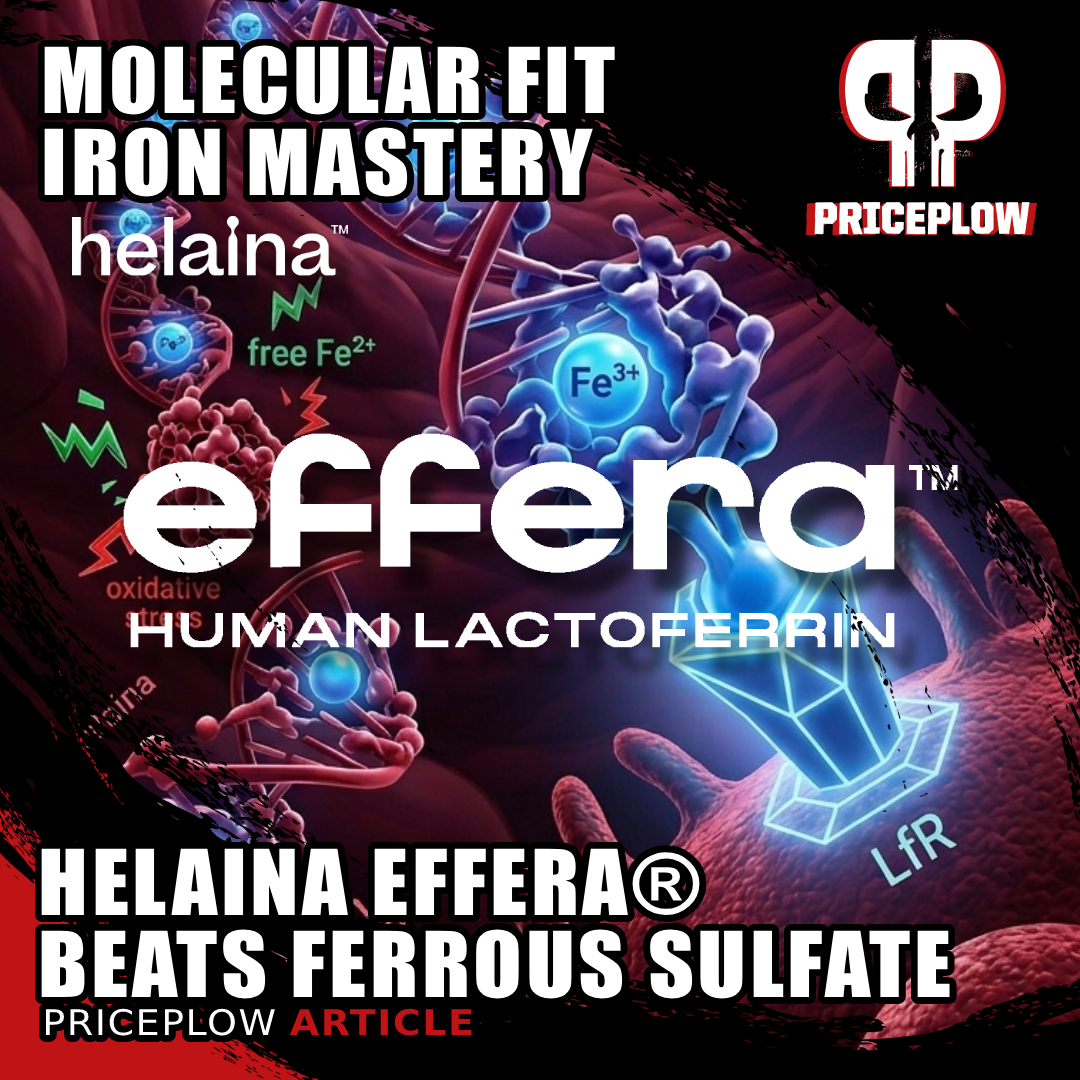
Why does lactoferrin beat ferrous sulfate despite absorbing less iron? The answer is structural. It binds Fe³⁺ safely, uses a dedicated gut receptor, and avoids the inflammation cascade that strands iron before it ever reaches your blood.
After menopause, estrogen levels fall substantially, and with them goes a key suppressive influence on systemic inflammation. Increased inflammatory signaling means elevated IL-6, elevated hepcidin, and progressively restricted iron availability even in women who are no longer losing iron monthly.[2] The perimenopause transition also frequently brings irregular, sometimes heavy bleeding through anovulatory cycles, so active iron loss may continue well into this period before menstruation fully ceases.
This hormonal-inflammatory connection is why lactoferrin fits so well post-menopause: its value here isn't primarily as a source of iron, but as an anti-inflammatory agent that keeps iron regulatory mechanisms from going into full lockdown. The body already has iron. It just can't access it efficiently because chronic low-grade inflammation is running the hepcidin response at a continuously higher setpoint.
-
The Bone Health Dimension
Menopause brings an additional concern that lactoferrin addresses through a separate mechanism: bone loss.
Bharadwaj et al. published a human trial in postmenopausal women showing that a lactoferrin-enriched supplement significantly affected bone turnover markers in both directions simultaneously: reducing bone resorption markers while increasing bone formation markers.[13] The mechanism runs through the RANKL/RANK/OPG pathway, which governs the balance between osteoclast (bone-breaking) and osteoblast (bone-building) activity. Lactoferrin appears to tip that balance toward formation.
Iron and immunity aren't separate systems -- they share the same signals. Lactoferrin sits at that intersection, and effera® delivers it in the human-identical form your body actually recognizes.
Iron status also connects to bone health through oxidative stress: excess unbound iron generates free radicals that damage bone tissue, while iron deficiency impairs the enzymatic processes that support collagen crosslinking. Addressing both through a molecule that simultaneously modulates iron homeostasis and directly supports bone turnover pathways is the kind of multi-layered benefit that makes lactoferrin a different kind of ingredient for this life stage.
-
Immune Support in Older Women
Immune function declines with age and is compounded by the inflammatory changes that accompany estrogen loss. Van Splunter et al. studied lactoferrin supplementation in elderly women, finding enhanced TLR7-mediated responses in plasmacytoid dendritic cells, an immune cell type with an outsized role in antiviral defense.[14] The iron story may be the headline here, but lactoferrin's benefits in this population extend well beyond any single mechanism.
Why Human-Identical Lactoferrin Matters
The studies cited throughout this article used bovine lactoferrin, which has a well-established safety and efficacy record. effera® is Helaina's recombinant human lactoferrin produced via precision fermentation, structurally identical to the lactoferrin your body makes naturally, rather than a milk-derived protein from another species.
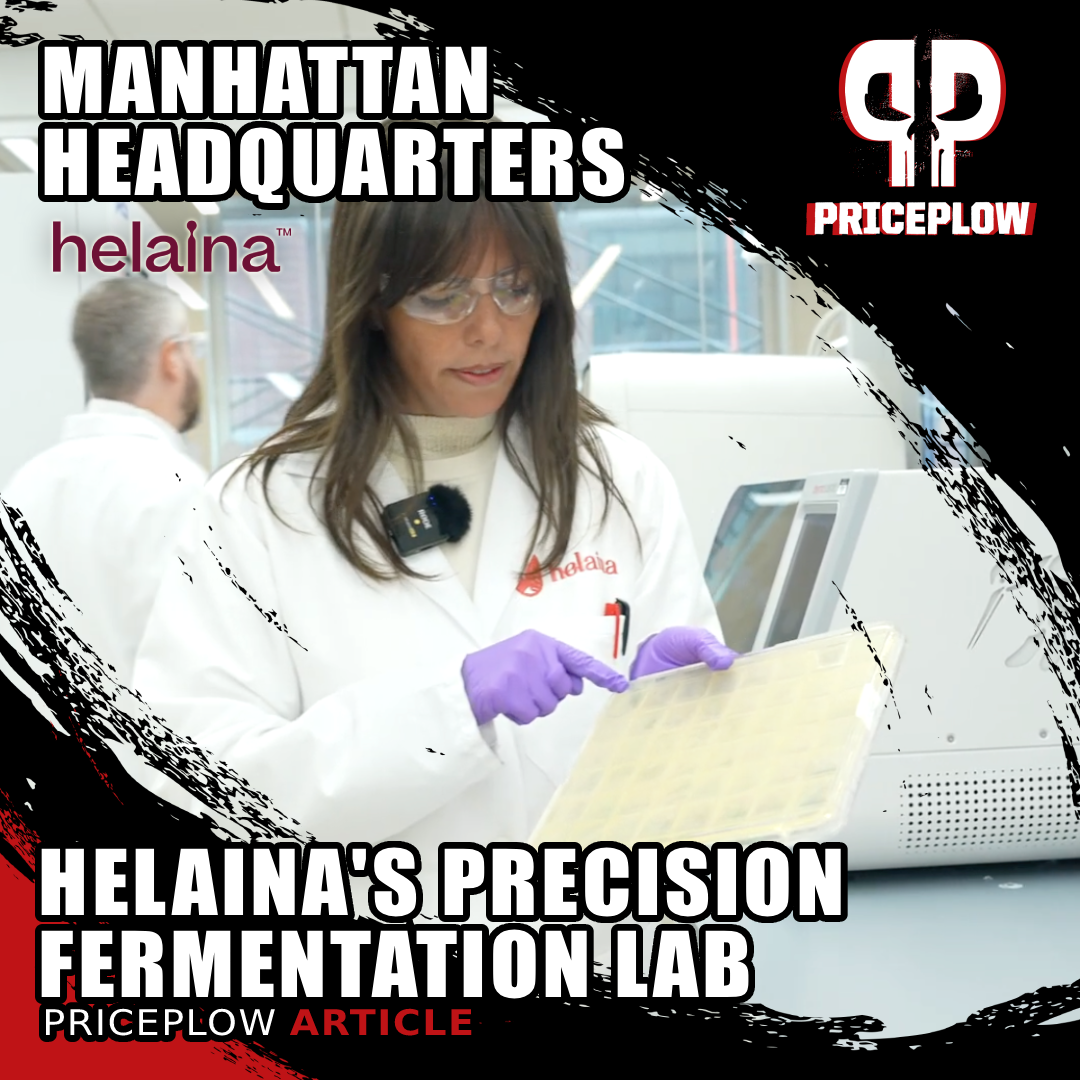
We went behind the scenes at Helaina's Manhattan lab to see how they make human-identical effera™ lactoferrin through precision fermentation.
Peterson et al.'s 2024 randomized controlled trial confirmed that effera® doesn't trigger anti-lactoferrin antibody formation like bovine ingredients do, resolving a key question about immunogenic response to long-term use.[15] The same trial's PBMC assay data showed effera® reduced IL-6 production at roughly double the magnitude of bovine lactoferrin in immune cells challenged with inflammatory stimuli, making for a potency advantage that matters for the hepcidin-modulation story at the core of this entire series.
For the full breakdown of how effera® is made and what distinguishes it from bovine alternatives, see our effera® ingredient overview.
Dosing: effera® ranges from 100 to 340mg/day. At 340mg, the data most directly supports maintained iron homeostasis (relevant for menstruating women, pregnant women, and postmenopausal women managing an inflammatory baseline).
One Molecule, Four Life Stages
The through-line across all of this is simple: women don't have a static iron problem. They have four distinct iron challenges that happen to be served by the same biological solution.

Laura Katz and Pamela Besada-Lombana take us inside Helaina's Manhattan R&D facility to reveal the precision fermentation science, clinical breakthroughs, and empathy-driven culture behind effera® lactoferrin on Episode #197 of the PricePlow Podcast.
During the menstruating years, lactoferrin addresses both the iron replacement need and the inflammation that blocks conventional supplements from working. For hair and ferritin, it delivers the ferritin gains that matter for follicle cycling, but without the GI burden that tanks compliance with ferrous sulfate. In pregnancy, it matches or exceeds ferrous sulfate's iron outcomes while lowering inflammation rather than raising it. After menopause, its role shifts toward anti-inflammatory support and bone health, helping the body maintain access to the iron it already has.
The "more iron is better" framework treats all of these as the same problem with the same solution. The biology says otherwise. And the clinical data, across a growing body of trials in exactly these populations, consistently points toward the regulatory approach over the brute-force one.
For updates on effera® research (including ongoing clinical work on real-world iron outcomes), sign up below: