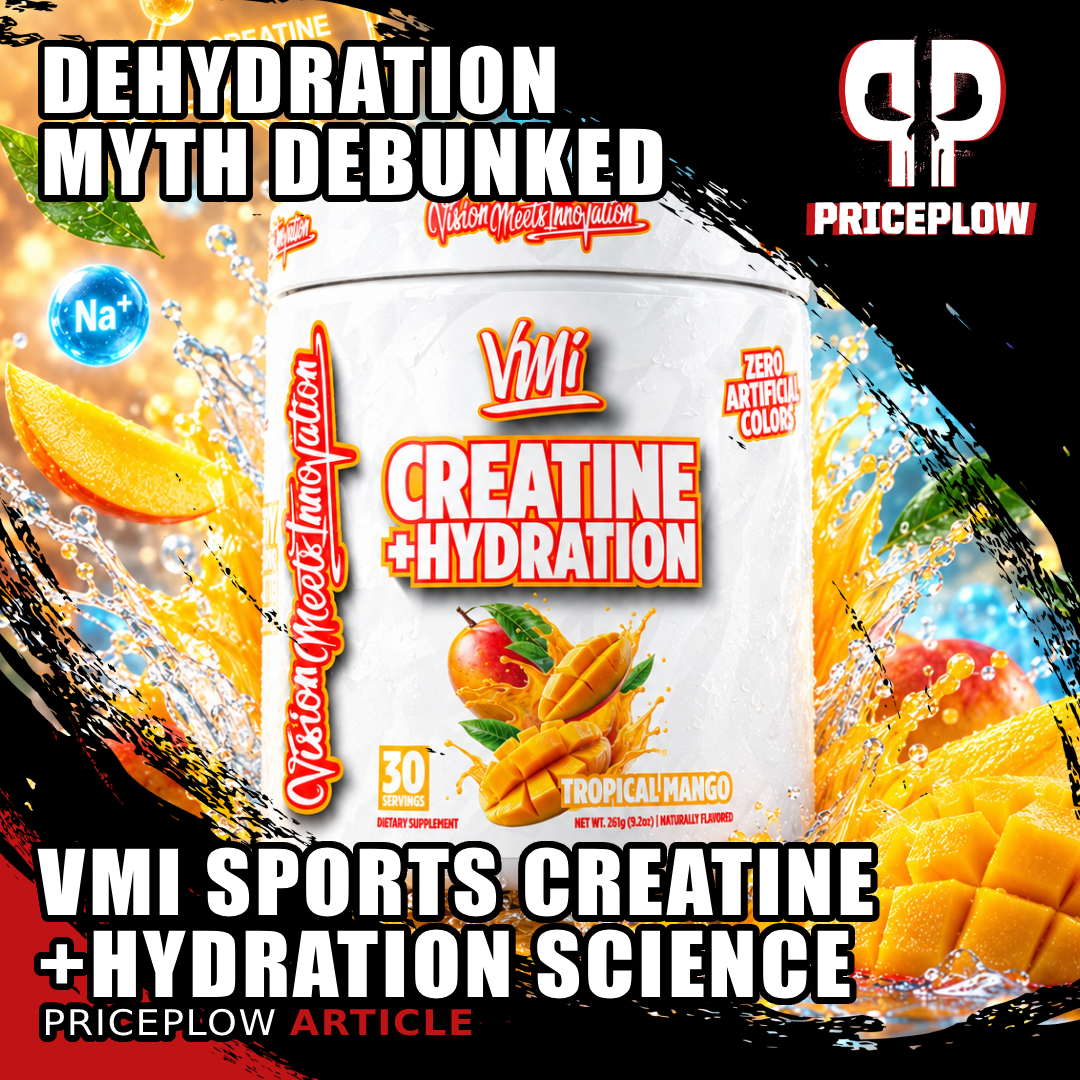
Dehydration cut muscle strength 5.5%, muscular endurance 8.3%, and anaerobic power 5.8% in a 28-study meta-analysis. That's the exact training creatine is supposed to help you build. VMI Sports Creatine +Hydration handles both sides.
If you've taken creatine for any length of time, you've probably heard the warning: "drink extra water, or it'll dry you out or give cramps". For years, gym wisdom treated creatine as something that hoards water inside your muscles at the expense of everything else, and plenty of lifters still back off their creatine once summer training heats up.
VMI Sports Creatine +Hydration is built on the opposite idea. It pairs a full 5g dose of NNB Nutrition's Pürest Creatine with TRAACS-chelated electrolytes, Aquamin sea minerals, taurine, and coconut water concentrate, on the premise that creatine and hydration work together rather than against each other.
We covered the formula ingredient by ingredient in our first breakdown of Creatine +Hydration (linked above), and VMI president Tom Reilly told us on Episode #226 of the PricePlow Podcast that he didn't want to throw creatine and electrolytes together just to chase a trend.
VMI Sports: Creatine is Also a Hydration Ingredient!
Our first article on Creatine +Hydration above took the premise at face value. This one puts it to the test. Below, we explain where the dehydration warning came from, what creatine actually does to the water in your body, how creatine users hold up in the heat, what the cramping data shows, and why staying hydrated matters so much for the training that creatine's supposed to improve.
The short version: as is often the case with this ingredient, the controlled research points away from the old wive's tales. Creatine pulls water into muscle cells, athletes taking it in hot conditions haven't shown added heat strain, and one heat trial recorded lower heart rate and core temperature after a week of creatine!
Check current prices on Creatine +Hydration below, and sign up for VMI Sports alerts so you'll hear about new flavors as soon as they land:
VMI Sports Creatine + Hydration – Deals and Price Drop Alerts
Get Price Alerts
No spam, no scams.
Disclosure: PricePlow relies on pricing from stores with which we have a business relationship. We work hard to keep pricing current, but you may find a better offer.
Posts are sponsored in part by the retailers and/or brands listed on this page.
This area is reserved for Team PricePlow's upcoming videos.
Subscribe to our channel and sign up for notifications so you catch it when it goes live!

Where the Dehydration Myth Started
The concern didn't come out of nowhere. Creatine is osmotically active (water follows it), and most of the body's creatine sits in skeletal muscle. So the theory went like this: as creatine pulls extra water into muscle cells, less fluid remains outside of them. During heavy sweating or hot weather, early creatine-haters (for there were many) thought that intracellular water might hurt temperature regulation and set the stage for dehydration, electrolyte imbalances, and cramps.
The idea was persuasive enough to shape official guidance. In the early 2000s, working from limited data and mostly speculation, the American College of Sports Medicine recommended that people controlling their weight while exercising intensely or in hot environments avoid creatine supplementation.[1]
Anecdotes added fuel. A standard loading phase (about 20g per day for 5 to 7 days) typically adds 1kg to 3kg of body mass, mostly water, which is hard to miss on a scale. Surveys also found low-quality creatine users reporting cramps, including one in which a quarter of creatine-using NCAA Division I baseball and football players said they'd experienced them. However, those surveys didn't control for other supplements or for how much creatine athletes were taking, and in one of them, 91% of participants exceeded the recommended 5g daily maintenance dose.[1]
Back then, manufacturing quality and micronization was a major issue, too -- these ingredients were nothing like what NNB Nutrition put together in Pürest Creatine
Once researchers tested the question in controlled settings with lab-tested ingredients, the theory started falling apart.
Where Creatine Sends the Water
Let's start with how creatine gets into muscle, because it doesn't drift in on its own. A sodium-dependent creatine transporter carries it across the cell membrane, and that transporter is the main route creatine takes into muscle cells.[2] Because the transport moves sodium along with creatine, water follows to keep the inside of the cell in osmotic balance, while the cell's sodium-potassium pump keeps intracellular sodium from climbing much.[1]
So yes, creatine increases body water, and the research is clear about where that water goes. In under-20 soccer players, a week of creatine at 0.3g/kg per day raised total body water by 2.3L, measured with deuterium oxide dilution (a reference method for body water).[3] Female collegiate dancers taking a lower 0.1g/kg daily dose for six weeks saw total body water rise too, along with a 1.7kg increase in DXA lean mass estimates, though the researchers noted that larger trials are needed to determine how much of that was new muscle.[4]
Key Trial: 8-Week Training Program, Better Data Everywhere
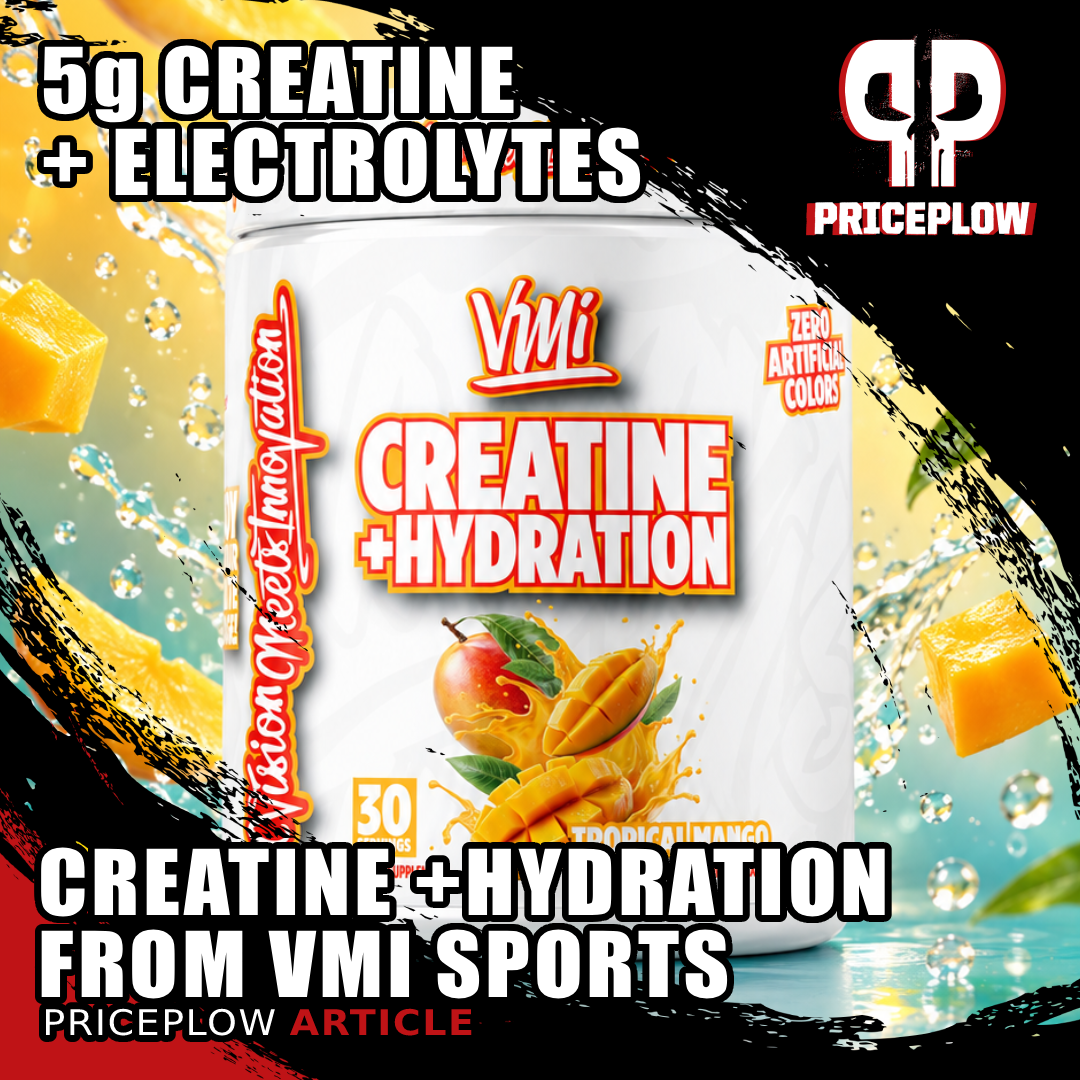
Creatine only works as well as the cells holding it are hydrated. That's the idea behind VMI Sports Creatine +Hydration, which puts a full 5g of Pürest Creatine next to a chelated electrolyte complex and 1g of taurine. No stims, no artificial colors.
The most useful data come from a longer trial in resistance-trained men. Over an 8-week training program, creatine (a 5-day load followed by 3g daily) produced bigger gains than placebo in skeletal muscle mass (+7.1% vs. +2.8%), total body water (+7.0% vs. +1.7%), and intracellular water (+9.2% vs. +1.6%).[5]
But even better: ratios stayed in line when this happened. Extracellular water, the fluid outside the cells, rose by a similarly small amount in both groups, and the ratio of intracellular water to muscle mass didn't change.[5]
In other words, the extra water stayed inside muscle cells, in step with new muscle tissue, and it didn't come at the expense of the fluid outside them. The effect also plateaus. Once muscle creatine stores are saturated, continued supplementation doesn't keep pushing more water into the cell.[6]
Bonus: It’s a Signal for Protein Synthesis!
Creatine researchers also point out that intracellular water is itself a cellular signal for protein synthesis, which may help drive muscle growth over time. After reviewing the full body of evidence, an international panel of creatine researchers concluded that short-term water retention, when it shows up, is mostly intracellular, and that over longer periods total body water tracks muscle mass.[1]
Creatine in the Heat
If creatine really hoarded water at the expense of thermoregulation, hot conditions would expose it. Yet researchers have checked this (repeatedly!) and haven't found it.
A 2009 systematic review with meta-analyses from the University of Connecticut screened the creatine literature for randomized trials on heat tolerance and hydration. The ten studies that made the cut scored 7 to 10 on a 10-point quality scale, and the conclusion was direct: no evidence supports the idea that creatine hinders the body's ability to dissipate heat or harms its fluid balance, and controlled trials of athletes exercising in the heat found no adverse effects at recommended doses.[7]
-
Brutal Study: Training in 92 Degree Heat with Getting Rectal Probes

One of the toughest tests came from the same research group. Twelve active men took either creatine (21.6g per day) or placebo for a week, then exercised in 33.5°C heat (92.5° F) until they'd lost 2% of their body mass, so they started the main test already dehydrated. That test was an 80-minute heat tolerance protocol mixing walking with high-intensity running. Despite gaining 0.88kg during the creatine week, the men showed no differences from placebo in rectal temperature (39.4°C vs. 39.3°C), heart rate (192 beats per minute in both trials), perceived exertion, thirst, or heat illness symptoms.[8]
Let's hope these participants were paid for this one!
-
Heat and Humidity: Creatine Reduces Heart Rate and Temperature
A University of Glasgow trial went a step further. In trained subjects exercising at 86°F and 70% humidity, a week of creatine (11.4g twice daily) increased total body water by 0.63L and significantly reduced heart rate, rectal temperature, and perceived effort during exercise compared to the same subjects' pre-supplementation trials, blunting the rise in heart rate by up to 7 beats per minute.[6] The researchers also tested glycerol, a classic hyperhydration agent. Adding it on top of creatine expanded body water further, but it didn't lower heart rate, core temperature, or effort any more than creatine alone. Neither regimen changed performance in that trial, so the benefit was lower physiological strain rather than a faster finish.
-
ISSN: This is Where Creatine Helps
The International Society of Sports Nutrition's creatine position stand lands in a similar place, listing thermoregulation alongside injury prevention and recovery among the areas where research suggests creatine may help.[9]
One scoping note: these heat trials used loading doses around 20g per day, the fastest and most dramatic version of creatine's water shift. At 3g to 5g daily, muscle stores still reach similar saturation, just over about four weeks instead of one.[1] With a daily 5g dose like the one in Creatine +Hydration, the water shift builds gradually, at a fraction of the doses that held up in the heat.
What the Cramping Data Shows
Lab heat tolerance tests are one thing. A full college football season is another.

Stim or no stim? VMI Sports just launched both. A three-source caffeine Creatine Pre-Workout and a stim-free Creatine +Hydration, each with a full 5g creatine, all in Patriot Pop for America's 250th.
Researchers followed 72 NCAA Division IA football players through the 1999 season, in training conditions that ranged from 59°F to 98.6°F with humidity as high as 91%. Thirty-eight players chose to take creatine (a 0.3g/kg daily load for five days, then a smaller maintenance dose after workouts, practices, and games), and the athletic training staff logged every treated injury. Compared to non-users, creatine users had significantly less cramping, fewer heat illness or dehydration episodes, less muscle tightness, fewer muscle strains, and fewer total injuries.[10] Noncontact joint injuries, contact injuries, illnesses, missed practices, and players lost for the season didn't differ between groups.
The study was open-label, and players picked their own group, so it can't show that creatine prevents cramps. Still, it found the opposite of what the "dehydration theory" predicted, in exactly the setting where that theory should have shown up first. After weighing the experimental and clinical evidence, the same international research panel concluded that it doesn't support the notion that creatine causes dehydration or muscle cramping.[1]
Dehydration Costs You Reps
The other half of VMI's premise gets less attention. Dehydration on its own is a performance problem, and it hits the same kind of training creatine supports.
Creatine's core job is raising muscle creatine stores, which helps explain its improvements in high-intensity exercise performance and the greater training adaptations that follow.[9] We already know this.
Critical Performance Losses, No Matter How You Slice the Data
But fluid loss pushes in the other direction. A 2015 meta-analysis pooling 28 studies found that hypohydration reduced muscle strength by 5.5%, muscular endurance by 8.3%, and anaerobic power by 5.8%, although the effect was smaller in trained individuals.[11] An earlier review estimated the losses at roughly 2% for strength, 3% for power, and 10% for high-intensity efforts lasting 30 seconds to two minutes.[12]
Squats at Full Hydration, 2.5% Dehydration, and 5% Dehydration: The Suffering

Tom Reilly, president of VMI Sports, returns to share the brand's newest grocery wins, a full creatine product lineup, and what's coming next in Episode #226 of the PricePlow Podcast.
For lifters, the most interesting study separated hydration status from confounders like elevated core temperature. Resistance-trained men completed a six-set back squat session fully hydrated, about 2.5% dehydrated, and about 5% dehydrated. Jump height, peak power, and peak force didn't change significantly, but the work they completed dropped in sets two and three at 2.5% dehydration, and in sets two through five at 5%.[13] So the damage landed on training volume, the same thing creatine is supposed to help you build.
Replacing fluid isn't only about water, either. The American College of Sports Medicine's fluid replacement position stand recommends starting exercise well hydrated with normal electrolyte levels and keeping fluid losses under 2% of body weight, noting that sweat rates and sweat electrolyte content vary so widely between people that individualized plans make sense.[14] After training, restoring fluid balance depends on drinking more than you sweated out and replacing electrolytes, especially sodium.[15]
Where Creatine +Hydration Fits
Put the research together and VMI's formula logic holds up. Tom Reilly's not just a hat rack, after all -- he and his team have been putting together potent formulas for a decade. Creatine moves water into muscle cells, and the electrolytes cover the fluid balance that sweating draws down.
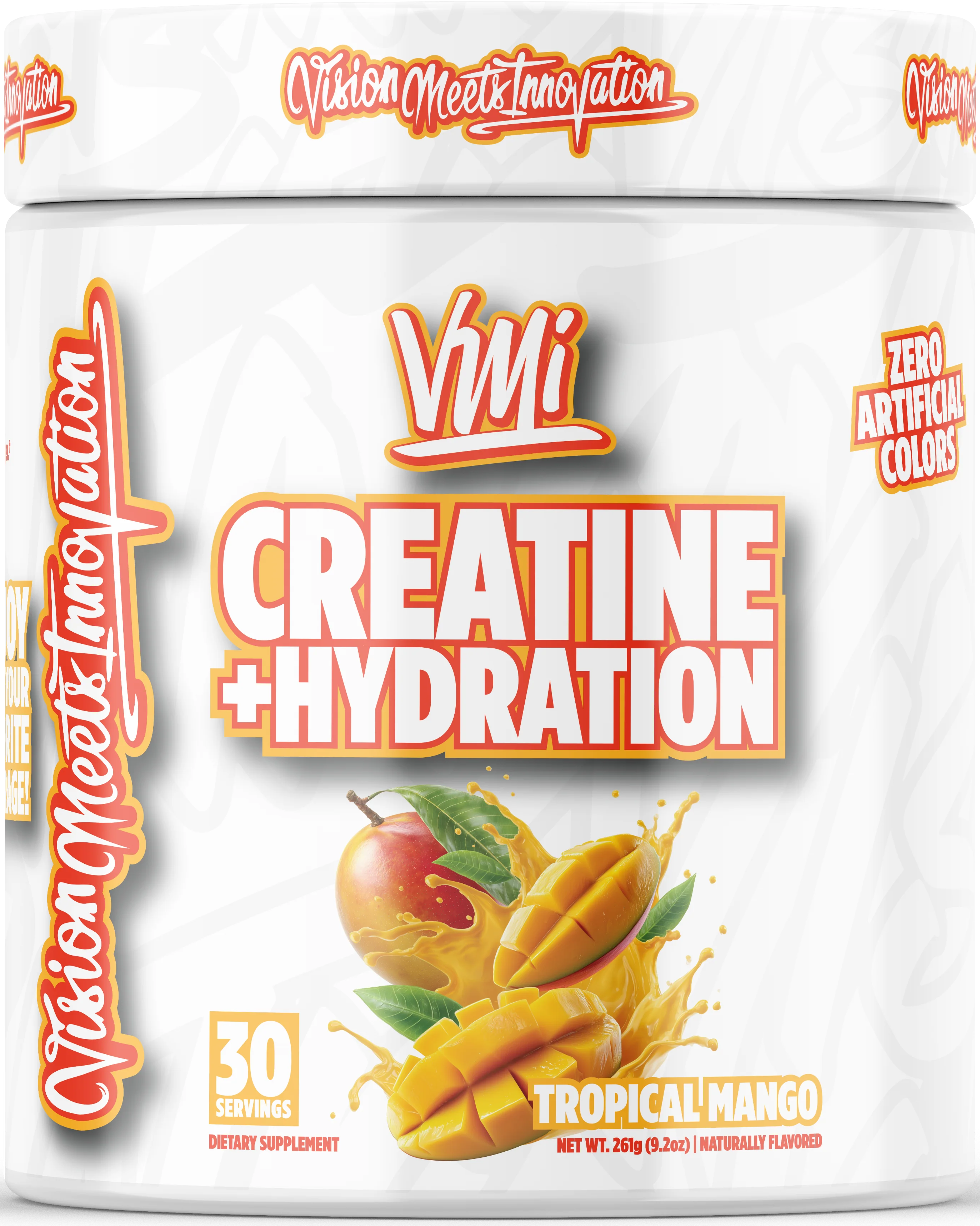
Each scoop starts with 5g of Pürest Creatine, NNB Nutrition's ultra-high-purity creatine monohydrate, which sits right in the 3g to 5g daily range that saturates muscle creatine stores without a loading phase. The hydration side comes from Balchem's Albion TRAACS-chelated potassium, magnesium, and calcium, Aquamin sea minerals, pink Himalayan salt, and coconut water concentrate, which together deliver 98mg of sodium, 145mg of chloride, 78mg of potassium, 28mg of magnesium, and 39mg of calcium, plus the 1g of taurine we covered in our first look at the formula.

That's a daily electrolyte baseline rather than a heavy-sweater sodium load, so long sessions in serious heat still call for drinking, and replacing sodium, based on what you lose. Because it's stim-free, Creatine +Hydration works on training days and rest days alike, and consistency is king creatine: at 5g per day, daily use is what gets muscle stores to saturation. Mix one scoop with 8oz to 12oz of water, or sip it through a long session to cover fluid, electrolytes, and your daily creatine from one bottle.
Conclusion: A Myth That Doesn’t Hold Water
The creatine dehydration warning grew out of a reasonable-sounding theory, a handful of early surveys, and a cautious recommendation made before the data existed. But it's time to put it to rest, permanently.
The controlled research simply tells a different (and more accurate) story. Creatine draws water into muscle cells in step with the muscle you build, athletes taking it in hot conditions haven't shown added heat strain, and the best field data on cramping found fewer cramps among creatine users.
Meanwhile, dehydration is a reliable way to lose strength and the later sets that drive progress. That's why you put creatine and electrolytes in the same scoop, and it's the case VMI made with Creatine +Hydration: a stim-free, daily way to build creatine stores while covering the hydration side of training.
If you want caffeine on training days, VMI's Creatine Pre-Workout carries the same 5g creatine dose, and VMI Sports Creatine Gummies cover the days you'd rather chew it. For everything else, a scoop of Creatine +Hydration keeps the routine simple.
Check PricePlow for current prices and availability on Creatine +Hydration, and sign up for VMI Sports alerts below to catch new flavors and formulas as they land:
VMI Sports Creatine + Hydration – Deals and Price Drop Alerts
Get Price Alerts
No spam, no scams.
Disclosure: PricePlow relies on pricing from stores with which we have a business relationship. We work hard to keep pricing current, but you may find a better offer.
Posts are sponsored in part by the retailers and/or brands listed on this page.


Comments and Discussion (Powered by the PricePlow Forum)