
Most sleep supplements sedate you. PLT Health's Vanizem and Serezin take different routes, working through the endocannabinoid system and inflammatory pathways to support the full sleep arc from wind-down to wake-up.
The sleep supplement category has one very crowded lane: sedate, relax, or reset the circadian clock. Melatonin adjusts your sleep-wake timing. GABA-based ingredients quiet neural arousal. Magnesium eases muscular tension. Adaptogens blunt the cortisol curve. Each does something real, but when sleep disruption comes from multiple simultaneous sources, a single mechanism leaves the others completely untouched.
PLT Health’s Sleep Stack: Approaching Sleep from Other Angles
PLT Health Solutions developed two clinical-grade botanical ingredients to tackle this from fundamentally different angles, both of which are underutilized in the market's existing sleep aids:
- Vanizem targets the endocannabinoid system (ECS) to support relaxation and smooth the transition into sleep.
- Serezin addresses the physical and inflammatory factors that may contribute to poor sleep quality throughout the night and affect how you feel the next morning.
Together, they cover a complete sleep arc, from the stress and tension of the evening through deep, restorative cycles and into a refreshed morning wake-up.

PLT Health positions Vanizem and Serezin as a dual-action botanical approach covering the entire night of sleep.
We've published dedicated ingredient guides on both. This article is for formulators and brands thinking about what the two look like together, and what a complete botanical sleep system built around them might look like in practice.
Before diving in, sign up for PLT Health, Vanizem, and Serezin news alerts:
Subscribe to PricePlow's Newsletter and Alerts on These Topics

The Problem With Single-Mechanism Sleep Support
Sleep disruption doesn't come from one source. It's typically three overlapping failure modes running at once.
- The first is neurological: tension, racing thoughts, and stress-driven wakefulness that prevent you from crossing the threshold into sleep. This is where most sleep supplements aim. Melatonin, GABA-ergic ingredients, and herbal relaxants all push on this lever, and they help when this is actually the problem.
- The second is physical: everyday musculoskeletal discomfort and low-grade inflammation that interrupt sleep architecture throughout the night. Even people who fall asleep readily often report fragmented sleep, frequent waking, and the nagging sense of not having truly rested. For active adults, athletes in the post-training window, and anyone over 40 accumulating daily wear, this is frequently the failure mode a standard neurotransmitter stack never addresses.
- The third shows up in the morning: grogginess and mental fog as a side effect of the sedation used to produce the sleep. Traditional sleep aids can solve the short-term onset problem while creating a next-day performance penalty.
PLT Health's two-ingredient sleep system directly addresses all three. Vanizem and Serezin don't replicate the mechanisms that dominate the category. They work through separate, clinically studied pathways to cover the full arc from evening wind-down to morning energy.
A Sleep Journey in Four Phases
A complete night of sleep isn't one event. Think of it as four sequential phases:
Evening stress reduction → Sleep onset → Deep restorative sleep → Morning energy
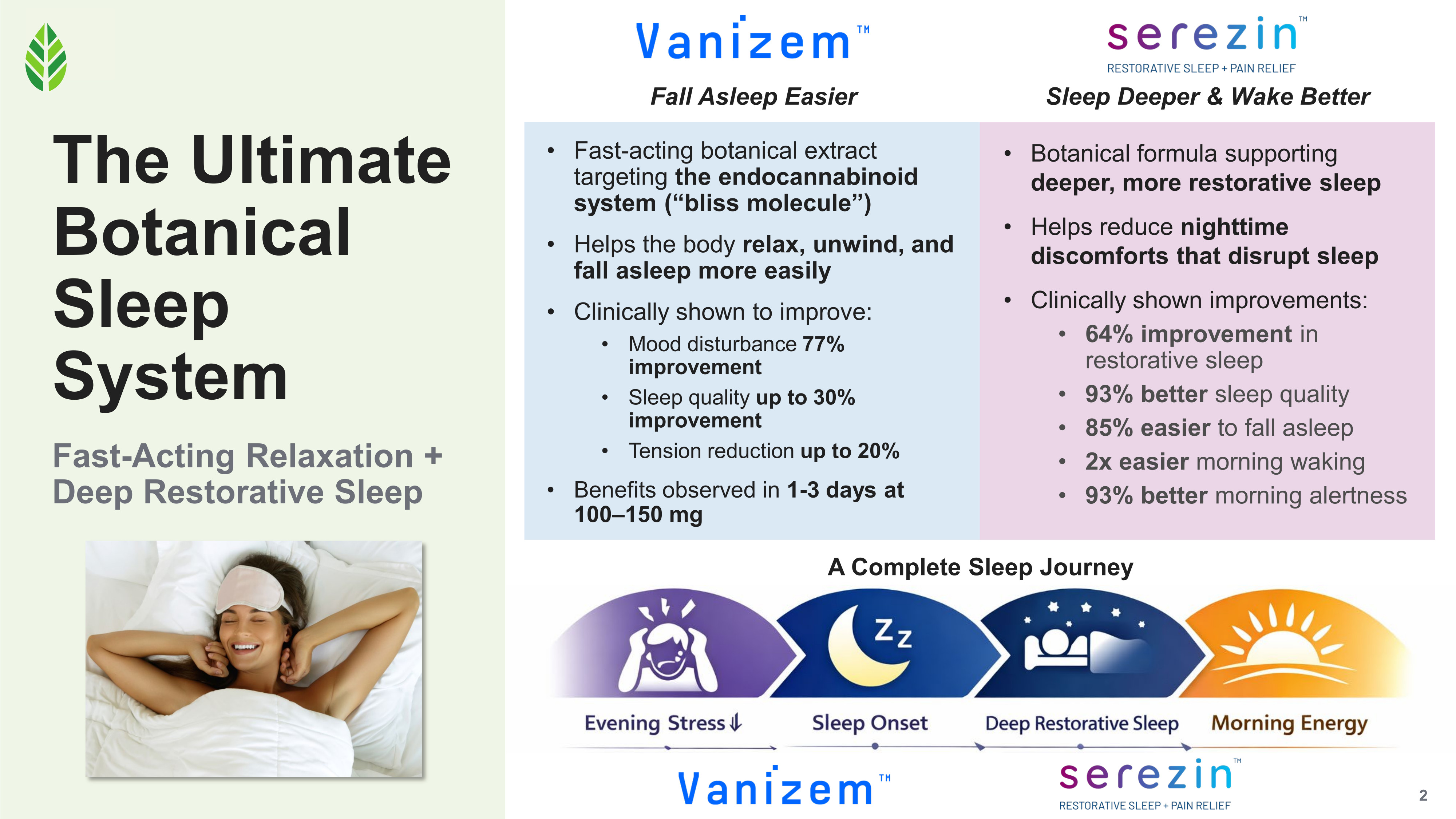
Vanizem handles relaxation and sleep onset while Serezin supports deeper, more restorative sleep and an easier morning wake-up.
Vanizem covers the front two. Its fast-acting mechanism works through the endocannabinoid system, targeting the FAAH enzyme to support relaxation and smooth the transition into sleep. This is the psychological wind-down and sleep onset side of the system.
Serezin covers the back two. By addressing physical discomfort and inflammatory processes that may contribute to poor sleep quality, Serezin builds progressively more restorative sleep quality over days to weeks. Its clinical benefits extend into the morning, with measurable improvements in ease of waking and morning alertness.
Neither ingredient steps on the other's mechanism. That's what makes this a system rather than two ingredients sharing a label. Below are further details on both:
Vanizem: Relaxation and Sleep Onset

Vanizem is PLT Health's proprietary Aframomum melegueta (grains of paradise) extract, developed for mood support, relaxation, and sleep onset through the endocannabinoid system. One clarification matters up front: Vanizem isn't the standard grains of paradise extract found in thermogenic fat burners. Its extraction, standardization, and proprietary microencapsulation give it a neurological mechanism other grains of paradise products don't share.
The full science is in our Vanizem ingredient guide linked above, but the key points for its role in this stack are below:
-
The ECS and Anandamide Connection
In vitro data suggest Vanizem's primary activity involves the endocannabinoid system (ECS), a regulatory pathway distinct from the sedative mechanisms that dominate the sleep category. The leading candidate is inhibition of FAAH (fatty acid amide hydrolase), the enzyme that breaks down anandamide, the endogenous cannabinoid widely called "the bliss molecule." FAAH inhibition is expected to allow anandamide to accumulate and activate cannabinoid receptors (CB1 and CB2) in the central nervous system, though anandamide concentrations weren't directly measured in the clinical study.[1]
In vitro pharmacology confirmed 92% FAAH inhibition, 85.5% modulation of hCB2R, and 62% activity at serotonin receptor 5-HT1AR. The extract also activates TRPV1 (an ion channel involved in pain signaling and thermogenesis) in a dose-dependent fashion, reaching 120% of the capsaicin control at the highest test concentration. Whether these mechanisms fully account for the clinical effects observed in humans remains to be established.[1]

Vanizem takes stress relief to the next level by boosting anandamide, the "bliss molecule," and supporting your endocannabinoid system. Elevate mood, improve sleep, and protect against chronic stress--all naturally.
That profile shapes the proposed role of Vanizem in this stack. The preclinical evidence points to a mood-elevating and tension-reducing pathway rather than a sedative one. Vanizem is intended to support relaxation and sleep initiation without acting as a traditional sedative.
-
Clinical Evidence
The research behind Vanizem is a randomized, double-blind, placebo-controlled crossover trial in 30 participants, ages 40 to 50, 44% women, all screened for mild anxiety via a modified Hamilton Anxiety Rating Scale. They received 50mg, 100mg, or 150mg once daily for three days, assessed via the Profile of Mood States (POMS) and Leeds Sleep Evaluation Questionnaire (LSEQ).[1]
Results were dose-dependent and fast-acting. At 150mg, total mood disturbance (TMD) improved 77% versus placebo, tension scores dropped nearly 20%, and key mood-state subscale scores improved ~35% (reflecting dejection and general disturbance), all reaching significance by day 3. Vigor increased 8% (indicating a positive mood state) at both the 100mg and 150mg doses, separating both active arms from placebo.[1]
Sleep outcomes were equally strong. At 150mg, ease of falling asleep improved 51%, sleep quality 36.5%, and morning wakefulness 7.4% versus placebo on the LSEQ. These effects appeared within 1 to 2 doses, with getting-to-sleep and quality-of-sleep scores separating from placebo at the first assessment. No treatment-related adverse events were reported in this pilot study.[1]
-
Dosing and Delivery Technology
Vanizem's effective clinical range is 100mg to 150mg per day, easily fitting into capsule-based formulas. At 100mg, most mood and sleep endpoints hit significance, but at 150mg, every primary outcome improved, including morning wakefulness. This formula uses 150mg.

PLT Health Solutions: Growth Through Innovation
The extract's delivery is a patent-pending complex coacervation process using Gum Arabic, pea protein, and low methoxyl pectin. That process maintains the stability of the volatile vanilloid constituents under heat and over time, improves water dispersibility, and provides taste masking, opening the ingredient to functional shots, stick packs, and RTD sleep beverage formats beyond standard capsules.
One important note: the sleep and mood benefits observed in clinical research belong to Vanizem's standardization and microencapsulation specifically. Standard grains of paradise extracts standardized for thermogenic activity haven't been evaluated on these neurological endpoints. They're different products with different biological targets.
For the full research breakdown, see our article titled "Vanizem: Enhance Mood and Conquer Stress by Boosting Anandamide Production".


Serezin: Restorative Sleep and Morning Recovery
Serezin is PLT Health's patented Boswellia serrata oleo-gum resin and Zingiber officinale (ginger) rhizome blend, positioned as "Restorative Sleep + Pain Relief". The name is the mechanism: rather than sedating you to sleep, Serezin targets the physical and inflammatory barriers that prevent quality sleep from the start.

Formulators already familiar with PLT Health's Joint Health Platform will recognize Boswellia serrata as the botanical backbone of AprèsFlex, Kinexa, and the broader Boswellia portfolio. It's the same plant family applied to a different clinical target. Where those joint ingredients focus on cartilage, stiffness, and mobility through their standardized AKBA content, Serezin pairs Boswellia with ginger in a ratio studied for the sleep-pain connection, using validated sleep outcome tools rather than joint function assessments.
The downstream benefit is restorative sleep quality, achieved through anti-inflammatory and analgesic mechanisms rather than sedation Formulators who see Serezin as part of a broader nighttime recovery stack will find it speaks to some of the same inflamed tissues as the Boswellia joint ingredients, from a different angle with a different endpoint.
Here's what's essential for the sleep system combination:
-
The Pain-Sleep Connection
The 5-LOX enzyme sits at the center of Serezin's botanical mechanism. Boswellic acids from Boswellia serrata, led by AKBA (acetyl-11-keto-β-boswellic acid), act as specific, non-redox inhibitors of 5-lipoxygenase, blocking the leukotriene synthesis pathway that drives vascular permeability, tissue inflammation, and pain amplification.[2][3] Ginger's primary actives, gingerols and shogaols, extend that analgesic coverage through separate receptor pathways (serotonergic receptors, TRPV1, and voltage-gated sodium channels), providing additional pain support without duplicating the 5-LOX work.[4]
PLT Health's Serezin targets the pain-sleep cycle with Boswellia serrata + ginger. New study: 64% better restorative sleep, 2.6x less nighttime pain, improved mood in 4 weeks. Perfect for athletes battling pre-workout hangovers + training inflammation. 300mg/day.
The link to sleep quality runs through TNF-α. TNF-α has well-established sleep regulatory functions, acting within biochemical networks to influence sleep in health and disease, and elevated TNF-α has been associated with sleep disturbance in people experiencing musculoskeletal discomfort.[5][6] Boswellia serrata extract directly modulates TNF-α and IL-1β production in human immune cells through inhibition of MAP kinase phosphorylation.[7] By working through both pain burden and TNF-α signaling, Serezin targets pathways that may contribute to improved sleep quality, without relying on sedation.
-
Clinical Evidence: The Salter 2025 Study
The primary research behind Serezin is a randomized, double-blind, placebo-controlled trial published in SLEEP: 60 healthy adults aged 40 to 70 (23 males, 37 females), self-reporting poor sleep secondary to mild musculoskeletal discomfort, randomized to 300mg daily or placebo for 28 days. Assessments used five validated instruments: the Restorative Sleep Questionnaire (RSQ), all four domains of the Leeds Sleep Evaluation Questionnaire (LSEQ), POMS-SF for mood, visual analog scales (VAS) for daytime and nighttime pain, and the Consensus Sleep Diary (CSD) for self-tracked sleep parameters.[8]
Significant Improvements Within 7 Days, Even More at 14 and 28 Days
Outcomes followed a consistent time-course. By day 7, restorative sleep and pain scores both separated from placebo (p<0.05). By day 14, all four LSEQ domains hit significance: subjects reported 85% greater improvements in ease of falling asleep and 93% greater improvements in sleep quality versus placebo, alongside meaningful gains in morning alertness and overall mood. By day 28, the full picture was in place: 64% better restorative sleep, 2.6x greater reduction in nighttime discomfort, 75% greater reduction in daytime discomfort, and 2.2x greater improvement in overall mood compared to placebo.[8]
PLT Health offers five clinically-backed Boswellia extracts for joint health. AprèsFlex for capsules, Dynagenix for beverages, 5-LOXIN for high-AKBA formulas, and FLEXIR for multi-botanical support. Each optimized for different formats and consumer needs.
Consensus Sleep Diary analysis added a clinically grounded benchmark. 57% of Serezin subjects achieved a meaningful increase in Total Sleep Time of at least 45 minutes, versus 17% of placebo subjects (p<0.001), with all four CSD endpoints (Total Sleep Time, Sleep Efficiency, Sleep Onset Latency, and Wake After Sleep Onset) improving significantly.[8] Serum TNF-α was significantly lower in the Serezin group at Day 28 (p<0.01). Because TNF-α has well-established sleep regulatory functions, this reduction provides objective evidence that Serezin influenced inflammatory pathways that may be relevant to the observed improvements in sleep quality and recovery. A secondary analysis of the women-only cohort, presented at SLEEP 2025 in Seattle, showed significant improvements across pain, restorative sleep, all LSEQ domains, and mood, confirming the full-cohort findings within that group.[8]
-
Dosing and Formula Considerations
Serezin's validated clinical dose is 300mg per day, taken as a single serving. That matches the Salter 2025 trial exactly, with no titration required, making it a clean fit for any single-serving capsule or powder formula.[8]
Because Serezin doesn't work through direct sedative mechanisms, next-day grogginess is less likely than with some conventional sleep aids. The clinical data reflect this: subjects taking Serezin reported significantly improved ease of waking and morning alertness compared to placebo. The progressive, multi-day mechanism also means the dose doesn't need to be taken at a specific window before bed -- athletes with variable training schedules and anyone who doesn't keep a rigid bedtime routine can use it without timing constraints.
Serezin shares no pathway overlap with GABA-modulating ingredients, sedative-class botanicals, or ECS-targeted ingredients like Vanizem, making it a genuinely additive component across multi-mechanism sleep formulas.
For the full research breakdown, see our article titled "Serezin: A New Angle for Sleep Support in Clinical Research from PLT Health".


Why Vanizem + Serezin Work Better Together
The GLP-1 era reset consumer expectations for weight management. PLT Health's Supresa and Slendacor cover both sides of energy balance: appetite control and thermogenesis, with no stimulants and clinical data backing each.
These two ingredients have independent clinical evidence and distinct ingredient narratives on their own. Three things make the combination worth considering together.
- Mechanistic non-overlap. Preclinical data suggest Vanizem may influence the endocannabinoid system through FAAH activity and cannabinoid receptor signaling. Serezin works through boswellic acid-driven 5-LOX inhibition and TNF-α reduction. These pathways don't compete and don't saturate each other. Since they act on complementary biological systems, the combination offers an opportunity to address sleep disruption from both angles simultaneously.
- Phase-of-sleep sequencing. Vanizem fires first: fast-acting ECS support for relaxation and wind-down into sleep onset. Serezin's benefits build progressively over days as the physical and inflammatory burden lifts and sleep quality improves. The result is faster sleep onset and more restorative cycles once you're there.
- Morning as a clinical endpoint. Both ingredients move the morning metric. Vanizem's anandamide-driven mood pathway extends into daytime wellbeing. Serezin's Salter 2025 study measured ease of morning waking and morning alertness as distinct primary endpoints, both improving significantly over placebo.[9] For a category that has historically defined success only by what happens at bedtime, that's a differentiated clinical story.
It's worth noting that while each ingredient has independent clinical evidence, the combination itself hasn't been evaluated in a controlled clinical trial.
The stack also covers demographic breadth. Vanizem's psychological and mood-driven sleep benefits resonate with stress-sensitive adults and those managing stimulant-heavy training schedules. Serezin's pain-inflammation pathway speaks directly to adults 40 and up, post-training athletes, and women experiencing sleep challenges tied to everyday physical discomfort.
A Concept Formula: What a Complete Sleep System Looks Like
PLT Health's concept formula anchors Vanizem and Serezin in a single-capsule bedtime product: three capsules (two of which are magnesium) taken before bed. This is an example formulator reference, not a product announcement, so any brand building around this stack can adapt it to their own label strategy. Each ingredient has a distinct role in the system, which the breakdowns below explain.
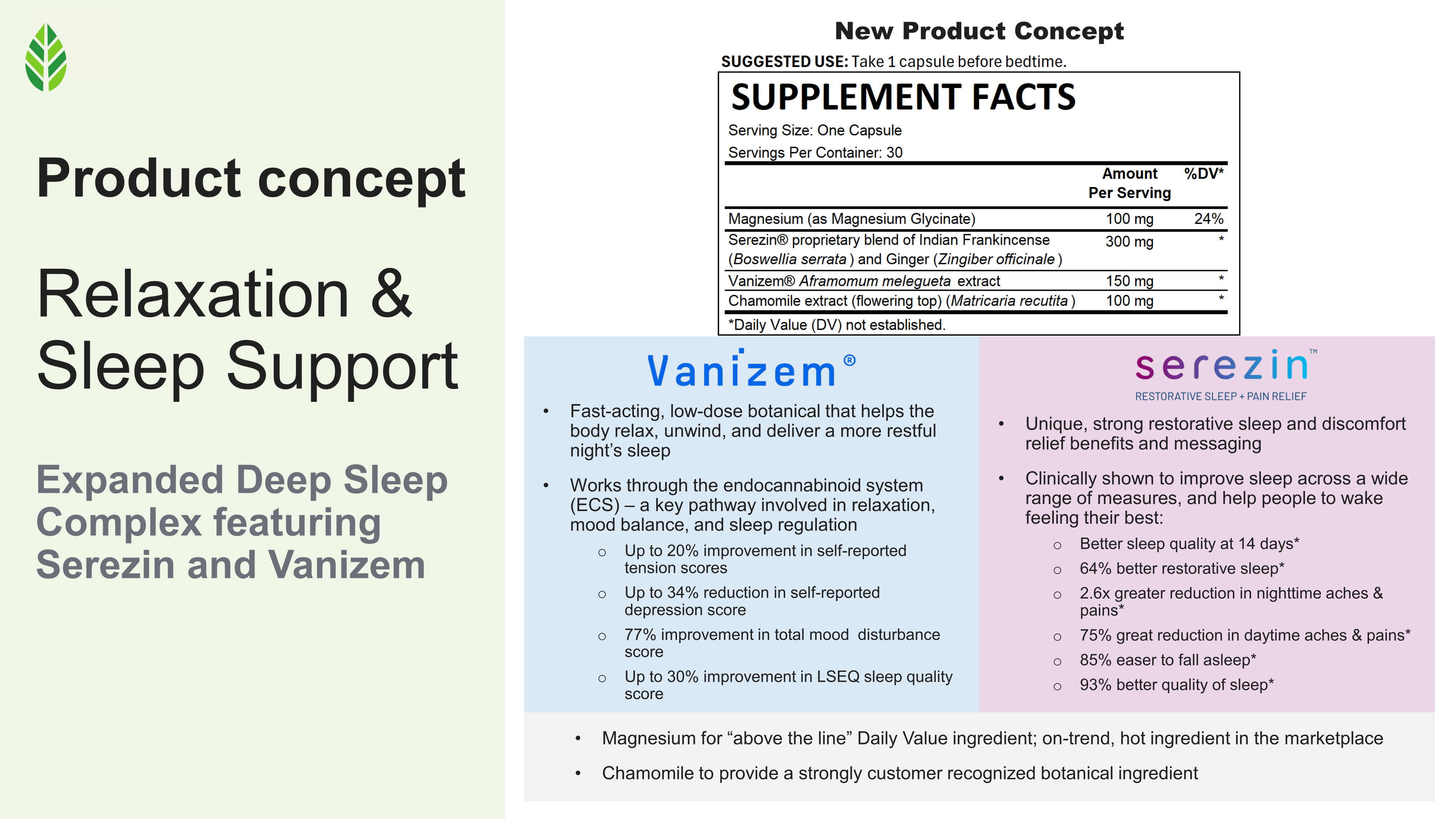
PLT Health Sleep Support Product Concept with Supplement Facts
-
Serezin® - 300mg
At 300mg, the full clinically validated dose from Salter 2025, Serezin is the restorative sleep and morning recovery anchor of this formula. It covers the phases Vanizem doesn't: addressing the physical discomfort and low-grade inflammatory burden that may contribute to poor sleep quality throughout the night, building progressively better sleep quality across days of use. The result is more restorative sleep and a meaningfully better wake-up experience.
-
Vanizem® - 150mg
150mg is the high end of Vanizem's clinically effective dose range, and that's the right call for this formula. It delivers maximal endocannabinoid system support for the evening wind-down phase: easing the tension of the day and supporting sleep onset in the hours before Serezin builds the restorative depth that carries through the night.
-
Magnesium (as Magnesium Glycinate) - 100mg (24% DV)
Magnesium Glycinate covers two distinct roles in this formula. As a nutrient with an established Daily Value, it gives consumers a familiar, trusted reference point on the label alongside the more novel Vanizem and Serezin. The glycinate form is absorbed in part as an intact dipeptide via a dedicated transport pathway, giving it a meaningful bioavailability and GI tolerability advantage over inorganic forms like oxide.[10] At 100mg, it adds a supportive layer to the formula's relaxation and sleep goals through magnesium's role in NMDA receptor modulation, GABAergic signaling, and normal muscle relaxation.[11]
Note: This dose takes up roughly two capsules on its own (magnesium glycinate is ~10% magnesium yield, so we'd need about a gram of material to get 100mg elemental magnesium). This means the entire formula will be three standard capsules or two very large capsules. If the formulator were willing to increase the number of capsules, we could further increase the magnesium dose here.
-
Chamomile Extract (Flowering Top, Matricaria recutita) - 100mg

Chamomile Extract (Matricaria recutita) is one of the most widely recognized botanical sleep ingredients available, with centuries of traditional use as a mild calming agent and a well-documented safety profile across clinical research.[12] Its primary active compound, apigenin, is a partial agonist at benzodiazepine-binding sites on GABA-A receptors in the brain, gently supporting relaxation and healthy sleep onset through a pathway distinct from both Vanizem's ECS mechanism and Serezin's anti-inflammatory approach.[13] At 100mg, this dose adds a complementary GABAergic layer and brings a broadly familiar botanical name to a formula that pairs it with the more novel Vanizem and Serezin.

Positioning and Target Audiences
The Vanizem + Serezin combination gives brands three natural positioning angles, and they're not mutually exclusive.
- Active adults and athletes. High-stimulant pre-workouts create "lingering neurological arousal", to say the least. Training-driven inflammation adds a separate physiological barrier to sleep quality. Serezin addresses the inflammation side through its non-sedative mechanism, so athletes wake without the performance penalty traditional sleep aids can leave behind. Vanizem addresses the stimulant-side tension through the ECS pathway. In Episode #212 of our podcast, Brett Bernier of PLT Health has noted that Serezin's timing flexibility (it doesn't need to be taken immediately before sleep) is also a practical advantage in high-demand schedules where bedtime isn't always predictable.
- Active aging adults. Everyday physical discomfort becomes an increasingly common driver of poor sleep with age, and neurotransmitter-based ingredients don't address it. The Serezin Salter 2025 study specifically recruited adults aged 40 to 70 with mild musculoskeletal discomfort, making the evidence directly applicable to this demographic. Vanizem's ECS-driven mood support adds a wellbeing dimension that's broadly relevant to this population.
- Women's sleep health. PLT Health conducted a dedicated women-only cohort analysis from the Salter 2025 study and presented those findings at the SLEEP 2025 conference in Seattle. That gender-specific dataset gives brands a documented path to women's sleep positioning in a category where women are frequently underserved by sports-adjacent recovery products.
On format: the concept formula shows capsule delivery, which is the most straightforward path. Vanizem's microencapsulation technology also gives it water dispersibility, opening the combination to functional shots, stick packs, or RTD sleep beverages for brands with those ambitions.
Conclusion: No More of the “Same Old” Sleep Formulas
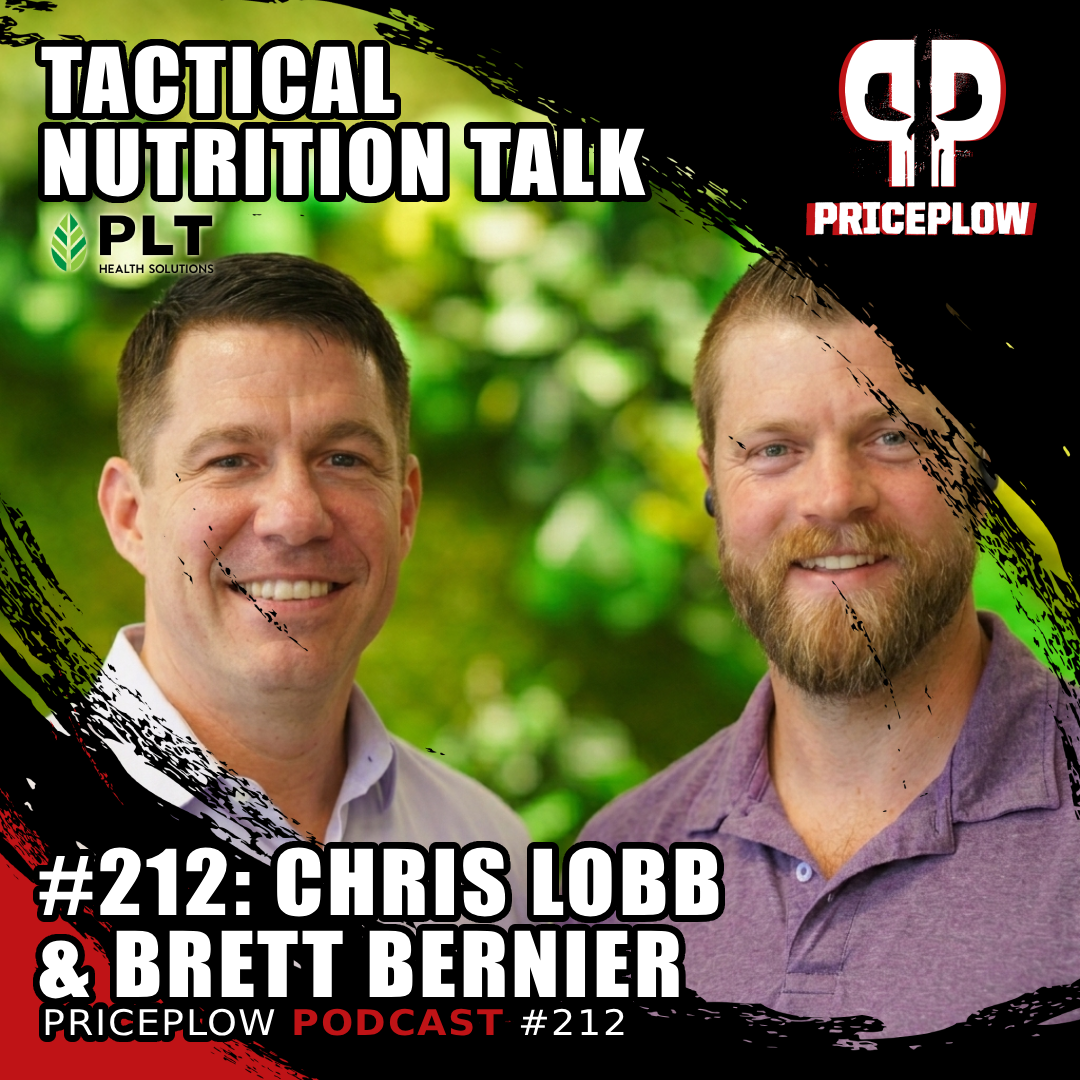
Chris Lobb, retired 10th Special Forces Group Green Beret, and Brett Bernier, Director of Sports and Active Nutrition at PLT Health Solutions, dig into tactical nutrition, CellFlo6®, and zümXR® on Episode #212 of the PricePlow Podcast.
The supplement industry's sleep category has long defaulted to the same short list of mechanisms: sedate, clock-adjust, or mildly relax. After enough time in this industry, every product has begun to look the same.
That can now change. Vanizem and Serezin come at the problem from directions the category hasn't addressed, neurological resistance to wind-down on one side and the physical inflammatory burden that fragments sleep on the other.
Both ingredients have independent clinical evidence and complementary, non-overlapping mechanisms. The available evidence suggests they may address different phases of the sleep experience, from that first moment of evening tension through to how someone feels stepping out of bed the next morning.
The deeper research on each ingredient lives in our Vanizem article and our Serezin article. Formulators exploring PLT Health's broader clinical portfolio can also check out their Joint Health Platform and Weight Management Stack articles.


Comments and Discussion (Powered by the PricePlow Forum)