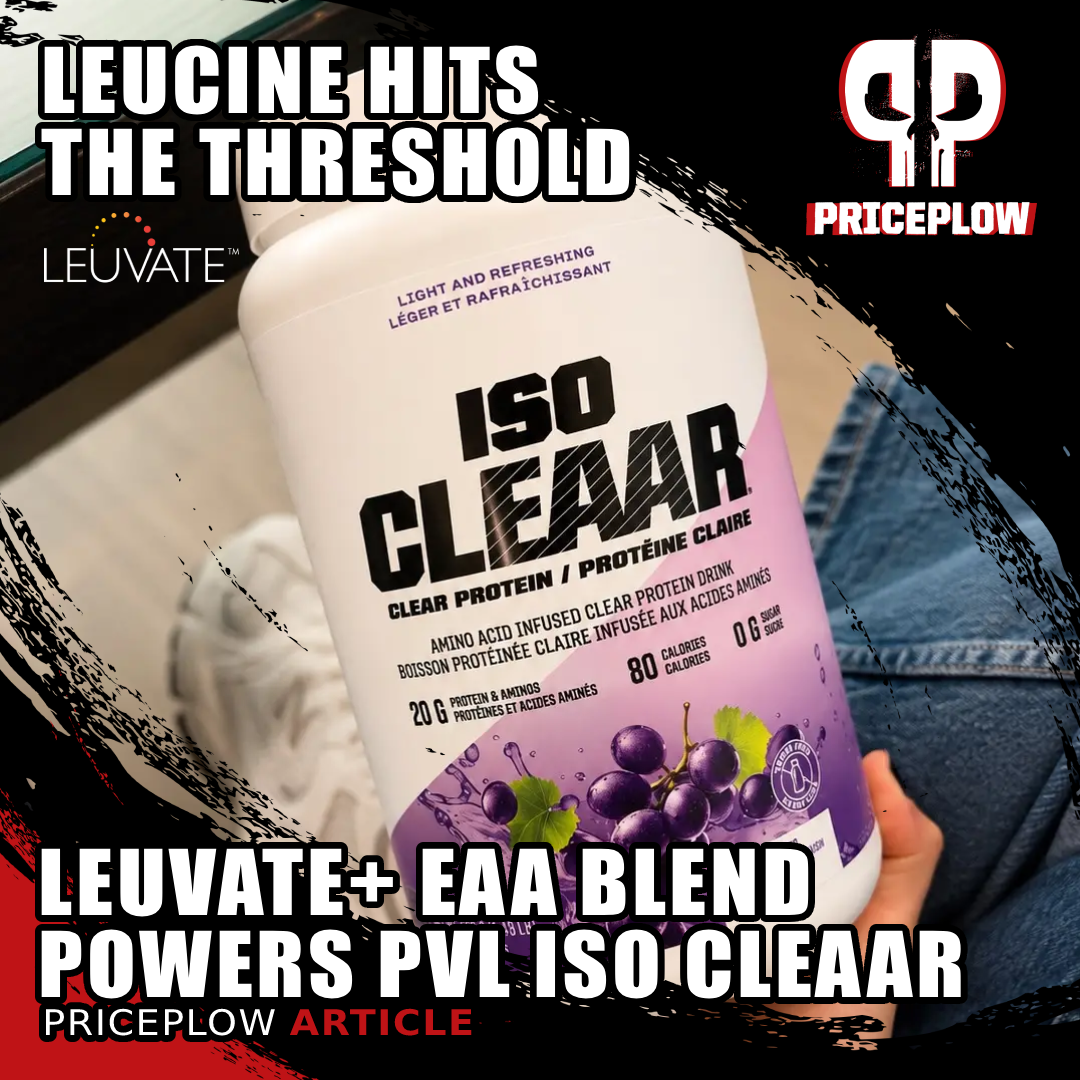
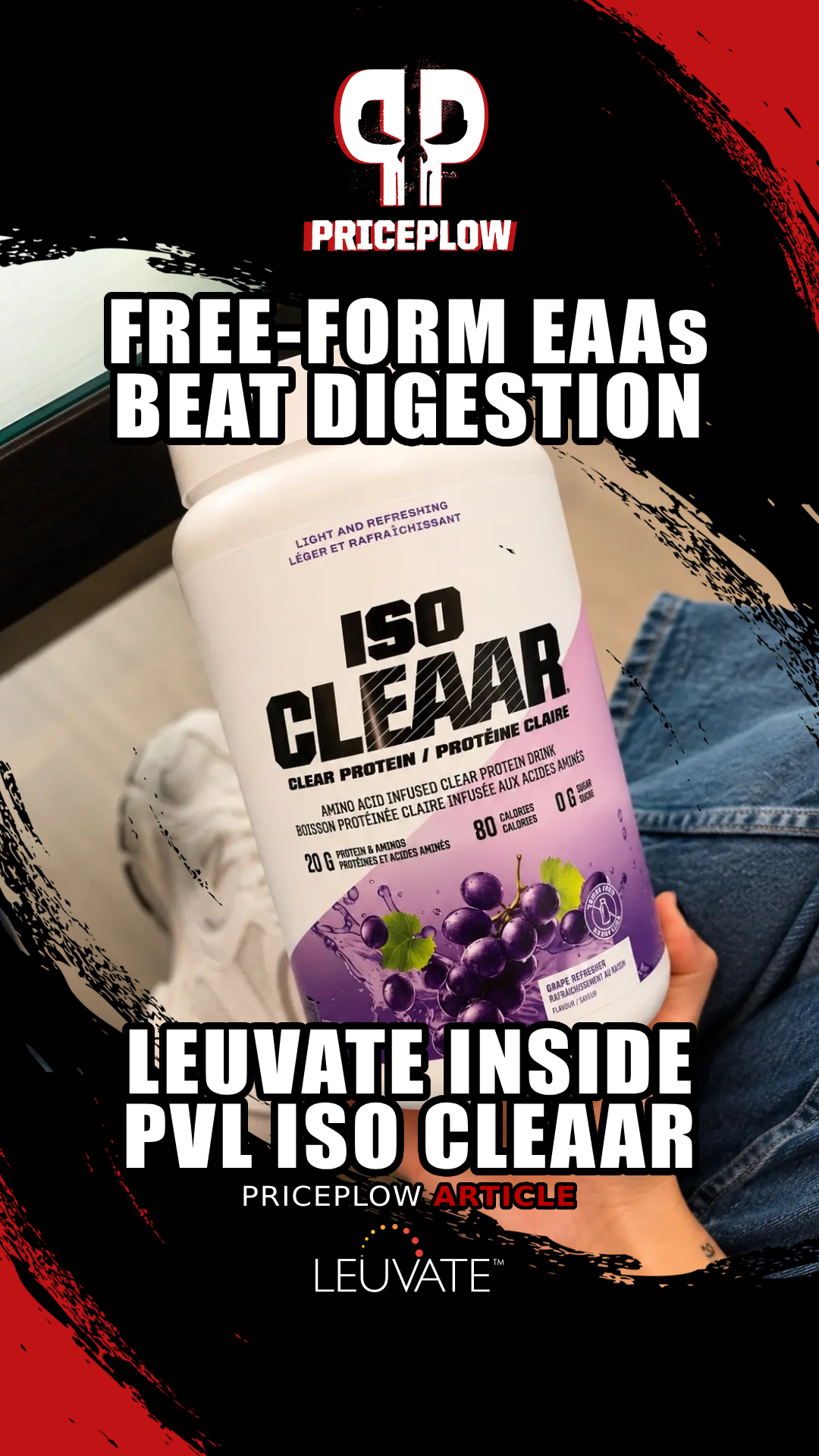
Whey protein hasn't changed much in three decades. Leuvate goes a different route with free-form leucine and EAAs that skip digestion. Dosed right, a smaller serving acts like a much bigger one. The research behind PVL ISO CLEAAR's blend.
Whey protein has held roughly the same shaker-cup format and benefits for over three decades. Jim McMahon, who introduced whey protein to Canada in 1993 and built Fit Foods Ltd. into a multi-brand supplement manufacturer, kept coming back to one question: instead of waiting out whey's next price shock, why not optimize what people already put in the shaker?
Solving Protein's Speed and Cost Problems
His answer showed up this year as PVL ISO CLEAAR, a dairy-free protein drink built to mix clear, like juice, instead of forming a thick shake. But the real story inside that scoop is Leuvate, marketed on the label as LEUVATE+™, a free-form essential amino acid (EAA) blend making its first commercial appearance in the formula. Leuvate is the work of Dr. Daniel Traylor, a protein and amino acid researcher at DePaul University who has spent close to 15 years studying how fast different amino acid sources reach the bloodstream.
The idea behind Leuvate is simple: whole protein has to be digested before its amino acids can do any work, and free-form amino acids skip that step. Dosed correctly, they can make a smaller serving act like a much larger one.
This article looks at the research behind that idea on its own, separately from ISO CLEAAR's full ingredient panel, which we've already covered in a separate deep-dive on PVL ISO CLEAAR: A Clear Protein Drink Built Around LEUVATE+™. Sign up for our updates on Leuvate and PVL, and then let's get into it:
Subscribe to PricePlow's Newsletter and Alerts on These Topics

EAAs, Leucine, and the Enhancement of Whole Proteins
Protein builds muscle because of the amino acids it's made of, and nine of those, the essential amino acids (EAAs), can't be made by the body at all. They have to come from food or supplements. Of the nine, one gets most of the credit for triggering muscle protein synthesis (MPS), the process that rebuilds and grows muscle tissue: leucine.
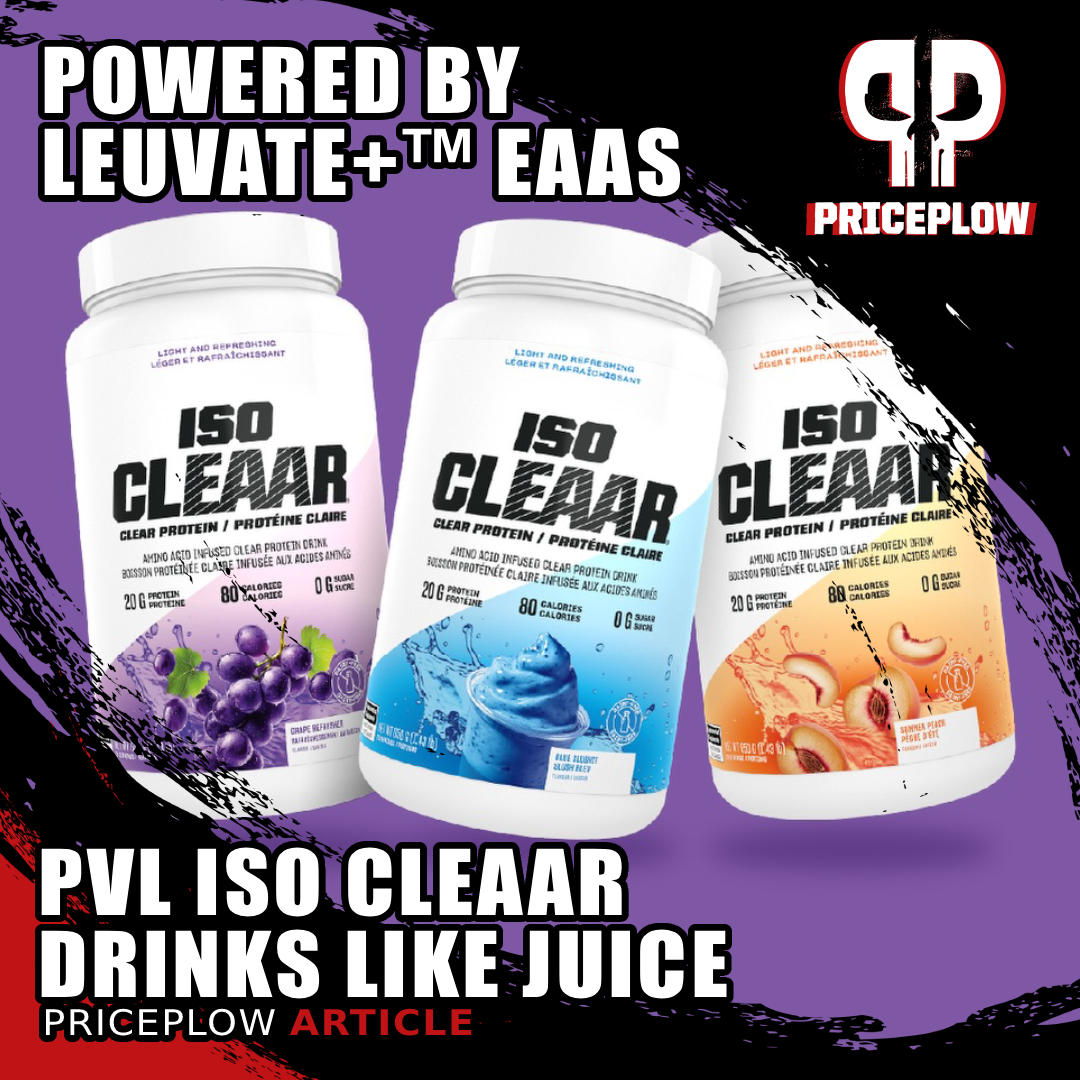
Some days you want more protein but not another thick shake. PVL ISO CLEAAR is the answer, a clear, juice-like protein with 20g protein and 80 calories, headlined by LEUVATE+™ making its commercial debut.
The 2023 International Society of Sports Nutrition position stand on EAA supplementation lays out the underlying logic. Free-form EAAs raise blood amino acid levels faster than intact protein does, and that faster rise stimulates MPS more than an equivalent amount of intact protein.[1]
The reason comes down to digestion speed. Whether it's whey, casein, collagen, or a plant protein, whole protein has to be broken down by digestive enzymes before its amino acids show up in the blood. In a head-to-head test of 25g doses, Dr. Traylor's team found that a whey-casein blend produced peak amino acid levels similar to whey alone and higher than casein alone, showing how much a protein source's digestion speed alone shapes its aminoacidemia curve, before any free-form aminos even enter the picture.[2]
Free-form amino acids skip that digestion step entirely, and leucine's role goes beyond adding volume. It acts as a direct signal to muscle cells rather than only a building block, which shapes how Leuvate gets dosed (covered in the next section). It's also part of why the supplement industry has a complicated history with the phrase "free-form amino acids".
Back in 2014, PricePlow covered a scandal where several protein brands added cheap free-form aminos like glycine and taurine purely to inflate the protein count on a nitrogen test. Sometimes even unlabeled, it was a massive deception, and the backlash from it made plenty of brands wary of listing free-form aminos on a label at all, even where they serve a legitimate purpose.
ISO CLEAAR takes the opposite approach. Its label splits the 20g of protein and aminos right on the front of the package into 12g whole protein and 8g free-form amino acids. Leuvate makes up a large part of that 8g, alongside a second blend of conditionally essential amino acids. Nothing is hidden, and the free-form aminos are the point of the formula rather than a way to inflate a protein count.
So with that background, let's explain Leuvate itself, which also needs its own background info on the key amino acid, leucine:
Leuvate: A Threshold-Built Amino Acid Blend
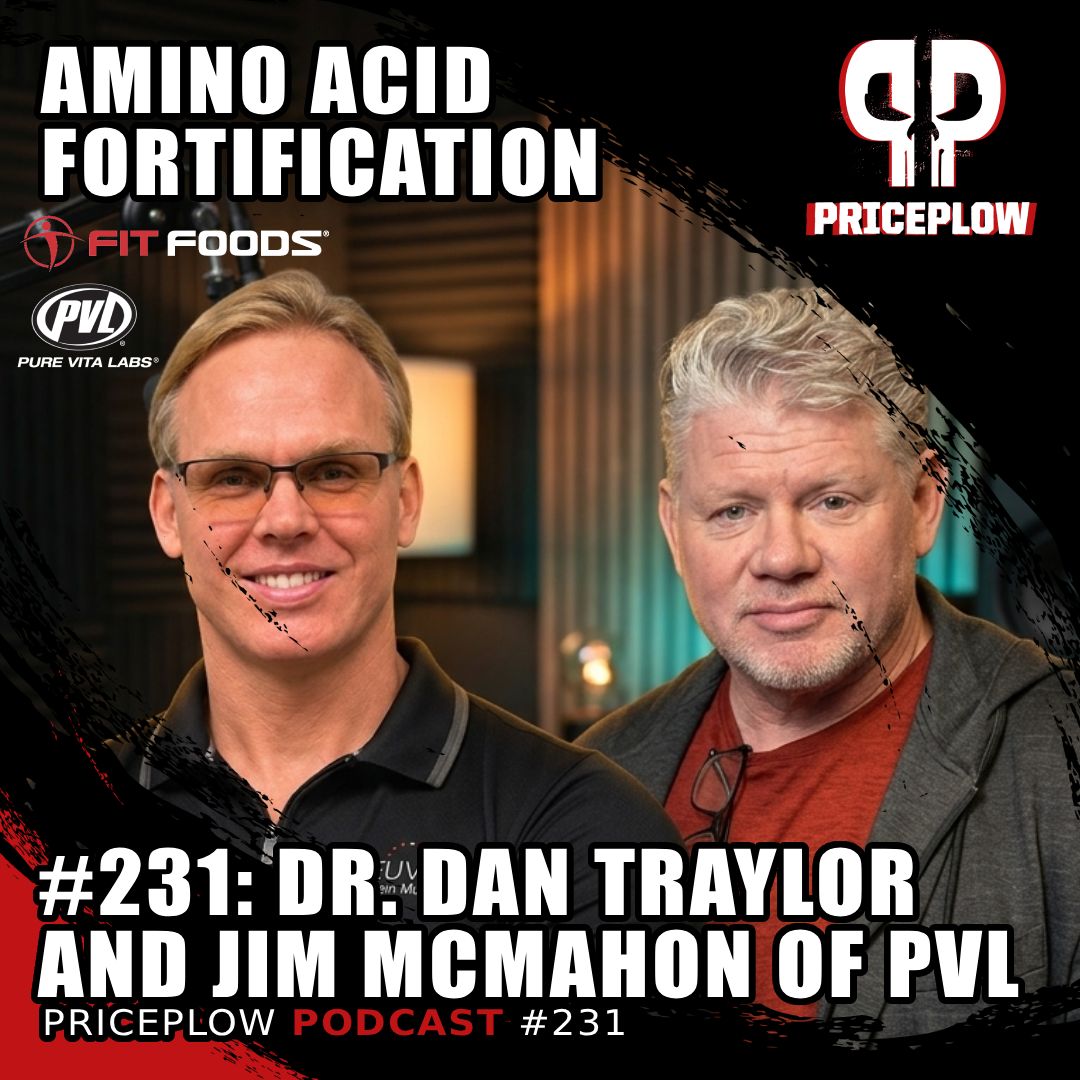
Dr. Daniel Traylor, founder of Leuvate, and Jim McMahon, CEO of Fit Foods, break down the amino acid science behind PVL's new ISO CLEAAR on Episode #231 of the PricePlow Podcast.
Dr. Daniel Traylor's path to studying amino acids started, oddly, on a football field. As explained in Episode #231, a shoulder injury during his playing days at Appalachian State taught him firsthand how much recovery drives athletic performance, and it eventually pulled him from coaching into academic research. He enrolled in a PhD program in 2010 chasing an idea for a protein gummy, pivoted to leucine when the serving size math didn't work, and landed a four-year postdoctoral fellowship in Dr. Stuart Phillips's kinesiology lab at McMaster University after a cold email led to a same-day reply. That's where his human trials, muscle biopsies included, began in earnest, and where the research base behind Leuvate took shape.
Leuvate is built around a base dose of free-form leucine, rounded out with the other eight EAAs. The dosing logic traces back to a foundational study from Dr. Tyler Churchward-Venne's group, which compared a full 25g whey protein dose against a much smaller 6.25g whey dose topped up with either leucine or the remaining EAAs to match whey's totals. The leucine-matched dose reproduced much of whey's early MPS response.[3] A related trial from the same group found a similar pattern across a range of added-leucine doses in a low-protein beverage.[4]
That dose-response curve isn't a straight line, though. It behaves more like an inverted U: too little leucine misses the threshold needed to trigger MPS, and too much doesn't add further benefit once the muscle's amino acid transporters are saturated. A bar study testing 2g versus 3g of added leucine peptide illustrates the point. Both doses raised fullness and lowered prospective food intake compared to no added leucine, but interestingly, only the 2g dose produced a significant drop in subjective hunger and desire to eat, while the 3g dose didn't reach significance on those same measures, although circulating PYY (a satiety hormone) didn't differ by dose at all.[5] It's appetite data rather than MPS data, but it's a clean example of more leucine not scaling every outcome in a straight line. Traylor has said palatability factored into Leuvate's dosing too. Free-form leucine turns noticeably bitter at higher doses, one more reason to land on a specific number rather than maximize leucine content outright.

The mechanistic reason leucine gets to act as a trigger rather than just fuel came into focus in 2015, when researchers at MIT identified how muscle cells actually detect it. Leucine binds directly to a protein called Sestrin2, and that binding releases Sestrin2's grip on the mTORC1 signaling pathway, the same pathway that drives muscle protein synthesis.[6] That's the molecular basis for why a leucine-forward blend, rather than an even spread across all nine EAAs, does the heavy lifting in triggering the response Leuvate is designed around.
The Research Behind Leuvate
-
Faster Aminoacidemia Than Whole Protein
The clearest test of Leuvate's premise is a direct swap: Can using a specific, smaller amino acid dose really act like a bigger protein serving? In older adults, Traylor's team tested exactly that. A protein- and leucine-enriched bar consumed after a low-protein breakfast produced an aminoacidemia curve comparable to a much larger high-protein meal eaten in one sitting.[7] More recently, the same group ran a four-arm comparison across whey, micellar casein, a whey-casein blend, and that same blend fortified with free crystalline leucine, tracking plasma leucine in both younger and mid-aged adults. Adding the free leucine shifted the leucinemia curve measurably higher than the blend alone, the closest thing in the published research to a direct test of Leuvate's actual approach.[8]
That aminoacidemia advantage also shows up downstream, in a 4-day resistance training trial from the same research group. Participants trained one leg with a leucine-enriched protein bar (about 16g of protein containing roughly 3g leucine) and the other leg with training alone. Integrated daily myofibrillar protein synthesis (MyoPS) rose 8% above a rested baseline with training alone, and 14% above baseline with the bar added, an extra 7 percentage points attributable to the leucine-enriched bar itself.[9]
-
Filling Collagen and Plant Protein Gaps

ISO CLEAAR's whole protein comes from beef isolate (itself a collagen and bone broth blend), fermented pea protein, and fava protein. None of them are complete, leucine-rich sources on their own, which is exactly the gap Leuvate is meant to close.
Collagen is the clearest example. A Maastricht University trial gave subjects a 30g dose of hydrolyzed collagen after resistance exercise and found it raised circulating amino acids substantially, mostly glycine, without significantly increasing myofibrillar protein synthesis compared to placebo.[10] The same research group then tested a 25g whey plus 5g collagen blend under the same conditions and found it raised both myofibrillar and muscle connective protein synthesis compared to placebo.[11] Pairing collagen with a complete, leucine-rich amino acid source changes the outcome, the same logic behind stacking Leuvate onto ISO CLEAAR's collagen-containing protein base rather than serving collagen alone.
Plant protein shows a similar pattern. A trial comparing a plant-based protein isolate, the same isolate with added leucine, and whey protein isolate found that adding leucine brought the plant blend's MPS response up to match whey, while the unfortified plant isolate didn't.[12] Fermented pea and fava protein face the same leucine gap that plain plant isolates do, the same gap Leuvate is positioned to fill in ISO CLEAAR.
-
Relevance for Aging and Anabolic Resistance
Aging muscle needs a larger relative amino acid stimulus to trigger the same MPS response, a pattern researchers call anabolic resistance.[13] That's part of why so much of the leucine-threshold literature, including several of Traylor's own trials, involves older adults, and it's relevant to Leuvate even in a product like ISO CLEAAR that's positioned toward general training and recovery rather than a clinical audience.
A few results stand out. In older women, a modest 3g dose of leucine-rich EAAs (40% leucine) stimulated muscle and albumin protein synthesis about as well as a full 20g whey protein bolus, both at rest and after exercise.[14] In older men, adding just 1.5g of free leucine to a 15g milk protein dose after resistance exercise measurably increased the MPS response beyond the protein dose alone.[15] And in a comparison of a 25g whey dose against a 10g milk protein dose matched for leucine content (3g each), older women showed similar integrated MPS gains in the exercised leg with both doses, though the smaller leucine-matched dose didn't reach a statistically significant increase over baseline in the rested leg the way the full whey dose did.[16] Note that the pattern holds more consistently during exercise recovery than at rest.

Traylor's own scoping review, covering 11 studies of leucine-enriched, vitamin D3-fortified protein formulas in sarcopenic older adults, found consistent improvements in lean mass and physical function across the trials included.[17] That vitamin D3 pairing has its own supporting data. A 12-week trial of 3,000IU daily vitamin D3 didn't change total 4-hour post-meal MPS, but it did enhance the earliest window (the first 60 minutes) of the postprandial response and raised circulating leucine and EAA availability.[18] That's a considerably higher D3 dose than the 800IU in ISO CLEAAR, so treat it as the mechanistic rationale for including vitamin D3 at all rather than evidence for the specific dose on this label.
The point is, as Daniel mentioned on the podcast, that you simply don't want to be vitamin D deficient. Those who get enough sunlight are likely good to go as well, although that's not tested with these formulas.
Applications, Dosing, and Safety
Across Traylor's research, the leucine dose that repeatedly shows up sits around 1.5g, layered on top of a base protein source. ISO CLEAAR's label reflects that same range: its 4,365mg Leuvate blend supplies 1,530mg of leucine alongside the other eight EAAs (1,000mg valine, 500mg isoleucine, 800mg lysine as the HCl form, and smaller amounts of threonine, phenylalanine, methionine, histidine, and tryptophan rounding out the profile).
PVL then pairs that with a second, smaller blend of conditionally essential amino acids (glycine, glutamine, arginine, and alanine) to help fill in what the collagen and plant protein base leaves out.
On the regulatory side, McMahon has said every ingredient in ISO CLEAAR is Health Canada approved and sourced to USP or another verified pharmaceutical-grade standard, with the finished product Informed Choice certified for banned-substance testing and a patent pending on the formula. Fit Foods has also said it's bringing in Strong Science, a third-party research validation group, to independently review the science behind Leuvate going forward.
Amino acids are common dietary components with an established safety profile, and none of the trials cited here reported adverse events tied to the leucine or EAA doses studied. The main practical limitation is taste rather than tolerability. Free-form leucine turns noticeably bitter as the dose climbs, part of why Traylor's research and ISO CLEAAR's label both land in a similar 1.5g range instead of pushing higher.
Supplements Containing Leuvate
PVL ISO CLEAAR
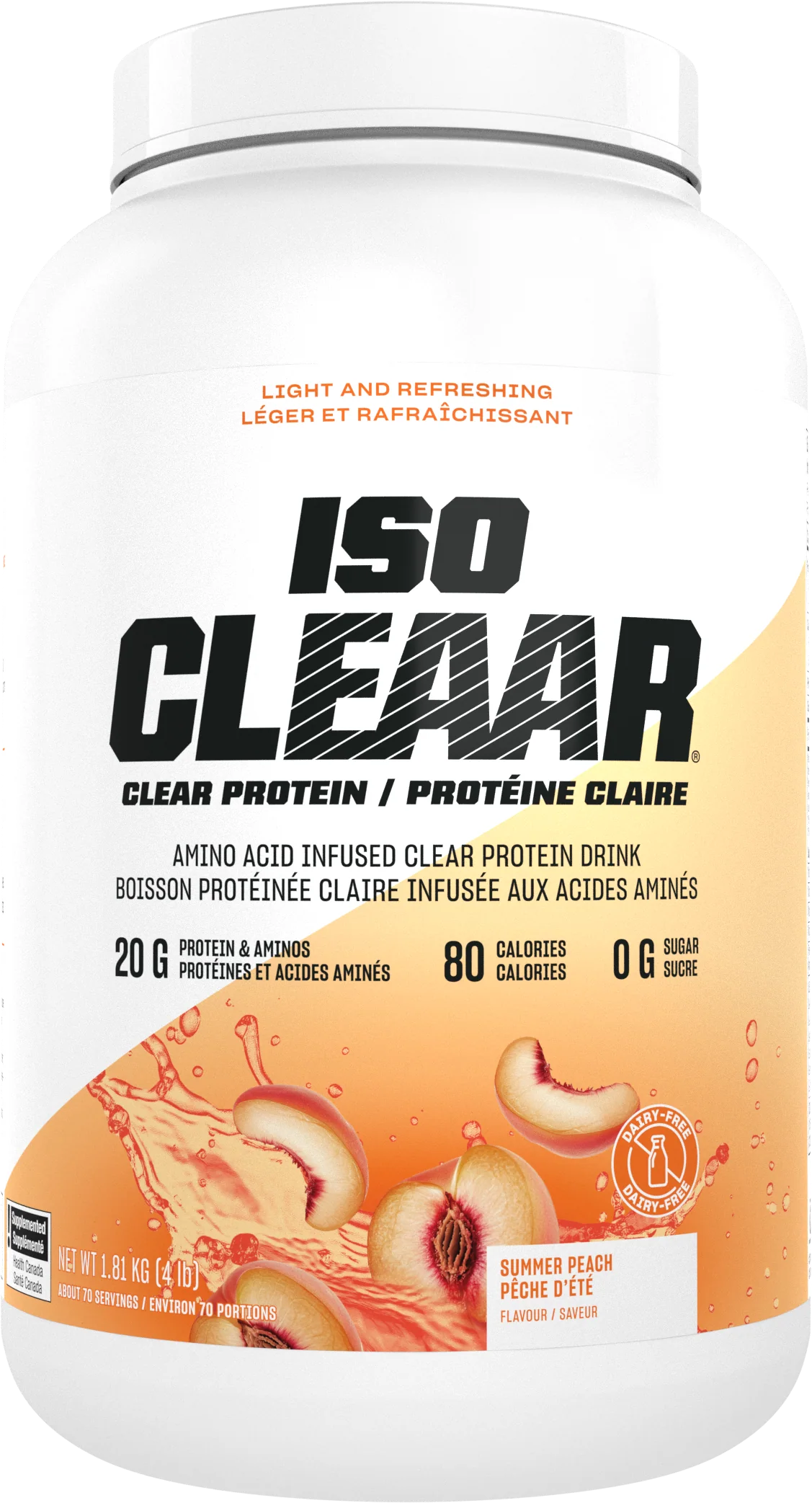
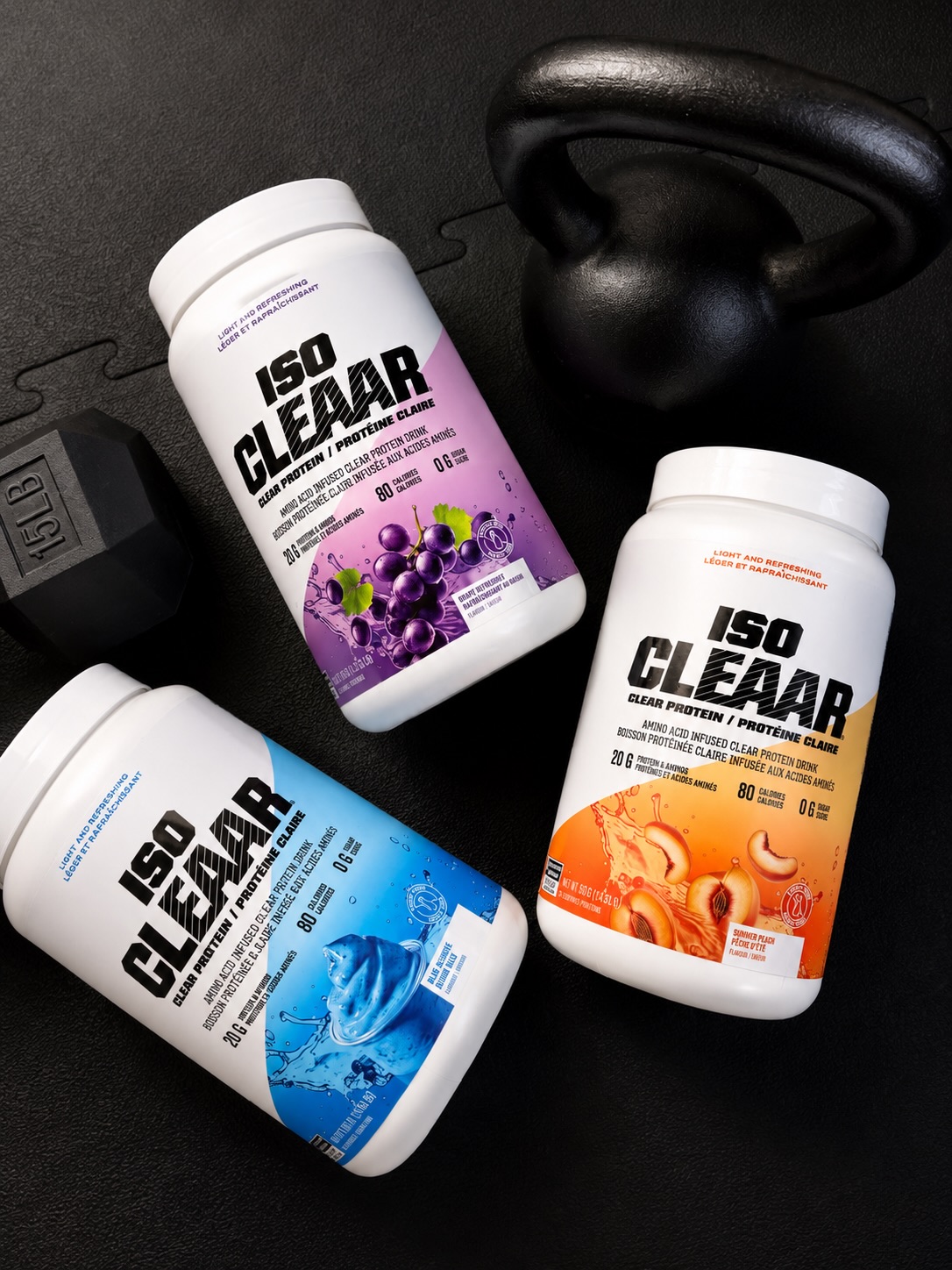
ISO CLEAAR is Leuvate's first commercial appearance, a dairy-free protein drink that mixes clear in cold water instead of forming a shake. Each 26g scoop delivers 20g of protein and amino acids (12g whole protein, 8g free-form aminos) for 80 calories with zero sugar, in three launch flavors: Blue Slushie, Summer Peach, and Grape Refresher.
More Leuvate products are already on the way. On the PricePlow Podcast, McMahon previewed an upcoming whey-based PVL ISOGOLD update that stacks 3g of Leuvate onto 27g of intact whey protein, aimed at Canada later this year.
Traylor is also running a registered three-arm crossover trial comparing 24g of whey protein against two Leuvate-containing doses (3g and 12g) in adults taking GLP-1 medications, using a leucine isotope tracer to measure whole-body protein synthesis.[19] The trial was roughly half complete as of mid-2026, with results not yet published. This is registered, ongoing research, not a claim that Leuvate treats, prevents, or interacts with any GLP-1 medication.
PVL ISO CLEAAR – Deals and Price Drop Alerts
Get Price Alerts
No spam, no scams.
Disclosure: PricePlow relies on pricing from stores with which we have a business relationship. We work hard to keep pricing current, but you may find a better offer.
Posts are sponsored in part by the retailers and/or brands listed on this page.
From the Field to the Lab
Before the muscle biopsies and postdoctoral research, Dr. Daniel Traylor played linebacker at Appalachian State, an experience he credits with teaching him how much recovery drives athletic performance. He even has a cameo in We Are Marshall, filmed during his playing days, credited as Number 70.
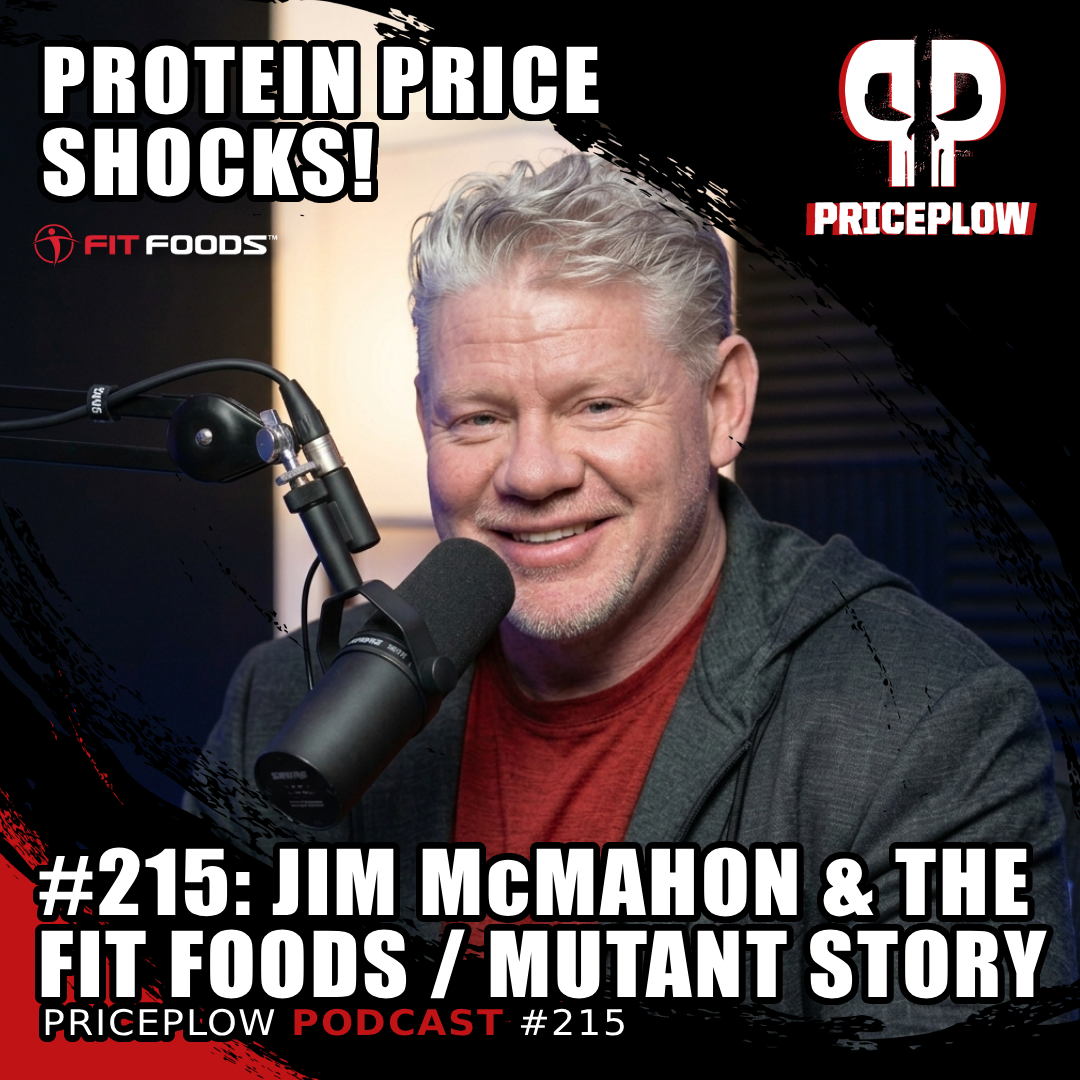
Jim McMahon, Founder and CEO of Fit Foods Ltd., traces his nearly 40-year supplement industry journey from introducing whey protein to Canada in 1993 to building Mutant into a 200,000-square-foot global manufacturing operation, on Episode #215 of the PricePlow Podcast.
He covers that path, along with the research behind Leuvate, in a research-dense conversation on Episode #231 of the PricePlow Podcast. The two discuss everything from a 2012 foundational leucine-threshold study to Traylor's ongoing GLP-1 trial, plus how a chance meeting at a SupplySide trade show turned into ISO CLEAAR. McMahon, who runs Fit Foods alongside PVL and Mutant, joined PricePlow previously to cover the company's nearly 40-year history and whey's recent price pressures on Episode #215.
The Bottom Line on Leuvate
Leuvate's premise rests on a straightforward idea backed by a real body of published research: free-form leucine and EAAs reach the bloodstream faster than intact protein, and dosed correctly, they can make a smaller amino acid serving act like a considerably larger one. That premise holds up especially well in the studies that test it most directly, and it holds up with the usual caveats good research always carries, including a smaller, less consistent effect at rest than during exercise recovery.
With whey protein prices constantly on the rise (and no end in sight), this is an excellent way to fortify non-dairy options, to get those leucine and key EAA numbers up where they belong.
ISO CLEAAR marks Leuvate's first appearance on a supplement label, but PVL has already signaled it won't be the last, with an updated ISOGOLD on the way and a GLP-1 focused human trial still collecting data.
Sign up for Leuvate and PVL news alerts on PricePlow to catch the next update, and check ISO CLEAAR's current pricing and availability below.


Comments and Discussion (Powered by the PricePlow Forum)