You've seen plenty of potent energy drinks with Cognizin®, but how about lightly-energized sparkling water? That's what's in store for today:
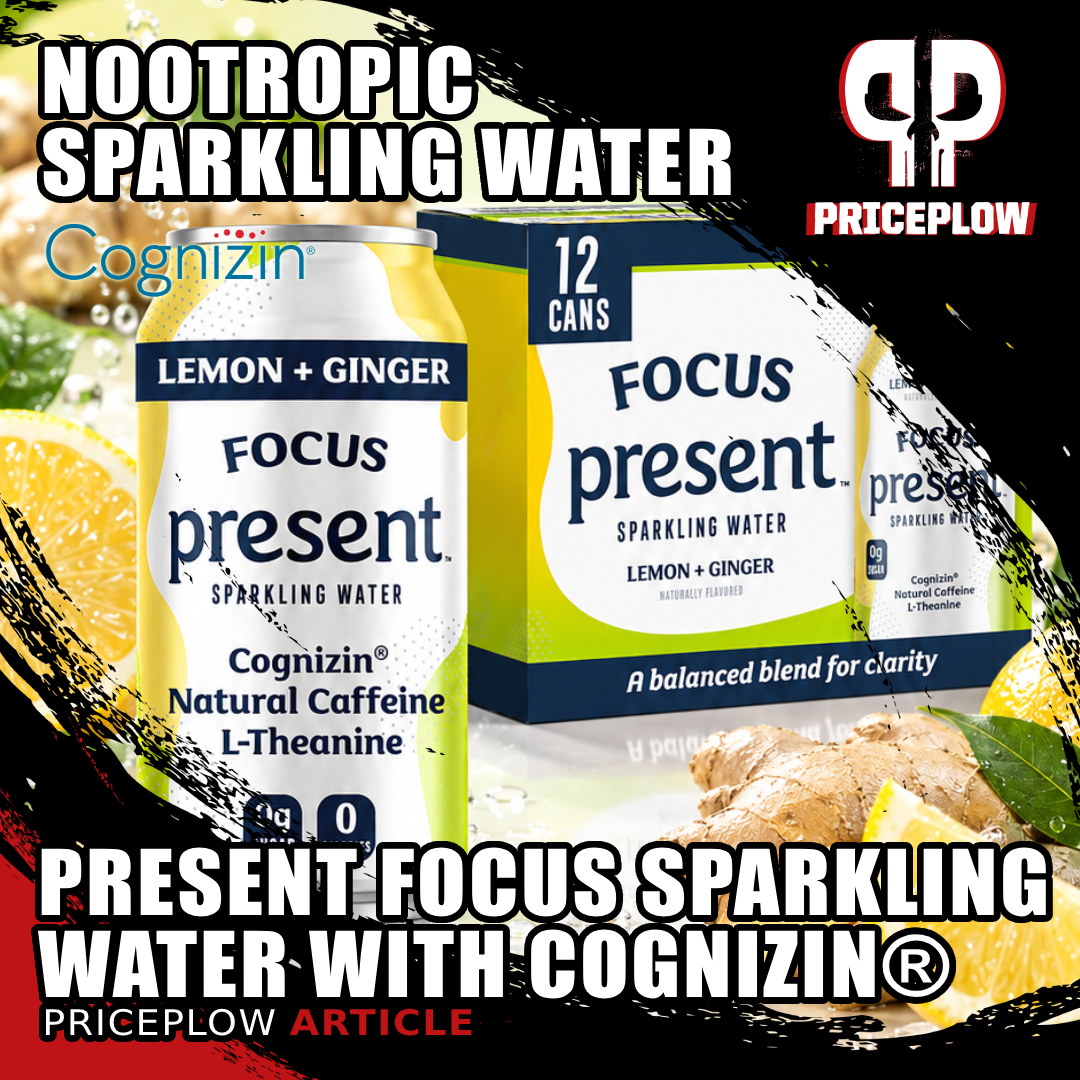
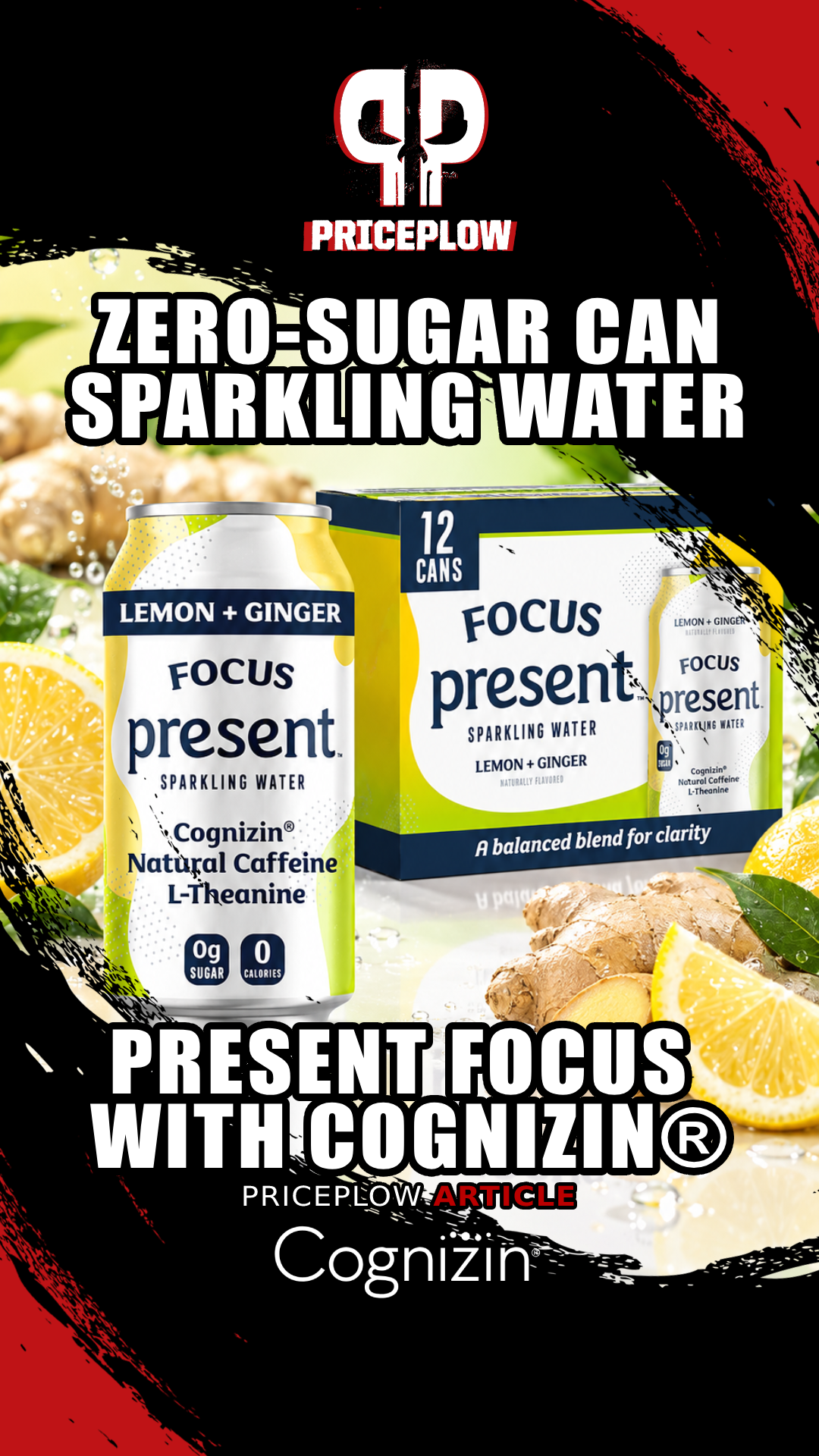
Sparkling water with nootropics in it? Present Focus puts 125mg Cognizin® citicoline, 200mg L-theanine, and 47mg green tea caffeine into a zero-sugar Lemon + Ginger can out of Left Hand Brewing's Longmont facility.
Present Focus brings a zero-sugar sparkling water built around three nootropic ingredients to Left Hand Brewing's Longmont, Colorado lineup. The brand got its start in 2019 as a joint venture between Left Hand Brewing Company and organic hemp grower WAAYB Organics, launching as a CBD-infused sparkling water. Present has since dropped CBD from its lineup entirely and rebuilt around two non-cannabinoid formulas, still canned and distributed out of Left Hand's Longmont facility.
An Energized Sparkling Water with Focus from Cognizin® Citicoline
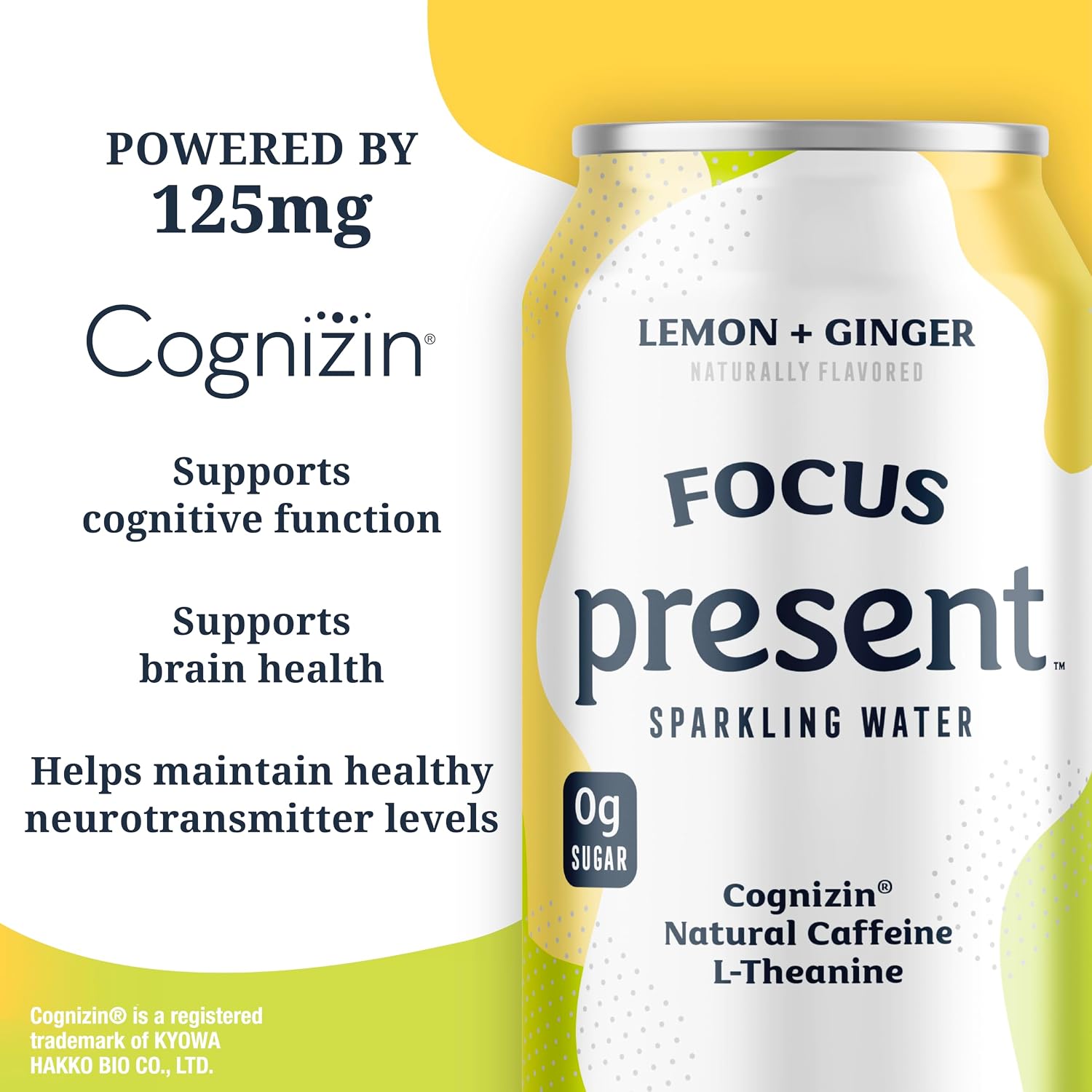
Focus launched in a single Lemon + Ginger flavor, naturally flavored and lightly sweetened with monk fruit extract rather than sugar or artificial sweeteners. Each 12fl oz can carries 125mg of Cognizin® citicoline, 200mg of L-theanine, and 47mg of natural caffeine sourced from green tea, all at 0 calories. Cognizin is a branded, clinically-studied form of citicoline made by Kyowa Hakko Bio, and its inclusion here is the main reason we're covering Focus.
Part of the Focus/Relax Stack
Note that Present's other current formula, Relax, swaps the stimulant angle for a caffeine-free Mixed Berry can built on GABA, magnesium bisglycinate, and 5-HTP, and the brand also sells a Variety Pack that splits a 12-pack evenly between the two. This piece focuses on Focus and its Cognizin dose, as Kyowa Hakko is the sponsor of today's educational article.
Let's get into it below, but before digging in, you can find Present online via Amazon and through PricePlow's listings:
Present Present Focus Sparkling Water – Deals and Price Drop Alerts
Get Price Alerts
No spam, no scams.
Disclosure: PricePlow relies on pricing from stores with which we have a business relationship. We work hard to keep pricing current, but you may find a better offer.
Posts are sponsored in part by the retailers and/or brands listed on this page.
This area is reserved for Team PricePlow's upcoming videos.
Subscribe to our channel and sign up for notifications so you catch it when it goes live!

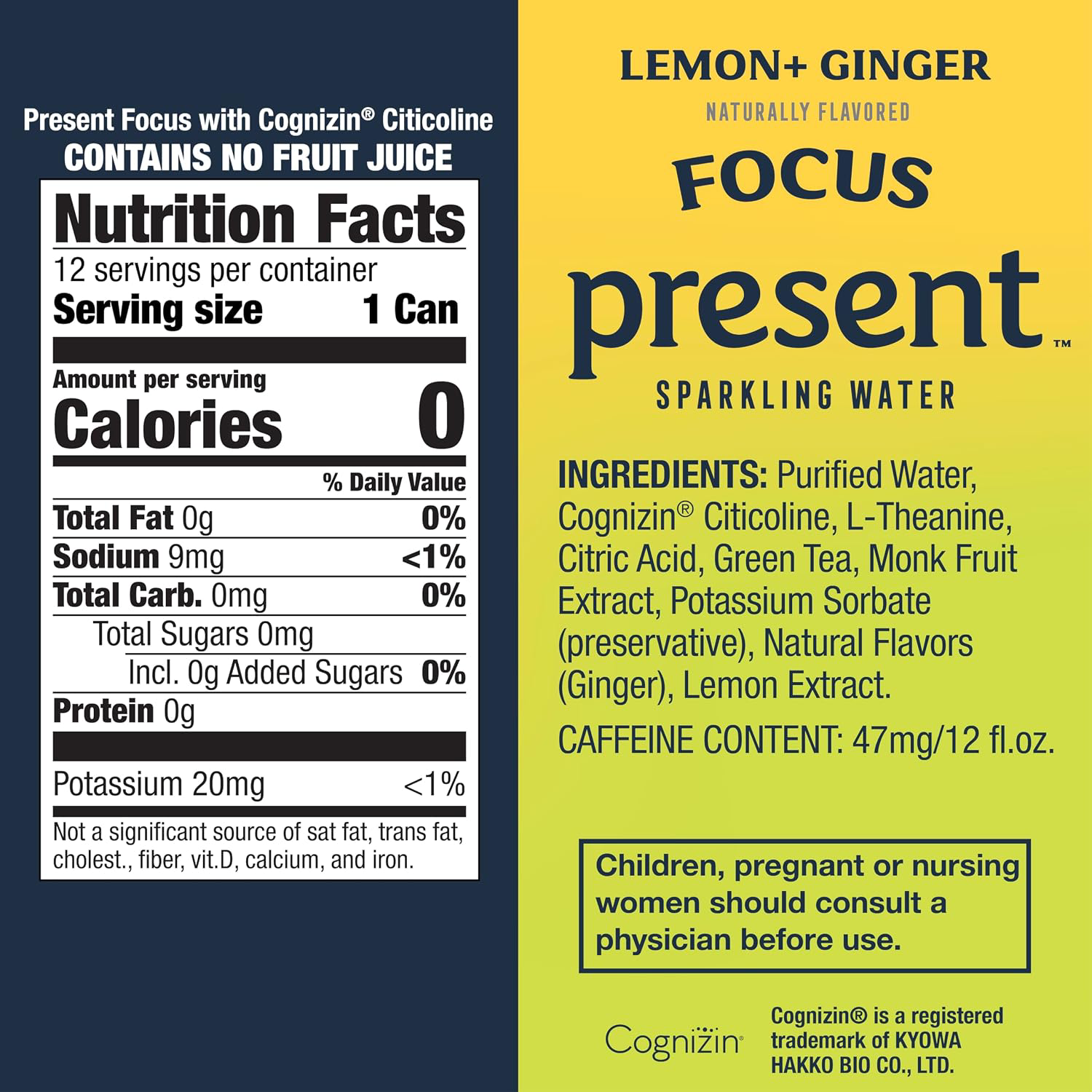
Present Focus Sparkling Water Nutrition Facts
-
Calories - 0
-
Total Fat - 0g
-
Total Carbohydrate - 0g
-
Total Sugars - 0g
-
Added Sugar - 0g
-
-
-
Protein - 0g
Present Focus Sparkling Water Ingredients
Each 12 fl oz can provides the following:
-
Cognizin® Citicoline - 125mg
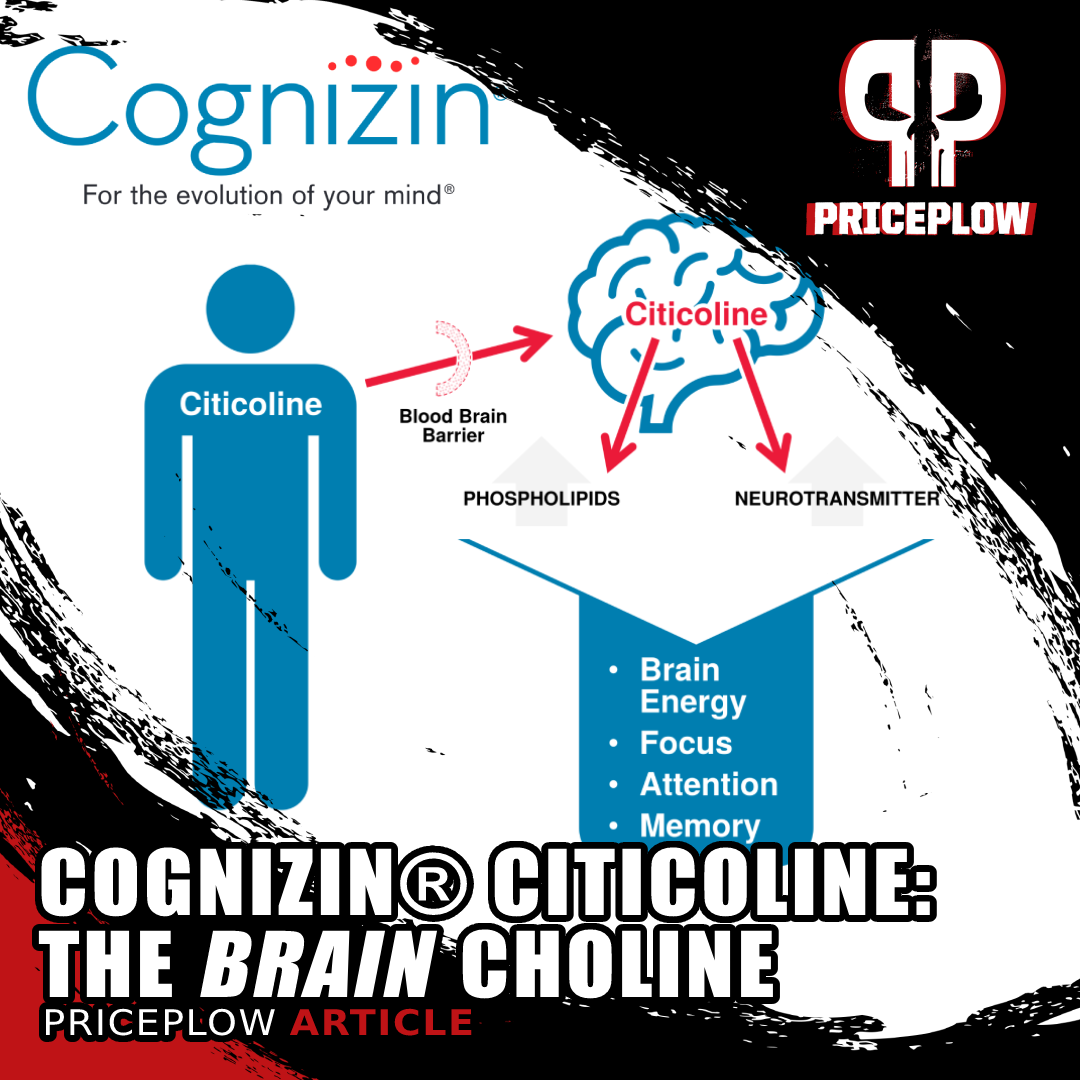
Cognizin Citicoline (cytidine-5'-diphosphocholine, or CDP-choline) is a compound your body already makes on the way to building phosphatidylcholine, the main structural fat in neuron cell membranes. Oral citicoline splits into choline and cytidine, both of which cross the blood-brain barrier and get rebuilt into CDP-choline inside brain cells, feeding acetylcholine synthesis and membrane repair while also raising dopamine and norepinephrine levels in the central nervous system.[1]
What does that mean? It means improved thinking and cognition, as acetylcholine is commonly known as "the learning neurotransmitter". Kyowa Hakko Bio Co., Ltd. manufactures the branded, clinically studied form found in Focus, and Cognizin shows up in most of the modern human research behind the ingredient.
How strong that research is depends heavily on the population and the outcome in question. A 2005 systematic review of 14 placebo-controlled trials, most of them in older adults with various disorders, found real improvements in memory and clinical global impression scores.[2] The research base has only grown since then.

Cognizin® Citicoline is dubbed the The Brain Choline not just because it provides choline, but because it also supplies cytidine, which is also needed for the synthesis of phosphatidylcholine
Attention, not memory, is the angle Present is selling with Focus, and that evidence comes from a different, smaller set of trials in healthy adults rather than from that larger review. In one, 60 healthy women ages 40 to 60 took either 250mg or 500mg of Cognizin daily for 28 days. Both doses cut errors on a sustained-attention test compared to placebo, and the 250mg group also made significantly fewer careless, or omission, errors.[3] A separate two-week trial in healthy young adults given 500mg daily found faster reaction time and better working memory accuracy than placebo, along with a drop in a marker of oxidative stress.[4]
Present's Focus can provides 125mg of Cognizin, half the 250mg dose used in that healthy-adult attention study above. A single can hasn't itself been the tested amount, so its attention-specific effects aren't guaranteed to match what the research found. Two cans put the total at 250mg, in line with that dose, but that also means double the caffeine (94mg) and L-theanine (400mg) discussed below, so it's worth considering the whole can rather than just the citicoline before reaching for a second one. A 125mg dose isn't unheard of on its own. It's the same amount PricePlow found in MOSH's High Protein Bar line at Target, for context on how brands are using Cognizin at this level outside of beverages.
You can read more in our article, "Cognizin Citicoline: The Brain Choline".
-
L-Theanine - 200mg
L-Theanine is an amino acid found naturally in tea leaves that promotes alpha brain-wave activity linked to relaxed, alert wakefulness, an effect tied to its activity at glutamate and GABA receptor systems in the brain.[5] On its own, the evidence on L-theanine's cognitive effects is mixed. A 2017 crossover trial using the same 200mg dose Focus includes found L-theanine alone modestly improved visual reaction time and attention-related brain activity in healthy men, an effect similar in size to caffeine taken alone.[6] A separate trial testing a higher 250mg dose of L-theanine alone found few benefits and even some impairment on a math-based attention task. In that same trial, pairing L-theanine with caffeine, not either ingredient alone, produced the clearest gains in reaction time, working memory speed, and reported mental fatigue.[7]

The more consistent research pairs L-theanine with caffeine, which is how Focus delivers it. A meta-analysis of 11 randomized trials found the combination improved alertness ratings and attention-switching accuracy over placebo, though the analysis credited most of that improvement to the caffeine dose rather than L-theanine itself.[8] Most of that combination research used 100mg to 160mg of caffeine, well above the 47mg in Focus, so L-theanine's calming counterbalance to caffeine is plausible here, though it hasn't been tested at this specific ratio.
-
Natural Caffeine (from Green Tea) - 47mg
Natural caffeine blocks adenosine receptors, mainly the A1 and A2A subtypes, in the brain and body. Since adenosine is the molecule that builds up during the day and makes you feel drowsy, blocking its receptors raises the availability of stimulating brain chemicals including dopamine, norepinephrine, and acetylcholine.[9] A wide research base supports caffeine doses of roughly 32mg to 300mg for improving reaction time, vigilance, and sustained attention in both rested and tired people, with benefits generally following an inverted-U curve where more isn't always better.[9] Focus's 47mg sits within that range, of course toward the lower end of it, which makes great sense for a sparkling water.
Present sources its caffeine from green tea rather than as isolated caffeine anhydrous. Once extracted, the caffeine molecule works the same way regardless of source, though whole green tea also naturally supplies small amounts of L-theanine on top of the 200mg already added separately to Focus.

At the regulatory level, the FDA classifies caffeine as Generally Recognized As Safe at intakes up to 400mg per day for healthy adults, and a review of safety data across hundreds of studies found no clear evidence of harm at that level for cardiovascular, behavioral, or reproductive outcomes.[10] Jitters, anxiety, and a racing heartbeat are dose-dependent side effects that become more likely at doses well past what's in a single can of Focus, one reason the brand pitches 47mg as a lighter alternative to a full cup of coffee.
Even for caffeine-sensitive individuals, this seems like a great place to be.
-
Monk Fruit, Citric Acid, and the Rest of the Label
Focus gets its light sweetness from monk fruit extract rather than sugar, sugar alcohols, or artificial sweeteners, keeping the can at 0g sugar and 0 calories. Citric acid, lemon extract, and natural ginger flavor make up the flavor system behind the Lemon + Ginger name, while potassium sorbate preserves the can without added sugar to help it along. None of these ingredients carry a label dose, and none are marketed as functional actives in their own right.
Who It's For
- Coffee cutback candidates: Focus is built around less caffeine than a cup of coffee, so it's a reasonable option for people trying to lower their daily intake without dropping it entirely, especially if jitters or an afternoon crash are the main complaint.
- Desk-bound focus seekers: The Cognizin, L-theanine, and caffeine combination targets sustained attention rather than a hard stimulant kick, which fits routine work blocks, studying, or other tasks that call for steady output over an hour or more rather than an immediate jolt.
- A late afternoon pick-me-up: This has about as much caffeine as a Diet Coke, but with actual functional ingredients. While you shouldn't take caffeine before bed, the low dose here enables for slightly later use, depending on your caffeine metabolism.
Conclusion: A Lighter Approach to Focus
Present Focus Sparkling Water gives the growing field of nootropic beverages a genuinely low-stimulation option, built around 125mg of Kyowa Hakko's Cognizin citicoline, 200mg of L-theanine, and 47mg of natural caffeine from green tea, all in a zero-sugar, zero-calorie can. It's a different bet than the 200mg-plus caffeine and 250mg-plus citicoline formulas some other focus-branded drinks are chasing. Whether that lighter approach delivers on the attention claims at 125mg per can, or whether it takes a second can to get there, is worth keeping in mind before expecting big changes from just one.
Present rounds out the lineup with Relax, a caffeine-free Mixed Berry can built around GABA, magnesium bisglycinate, and 5-HTP for calmer moments, plus a Variety Pack that splits a 12-pack evenly between the two. Both formulas share the same zero-sugar, monk fruit-sweetened approach as Focus.
Check PricePlow for current pricing and availability on Focus, Relax, and the Variety Pack, and keep an eye on our supplement news coverage for updates as Present's lineup grows.
Present Present Focus Sparkling Water – Deals and Price Drop Alerts
Get Price Alerts
No spam, no scams.
Disclosure: PricePlow relies on pricing from stores with which we have a business relationship. We work hard to keep pricing current, but you may find a better offer.
Posts are sponsored in part by the retailers and/or brands listed on this page.

Comments and Discussion (Powered by the PricePlow Forum)