We spent a day inside Nootropics Depot's R&D labs in Tempe. Millions in analytical equipment, cell culture research, and testing methods that expose how most supplements contain far less active ingredients than advertised. This is what real quality control looks like.
When you pull up to Nootropics Depot's facilities in Tempe, Arizona, you don't see a typical supplement operation. You see multiple buildings housing millions of dollars in analytical equipment, research labs studying cellular responses to supplements, and a team obsessed with answering one question: does this product actually contain what the label claims?
We spent a day touring Nootropic Depot's R&D labs, manufacturing facilities, and analytical testing operations. What we found explains why they keep discovering that most supplements on the market contain far less active ingredients than advertised... and sometimes none at all. Because they can actually test for it, and they do so with elite-tier equipment and know-how.
But it's not about tearing down the industry, it's really about showing what pharmaceutical-grade quality and ingredient development control looks like when applied to supplements, and why most brands can't or won't invest in this level of verification.

The Facility: Where Science Meets Scale
Walking through the complex, we immediately noticed the scale and modularity. This isn't a small operation relying on contract manufacturers and supplier certificates. Nootropics Depot controls every step from raw material verification through final product testing.
The analytical lab houses equipment you'd typically find in pharmaceutical development. Multiple UPLC and HPLC systems running validated methods for hundreds of different compounds. But beyond that, there's a Prep-HPLC system that can isolate individual compounds from complex botanical extracts. The even have Supercritical Fluid Chromatography Extraction instrumentation to target specific molecules based on molecular weight.
Every room of the lab brings more equipment, and the team explains how they're getting even more over time!
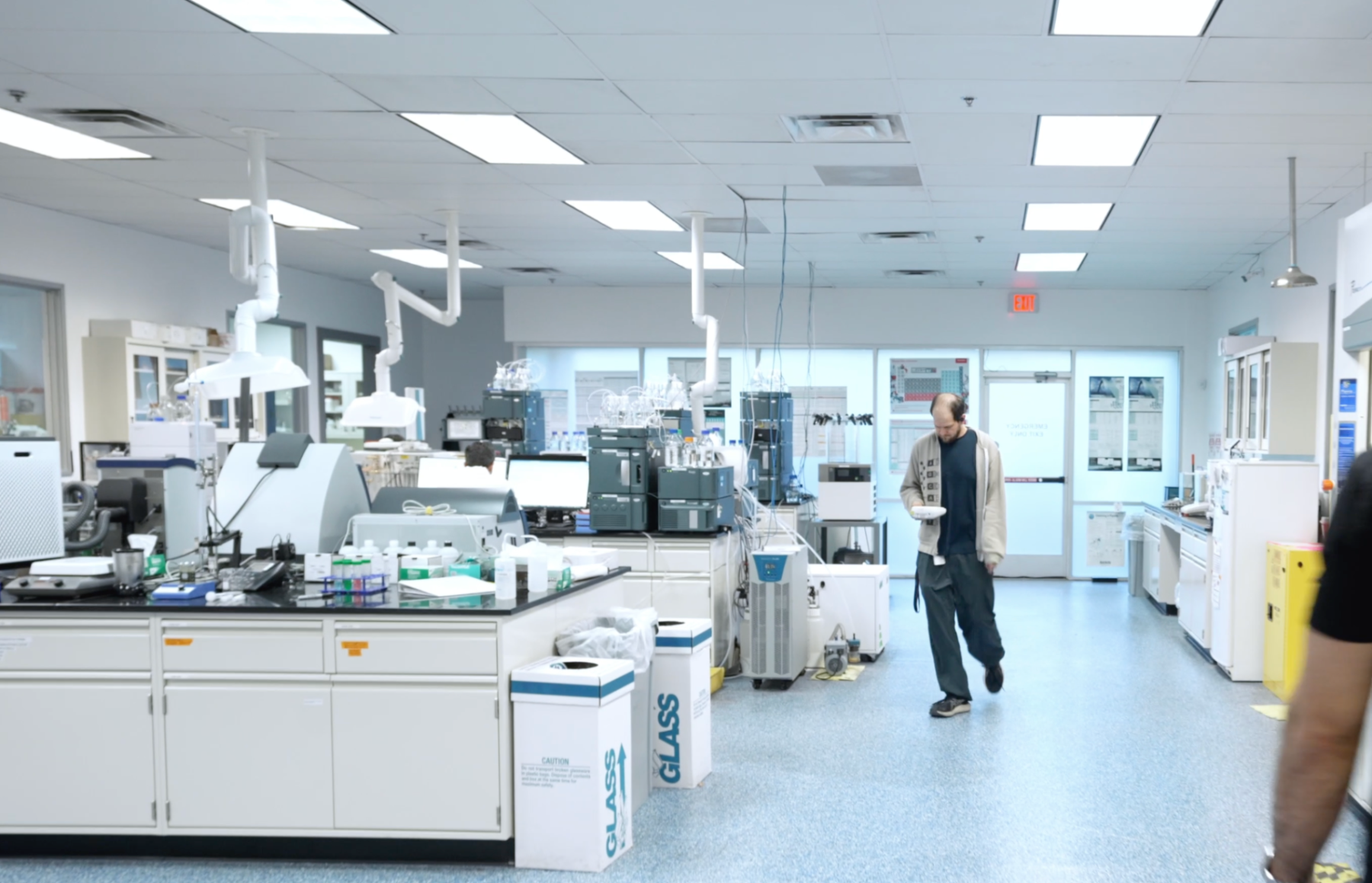
This is where you find out what an ingredient really is. Multiple chromatography systems verify species, purity, solvents, and active compounds before anything moves forward.
But the most fascinating addition is relatively new: a cell culture research program that studies how supplements affect living human cells in real-time.
Living Cells Responding to Supplements?!
The cell culture lab is something that's basically unheard of in the supplement industry. Nootropics Depot has officially gone beyond just testing whether products contain specific compounds. They're now observing how those compounds affect actual human cells.
"We have neurons in there", explained CEO Paul Eftang during the tour. The Incucyte SX5 live-cell analysis system captures images of cells at specific intervals, creating time-lapse documentation of cellular behavior. They can track cell growth, viability, morphology changes, and biochemical processes as they happen.
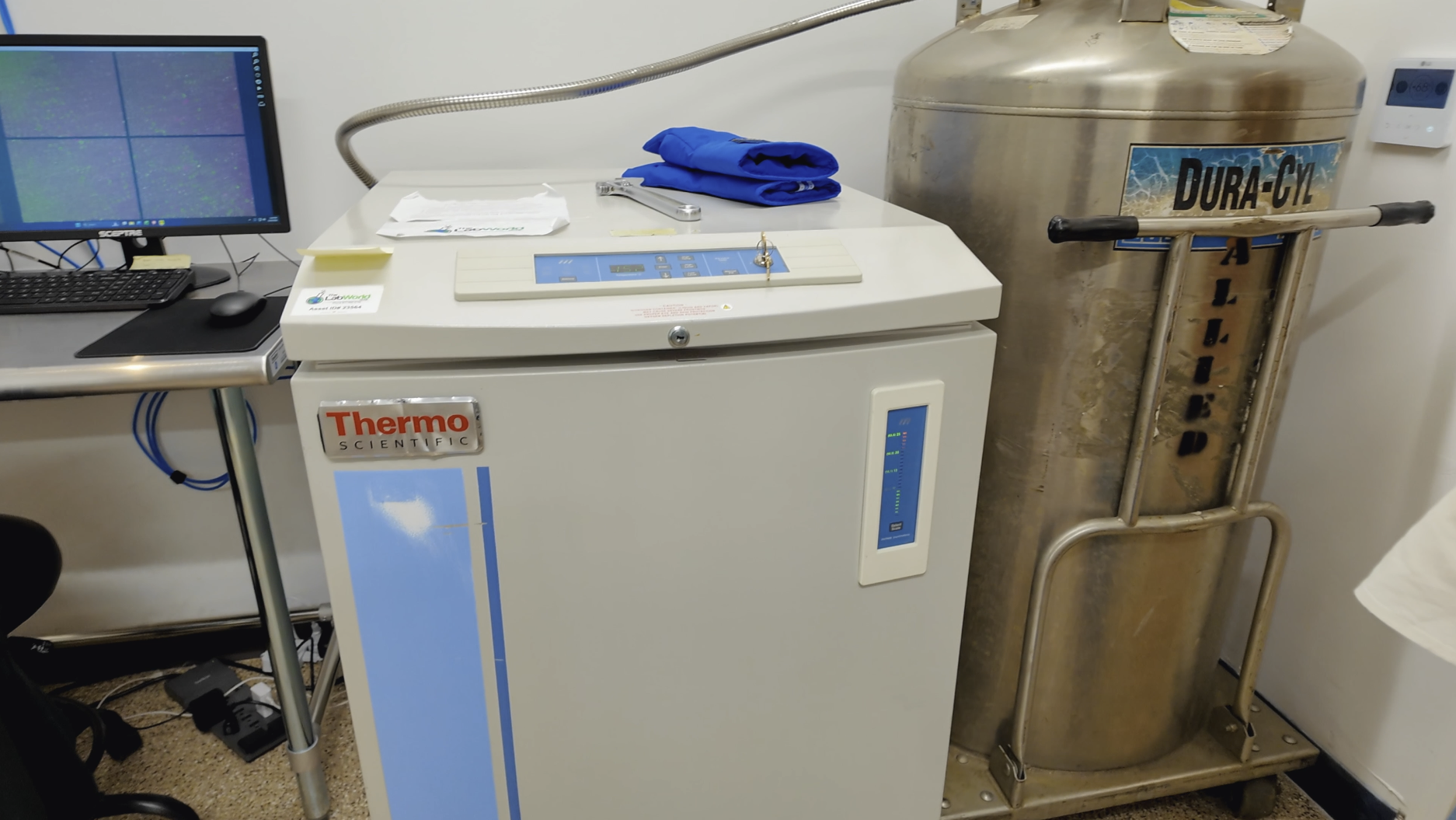
Instead of guessing how supplements work, they test them on real human cells. Intestinal and brain cells show how compounds behave over time, not just on paper.
Their current research focuses on how their mushroom products affect healthy intestinal cells and how cells respond to oxidative stress and inflammation triggers. For neuronal research, they can observe nerve cell health, neurite outgrowth, and signal transmission.
This capability will support development of Erinamax, the first Lion's Mane supplement standardized to verified erinacine A content. The cellular research helps validate that the standardization strategy delivers the nerve growth factor (NGF) stimulation that makes Lion's Mane valuable.
The Retain Library: Keeping Score
One corner of the facility houses something you won't find at most supplement companies: a comprehensive library of competitor products, carefully stored and cataloged.
This isn't exactly for comparison shopping, either... it's an ongoing research program done in partnership with the Future Nutra Foundation. When Nootropics Depot develops testing methods for specific bioactive compounds, they run those same tests on commercially available products. The results consistently expose quality problems that standard identity testing misses.
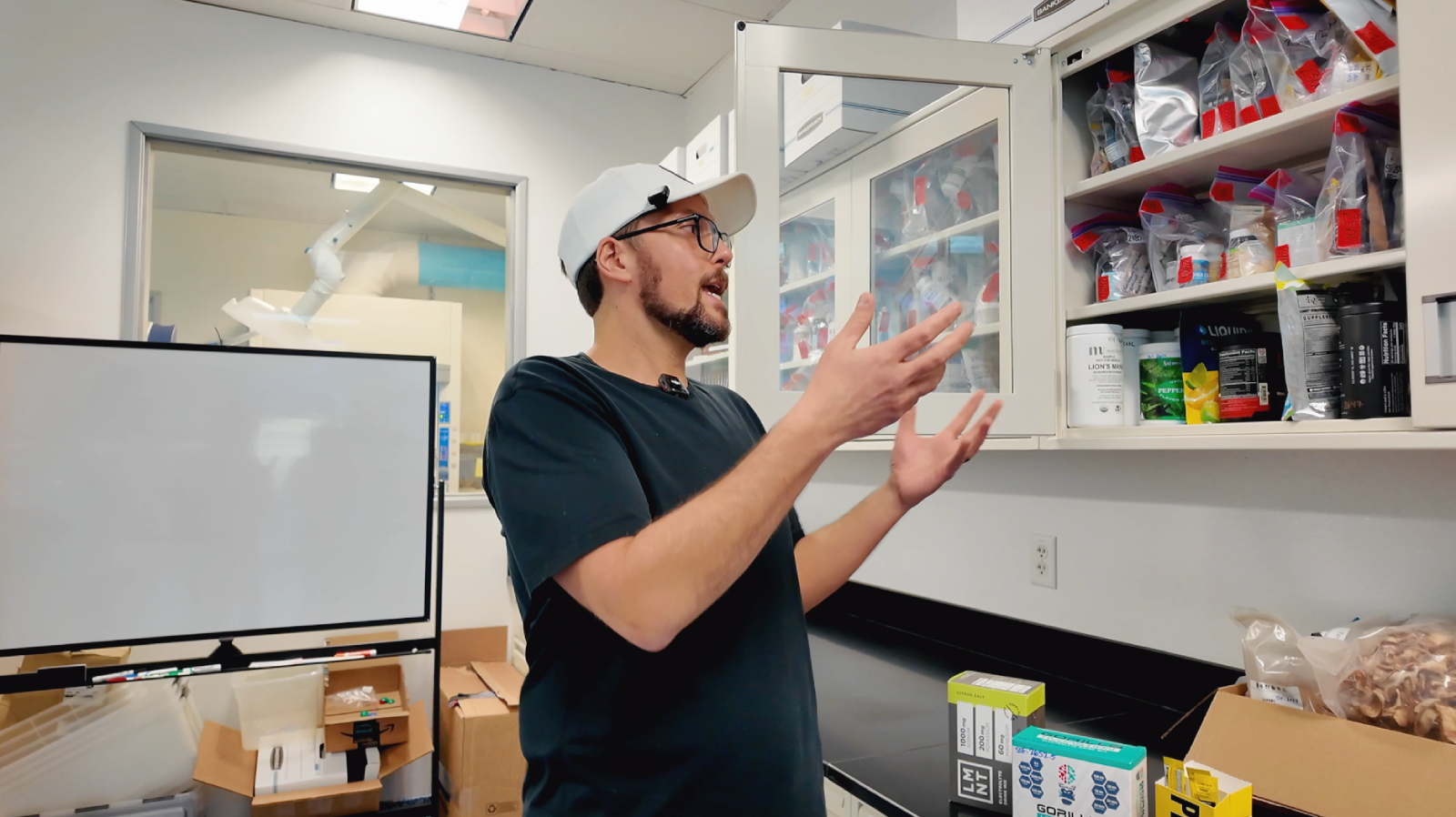
Retained samples stay sealed and documented so results can be rechecked anytime. If numbers are challenged, the product goes back under the microscope.
The library has grown as they've expanded testing capabilities and performed additional testing for Future Nutra. Each product represents a data point in understanding market-wide quality standards (or sometimes... lack thereof).
The Origin Story: Built from Frustration
How does a supplement brand end up with pharmaceutical-grade R&D labs? CEO Paul Eftang's answer from the forthcoming PricePlow Podcast episode is straightforward: they got tired of being lied to.
In the early days, Nootropics Depot operated like most supplement brands, only more heavily focused in the nootropics space. They'd contract with manufacturers, trust supplier certificates, and hope the finished products matched specifications. That trust kept getting violated.
Batches would come back from contract manufacturers with completely wrong formulations. Suppliers would provide certificates claiming specific standardizations that independent testing revealed were false. The industry's weak quality control infrastructure meant there was no reliable way to verify what you were actually getting.
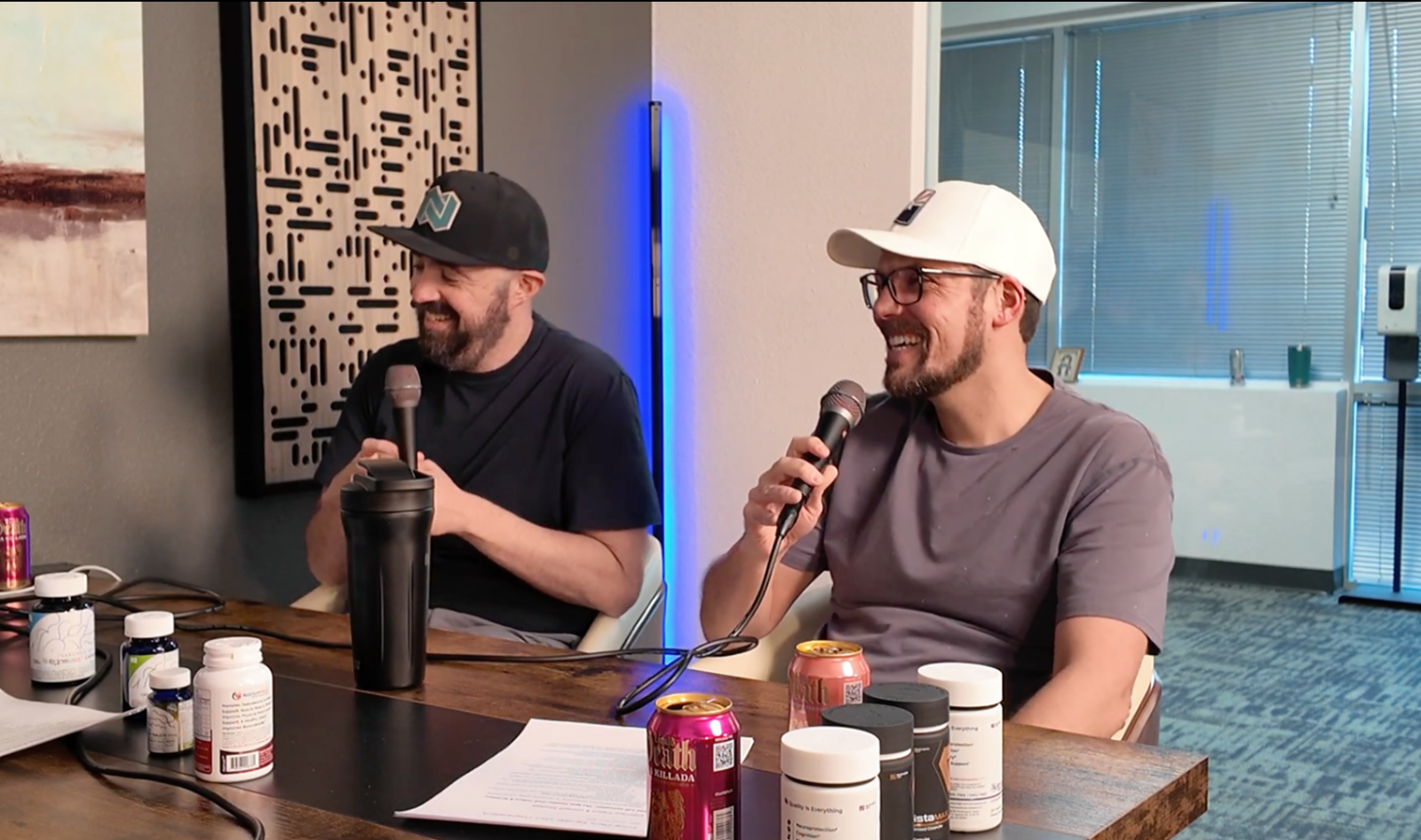
The decision to build rather than trust wasn't immediate. It took years of frustration, failed batches, and wasted money before Paul decided the only solution was vertical integration. If you want pharmaceutical-grade quality, you need pharmaceutical-grade capabilities.
In our upcoming two-part podcast with Paul, he details this journey including a 2021 FDA raid that paradoxically validated their approach to quality control! The full story involves regulatory challenges, supplier deception, and the realization that the supplement industry's testing infrastructure was fundamentally broken.
Stay tuned for those episodes. The story is worth the wait.
The Technology Arsenal: Beyond Standard Testing
All supplement brands must verify botanical identity and run purity screens, on top of testing for heavy metals. That's table stakes. Nootropics Depot's analytical capabilities go several levels deeper.
Isolating Unknown Compounds
The Prep-HPLC system separates complex mixtures into individual compounds. This process continues until they've isolated single molecules, even compounds that have never been studied before or lack available analytical standards.
The recent addition of the Supercritical Fluid Chromatography Extraction instrument dramatically improved this capability. It targets specific compounds based on molecular weight, increasing both isolation speed and accuracy.
What does this enable? When developing black ginger extract, they could isolate and quantify 5,7-dimethoxyflavone with precision. Their 10% standardization delivers five times more of this key PDE5-inhibiting compound than typical 2-4% extracts on the market.
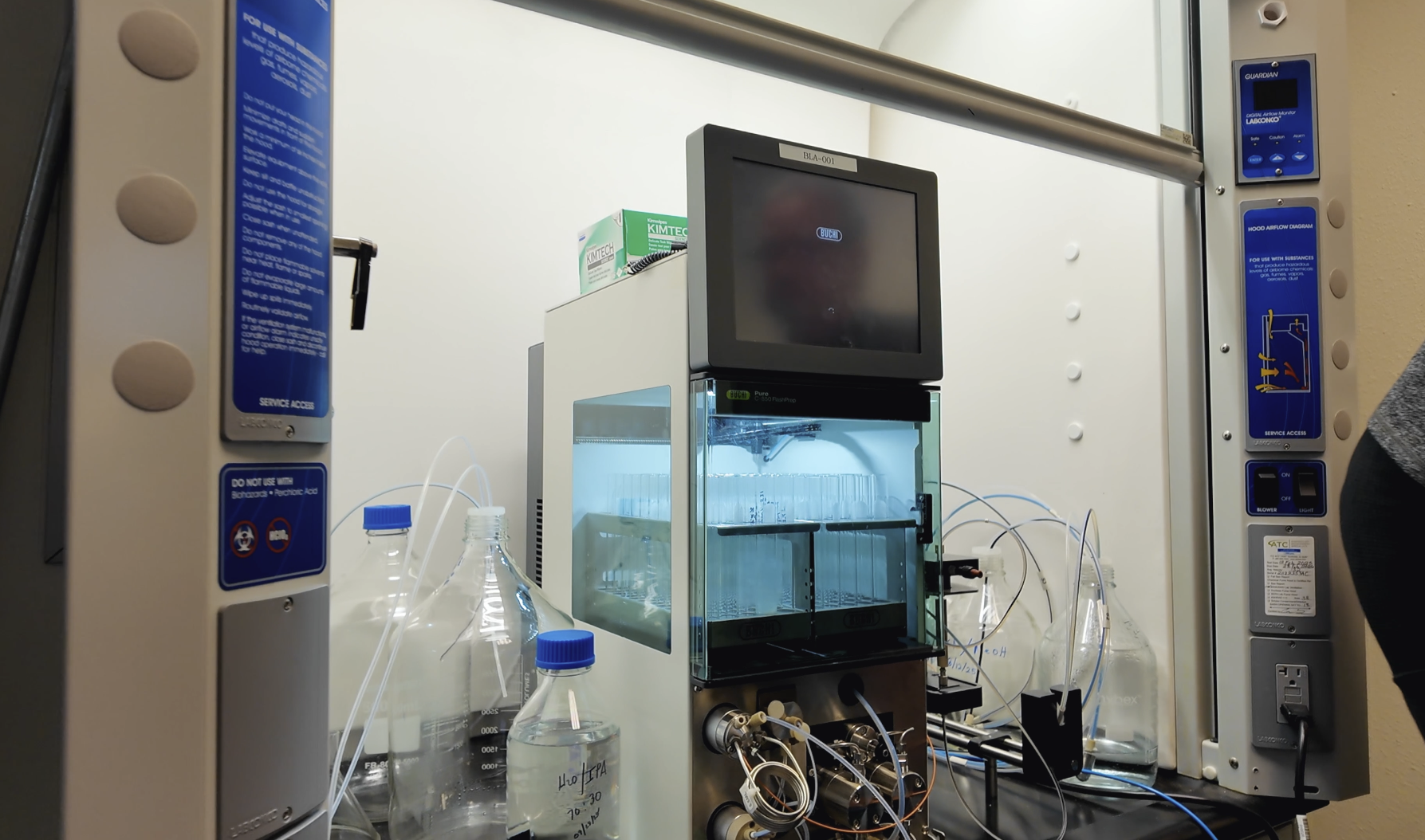
Prep-HPLC system doesn't just measure compounds. It separates and collects them, allowing new reference standards and precise bioactive verification.
Creating New Testing Methods
When Nootropics Depot worked to develop Ecklonia cava, they discovered no validated reference standards existed for this seaweed. Without a verified standard, they couldn't confidently test supplier materials.
Rather than proceeding with unverified material like most companies, they partnered with DNA labs, a Korean university, and expert botanists to create the industry's first authenticated Ecklonia cava reference material. That six-year development process explains why Nootropics Depot's Ecklonia Cava is currently the only one with measurable dieckol content.
This pattern repeats across multiple ingredients. When analytical methods don't exist, they develop them. When reference standards aren't available, they create them. It's pharmaceutical development work applied to botanical supplements.
Discovering the Spent Marc Cycle
One of the more troubling industry practices Nootropics Depot uncovered involves what happens to plant material after extraction.
Spent marc is the plant matter left over after extracting bioactive compounds. In legitimate manufacturing, this exhausted material gets discarded. The bioactives have been removed. What remains is fiber and cellulose.
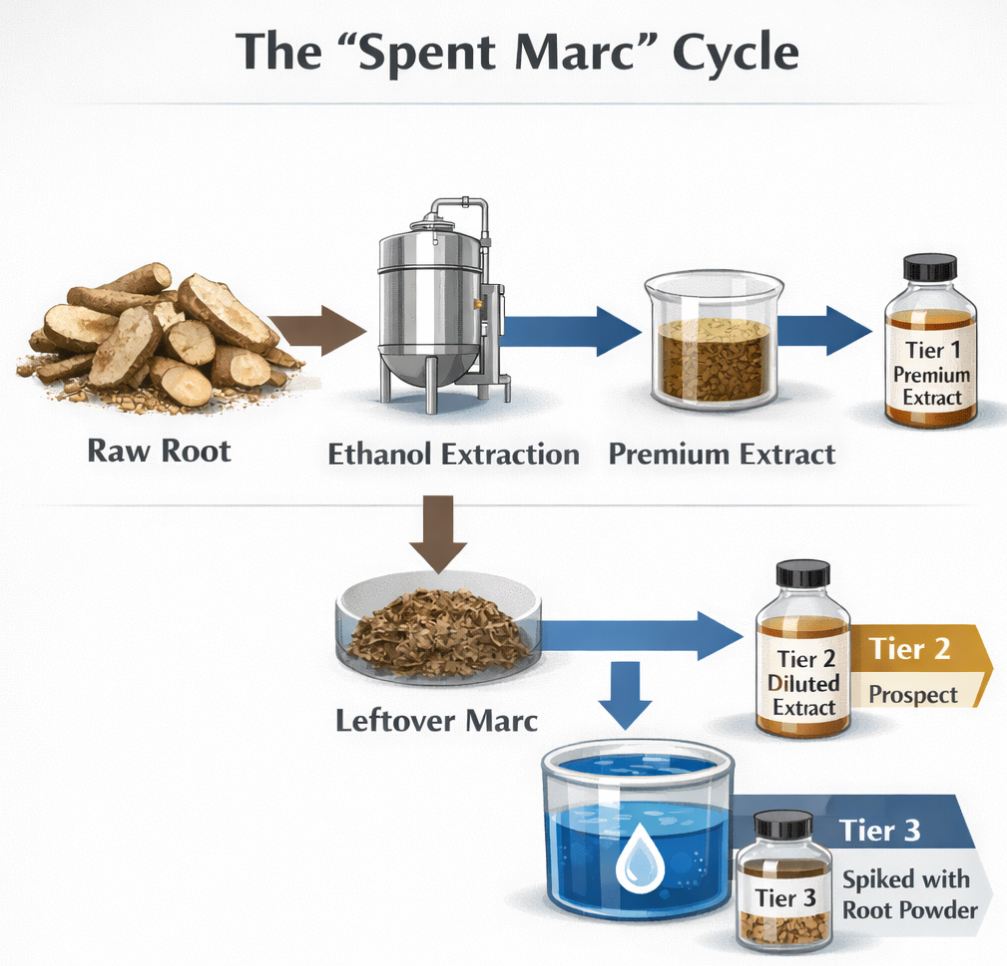
Exhausted plant material gets re-extracted and sold at lower tiers after initial bioactive extraction, creating products that pass identity tests but lack therapeutic compounds.
But in the race-to-bottom supplement market, spent marc doesn't get thrown away. It gets sold.
The process works in tiers. Premium extraction creates genuine high-potency extracts. The leftover marc gets extracted again with more aggressive solvents, creating diluted products with reduced potency. That twice-extracted marc still looks correct under a microscope and contains the right DNA, but the bioactives are gone.
This exhausted material gets powdered and either sold directly or re-extracted to create products that pass identity testing while containing minimal or zero therapeutic compounds.
The economic incentive is powerful. Premium extraction is expensive. Spent marc is nearly free. Both can pass standard quality control testing focused solely on botanical identity.
Nootropics Depot's compound-specific testing exposes this practice. Products claiming high concentrations show minimal or zero bioactive content when tested with UPLC methods that measure actual compound levels.
The Industry Impact: Exposing Quality Gaps
The testing capabilities have revealed systematic quality failures across multiple categories.
- The turkesterone scandal: When Nootropics Depot tested commercially available products claiming "500mg turkesterone" per capsule, they found actual content ranging from 0.44mg to 0.78mg. Some products showed zero detectable turkesterone despite passing identity testing. Read the full investigation in our Nootropics Depot Beta-Ecdysterone article.
- The Ecklonia cava crisis: Third-party chromatography testing of seven commercially available products revealed only one (theirs) contained measurable dieckol content. Competitors showed "non-detect" levels of the critical bioactive compound. See the chromatogram evidence here.
- The tongkat ali gap: Most products deliver less than 0.5mg eurycomanone per dose, with some containing zero detectable active compounds. Nootropics Depot's 10% extract provides 12mg per dose, creating a 40x cost efficiency advantage! Details in our tongkat ali coverage.
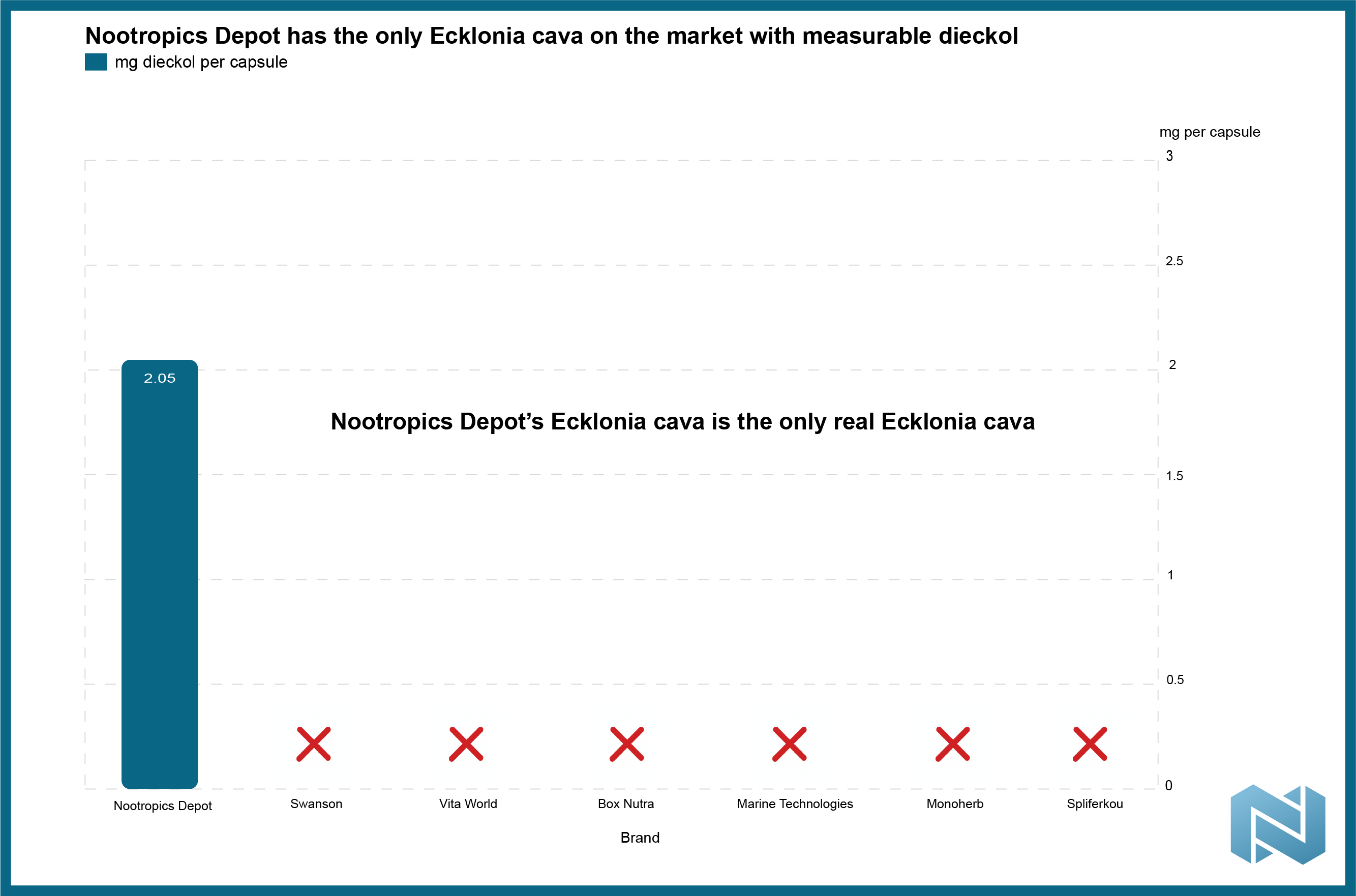
Quantitative testing reveals Nootropics Depot delivers 2.05mg of dieckol per capsule while all six competing brands tested show zero detectable dieckol content.
The pattern is consistent across categories: generic extraction claims hiding bioactive deficiency. Products pass identity testing but fail compound-specific verification.
Most brands can't expose these problems because they lack the analytical capabilities to test for specific bioactive compounds. Standard botanical testing verifies the plant species is correct without measuring whether therapeutic levels of key molecules are present. In our podcast, Paul and Matt explain how labs are actually incentivized to pass failing material, opening up another major industry issue.
What's Next: Expanding Research Capabilities
Excitedly, the cell culture program is expanding. The Nootropics Depot team is currently selecting additional cell lines that'll allow for observation of how products impact different tissue types. For neuronal research specifically, the Incucyte system can track both neurite outgrowth (how much neurons grow) and activity patterns (how effectively they transmit signals).
This research creates direct evidence that products affect human cells. Most supplement benefits are extrapolated from animal studies or assumed based on traditional use. Nootropics Depot is generating data showing their products produce specific cellular responses in human tissue.
New testing capabilities continue coming online. The infrastructure investment seems to be accelerating. Every new analytical instrument or research program opens new possibilities for product development and quality verification that didn't exist before. This is literally as close as the supplement industry gets to pharmaceutical-level development.
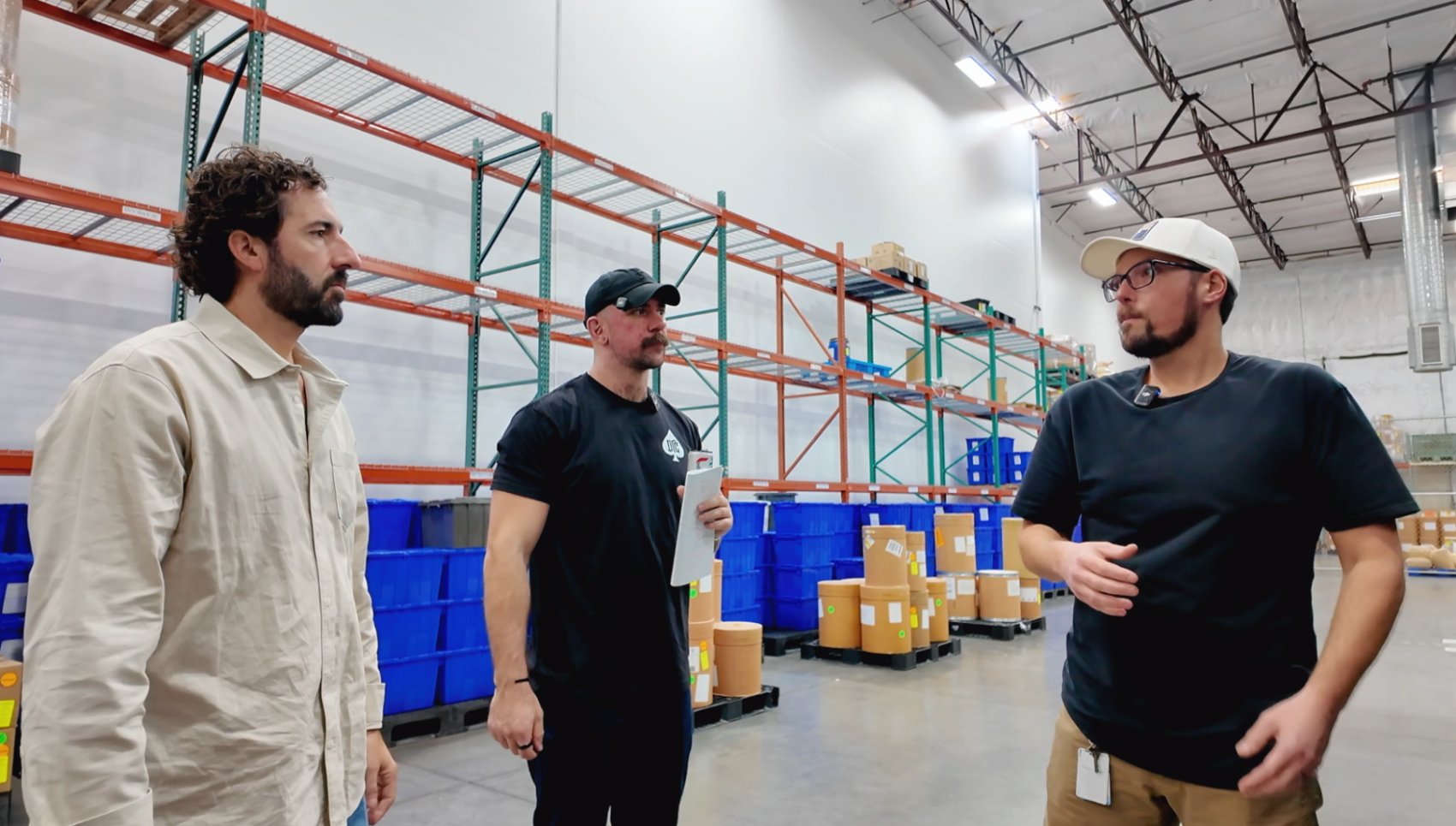
Nootropics Depot's setup wasn't built for marketing. It exists because the industry keeps cutting corners, and someone has to prove what quality really looks like.
The vision extends beyond just improving their own products. They've made Omnient Labs' testing services available to other supplement brands. The goal is raising industry standards by making pharmaceutical-grade testing accessible to companies willing to invest in quality.
Wrapping Up: This Is What Quality Looks Like
After spending two days in these facilities, the gap between Nootropics Depot's approach and typical supplement industry practices is massive. Most brands rely on supplier certificates and contract manufacturer testing. Some shop for labs that happily pass lab tests that don't actually make the grade. Others just hope their raw materials are what they claim to be.
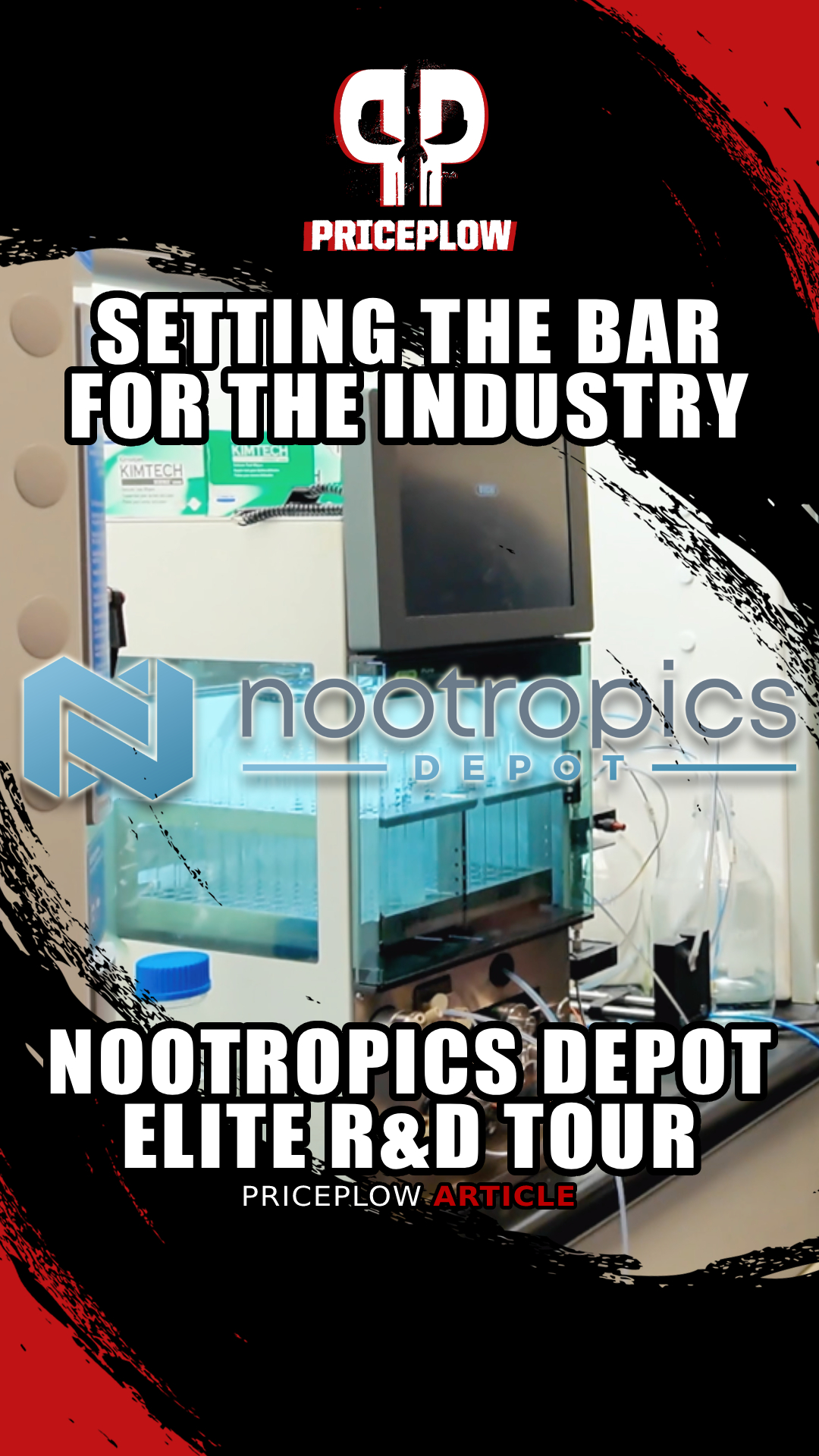
But Nootropics Depot built infrastructure to verify rather than hope. They can isolate unknown compounds, develop new testing methods, and even observe cellular responses in real-time. Along the way, this exposes quality problems that standard testing misses.
The investment in R&D capabilities isn't just about creating better products. It's about earning trust through transparent verification that stands up to scrutiny. When they publish Certificates of Analysis showing specific bioactive content, those numbers come from validated analytical methods performed in their own labs and verified by ISO-accredited third-party facilities.
This is pharmaceutical-grade quality control applied to supplements. It's what the industry could look like if more brands prioritized verification over marketing claims, or were at least held to the actual standard of the law.
Want to see these facilities in action? Watch for our detailed lab tour video and the two-part podcast with founder Paul Eftang dropping soon. The behind-the-scenes story of building this infrastructure from scratch is well worth your time.
In the meantime, check out the full range of extraordinarily well-tested supplements from Nootropics Depot and sign up for news alerts to catch future innovations from the brand setting new standards for supplement quality:
Nootropics Depot – Deals and Price Drop Alerts
Get Price Alerts
No spam, no scams.
Disclosure: PricePlow relies on pricing from stores with which we have a business relationship. We work hard to keep pricing current, but you may find a better offer.
Posts are sponsored in part by the retailers and/or brands listed on this page.

Comments and Discussion (Powered by the PricePlow Forum)